Where New Hampshire Turkeys Are Densest
It can be incredibly frustrating for turkey hunters in New Hampshire when you hear scattered gobblers or see old sign, but you just can't seem to get into a consistent flock. Understanding where the wild turkeys are densest in the Granite State isn't just about drawing an X on a map; it's about grasping the landscape, the history, and the factors that allow these magnificent birds to thrive. This guide will walk you through the prime turkey territories, explain why they're so productive, and give you practical strategies to find your next New Hampshire gobbler.
Understanding New Hampshire's Wild Turkey Comeback and Distribution
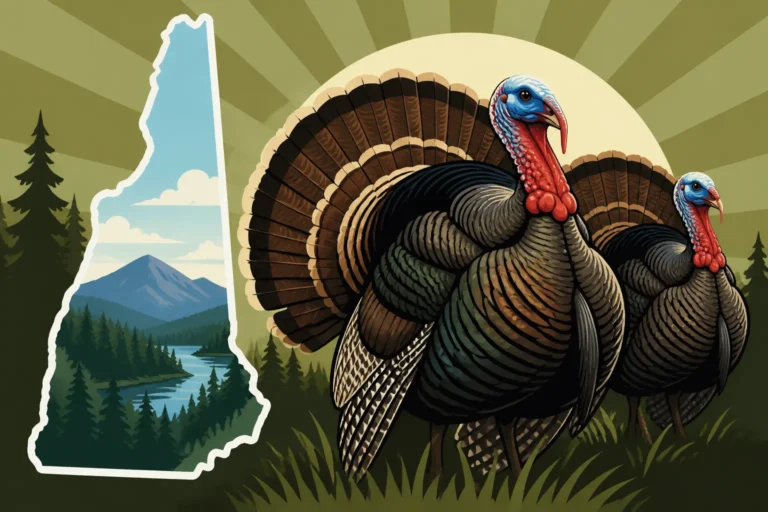
The wild turkey is a true success story in New Hampshire, a testament to dedicated conservation efforts. Once nearly extirpated from the state, these birds have made a remarkable resurgence, expanding their range and population across most regions. But this growth hasn't been uniform, and certain areas consistently hold higher densities than others, offering hunters more consistent opportunities.
The Remarkable Restoration Story
It's hard to imagine now, but not so long ago, hearing a wild turkey gobble in New Hampshire was practically unheard of. Habitat loss and unregulated hunting practices in the 1800s led to their complete disappearance by the mid-1800s. The birds we see today are the result of tireless efforts by the New Hampshire Fish and Game Department, beginning in the late 1970s. Turkeys were trapped in other states, primarily New York and Vermont, and carefully relocated to suitable habitats within New Hampshire.
These initial releases were strategically chosen in areas with a mix of mature hardwood forests (for acorns and roosting), agricultural fields (for insects and greens), and dense undergrowth (for nesting and brooding cover). This combination of habitat diversity was key. As those initial populations thrived and expanded, new release sites were established, gradually filling in the state's available habitat. This incremental approach, coupled with careful season management, allowed the population to boom. If you're interested in the details, you might enjoy learning How Turkeys Were Restored to New Hampshire. Today, the state's wild turkey population is robust, with harvest numbers showing just how successful this effort has been.
Factors Influencing Turkey Density
While wild turkeys are adaptable, certain environmental factors greatly influence how dense their populations become in any given area. It's not just about having some trees; it's about the right kind of trees, the right food sources, and the right cover.
Firstly, food availability is paramount. Turkeys are omnivores with a diverse diet, but they heavily rely on mast crops – acorns, beechnuts, and wild cherries – especially in fall and winter. Areas with extensive mature oak and beech forests will naturally support more turkeys. These hardwoods provide crucial energy when other food sources are scarce. Secondly, agricultural lands, particularly cornfields, hayfields, and old pastures, offer both food (waste grain, insects) and open spaces for strutting, feeding, and brooding poults. The edges where these fields meet dense woods are often prime turkey real estate.
Finally, cover and predator protection play a significant role. Turkeys need dense undergrowth for nesting hens and young poults to hide from predators like coyotes, bobcats, and even raptors. They also need tall, sturdy trees for roosting at night, providing safety from ground predators. Ideal turkey habitat is a mosaic of these elements: mature hardwoods, open fields, and thick brushy areas, often near water sources. This habitat mix allows hens to nest safely, poults to forage for insects in security, and adults to find ample food year-round.
Pinpointing the Densest Turkey Populations by Region
When you talk about turkey hunting in New Hampshire, it quickly becomes clear that not all regions are created equal. While you can find turkeys almost anywhere, some areas are simply teeming with them, offering more consistent action and higher harvest rates. These tend to be the regions that strike the perfect balance of food, cover, and historical stocking success.
The Southern Tier and Merrimack Valley Hotspots
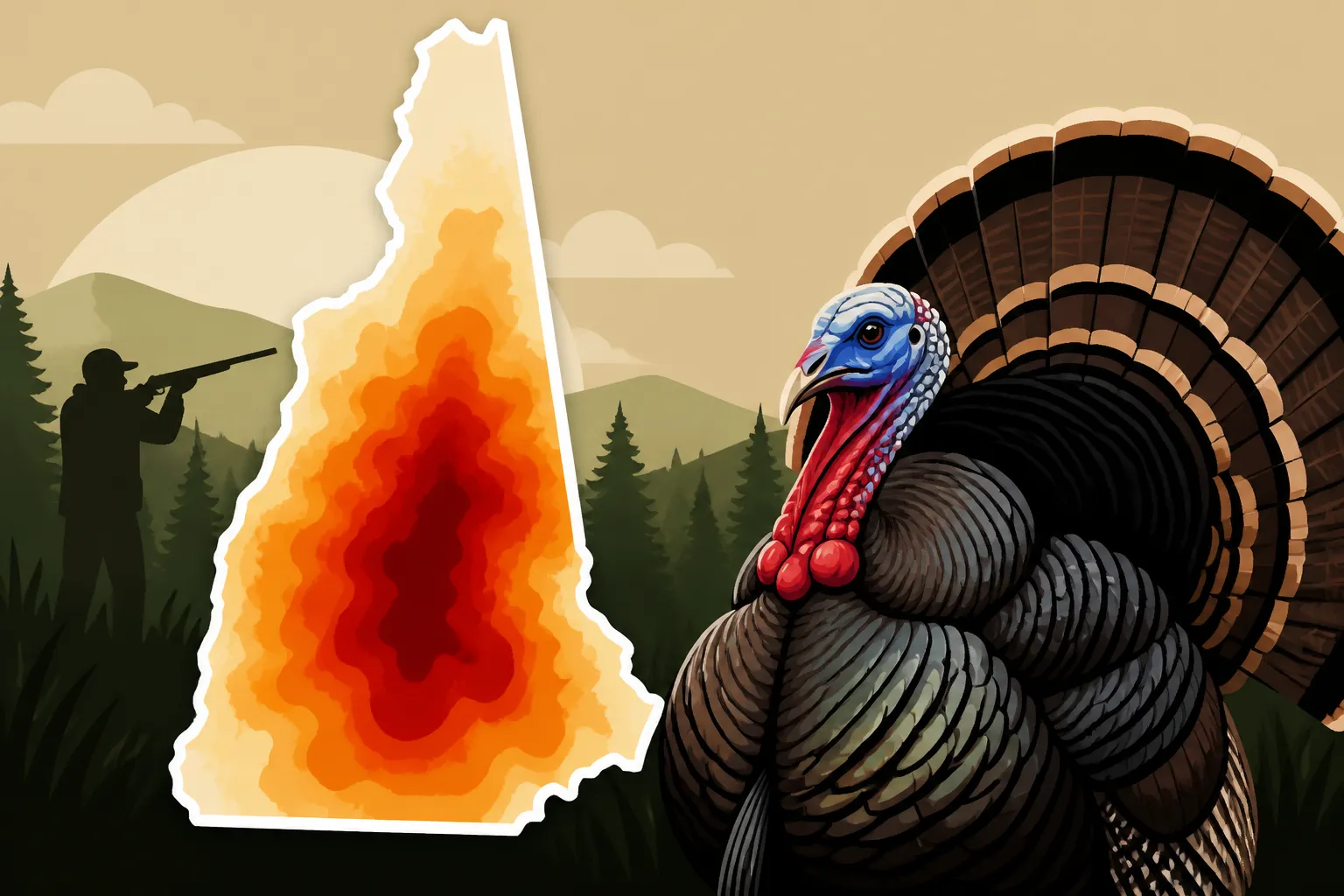
Without a doubt, the Southern Tier and the Merrimack Valley regions of New Hampshire consistently hold some of the densest turkey populations. Think about the areas south of Concord, stretching down towards the Massachusetts border, and along the Merrimack River corridor. These regions are characterized by a fantastic mix of mature hardwood forests, particularly in the rolling hills and river bottoms, combined with a significant amount of agricultural land. You'll find active farms with corn and hay fields alongside sprawling woodlots.
This blend provides an ideal environment for turkeys. The hardwoods offer abundant mast crops like acorns, crucial for overwinter survival and spring energy. The farm fields are a buffet of waste grain and insects, essential protein for growing poults and breeding hens. Towns like Chester, Candia, Weare, and Goffstown, while experiencing some suburban sprawl, still retain enough contiguous habitat to support thriving turkey numbers. Hunters in these areas often report seeing multiple flocks and hearing active gobbling throughout the spring season. New Hampshire Spring Turkey Harvest Numbers tend to be strong in these WMUs, year after year. The availability of both food and nesting cover in these transitional zones makes them prime hunting grounds, though finding access on private land can sometimes be a challenge due to higher population density.
Lakes Region and Central New Hampshire Opportunities
Moving slightly north, the Lakes Region and other central New Hampshire areas also boast very healthy turkey populations, albeit with perhaps a slightly different habitat composition. Here, you'll still find plenty of hardwoods, especially around the numerous lakes and rivers, but the agricultural footprint might be a bit more dispersed compared to the Southern Tier. However, these areas often feature more fragmented forests, interspersed with smaller clearings, old apple orchards, and diverse forest types that still offer excellent forage and cover. Towns surrounding Lake Winnipesaukee, such as Moultonborough, Meredith, and Tuftonboro, along with areas west towards Andover and Salisbury, are known for their turkey numbers.
The topography here often provides excellent scouting opportunities, with turkeys frequently seen feeding in open fields or crossing logging roads. The mix of residential areas with larger tracts of undeveloped land can sometimes mean turkeys become accustomed to human presence, making them a bit harder to pattern but also potentially less wary if you can get into their routine. This region offers a great balance for hunters who want to experience both classic deep woods hunting and opportunities near more open agricultural pockets. It's a fantastic area to practice Run-and-Gun Turkey Tactics on Public Land as you can cover diverse terrain efficiently.
North Country and White Mountain Considerations
While the North Country and White Mountain regions are undeniably beautiful and offer incredible hunting for other species, turkey densities generally taper off as you move further north and into higher elevations. The colder winters, shorter growing seasons, and different forest compositions (more softwood, less mast-producing hardwoods at higher elevations) make it a tougher environment for turkeys to thrive in the same numbers as their southern counterparts.
However, "less dense" doesn't mean "no turkeys." In the lower elevations and river valleys of the North Country, particularly along the Connecticut River and around areas like Lancaster, Colebrook, and Errol, you can still find pockets of good turkey habitat and decent populations. These areas often have broader river bottoms with more hardwoods and some scattered agricultural fields. Success here often relies on focused scouting and understanding the specific microhabitats where turkeys concentrate, such as south-facing slopes that warm up quickly in spring or sheltered valleys. Hunting in the North Country requires a bit more perseverance and often covers more ground, but the reward of a gobbler in such a pristine setting is unmatched. For a different perspective on big game up here, you might consider Moose Hunting New Hampshire's North Country.
Using Data and Scouting to Find Your Spot
Finding where turkeys are densest isn't just about knowing the general regions; it's about drilling down to specific woodlots, fields, and ridges. Combining readily available data with good old-fashioned boots-on-the-ground scouting is the winning formula.
Leveraging New Hampshire Fish and Game Resources
The New Hampshire Fish and Game Department (NHF&G) is your absolute best friend when it comes to understanding game populations. They collect and publish a wealth of data that can help you pinpoint high-density turkey areas. While they don't provide a real-time turkey tracker (wouldn't that be nice?), their annual harvest reports are incredibly informative. These reports often break down turkey harvest numbers by Wildlife Management Unit (WMU) and sometimes even by town. By looking at these historical harvest data, you can quickly identify the WMUs and towns that consistently produce the highest numbers of birds. This is a crucial first step in narrowing down your search. You can also refer to their information on New Hampshire Fall Turkey Permit Rules for specific WMU guidance.
Beyond harvest data, NHF&G also publishes maps and information about public lands, including Wildlife Management Areas (WMAs) and State Forests. These are excellent starting points, as they are managed for wildlife and open to hunting. Cross-referencing high-harvest WMUs with available public land can quickly generate a list of promising locations. Additionally, tools like GoHunt and various mapping apps can overlay public land boundaries and even show habitat types, allowing you to visually identify areas with the ideal mix of hardwoods, fields, and cover that turkeys prefer. These digital resources allow you to do significant "e-scouting" from home, saving you valuable time and fuel.
Here's a simplified table illustrating general turkey density trends by region/WMU:
| New Hampshire Region/WMU | General Turkey Density | Key Habitat Characteristics | Harvest Potential |
|---|---|---|---|
| Southern Tier (WMU K, M) | High | Extensive hardwoods, active agriculture, rolling hills | Excellent |
| Merrimack Valley (WMU I1, I2) | High | Hardwoods, river bottoms, mixed agriculture, suburban fringe | Excellent |
| Lakes Region (WMU D1, D2) | Medium-High | Varied hardwoods, lakeshore areas, scattered fields | Good |
| Monadnock Region (WMU G, H2) | Medium-High | Forested hills, some agriculture, dense cover | Good |
| White Mountains (WMU E, F) | Medium | Higher elevation, mixed forest, river valleys | Moderate |
| North Country (WMU A, B, C) | Low-Medium | More softwoods, colder, concentrated in river valleys | Moderate |
Boots-on-the-Ground Scouting and Sign Reading
No amount of digital scouting or data analysis can replace getting out there and seeing the land for yourself. Once you've identified a promising WMU or public land parcel, it's time to hit the woods. Early spring, before the leaves fully pop, is an ideal time for turkey scouting. Look for key turkey sign:
- Droppings: Turkey droppings are distinctive. J-shaped droppings indicate a gobbler, while more globular, coiled droppings usually mean a hen. Fresh droppings signal recent activity.
- Feathers: Finding a collection of feathers, especially large primary wing feathers, can indicate a roosting area. Body feathers scattered around suggest feeding or loafing areas.
- Tracks: Look for distinct three-toed tracks in soft mud, dirt roads, or field edges.
- Scratchings: Turkeys are notorious for scratching through leaf litter to find acorns, insects, and seeds. Look for fan-shaped patterns of disturbed leaves.
- Dusting Bowls: Turkeys will create shallow depressions in dry dirt or sandy areas to dust themselves, helping to rid themselves of parasites. These are often found in sunny, open areas.
- Roost Trees: Identifying large, sturdy trees (often pines or oaks) with significant droppings underneath them is crucial. These are where turkeys spend the night, and knowing their roost sites can give you a significant advantage for a morning setup.
Beyond sign, pay attention to the terrain. Note where hardwoods transition to fields, where creek bottoms offer dense cover, or where logging roads create open travel corridors. Observe potential strutting zones – open fields, old logging decks, or even just flat spots in the timber where a gobbler might display for hens. The more time you spend scouting, the more you'll understand the local turkey movements and habits. Don't forget that scouting isn't just for deer; for tips on getting out there, check out Scouting New Hampshire Public Land Before Season.
Strategies for Hunting High-Density Areas
Hunting in high-density turkey areas can be both exhilarating and challenging. While you'll likely encounter more birds, these areas often see more hunting pressure, meaning the birds can be warier. Adjusting your tactics is key to success.
Public Land Approaches in Populous Zones
When hunting public land in New Hampshire's high-density turkey areas, assume that other hunters will be out there too. This doesn't mean you can't be successful, but it requires a more strategic approach.
- Get There Early, or Hunt Later: The earliest morning hours, especially at fly-down, often see the most competition. If you're targeting a roost, be in position well before first light. Alternatively, consider hunting later in the morning or into the afternoon. Many hunters pack up after the initial morning rush, leaving the woods quieter for those willing to stay out. Turkeys will often regroup and become active again later in the day, especially if they haven't been heavily pressured.
- Go Deeper: Most hunters don't venture too far from easily accessible trails or roads. If you're willing to walk an extra half-mile or more into thick cover or challenging terrain, you'll often find less-pressured birds. Use mapping apps like GoHunt to identify areas that are further from parking lots and roads, or look for natural barriers that deter casual hunters.
- Scout Beyond the Roost: While a morning roost setup is classic, pressured birds might fly down and immediately head away from calls if they've had too much interaction. Focus on finding midday loafing areas, feeding zones, or strutting fields. You might have more success setting up in a travel corridor between these locations. Understanding New Hampshire Wildlife Management Areas and their specific access points can also give you an edge in planning.
- Vary Your Calls: If every hunter is using the same slate call and standard yelps, try something different. A soft tree yelp, a kee-kee run, or even just subtle clucks and purrs might be more effective on call-shy birds. Don't overcall; let the bird dictate the cadence.
Navigating Private Land Permission in Prime Areas
In many of New Hampshire's densest turkey areas, especially in the Southern Tier and Merrimack Valley, a significant portion of the best habitat might be on private land. Gaining permission to hunt these parcels can dramatically increase your chances of success, as these birds often experience less pressure.
- Be Respectful and Prepared: When approaching landowners, always be polite and respectful of their property. Dress neatly, have your hunting license and insurance information ready, and offer to share some of your harvest. Explain how you plan to hunt – will you be treestand hunting, still-hunting, or setting up a ground blind? Showing you're a responsible hunter goes a long way.
- Start Early, Off-Season: Don't wait until a week before opening day. Start asking for permission in the late winter or early spring. This gives you time to build a rapport and scout the property, and it gives the landowner time to consider your request without feeling rushed.
- Offer to Help: Many landowners appreciate help with chores like cutting firewood, raking leaves, or even helping with small repairs. This can be a fantastic way to earn trust and build a long-term hunting relationship.
- Small Parcels Can Be Gold: Don't overlook smaller, fragmented woodlots or brushy creek bottoms between houses. While they might not look like classic turkey habitat from the road, these small pockets often hold birds that move between larger tracts. Landowners of these smaller parcels may also be more receptive to hunters than those with vast acreage, especially if they have turkey issues in their gardens or around their homes. For more detailed advice, refer to Asking a New Hampshire Landowner for Permission.
- Follow Up and Say Thank You: If you get permission, always follow through on your promises, close gates, pick up any trash (even if it's not yours), and always, always say thank you. A small gift, like a gift card or a part of your harvest, can reinforce good will. Building a positive relationship is key to long-term access.
Remember, patience and persistence are virtues in turkey hunting, especially when seeking out those high-density areas. Combine your research with time in the field, adapt your strategies, and you'll be well on your way to punching your tag in the Granite State.
Disclaimer
This article is for general informational purposes only and does not constitute professional advice. Laws, prices and regulations vary by location and change over time. Consult a qualified professional for guidance on your specific situation.