New Hampshire Spring Turkey Harvest Numbers
It's that time of year again, isn't it? The snow is (mostly) gone, the woods are starting to wake up, and our thoughts turn to those booming gobbles echoing through the New Hampshire timber. But as much as we love chasing spring turkeys, it's natural to wonder about the bigger picture. Are the birds doing well? How many did hunters harvest last year, and what do those numbers really mean for our upcoming season? It can sometimes feel like trying to piece together a puzzle with missing pieces, relying on whispers from the local general store or a quick glance at a forum. This guide is here to cut through that noise, diving deep into New Hampshire's spring turkey harvest numbers, what they tell us about the health of our flocks, and how understanding these figures can genuinely help you become a more informed and, hopefully, more successful spring turkey hunter.
Understanding New Hampshire's Spring Turkey Harvest Data
When we talk about "harvest numbers," it's easy to just think of a raw total, a simple tally of birds taken. But for wildlife managers and serious hunters alike, these numbers are so much more than just a score sheet. They are a critical pulse check on the health and vitality of our wild turkey populations across the Granite State. Without this data, managing our beloved resource would be a shot in the dark, and we’d all be operating purely on guesswork.
The "Why" Behind the Numbers: Beyond Just Bragging Rights
You might hear a lot of chatter around town or on social media after the season ends – "I saw more birds than ever!" or "It was tough, hardly heard a gobble." While these anecdotal observations are valuable to us as individual hunters, they don't paint the whole picture for the state's wildlife management. That's where the official harvest data comes in. The New Hampshire Fish and Game Department collects these numbers not just to keep tabs on hunter success, but primarily to manage the resource effectively. These figures help them understand population trends: are turkey numbers stable, increasing, or declining in certain areas? This information is vital for setting future season lengths, bag limits, and even determining where conservation efforts might be most needed.
Think of it like this: if harvest numbers consistently trend downwards over several years, it might signal an issue with reproductive success, habitat loss, or increased predation. Conversely, rising numbers suggest a healthy, expanding population, potentially allowing for more generous hunting opportunities in the future. It’s a delicate balance, and these statistics are the best tool we have to maintain it. It also helps them to monitor the overall health of the herd, looking for any signs of disease or other environmental stressors that could impact the birds.
How New Hampshire Collects Spring Turkey Harvest Information
So, how does New Hampshire gather all this crucial data? It largely comes down to you, the hunter, and your mandatory reporting of harvested birds. When you tag a gobbler in the spring, you're required to register that bird. For many years, this meant a trip to a designated check station, which was a fantastic way to interact with conservation officers and fellow hunters, sharing stories and showing off your bird. However, with modern technology, the process has largely shifted to online or phone reporting, making it more convenient for hunters.
While the convenience is undeniable, it also places a greater responsibility on each hunter to report accurately and promptly. Every piece of information collected, from the date of harvest to the Wildlife Management Unit (WMU) where the bird was taken, its weight, and spur length, contributes to a comprehensive dataset. This data allows the Fish and Game Department to create detailed reports, sometimes even down to the WMU level, which is incredibly useful for local hunters trying to understand the turkey dynamics in their specific hunting grounds. For instance, knowing the New Hampshire Turkey Harvest Numbers by WMU can drastically alter your pre-season scouting.
It’s important to remember that these harvest numbers, while invaluable, are a reflection of hunter success and hunter effort, not necessarily an exact count of every single turkey in the woods. Factors like how many hunters are out there, how much time they're spending, and even the weather on opening day can skew the numbers compared to the actual total population. However, when combined with other methods like brood surveys (counting poults with hens in the summer), biologists can get a remarkably accurate picture of the overall New Hampshire Turkey Population Estimate.
Deciphering the Trends in New Hampshire's Spring Turkey Harvest
Looking at raw harvest numbers year after year can be a bit like staring at a spreadsheet – important, but not always immediately clear what story it’s telling. To truly understand New Hampshire's spring turkey harvest, we need to look for trends and consider the many variables that contribute to those ups and downs we see in the annual reports. It's a complex ecosystem out there, and everything from the previous fall's acorn crop to the current spring's rain can play a role.
Factors Influencing Annual Spring Harvest Fluctuations
There are several key elements that can cause the spring turkey harvest numbers to fluctuate from one year to the next. It's rarely just one thing, but usually a combination of factors working together.
-
Weather Conditions: This is a huge one. A harsh winter with deep, persistent snow can mean higher overwinter mortality for turkeys, especially younger birds, leading to fewer birds available in the spring. More critically, the weather during the actual nesting and brooding period (late spring/early summer) has a massive impact. Cold, wet springs can decimate poult survival, as young turkeys are highly susceptible to hypothermia and a lack of insects (their primary food) during prolonged wet periods. If a hatch suffers one year, you'll see fewer jakes and two-year-old birds in the subsequent spring seasons. Think about a particularly rainy May – those little poults struggle immensely.
-
Mast Crop Success: Turkeys rely heavily on acorns, beechnuts, and other hard mast crops in the fall and winter for energy reserves. A bumper crop means birds go into winter in excellent condition, increasing their survival rates and improving hen health for spring breeding. A poor mast crop, however, can lead to weaker birds, higher mortality, and less successful breeding efforts. These effects can ripple through the population for a couple of years.
-
Predator Populations: While nature always finds a balance, spikes in predator populations (coyotes, bobcats, foxes, raccoons, opossums) can certainly impact turkey numbers, especially through nest predation and poult mortality. If predator numbers are high in a particular WMU, it can put a dent in the local turkey population, which can then be reflected in hunter success rates a season or two later. It's a natural dynamic, but it's one more piece of the puzzle.
-
Hunter Effort and Participation: This is a factor often overlooked. If there are fewer hunters out in a given spring, or if hunters spend less time afield due to personal schedules, economic factors, or poor weather, the harvest numbers might appear lower even if the turkey population itself is healthy. Conversely, a surge in hunter interest or ideal hunting conditions can lead to higher harvest numbers. Resources like GoHunt can help hunters understand peak activity times, and while it doesn't directly influence turkey numbers, it can indirectly inform hunter effort.
Understanding these variables helps us interpret the official numbers. A single low harvest year isn't necessarily a crisis, but consistent trends, especially when correlated with environmental data like weather patterns or mast crop surveys, can provide valuable insights for wildlife managers and proactive hunters alike.
Geographic Breakdown: Harvest Numbers by Wildlife Management Unit (WMU)
While statewide harvest numbers are interesting, they're often too broad to be truly actionable for a dedicated turkey hunter. This is where New Hampshire's Wildlife Management Unit (WMU) system becomes invaluable. The state is divided into various WMUs, and turkey populations, habitat, and even hunting pressure can differ significantly between them. Therefore, looking at harvest numbers by WMU provides a much more granular and useful perspective.
For example, a WMU with extensive mature hardwoods and open agricultural fields might consistently produce higher turkey harvests than a heavily fragmented suburban WMU, even if the statewide numbers remain stable. Or, a WMU in the mountainous North Country might see different trends due to harsher winters and different habitat types compared to the milder, more agricultural southern regions. Understanding these localized trends is crucial for planning your hunts. If you're wondering Where New Hampshire Turkeys Are Densest, WMU harvest data is a primary indicator.
Here’s a hypothetical example of how WMU harvest numbers might look over a few seasons, illustrating how they can vary and what kind of information you might expect to see:
| Wildlife Management Unit (WMU) | 2021 Spring Harvest | 2022 Spring Harvest | 2023 Spring Harvest | 3-Year Average | Key Characteristics |
|---|---|---|---|---|---|
| A (North Country) | 65 | 72 | 68 | 68.3 | Remote, mountainous, dense softwoods, harsher winters. |
| D1 (Lakes Region) | 285 | 310 | 295 | 296.7 | Mixed forests, suburban interface, good agricultural pockets, moderate pressure. |
| G (Southwest Hills) | 380 | 365 | 390 | 378.3 | Rolling hills, mixed hardwoods, significant public and private land, moderate-to-high pressure. |
| M (Southeast) | 120 | 135 | 128 | 127.7 | More developed, fragmented habitat, smaller woodlots, higher hunter density in accessible areas. |
This table is illustrative and does not represent actual, current New Hampshire harvest data.
As you can see from this hypothetical table, WMU G consistently shows higher harvest numbers, potentially indicating a robust turkey population and good habitat in that region. Conversely, WMU A, with its more challenging terrain and harsher climate, typically sees lower numbers. This kind of data can inform your scouting and help you decide where to focus your efforts. A hunter might use this information to decide whether to brave the backwoods of WMU A or stick to the more accessible lands in WMU G. It's all about making informed choices to maximize your chances during the short New Hampshire Spring Turkey Season Dates.
What Spring Turkey Harvest Numbers Mean for Hunters
Now that we've dug into what these numbers are and how they're collected, let's bring it back to where the rubber meets the road: how does this information actually help you, the hunter, in the spring woods? Understanding these trends and statistics isn't just for biologists; it's a powerful tool for strategic decision-making and for appreciating the overall health of New Hampshire's wild turkey resource.
Adjusting Your Spring Hunting Strategy Based on Trends
Harvest numbers, especially WMU-specific ones, can be incredibly insightful for refining your hunting strategy. They offer a tangible, data-driven perspective that can either confirm your gut feelings or challenge them, pushing you to adapt.
-
Interpreting a Dip in Harvest: If you notice a significant dip in the spring turkey harvest numbers for your favorite WMU, don't immediately despair. Instead, view it as a signal to adjust. It might mean that birds are more scattered, perhaps due to a tough winter, or that they're experiencing higher pressure. Your strategy might shift towards more extensive pre-season scouting, looking for fresh sign in overlooked areas rather than relying on historical hot spots. It might also mean adopting a more patient approach, Calling a May Gobbler Off the Roost with softer, more subtle calls, or trying run-and-gun tactics only in areas with confirmed activity. You might even consider hunting later in the season, after initial hunting pressure has subsided, When New Hampshire Gobblers Go Quiet in Late May, and they become more patternable.
-
Leveraging a Strong Harvest: Conversely, if your WMU shows strong or increasing harvest numbers, it suggests a healthy, robust population. This could mean you can afford to be a bit more aggressive with your calling, or explore new areas within that WMU with a higher likelihood of success. It might also indicate that the birds are more responsive to calls and decoys. You might pay more attention to your Decoy Placement for Pressured Spring Birds to capitalize on the higher density of turkeys. This isn't an excuse to be complacent, but it provides a good baseline level of confidence in the population health.
-
Habitat Clues: Often, harvest numbers correlate with habitat changes. If a large timber harvest occurred, or new agricultural fields were planted, you might see subsequent shifts in turkey distribution and, therefore, harvest numbers. Keeping an eye on these changes, perhaps through mapping tools or scouting on your own, can help you predict where birds might be concentrated or dispersed. Even the general landscape, like Hunting a Ridge-Top Saddle for Rutting Bucks for deer, can provide habitat clues for turkeys.
By integrating harvest data into your pre-season preparation, you move beyond just hoping for the best and start making data-informed decisions that can significantly improve your chances of filling your tag for one of the New Hampshire Spring Turkey Permit Rules.
The Broader Picture: Turkey Population Health in New Hampshire
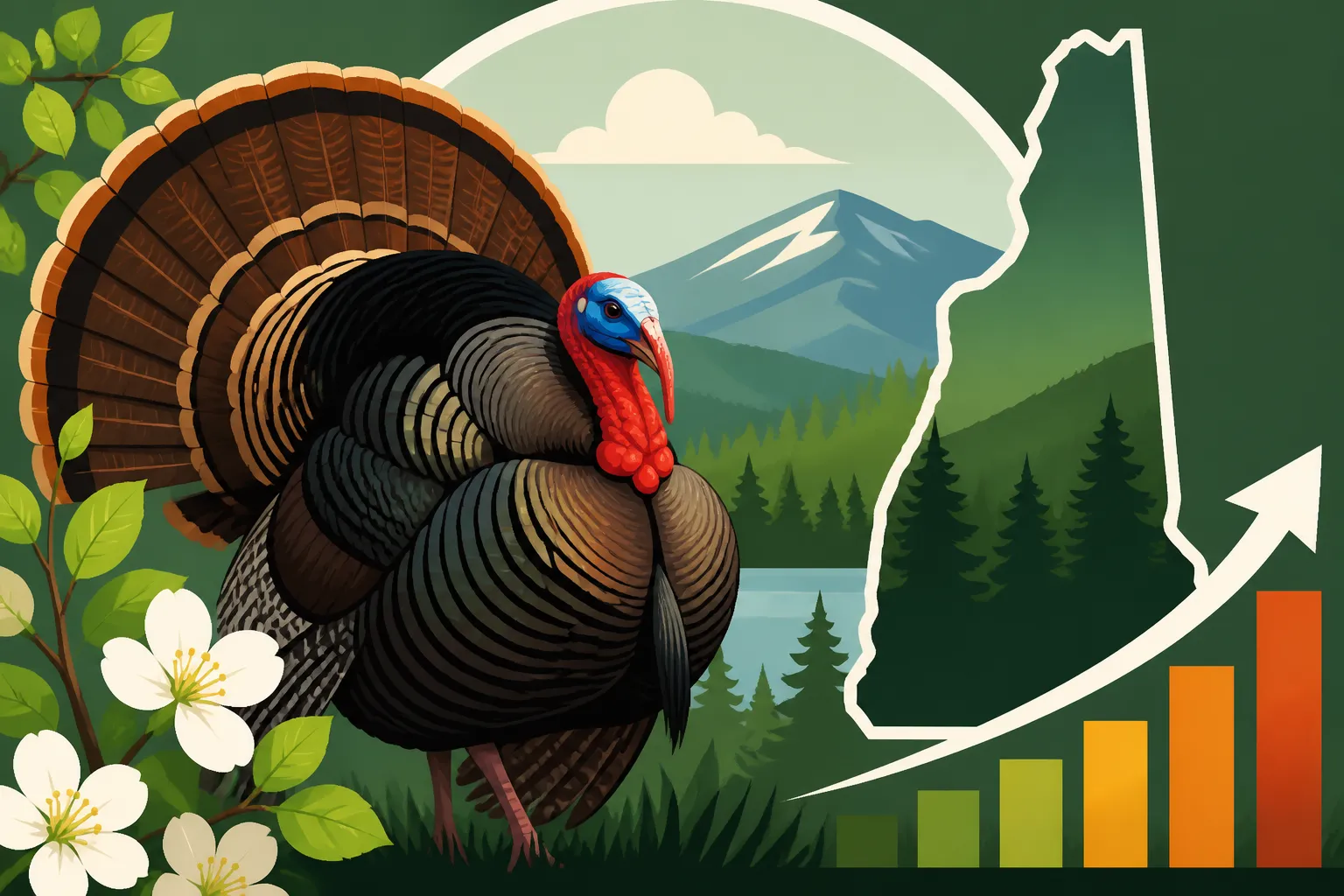
Stepping back from the individual hunt, understanding the spring turkey harvest numbers gives us a valuable perspective on the overall health and future of wild turkeys in New Hampshire. It's a truly remarkable conservation success story. Not so long ago, wild turkeys were practically non-existent in the Granite State. Through dedicated restoration efforts, including trap-and-transfer programs, their numbers have rebounded dramatically.
Today, New Hampshire boasts a thriving and expanding turkey population, which is something every hunter should be proud of. Even with the inevitable annual fluctuations driven by weather, mast crops, and other ecological factors, the long-term trend has been overwhelmingly positive. The harvest numbers, combined with ongoing research like New Hampshire Turkey Brood Survey Results which track the success of nesting hens and poult survival, allow Fish and Game to continuously monitor the population. This comprehensive approach ensures that hunting opportunities remain sustainable for generations to come.
So, while you're out there chasing those elusive gobblers, remember that your participation in the harvest reporting process is a critical piece of this larger conservation puzzle. Every registered bird helps solidify the data that ensures healthy turkey populations for future springs. And whether you're aiming for your first bird or your hundredth, understanding these numbers makes you a more connected and responsible steward of New Hampshire's incredible wildlife. The goal isn't just to harvest the bird, but to understand the larger context of Hunting the Two-Bearded-Bird Spring Limit responsibly.
Disclaimer
This article is for general informational purposes only and does not constitute professional advice. Laws, prices and regulations vary by location and change over time. Consult a qualified professional for guidance on your specific situation.