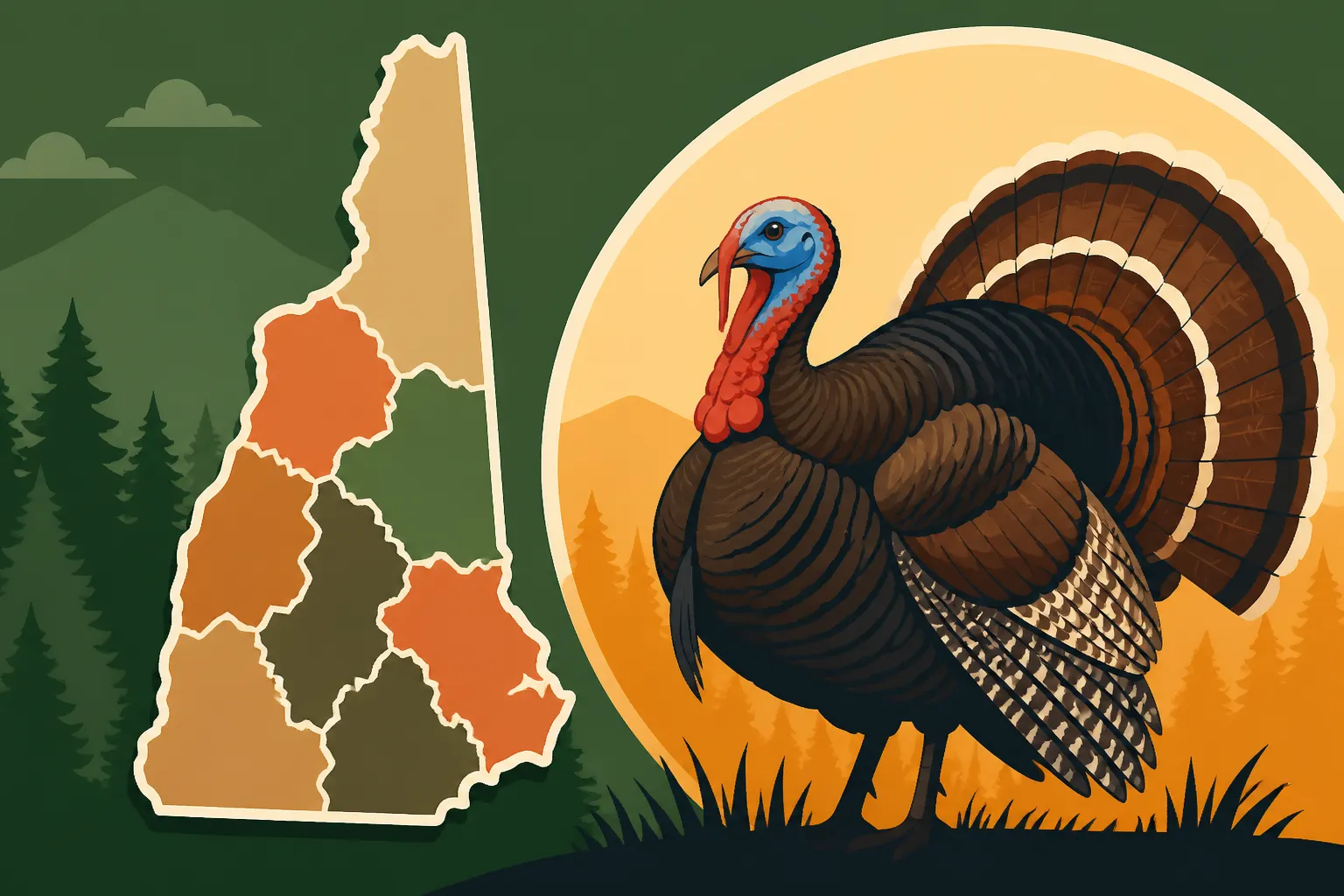
New Hampshire Turkey Harvest Numbers by WMU
Trying to figure out where to hunt turkeys in New Hampshire can feel like a shot in the dark if you're just relying on hearsay or past successes that might not reflect current conditions. The truth is, wild turkey populations and hunter success can vary wildly not just from year to year, but from one Wildlife Management Unit (WMU) to another. This guide is dedicated to breaking down New Hampshire's turkey harvest numbers by WMU, helping you understand what these statistics really mean and how to use them to inform your next hunt, whether you're chasing spring gobblers or autumn flocks.
Understanding New Hampshire's WMU System for Turkey Hunting
Before we dive into the nitty-gritty of turkey harvest data, it's crucial to grasp how New Hampshire's Wildlife Management Unit (WMU) system works, especially as it pertains to wild turkeys. These aren't just arbitrary lines on a map; they are the fundamental building blocks for how our state's wildlife is managed and how hunters navigate the seasons. Without a solid understanding of WMUs, the harvest numbers become just a string of figures without context.
What is a Wildlife Management Unit WMU?
In New Hampshire, the state is divided into 17 distinct Wildlife Management Units, typically labeled with letters A through M, and further subdivided (like D1 and D2, H1 and H2, I1 and I2, J1 and J2). Think of each WMU as a unique ecological zone, often delineated by major geographical features like rivers, mountain ranges, or county lines. These units allow the New Hampshire Fish and Game Department to manage wildlife populations on a localized basis, recognizing that habitat, climate, and hunting pressure aren't uniform across the entire state. For wild turkeys, this distinction is particularly important because their populations can fluctuate significantly based on local factors.
For instance, a WMU in the mountainous north might have a lower turkey density and different challenges for hunters compared to a more agricultural WMU in the southern part of the state. Knowing which WMU you plan to hunt in is the first step in understanding the local turkey dynamics. It’s not just about the state-wide rules; many regulations, particularly for bear and fall turkey, are tied directly to these WMU boundaries, so familiarize yourself with them before heading out.
How WMUs Shape Turkey Management
The very existence of WMUs is a testament to New Hampshire's commitment to localized, science-based wildlife management. For turkeys, this means that population goals, harvest recommendations, and season structures can be tailored to the specific conditions of each unit. Wildlife biologists regularly assess factors like brood success, overwinter survival, and habitat quality within individual WMUs. This granular data allows them to identify areas where turkey populations might be thriving and can sustain higher harvest levels, versus areas where populations might need more protection or management intervention.
For example, if a severe winter impacts turkey survival in a particular northern WMU, the department might adjust harvest limits or season lengths in future years for that specific area, without necessarily affecting hunting opportunities in a more southern WMU that experienced a mild winter. This adaptive management approach helps ensure the long-term health and sustainability of New Hampshire's wild turkey resource, providing consistent hunting opportunities for generations to come. This careful approach contrasts sharply with a blanket state-wide policy, which would fail to address the unique ecological nuances of the Granite State.
The Importance of WMU-Specific Data
When you look at turkey harvest numbers, whether it's for spring gobblers or fall flocks, focusing on the WMU-specific data is paramount. A state-wide harvest total can be misleading, masking significant variations at the local level. One WMU might boast an incredibly high success rate, while another, just a few miles away, could be struggling. This specific data allows hunters to make informed decisions about where to invest their time and effort. It highlights which areas are consistent producers and which might present a greater challenge, perhaps due to lower turkey densities or higher hunting pressure.
Furthermore, WMU-specific data is a critical tool for hunters doing their homework. For example, if you're trying to decide between two potential hunting spots, knowing the historical harvest data for their respective WMUs can give you a significant edge. Tools like GoHunt or other state-provided resources often compile this data, allowing you to visualize trends and make strategic decisions. Understanding these nuances can save you countless hours of scouting in areas with low turkey numbers and direct you towards more productive grounds. This localized insight is key to successful turkey hunting in New Hampshire.
Deciphering Turkey Harvest Data: What the Numbers Mean
Looking at raw harvest numbers can be a bit like staring at a complex spreadsheet—lots of figures, but not always immediately clear what story they're telling. To truly leverage New Hampshire's turkey harvest data by WMU, we need to go beyond the surface and understand the underlying metrics and trends. These numbers are a powerful reflection of the health of our turkey populations, the effectiveness of management strategies, and the overall hunting experience.
Total Harvest vs. Hunter Success Rates
When reviewing harvest data, you'll typically see two key figures: the total number of turkeys harvested and the hunter success rate. While both are important, they tell different stories. The total harvest number indicates the raw count of turkeys taken within a specific WMU during a particular season (spring or fall). A high total harvest might suggest a robust turkey population or a high number of hunters in that area. However, it doesn't necessarily mean individual hunters are having an easy time.
This is where the hunter success rate comes in. This metric, often expressed as a percentage, calculates the proportion of licensed turkey hunters who successfully harvested a bird. A high success rate, even with a moderate total harvest, can be a strong indicator of a healthy, accessible turkey population where hunters have a good chance of filling their tag. Conversely, a high total harvest coupled with a low success rate might suggest a large number of hunters vying for fewer birds, or perhaps a population that's harder to locate and hunt effectively. For example, some units might have incredible numbers of birds but limited public access, which could skew the success rate downward for the average hunter. These two figures, taken together, provide a much more nuanced picture of hunting opportunities.
Spring vs. Fall Harvest Trends
New Hampshire offers both a spring and a fall turkey season, and the harvest trends for each can be quite distinct. The spring season is primarily focused on gobblers, meaning male turkeys. This is when birds are actively breeding, gobbling, and responding to calls, making them more predictable and often more vulnerable to hunters. Spring harvest data therefore tends to reflect the mature gobbler population and the overall enthusiasm and skill of spring turkey hunters. You can dive deeper into specific tactics for this time of year by exploring topics like Calling a May Gobbler Off the Roost.
The fall season, on the other hand, often allows for the harvest of either sex, depending on the specific WMU and regulations. Fall turkey hunting typically involves different tactics, such as breaking up flocks and calling birds back together, or still-hunting through mast-producing areas. Fall harvest numbers can give a better indication of the overall turkey population, including hens and jakes, and brood success from the previous nesting season. If you're planning for a fall hunt, understanding New Hampshire's Fall Turkey WMU List and the specific regulations for those units is crucial. The methods for hunting in the fall, which might involve different calling strategies and even shotgun-only periods, lead to different success metrics and can sometimes mean a higher total harvest but a lower success rate per hunter, as fall birds can be notoriously wary.
Interpreting Annual Fluctuations
It's tempting to look at a single year's harvest numbers and draw conclusions, but savvy hunters and wildlife managers understand that annual fluctuations are a normal part of wildlife dynamics. A sudden drop in harvest for a specific WMU might not necessarily mean the turkey population is in decline; it could be due to a particularly harsh winter, a late spring affecting breeding, or even adverse weather during the hunting season itself that kept hunters out of the woods. Conversely, a bumper crop of turkeys harvested could be the result of exceptional brood survival the previous year, or ideal hunting conditions.
When analyzing data, it's best to look at trends over several years. Is the harvest consistently increasing, decreasing, or holding steady? This multi-year perspective provides a more reliable indicator of population health and hunting potential. GoHunt can be an invaluable tool for reviewing historical data and spotting these long-term trends, allowing you to separate a temporary blip from a genuine shift in turkey numbers or hunter behavior. Remember, turkeys are resilient, but their populations are sensitive to environmental factors, making annual variations part of the natural cycle.
Regional Breakdown of New Hampshire Turkey Harvests
New Hampshire is a diverse state, ranging from rugged northern forests to agricultural southern valleys. This geographical diversity translates directly into varied turkey habitats and, consequently, different harvest outcomes by WMU. Let's break down how turkey harvests tend to look across these different regions, keeping in mind that specific numbers can vary year to year.
North Country WMUs: The Challenges and Rewards
The North Country WMUs, like A, B, and C, encompass some of New Hampshire's most wild and remote terrain. Think vast stretches of White Mountain National Forest, dense softwoods, and plenty of rugged, steep landscapes. While these areas might not boast the sheer turkey densities found in the more agricultural south, they offer a unique and incredibly rewarding hunting experience. Harvest numbers here tend to be lower overall, and hunter success rates might also be more modest compared to other regions.
The challenges are clear: turkeys in these WMUs often roam larger territories, making them harder to locate. The habitat, while beautiful, can be less conducive to high turkey populations due to harsher winters and limited mast crops in some areas. However, for those willing to put in the effort, the rewards are significant. Harvesting a gobbler in the North Country is often seen as a greater accomplishment, a testament to true woodsmanship. When planning for these areas, you might find useful information in guides such as Still-Hunting White Mountain National Forest Timber which shares tactics that can be adapted for turkey as well. These units, despite their lower numbers, are crucial for supporting the state's overall turkey population and providing diverse hunting opportunities.
Central New Hampshire: A Mixed Bag
As we move into Central New Hampshire, WMUs like D1, D2, E, and F, we start to see a more varied landscape and, subsequently, a more mixed bag in terms of turkey harvest. This region blends rolling hills, mixed hardwoods and softwoods, and some agricultural pockets. Here, turkey populations can be quite healthy, particularly in areas with good habitat diversity that provides both nesting cover and reliable food sources. Harvest numbers here are often robust, reflecting a good balance between turkey density and hunter accessibility.
You'll find areas in the Lakes Region (partially in D1) and the foothills of the White Mountains (E, F) that produce consistent harvests. Hunter success rates can be quite respectable, especially for those who scout thoroughly and adapt their tactics to the local terrain. This region often represents a sweet spot for many hunters, offering decent opportunities without the extreme pressure sometimes found further south, or the rugged isolation of the far north. Strategies like Hunting a Granite Ridge Saddle can be particularly effective in these WMUs, helping you locate birds moving between feeding and roosting areas.
Southern New Hampshire: High Density, High Pressure
The WMUs of Southern New Hampshire – G, H1, H2, I1, I2, J1, J2, K, L, M – are typically where you'll find the highest turkey densities and, often, the highest total harvest numbers. This region benefits from milder winters, more agricultural land providing abundant food sources, and a higher proportion of mixed deciduous forests ideal for turkeys. Populations here have really thrived since the reintroduction efforts many years ago, and continue to do well. Consequently, these WMUs often have a significant number of hunters, leading to increased pressure on the birds.
While the sheer number of turkeys might be higher, the hunter success rate might not always be proportionally higher, simply because more hunters are vying for those birds. Turkeys in these areas can become highly call-shy and wary, requiring different strategies, such as precise Decoy Placement for Pressured Spring Birds. Access to private land, often with higher turkey concentrations, can play a significant role in success in these WMUs. Many hunters focus on these southern WMUs for Spring Turkey Hunting in New Hampshire due to their consistent populations. Despite the pressure, the potential for success here is undeniable for those who adapt and hunt smart.
Factors Influencing Turkey Harvest Success by WMU
Turkey harvest numbers don't just appear out of thin air; they are the cumulative result of a complex interplay of environmental factors, habitat conditions, hunter pressure, and even the quirks of weather. Understanding these influences can help you read between the lines of the harvest data and predict where and when your chances might be best. It's not always about where the most birds are, but where the conditions align for a successful hunt.
Habitat Quality and Food Availability
The quality and availability of habitat are arguably the most critical factors influencing turkey populations and, by extension, harvest success within any given WMU. Turkeys need a mosaic of different habitats to thrive: mature hardwood forests for roosting and foraging for mast (acorns, beechnuts), open fields or clearings for strutting and bugging, and dense undergrowth for nesting and brood rearing. A WMU with excellent diversity in these habitat types will typically support a higher, healthier turkey population.
Food availability, particularly, fluctuates year to year and greatly impacts turkeys. Years with abundant mast crops mean turkeys are well-fed going into winter, leading to better survival rates and stronger breeding seasons. Conversely, a poor mast year can lead to birds being more spread out as they search for food, or entering winter in weaker condition, which can suppress populations. This might make them harder to pattern, even if the overall numbers are good. Hunters often leverage mapping tools from services like GoHunt to identify prime habitat features such as mature oak stands or field edges, which are crucial for finding birds. Understanding how a New Hampshire Turkey Population Trends over time is directly tied to these habitat and food dynamics.
Weather Patterns and Their Impact
Mother Nature plays a huge, often unpredictable, role in turkey harvest success. Severe winters can significantly impact overwinter survival, especially for jakes and hens, directly affecting the spring breeding population and subsequent fall numbers. A late, cold spring can delay gobbling activity, making birds less responsive to calls and harder for hunters to locate during the early parts of the season. Heavy rains or strong winds during the hunting season itself can keep birds on the roost or make them less active, reducing hunter opportunities and success rates.
Conversely, a mild winter followed by an early, warm spring can lead to excellent brood survival and early, vigorous gobbling, setting the stage for a banner harvest. Hunters who track weather patterns and understand their local forecast can adjust their strategies accordingly. For instance, knowing when gobblers are most active based on temperature and wind, or if a spring snowstorm might temporarily shut down activity, is key. This is why paying attention to local forecasts, not just statewide ones, is vital when planning your hunt.
Hunting Pressure and Accessibility
The number of hunters and the accessibility of hunting land within a WMU can have a profound impact on harvest success. In WMUs with high hunter density, especially on public lands, turkeys can quickly become "educated" – meaning they learn to associate certain sounds or behaviors with danger. They might gobble less, avoid open areas, or move to private land. This increased pressure often leads to lower individual hunter success rates, even if the total turkey population is quite high.
Conversely, WMUs with extensive private land, where access is more restricted, might see higher success rates among those few hunters who do gain permission. However, public land hunters in these areas might struggle. Understanding the dynamics of Hunting Pressure on New Hampshire Public Land is essential. Utilizing land ownership maps and scouting for areas that are harder to access, such as remote blocks of New Hampshire's White Mountain National Forest Camping Setback Rules or town forests, can often lead to finding less pressured birds. For fall hunting, especially, birds can be very spread out and pressured flocks might be extremely difficult to call in.
Utilizing Harvest Data for Future Hunts and Conservation
So, you've sifted through the numbers, understood the regional differences, and considered the influencing factors. Now, how do you actually put this knowledge to work? Turkey harvest data isn't just for wildlife managers; it's a powerful tool that can dramatically improve your hunting strategy and contribute to the broader health of New Hampshire's wild turkey population.
Planning Your Next Turkey Hunt
One of the most immediate benefits of understanding WMU-specific harvest data is its utility in planning your next turkey hunt. Instead of blindly choosing a location, you can use the data to identify WMUs that consistently produce high harvests or offer excellent hunter success rates. This doesn't necessarily mean you should always flock to the highest-harvest WMU, as these often come with higher hunting pressure. Instead, you might look for WMUs that show consistent, moderate success, indicating a healthy population that isn't overly pressured.
Consider the time of year you want to hunt. If you're targeting a gobbler in late May, you might compare New Hampshire Spring Turkey Season Dates with historical harvest peaks within different WMUs. If fall hunting is your preference, reviewing Which WMUs Allow Fall Turkey Hunting and their past performance can guide your strategy. Using a platform like GoHunt can help visualize this data, combining it with topographical maps and property boundaries to pinpoint potential hotspots. For instance, if WMU D1 shows a strong spring gobbler harvest and you find a large block of public land within it with good mixed habitat, that could be a prime spot to focus your scouting efforts.
Informing Conservation Efforts
Beyond personal hunting success, understanding turkey harvest numbers is crucial for informing and supporting broader conservation efforts. The New Hampshire Fish and Game Department relies heavily on this data to monitor turkey populations, assess the impact of hunting seasons, and make informed management decisions. When hunters actively participate in reporting their harvests and observing trends, they provide invaluable real-world data that complements scientific surveys.
For example, if harvest numbers in a specific WMU begin to show a consistent decline over several years, it can trigger further investigation by wildlife biologists into potential causes, such as habitat loss, disease outbreaks, or increased predation. This data helps justify habitat improvement projects, adjustments to season structures, or even public awareness campaigns. By taking an interest in these numbers, we, as hunters, become active stewards of the resource. This collective understanding helps maintain the healthy, sustainable turkey populations we enjoy today, ensuring that New Hampshire's CWD-Free Deer Herd (and by extension, other game species like turkey) remains robust.
Staying Up-to-Date with Regulations
Finally, turkey harvest data and the discussions around it often go hand-in-hand with changes or clarifications in hunting regulations. The Fish and Game Department regularly reviews harvest statistics to determine if current regulations are meeting conservation goals. This might lead to changes in bag limits, season dates, or even legal methods within specific WMUs. For instance, if fall turkey harvest numbers are consistently low in a particular WMU, the department might explore extending the season or adjusting the bag limit to increase opportunity.
It is absolutely essential to stay informed about the latest New Hampshire Turkey Season Rules. Every year, before you head out, review the official New Hampshire Fish and Game Hunting Digest. While this guide provides a deep dive into historical data, regulations can and do change. Also, don't forget the importance of New Hampshire Turkey Checking Requirements. Prompt and accurate reporting of your harvest directly contributes to the data that guides future management decisions, completing the cycle of informed hunting and responsible conservation. By staying current, you ensure your hunts are not only successful but also legal and ethical.
| WMU (Example) | Spring Gobbler Harvest (Avg. Last 3 Yrs) | Fall Turkey Harvest (Avg. Last 3 Yrs) | Hunter Success Rate (Spring) | Typical Habitat | Notes |
|---|---|---|---|---|---|
| A | Low (e.g., 5-15) | Very Low (e.g., 0-5) | 5-10% | Remote, mountainous, dense softwood | Highly challenging, true wilderness hunt. Lower turkey density. |
| D1 | Moderate (e.g., 50-70) | Low-Moderate (e.g., 10-20) | 15-20% | Mixed forests, rolling hills, Lakes Region influence | Good balance of opportunity and less pressure than southern WMUs. |
| H2 | High (e.g., 100-150) | Moderate-High (e.g., 30-50) | 20-25% | Agricultural, mixed hardwoods, suburban fringes | High turkey density, but often high hunter pressure. Public land spots can be tough. |
| K | High (e.g., 120-180) | High (e.g., 40-60) | 20-30% | Farmland, river bottoms, mature hardwoods | Consistent producer, but private land access is key. Birds can be very wary. |
| M | Moderate (e.g., 60-90) | Moderate (e.g., 15-25) | 18-22% | Mixed forests, suburban pockets, small farms | Steady population, good potential for diligent hunters. Less pressure than H/K sometimes. |
Disclaimer
The information provided in this guide is for informational purposes only and is based on general knowledge and publicly available data concerning New Hampshire turkey hunting. Hunting regulations, season dates, and specific WMU boundaries and rules are subject to change by the New Hampshire Fish and Game Department. Always consult the most current official New Hampshire Hunting Digest or the NH Fish and Game website before engaging in any hunting activities. Adherence to all local, state, and federal laws and regulations is the sole responsibility of the hunter.