New Hampshire’s Eastern Coyote Origins
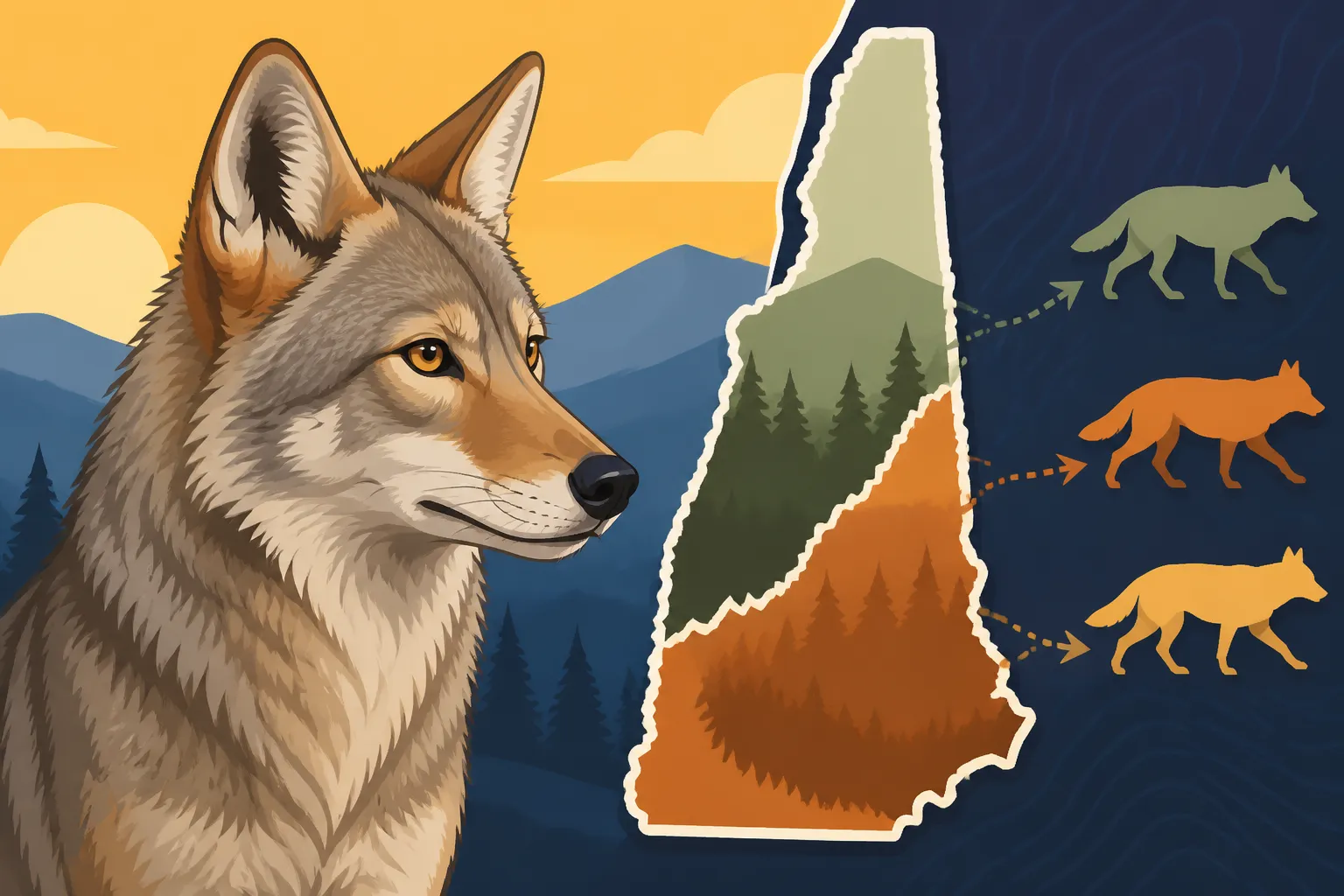
It's no secret that the presence of coyotes in New Hampshire has become a defining characteristic of our wildlife landscape, but many folks still scratch their heads, wondering how these savvy predators ended up thriving so far east. The truth is, the coyotes we encounter roaming our woods, fields, and even suburban fringes aren't quite the same as their western counterparts, and understanding their unique lineage and journey is key to grasping their role in our state's ecosystem. This guide will delve into the fascinating story of New Hampshire's eastern coyote, from its genetic roots to its impact on our wild spaces and how we've learned to live with them.
Understanding the Eastern Coyote: Not Your Western Cousin
When people talk about coyotes, they often picture the smaller, lankier canids of the American West, known for their distinctive yips and yaps under desert moons. But if you’ve spent any time in the New Hampshire woods, you know the eastern coyote is a different animal altogether. They often appear larger, more robust, and can even strike some hunters as wolf-like in their presence. This isn't just a trick of the light or a case of mistaken identity; there's a biological reason for this distinction that speaks to their unique origins.
The Genetic Blend: A Unique Hybrid
The eastern coyote, or *Canis latrans var. *, as scientists sometimes refer to them, is a testament to nature's adaptability and a historical journey across the continent. Unlike a purebred western coyote, our eastern variety is actually a fascinating hybrid, a mosaic of genetic material from different canid species. As coyotes expanded their range eastward over the last century, they encountered dwindling populations of wolves (specifically eastern wolves and possibly even a touch of gray wolf) and, in some cases, domestic dogs. With few purebred mates available, and a strong drive to survive and reproduce, these pioneering coyotes bred with these other canids.
This genetic mixing wasn't a one-off event; it happened over generations as the population moved across the Great Lakes region and into New England. What resulted is an animal that carries a blend of traits, making it perfectly suited for the diverse, often human-modified landscapes of the Northeast. This genetic cocktail provides them with certain advantages, which explains why they’ve been so incredibly successful in establishing themselves across New Hampshire. It's a prime example of evolutionary adaptation right here in our backyard.
Physical Characteristics: Bigger and Bolder
The genetic heritage of the eastern coyote translates directly into its physical appearance. They are, on average, larger than their western cousins. While a typical western coyote might weigh in the 20-30 pound range, an eastern coyote can easily tip the scales at 35-50 pounds, with some larger individuals pushing past that. Their frames are often more muscular, their legs a bit longer, and their skulls can be broader, giving them a more robust, powerful look.
Their coats also tend to be thicker and can range in color from a grizzled gray or brown to reddish-brown, often with hints of black on the back and tail. This heavier build and denser fur are perfect adaptations for our colder New Hampshire winters, allowing them to conserve heat and move efficiently through snow. This larger size isn't just for show; it gives them an edge in hunting larger prey, like white-tailed deer, a crucial part of their diet, especially during lean winter months. When you're Hunting New Hampshire's Archery Season Into December, you might notice their tracks are considerably larger than you'd expect from a typical coyote, reflecting this increased size.
Behavioral Differences: Adapting to the East
Beyond their looks, eastern coyotes exhibit behavioral patterns that distinguish them. Due to their larger size and partial wolf ancestry, they often hunt in slightly larger family groups or pairs more frequently than western coyotes, especially when targeting bigger game. This cooperative hunting can be incredibly effective when tracking deer through deep snow or running them down in open timber. They are incredibly opportunistic, adapting their diet to whatever is most available, whether it's small rodents, rabbits, wild berries, or deer.
Their territorial behavior is also finely tuned to the eastern landscape, which often involves a mix of dense forest, open fields, and suburban edges. They are incredibly intelligent and learn quickly, allowing them to navigate human-dominated areas with surprising stealth. This adaptability means they can thrive not just in the remote North Country but also in areas closer to towns and farms. Understanding their cunning is crucial if you're trying Coyote Calling at First Light or even just trying to keep them away from livestock.
The Journey East: A Gradual Expansion
The arrival of the eastern coyote in New Hampshire wasn't a sudden invasion but rather a slow, deliberate expansion that took place over many decades. It's a remarkable story of a species taking advantage of changing landscapes and ecological voids, moving eastward from its ancestral homelands in the plains of the American West.
Filling a Niche: Following the Forest
Originally, coyotes were predominantly creatures of the western prairies and deserts. However, as European settlers moved westward, they cleared forests for agriculture and eliminated large predators like wolves and mountain lions. This created new, open habitats that favored the coyote, allowing their populations to boom and their range to expand. Simultaneously, in the East, vast tracts of forest that had been cleared for farming began to regenerate, creating a mosaic of woodlands and old fields – prime coyote habitat.
The coyotes followed this regenerating forest, making their way across the northern United States and southern Canada. They were natural pioneers, able to survive in fragmented landscapes and adapt to new food sources. New Hampshire, with its diverse terrain—from the vast wilderness of the White Mountains to the rolling farmlands of the Connecticut River Valley—presented an ideal new home. They found an abundance of small game, a healthy deer population, and plenty of cover. They’re now firmly established, and a valuable tool like GoHunt can help you understand their common travel corridors, whether you're scouting Entry Routes Through a Cut Cornfield or planning a stand near a Beaver Flowage Edge.
The Absence of Apex Predators
A significant factor in the eastern coyote's successful colonization of New Hampshire was the absence of its traditional competitors and predators. Historically, wolves were the top canine predator in the Northeast. However, by the late 19th and early 20th centuries, wolves had been extirpated from most of the region due to aggressive hunting and habitat loss. This created a large ecological vacuum, a niche that the adaptable coyote was perfectly poised to fill.
With no larger canine predators to keep their numbers in check or compete for food resources, coyotes could expand their populations rapidly. They essentially became the new apex predator in many areas, taking on a role that was once occupied by wolves. This lack of competition allowed them to thrive and solidify their presence, shaping the predator-prey dynamics of our state. Without this void, it's unlikely they would have gained such a strong foothold.
Early Sightings and Scientific Confirmation
The first eastern coyotes began to appear in New Hampshire in the 1930s and 40s, primarily in the northern parts of the state, slowly pushing south. Initially, their presence was often met with confusion. People would report seeing "wolves" or "large dogs" in the wild, struggling to identify these new, larger canids. Wildlife biologists at the time started collecting specimens and studying their genetics, which eventually confirmed their hybrid status.
It took time for the scientific community to fully understand and classify these unique animals, distinguishing them from pure western coyotes. The detailed genetic analysis revealed the mix of wolf and dog DNA, painting a clearer picture of their migratory path and the evolutionary processes at play. Today, the eastern coyote is well-studied, and their range extends across the entire state, making them a common sight and a fascinating example of wildlife adaptation. You can find more information about their population and distribution in articles like New Hampshire Coyote Range and Density.
Impact on New Hampshire's Ecosystem
The arrival and proliferation of the eastern coyote in New Hampshire have undeniably altered the state's ecological balance. As a new, effective predator, they've integrated themselves into the food web, impacting everything from large game to small furbearers. This impact is a frequent topic of discussion among hunters, trappers, and wildlife enthusiasts alike, often leading to differing perspectives on their role.
Predator-Prey Dynamics with Deer
One of the most significant impacts of the eastern coyote is on New Hampshire's white-tailed deer population. While coyotes certainly don't take down mature, healthy adult deer with regularity, they are highly effective predators of fawns, especially during the vulnerable spring and early summer months. They also opportunistically prey on deer that are weakened by harsh winters, injury, or disease. This can be a concern for deer managers and hunters, especially in areas where deer populations are already struggling due to other factors like habitat loss or severe weather.
Studies have shown that New Hampshire Predator Impact on Fawn Recruitment can be substantial in certain regions, with coyotes being a leading cause of fawn mortality. This isn't necessarily a bad thing in every scenario; predators play a vital role in maintaining the health and vigor of a prey population by culling the weak. However, it means less fawns recruit into the adult population, which can affect future hunting seasons. Hunters often wonder if the increasing coyote presence correlates with shifts in deer movement or population density, especially when Hunting the Rut in Early-to-Mid November.
| Feature | Western Coyote | Eastern Coyote (Coywolf) |
|---|---|---|
| Typical Weight | 20-30 lbs | 35-50+ lbs |
| Average Length | 40-50 inches (nose to tail) | 48-60+ inches (nose to tail) |
| Height | ~18-20 inches at shoulder | ~22-25 inches at shoulder |
| Genetic Makeup | Primarily Canis latrans | Canis latrans + Wolf + Dog DNA |
| Social Structure | Solitary or small family groups | Larger family groups/pairs often |
| Prey Focus | Small mammals, opportunistic | Small-medium mammals, deer (fawns, weakened adults) |
| Habitat | Prairies, deserts, open country | Forests, mixed woodlands, suburban |
| Head Shape | Narrower, more pointed muzzle | Broader skull, more robust jaw |
Influence on Small Game Populations
Beyond deer, eastern coyotes exert significant pressure on various small game species. Rabbits, snowshoe hare, squirrels, and various ground-nesting birds like wild turkeys are all on the coyote menu. Hunters targeting these species, such as during Squirrel Hunting New Hampshire Hardwoods or Running Beagles on a New Hampshire Snowshoe Hare, have often noticed fluctuations in local small game numbers that they attribute, at least in part, to coyote predation.
This is a natural part of any ecosystem, but when coyote populations are particularly dense, they can have a more pronounced effect. However, it's also important to remember that small game populations are influenced by many factors, including habitat quality, weather patterns, and disease, not just predation. Coyotes are efficient predators, and their presence keeps many of these prey species alert and healthy, ensuring only the fittest survive. Understanding the complex web of predator-prey relationships is crucial for anyone interested in New Hampshire Small Game and Furbearers.
Competition with Other Predators
The eastern coyote's ascendancy has also brought them into competition with other native New Hampshire predators. Bobcats, foxes, and even black bears (especially for carrion or certain food sources) now share the landscape with a highly adaptable and often dominant canine. While direct confrontations are rare, competition for food resources and territory is an ongoing reality.
For instance, coyotes and foxes often hunt similar small prey, leading to a dynamic where coyotes can displace foxes from prime hunting grounds. The larger, more aggressive coyote generally has an advantage. Bobcats, though formidable hunters themselves, tend to be more solitary and may adjust their territories to avoid frequent coyote encounters. Even larger predators like bears, which are primarily omnivorous, might find coyotes competing for the remains of a deer carcass or certain berry patches. This intertwining of predator ranges is a fascinating aspect of Coyotes and Predators in New Hampshire.
Living Alongside the Eastern Coyote
For many New Hampshire residents, the eastern coyote is a familiar, if sometimes unsettling, presence. Whether you’re a farmer concerned about livestock, a pet owner, or simply someone who appreciates wildlife, learning to coexist with these adaptable canids is an ongoing process. It requires a blend of management strategies, preventative measures, and a deep understanding of their behavior.
Managing Conflicts: Livestock and Pets
One of the most common frustrations and significant challenges associated with eastern coyotes arises when they interact with domestic animals. For farmers, particularly those raising sheep, goats, or poultry, coyote predation can lead to real economic losses and emotional distress. It's a tough situation, and it highlights the need for effective mitigation strategies.
Common Strategies for Livestock Protection:
- Fencing: Sturdy, well-maintained fences, especially woven wire or electric fencing, are often the first line of defense. They need to be tall enough to deter jumping and dug deep enough to prevent digging underneath.
- Guard Animals: Livestock guardian dogs, donkeys, or llamas can be highly effective in deterring coyotes, as they bond with the livestock and actively defend them.
- Sheltering at Night: Bringing vulnerable livestock into secure pens or barns at night, when coyotes are often most active, can dramatically reduce predation risks.
- Sanitation: Removing attractants like pet food, fallen fruit, or accessible garbage can prevent coyotes from associating your property with an easy meal.
For pet owners, especially those in more rural or even suburban areas, coyotes can pose a threat to cats and small dogs. This is where vigilance is paramount. Keeping pets indoors, especially at dawn and dusk, or supervising them closely when outside in fenced yards, is crucial. Never leave pet food bowls outside overnight, as this is a strong attractant. If you have concerns about coyotes in your area, resources are available to help manage them, and knowing your local regulations on options like Night Hunting Rules for New Hampshire Coyotes can be helpful.
Hunting as a Management Tool
Hunting coyotes is a widely accepted and often effective management tool in New Hampshire, particularly for hunters concerned about deer populations or landowners experiencing conflicts. There is no closed season on coyotes in New Hampshire, and they can be hunted day or night, year-round, which speaks to the state's recognition of their prolific nature and potential impact.
Many hunters engage in coyote hunting for sport, for their fur, or as a way to potentially reduce pressure on other game species. Methods can vary from calling them in using distress calls, as discussed in Predator Calling New Hampshire's White Mountain Backcountry, to still-hunting or stand hunting. Hunters often use thermal or night vision equipment where legal to effectively hunt after dark. While hunting alone isn't likely to significantly depress regional coyote populations over the long term due to their high reproductive rates, it can be effective at reducing numbers in specific localized areas where conflicts are occurring. For those who enjoy predator hunting, it offers a challenging and active pursuit.
Coexistence Strategies for Landowners
Ultimately, living with eastern coyotes in New Hampshire means understanding their place in the ecosystem and employing a combination of smart management and respectful coexistence. For landowners, this involves being proactive rather than reactive. Knowing that coyotes are likely present, even if unseen, allows for better planning.
Tips for Landowners:
- Educate Yourself: Learn about New Hampshire Coyote Diet in Farm Country and typical coyote behavior to better anticipate their actions. Knowledge is your best defense.
- Secure Your Property: Implement the fencing and sanitation methods mentioned above. Even simple steps like keeping outdoor lighting on at night can deter them.
- Community Effort: Encourage neighbors to also adopt preventative measures. A community-wide effort is far more effective than individual attempts.
- Report Conflicts: If you're experiencing ongoing issues with coyotes, contact the New Hampshire Fish and Game Department. They can offer advice and, in some cases, assistance.
Coexistence isn't about eliminating coyotes entirely, which is an unrealistic goal given their adaptability and widespread presence. Instead, it's about minimizing negative interactions and creating environments where both humans, their domestic animals, and wildlife can thrive. With tools like GoHunt, individuals can become more informed about local wildlife patterns, aiding in both conservation and responsible management practices.
Disclaimer
This article is for general informational purposes only and does not constitute professional advice. Laws, prices and regulations vary by location and change over time. Consult a qualified professional for guidance on your specific situation.