Hunting the Rut in Early-to-Mid November
The crisp air of early November in New Hampshire signals a shift many of us anticipate all year: the whitetail rut. It's that fleeting window when deer behavior becomes more predictable, but also more unpredictable, leaving many hunters frustrated as they try to pinpoint the exact moment bucks lose their minds. This guide is here to unravel the mysteries of hunting during New Hampshire's early-to-mid November rut, offering practical, on-the-ground strategies to increase your chances of success when those big boys are on the move.
Understanding the New Hampshire Rut Cycle
The rut isn't a single event; it's a dynamic period with distinct phases, each requiring a slightly different approach. In New Hampshire, early to mid-November often aligns perfectly with the most intense period of breeding activity, where bucks are actively searching for and chasing does. Understanding this ebb and flow is crucial to being in the right place at the right time.
When the Pre-Rut Gives Way to Peak Activity
Before the full-blown chaos of the rut, we experience the "pre-rut." This is when bucks are really starting to feel the urge. They've been making scrapes and rubs for weeks, but now they're more aggressively checking them, and their testosterone levels are surging. They might still be somewhat patterned around food sources, but they're increasingly venturing out during daylight, covering more ground, especially near doe bedding and feeding areas.
As we transition into early-to-mid November, that pre-rut energy explodes into peak rut. This is when the does are truly coming into estrus, and the bucks are singularly focused on finding them. Forget the quiet, stealthy movements of early season; these bucks are on a mission. You'll see more chasing, more daylight activity, and bucks covering immense distances. They're less concerned with caution and more with breeding. This means traditional food sources might take a backseat, and instead, you want to focus on areas where does congregate, or where bucks travel between these areas. Think about those hidden pockets of late-season food, or even just thick cover where does feel secure. This phase typically lasts about two weeks, and if you hit it right, it can be the most exciting hunting of the year.
Regional Rut Variations Across the Granite State
New Hampshire's diverse landscape, from the sprawling White Mountain National Forest to the more agricultural southern regions, means the rut doesn't hit uniformly. While the timing of the peak rut is largely driven by photoperiod (daylight length), the intensity and visible signs can vary quite a bit based on deer density, habitat, and even the local weather patterns.
In the North Country, particularly in WMUs like A, B, and E, where deer densities are generally lower and the climate is harsher, the rut can feel more intense and concentrated. Bucks might cover even larger areas to find receptive does, making travel corridors and pinch points incredibly productive. The breeding window might also seem slightly more compressed here, perhaps due to the need to ensure fawns are born at an optimal time for survival in colder environments. Hunters in these areas might observe fewer deer overall, but when a buck is encountered, he’s often on the move with purpose. For those hunting the remote expanses, understanding the regional patterns is key, and resources like mapping apps can show you the lay of the land, helping you pinpoint those elusive travel routes.
Conversely, in the more developed and agriculturally rich southern WMUs, such as I2, J1, and K, where deer populations are higher, the rut might appear more spread out. With more does available, bucks don't always have to travel as far to find a receptive mate, and there can be multiple breeding cycles within a larger herd. You might witness more "lock-down" periods where a buck is tending a single doe for 24-48 hours, making him seem to disappear. However, once that doe is bred, he's back on the prowl. This is where understanding local doe bedding and feeding areas becomes paramount. A good resource, like the scouting features on GoHunt, can help identify these areas and how bucks might move between them. Even in these areas, during early-to-mid November, the desire to breed still overrides much of their natural caution.
Strategies for Locating Rutting Bucks
During the rut, bucks become creatures of habit in their purpose, but less so in their location. They are driven to find does, and this drive dictates their movements. Instead of hunting specific food plots, you're hunting areas where does gather, or where bucks travel while searching.
Key Sign to Look For: Rubs, Scrapes, and Trails
While rubs and scrapes are made throughout the pre-rut, their interpretation changes during the peak rut. Fresh rubs, especially large ones on trees, indicate a buck has recently passed through, marking his territory and letting other deer know he's in the area. During the rut, these aren't just territory markers; they're signposts along a buck's cruising route. Look for clusters of fresh rubs along ridge lines, wood edges, or near thick cover. A hot rub line can tell you a lot about a buck's general direction of travel.
Scrapes are even more telling. While some scrapes are abandoned during the peak of breeding when bucks are locked down with a doe, active scrapes, especially those still being visited or re-freshened, serve as communication hubs. Primary scrapes, often found on field edges or logging roads, are checked frequently by multiple deer. Secondary scrapes are typically found deeper in the woods. During early-to-mid November, focus on scrapes near doe bedding areas or along heavily used travel routes. A buck might pause to check a scrape, scent-check the wind, and then continue his search. Don't be afraid to enhance these scrapes with a little curiosity scent or even some doe-in-estrus urine to pique a cruising buck's interest. Understanding the nuances of Scrape Lines Along a Logging Road can really pay off in these situations.
Finally, heavily used trails are your highway maps. Look for main trails connecting bedding areas to secondary food sources or water, or those that run along natural funnels. During the rut, bucks will often use these primary thoroughfares, but they'll also create secondary, less-worn trails that skirt the edges of thickets or parallel main trails, often just inside the cover. These are the sneaky routes they use to scent-check does without fully exposing themselves. Look for fresh tracks, especially larger ones, indicating a buck has been moving with purpose.
Targeting Travel Corridors and Funnels
This is perhaps the most critical strategy during the peak rut. Bucks are constantly on the move, searching. They use terrain features that concentrate deer movement – natural funnels and travel corridors. These can be:
- Ridges and Saddles: In hilly or mountainous terrain, deer often prefer to travel along contours, especially ridges. Saddles (dips in a ridge line) act as natural cross-points. Hunting a Ridge-Top Saddle for Rutting Bucks is an extremely effective tactic. Bucks will use these to conserve energy and often to scent-check wider areas from a higher vantage point.
- Pinch Points: Any narrow strip of cover between two open areas (fields, clear-cuts), or between a thicket and a water body (swamp, beaver flowage), creates a pinch point. Bucks are forced into these constricted areas when moving from one location to another.
- Creek Bottoms and River Corridors: These can offer natural cover and easier travel, especially in steeper terrain. Bucks will often cruise these areas, scent-checking for does.
- Edges of Thick Cover: Bucks, even during the rut, prefer security. They will often travel just inside the edge of a thick cedar swamp, a dense clear-cut, or a heavy regeneration area. This allows them to stay hidden while still moving purposefully.
- Drainages and Draws: These natural depressions can funnel deer through otherwise open or uniform terrain. Bucks will use these to travel undetected.
Using a mapping app like GoHunt to analyze topography and identify these features before you even set foot in the woods can save you countless hours. Look for areas where several of these features converge – a saddle on a ridge line that also funnels into a dense thicket, for example. These are high-odds spots.
Effective Hunting Tactics During Early-to-Mid November
With bucks prioritizing breeding over nearly everything else, your tactics need to match their heightened activity and decreased caution. This is the time to be aggressive but smart, putting yourself in positions to intercept a buck on the move.
Stand Placement: Capitalizing on Buck Movement
Optimal stand placement during the rut is all about intercepting bucks as they cruise, chase, or cut through cover. Instead of focusing solely on food, think about where does bed and where they might move during the day, and then place your stand in the travel route a buck would take to intercept them.
Treestands are often the go-to for many hunters, offering a good vantage point for seeing deer move through thicker timber or across openings. Look for locations overlooking:
- Funnels and Pinch Points: As mentioned, these are critical. A stand overlooking a narrow strip of woods between a swamp and a logging road, or a saddle between two ridges, can be golden.
- Doe Bedding Area Edges: Bucks will cruise the downwind side of these areas, scent-checking for does. Set up to catch them before they get wind of you.
- Crossing Points: Where trails cross a creek, an old logging road, or a field edge.
- Heavy Cover: Bucks will often skirt the edge of thick cover, scent-checking. A stand set just inside a swamp edge or a dense pine plantation can be deadly.
Always consider the wind. Even during the rut, a buck's nose is his primary defense. Set up so your scent is blowing away from the expected travel route. This might mean having multiple stand locations for different wind directions. For tips on specific setups, consider how you might approach Hanging a Stand on a Granite Ridge.
Ground blinds are also highly effective, especially in areas where treestand placement is difficult, or when hunting with a firearm where a steadier rest is desired. They're great for field edges, clear-cuts, or along dense transition lines. Ensure your blind is well brushed-in and concealed. A prime spot for a ground blind might be nestled into a hedgerow or a cluster of evergreens along a suspected travel route between two woodlots. For advice on these setups, check out Brushing In a Blind on a Field Edge.
Calling and Decoying: Luring in Dominant Bucks
The rut is prime time for calling and decoying because bucks are actively looking for interaction. Their hormones are raging, making them more susceptible to sounds and visuals that mimic other deer.
Calling:
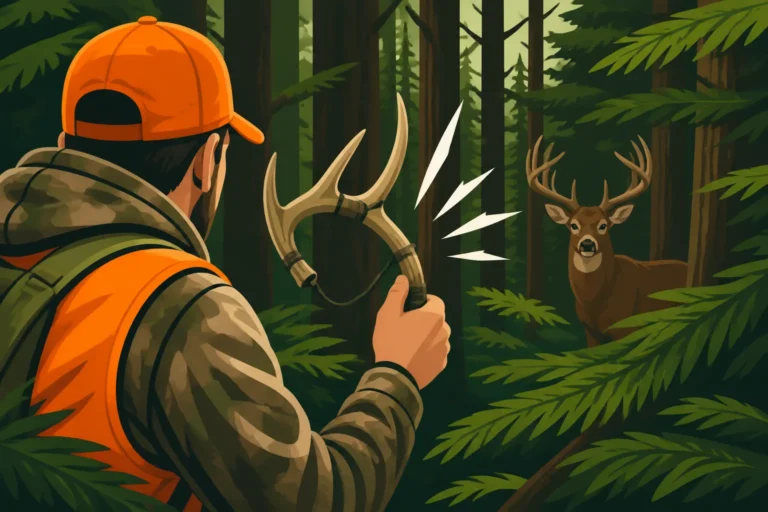
- Rattling: Simulating two bucks fighting can be incredibly effective, especially for dominant bucks looking to assert themselves or curious younger bucks. Start with light sparring, gradually increasing intensity to a full-blown brawl, then back down. Wait patiently after a sequence; a buck might circle downwind before showing himself. The key is to match the volume to the cover; Rattling Volume in Thick Softwood Cover will differ from open hardwoods.
- Grunting: A series of soft grunts can mimic a buck trailing a doe or a lone buck cruising. Aggressive grunts or "roars" can challenge a dominant buck. Mix in doe bleats or estrus bleats to signal a receptive doe. Use short sequences and be ready, as a buck might come in fast. Learn more about Grunt Calls in Mature New Hampshire Hardwoods.
- Doe Bleats/Estrus Bleats: These calls mimic a receptive doe, which can draw in cruising bucks from a distance. Use them sparingly but effectively, particularly during midday lulls when bucks might be looking for a new doe after breeding or losing one.
Decoying:
- Buck Decoys: A small buck decoy can challenge a dominant buck, especially when paired with rattling. Place it facing away from your position, creating a realistic scenario where the buck is "walking away" from the sound, inviting the real buck to come in for a fight. Ensure your decoy isn't too large or intimidating, particularly in areas with smaller deer.
- Doe Decoys: A single doe decoy, especially an estrus-scented one, can act as a magnet for cruising bucks. Place it in an open area within sight, perhaps paired with soft grunts or bleats. The visual can often seal the deal when a buck is hesitant to commit to calling alone.
Always use a decoy with the wind in mind. You want a buck to approach the decoy, not catch your scent first.
Still-Hunting and Drives: Active Approaches
While sitting on stand is a classic rut tactic, active hunting methods can also be highly successful, especially if you know deer are in a general area but can't pinpoint their exact movement.
Still-Hunting: This involves moving slowly and deliberately through the woods, pausing frequently to observe, listen, and scan. During the rut, still-hunting can be incredibly productive, particularly during midday. Bucks are often up and moving, checking bedding areas, or following subtle trails.
- Focus on Cover: Still-hunt through thickets, regenerating clear-cuts, or along the edges of swamps. These are places bucks feel secure and where does might be bedded.
- Use the Wind: Always hunt into the wind or with a crosswind. A slight breeze can help carry your scent away and also rustle leaves, masking your own movements.
- Observe and Listen: Take 5-10 steps, then stop and thoroughly scan your surroundings. Listen for the rustle of leaves, a twig snap, or the tell-tale sound of deer fighting or chasing. Look for horizontal lines in the vertical forest, or the flick of an ear. For effective techniques, check out Still-Hunting White Mountain National Forest Timber.
Deer Drives: While often associated with larger groups, small, organized deer drives with just two or three hunters can be very effective in early-to-mid November. Bucks are more willing to move and less likely to hide tightly during the rut.
- Identify Bedding/Holding Areas: Focus on small woodlots, thick swamps, or dense stands of conifers where deer might be holding up.
- Set Up Standers: Position one or two hunters (standers) on known escape routes or pinch points, downwind of the anticipated movement.
- Slow Push: The "pusher(s)" move slowly and quietly through the cover, making occasional soft noises. The goal isn't to blast through the woods, but to gently encourage deer to move towards the standers. For more on this, consider tactics like Deer Drives With Three or Four Hunters. This is a great way to move deer that might be locked down with a doe or simply hiding in plain sight.
Navigating Challenges and Maximizing Success
Hunting the rut is exhilarating, but it also comes with its unique set of challenges. New Hampshire weather can be fickle, and public land pressure can be intense. Adapting to these factors is key to consistency.
Weather's Impact on Rutting Behavior
New Hampshire's November weather can swing wildly, from crisp, clear days to heavy rain or even early snow. Each condition impacts deer behavior and how bucks approach the rut.
- Cold Fronts: A sudden drop in temperature, especially after a period of mild weather, can kick deer activity into high gear. Bucks will become more active, moving more during daylight hours. The colder temperatures stimulate their metabolism and encourage movement, making them more receptive to calling and more likely to be seen cruising. Hunting Deer After a Cold Front is often some of the most exciting hunting of the season.
- Rain: Light rain can be a hunter's friend. It quiets the woods, masking your sound, and often puts deer on their feet. Heavy, driving rain, however, usually sends deer into thick cover. On rainy days, focus on hunting the edges of dense conifer stands or thick swamps, where deer might seek shelter but are still moving.
- Snow: Early season snow can be a game-changer. It provides tracking opportunities, helps you identify fresh movement, and can highlight those hidden travel routes. Deer typically become more active before a major snowfall, and then again after it clears, often feeding heavily. However, during the snow, they might seek shelter. The stark contrast of deer against white snow also makes them easier to spot.
Understanding Wind and Thermals in Steep Granite Terrain is also vital, especially on those colder, clear days. Thermals will typically rise in the morning as the ground warms and fall in the evening as it cools. Knowing how these air currents move can help you stay undetected, particularly when hunting ridge lines or deep ravines.
Adapting to Hunting Pressure
New Hampshire's public lands, while abundant, can see significant pressure during the firearms season, which often coincides with the peak rut. This pressure can make bucks more nocturnal or push them into the thickest, nastiest cover.
- Hunt Midday: Most hunters are in their stands at dawn and dusk. Bucks, especially those that have been bumped, often continue to cruise and search for does during the middle of the day, when pressure is lowest. Don't head back to camp; stay out and keep still-hunting or sitting those key funnels from 10 AM to 2 PM.
- Access Remote Areas: Many hunters won't venture far from established trails or logging roads. Use mapping apps like GoHunt to identify areas that are a mile or more from the nearest access point. These "hard-to-reach" spots often hold mature bucks that have learned to avoid human activity. Think about hunting a beaver flowage edge or a deep ravine that requires a serious hike.
- Focus on Sanctuary Cover: Look for the thickest, nastiest places on your map – cedar swamps, dense clear-cuts, areas with steep terrain, or even small, overlooked pockets of cover adjacent to private land. Bucks will retreat to these sanctuaries under pressure. Where New Hampshire Bucks Bed in Thick Cover is often where you'll find them holding up during the day.
- Scout Smarter: Even during the rut, smart scouting can give you an edge. Don't be afraid to put in the legwork before and during the season. Look for fresh rubs, scrapes, and tracks in areas you suspect might hold deer. Pay attention to Reading New Hampshire Mud for Fresh Deer Movement to determine recent activity. The more information you gather, the better your chances. Being aware of Hunting Pressure on New Hampshire Public Land can help you adjust your strategy.
Remember, the rut is a challenging but incredibly rewarding time to hunt. By understanding deer behavior, scouting effectively, and adapting your tactics, you can significantly increase your odds of tagging a buck in New Hampshire's early-to-mid November season.
| Rutting Activity Sign | Timing in Early-to-Mid November | What it Means for Hunters | Recommended Tactic |
|---|---|---|---|
| Fresh Rubs | High activity, constant refresh | Buck actively cruising, marking territory, seeking does. | Hunt parallel travel corridors, use grunt calls. |
| Active Scrapes | Moderate to High, checked frequently | Communication hubs for deer; does leaving scent, bucks checking. | Set up near primary scrapes, use curiosity/estrus scent. |
| Heavy Trails | Very High, especially between bedding/feeding/water | Primary travel routes for does and cruising bucks. | Position stand overlooking trails in funnels. |
| Buck Chasing Doe | Peak, common during daylight | A buck is actively pursuing a receptive doe. | Stay put, be ready; another buck might follow. Try aggressive rattling/grunting. |
| Buck Tending Doe | Moderate, less visible movement | A buck is "locked down" with a single doe in thick cover. | Still-hunt thick cover carefully, use subtle bleats. |
| Dominant Buck Fights | Moderate to High, aggressive | Bucks challenging each other for breeding rights. | Aggressive rattling can pull them in, position decoying buck. |
Disclaimer
Hunting is an inherently dangerous activity. Always prioritize safety, adhere to all New Hampshire Fish and Game laws and regulations, and respect private property. This guide is for informational purposes only and does not replace professional instruction or local knowledge. Be aware of your surroundings and always know your target and what is beyond it.