Hunting the December Archery Close
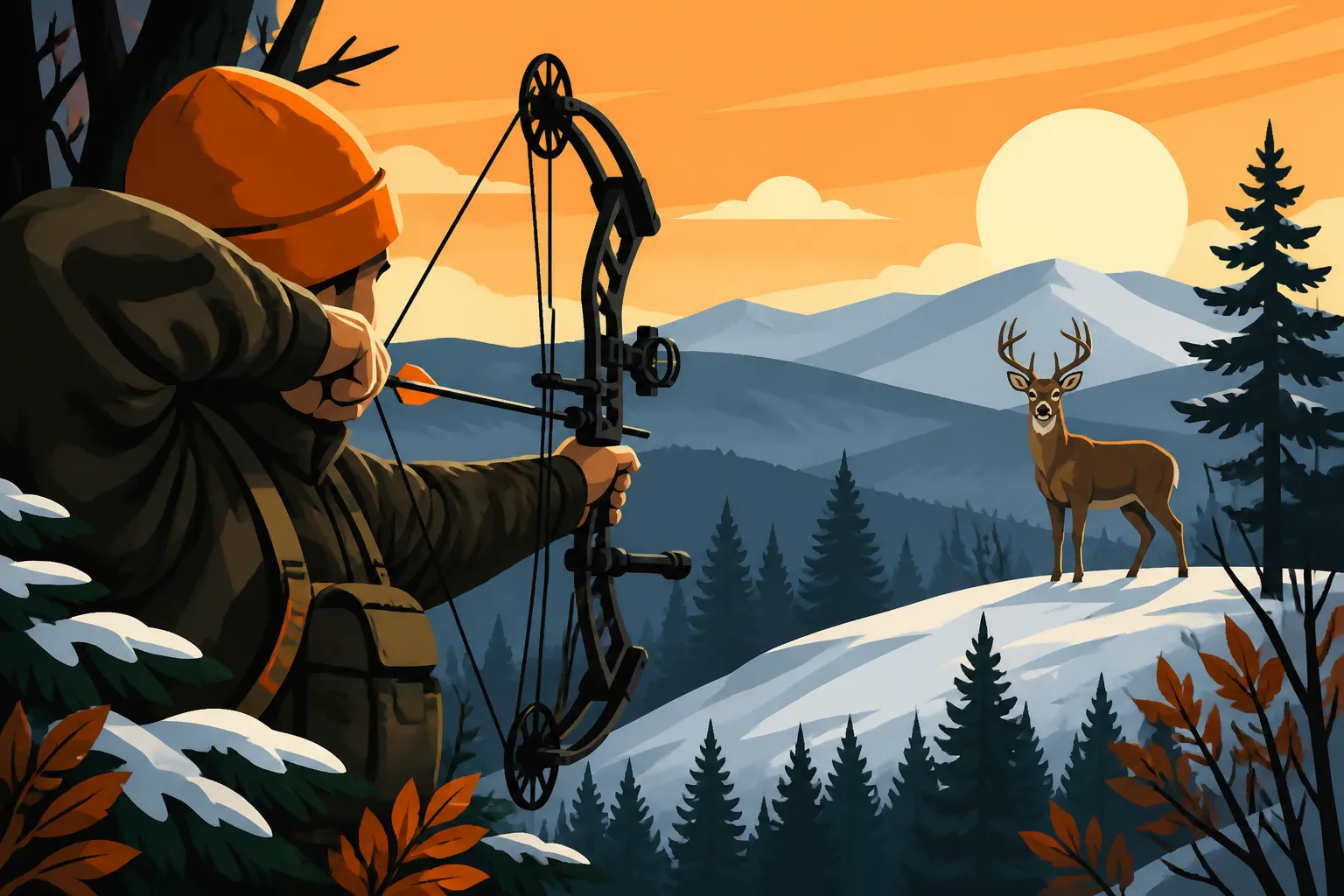
As the New Hampshire landscape transforms into a hushed, frozen world, December archery hunting presents a unique and often brutal challenge for even the most seasoned bowhunters. You've likely felt the frustration of dwindling deer activity, the biting cold that seems to seep into your bones, and the sheer difficulty of trying to locate whitetails that have seemingly vanished. But don't give up hope! This guide is designed to equip you with the knowledge and tactics needed to navigate the final, often overlooked, stretch of New Hampshire's archery season, turning those late-season struggles into success.
The Harsh Realities of December Archery in New Hampshire
The transition from the vibrant fall rut to the deep chill of December brings a drastic shift in deer behavior and hunting conditions. It's a whole new ballgame, and understanding these changes is paramount to even having a chance at success.
Understanding Deer Behavior in Deep Winter
Gone are the days of bucks chasing does frantically through the woods. By December, the whitetail rut is a distant memory, and deer, especially in the challenging climate of New Hampshire, shift entirely into survival mode. Their primary focus becomes conserving energy, finding reliable food sources, and seeking thermal cover to escape the frigid elements. This often means they become increasingly nocturnal, moving only during the darkest hours and minimizing their daytime activity to quick trips between bedding and feeding. You'll likely see less casual meandering and more direct, purposeful movement. The pressure from months of hunting also plays a huge role; deer are incredibly wary, having learned to associate human scent and sound with danger. They become ghosts, utilizing every available piece of thick cover and terrain advantage. Understanding this shift from a breeding-focused animal to one solely concentrated on survival is your first critical step.
Weather and Its Impact on Success
December in New Hampshire can be unforgiving. You're not just dealing with cold; you're dealing with bone-chilling cold, often accompanied by snow, ice, and biting winds. This extreme weather impacts everything. Snowfall, while providing excellent tracking opportunities, can also make travel difficult and muffle sounds, altering how deer perceive their environment. Ice can make trails treacherous for both deer and hunters. The wind, in particular, is a game-changer. Strong gusts can carry your scent for miles, even with careful wind checks, and can quickly deplete your body heat. Conversely, lighter, consistent winds can create predictable thermal currents, especially in hilly or mountainous terrain, which deer instinctively use to their advantage. It also affects your equipment – bow strings can become stiff, release aids can freeze up, and even your broadheads might perform differently on deer wearing their thickest winter coats. Mentally and physically, it's a grind that demands resilience and preparation.
Late-Season Scouting and Stand Placement
Successfully hunting the December archery close hinges on accurate, focused scouting that identifies key late-season necessities for deer. Forget the rut sign; you're looking for survival sign.
Pinpointing Crucial Food Sources
By December, the natural buffet for deer has largely been depleted. Acorns, if there were any, have long been consumed or buried under snow. What remains becomes gold. Your scouting needs to prioritize any available food source that can sustain deer through the winter. This might include standing cornfields on private land, which offer both calories and cover. Old apple orchards, even if picked over, can still hold a few frozen apples that become a critical energy boost. More commonly on public land, deer will turn to browse – the tender tips of woody shrubs and young trees. Identifying areas of recent logging or clearcuts can be a goldmine, as new growth provides accessible browse.
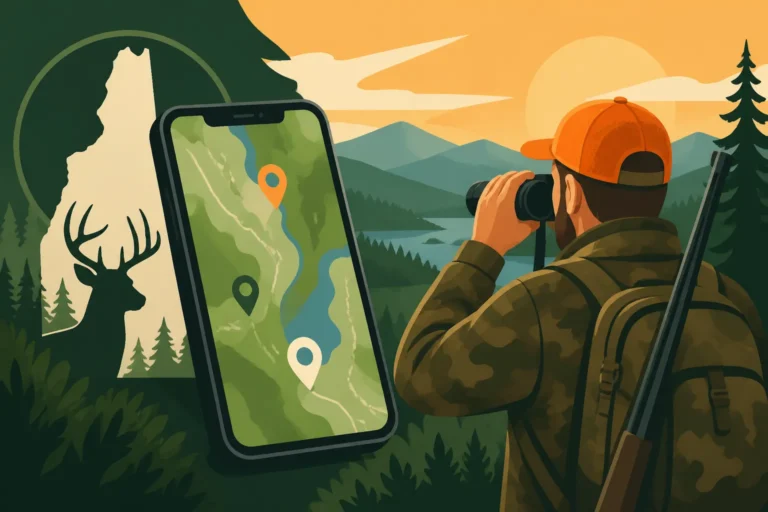
Tools like the GoHunt app are invaluable here. Use their satellite imagery and public/private land layers to pinpoint potential agricultural fields, old orchards, or areas of disturbed timber that would promote browse. Spend time on foot, walking these areas, looking for tracks leading into them, deer droppings (which become more firm and pelleted in winter), and browse lines on bushes. Remember, deer won't travel far for food if they don't have to, especially in deep snow, so look for food sources close to dense cover. Finding those Late-Season Food Sources for New Hampshire Whitetails is non-negotiable for success.
Locating Wintering Areas and Thermal Cover
As temperatures plummet and snow deepens, thermal cover becomes as important as food. Deer seek out areas that offer protection from the wind and heavy snowfall, allowing them to conserve precious body heat. These often manifest as "deer yards" or wintering areas. In New Hampshire, these are typically dense stands of conifers (pines, hemlocks, spruces) that act like natural umbrellas, holding less snow and blocking wind. South-facing slopes, catching more direct sunlight, are also highly favored.
Your scouting should focus on identifying these thick, sheltered areas. Look for concentrations of tracks, beds in the snow, and areas where deer have obviously spent significant time. The deeper the snow, the more concentrated deer will become in these yards. Understanding how to interpret these signs is key to Reading a White Mountain Deer Yard. These areas are critical, as deer will often spend daylight hours bedded deep within them, moving only short distances to feed. Learning more about New Hampshire Deer Wintering Yards Explained will definitely give you an edge.
Strategic Stand Setups for Reduced Movement
Given that deer movement is significantly reduced and often highly predictable in December, your stand placement needs to be precise. Forget wide-ranging travel corridors; you're looking for pinch points and funnels that connect a known bedding area (thermal cover/deer yard) to a reliable food source. These routes will be direct, efficient, and often well-worn, even in snow. Look for natural funnels created by terrain features, thick brush lines, or property boundaries.
Consider using a ground blind for concealment and, crucially, for warmth. A well-brushed-in ground blind offers excellent concealment against the stark winter backdrop and provides a much-needed barrier against the wind and cold. This can significantly extend your sit time, which is often the difference between seeing a deer and going home empty-handed. Setting up a ground blind along a fence line, an old logging road, or at the edge of a thick softwood patch can be highly effective. For more guidance, check out Using a Ground Blind on Public Land.
Gear and Tactics for Extreme Cold
Hunting the December archery close is as much a test of your gear and your ability to withstand the elements as it is about finding deer. Preparation in this area is paramount.
Layering for Unforgiving New Hampshire Winters
Staying warm and dry is not just about comfort; it's about safety and your ability to remain motionless and focused on stand for hours. Proper layering is absolutely essential. Start with a moisture-wicking base layer (merino wool or high-quality synthetic) against your skin to pull sweat away. This is crucial because getting damp in cold weather can lead to hypothermia. Add insulating mid-layers, such as fleece or puffy down/synthetic jackets, to trap warmth. Finally, your outer shell needs to be windproof and waterproof, protecting you from snow, freezing rain, and that brutal New Hampshire wind.
You'll want to avoid cotton at all costs, as it loses its insulating properties when wet. Don't forget extremities: warm, waterproof boots (consider oversized for extra socks), heavy-duty mittens (with finger access for shooting), and a warm hat are non-negotiable. Sitting for hours in sub-freezing temperatures demands a robust Layering for New Hampshire's Cold Hunting Season strategy. Seriously, your ability to endure the cold directly impacts your success, so study up on a Cold-Weather Sitting Strategy in the North Country.
Bow Hunting in Frigid Temperatures
Hunting with a bow in December introduces several unique challenges. Your muscles can become stiff, making it harder to draw smoothly. Bulky clothing can interfere with your anchor point and string clearance. Perhaps most critically, your fingers can freeze, making it difficult to properly manipulate your release aid. Consider using a wrist-strap release that you can wear inside your mitten, allowing you to easily slip your finger out when a shot opportunity arises.
As for your bow itself, ensure it's well-maintained. Cold can affect materials. A well-waxed string is less likely to seize up. When it comes to broadheads, penetration is always key, but especially so when deer are wearing their thickest winter coats. A sharp, durable fixed-blade broadhead or a robust mechanical designed for maximum penetration will give you the best chance for a clean pass-through. A good resource for this is Best Broadhead for a New Hampshire Whitetail. Make sure to practice shooting with your bulky cold-weather gear on to ensure proper form and clearance.
Leveraging Technology for Late-Season Success
Technology can be your best friend when battling the elements and elusive deer. A reliable GPS device or a mapping app like GoHunt on your phone is vital for navigating dense public land, especially if snow covers familiar trails. Mark your stand locations, prospective food sources, and thermal cover. Ensure your devices are fully charged and carry a portable power bank, as cold drains batteries quickly. Many hunters also swear by chemical hand warmers for gloves and boots, or even small, safe, portable heaters for ground blinds (check local regulations for use).
Beyond navigation, a good understanding of your chosen hunting area through aerial imagery (again, GoHunt excels here) can reveal hidden benches, logging roads, or terrain features that act as natural funnels. For more details on navigation, check out Best GPS App for New Hampshire Public Land. These small technological aids can dramatically improve comfort and efficiency during long, cold sits.
Maximizing Your Chances on the Final Days
With limited time left in the season, every sit counts. It’s about smart execution and relentless persistence.
Short, Intense Hunts and Patience
In December, deer movement is often compressed into short, intense windows, typically at dawn and dusk. This means long, all-day sits might be less productive unless you are absolutely confident you are positioned between a very close bedding and feeding area. Instead, consider short, strategic hunts during the most active periods. Get in early, stay focused for a few hours, and then pull out quietly. The key is not to over-pressure a spot. If you bump deer, move on to a new area for a day or two before returning.
Patience, however, is still paramount. Deer might not move for hours, then suddenly appear. Being able to remain motionless and alert despite the cold is a huge advantage. They are not covering miles like during the rut; every step is deliberate, every pause is critical. They might stand in a thicket for 20 minutes before taking another step. If you've done your scouting and you're in a good spot with fresh sign, trust your instincts and wait it out.
Tracking in Fresh Snow
One of the few advantages of late-season hunting in New Hampshire is fresh snow. A new blanket of white can instantly reveal deer movement, telling you what's active, where it's going, and how recently it's been there. After a snowfall, hitting the woods to look for fresh tracks can be incredibly productive. You're not just looking for any tracks; you're looking for fresh tracks, ideally leading from a bedding area to a food source, or vice-versa.
Learning to differentiate between a fresh track and one from the previous day is a skill honed by experience, but sharp edges, visible hoof prints, and lack of snow covering the print are good indicators. If you find a fresh set of tracks, especially a mature buck's, you might consider still-hunting or carefully stalking if the terrain allows. Should you make a shot, fresh snow makes Tracking a Deer in Fresh White Mountain Snow infinitely easier. Even in low light, the blood trail will often stand out clearly. However, always be prepared for the challenge of Blood Trailing After Dark in New Hampshire, which requires powerful headlamps and meticulous attention.
Hunting the December archery close requires a unique blend of grit, strategy, and deep understanding of whitetail behavior in the face of winter. It's not for the faint of heart, but for those willing to brave the elements and adapt their tactics, it offers a challenging yet incredibly rewarding end to the season. The chance to harvest a New Hampshire whitetail under these conditions is truly a testament to a hunter's skill and dedication. Make sure you understand all the rules for hunting New Hampshire's long archery season into December and always double-check New Hampshire Archery Season Dates for your specific WMU to ensure you're legal.
Disclaimer
Hunting involves inherent risks, including but not limited to those associated with firearms, archery equipment, and outdoor conditions. Always prioritize safety, follow all local, state, and federal hunting regulations, and be aware of your surroundings. The information provided in this guide is for informational purposes only and should not be considered a substitute for professional instruction or official hunting regulations. Always consult the most current New Hampshire Fish and Game Department hunting digest for precise season dates, licensing requirements, and rules.