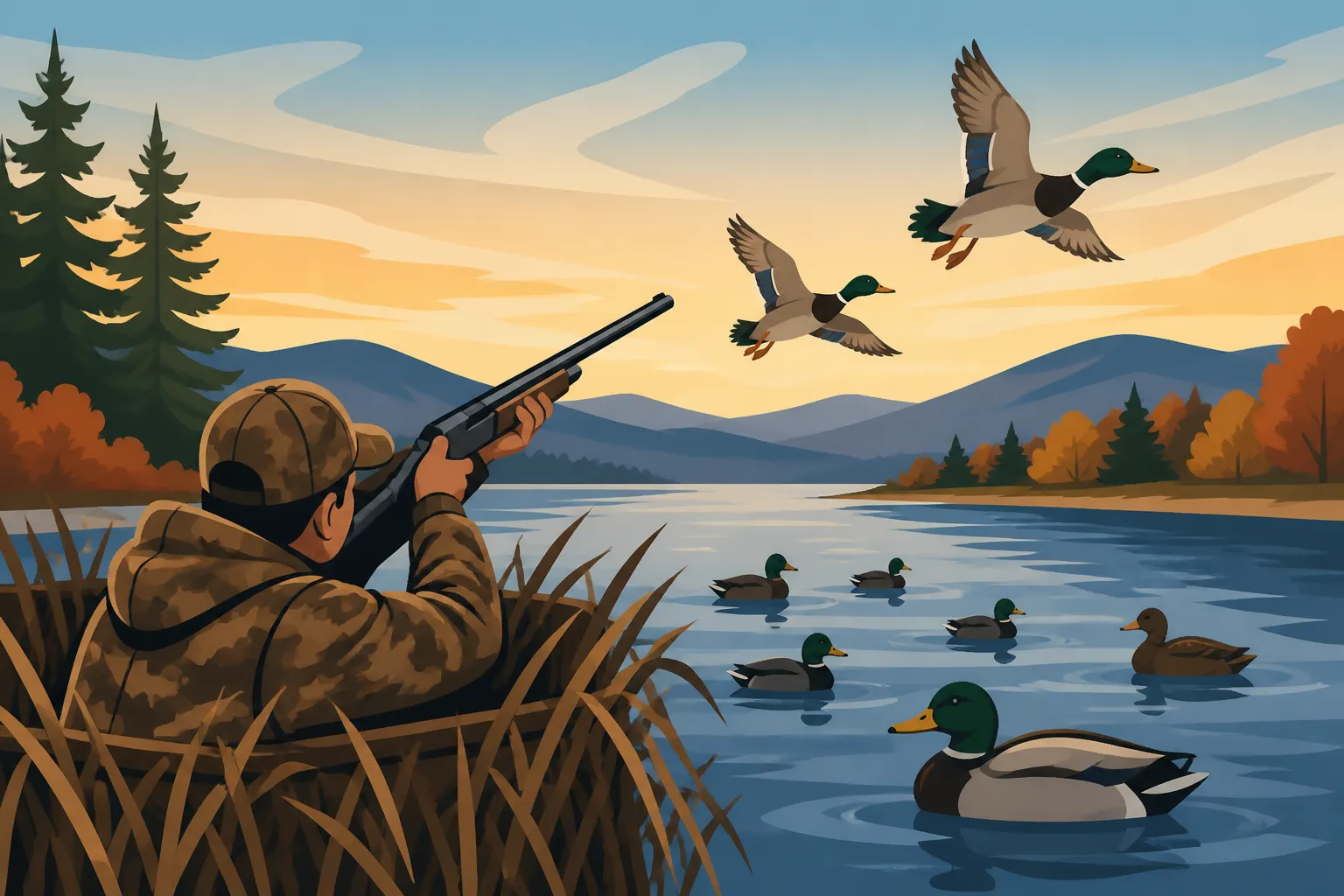
Decoying Ducks on New Hampshire’s Connecticut River
The Connecticut River in New Hampshire offers some truly incredible waterfowl hunting, but let's be honest, it can also be incredibly frustrating. One day the ducks are everywhere, buzzing your decoys with reckless abandon, and the next, it feels like they’ve all packed up and headed for warmer climes without so much as a goodbye. This guide is all about cutting through that frustration, giving you the knowledge and practical tips you need to confidently set your decoys and call in those elusive ducks on New Hampshire's storied Connecticut River.
Understanding the Connecticut River's Unique Duck Habitat
The Connecticut River, flowing through the heart of New Hampshire, isn't just a picturesque waterway; it's a vibrant ecosystem that acts as a superhighway for migratory waterfowl on the Atlantic Flyway. But it’s not just a big, straight river. Its diverse character, from wide, slow-moving oxbows to narrower, faster stretches, dictates where ducks will feed, loaf, and feel safe. Understanding these nuances is crucial for successful decoying.
Navigating the River's Diverse Waterfowl Zones
The Connecticut River changes character significantly as it winds its way from the Canadian border down to Massachusetts. Up north, particularly in the reaches of Coos and Grafton counties, you'll find more wild, untamed sections with extensive beaver flowages, small tributaries, and untouched timbered edges. This habitat appeals strongly to dabbling ducks like mallards, wood ducks, and black ducks, especially during the early season. As you move south, the river tends to widen, with more agricultural fields bordering its banks, creating prime feeding grounds for migrating geese and puddle ducks that favor corn or stubble. This means your approach to decoying will need to adapt. A compact, realistic spread might work wonders in a secluded northern bend, while a larger, more aggressive spread could be needed to draw attention on a wide, open southern stretch. Knowing whether you're in the Northern Zone or the Inland Zone for waterfowl is also critical, as season dates and bag limits can differ, impacting when and where you can hunt.
Key Duck Species and Their Preferences
While many species might pass through, the primary targets for decoying on the Connecticut River are typically mallards, black ducks, and wood ducks, especially early in the season. Later in the fall, you'll also see increasing numbers of divers like common mergansers and even goldeneyes, though decoying them requires a slightly different strategy.
- Mallards: These adaptable birds love shallow water, especially where food is abundant. Think flooded timber, slow eddies, backwater sloughs, and field edges. They are relatively "decoy friendly" and respond well to traditional mallard calls and active motion decoys.
- Black Ducks: More wary than mallards, black ducks often associate with similar habitats but prefer more secluded, wilder areas. They often decoy to mallard spreads, but a few black duck decoys can add realism. They respond to slightly softer, more subtle calling.
- Wood Ducks: Stunningly beautiful, wood ducks are often an early-season favorite. They prefer wooded swamps, small streams, and beaver ponds—anywhere with overhead cover and plenty of acorns or other natural mast. They're less prone to circling traditional decoy spreads and often commit quickly. Their unique whistling call can be effective.
- Geese: While the focus here is ducks, don't overlook geese. Canada geese frequent the river, especially where it borders agricultural fields. A separate goose spread, or even a few goose floaters on the water's edge, can be effective, particularly on those wide, open sections of the river.
Understanding these preferences helps you choose your locations and fine-tune your decoy setup. For instance, a small group of wood duck decoys tucked into a brushy bank might outperform a large mallard spread in a tight, timbered creek mouth.
Essential Gear for Connecticut River Decoying
Hunting the Connecticut River isn't like hunting a small farm pond. The sheer scale, current, and often rugged access demand specific gear to ensure not just success, but also safety and comfort. You can't just throw a dozen decoys in the back of the truck and expect to be ready for anything the river throws at you.
Decoys: Quantity, Quality, and Realism
When it comes to decoys, think about what you’re trying to achieve: attracting birds from a distance and convincing them to commit.
- Species-Specific Decoys: While mallards are the bread and butter, having a mix of species adds realism. A dozen mallards, a few black ducks, and perhaps a couple of active wood duck decoys can make a spread look much more natural, especially in diverse river habitats. You might even consider a few pintail or wigeon decoys if those birds are prevalent in your area.
- Motion Decoys: On big water like the Connecticut, motion is king. Spinning wing decoys (like a Mojo Mallard) can be incredibly effective for grabbing attention from afar, especially on calmer days. Jerk strings or even simple, battery-operated pulsators can add subtle, lifelike movement to your spread, mimicking feeding ducks. However, be mindful of rules regarding motorized decoys in certain areas or during specific seasons.
- Weight and Durability: River hunting often means battling currents and potentially rocky bottoms. Decoys with heavy, reliable keel weights or a sturdy keel design are essential to prevent them from flipping or drifting. Durable plastic or foam decoys will withstand the abuse of transport and repeated deployment in varied conditions. Investing in quality decoy bags or slotted bags will also protect your investment and make setup/take-down quicker.
- Realism is Key: While numbers matter, a few realistic decoys often outperform a dozen cheap, shiny ones. Birds are incredibly observant. Pay attention to paint schemes, natural postures, and clean surfaces. Faded or chipped decoys don't inspire confidence in wary birds.
A typical spread on the Connecticut might involve 1-2 dozen floating decoys, a couple of spinning wing decoys, and a jerk string setup. Consider the visibility from the air; sometimes, a smaller, more realistic spread that perfectly mimics local feeding behavior is better than a huge, haphazard one.
Waders, Watercraft, and Weather Gear
Your personal gear needs to match the environment. The Connecticut River can be cold, deep, and unpredictable.
- Waders: Chest waders are non-negotiable. Look for durable, insulated neoprene or breathable GORE-TEX waders, depending on the season. Neoprene offers superior warmth for colder hunts, while breathable options are better for milder early-season days or if you're doing a lot of walking. Built-in boots with good traction are vital for navigating muddy banks and slippery riverbeds. You’ll be in and out of the water constantly, setting decoys and retrieving birds, so good waders are a lifesaver.
- Watercraft: A sturdy Jon boat, canoe, or kayak is often essential for accessing prime spots, deploying large spreads, and retrieving downed birds. Ensure your boat is stable and large enough to carry all your gear, especially if you're hunting with a partner or a dog. If using a motor, make sure it's reliable and has a shallow-water drive option. Always have a PFD (personal flotation device) for everyone aboard and proper lighting if hunting pre-dawn or post-dusk. Remember, safety always comes first on big water.
- Weather-Appropriate Clothing: New Hampshire weather can change on a dime. Layering is crucial. Start with a moisture-wicking base layer, add insulating mid-layers (fleece or down), and top it with a waterproof, windproof outer shell. Consider a good pair of waterproof gloves and a warm hat. Being cold and wet will quickly ruin a hunt, and can even be dangerous. Remember that even if the air feels mild, sustained exposure to cold river water will drop your core temperature quickly. You can read more about Layering for New Hampshire's Cold Hunting Season.
Calls and Other Essentials
Beyond decoys and clothing, a few other items are critical for a successful river hunt.
- Duck Calls: A good, versatile duck call is essential. Learn to make basic quacks, feeding chuckles, and greeting calls. A high-quality acrylic or wooden call will offer better sound and durability than cheaper plastic options. Consider carrying a couple of different calls—one for loud hailing, another for softer, more realistic finishing calls. Practice regularly! There's nothing worse than blowing a sour note when a flock is cupped and coming in.
- Retrieval Devices: A good retrieving dog is invaluable, but if you don't have one, a long retrieving pole or even a casting rod with a lure retriever can help reach downed birds in current or thick cover.
- Thermos and Snacks: Long, cold mornings on the river mean a hot drink and some energy-rich snacks are always welcome. Staying hydrated and fueled will keep your spirits up and your focus sharp.
- Mapping Tools: A reliable GPS or mapping app like GoHunt is incredibly helpful for marking productive spots, noting access points, and navigating property lines on the riverbanks. It can save you a lot of time and hassle when scouting or trying to relocate a setup in the dark.
Choosing the Right Decoy Spreads
Decoy spread strategy is less about a hard-and-fast rule and more about understanding duck behavior, the water conditions, and the specific species you’re targeting. The Connecticut River's varying currents and widths mean you'll need a versatile approach.
The Classic J-Hook and U-Shape Spreads
These are perhaps the most common and effective spreads for ducks on rivers and larger bodies of water. The basic idea is to create a landing zone right in front of your blind, leading birds directly into optimal shooting range.
- J-Hook Spread: Imagine a large "J" laid out on the water. The long leg of the "J" extends upstream, with the bend of the hook creating an open water "pocket" directly in front of your blind. This design works exceptionally well with current, allowing ducks to fly downriver, see the decoys, and then swing into the pocket to land against the current, much like an airplane landing into a headwind. Place your most realistic, active decoys (like feeders or a spinning wing decoy) at the bend of the "J" to draw their attention to the desired landing zone. You might have 15-20 decoys in a spread like this, with a few pairs positioned at the tail of the "J" and the bulk clustered at the bend.
- U-Shape (or Horseshoe) Spread: Similar to the J-hook, the U-shape creates a wider, more inviting landing zone. Decoys are arranged in a "U" or horseshoe shape, with the open end facing your blind. This spread works well for multiple species and can be particularly effective on wider river sections where birds have more room to maneuver. It still allows birds to land into the wind (or current), putting them exactly where you want them. For a U-shape, you might use 20-30 decoys, with pairs and small groups staggered along the arms of the "U" to create a natural, uncrowded appearance. Both the J-hook and U-shape spreads are designed to make the ducks comfortable and give them a clear, safe-looking spot to land.
Divers and Confidence Decoy Placement
While dabblers are often the primary target, don't forget about divers or the power of confidence decoys.
- Diver Spreads: If you're seeing divers like goldeneyes, buffleheads, or mergansers, a separate, more compact spread of diver decoys can be effective. Divers tend to raft up in tight groups and don't necessarily need large landing zones. Often, a small string of 6-10 diver decoys anchored in deeper water, slightly separate from your dabbler spread, can pull these birds in. They are often attracted to the "white" on some diver decoys, so make sure yours are clean and visible.
- Confidence Decoys: These are decoys of other bird species that ducks naturally associate with safety and good feeding grounds. A few goose floaters or even a pair of swan decoys (where legal) can make your duck spread more appealing by signaling that the area is safe. On the Connecticut, a few Canada goose floaters tucked along a field edge adjacent to your duck spread can be incredibly effective, especially where geese and ducks commonly feed together. This adds an extra layer of realism and can help calm wary birds. For those utilizing GoHunt to scout, observing where different species congregate can inform your confidence decoy choices.
Adapting to Current and Water Depth
The Connecticut River is a dynamic environment, and your decoy spread needs to be equally dynamic.
- Anchoring in Current: Standard decoy weights often aren't enough in stronger currents. Consider heavier weights (like 6-8 oz mushroom anchors), or rig your decoys with Texas rigs or custom-made gang rigs that use heavy line and a large anchor at one end, then attach multiple decoys to a single line. This allows for quick deployment and retrieval while ensuring your decoys stay put. Always rig your lines longer than the water depth to allow for current and movement.
- Depth Considerations: Ducks typically want to land in shallow water where they can feed. Place your decoys in water that's roughly 1-3 feet deep, if possible, or create the illusion of shallow water. If you're hunting deeper sections, focus your spread on any shallow bars, eddies, or backwaters where ducks might naturally congregate.
- Natural Movement: Even without dedicated motion decoys, the current can be your friend. Rig decoys with slightly longer lines to allow them to swing and bob naturally with the water, mimicking living birds. This subtle movement, combined with good calling, can be incredibly persuasive. The goal is to make your spread look as alive and inviting as possible. You want them to think it's a bustling duck party!
| Decoy Type | Best Use Cases | Typical Quantity | Notes |
|---|---|---|---|
| Mallard Floaters | Primary target, general use, various habitats | 1-2 dozen | Essential base for most spreads |
| Black Duck Floaters | Wary birds, natural look, wilder areas | 3-6 | Add realism, mix with mallards |
| Wood Duck Floaters | Early season, wooded swamps, tight spots | 2-4 | Very specific habitat, commit quickly |
| Spinning Wing | Long-distance attraction, calm days, open water | 1-2 | "Mojo" style, very effective attention-getter |
| Jerk String | Subtle motion, close-in realism, feeding ducks | 1 per hunter | Cost-effective, mimics feeding/fidgeting birds |
| Goose Floaters | Confidence decoys, field edges, larger river sections | 2-4 | Signals safety, attracts ducks and geese |
| Diver Floaters | Targeting divers (goldeneye, merganser), tight groups | 6-10 | Anchor in deeper water, separate from dabblers |
Mastering Duck Calling on the River
Calling ducks on the Connecticut River is an art form, not just a series of loud noises. It’s about communication, mimicking what real ducks are saying, and knowing when to talk and, perhaps more importantly, when to shut up. There's a certain cadence and rhythm that takes practice to master.
Basic Calls and Their Situations
Before you master the fancy stuff, focus on getting the fundamental calls down perfectly. These are the workhorses of duck calling.
- Greeting Call (Hail Call): This is typically a series of 5-7 loud, drawn-out quacks, increasing in volume and urgency. It's used to grab the attention of ducks flying at a distance, letting them know there's a party happening on the water. You're essentially saying, "Hey! Over here! Come check us out!" On the wide stretches of the Connecticut, a strong greeting call is crucial for reaching high-flying birds.
- Comeback Call: If ducks acknowledge your greeting call but seem to be flying past or losing interest, the comeback call is your next move. It's a more insistent, slightly faster series of 6-10 sharp quacks, often with a rising inflection at the end, as if saying, "No, seriously, don't leave! Come back!" It’s a bit like a nagging friend, but one that ducks usually can't resist.
- Feeding Chuckle (Paddling Call): This is one of the most natural and reassuring sounds to ducks. It's a low, raspy, broken series of short quacks, mimicking ducks happily feeding and chattering on the water. Use this call when birds are closer and working your spread. It tells them, "We're safe, we're eating, join us!" This call is crucial for convincing wary birds to commit the last few yards.
- Lonesome Hen Quack: A single, sharp, plaintive quack. This can be effective for single birds or small groups that are passing by, sounding like a duck looking for company. It's subtle but often highly effective when birds are close and hesitant.
Remember, ducks are listening for confidence and natural rhythm. Practice these calls until they sound smooth and effortless. Don't be afraid to record yourself and compare it to real duck sounds.
Reading the Birds: When to Call, When to Be Quiet
This is where the true art of calling comes in. It's not about how loud or how often you call, but how effectively you respond to the birds' behavior.
- High and Far: Start with a loud greeting call to get their attention. If they turn your way, great! If not, hit them with a comeback call. You're trying to pull them off their original flight path.
- Working the Decoys: Once birds are circling and showing interest, ease off the aggressive calling. Switch to softer, more reassuring feeding chuckles and lonesome hen quacks. You want to sound inviting, not demanding. Use soft quacks as they pass directly over, and continue feeding chuckles as they make their turns. The closer they get, the softer your calls should be.
- Cupped and Coming: If ducks have their wings cupped and are dropping their feet, preparing to land, stop calling. Any further calls can sound unnatural, alarming them. Let the decoys and the perceived safety do the work. The only exception might be a very soft, contented chuckle if they seem to be hanging up slightly outside the sweet spot.
- Don't Overcall: This is the most common mistake. Too much calling, or calling at the wrong time, will spook more birds than it attracts. If they're coming, let them come. If they veer off, then you can try a comeback call, but don't blast them incessantly. Sometimes silence, broken by natural decoy movement, is the most effective call of all.
- Wind and Thermals: On the Connecticut River, especially in the wider stretches, wind and thermals play a huge role. Sound carries differently. Call louder into the wind to project your sound, but be mindful that the birds will also hear you better. Use natural terrain and wind direction to your advantage, positioning your blind so the wind brings the ducks into your spread.
Advanced Techniques and Confidence Boosters
Once you've mastered the basics, you can start to experiment with more advanced techniques.
- Combining Calls: Sometimes, a combination of a mallard call and a high-pitched pintail whistle or a wigeon whistle can add realism, especially if these birds are in the area. This creates the impression of a diverse group of ducks on the water.
- Group Calling: If you're hunting with a partner, try having one person make primary calls while the other adds softer feeding chuckles or lonesome quacks. This mimics a busy, content flock. Just be sure you're not competing or overcalling each other.
- Specialty Calls: For species like wood ducks, carrying a wood duck whistle can be highly effective, particularly in the timbered backwaters and beaver flowages of the northern Connecticut River. Their unique whistle is a sure way to grab their attention. Similarly, a goose call is invaluable if you're targeting Canada geese or using goose decoys for confidence.
- Scouting for Sounds: Before the season, or during quiet periods, spend time listening to real ducks on the river. Pay attention to their cadence, tone, and the situations in which they make different sounds. This firsthand experience is invaluable for making your calling sound truly authentic. For up-to-date reports on bird activity, a tool like GoHunt can provide recent sightings and help you pinpoint current bird movements.
Location, Location, Location: Scouting the Connecticut River
You can have the best decoys and call like a champion, but if you're not in the right spot, it's all for naught. Scouting is the foundation of successful waterfowl hunting on the Connecticut River, particularly when hunting Waterfowl Hunting New Hampshire's Two Zones. It's about finding where the ducks want to be, not just where it's convenient for you.
Identifying Productive Flyways and Roosting Areas
Ducks are creatures of habit, and they typically follow established flight paths between feeding and roosting areas.
- Flyways: Look for natural funnels like river bends, stretches of water between islands, or where the river narrows. Ducks will often take the path of least resistance. Observe birds at dawn and dusk—where are they coming from, and where are they going? What is their altitude? If they're consistently flying high and ignoring the river, you might be too far from a primary feeding or roosting area. Consider how specific geographic features influence these patterns. For instance, the river often parallels agricultural fields, creating an easy corridor for birds moving from a roost pond to a cornfield for feeding.
- Roosting Areas: These are typically safe, secluded bodies of water where ducks spend the night. Large, open stretches of the river, wide oxbows, or even expansive beaver ponds that offer plenty of open water and minimal disturbance can serve as roosts. Ducks will often return to the same roost night after night. Setting up along the flight path from the roost to a feeding area, or to the roost from a feeding area, can be incredibly productive. You're catching them when they're most active and most likely to interact with decoys.
- Feeding Areas: These are where ducks spend most of their day. On the Connecticut, this can mean flooded timber, shallow mud flats rich with aquatic vegetation, harvested cornfields bordering the river, or small backwater sloughs. Look for signs of feeding: dabbling marks, fecal matter, or ducks actively tipping up. Often, the best spots combine good feeding with nearby cover for loafing.
Using a mapping app like GoHunt can help identify potential funnels, open water areas, and nearby agricultural fields, giving you a strong starting point for on-the-ground scouting.
Interpreting Duck Sign and Water Conditions
Scouting isn't just about looking for birds in the air; it's about becoming a detective on the ground (or water).
- Visual Sign: Look for physical evidence that ducks are using an area. This includes droppings on logs or banks, feathers floating on the water or caught in vegetation, and dabbling marks in shallow mud. Fresh sign is key. If the droppings are still wet, you know birds were there recently.
- Food Sources: What are the ducks eating? Are there acorns dropping into the water, wild rice beds, or leftover grains in a nearby field? Ducks will follow their stomachs. If a particular food source is abundant and available, ducks will be there. A good example is a standing corn field for deer, which can also be an excellent late-season food source for waterfowl.
- Water Levels and Current: The Connecticut River's water levels can fluctuate. A spot that was prime one week might be too high or too low the next. Observe how current affects the water—are there eddies forming that create calm pockets? Are there shallow bars exposed by lower water? Ducks prefer calmer water for landing and feeding, and eddies are natural gathering spots.
- Pressure: The Connecticut River sees hunting pressure, especially on public access points. Look for less obvious spots, those that require a bit more effort to reach. Ducks learn quickly, and heavily pressured areas often become "no-fly zones." Being willing to walk further or paddle into a remote section can pay huge dividends.
Early Morning and Late Evening Scouting
The best times to scout for waterfowl are the same times you hunt them: first light and last light.
- Roost Flights: Position yourself quietly along the river before dawn or just before dusk. Watch where ducks fly from their roost to feeding areas in the morning, and where they return to roost in the evening. This gives you direct insight into their daily patterns. Make sure you're well concealed and observe from a distance so you don't spook the birds.
- Daytime Activity: During the day, ducks will often loaf in calm, protected areas, sometimes rafting up in large numbers. These areas are usually very safe and out of reach of hunters. Observing these daytime habits can help you confirm the locations of their chosen safe zones and identify nearby feeding areas they might use.
- Map Reconnaissance: Before hitting the water, spend time with detailed maps, whether paper or digital like GoHunt. Look for pinch points, oxbows, islands, and areas where the river widens or is bordered by agricultural land. This helps you narrow down potential spots for physical scouting. Pay attention to contour lines for subtle changes in elevation that might indicate shallow bars or backwater sloughs. This preliminary recon saves a lot of wasted time and effort. It's especially useful for identifying potential public hunting land in New Hampshire.
Setting Up for Success: Blinds and Concealment
Once you've scouted your spot and planned your decoy spread, the final, crucial step is setting up your blind and ensuring you are completely concealed. Ducks have incredible eyesight, and even a slight glint or unnatural outline can send them veering away.
Choosing Your Blind Type for River Conditions
The type of blind you use will largely depend on the specific section of the Connecticut River you're hunting and your access.
- Natural Blinds: This is often the most effective and low-cost option. Utilize existing cover like dense cattails, willow thickets, downed trees, or brushy banks. Enhance these natural features by weaving in additional natural vegetation collected from the area. The key is to break up your outline completely. Make sure there’s enough room to comfortably shoot without snagging your barrel or knocking your head. When utilizing natural cover, try to position yourself downwind or crosswind of your decoy spread, which will encourage ducks to land into the wind, presenting good shot opportunities.
- Layout Blinds (for Field Edges): If you're hunting a wide-open section of the river where ducks are feeding in adjacent fields, a layout blind can be ideal. These low-profile blinds allow you to lie down flat, becoming virtually invisible when properly brushed in. They are excellent for hunting Layout Blind Hunting a Northern Zone Field or other agricultural areas. Brush them thoroughly with local vegetation – corn stalks, grass, or stubble – to match the surroundings perfectly. Ensure you have a clear field of view and shooting lane.
- Boat Blinds: For hunters using a Jon boat or similar watercraft, a permanent or removable boat blind is a versatile option. These blinds are typically framed structures covered with camouflage netting or fabric, allowing you to hunt directly from your boat. They offer mobility, which can be a huge advantage on a long river like the Connecticut, letting you move with the birds. When using a boat blind, always brush it in with local vegetation once you've anchored. Just because it's camouflaged doesn't mean it's invisible without some natural augmentation.
- Portable Panel Blinds: These modular blinds consist of several panels that can be quickly set up and taken down. They're great for creating temporary cover in areas with sparse natural vegetation. They're generally lightweight and can be carried in, making them a good choice for public land hunting where you can’t leave a permanent structure. Again, brush them in heavily!
The Art of Concealment: Brushing In and Breaking Up Your Outline
Good concealment is about more than just wearing camouflage clothing; it’s about becoming part of the landscape.
- Brush, Brush, Brush: Once your blind is in place, gather as much local vegetation as possible. Weave it into the netting, cover the frame, and fill any gaps. The goal is to eliminate straight lines and unnatural shapes that scream "hunter" to incoming ducks. Change out old, faded brush regularly, especially if your setup is static. Fresh, green vegetation in early season will look out of place as the leaves change and fall.
- Background and Backlighting: Always try to set your blind up against a natural background—a treeline, a dark bank, or dense brush. Avoid sky-lighting yourself, where you're silhouetted against the bright sky. Ducks approaching from the direction of the rising sun can easily spot silhouettes. Consider the sun's position throughout your hunt.
- Shadows: Use shadows to your advantage. Early morning or late afternoon sun can create long shadows that help break up your outline. Conversely, direct midday sun can reveal every detail, so adjust your position if possible.
- Stillness is Golden: Even the best blind can be compromised by movement. Keep talking to a minimum, and move slowly and deliberately. Resist the urge to peek out of the blind constantly. Use small, mesh-covered openings to scan the skies. Ducks have fantastic eyesight and can spot even the slightest twitch.
- Dog Concealment: If you're hunting with a retriever, ensure they are also completely concealed. A dog stand covered with a dog blind or simply tucked deeply into dense cover is essential. Their natural excitement can sometimes lead to fidgeting, so a well-trained dog that stays still until released is a massive asset.
- Face and Hand Cover: Don't forget your face and hands! These are often the lightest parts of your body and can stand out against dark cover. Use a face mask, face paint, and camouflage gloves. Any exposed skin, especially if shiny or reflecting sunlight, can be a dead giveaway. This is also important when hunting the rut in early-to-mid November for deer, where any slight movement or reflection can cost you a shot.
By meticulously planning your decoy spread and executing a flawless concealment strategy, you’ll dramatically increase your chances of having ducks commit to your spread on the Connecticut River, making those cold, early mornings truly rewarding.
Disclaimer
Hunting is an inherently dangerous activity. Always prioritize safety, adhere to all New Hampshire Fish and Game laws and regulations, and respect private property. The information provided in this guide is for informational purposes only and should not replace proper training, local knowledge, or professional guidance. Be aware of changing weather and river conditions, and always let someone know your hunting plans.