Layout Blind Hunting a Northern Zone Field
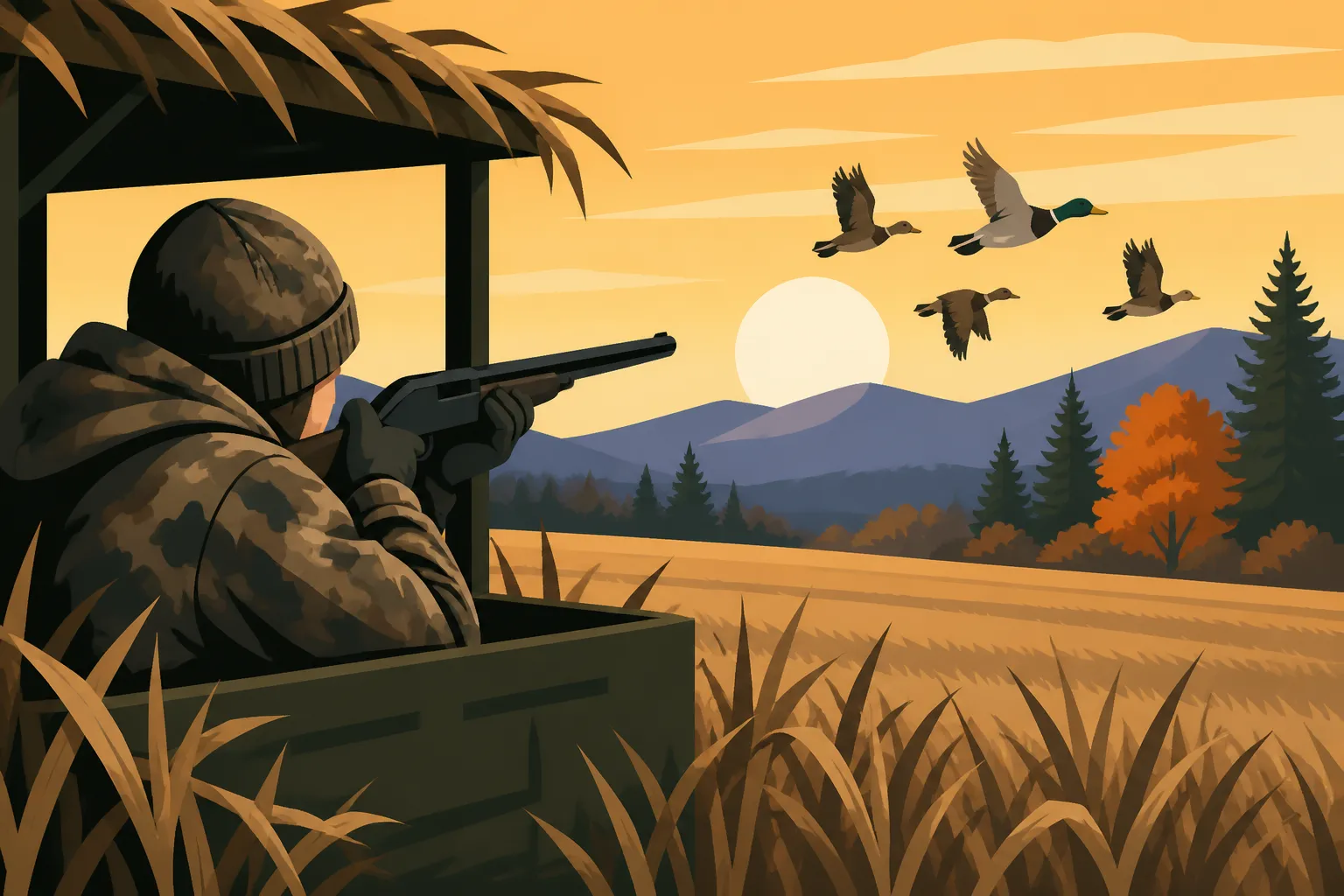
There’s nothing quite like the sight of a flock of geese or ducks cupping their wings, preparing to commit to your spread in an open field. But let's be honest, getting them to finish can be one of the most frustrating aspects of waterfowl hunting in New Hampshire. Too often, birds flare off at the last second, wary of unnatural shapes or suspicious movements. This guide is all about mastering the art of layout blind hunting in New Hampshire's Northern Zone fields, giving you the edge you need to turn those frustrating flare-ups into successful retrieves.
Understanding New Hampshire's Northern Zone for Waterfowl
Hunting waterfowl in New Hampshire means understanding the lay of the land, and the Northern Zone is a beast all its own. This isn't your typical southern New Hampshire marsh hunt; it's a vast expanse with unique challenges and opportunities.
Defining the Geographic Boundaries and Characteristics
The Northern Zone encompasses the northernmost parts of New Hampshire, primarily including Coos County and parts of Grafton and Carroll Counties. Think big timber, expansive agricultural fields, and major river systems like the Connecticut River and the Androscoggin. Unlike the more developed southern regions, this area is characterized by vast tracts of public and private forest land interspersed with working farms. These farms often feature corn, soy, and other grain fields that become prime feeding grounds for migrating waterfowl, especially geese, in the late fall. The terrain can be rugged, transitioning from mountain foothills to sprawling river valleys, which means diverse hunting scenarios, but when the birds are locked into a field pattern, that's where you need to be. Knowing these boundaries is crucial for understanding the specific hunting regulations that apply, as they can differ from the Inland Zone. If you're unsure about your specific location, always refer to the New Hampshire Fish and Game digest or their website for detailed maps and rules for Waterfowl Hunting New Hampshire's Two Zones.
Hunting these northern fields means dealing with wide-open spaces, often with little natural cover around the edges of agricultural plots. This lack of natural concealment is precisely why layout blinds become not just an option, but often a necessity. You might find some residual hedgerows or thickets, but relying solely on these can be hit-or-miss, especially if the birds prefer the middle of a massive cornfield. The sheer scale of some of these fields can also be daunting, requiring extensive scouting to pinpoint exactly where the birds are feeding.
Key Waterfowl Species and Migration Patterns
While you might encounter a variety of ducks, particularly mallards, in the Northern Zone fields, the real draw for many field hunters here is the Canada goose. These birds love open fields, especially after harvest, to feed on waste grain. New Hampshire sits squarely on the Atlantic Flyway, and as cold weather pushes south, these fields become crucial staging and feeding areas for both resident and migratory populations. Early in the season, you'll be hunting primarily resident geese, but as October and November roll around, migrating flocks from Canada begin to filter in, offering some truly spectacular hunting opportunities.
The migration timing can vary year to year, influenced heavily by weather patterns in both Canada and New England. Generally, significant goose movements occur from mid-October through November. Ducks, especially mallards, can also be found hitting fields, particularly if there are smaller potholes or water features nearby where they can loaf before flying out to feed. Understanding these patterns, and keeping an eye on weather forecasts to predict pushes of new birds, is key. Hunters often lament the unpredictability, but with diligent scouting, you can find those patterns. For specific information on when to expect certain species, looking up New Hampshire Northern Zone Waterfowl Dates is a great first step.
The Unique Challenges of Northern Zone Field Hunting
Field hunting in the Northern Zone presents several challenges that hunters must overcome. First, the weather can be brutal. Late-season hunts can mean frigid temperatures, driving wind, snow, or even freezing rain. Your gear needs to be up to the task of keeping you warm and dry for hours while lying nearly prone in a field. Secondly, these birds are often highly educated. They’ve been shot at across hundreds, if not thousands, of miles along the flyway, making them incredibly wary of anything that looks out of place. Third, access to prime fields can be tricky. Much of this land is privately owned farmland. Gaining permission requires time, respect, and often knocking on doors well in advance of the season.
Another major challenge is pinpointing the exact feeding location. A massive 100-acre cornfield might only have a concentrated feeding pattern over 5 acres on any given day. Scouting is absolutely critical, but even then, birds can shift their patterns overnight due to pressure, weather, or simply exhausting a food source. This means being adaptable and having the ability to move your setup quickly if needed. Lastly, concealment in these wide-open spaces is paramount. Even the slightest glint of an uncovered face or an unnatural shadow can send a flock climbing for the stratosphere. This is where the layout blind truly shines, but it requires careful attention to detail in its setup and brushing.
The Advantage of Layout Blinds for Field Hunting
When you're out in an open field with no natural cover to speak of, a layout blind isn't just a piece of gear; it's your lifeline to success. It's designed specifically for this environment, allowing you to disappear into the landscape in a way no other blind can.
Why Ground-Level Concealment Excels
The primary reason layout blinds are so effective is their low profile. Waterfowl, especially geese, have incredible eyesight and are constantly scanning the ground for predators. Anything that breaks the natural horizon, like a standing blind or even a hunter crouched behind a few stalks of corn, will stick out like a sore thumb. A layout blind, on the other hand, allows you to lie down, bringing your profile almost flush with the ground. When properly brushed in, it becomes virtually invisible, blending seamlessly with the stubble of a harvested cornfield or the brown tones of a tilled field.
This ground-level concealment minimizes the "blob" effect that often spooks wary birds. Instead of seeing a collection of unnatural shapes, approaching geese and ducks see only what appears to be a natural part of the field. This can make all the difference, coaxing those birds to drop their landing gear and commit fully to your decoy spread, allowing for closer, more ethical shots. It's about being part of the environment, not an intrusion upon it, which is exactly what highly pressured birds are looking for or, more accurately, not looking for. The psychological advantage of knowing you're truly hidden also does wonders for hunter confidence, allowing you to focus on calling and watching the birds work.
Benefits Over Traditional Pit Blinds or Natural Cover
While pit blinds offer similar low-profile concealment, they come with significant drawbacks. They're permanent structures, require extensive digging and construction, and are only viable in fields where you have guaranteed, long-term access and the landowner's explicit permission for such an endeavor. They're also fixed, meaning if the birds shift their feeding patterns even a few hundred yards, your pit blind becomes useless for that day. Natural cover, while always a good option when available, is often sparse or non-existent in the very fields geese and ducks prefer. A thin hedgerow might offer some cover, but it often doesn't allow for an optimal shooting angle or the necessary space for a proper decoy spread.
Layout blinds offer unparalleled portability and flexibility. You can set them up in minutes, move them in response to changing bird patterns or wind directions, and take them down just as quickly. This adaptability is crucial in the dynamic world of field hunting. If the geese were working one corner of the field yesterday but shifted due to new pressure or a fresh food source, you can simply pack up your layout blinds and relocate. This mobility ensures you're always where the birds want to be, maximizing your hunting time and success. They are also much less intrusive to a farmer's land than a permanent structure, making it easier to gain permission from landowners who might be hesitant about permanent alterations to their fields.
Choosing the Right Layout Blind for New Hampshire Conditions
Selecting the right layout blind is crucial for comfort, concealment, and durability in New Hampshire's challenging Northern Zone. You want something that’s built to last, easy to brush, and comfortable enough for long sits in potentially harsh weather. There are several excellent brands on the market, each with slightly different features. Look for blinds with a sturdy aluminum frame, which holds up well to transport and use. A waterproof or highly water-resistant bottom is non-negotiable, as even a damp field can quickly lead to a miserable hunt if moisture seeps in.
Consider the size and weight of the blind. While larger blinds offer more room and comfort, they can also be heavier and bulkier to transport, especially if you’re humping gear across a large field. Smaller, more compact blinds might be preferable for solo hunters or those who need to remain highly mobile. Good back support and comfortable padding are also key, as you’ll be lying in this position for hours. Finally, pay close attention to the stubble straps and brushing capabilities. The more loops and pockets your blind has for natural vegetation, the easier it will be to truly disappear into the field. Brands like Avery, Final Approach, and Rogers Sporting Goods offer a range of blinds that cater to different preferences and conditions, many of which can be found through retailers like GoHunt, which often stocks a variety of waterfowl gear.
Mastering the Art of Field Scouting for Waterfowl
Before you even think about setting up a layout blind, you need to know where to set it up. Field scouting isn't just a suggestion; it's the bedrock of successful waterfowl hunting, especially in the Northern Zone. Without it, you're just guessing, and guessing rarely leads to limits.
Identifying Prime Feeding Fields and Roosting Areas
The first step in effective scouting is understanding what waterfowl are looking for. Geese and field-feeding ducks primarily want two things: food and safety. They’ll gravitate towards harvested grain fields (corn, soy, wheat) where waste grain is abundant. They also prefer large, open fields that offer unobstructed views, allowing them to spot predators from a distance. Identifying these fields on a map is a good starting point, but ground-truthing is essential. You need to drive or walk around, observing bird activity from a distance. Look for birds actively feeding, not just flying over.
Once you’ve identified a field, look for signs of heavy feeding: droppings, disturbed stubble, and actual feathers. These are clear indicators that birds are consistently using that particular spot. Roosting areas, typically large bodies of water like lakes, rivers, or large ponds, are where birds spend the night. While you won't hunt the roost, knowing where they come from and return to can help you predict flight paths and timing. Birds will often fly from a roost to a feeding field in the morning, loaf in a protected area midday, and return to feed again in the late afternoon before flying back to the roost. Understanding this daily routine is paramount to positioning yourself correctly.
Utilizing Aerial Photos and On-the-Ground Reconnaissance
Modern technology has revolutionized scouting. Tools like GoHunt or ONX Hunt can be incredibly valuable. Start by using aerial photos on these apps to identify potential feeding fields, especially those adjacent to larger water bodies or known migration corridors. Look for large, recently harvested fields with good road access (or at least reasonable walking access). You can also identify potential pinch points or travel lanes that birds might use to get to and from fields. These apps often allow you to overlay property lines, which is invaluable for identifying landowners you’ll need to approach for permission.
However, aerial reconnaissance is only the first step. You absolutely must follow up with on-the-ground scouting, ideally without disturbing the birds. This means observing from a distance with binoculars or a spotting scope. Drive country roads slowly, keeping an eye out for flocks. Once you spot birds, watch their behavior: where do they land in the field? What direction do they approach from? What time of day are they feeding? Note wind direction on those days, as birds almost always land into the wind. This detailed observation will inform your blind placement and decoy spread setup. The best time for this is typically midday, after the morning flight, or late afternoon, before the evening flight, when birds are either absent or less wary. Scouting New Hampshire Public Land Before Season can also reveal overlooked field opportunities.
Understanding Flight Paths and Entry/Exit Points
Waterfowl are creatures of habit, especially when it comes to their travel routes. They'll often use the same flight paths day after day, particularly if these routes offer the most direct line between their roost and feeding grounds, or if they follow natural features like river valleys or tree lines. Pay close attention to these patterns during your scouting trips. Are they flying over a specific ridge? Skirting a woodline? Entering the field from a particular corner? These observations will dictate where you position your blinds and your decoy spread.
Entry and exit points within a field are also crucial. Birds won't just land anywhere. They often prefer to land in a "safe zone" that provides a clear view of their surroundings. This might be a slightly higher elevation within the field, or a spot where they can easily see any potential threats. Knowing these preferred landing zones allows you to set up your blinds and decoys in a way that guides them directly into shooting range. You want to place your spread and blinds downwind of where they enter the field, compelling them to fly over your setup as they approach their landing zone. This often means setting up into the prevailing wind for the morning hunt, allowing birds to cup their wings and work directly into your spread.
Strategic Layout Blind Setup and Concealment
Once you’ve pinpointed your spot, setting up your layout blinds is where the real work of disappearing begins. It’s not enough to just plop a blind down; you need to become part of the field itself.
Brushing In for Seamless Integration
This is, arguably, the most critical step after scouting. A bare layout blind is an absolute bird repeller. You need to brush it in, heavily, until it looks like just another clump of vegetation or stubble in the field. Don't be afraid to overdo it; there's no such thing as too much concealment when hunting wary waterfowl. Collect natural vegetation from around the field: corn stalks, dried grasses, brush, whatever matches the immediate environment. If you're hunting a cornfield, cut corn stalks and weave them into the blind's stubble straps. If it's a stubble field, use dried grasses.
Pay particular attention to the edges and ends of the blind, where its geometric shape is most pronounced. Break up these straight lines with natural materials. Even if your blind is camouflaged, its shape will give it away. Tuck in enough material so that no part of the blind's fabric or frame is visible from above. Have your hunting partners stand back and look at the blind from various angles and distances, including what a bird might see from 100 yards up. Getting their honest feedback is essential. Remember, you want to blend in so well that a bird would literally consider landing right on top of your blind. Don't forget to brush around your face opening as well – an exposed face can be just as alarming as an unbrushed blind. For more tips on blending in, check out Brushing In a Blind on a Field Edge.
Optimal Blind Placement Within the Decoy Spread
The placement of your layout blinds relative to your decoy spread is critical for successful shots. Generally, you want your blinds positioned downwind of your main decoy spread, creating a landing zone directly in front of you. This forces the birds to fly directly over your blinds as they commit to land, offering closer, overhead shots. For geese, a common setup is to place your blinds 15-25 yards downwind of the main body of decoys. This creates a "kill hole" or "landing strip" where the birds feel safe to descend.
Consider the wind direction, which dictates how birds will approach. They will always land into the wind. Position your blinds so that the birds are approaching from your front, flying directly towards you. If the wind shifts, you might need to adjust your blinds and even part of your spread. Think about visibility from the birds' perspective. Are there any shadows being cast by your blinds that could look unnatural? Are you inadvertently placing your blinds in an area where glare from the sun might hit them? Continuously assess your setup from the perspective of an incoming bird. Your goal is to make them so comfortable they almost land in your lap.
Managing Gear and Minimizing Human Outline
Once you're brushed in and in position, it's all about minimizing any movement or unnatural elements. All your gear—extra shells, calls, water bottles, snacks—should be inside your blind or tucked away neatly beneath the skirting so nothing is visible. Any reflective surfaces, like metal water bottles or even shiny gun barrels, need to be covered or camouflaged. Even a small glint can flare a flock.
Minimizing your human outline extends beyond the blind itself. Wear dark, non-reflective clothing inside the blind, especially around your head and face, as these are often the first things birds see when you sit up to shoot. Some hunters wear face paint or dark face masks. When birds are working, remain absolutely still. No peeking out of the blind, no shifting, no talking. Wait for your shot opportunity patiently. When it's time to shoot, sit up smoothly and decisively. Jerky movements can cause birds to flare even at close range. Practice sitting up quickly but quietly before the hunt so it becomes second nature.
Effective Decoy Spreads for Northern Zone Fields
Decoys are your visual invitation to approaching waterfowl. In the wide-open expanse of a Northern Zone field, a well-planned and realistic spread is your most potent tool for drawing in wary geese and ducks.
Goose Decoy Spreads for a Northern Zone Field
When targeting Canada geese in a field, realism and numbers are often key. Geese are social birds, and a large, natural-looking spread communicates safety and an abundant food source. Full-body decoys are often considered the gold standard for their three-dimensional realism, especially if they have flocked surfaces to eliminate shine. Shells and silhouettes can be used to add bulk to a spread, particularly in the outer fringes, and are much lighter to transport. A common strategy is to create a main feeding flock, with several smaller family groups scattered around. Geese tend to feed somewhat spread out, but with distinct clusters.
The shape of your spread is also important. The classic "J" or "U" shape, with the open end of the letter facing into the wind, creates a natural landing pocket directly in front of your blinds. This funneling effect guides birds exactly where you want them. Place your blinds at the curve or bottom of the "J" or "U." Leave adequate space in the landing zone—don't overcrowd it with decoys. A general rule of thumb is to place decoys about 3-5 feet apart, mimicking natural feeding behavior. For detailed examples, look up Goose Decoy Spreads for a Northern Zone Field. Incorporating a few sentry or "looker" decoys at the fringes of your spread can add to the realism, suggesting that some birds are standing guard while others feed.
Duck Decoy Spreads in Agricultural Settings
While geese are the primary target for many Northern Zone field hunters, ducks, especially mallards, will also readily hit fields, particularly corn or wheat. A duck spread in a field environment is usually less elaborate than a goose spread, but still crucial. Often, duck decoys are mixed in with a larger goose spread, or a smaller, separate "puddle" of duck decoys is placed nearby. Since field-feeding ducks are often mallards, green-headed drakes and hen mallard decoys are your go-to.
You might also consider adding a few black duck or pintail decoys for variety, as these species can also utilize fields. Motion decoys, like spinning wing models or those that simulate feeding activity (e.g., tip-up feeders), can be incredibly effective for ducks, adding that vital element of movement that catches their eye from a distance. Place these motion decoys strategically to enhance the illusion of a vibrant feeding area. Ducks typically land closer together than geese, so your duck clusters can be a bit tighter. Remember, the goal is to create an irresistible visual that tells incoming birds, "This is the safest, best place to land for a meal."
Using Motion Decoys and Confidence Birds
Motion is a huge trigger for waterfowl. A completely static spread can look unnatural, especially on a calm day. Spinning wing decoys (like Mojos) are incredibly effective for ducks, especially in fields, as their flashing wings simulate landing or stretching birds, drawing attention from far away. Use them judiciously—sometimes too many can be overwhelming or even spook wary birds. One or two strategically placed spinning wing decoys can be enough. Battery-powered "feeding" decoys that bob and dip can also add realism.
Confidence decoys, while not strictly "motion," add another layer of realism. These are decoys of other species that waterfowl feel safe around, such as crows or even deer. Placing a few crow decoys around your spread can tell wary geese that "if crows are feeding here, it must be safe." Similarly, a deer decoy on the edge of a field can give a sense of normalcy and safety. These subtle additions can make a big difference in convincing educated birds to commit. Experiment with different types and numbers of motion and confidence decoys, paying attention to how birds react on different days and under varying conditions. The more realistic and inviting your spread appears, the higher your chances of success.
| Decoy Type | Advantages | Disadvantages | Best Use Case |
|---|---|---|---|
| Full-Body Geese | Most realistic, 3D appearance, great movement in wind | Heavy, bulky, expensive | Main body of a goose spread, highly effective |
| Goose Shells | Lighter, stackable, more affordable than full-bodies | Less realistic than full-bodies, can look flat | Adding numbers to a spread, outer fringes, budget-friendly |
| Goose Silhouettes | Very light, easy to transport, cost-effective | 2D, little movement, least realistic | Bulk numbers for large spreads, far distances |
| Mallard Full-Body | Realistic 3D duck look, good in fields | Heavier than other duck decoys, can be bulky | Main duck clusters, especially in mixed spreads |
| Spinning Wing (Mojo) | Excellent motion, highly visible, draws attention | Battery dependent, can be too much for wary birds | Duck spreads, attracting attention from a distance |
| Feeder Decoys | Realistic feeding motion, adds confidence | Can be subtle, less visible from far away | Enhancing realism within a close-range spread |
Calling Techniques to Seal the Deal
Decoys get their attention, but your calling is what often convinces them to commit. Mastering the art of calling isn't just about making noise; it's about reading the birds and communicating effectively.
Reading Bird Behavior and Adjusting Your Calling
Effective calling begins with keen observation. Before you even touch your call, watch the birds. Are they high and circling, trying to get a read on your spread? Are they coming in low and direct? Are they flaring, indicating suspicion? Their behavior will tell you what kind of call, and how much of it, is appropriate. If birds are distant and flying high, louder, aggressive "hail calls" or "comeback calls" are needed to grab their attention. Once they turn and head your way, switch to softer, more contented "clucks" and "mating moans" for geese, or soft "quacks" and "feed calls" for ducks.
If birds are working your spread but seem hesitant, a single, sharp "cluck" or "honk" might be enough to reassure them, or a soft "feed chuckle" to suggest everything is safe. If they begin to flare, sometimes silence is the best call. Let them go, but if they circle back, try a subtle, reassuring call once they're well out. Learning to read the birds is a skill developed over seasons, but paying close attention to their wingbeats, body language, and flight patterns will significantly improve your calling success. It's a conversation, not a monologue.
Mastering the Basics of Goose and Duck Calls
You don't need to be a world champion caller, but you do need to master the fundamental sounds. For Canada geese, the basic sounds include the honk (a single, deep note), the cluck (a short, sharp honk), and the murmur or feed call (a rapid series of clucks and honks). The honk is your attention-getter, the cluck your reassurance, and the feed call indicates contentment. Practice varying the volume and cadence to mimic a real flock. When using a short-reed goose call, focusing on air pressure and proper diaphragm control is crucial for realistic sounds.
For ducks, particularly mallards, the basic "quack" is essential, but equally important are the "feed chatter" (a rapid series of short quacks) and the "lonesome hen" (a series of five to seven descending quacks). The feed chatter indicates a group of contented ducks feeding. The lonesome hen is a powerful call that can bring curious drakes and hens flying in. Again, practice makes perfect. Listen to real birds, watch hunting videos, and spend time in the off-season refining your technique. Understanding how to use these calls effectively can turn a fly-by into a landing. When hunting the Calling a May Gobbler Off the Roost for turkey, you similarly adjust calls based on the bird's response.
When to Call and When to Stay Silent
Knowing when to call is often more important than knowing how to call. In many situations, less is more. When birds are distant and not reacting, call aggressively to get their attention. Once they commit and turn towards your spread, ease off the volume and switch to softer, more contented calls. As they get closer, typically within 100-150 yards, often silence is golden. Let your decoys do the work, and be ready to shoot.
Over-calling can be a common mistake, particularly with wary birds. If you're constantly blowing on your call, it can sound unnatural or even aggressive, making birds nervous. Watch their reaction: if they're still coming, you're doing something right, or they're well-trained. If they start to climb or veer off, back off the calling. Sometimes a well-placed decoy spread and perfect concealment are all you need, with a minimal, reassuring call every now and then. Be patient, observe, and let the birds tell you what they want to hear—or not hear. This applies across many types of hunting, from Rattling and Grunting New Hampshire Bucks to calling waterfowl.
Safety, Ethics, and Regulations in Field Hunting
Hunting in New Hampshire is a privilege that comes with significant responsibilities. Upholding safety, ethical practices, and adherence to regulations is paramount, especially in a popular activity like waterfowl hunting.
Understanding New Hampshire Waterfowl Season and Zones
Before you even think about buying gear, you must understand New Hampshire's specific waterfowl seasons, bag limits, and zone regulations. New Hampshire is divided into two main waterfowl zones: the Northern Zone and the Inland Zone. The season dates and bag limits can differ between these zones, and it's your responsibility to know which zone you are hunting in and what the current regulations are. These dates are set by the New Hampshire Fish and Game Department in conjunction with federal guidelines. Always consult the current hunting digest or the NH Fish and Game website for the most up-to-date information, as regulations can change annually.
Beyond season dates, pay close attention to species-specific bag limits and possession limits. For example, New Hampshire Duck and Goose Bag Limits specify how many of each species (e.g., mallards, black ducks, Canada geese) you can harvest per day and how many you can have in your possession at home. Federal regulations also require all waterfowl hunters to possess a federal duck stamp and to be HIP (Harvest Information Program) certified. Failing to comply with any of these regulations can result in heavy fines and loss of hunting privileges, so take the time to do your homework.
Hunter Safety Considerations in Open Fields
Safety is always the top priority. When hunting from layout blinds in an open field, several unique safety considerations come into play. First, muzzle control is critical. When sitting up to shoot, ensure your shotgun is always pointed in a safe direction. Never sweep your hunting partners with your muzzle. Communicate clearly with your partners about shot zones and who is shooting at what bird. A common practice is for everyone to pick a specific bird when the shot is called, avoiding multiple hunters shooting at the same bird and creating confusion.
Situational awareness is also crucial. In a layout blind, your field of vision is restricted until you sit up. Be aware of your surroundings, especially if other hunting parties might be in adjacent fields. If you're hunting near a road or buildings, know your safe shooting lanes and distances. Never shoot towards roads, dwellings, or livestock. Blaze orange requirements do not typically apply to waterfowl hunting when in a blind, but it's wise to wear some when walking to and from your blinds, especially during firearms deer season overlap, or if you are retrieving birds in dense cover. Always identify your target clearly and ensure you have a safe backdrop before pulling the trigger.
Respecting Landowners and Local Ordinances
The vast majority of field hunting opportunities in New Hampshire occur on private land. This makes landowner relations paramount. Always obtain explicit permission before hunting on private property. A simple "no hunting" sign means no hunting, and hunting without permission is trespassing and illegal. When you do obtain permission, be the best guest you can possibly be. This means respecting their property, leaving no trash (including spent shotshells), closing gates, driving only on designated paths, and avoiding damage to crops or fences. A thank you note or a small gift of venison or fresh fish goes a long way to cementing a positive relationship for future seasons.
Be aware of any local ordinances that might restrict hunting in certain areas, such as town-specific no-discharge zones or buffer zones around populated areas. Use mapping apps like GoHunt to understand property lines and urban boundaries. If you retrieve a bird that falls on adjacent private land where you don't have permission, you must seek permission before retrieving it. Never assume it's okay to trespass, even for game recovery. Your behavior reflects on all hunters, and acting ethically ensures these opportunities remain available for years to come. Remember, the privilege of hunting in the Granite State relies heavily on all of us being responsible stewards of the land and respectful neighbors.
Disclaimer
Please note: Hunting regulations and seasons in New Hampshire are subject to change. Always consult the latest New Hampshire Fish and Game Department regulations, federal regulations, and local ordinances before engaging in any hunting activity. This content is for informational purposes only and does not constitute legal advice or an endorsement of specific products.