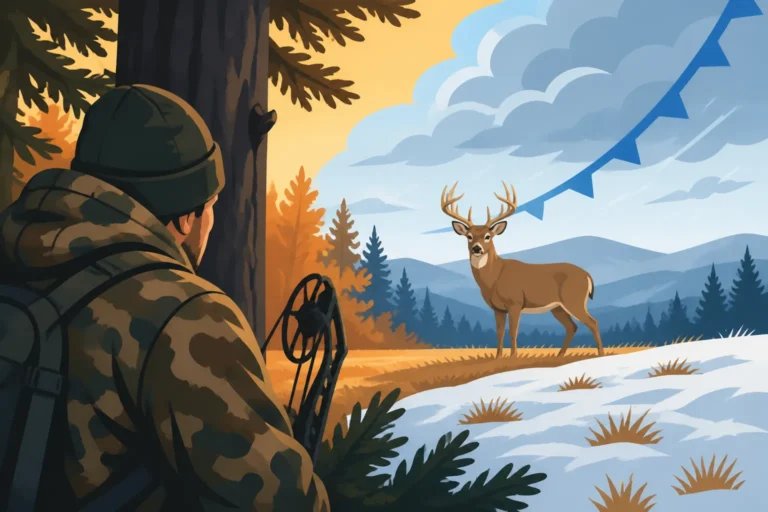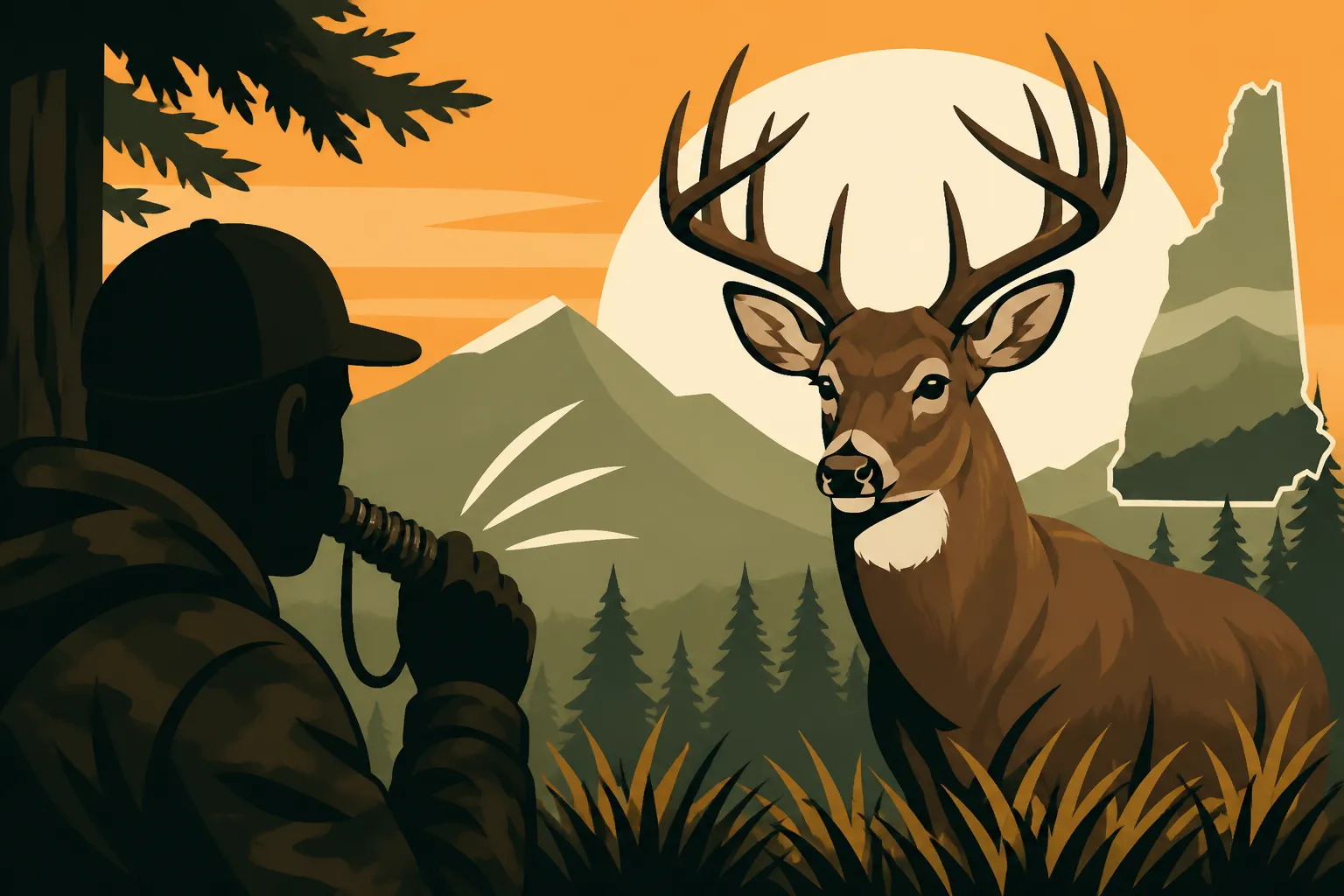
Rattling and Grunting New Hampshire Bucks
There's nothing quite like the anticipation of a New Hampshire deer season, the crisp autumn air, the vibrant foliage, and the hope of a majestic buck stepping into view. But let's be honest, sometimes those elusive whitetails just don't cooperate. You spend hours on stand, scouting diligently, and still, nothing. That's where active calling techniques like rattling and grunting come into play, transforming a passive wait into an engaging hunt where you can actively draw in the buck of a lifetime. This guide will walk you through the nuances of using these powerful vocalizations and fight simulations to bring New Hampshire bucks into your hunting world, giving you a tangible edge in the woods.
Understanding the Deer Rut in New Hampshire
To effectively rattle and grunt for New Hampshire bucks, you absolutely must understand the whitetail rut. It's the annual breeding season, and it dictates nearly every aspect of a buck's behavior, making certain calling strategies incredibly potent at specific times. If your timing is off, your calls might fall on deaf ears or, worse, spook deer. Knowing when to be aggressive and when to be subtle is the key to success.
The Phases of the Rut and Calling Strategy
The rut isn't a single event; it's a dynamic period with distinct phases, each demanding a slightly different approach to calling. Understanding these phases will help you tailor your strategy for maximum impact, especially when targeting those older, wiser bucks.
During the early rut, often called the "pre-rut," bucks are becoming more active, starting to lay down scrapes, rub trees, and test dominance. They're still somewhat focused on food but their minds are increasingly turning to does. This is a fantastic time for more subtle rattling and light grunting. Think of it as bucks doing some light sparring, establishing a pecking order before the main event. You might use short, soft rattling sequences and single, inquisitive grunts to pique their curiosity. Bucks are often covering ground, seeking the first does to come into estrus, and a well-placed, subtle call can divert their travel directly to you.
As we move into the peak rut, also known as the "chasing" or "breeding" phase, all bets are off. This is typically when you see those legendary daylight sightings of bucks running does at full tilt. Bucks are now actively seeking, chasing, and breeding does, often abandoning their usual nocturnal patterns. This is the prime window for aggressive rattling, simulating a full-blown buck fight. Think loud, crashing antlers, snort-wheezes, and a series of challenging grunts. Bucks are territorial and competitive during this time, and the sound of rival bucks fighting over a hot doe can be an irresistible draw. This intense activity usually occurs in New Hampshire around the second and third weeks of November, often overlapping with the firearms season. You can learn more about this crucial period by checking out our guide on Hunting the Rut in Early-to-Mid November.
Finally, the late rut or "post-rut" phase sees the peak breeding winding down. Most does have been bred, and bucks are exhausted. While the intense chasing slows, there might still be unbred does, or secondary estrus cycles, keeping some bucks active. During this phase, aggressive calling is usually less effective and can even be counterproductive. Bucks are more interested in recovering and finding food sources. A more subtle approach, perhaps a soft doe bleat or a few quiet contact grunts, can sometimes still draw in a tired buck looking for one last opportunity or simply responding out of curiosity to what they perceive as a lone deer.
Regional Differences in Rut Timing
While the general framework of the rut applies across New Hampshire, subtle regional and local factors can influence its exact timing and intensity. Our state offers a diverse range of habitats, from the vast expanses of the North Country to the more fragmented woodlots of southern New Hampshire, and deer behavior can reflect these differences.
In the North Country, with its colder temperatures and deep snows, the rut tends to be slightly more compressed, with bucks perhaps expending energy more efficiently when the breeding window opens. Deer densities can be lower here, meaning bucks might travel further to find does, making aggressive calling a powerful tool to cover more ground vocally. The dense spruce and fir stands in regions like Coos County can muffle sounds, so adjusting your Rattling Volume in Thick Softwood Cover becomes especially important. Conversely, in southern New Hampshire, with generally milder weather and higher deer densities, the rut might feel more drawn out. Bucks don't have to travel as far, and competition can still be fierce. Here, subtle calls might be more effective in drawing out a buck from thicker cover that already knows where the does are.
Beyond geography, weather's influence on the rut cannot be overstated. A sudden cold front can often kick-start deer activity, making bucks more eager to move and respond to calls. Conversely, unseasonably warm spells can make deer more lethargic and less responsive. Hunters often report seeing increased activity on clear, frosty mornings following a cold snap. Paying attention to weather patterns, and not just the calendar, can give you a significant advantage in determining the best days to hit the woods with your calls. A rising barometer and a drop in temperature are often perfect conditions for a calling session.
Essential Gear for Rattling and Grunting
You wouldn't head out on a hike up Mount Washington without the right boots, and you shouldn't go calling for bucks without the proper gear. Having the right tools, and knowing how to use them effectively, is paramount for drawing in a curious or challenging buck. It's not just about making noise; it's about making the right noise, and that starts with your equipment.
Choosing the Right Calls
The market is flooded with deer calls, and it can be overwhelming to pick the best ones. For rattling and grunting, your choices boil down to a few key items, each with its own advantages and ideal situations.
When it comes to rattling antlers or bags, you have a couple of primary options. Real antlers, preferably shed antlers from a mature buck, produce the most authentic, natural sound. The density and resonance of real bone are hard to replicate. They create a sharp, distinct clack that truly mimics two bucks fighting. However, real antlers can be bulky, noisy to carry, and can bang together prematurely if you're not careful. This is where synthetic rattling bags come in. Brands like Rattling Bag or Primos Fight'n Horns offer a more compact, quieter alternative. They're easier to carry and manipulate, allowing for various sounds from light sparring to aggressive clashing. While some purists argue they don't sound exactly like real antlers, modern synthetic calls are incredibly realistic and highly effective, especially for hunters who prefer a lighter, more portable setup. The choice often comes down to personal preference and how much gear you want to carry into the timber or up a steep granite ridge.
Grunt tubes are another indispensable tool. These tubes allow you to mimic a buck's grunt, a versatile vocalization that can mean anything from a challenge to an inquiry or even a lost deer. Good grunt tubes often have an adjustable reed or baffle that allows you to change pitch and tone, mimicking anything from a young buck to a mature, guttural dominant grunt. Brands like Primos, Flextone, and HS Strut offer excellent options. The key is to find one that's easy to use, fits comfortably in your hand, and, most importantly, allows you to produce a variety of realistic sounds. Some tubes even have a snort-wheeze feature, which is an incredibly aggressive, short burst of air that bucks use to challenge rivals and can be a game-changer during the peak rut.
Don't overlook fawn bleats and doe calls. While rattling and grunting focus on bucks, adding a doe bleat can often complete the picture, making your scenario more realistic. A "distress fawn" bleat can attract does, and where there are does, bucks will follow, especially during the pre-rut. A soft "estrus bleat" from a doe can be particularly enticing during the peak rut, signaling to a buck that a receptive female is nearby. Sometimes, a buck might hang up just out of sight, and a subtle doe bleat is all it takes to convince him to take those last few steps.
Stealth and Setup Considerations
Having the right calls is only half the battle; how you position yourself and manage your presence in the woods is equally critical. Bucks are incredibly wary animals, especially older, bigger ones, and any slip-up can quickly unravel your calling efforts.
Scent control is paramount, perhaps even more so when actively calling. When you're rattling and grunting, you're essentially inviting a buck to come find you. If he gets a whiff of human odor before he sees or hears you, he's gone, plain and simple. This means meticulous attention to scent-free practices: washing your hunting clothes in scent-eliminating detergent, storing them in scent-proof bags, showering with scent-free soap, and using sprays. Pay close attention to your hands, breath, and hair. Even a faint trace of human scent can blow an encounter, especially with a mature buck that's been called to before.
Your camo and blinds are also crucial for close encounters. When a buck responds to your calls, he's often coming in looking for something specific: two bucks fighting, or a doe making noise. If he sees an unnatural blob of color or movement, he'll disappear. Breaking up your silhouette is key. Quality camouflage that matches the New Hampshire hardwoods or pine thickets you're hunting can make a huge difference. If hunting from the ground, a ground blind offers excellent concealment and also helps contain some of your scent. Even a simple pop-up blind or carefully brushing in behind natural cover like a downed log or thick brush can be effective. Remember, your objective is to blend seamlessly into the environment.
Finally, wind direction is arguably the most critical factor in any calling setup. A deer's nose is its primary defense, and they will almost always try to circle downwind of a sound to verify it with their scent. This is where many calling efforts go wrong. You must position yourself so that any approaching buck will have to pass in front of you before he gets downwind. This often means setting up with the wind quartering to your back or side. Use mapping tools like GoHunt to understand the terrain and prevailing wind direction in your area, identifying potential approach corridors. For example, if you anticipate a buck will approach from a certain thicket, try to set up so the wind carries your scent away from that thicket, forcing him to walk past your shooting lane to get downwind. Ignoring the wind is a surefire way to educate a buck and send him fleeing before you ever get a shot.
Mastering Rattling Techniques
Rattling is an art form, not just noise. It's about painting a picture with sound, mimicking the raw aggression and territorial dominance of bucks squaring off. Simply smashing antlers together might occasionally work, but truly mastering the technique means understanding the nuances of different fight scenarios and how to recreate them.
Aggressive vs. Subtle Rattling
The type of rattling you employ should always be dictated by the phase of the rut and the buck's behavior you're trying to evoke. A one-size-fits-all approach will lead to missed opportunities and spooked deer.
Aggressive rattling is designed to mimic a full-blown, knock-down-drag-out fight between two mature bucks. This is your go-to strategy during the peak rut when bucks are competitive and testosterone-fueled. To achieve this, you need to use your antlers (or rattling bag) with considerable force and conviction. Start with a loud, crashing sound, as if two bucks just collided. Follow this with continuous, intense clashing, grinding, and pushing. Don't be afraid to thrash nearby small saplings or brush with your antlers to simulate the visual commotion of a real fight. Incorporate sounds like snort-wheezes, heavy breathing, and a series of challenging grunts to make the scenario even more realistic. This isn't a gentle tap; it's a primal scream for attention, signaling to a dominant buck that a rival is in his territory, challenging his right to breed. When performed correctly, an aggressive rattling sequence can sometimes bring a buck charging in, ready to join or break up the fight, making for an incredibly exciting and fast-paced encounter.
On the other hand, subtle rattling is about mimicking lighter sparring or a buck simply working a scrape line, making soft, intermittent noises. This is more effective during the pre-rut or early post-rut, or when you suspect a mature buck might be nearby but is wary. Instead of crashing, aim for lighter clacking sounds, gentle grinding, and soft rubs. Imagine two young bucks testing each other, or a single buck casually raking his antlers on a sapling. The goal here is curiosity, not confrontation. Use shorter sequences, perhaps 15-30 seconds of quiet rattling, followed by a long period of listening. You might even incorporate a few quiet contact grunts or soft doe bleats. This approach is excellent for drawing in bucks that might be hesitant to respond to a full-blown fight, or those that are just starting to feel the effects of the rut. Remember that Grunt Calls in Mature New Hampshire Hardwoods will carry differently than in open fields, so adjust accordingly.
The Sequence and Duration
The timing and length of your rattling sequences are just as important as the sounds themselves. It’s a performance, and like any good performance, it has a beginning, a middle, and an end, with plenty of pauses for dramatic effect.
After you've carefully chosen your stand location and settled in, the initial setup period is crucial. Give the woods time to settle down after your approach. Many experienced hunters wait at least 30-45 minutes, sometimes even an hour, before making their first call. This allows any deer you might have bumped to calm down and for the natural sounds of the forest to resume. Rushing into a calling sequence can alert nearby deer to your presence before you even have a chance to call them in.
Once you initiate your calling sequence, think of it as a story. Start relatively soft, almost tentatively, as if two bucks are just starting to size each other up. Then, gradually build the intensity, adding more aggressive crashing, grinding, and pushing sounds, simulating the fight escalating. This build-up makes the situation more believable. Mid-sequence, you absolutely must incorporate grunts – challenging grunts, trailing grunts, whatever fits the "mood" of the fight you're trying to portray. These vocalizations add another layer of realism. After reaching peak intensity, gradually decrease the volume and frequency of your rattling, ending with some soft clacks and perhaps a few more grunts, as if the fight is dying down or one buck is disengaging. A typical aggressive sequence might last anywhere from 60 seconds to a full two minutes.
Crucially, the most important part of the sequence is the listening and waiting. After you finish a rattling series, put your calls down and scan the woods intently. Bucks often come in silently, circling downwind, or pausing just out of sight to observe. You need to be absolutely still and focused. Many hunters get impatient and call again too soon, or worse, move, giving themselves away. Wait for at least 15-20 minutes, sometimes longer, after each sequence. Pay attention to every rustle, every snapped twig. A buck might be cautiously approaching, and your next move could make or break the encounter. A good rule of thumb is to call every 30-60 minutes, repeating your chosen sequence, always remembering to listen intently between calls.
Effective Grunting Strategies
Grunting is another incredibly powerful tool in your deer calling arsenal. Unlike rattling, which simulates a fight, grunts are more conversational, conveying a range of messages from dominance and challenge to curiosity and presence. Understanding the different types of grunts and how to use them can significantly increase your chances of attracting a buck.
Different Grunt Types and Their Meaning
Just like human language, deer vocalizations have different tones and meanings. Mastering these variations is key to effectively communicating with bucks in the wild.
The dominant grunt is a short, sharp, and aggressive vocalization. It's often deeper and more guttural, signaling a buck's presence and challenging other bucks in the area. Think of it as a clear "I'm here, and I'm dominant." This grunt is particularly effective during the pre-rut and peak rut when bucks are establishing hierarchy and actively seeking does. You'd use this grunt when you're trying to draw a buck in by challenging him, especially if you've spotted a deer at a distance that appears to be a mature buck. It's a statement, and bucks often respond with similar aggression or curiosity. This call works wonders when you're looking for that specific reaction.
A trailing grunt is a softer, longer, and often more drawn-out grunt. Bucks use this sound when they are actively following a doe, especially one that is nearing estrus. It's less aggressive than a dominant grunt and more of a persistent, almost conversational sound. The trailing grunt conveys "I'm here, I'm following, and I'm interested." This is an excellent call to use if you suspect a buck might be cruising for does or if you hear a doe bleating and want to simulate a buck responding to her. It can also be effective in drawing in a curious buck that thinks another buck might be on the trail of a hot doe. Try to mimic the rhythm of a buck walking, grunting every few steps.
Lastly, the contact grunt is the quietest and most conversational of the grunts. It's a soft, often single grunt, used by deer to communicate their presence to other deer in a non-threatening way. Think of it as a subtle "Hey, I'm over here" or "Is anyone around?" This grunt is particularly useful when you want to draw in a curious buck without being overly aggressive, especially if the rut isn't in full swing or if you're hunting pressured public land. It's also great for getting the attention of a buck that might be out of earshot for rattling, or for coaxing in a buck that has hung up just out of range. A few soft contact grunts can often be enough to make a wary buck take those extra few steps into your shooting lane.
Combining Grunts with Rattling and Scrapes
The true power of grunting often comes from combining it with other elements of deer communication, creating a more believable and irresistible scenario. A single call might work, but a symphony of realistic sounds and visual cues is far more persuasive.
When you combine grunts with rattling, you create a dynamic and authentic depiction of bucks interacting. Instead of just antlers clashing, adding grunts makes it sound like two actual deer are involved. For aggressive rattling, intersperse challenging grunts and snort-wheezes during the fight. Imagine a buck making an aggressive grunt as he pushes another buck, or snort-wheezing right before a charge. These sounds make the fight come alive. For subtle rattling, a few soft contact grunts interspersed with light antler clacks can make it sound like a buck is sparring and communicating with a doe or another buck in a non-threatening way. This combination often leads to bucks approaching with more confidence, as they perceive a full, realistic interaction rather than just random noises.
Moreover, integrating your calling with visual cues like scrapes and rubs can significantly enhance your chances. Bucks actively create and visit Scrape Lines Along a Logging Road during the rut. Setting up near an active scrape line or rub indicates a buck's presence and territoriality. When you call near these signs, you're essentially saying, "Hey, another buck is on your turf, checking out your signs!" This can infuriate a dominant buck and bring him in quickly. Consider also creating a mock scrape near your stand. Clear a patch of ground, scrape away the leaves, and even break a low-hanging branch above it. Add some buck urine or a tarsal gland if legal in New Hampshire, then follow up with a few soft grunts and light rattling. This visual and auditory combination can be incredibly compelling.
While not the primary focus, the brief mention of decoys is relevant here. A buck decoy or even a doe decoy can dramatically enhance your calling efforts. When a buck hears rattling and grunting, and then sees what appears to be another buck or a hot doe, the visual confirmation can often override his caution. He might approach more directly and confidently. Placement is critical: position the decoy so the approaching buck will have to pass your shooting lane to get to it, keeping the wind in your favor. Combine the visual appeal with your aggressive rattling and grunts, and you've created a highly enticing scene that's hard for a rutting buck to resist.
Reading Deer Behavior and Responding
Calling is an interactive process. It's not just about making sounds; it's about listening, observing, and adapting your strategy based on how the deer respond. A keen eye and ear, combined with patience, will allow you to read a buck's intentions and react accordingly, ultimately guiding him into your kill zone.
Interpreting Buck Responses
Once you start calling, every rustle, every glimpse, and every subtle shift in the woods could indicate an approaching buck. Knowing what these responses mean is crucial for your next move.
If a buck is approaching quickly, head up, ears forward, and perhaps even grunting back, it means he's engaged and coming in aggressively. This is often the response you get during the peak rut with a dominant buck who views your calls as a direct challenge. When this happens, stop calling immediately, get your weapon ready, and prepare for a shot. He's coming in hot, possibly without much caution, and the encounter can be very rapid. Your window of opportunity might be brief, so stillness and preparedness are paramount. Don't fidget, don't make eye contact, and let him come to you.
It's far more common, however, for a buck to approach cautiously, especially if he's mature or has been pressured before. Often, a buck will try to circle downwind. This is an instinctual behavior to gain a scent advantage and confirm the source of the sound. If you anticipate this, you've hopefully set up to intercept him before he gets your wind. If you see a buck trying to circle, be ready for a shot as he moves through your shooting lanes. Don't try to call him closer once he's committed to circling; you'll likely just make him more suspicious. Instead, stay absolutely still, let him come, and wait for the shot. Sometimes, he might pause, scent-checking, giving you a brief moment.
A buck might also stop and look, often just out of range, trying to pinpoint the source of the sound or observe the "fight" before committing. This paused response is a critical moment. He might be curious but cautious. He might also be trying to locate the other "bucks" visually. Your next steps are vital here. If he seems hesitant, a soft contact grunt or a very subtle doe bleat might coax him a little closer. If you called aggressively and he stopped, try a few soft clacks of antlers, as if the fight is still going on but winding down. The goal is to give him just enough encouragement to take those final few steps into range, without over-calling and tipping him off to your position.
Adjusting Your Strategy
Hunting is rarely a static endeavor, and calling for bucks is no exception. You need to be dynamic, willing to adjust your plan based on the buck's reaction. What works for one buck or one situation might not work for another.
When a buck hangs up, meaning he stops just out of range or refuses to come closer, this is a test of your patience and subtlety. Don't immediately hit him with aggressive calls. Instead, try to coax him closer with soft, inquisitive calls. A quiet contact grunt, a soft doe bleat, or even a few very light antler ticks can sometimes be enough to pique his curiosity and make him take those few extra steps. If he's focused on where he thinks the action is, try making a very subtle sound slightly to the side of his line of sight, as if one of the "fighting" bucks moved. Sometimes, complete silence is the best call. Let him stew, wonder, and eventually decide his curiosity is stronger than his caution. Many experienced hunters find that less is more in these situations.
Equally important is knowing when to stop calling. This is a common mistake for many new callers. Once a buck is committed and on his way in, or if he's already within range, stop calling. Any further noise can distract him, make him pinpoint your exact location prematurely, or even cause him to spook. Your job at that point is to be absolutely silent, motionless, and ready for the shot. Let him come. If you're on a Cold-Weather Sitting Strategy in the North Country, the urge to move for warmth might be strong, but resist it. Silence truly is golden once the game is afoot.
Ultimately, patience is key in all aspects of calling. It takes time for sounds to travel, for deer to hear them, process them, and decide to respond. Over-calling is one of the most common mistakes, leading to bucks becoming wary or just plain ignoring your efforts. Instead, focus on realistic sequences, long listening periods, and interpreting the deer's subtle cues. A great hunting app like GoHunt can help you mark locations where you've had responses or where you've identified good calling setups based on wind and terrain features, refining your strategy over time. Remember, you're trying to fool one of the smartest animals in the woods, and that requires a thoughtful, patient approach.
Common Mistakes and How to Avoid Them
Even seasoned hunters make mistakes, and calling for bucks is an area where errors can quickly educate deer and ruin opportunities. Being aware of these pitfalls and actively working to avoid them will greatly improve your success rate.
Over-Calling and Unrealistic Sounds
One of the most frequent mistakes made by hunters trying to call in bucks is simply too much noise, or noise that doesn't sound right. Deer have excellent hearing, and they can distinguish between natural sounds and something that just doesn't quite fit.
Many hunters fall into the trap of calling too loud, too long, or too frequently. This is particularly true for aggressive rattling. While the intent is to simulate a fierce fight, if you're crashing antlers for five minutes straight every ten minutes, it sounds unnatural. Real buck fights, while intense, usually don't last for an extended, uninterrupted period, nor do they happen every few minutes. Bucks will fight, pause, grunt, size each other up, and then perhaps resume. An endless barrage of noise will quickly make a mature buck suspicious. They'll also notice if the "fight" never moves, always staying in the exact same spot. A good rule of thumb for aggressive sequences is to keep them to 60-90 seconds, followed by 15-20 minutes of silent, attentive listening. For grunts, less is often more. A few well-placed grunts are far more effective than a constant stream of noise.
Another critical error is producing sounds that don't match the rut phase. Attempting aggressive, full-blown rattling and dominant grunts in early September, when bucks are still in their bachelor groups and often tolerant of each other, is likely to be ineffective or even spook deer. Similarly, trying subtle contact grunts during the peak of the rut might not be enough to grab the attention of a buck that's frantically chasing a hot doe. The rut phases, as discussed earlier, are your guide. Matching your call intensity and type to the prevailing buck behavior will make your efforts infinitely more believable and appealing to the deer. Always consider what sounds a buck would naturally be making or responding to in that specific time period.
Ignoring Wind and Scent
Despite all the advances in hunting technology and calling techniques, the deer's nose remains its ultimate defense system. Ignoring the wind and your scent is perhaps the gravest error a caller can make, nullifying all other efforts.
The deer's primary defense is its sense of smell. They can detect human odor from incredible distances, and they use the wind constantly to identify potential threats. When you're actively calling, you are broadcasting your location, inviting deer to come find you. If a buck, especially a mature, wary one, approaches and catches your scent before you even see him, the jig is up. He'll simply veer off, often without you ever knowing he was there. This is why paying meticulous attention to wind direction is not just important, it's absolutely non-negotiable. You can try all the scent-eliminating sprays and washes in the world, but if the wind is carrying your scent directly into the path a buck is likely to take, you're at a significant disadvantage.
The consequences of being winded are severe. Not only do you blow that specific encounter, but you can also educate that particular buck and potentially other deer in the area. A buck that gets a whiff of human scent at a calling location will become much warier of similar sounds in the future. He learns to associate those sounds with danger. For this reason, hunters who ignore the wind often find their calling efforts diminish in effectiveness over the season, as they inadvertently train the local deer to avoid their calls.
This emphasizes the absolute importance of playing the wind, especially with active calling. Before you even choose your stand location for a calling session, check the wind direction using a wind checker (a small bottle of powder or milkweed down). Use mapping tools to identify potential deer travel corridors and where a buck might approach from to get downwind. Then, set up so that the wind carries your scent away from those likely approach paths, forcing the buck to expose himself to your sight lines before he can smell you. This might mean setting up on the edge of a field, using a slight ridge, or positioning yourself so your scent blows over a river or a deep ravine. Never compromise on wind. If the wind isn't right for your chosen spot, find a new spot or wait for a different day. It's better to not call at all than to call with the wind working against you and inadvertently educating the deer. You might consider using your GoHunt app to plan out several potential stand sites based on various wind directions, ensuring you always have an advantageous option.
| Rut Phase | Primary Calls | Intensity | Best Time of Day | Buck Behavior |
|---|---|---|---|---|
| Pre-Rut | Soft Rattling, Contact Grunts, Doe Bleats | Subtle | Early Morning, Late Afternoon | Bucks seeking first does, establishing dominance. |
| Peak Rut | Aggressive Rattling, Dominant Grunts, Snort-Wheezes | High | All Day (especially mid-day) | Bucks actively chasing and breeding does, highly competitive. |
| Late Rut | Subtle Rattling, Contact Grunts, Doe Bleats | Low to Medium | Early Morning, Late Afternoon | Bucks recovering, some secondary estrus does. |
Disclaimer
Hunting is an activity that carries inherent risks. Always prioritize safety, understand and adhere to all local and state regulations, including those set by the New Hampshire Fish and Game Department. This information is for educational purposes only and should not replace proper hunter education and responsible practices. Make sure you have the appropriate licenses and permits before heading into the field.