Layout Blind Hunting a Northern Zone Cornfield
The crisp, cold air of a New Hampshire autumn, promising that perfect morning hunt, often turns frustrating when you find ducks and geese locked onto a seemingly impenetrable cornfield. You’ve put in the time scouting, seen the birds feeding, but how do you get close enough when there’s virtually no natural cover? That’s where the magic of a layout blind comes in, transforming open fields into your concealed advantage, and this guide is here to walk you through exactly how to set up and successfully hunt those wary birds in the Northern Zone.
Hunting New Hampshire's Northern Zone for Waterfowl
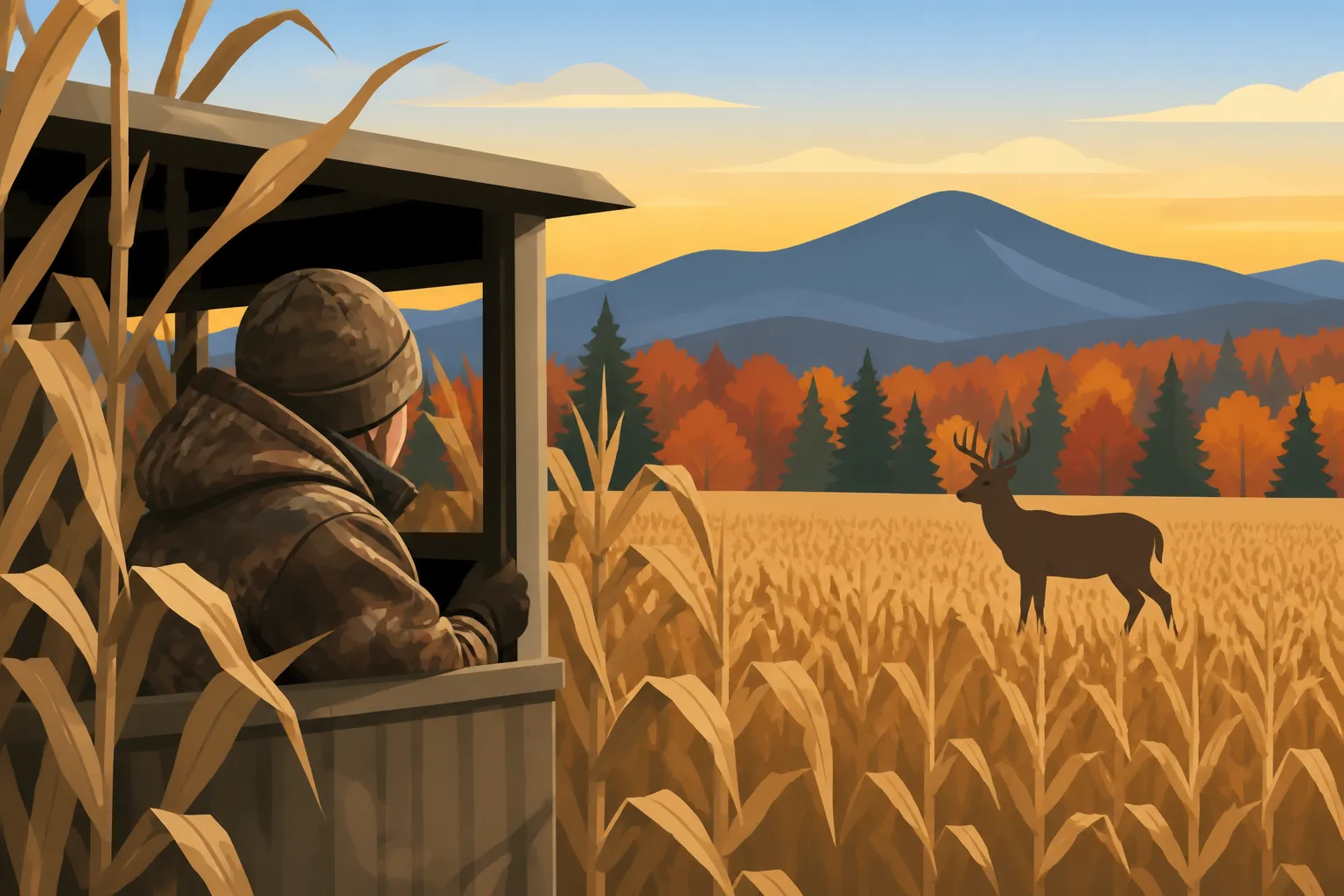
The Northern Zone in New Hampshire, stretching across counties like Coos and northern Grafton, offers some truly unique waterfowl hunting opportunities, particularly when it comes to field hunting for geese and puddle ducks. Unlike the more diverse habitats of the Inland or Coastal zones with their extensive river systems and salt marshes, the Northern Zone often presents vast agricultural landscapes, especially cornfields that become prime feeding grounds after harvest. However, this very openness that attracts hungry birds also poses the biggest challenge for hunters: a complete lack of natural concealment.
Imagine seeing hundreds of Canada geese silhouetted against a sunrise, dropping into a freshly harvested cornfield. Their keen eyesight, honed over generations, makes them incredibly difficult to approach. They circle, they climb, they scrutinize every shadow and anomaly. This is where the frustration sets in for many hunters who try to hide behind sparse hedgerows or hastily constructed blinds. The birds simply won't commit. This is why a well-executed layout blind strategy isn't just an option; it's often the only way to consistently put birds in your bag in these open agricultural settings. Understanding the specific behaviors of Northern Zone birds and the topography of these fields is your first step to success.
These cornfields, especially those bordering major river systems or larger lakes in the region, act as critical staging and feeding areas during the migration and even for resident populations. The birds are there for one thing: food. They’ll fly miles from their roosts on large bodies of water or isolated beaver flows to hit these caloric goldmines. The flight paths they use are often predictable, following river corridors, power lines, or distinct geographical features. Learning these routes and observing where they prefer to land within a field—often an elevated spot or a particular corner—is paramount. This isn't just about finding birds; it's about understanding their daily rhythm and tendencies. When you commit to Layout Blind Hunting a Northern Zone Field, you're committing to an immersive, strategic approach.
Another crucial aspect of the Northern Zone cornfields is the prevalent weather. While beautiful, late-season hunts can bring bitter cold, driving snow, or icy winds. These conditions can make long waits in a field incredibly challenging without proper gear and a comfortable blind. The birds themselves might also change their patterns, feeding more frequently or seeking shelter during extreme weather. Your setup needs to be robust enough to withstand these elements, and your personal gear must be up to the task of keeping you warm and alert for hours, often before the sun even breaches the horizon. This commitment to comfort and resilience pays off when the birds finally decoy.
Essential Gear and Setup for a Northern Zone Cornfield Hunt
Successfully hunting waterfowl in a New Hampshire Northern Zone cornfield with a layout blind isn't just about having a blind; it's about having the right gear and knowing how to maximize its effectiveness. This isn't a casual affair; it requires deliberate choices and a meticulous approach to concealment. Every piece of equipment, from your blind to your smallest decoy, plays a role in convincing wary birds that your spread is safe.
Choosing Your Layout Blind
Your layout blind is the cornerstone of this entire operation. It needs to be comfortable, durable, and most importantly, incredibly effective at concealment. Look for blinds with a low profile that hug the ground, minimizing any unnatural shadows or shapes. Brands like Avery, Final Approach, and Rogers Sporting Goods offer excellent options designed specifically for field hunting. Consider models with sturdy aluminum frames, waterproof bottoms, and comfortable backrests, because you’ll be spending hours lying perfectly still in potentially cold, damp conditions. The color of your blind is also crucial; most come in shades of brown and tan, which blend well with dried cornstalks and stubble. However, the real magic happens with the stubble straps. These woven loops on the blind's exterior are where you attach natural vegetation from the field itself – cornstalks, grass, weeds – to break up the blind's outline. The more realistic you make it, the better. When considering your options, remember to check out resources on the Best Layout Blind for a Northern Zone Field for detailed comparisons.
Decoy Spreads and Motion
Decoys are your silent partners in convincing birds to commit. For geese in cornfields, a spread of full-body Canada goose decoys is usually most effective, as they provide the realistic bulk and shadow that silhouettes or shells sometimes lack. You'll want a mix of feeders, sentries, and resting poses to create a natural scene. If hunting ducks, particularly mallards or black ducks, adding full-body duck decoys can be incredibly effective, or even some shell decoys scattered among your goose spread. The size of your spread often depends on the number of hunters and the field size, but a good starting point for a small group might be 2-3 dozen goose decoys and a dozen duck decoys.
Motion is another critical element. Static decoys can look lifeless, especially on a calm day. Spinner decoys, like those from Mojo, create the illusion of flapping wings and can grab a bird's attention from a long distance. Placement is key; a few spinners within your duck spread, or even a flying goose "flapper" on a pole, can add that extra layer of realism. Hand-held flags, used by hunters in their blinds, can also simulate landing birds and are incredibly effective for drawing attention when birds are circling far out. Don't forget that understanding Goose Decoy Spreads for a Northern Zone Field can significantly enhance your success, and specific motion decoys like Mojo Decoys for New Hampshire Puddle Ducks can be game-changers.
Camouflage and Apparel
Beyond brushing in your blind, your personal camouflage needs to blend seamlessly with the cornfield environment. Patterns that mimic dry grass, corn stubble, or even faded dirt are ideal. Many hunting apparel companies offer specific "field camo" patterns that excel in these settings. However, the real secret is layering. New Hampshire mornings, even in early fall, can be brisk, and late-season hunts can be downright frigid. You'll be lying still for extended periods, generating little body heat. A good base layer, insulating mid-layers, and a waterproof/windproof outer shell are non-negotiable. Don't forget a warm hat, gloves, and face mask. Even though you're in a blind, any exposed skin or shiny surfaces can spook birds. Speaking of warmth, having a well-stocked Best Blind Bag for a Waterfowl Hunt will keep your essentials dry and organized, from extra shells to hand warmers and a thermos of coffee.
Weaponry and Ammunition
For waterfowl hunting in New Hampshire, a 12-gauge shotgun is the standard. Whether you prefer a pump, semi-auto, or over/under, make sure it’s reliable and can handle the specific conditions of field hunting. As for ammunition, federal regulations mandate the use of non-toxic shot for all waterfowl hunting. Steel shot is the most common and affordable option, but bismuth, tungsten-iron, or other alloys offer superior performance at a higher cost. For geese, heavier shot sizes like BB, 1, or 2 are effective, while ducks often fall to 2, 3, or 4 shot. Always match your choke to your shot size and the range you expect to be shooting. A modified or improved modified choke is a good all-around choice for field hunting, offering a balance of pattern density and spread.
Scouting and Strategizing Your Layout Blind Hunt
The success of a layout blind hunt in a Northern Zone cornfield hinges less on luck and more on meticulous scouting and strategic planning. You can have the best blind and decoys in the world, but if you’re not where the birds want to be, it’s all for naught. This phase requires patience, observation, and leveraging modern tools to understand bird behavior.
Pre-Season Scouting and Observation
Long before opening day, the serious field hunter is out observing. This means driving secondary roads at dawn and dusk, using good binoculars or a spotting scope to watch where geese and ducks are feeding. Pay attention to specific fields, not just general areas. Do they prefer a particular corner? Is there a low spot they always land in first? Are they consistently flying over a specific fencerow? Mapping tools, like the one offered by GoHunt, can be invaluable here. Use their satellite imagery and property line overlays to identify potential landing zones, understand terrain features, and ensure you're scouting accessible land. GoHunt's detailed maps can show you contours and field edges that might not be obvious from the road, helping you pinpoint the exact sweet spot.
Beyond just where they land, observe how they enter and exit the field. Are they coming in low from a river, or high over a distant woodlot? Do they fly a specific pattern before settling? This information is critical for positioning your decoy spread and blinds. Remember that bird habits can change with weather, hunting pressure, and food availability, so ongoing scouting, even during the season, is beneficial. Check the New Hampshire Northern Zone Waterfowl Dates to ensure you're scouting at the right time.
Reading Bird Movement and Patterning
Waterfowl are creatures of habit, especially when it comes to feeding. Once you’ve identified a field they’re using, spend time observing their patterns over several days if possible. Note the wind direction on the days they use the field—this is critical for their approach. Birds almost always land and take off into the wind. If you see them using a field when the wind is from the west, and ignoring it when the wind is from the east, that tells you something about their preferred approach and landing zones.
Look for physical evidence in the field: tracks in the mud, droppings, and obviously, signs of feeding like scattered corn kernels or pulled-up stubble. These "signposts" confirm your observations and give you confidence in your chosen spot. Identify specific entry and exit points, as this is where you'll want to focus your decoys to guide them into shooting range. Pay close attention to the number of birds, the species mix, and how quickly they settle once they hit the ground. A field where they land quickly and feed hard is a much better bet than one where they circle nervously for minutes before finally dropping in.
Wind, Sun, and Blind Placement
Once you've chosen your field and narrowed down the landing zone, the next step is strategic blind placement. This is where wind direction and sun position become your best friends.
- Wind: Always try to position your blinds with the wind at your back, or at least quartering from behind you. This forces the birds to fly into the wind to land, bringing them directly over your decoy spread and, crucially, over your blinds. It slows them down, makes them hover, and gives you prime shooting opportunities.
- Sun: Place your blinds so the morning sun is in the birds' eyes as they approach. This makes it harder for them to spot your blinds and gives you a visual advantage. Avoid placing your blinds where the sun will be directly in your eyes, making it difficult to identify incoming birds and shoot accurately.
Your decoy spread should be set up in front of your blinds, with a clear "landing zone" or hole where you want the birds to commit. Often, a J-hook or U-shaped spread works well, with the open end of the J or U facing into the wind, guiding birds directly into your kill hole. For more specific guidance, researching Goose Decoy Spreads for a Northern Zone Field can provide valuable insights for effective placement.
Executing the Hunt and Calling Techniques
With your scouting done and your gear prepped, the moment of truth arrives. Executing a successful layout blind hunt requires discipline, sharp senses, and a mastery of calling and flagging techniques to seal the deal with those ever-watchy waterfowl.
Stealthy Entry and Brushing In
Long before legal shooting light, you need to be in position. This often means a pre-dawn trek across a cold, possibly muddy, cornfield. Be quiet, be methodical, and avoid making any unnecessary noise or shining bright lights that could spook birds already roosting nearby. Once you reach your pre-determined spot, swiftly and meticulously brush in your layout blinds. This isn't just throwing a few stalks on top; it's about making the blind disappear into the natural landscape. Use cornstalks, dried weeds, and any other available vegetation from the immediate area. Tuck the material into the stubble straps, making sure to break up the hard lines of the blind, especially the head and foot ends. The goal is to blend so seamlessly that a bird flying overhead literally sees nothing but corn stubble. Don't rush this step, as it's the most critical for concealment.
Effective Calling and Flagging
Calling is an art, not just noise. For geese, a series of clucks, honks, and murmurs can replicate a flock feeding contentedly. Vary your calls, mixing in aggressive honks to grab attention with softer clucks and moans as they get closer. For ducks, especially mallards, a greeting call followed by contented quacks and feeding chuckles can work wonders. Pay attention to how the birds respond. If they shy away, you might be calling too aggressively. If they ignore you, perhaps you need to call louder or more frequently.
Flags, particularly white or black flags that mimic landing birds, are incredibly effective in open fields. When birds are distant, flagging can simulate the flash of wings, drawing their attention. As they get closer and begin to circle, use more subtle flagging movements, or even just a slow, deliberate wave to appear like a bird settling in. Coordinating flagging with your calls can create an incredibly realistic and enticing scene. Always be mindful of Pass-Shooting Geese on a Split-Season Field tactics, as they also emphasize the importance of calling and flagging to get birds within range.
Patience, Identification, and the Shot
The hardest part of layout blind hunting might just be the patience it demands. You'll spend long periods lying still, often in the cold, with nothing but the vast sky above. Resist the urge to sit up, check your phone, or move unnecessarily. Those subtle movements are what wary waterfowl will pick up. Keep your eyes to the sky, constantly scanning for approaching birds. When you spot them, remain still, use soft calls, and let your decoys do most of the work until they're committed.
Before you call the shot, ensure the birds are within effective range and are legal to harvest according to New Hampshire Duck and Goose Bag Limits and species identification rules. Waterfowl, especially geese, can appear closer than they are. Wait until they've dropped their landing gear, committed to your hole, and are within 20-30 yards for clean, ethical shots. When it's time, yell "Take 'em!", sit up quickly, shoulder your gun, acquire your target, and shoot. Be safe, know where your hunting partners are, and always be aware of your muzzle. Remember, every hunter needs a New Hampshire Federal Duck Stamp Requirement and to be HIP certified for migratory birds.
Retrieving and Post-Hunt Considerations
Once the shooting is done, retrieve your downed birds quickly. If you have a trained retriever, this is their moment to shine. If not, be prepared to walk out into the field to locate every bird. Ducks and geese can be surprisingly resilient and can travel a good distance even after being hit. Mark where they fall, and follow up immediately. If you're hunting near standing water or a beaver flowage, having Waders for New Hampshire Waterfowl Hunting can be crucial for retrieving birds that fall into the drink.
After the hunt, take the time to pack up your gear carefully. Clean your blinds, secure your decoys, and ensure all trash is picked up. Respect for the land and the landowner is paramount. Proper field care of your harvested birds is also essential, especially if temperatures are mild. This ensures the best possible table fare and honors the animal you've taken.
| Task Category | Key Tasks | Why It's Important |
|---|---|---|
| Pre-Hunt Scouting | Drive roads, glass fields, use mapping apps (GoHunt) | Identifies active feeding areas, patterns bird movement, locates accessible land. |
| Observe wind, sun, and bird approach/exit patterns | Dictates optimal blind and decoy placement for realistic setups and successful shooting. | |
| Look for physical signs (tracks, droppings, scattered corn) | Confirms active use of a field and helps pinpoint hot spots. | |
| Gear Preparation | Select low-profile, weather-resistant layout blinds | Ensures maximum concealment and comfort during long, cold sits. |
| Prepare full-body goose/duck decoys, add motion (spinners) | Creates realistic appearance and grabs distant birds' attention. | |
| Assemble field-appropriate camouflage and layered clothing | Blends with environment, keeps you warm and hidden from keen bird eyesight. | |
| Check 12-gauge shotgun, ensure non-toxic shot (BB, 1, 2) | Guarantees reliable performance and legal compliance for waterfowl hunting. | |
| Field Execution | Stealthy, pre-dawn entry and meticulous blind brushing | Prevents spooking birds and makes blinds disappear into the field. |
| Use varied calling sequences (clucks, honks, quacks) | Replicates natural flock sounds, enticing birds to commit. | |
| Employ flags to simulate landing birds | Visually attracts attention and signals safety to circling birds. | |
| Practice extreme patience, remain motionless | Waterfowl have incredible eyesight; any movement can blow the hunt. | |
| Identify birds, wait for ethical shooting range (20-30 yards) | Ensures clean kills and adherence to bag limits and legal species. | |
| Swiftly retrieve all downed birds | Prevents lost game and minimizes suffering. |
Disclaimer
Hunting is an activity that carries inherent risks. Always prioritize safety, follow all local, state, and federal hunting regulations, and obtain proper licenses and permits before heading afield. The information provided in this guide is for informational purposes only and should not replace professional training or instruction. Be aware of your surroundings, practice ethical hunting, and respect private property.