Goose Decoy Spreads for a Northern Zone Field
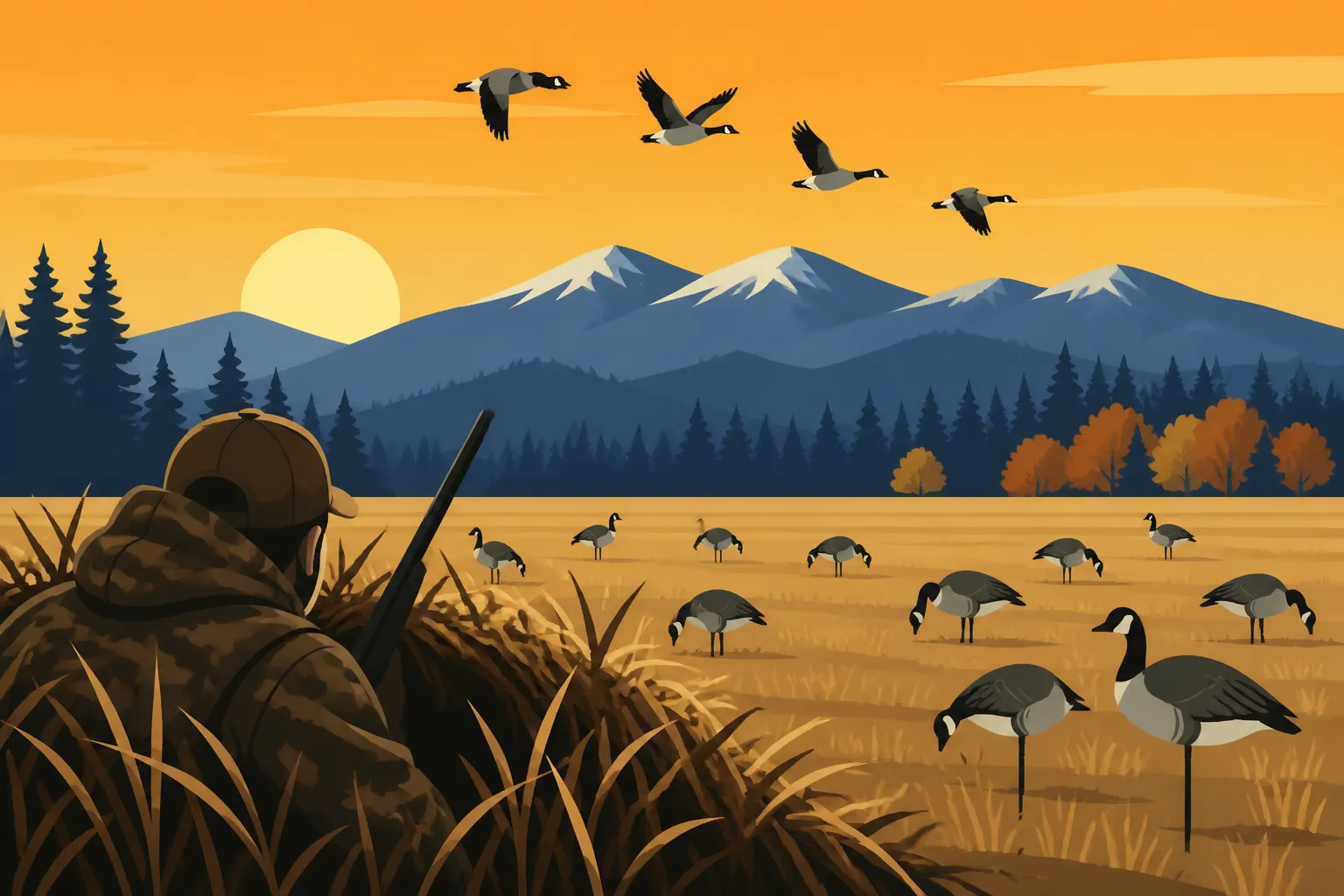
There's nothing quite like the sight of a flock of geese cupping their wings, preparing to commit to your spread in a wide-open New Hampshire northern zone field. But let's be real, often it feels like they've seen it all, circling high above, giving you the cold shoulder. This guide is here to walk you through crafting effective goose decoy spreads designed to fool even the wariest birds in those challenging northern fields, turning those high flyers into committed decoying geese.
Understanding Northern Zone Geese Behavior
Hunting geese in New Hampshire's northern zone, especially in open fields, demands more than just throwing out a few plastic birds. You're up against incredibly intelligent waterfowl that have seen every trick in the book, or so it seems. Their behavior is largely dictated by food sources, migration patterns, and, frankly, hunting pressure. If you want to consistently bring them into range, you need to think like a goose.
Migration Patterns and Local Habits
The geese we see in New Hampshire's northern fields aren't just passing through; many are resident birds, while others are migrating through the Atlantic Flyway. The early season might find you hunting local family groups that have spent all summer grazing these very fields. They know the safe spots, the usual flight lines, and they've developed a keen sense of what looks "off." Later in the season, as the weather turns colder and migratory birds push down from Canada, you'll encounter different dynamics. These birds might be less familiar with a specific field but are often more wary from enduring hunting pressure across multiple states.
Understanding whether you're dealing with local birds or fresh migrants can drastically alter your strategy. Local birds might respond better to smaller, more realistic family groups, as they're used to seeing their own kind in those specific locations. Migrators, on the other hand, might be drawn to larger, more visible spreads that signal a major feeding opportunity after a long flight. Keep an eye on the weather patterns and harvest reports; a sudden cold snap up north can bring a fresh wave of birds that behave entirely differently than the ones you've been chasing for weeks. Using resources like GoHunt's mapping tools can help you track potential flight corridors and identify prime feeding areas based on historical data.
Feeding Habits and Field Selection
Geese are primarily grazers. They love agricultural fields—corn, soybeans, winter wheat, and even freshly cut hayfields. They're looking for waste grain or tender new shoots. But it's not just what they eat, it's where and how they eat it. They prefer open areas where they can see predators coming from a distance, which is precisely why field hunting can be so challenging for concealment. They'll often feed on the edges of fields initially, gradually working their way inward. They also have preferred loafing areas, usually near water, where they'll rest between feeding sessions.
Scouting is paramount here. You absolutely have to put in the windshield time, observing flight paths, identifying feeding fields, and noting where geese prefer to land and stage. If you can find a field they're actively using, you're halfway there. Even better if you can pinpoint the exact section of the field where they're concentrating. This information allows you to place your spread not just in a field, but in their field, in their preferred spot. A fresh "hot" field where geese were feeding the day before will always outperform a speculative spot. Remember, geese are creatures of habit until something spooks them. They return to reliable food sources as long as they feel safe. Understanding these patterns is key to successful Scouting New Hampshire Public Land Before Season and finding those ideal hunting spots.
Essential Decoy Types and Their Roles
When it comes to building an effective goose decoy spread for New Hampshire's northern fields, it's not just about quantity. It's about quality, realism, and understanding the role each decoy type plays in painting a convincing picture. You need to present a scene that screams "safe and abundant food" to a passing flock.
Full-Bodied Decoys vs. Shells vs. Silhouettes
Each type of decoy has its place, and often the most effective spreads combine them.
- Full-bodied decoys are the gold standard for realism. They have a three-dimensional shape, often flocked to reduce glare, and mimic geese perfectly from all angles. Their drawback is bulk and cost, making it difficult to deploy massive numbers, especially if you're hiking into a remote field. However, a core group of high-quality full-bodies placed near your blinds acts as the main attraction, the "come-to" spot. They look like contented, feeding geese, inviting others to join.
- Shell decoys are half-bodied, often sitting on stakes. They're lighter, less bulky, and more affordable than full-bodies, allowing you to deploy more of them. They create the illusion of numbers and depth when viewed from above. When seen from a distance, they can be incredibly effective, especially if you mix in different postures. Their main limitation is that they look less convincing from the side or behind, but when paired with full-bodies, they can round out a spread beautifully, extending the visual appeal without breaking the bank or your back.
- Silhouette decoys are flat, two-dimensional cutouts. These are the lightest, most compact, and most budget-friendly option for creating the illusion of a massive flock. They're fantastic for high-volume spreads, especially when you need to make your spread visible from a long distance. However, their two-dimensional nature means they can disappear when viewed from certain angles, especially head-on or tail-on. They shine when used on the outer edges of a spread, or mixed strategically among shells and full-bodies to add depth without adding excessive weight or cost. Many hunters use them to fill out the flanks of a large "V" or "U" spread.
Motion Decoys and Their Impact
Geese are constantly moving, whether pecking at the ground, stretching a wing, or looking around. A completely static decoy spread can look unnatural to wary birds. This is where motion decoys come in. They add a crucial element of realism that can be the difference between geese flaring off and committing.
- Flagging is a manually operated motion decoy that involves waving a flag designed to mimic a landing goose. It's incredibly effective for grabbing attention and signaling to distant birds that there's an active, excited flock below. The key is knowing when and how to flag—subtly waving when birds are far out, and ceasing as they get closer and start to commit. Over-flagging can spook them.
- Wind socks or rotary wing decoys harness the wind to create movement. Wind socks, often used with silhouettes, have a lightweight fabric body that billows and moves in the breeze, simulating feeding birds. Rotary wing decoys, like those from Mojo Outdoors (though I can't speak to specific models or prices), use spinning wings to mimic landing or stretching birds. These add a captivating flash and movement that can draw geese in from afar, especially on calm days when other decoys are still. However, be mindful of overdoing it; sometimes too much unnatural motion can be a deterrent for wary birds, so use them judiciously, perhaps just a few strategically placed ones to add life to the core of your spread.
Flock Composition Decoys (Feeders, Sentries, Resters)
A truly realistic spread isn't just about different decoy types; it's about replicating the natural behaviors you observe in a real goose flock. Geese aren't all standing upright like soldiers; they're engaged in various activities.
- Feeder decoys are arguably the most important. These decoys have their heads down, mimicking birds actively grazing. A spread dominated by feeders projects an image of a safe, undisturbed feeding area. This is your primary confidence builder. The majority of your full-bodied and shell decoys should be in feeding postures.
- Sentry decoys stand upright, heads alert, as if watching for danger. Every natural flock has a few sentries. Strategically placing one or two sentries on the outer edges or slightly elevated within your spread adds to the realism without making the entire flock appear on high alert. Too many sentries, however, can signal danger to approaching geese. You want just enough to suggest vigilance, not panic.
- Rester or sleeper decoys are birds with their heads tucked into their backs, appearing to be resting or sleeping. These are excellent confidence decoys, especially in the core of your spread or near your blind. A bird sleeping in the open indicates ultimate safety and comfort, which is a powerful draw for wary geese. Incorporating a few resisters really sells the illusion of a settled, undisturbed flock.
By mixing and matching these types and postures, you can create a dynamic and believable scene that effectively mimics what geese naturally expect to see.
Designing Effective Spreads for Different Scenarios
The "perfect" decoy spread doesn't exist. Instead, you need to adapt your spread to the specific conditions you face: wind, field size, hunting pressure, and the number of decoys you have. The goal is always to create a welcoming, safe landing zone for the geese, often referred to as the "kill hole," within ethical shooting range.
The Classic "U" or "J" Spread
These are perhaps the most popular and effective spreads for field hunting geese. They create a natural landing zone right in front of your blinds.
- The "U" spread: Imagine a large "U" shape laid out in the field, with the open end of the "U" facing the direction the geese will be approaching from (usually into the wind). Your blinds are placed at the base of the "U," or just inside the bottom of the "U," depending on your setup. The geese will naturally want to land in the open space, working their way into the wind, putting them perfectly in your kill hole. The sides of the "U" should be filled with a mix of feeder and shell decoys, with perhaps a few sentries on the outer points. The depth and width of the "U" depend on your decoy numbers and the field size, but aim for a clear, inviting opening. This shape is incredibly versatile for various wind conditions, allowing geese to comfortably cup their wings and set down.
- The "J" spread: Similar to the "U," the "J" spread features a long main leg that typically runs into the wind, and a shorter, curved "hook" that widens the landing zone. Your blinds would be placed at the curve of the "J" or along the inside of the hook. This spread can be very effective for guiding geese exactly where you want them, especially if you're dealing with a consistent crosswind or want to subtly direct them towards a specific shooting lane. The long straight line of decoys acts as a beacon, while the hook provides the illusion of a safe landing. Both "U" and "J" spreads work by presenting an open, inviting space that geese intuitively seek out for a safe touchdown.
The "Family Group" Approach
Sometimes, less is more, especially when targeting highly pressured birds or in smaller, more intimate settings. The "family group" approach focuses on realism over sheer numbers. Instead of one massive spread, you break your decoys into several smaller, distinct groups.
Each group, typically 5-10 decoys, mimics a natural family unit feeding together. You'd have mostly feeders, perhaps one sentry, and a couple of resters within each group. These groups are then spaced out, creating natural lanes and open pockets between them. This scattered, organic look can be incredibly effective for wary geese who might be turned off by an overly large, "perfectly" arranged spread. The key is to arrange these groups realistically, often with slightly different orientations, as if they've just settled down and are working across the field. Your blinds would be positioned to overlook one or more of these open lanes, giving the geese a natural approach path. This approach also reduces the amount of equipment you need to haul in, making it a good option if you're hunting more remote locations or on public land where access is challenging.
Spread Variations for Different Wind Conditions
Wind is the duck and goose hunter's best friend and worst enemy. It dictates how birds approach, land, and what looks natural. Ignoring the wind is a recipe for disaster.
- Headwind Approach: Geese almost always land into the wind. If the wind is directly in your face, a traditional "U" or "J" spread with the opening facing you works perfectly. The geese will come in over your shoulder or directly at you, trying to land in the sweet spot.
- Crosswind Approach: A direct crosswind can make a standard "U" difficult as geese will try to drift with the wind rather than land squarely in your kill hole. In this scenario, consider an "L" shape or a modified "J" that angles the landing zone slightly downwind, creating a more comfortable side approach for the birds. You might also extend one arm of your "U" further into the wind, allowing them to swing and turn. The key is to ensure their flight path intersects your kill zone within range, accounting for their drift.
- Light Wind/No Wind: This is often the toughest condition. Geese are less predictable without a strong wind to guide their approach. This is when motion decoys, like flags and wind socks, become absolutely critical to create any sense of life. A larger, more visible spread can help draw attention, and you might consider a slightly more scattered, less defined "U" or "J" to give them options. On really calm days, having your decoys facing in slightly different directions, as if randomly pecking, can add a touch of realism that a perfectly uniform spread lacks. Remember, the objective is always to make your spread look inviting, regardless of the wind's influence. Wind and Thermals in Steep Granite Terrain might be a different kind of hunting, but the principle of understanding air movement is just as vital for field geese.
Advanced Tactics for Wary Birds
Hunting geese in the northern zone, especially later in the season, means dealing with birds that have been educated by relentless hunting pressure. They've seen it all, and they're incredibly discerning. To fool these "graduate school" geese, you need to go beyond the basics and focus on hyper-realism and subtle cues.
Adding Confidence Decoys
Sometimes, a spread of only geese can look too perfect. Real flocks often associate with other waterfowl or even other animals in a field, especially if it's a food-rich area. Adding a few "confidence decoys" can help sell the illusion of safety.
- Duck Decoys: A small cluster of mallard or pintail full-bodied decoys placed casually on the edge of your goose spread, or even in a little "pond" of water in the field (if applicable), can make your setup look more natural. Geese often tolerate ducks feeding alongside them, and the presence of ducks signals that the area is safe enough for smaller, less wary birds, thus implying safety for the geese themselves.
- Crane or Sandhill Decoys: If sandhill cranes are in your area (though less common in New Hampshire's immediate northern zone fields, their presence further west can be a factor), adding a few of these tall, distinctive decoys can work wonders. They stand out and attract attention from a distance, and their presence suggests a large, undisturbed feeding ground. The bigger the "animal," the more confidence it can instill, assuming it’s a natural pairing in their environment.
These decoys aren't meant to be the main attraction but rather subtle background elements that enhance the overall credibility of your spread. It's about building an ecosystem, not just a bunch of geese.
Fewer Decoys, More Realism
There's a common misconception that more decoys always equal more geese. For highly pressured, wary birds, this can often backfire. A huge, uniform spread can look unnatural and intimidating. Instead, consider scaling back your numbers and focusing intensely on realism.
A smaller spread, say 2-3 dozen high-quality full-bodied decoys, arranged in incredibly lifelike "family groups" with varied postures (feeders, resters, a single sentry), can be far more effective than 10 dozen less realistic silhouettes. When you use fewer decoys, every single one needs to be perfect: no glare, natural-looking flocking, and placed with purpose. The advantage here is that the birds don't see a giant, overwhelming blob; they see a few contented small groups, and their natural instinct to join a smaller, safe-looking flock kicks in. This approach also makes setup and teardown much faster, which is a bonus on those frigid northern zone mornings. Sometimes, the effort put into a smaller, perfectly executed spread outweighs the perceived advantage of a massive, but less convincing, one.
The Impact of Spacing on Wary Geese
Spacing is a subtle yet critical element that many hunters overlook. Beginners often place decoys too tightly together, creating an unnatural cluster. Geese, especially wary ones, need their personal space.
- Natural Spacing: Observe real geese in a field. They are rarely shoulder-to-shoulder unless tightly packed for warmth on an extremely cold day. Most often, they're spread out, giving each bird room to feed and move. Replicate this. Give your decoys ample room, at least 3-5 feet between each one, and sometimes more. This gives the impression of a relaxed, uncrowded feeding area.
- The Kill Hole: Within your "U" or "J" spread, the kill hole should be noticeably wider than the spacing within your decoy groups. This exaggerated open space is where the geese feel safest to land. If your decoys are too close to this landing zone, it can make geese nervous about landing too close to a crowded area. A well-defined, spacious kill hole acts as a clear invitation.
- Approaching from Downwind: While geese land into the wind, they often approach from downwind, circling to assess the situation before making their final turn. Your spacing should account for this. A more open, realistic spread allows them to see through the decoys, making them feel more comfortable during their fly-bys. A tightly packed spread can look like a wall, causing them to shy away. The way you spread your decoys can significantly impact whether a distant flock decides to investigate or simply pass you by. When you're trying to fool experienced birds, little details like decoy spacing matter immensely.
Placement and Spacing Considerations
You can have the best decoys in the world, but if they're not placed correctly, they're just expensive plastic. Proper placement and spacing are crucial for making your spread look natural and inviting. It's all about guiding the geese where you want them to be.
Setting the Kill Hole
The "kill hole" is the inviting open space in your decoy spread where you want the geese to land. It’s your target zone, and its placement directly affects your shooting opportunities.
- Location, Location, Location: Your kill hole should always be downwind of your blinds, allowing the geese to land directly into the wind, facing you. This presents broadside or slightly quartering shots, which are ideal for clean kills. It should also be within comfortable shooting range—typically 25-35 yards. Resist the urge to make it too close, as wary birds need a bit more buffer, but don't make it so far out that you're attempting Hail Mary shots.
- Size Matters: The kill hole should be larger than you might think, often 15-25 yards across. Geese prefer ample room to land and will be looking for an unobstructed, safe touchdown. If the opening is too small, they might feel crowded and simply bypass your spread. Use your decoys to frame this opening, drawing their eyes directly to it. Think of your decoys as arrows pointing directly to the prime landing spot. Consider the sun's position throughout the hunt; placing your kill hole so the sun isn't directly in the birds' eyes as they approach can also be beneficial.
- Obstruction-Free: Ensure your kill hole is completely clear of any blinds, equipment, or anything else that might look out of place. Geese have incredible eyesight, and even a slight anomaly can make them flare. For comprehensive guidance on setting up your blinds in these areas, refer to Layout Blind Hunting a Northern Zone Field.
Wind Direction and Decoy Orientation
As we've discussed, geese land into the wind. Your decoys should mimic this natural behavior.
- Majority into the Wind: Most of your feeder and rester decoys should be oriented with their backs to the wind, as if they've landed and are now feeding or resting comfortably. This makes the entire spread look natural to approaching birds. If all your decoys are facing random directions, it can look chaotic and unnatural.
- Subtle Variations: While the majority face into the wind, don't make them all perfectly uniform. Real geese shift and move. A few decoys with slightly different angles, or even one or two sentries facing slightly crosswind, can add a touch of realism. The goal is to avoid an artificial, grid-like appearance.
- Using the Wind for Motion: If you're using decoys with stakes or bases that allow for some natural movement in the wind, ensure they're positioned so the breeze can animate them. A gentle sway or rock adds life to your spread, especially on days with light but consistent wind. The wind is your ally; let it work for you to create dynamic, lifelike movement.
Realism in Decoy Groupings
Geese don't just stand around randomly. They form social groups and tend to feed in patterns. Replicating these patterns enhances realism.
- Clustering: Instead of evenly distributing your decoys, create natural clusters. Groups of 3-7 birds feeding together, perhaps with a single sentry slightly apart, are common. Then, leave larger gaps between these clusters. This creates a more organic, dynamic look that mimics real geese. It also helps create those natural landing lanes within your larger spread.
- Movement Patterns: Imagine how a flock moves across a field. They don't land all at once in a perfect line. Some might be farther ahead, having started feeding earlier, while others are just settling in. You can replicate this by having some clusters further into the field, and others closer to your kill hole, as if they are gradually working their way across. This tells a story that approaching geese can understand and relate to.
- Head Positions: A mix of head-up (sentry) and head-down (feeder) postures is crucial, but also think about intermediate positions. Some decoys with heads slightly raised, as if looking around for a moment before resuming feeding, break up the monotony and add another layer of realism. The more varied and natural your postures, the more convincing your entire spread will be.
Calling and Concealment Synergy
You can have the most beautiful decoy spread in the world, but if you're not calling effectively and you're not completely hidden, those wary northern zone geese will still flare. These two elements work hand-in-hand to complete the illusion.
Calling to Your Spread
Goose calling isn't just about making noise; it's about having a conversation with the birds and giving them confidence as they approach your spread.
- Identify the Mood: Observe how the geese are flying and reacting. Are they high and uncommitted? Aggressive, looking for a fight? Or simply cruising, needing a friendly invitation? Your calling should match their mood. A loud, excited greeting call might grab attention from distant birds, but close-in, wary geese will respond better to soft, contented clucks and moans.
- Building Confidence: As geese circle your spread, your calling should be subtle and reassuring. Low, contented feeding calls, clucks, and moans tell them, "Everything's fine here, come on down." Avoid loud, aggressive honks when they are close and trying to commit. Think of it as inviting a friend over for dinner – you don't shout at them as they pull into the driveway.
- Timing is Everything: Knowing when to call and, crucially, when to stop calling is an art. Call to grab their attention when they're distant. As they commit and start to turn towards your spread, ease off the calling. Let the realism of your decoys do the work. If they start to flare or pull away, a quick, pleading "come back" call or a soft cluck might bring them around. Practice is key, and listening to real geese will teach you more than any instructional video. Your calling should complement your spread, never overpower it.
The Importance of Layout Blind Concealment
Geese possess an almost supernatural ability to spot anything out of place. In wide-open northern zone fields, your layout blind is your most exposed element, so concealment is paramount.
- Brush It In, Then Brush It More: Your layout blind shouldn't just be in the field; it needs to become part of the field. This means aggressively brushing it in with natural vegetation from the surrounding environment. If you're in a corn stubble field, use corn stalks. If it's a cut hayfield, use hay. Don't just lay vegetation on top; weave it into the stubble straps and ensure it breaks up the hard lines of the blind. Pay special attention to the head and foot ends, as these are often the most visible parts.
- Blend with the Background: Consider your background. Is there a tree line, a slight rise, or a fence row? Position your blinds against these features to help them disappear. Placing blinds perpendicular to the sun can also reduce glare. The flatter you can make your blind look, and the more it mimics the texture and color of the field, the better.
- No Gaps, No Shine: Even a small gap in your brushing, or a shiny piece of equipment sticking out, can be a dead giveaway to sharp-eyed geese. Check your blinds from a goose's perspective—get down low and look at them from various angles. Make sure all faces are covered, and no reflective surfaces are exposed. This meticulous attention to detail can make all the difference, especially when Hunting a Northern Zone Field where cover is sparse.
Using Natural Cover
Sometimes, the best concealment isn't a blind at all; it's using the natural contours and features of the field itself.
- Ditches and Depressions: If a field has a slight ditch, swale, or natural depression, these can offer fantastic concealment. Position yourself just below the grade, using the natural earth to break up your silhouette. This is often more effective than any man-made blind, as it is inherently part of the landscape.
- Fencerows and Hedgerows: A thick fencerow or hedgerow can provide excellent cover, allowing you to peek over or through to your spread. The challenge here is often finding one that offers an unobstructed view and shooting lane to your kill hole. You might need to trim a few branches or stalks to create clear lines of sight.
- Standing Crops (When Legal and Practical): If you're hunting during an early season when some crops might still be standing (and if it's legal to do so on that property), the edge of a standing corn or soybean field can offer incredible concealment. You're literally part of the habitat. Always ensure you have permission and are following all hunting regulations regarding hunting in or near standing crops. Regardless of your chosen concealment method, the goal is to disappear into the landscape, becoming an invisible part of the field that the geese scan right over as they commit to your inviting spread.
Optimizing Your Decoy Arsenal
Building a successful goose decoy spread in New Hampshire's northern zone is an ongoing process of learning, observing, and adapting. You're not just deploying gear; you're crafting an illusion, a story that coaxes wary birds into range. It takes effort, patience, and a keen eye for detail. Every setup is a chance to learn something new about goose behavior and what makes them commit. Don't be afraid to experiment with your spreads and refine your techniques. The reward of watching a flock lock up and commit to your hard work is truly unmatched.
| Decoy Type | Pros | Cons | Ideal Use |
|---|---|---|---|
| Full-Bodied | Highest realism, 3D | Bulky, heavy, expensive | Core of the spread, close to blinds, high-confidence decoys |
| Shells | Lighter, stackable, cheaper than full-bodies | Less realistic from side/rear, 2D appearance from certain angles | Fill out numbers, mixed with full-bodies, mid-range of spread |
| Silhouettes | Very light, compact, inexpensive, high numbers | Flat, disappear from certain angles, least realistic | Outer edges of large spreads, create illusion of volume |
| Motion Decoys | Adds crucial realism and visibility, grabs attention | Can be too much if overused, requires wind or batteries | Scattered throughout spread, especially on calm days |
| Confidence Decoys | Enhance realism, signal safety (ducks, cranes) | Can be bulky, only effective if natural for the area | Edge of spread, near kill hole |
New Hampshire Waterfowl Season and Zones can vary, so make sure your efforts align with legal hunting periods. Also, always be mindful of New Hampshire Duck and Goose Bag Limits and ensure you are legally compliant. Good scouting, careful setup, and smart calling can really turn a slow day into a memorable one. Pay attention to how the local birds behave on public land; resources like GoHunt's public land maps can help identify these key spots. It's often the small adjustments and the commitment to realism that bring those high-flying northern zone geese down.
Disclaimer
This article is for general informational purposes only and does not constitute professional advice. Laws, prices and regulations vary by location and change over time. Consult a qualified professional for guidance on your specific situation.