New Hampshire Small Game and Furbearers
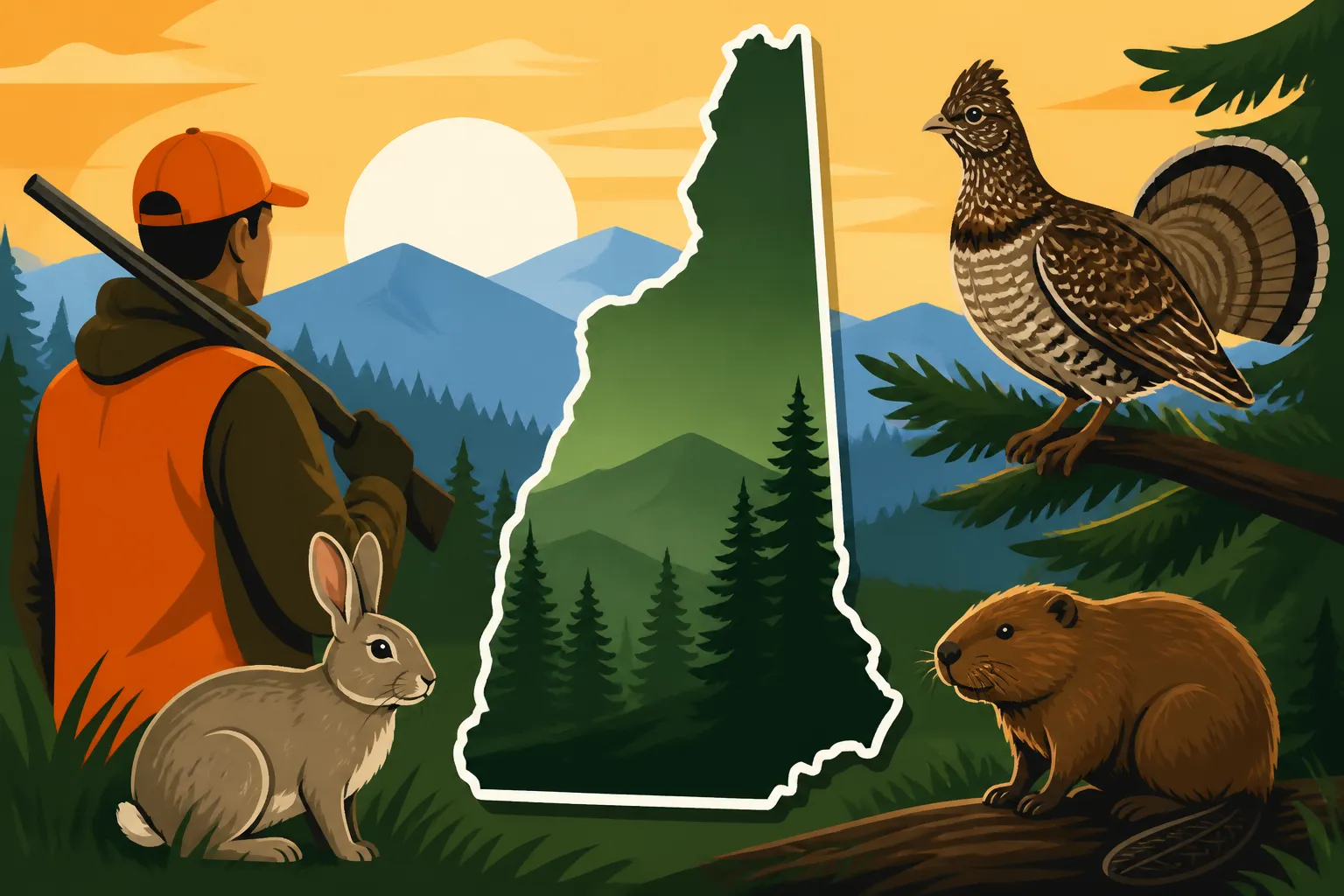
For many hunters in New Hampshire, the focus naturally drifts to big game like deer, moose, or bear. But if you’ve ever felt like your hunting season ends too soon, or you're craving diverse challenges beyond the big woods, you're missing out on a vibrant world right under your nose. This comprehensive guide will open your eyes to the fantastic opportunities available for pursuing small game and furbearers across the Granite State, offering a chance to extend your time afield and hone your skills.
The Underrated World of New Hampshire Small Game
New Hampshire offers a diverse array of small game species that provide fantastic hunting opportunities, often requiring different tactics and offering unique thrills. These pursuits are not just for beginners; they can challenge even the most seasoned hunter and offer more days afield when big game seasons are closed.
Squirrels: The Accessible Tree-Dwellers
Ah, the humble squirrel! Don't let their ubiquity fool you; grey squirrels and the smaller, feistier red squirrels offer some of the most accessible and enjoyable hunting in New Hampshire. They are abundant throughout the state, especially wherever you find mature hardwood forests or mixed woods with plenty of mast crops like acorns, hickory nuts, and beechnuts. For many of us, chasing squirrels with a .22 rifle or a small-gauge shotgun was our first real hunting experience, teaching us patience, stalking skills, and marksmanship.
Hunting squirrels usually involves a quiet walk through the woods, often called still-hunting or "squirrel busting." You're looking for movement in the treetops, the tell-tale cutting of nuts, or the chatter that gives away their presence. Early season, when the leaves are still thick, requires sharp eyes and a keen ear. As the foliage drops, spotting them becomes a little easier, but they also become more wary. A good pair of binoculars can be incredibly helpful for picking them out high in the canopy, especially on a bright, sunny day. The season typically opens in September, offering a fantastic way to warm up for deer season and introduce new hunters to the sport. Remember to check the current regulations for exact dates and bag limits, as these can vary slightly year to year.
Snowshoe Hare: Winter's Wily Challenge
If you're looking for a true winter hunting experience, the snowshoe hare, with its incredible camouflage and elusive nature, is your quarry. These fascinating creatures are perfectly adapted to New Hampshire's snowy winters, their fur changing from brown to white and their large feet acting like natural snowshoes. You'll find them in dense, brushy cover – think thickets of alders, young spruce, cedar swamps, and areas with regenerating clear-cuts. This kind of habitat, often referred to as "hare country," provides both food and essential protection from predators.
Hunting snowshoe hare is often a social affair, especially when done with a good pack of beagles. Listening to the hounds open up on a fresh track and the chase begins is an exhilarating experience unique to this kind of hunting. The dogs push the hare in a big circle, and hunters position themselves on likely crossing points. If you prefer a solo challenge, still-hunting in fresh snow can be incredibly rewarding. You're looking for fresh tracks leading into thick cover, then moving slowly, trying to jump a hare from its daytime bed. A .22 rifle or a shotgun with fine shot are common choices. The season often extends deep into winter, providing excellent opportunities when other hunting options are scarce. For more specific tactics, you might find our guide on Running Beagles on a New Hampshire Snowshoe Hare helpful.
Ruffed Grouse and Woodcock: Upland Bird Thrills
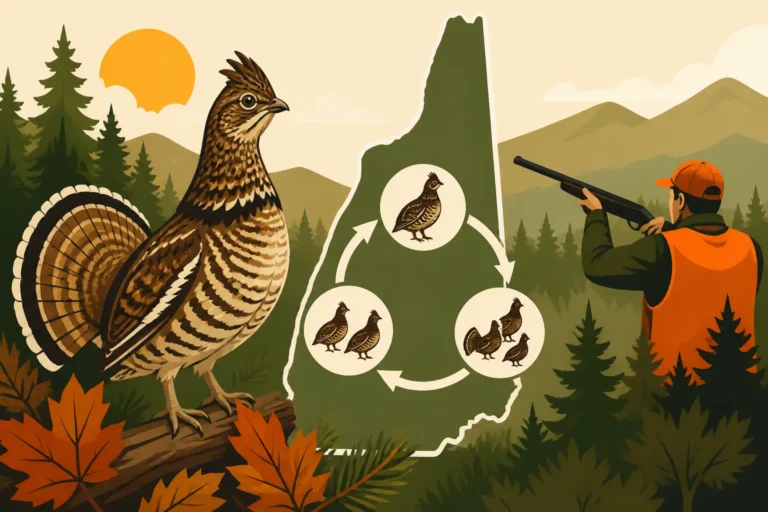
For many, the drumming of a ruffed grouse or the unpredictable flush of a woodcock is the epitome of upland bird hunting. New Hampshire offers fantastic opportunities for both. Ruffed grouse, often called "partridge" by local hunters, thrive in young forest habitats, especially those with a mix of aspen stands, old apple orchards, and diverse timber. They rely on dense cover for protection and feed on buds, berries, and insects. Hunting grouse often involves walking old logging roads, clear-cuts, or along the edges of thicker cover, hoping to flush one of these explosive birds.
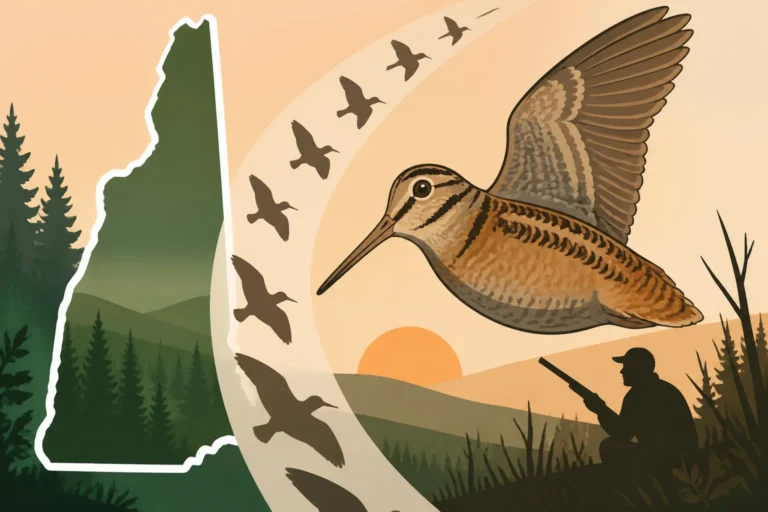
Woodcock, sometimes affectionately known as "timberdoodles," are migratory birds that pass through New Hampshire, particularly during their fall migration. They prefer wet, boggy cover, often found in alder thickets along stream bottoms or in young, moist woodlands where they can probe the soft earth for worms with their long bills. Hunting woodcock is often done in conjunction with grouse, as their habitats can overlap. Both species present a challenging shot, often requiring quick reflexes as they rocket through the trees. A light, fast-swinging shotgun, typically a 20-gauge or 12-gauge with open chokes and smaller shot sizes (like 7.5 or 8), is ideal for these pursuits. Hunting with a pointing dog can be a real game-changer, but many successful hunters simply walk likely cover.
New Hampshire's Furbearer Opportunities
Beyond small game, New Hampshire also provides robust opportunities for pursuing furbearers. These hunts often demand a different set of skills, focusing on calling, stealth, and an in-depth understanding of animal behavior.
Coyotes: The Eastern Opportunists
The eastern coyote is a remarkable animal, a true testament to adaptability, and they are found throughout New Hampshire. Their population has steadily grown, making them a year-round hunting opportunity, though specific regulations for night hunting and firearm use apply. Coyotes are incredibly intelligent and wary, making them a challenging quarry. Their diet is diverse, including deer fawns, small mammals, and even fruits and berries, which makes their presence a topic of much discussion among deer hunters.
Calling coyotes is an art form. It involves imitating prey animals in distress (rabbit, fawn, bird calls), or using coyote vocalizations like howls and yips to draw them in. Success hinges on stealthy entry and exit, choosing a stand with good visibility and a clear shooting lane, and paying close attention to wind direction. Coyotes have an incredible sense of smell, so staying downwind is paramount. Night hunting for coyotes is permitted in New Hampshire under specific rules, often requiring lights and presenting an entirely different kind of challenge. A good rifle, typically a .223 Remington or similar centerfire caliber, is common, as are shotguns with buckshot at closer ranges. If you're looking to dive deeper into this, our guide on Coyote Calling New Hampshire Farm Country has some excellent tips.
Foxes: Red and Gray, Masters of Stealth
New Hampshire is home to both red and gray foxes, offering hunters and trappers exciting opportunities. Red foxes are the more common and widespread, preferring open country, farm fields, and mixed woodlands, often seen slinking along field edges. Gray foxes, on the other hand, are more elusive and typically favor denser, brushier habitats and rocky outcrops, and are known for their ability to climb trees! Both species are incredibly cunning and can be challenging to call in.
Similar to coyotes, predator calls can be effective for foxes, often using mouse or rabbit distress sounds. Patience and proper setup, accounting for wind, are crucial. Trapping, under strict regulations, is also a common method for harvesting foxes, and their beautiful pelts are highly valued. Understanding the differences in their habitat and behavior is key to targeting either species successfully. Whether you're calling them in or setting traps, the pursuit of foxes demands a deep understanding of their natural instincts and movements.
Bobcat and Fisher: Recovering Predators
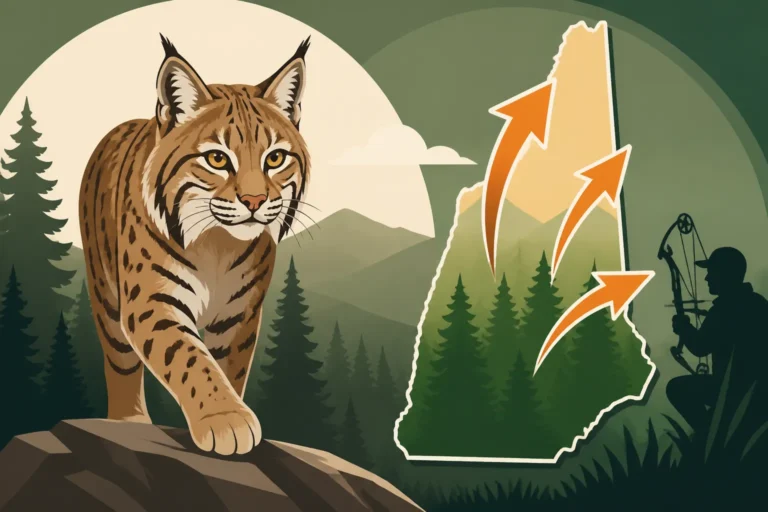
Bobcats and fishers represent some of New Hampshire's more elusive and enigmatic furbearers. Both populations have seen significant recovery in recent decades, thanks to careful management and habitat restoration. Bobcats are powerful, secretive wild cats that inhabit dense forests, rocky terrain, and swamps. Their numbers are healthy enough to support a limited hunting and trapping season in many WMUs, but permits are highly regulated and often require successful completion of an online quiz to demonstrate knowledge of bobcat identification.
Fishers, members of the weasel family, are incredibly quick and agile predators, known for their ability to hunt porcupines. They thrive in mature conifer and mixed forests. Like bobcats, fishers are primarily pursued by trappers in New Hampshire, with specific seasons and quotas. These species highlight the importance of careful wildlife management to ensure sustainable populations for future generations. For both bobcats and fishers, understanding the specific WMU regulations, permit requirements, and reporting obligations is absolutely critical. These are not species to be taken lightly, and their pursuit requires significant preparation and respect for the regulations designed to protect them. You can learn more about Trapping New Hampshire Furbearers in our detailed guide.
Understanding Seasons, Limits, and Regulations
Navigating the rules and regulations for hunting small game and furbearers in New Hampshire can sometimes feel like trying to untangle a stubborn knot. It's not always straightforward, but taking the time to understand the nuances is crucial for ethical and legal hunting.
Navigating the New Hampshire Fish and Game Digest
Your single most important resource for any hunting activity in New Hampshire is the official New Hampshire Fish and Game Department's hunting and trapping digest. This isn't just a suggestion; it's a requirement to know and abide by these rules. The digest is updated annually, so simply relying on what you remember from last year isn't enough. Seasons, bag limits, and even legal methods can change, sometimes subtly, sometimes significantly.
You can find the digest online as a downloadable PDF on the NH Fish and Game website, or pick up a physical copy wherever hunting licenses are sold, such as local sporting goods stores or town clerks' offices. I recommend doing both: keep a digital copy on your phone for quick reference in the field (though remember, cell service can be spotty in the backcountry!) and a physical copy at home for thorough review. Pay close attention to the general statewide rules, but also scour the sections that detail regulations specific to certain Wildlife Management Units (WMUs) or even particular species. It's your responsibility as a hunter to be fully informed.
General Season Dates and Bag Limits
While specific dates and limits should always be confirmed in the current digest, many small game and furbearer seasons in New Hampshire offer generous windows. For instance, squirrel season often begins in September and extends well into the colder months, providing ample opportunity. Snowshoe hare season typically opens later in the fall and runs deep into winter, making it a perfect pursuit for snowy days. Upland bird seasons for grouse and woodcock usually align with early fall, overlapping with other popular big game archery seasons.
Furbearer seasons, especially for coyotes, are often quite long, allowing for nearly year-round hunting with specific regulations for night hunting. Fox seasons also offer extended periods. Bag limits for small game like squirrels and hare are generally generous, reflecting their healthy populations. For furbearers like bobcats and fishers, however, limits are much stricter, often involving specific permit requirements, harvest quotas, or tagging procedures to ensure sustainable management. Always double-check the 'daily bag limit' and 'possession limit' for each species you intend to pursue.
| Species | Typical Season Start | Typical Season End | Common Daily Bag Limit | Notes |
|---|---|---|---|---|
| Grey/Red Squirrel | September | December | 5 per day | Check for WMU variations. |
| Snowshoe Hare | October | March | 5 per day | Runs well into winter. |
| Ruffed Grouse | September | December | 4 per day | Often overlaps with woodcock. |
| Woodcock | September | November | 3 per day | Migratory bird, season may be split. |
| Coyote | Year-round (specific periods for night hunting) | Year-round (specific periods for night hunting) | No limit | Night hunting rules apply. |
| Red/Gray Fox | October | March | No limit | Trapping season may differ. |
| Bobcat | December | January | 1 per permit | Limited permits, specific WMUs, quiz required. |
| Fisher | December | January | 1 per permit | Trapping only, specific WMUs, quotas. |
Note: This table provides general guidance. Always consult the current New Hampshire Fish and Game Digest for exact dates, bag limits, and specific regulations before hunting.
Legal Weapons and Methods for Small Game and Furbearers
Choosing the right equipment is not just about effectiveness; it's also about legality. For squirrels and rabbits, a .22 caliber rimfire rifle is a classic choice, offering precision and quiet operation. Small-gauge shotguns (like a .410 or 20-gauge) are also popular, especially for moving targets. For upland birds and snowshoe hare, a 12-gauge or 20-gauge shotgun with appropriate shot sizes is standard. It's important to be mindful of shot size restrictions, particularly near inhabited areas.
When it comes to furbearers like coyotes, you have more options. Centerfire rifles such as the .223 Remington, .22-250, or .204 Ruger are excellent for precision at longer ranges, which is often necessary when calling in wary predators. Shotguns with buckshot can be effective at closer ranges, especially in thick cover. Archery equipment is also legal for many small game and furbearers, offering an additional challenge. For trapping, New Hampshire has very specific regulations regarding trap types (e.g., foot-encapsulating, body-grip), set locations, trap tagging, and checking intervals. Understanding these rules is paramount to ensuring both ethical and legal trapping practices. Remember, New Hampshire Hunter Education Requirements are essential for all first-time hunters and should be taken seriously.
Essential Gear for Small Game and Furbearer Hunting
Having the right gear makes a world of difference, not just in comfort and safety, but in increasing your chances of success. New Hampshire's varied terrain and weather, from mild fall days to bitter winter winds, demand thoughtful preparation.
Firearms and Ammunition Choices
For small game, the debate often comes down to rimfire rifles versus shotguns. A good .22LR rifle, like a Ruger 10/22 or a Marlin bolt-action, is perfect for quiet stalking of squirrels, offering minimal recoil and affordable ammunition. It allows for precise headshots, preserving more meat. For fast-flushing grouse or hares, a shotgun is more appropriate. Many hunters favor a 20-gauge for its lighter weight and manageable recoil, but a 12-gauge with open chokes (like improved cylinder or skeet) loaded with 7.5 or 8 shot will do the job beautifully.
For coyotes and foxes, precision and power are often key. A flat-shooting centerfire rifle in a caliber like .223 Remington, .22-250, or 6mm ARC is ideal for calling setups where shots can range from close to several hundred yards. Pair it with good quality varmint-specific ammunition designed for rapid expansion. If hunting in thicker cover or during night hunts where shots are closer, a 12-gauge shotgun loaded with buckshot (like #4 buck or 00 buck) can be very effective. Always carry extra ammunition and make sure your rifle is sighted in properly before hitting the woods.
Calls, Decoys, and Trapping Equipment
Calls are often the difference-maker when pursuing furbearers. For coyotes and foxes, you'll want a variety:
- Distress Calls: Rabbit distress, fawn distress, and bird distress calls (mouth-blown or electronic) are primary tools. Brands like Foxpro or Primos offer excellent electronic callers with a wide range of sounds, while traditional mouth calls require practice but can be very effective.
- Howler Calls: Coyote howlers can be used to locate coyotes, challenge them, or bring in curious animals.
- Decoys: Motion decoys, like a flickering piece of fur on a stick, can provide a visual element that helps seal the deal when a predator is wary of committing to the call.
For upland birds, a good flush dog is the best "call," but for turkeys (which sometimes overlap small game seasons), slate or box calls are essential. If you're interested in Predator Calling New Hampshire's White Mountain Backcountry, you'll find even more specialized advice.
When it comes to trapping, you'll need a range of tools: appropriately sized foothold traps or body-grip traps, setting tools, lures and baits specifically designed for the furbearer you're targeting, and all the safety gear to handle traps properly. Proper trap placement, camouflage, and anchoring are critical for success and avoiding non-target catches.
Clothing, Footwear, and Navigation for Varied Terrain
New Hampshire weather is famously unpredictable, especially during hunting season. Layering is key, allowing you to adapt to changing temperatures and activity levels. Start with a moisture-wicking base layer, add insulating mid-layers (fleece or synthetic down), and finish with a waterproof and windproof outer shell. Even in early fall, mornings can be chilly, so consider your Layering for New Hampshire's Cold Hunting Season.
Footwear needs to be robust. For navigating the granite ridges, wet bogs, and dense undergrowth, sturdy, waterproof boots with good ankle support are a must. Brands like Schnee's, Kenetrek, or Irish Setter are popular among serious hunters. Depending on the terrain, you might also consider gaiters to keep debris and snow out of your boots. Blaze orange is often required during specific seasons (check regulations carefully), so invest in a comfortable, visible vest or hat that you can layer over your outer clothing.
Finally, navigation. A reliable GPS unit or a smartphone app like GoHunt or onX Hunt is invaluable. These apps allow you to mark your location, track your movement, identify property boundaries (crucial for both public and private land), and even access satellite imagery. Always carry a physical compass and map as a backup, especially when Hunting New Hampshire's White Mountain National Forest where cell service is often nonexistent. A headlamp is also non-negotiable for pre-dawn hikes to your stand or tracking after dusk.
Scouting and Strategy for Success
Successful small game and furbearer hunting in New Hampshire, much like big game, hinges on thorough scouting and employing sound strategies. It's about more than just walking in the woods; it's about understanding the animals and their environment.
Reading the Landscape for Small Game Sign
Becoming a proficient small game hunter means learning to read the subtle clues the animals leave behind.
- Squirrels: Look for "dreys" – their nests of leaves and twigs high in trees. More importantly, search the ground around mature nut-bearing trees for cut nutshells or discarded acorn caps. Fresh cuttings indicate recent activity. Pay attention to the calls; their barks and chirps can often lead you right to them.
- Snowshoe Hare: In winter, fresh tracks in the snow are your best friend. Look for clusters of tracks leading into dense softwood thickets or alder swamps. Hare will often bed down in these areas during the day. Their droppings, small pellets, can also indicate a well-used area.
- Ruffed Grouse: Listen for drumming during spring, but in fall, look for dusting bowls (small depressions where they dust themselves), tracks in soft earth, or "grouse piles" (droppings). Often, you'll find them near old apple trees, wild grapevines, or areas with dense, young timber.
- Woodcock: Their tell-tale sign is the "probe hole" – small, pencil-sized holes in soft, moist ground where they've poked for worms. Look for these in bottomland alder thickets, wet meadows, or swampy woods. Their droppings are distinct, often white splashes.
Understanding these signs, combined with an appreciation for their preferred habitats, will drastically improve your chances. Scouting even when you're not hunting, just observing, can be incredibly insightful.
Predator Hunting Tactics and Setups
Predator hunting, especially for coyotes and foxes, is a game of chess. Your setup is paramount.
- Wind Direction: This is arguably the most critical factor. Always approach and set up so that the wind is in your face or quartering into you, carrying your scent away from where you expect the predator to approach. Coyotes will almost always circle downwind to scent-check the setup.
- Visibility and Cover: Choose a stand location that offers good visibility of the approach lanes but also provides enough cover to break up your silhouette. Think about shooting lanes and potential backstops.
- Thermals: In hilly or mountainous terrain, thermals play a huge role. In the mornings, air currents generally flow uphill as the sun warms the ground. In the evenings, they flow downhill as the air cools. Understanding Wind and Thermals in Steep Granite Terrain can help you predict how your scent will carry and how predators might approach.
- Calling Sequences: Start with softer, subtler calls and increase intensity if you don't get a response. Mix in different sounds – distress calls, pup howls, or challenge howls. Be patient; a coyote might respond in minutes or take a half-hour to circle in. Sometimes, the best call is no call at all, just patiently waiting after an initial burst.
Successful predator hunting is rarely rushed. It's about planning your approach, executing a flawless setup, and patiently allowing the call to work its magic.
Public vs. Private Land Access for Small Game and Furbearers
New Hampshire boasts a good amount of public hunting land, which is a fantastic resource for small game and furbearer enthusiasts.
- White Mountain National Forest: A vast expanse, offering extensive opportunities, especially for grouse, hare, and coyotes in its diverse timber. However, access can be challenging, and cell service is often non-existent.
- Wildlife Management Areas (WMAs): Scattered throughout the state, these areas are specifically managed for wildlife habitat and public access. They are often excellent for upland birds, rabbits, and squirrels, and some even have specific regulations for furbearers. Make sure to check WMA-specific rules, as some may have restrictions on certain activities or hunting methods.
- State Forests and Town Forests: Many state-owned forests and numerous town forests also allow hunting, providing closer-to-home options. These can be prime spots for squirrels and grouse.
Beyond public lands, don't overlook the potential of private land, especially for species like coyotes and foxes, which frequent agricultural areas and woodlots. Knocking on Doors in New Hampshire Farm Country to ask for permission can open up some excellent, less-pressured opportunities. Always be respectful, clearly understand the landowner's boundaries and restrictions, and leave the property better than you found it. Carrying a map (like a GoHunt or onX Hunt app map) showing property lines can prevent accidental trespassing and ensure you're hunting legally.
Processing and Utilizing Your Harvest
The hunt doesn't end when the shot is fired. Proper field dressing, processing, and eventual utilization of your harvest are integral parts of the hunting experience, ensuring respect for the animal and adherence to regulations.
Field Dressing and Care for Small Game
Proper field care for small game is straightforward but important to ensure quality meat.
- Squirrels and Rabbits: These can be quickly field dressed by making an incision from the sternum to the pelvis, removing the entrails, and wiping out the cavity with a clean cloth or snow. Many hunters will skin and butcher squirrels and rabbits directly in the field to reduce weight and cool the meat rapidly. If you're planning to skin them at home, cool them quickly in a game bag.
- Upland Birds (Grouse, Woodcock): For birds, simply gutting them is often sufficient if you plan to pluck them. Alternatively, many hunters breast out birds in the field, taking only the breast meat, legs, and sometimes the wings. This reduces weight and allows for quick cooling. Ensure you leave a wing attached if required by law for species identification or transport.
- Cooling: Regardless of the species, getting the animal cooled down as quickly as possible is key, especially on warmer early-season days. Hang them in the shade, or place them in a cooler with ice (but not directly on ice, which can make the meat mushy; use a barrier or ice packs).
Good field care ensures that the delicious, lean meat from your small game harvest is preserved and ready for the kitchen.
Handling Furbearer Pelts and Carcasses
For furbearers like coyotes and foxes, the primary goal is often the pelt. This means careful skinning and preparation are essential to maximize fur value.
- Skinning: Furbearers are typically "cased skinned," meaning the skin is pulled off like a sock, leaving the fur side out. This requires precision around the face, ears, and feet. Various online tutorials and experienced trappers can guide you through the process.
- Fleshing: After skinning, the pelt needs to be "fleshed" – removing all fat and muscle tissue from the hide. This is a critical step for preventing spoilage and ensuring the pelt dries properly.
- Stretching and Drying: Once fleshed, the pelt is stretched over a wooden or wire stretcher board to the correct dimensions and allowed to dry in a cool, dry, well-ventilated area, away from direct sunlight or heat.
- Reporting: For certain species like bobcats and fishers, there are strict reporting requirements and often a mandatory tagging process by the New Hampshire Fish and Game Department. It is your legal responsibility to know and follow these rules.
While the pelts are the main draw, some hunters also utilize coyote meat, often as feed for their dogs. Always ensure the carcass is disposed of respectfully and legally, whether buried or transported to a licensed facility.
Culinary Delights: Cooking Wild Game
One of the great joys of small game hunting is the incredible table fare it provides. The lean, natural flavors of wild game are a true treat.
- Squirrels: Often compared to rabbit, squirrel meat is versatile. It's fantastic in stews, slow-cooked until tender, or pan-fried with a simple breading. Many enjoy Cooking a Wild Turkey Breast (if you were successful with a turkey tag), and squirrel can be prepared in similar ways.
- Rabbits and Snowshoe Hare: These are fantastic braised, stewed, or fried. A classic rabbit stew with vegetables or a hearty hare pot pie can be incredibly satisfying after a cold day in the woods. The meat is mild and takes well to various seasonings.
- Ruffed Grouse and Woodcock: These upland birds have delicate, dark meat. Grouse breasts are excellent pan-seared or grilled, while woodcock can be roasted whole or breasted out and cooked quickly. Be careful not to overcook, as they can dry out.
- Coyotes and Foxes: While typically not consumed by humans, the meat of these furbearers can be rendered for various purposes or used as bait for other trapping efforts. Always ensure any meat given to pets is thoroughly cooked.
Experiment with different recipes and enjoy the fruits of your labor. There's nothing quite like sharing a meal prepared from an animal you've ethically harvested yourself.
Conservation and Ethical Hunting Practices
Hunting small game and furbearers in New Hampshire is not just about the pursuit; it's deeply intertwined with conservation, ethics, and responsible stewardship of our natural resources.
The Role of Small Game and Furbearer Hunting in Management
Believe it or not, hunting these smaller species plays a vital role in maintaining ecological balance and healthy populations.
- Population Control: For prolific species like coyotes, regulated hunting and trapping help manage populations, especially where they might impact deer fawn survival or livestock. This is a key tool in New Hampshire's approach to game management.
- Habitat Management: The pursuit of species like ruffed grouse indirectly supports habitat work. Hunters advocate for and help fund forest management practices that create the young forest habitats essential not just for grouse, but for many other species of birds and mammals.
- Funding Conservation: Every hunting license and permit purchased in New Hampshire contributes to the Fish and Game Department's budget. This money funds wildlife research, habitat restoration, law enforcement, and hunter education programs across the state. Without hunters, much of this crucial conservation work wouldn't be possible.
By participating in small game and furbearer hunting, you are actively contributing to the overall health and management of New Hampshire's wildlife heritage.
Respecting Landowners and Fellow Hunters
Being a responsible hunter goes beyond following the laws; it's about being a good steward of the land and a respectful member of the hunting community.
- Landowner Relations: If you are hunting on private land, permission is absolutely non-negotiable. Always ask, clearly understand the boundaries, and respect any specific requests the landowner has. Leave no trash, close gates, and if possible, offer them some of your harvest as a thank you. Good landowner relations are vital, especially since Getting Private Land Permission in New Hampshire is key to accessing many prime hunting spots.
- Public Land Etiquette: On public lands, be mindful of other users – hikers, birdwatchers, mountain bikers, and other hunters. Give people space, avoid unnecessary noise, and always pack out everything you pack in. Be aware of where other hunters might be and communicate if necessary to ensure safety and avoid disturbing each other's hunts.
- Fair Chase: Uphold the principles of fair chase, meaning giving the animal a reasonable chance to evade you. This includes understanding legal shooting hours and ensuring you have a clear, ethical shot.
These practices ensure that hunting remains a respected and sustainable activity for generations to come.
Safety First: Handling Firearms and Traps Responsibly
Safety should always be your number one priority, whether you're carrying a .22 for squirrels or checking a coyote trap.
- Hunter Education: For anyone new to hunting, New Hampshire Hunter Education Requirements are mandatory. These courses cover firearm safety, wildlife identification, ethics, and basic survival skills. Even seasoned hunters benefit from occasional refreshers.
- Firearm Safety: Always treat every firearm as if it's loaded. Keep the muzzle pointed in a safe direction, keep your finger off the trigger until you're ready to shoot, and be absolutely sure of your target and what is beyond it.
- Trap Safety: If trapping, learn how to safely set and handle traps. Understand how to release non-target animals if accidentally caught. Always identify your traps with proper tagging as required by law.
- Self-Preparedness: When venturing into New Hampshire's wild places, especially in more remote areas like the White Mountains or North Country, be prepared for emergencies. Carry a first-aid kit, extra layers, water, a fire-starting kit, and reliable navigation tools. Tell someone where you're going and when you expect to return.
By prioritizing safety and ethics, we ensure that every hunting trip is not only successful but also responsible and enjoyable for everyone involved.
Disclaimer
The information provided in this guide is for general informational purposes only and is not a substitute for the official New Hampshire Fish and Game Department regulations. Hunting laws and regulations can change, and it is the responsibility of each hunter to consult the most current New Hampshire Hunting and Trapping Digest before engaging in any hunting activities. Always prioritize safety and ethical practices in the field.