Coyote Calling New Hampshire Farm Country
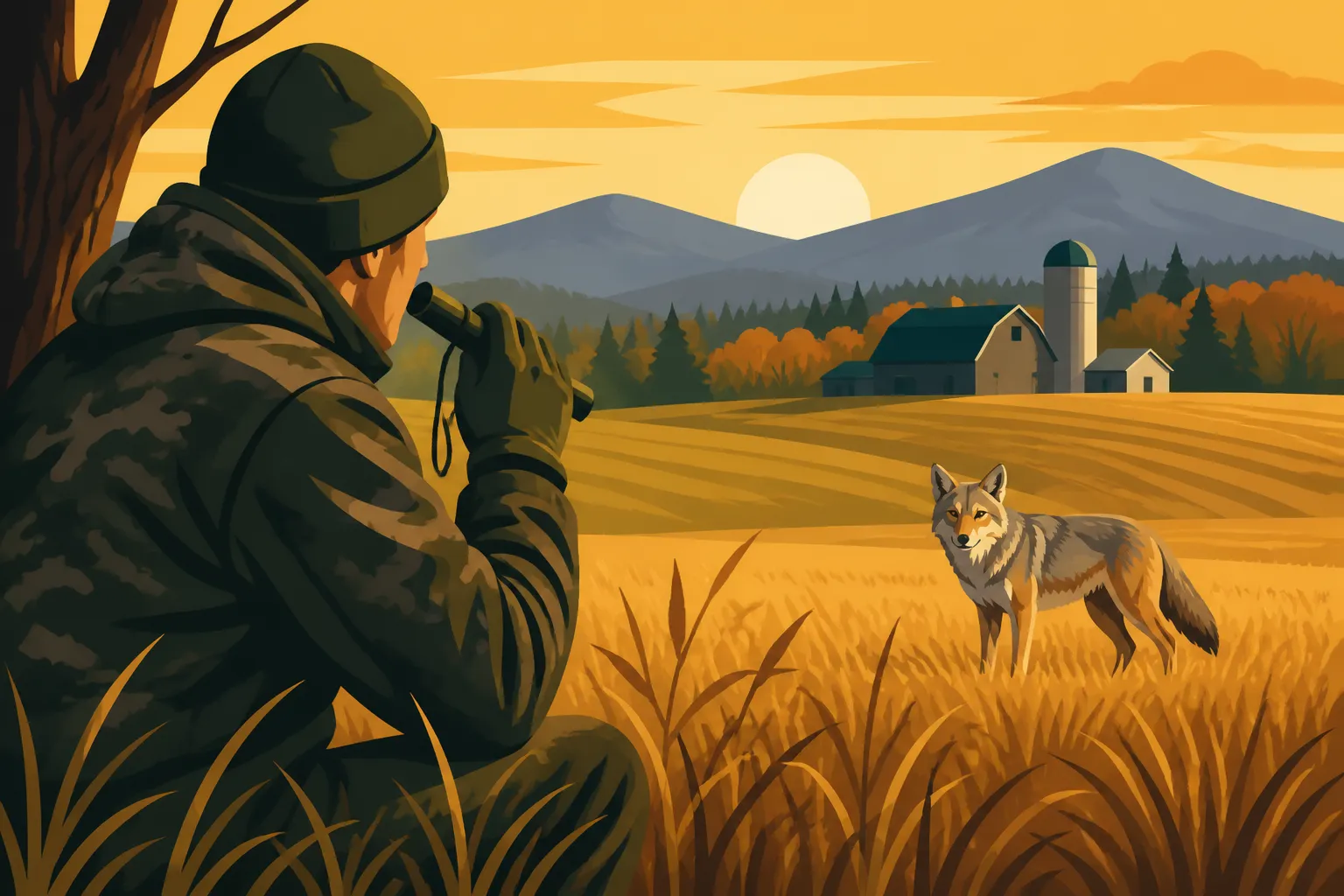
Hunting coyotes in New Hampshire's farm country presents a unique set of challenges, from navigating varied terrain to outsmarting these incredibly intelligent and adaptable predators. Their keen senses and often nocturnal habits make them a formidable target, leaving many hunters frustrated by empty stands and silent responses. This guide aims to demystify the art of coyote calling in agricultural landscapes, providing you with detailed strategies and insights to increase your success rates and help manage these cunning canids.
Understanding New Hampshire Farm Country Coyotes
Coyotes are remarkably versatile predators, and nowhere is this more evident than in New Hampshire's farm country. These areas, characterized by a mosaic of open fields, woodlots, brushy fencerows, and wetlands, provide an ideal blend of cover, food, and travel corridors for coyotes. Understanding their behavior in these specific environments is the first step toward becoming a more effective caller. They are not just transient visitors; they are integral parts of the ecosystem here, often thriving on the edges of human activity.
Coyote Behavior and Habitat in Agricultural Areas
In farm country, coyotes operate with a distinct rhythm, heavily influenced by agricultural practices and the availability of prey. They often use the cover of small woodlots and brushy creek bottoms as bedding areas during the day, venturing into fields and along fencerows at dawn, dusk, and throughout the night to hunt. The fragmented nature of these habitats means coyotes are often traveling between cover, making well-placed ambush points crucial. They learn quickly from human disturbance, becoming incredibly wary of consistent pressure. You'll find them using subtle elevation changes, natural drainage ditches, and thick stands of multi-flora rose or dense alders as natural highways, allowing them to move unseen.
Their territories in these areas might be smaller than in vast wilderness, but they are intensely defended and meticulously patrolled. A single farm property could hold a breeding pair and their pups, or several transient individuals. Understanding these dynamics is key to anticipating where they might come from when you call. They are masters of using the available topography and vegetation to their advantage, often circling downwind of a call to scent-check before committing. This is why a strategic setup, often involving a partner or careful positioning, is paramount. You might spot them slinking along a distant tree line or cutting through a harvested cornfield, their movements deliberate and cautious, always on high alert for any perceived threat.
Seasonal Movements and Food Sources
Coyote activity in New Hampshire farm country shifts dramatically with the seasons, directly correlating with food availability and breeding cycles. During late summer and fall, after the pups are old enough to hunt with the adults, family groups are more common, and their diet expands to include a wider variety of prey. This is often a great time to target them, as younger, less experienced coyotes might respond more readily to calls. As crops are harvested, fields become open buffets, attracting rodents, rabbits, and even deer scavenging on leftover grains, which in turn draws coyotes.
Winter presents a different scenario. Food becomes scarcer, and coyotes become more opportunistic. They might focus more on deer, especially those weakened by harsh conditions, and are often seen scavenging on deer carcasses. This time of year can be excellent for calling, as their hunger drives them to investigate potential food sources more aggressively. During the breeding season (typically late winter into early spring), vocalizations increase significantly, and challenge howls can be particularly effective. Understanding these seasonal shifts in their diet and behavior, as discussed in detail in guides like Coyote Diet in Farm Country, allows you to tailor your calling approach and increase your chances of success. A deep snow cover can also funnel coyotes into specific travel corridors, such as along cleared roads or frozen streams, making their movements more predictable.
Identifying Prime Calling Locations
The key to successful coyote calling lies in selecting the right spot to set up. In New Hampshire farm country, you're looking for locations that offer a combination of good visibility, natural cover for yourself, and strategic advantages based on wind direction. Focus on transition areas: the edges where a dense woodlot meets an open field, along brushy fencerows connecting two larger cover blocks, or points overlooking a series of agricultural fields. A slight rise in elevation, even a subtle knoll, can offer a significant advantage for spotting incoming coyotes while keeping you concealed.
Think about the coyote's approach. They will almost always try to circle downwind. Therefore, your setup should anticipate this. If possible, use natural barriers like a wide river, a dense swamp, or a busy road downwind to funnel their approach, preventing them from completely circling behind you. Look for fresh sign – tracks in mud or snow, scat, or even previous harvest locations that would concentrate their prey. Using mapping tools, like those found on GoHunt, can help identify property lines, topography, and potential travel corridors, allowing you to scout effectively even before setting foot on the land. Remember, coyotes are lazy; they will often use the path of least resistance. A well-placed setup will put you in their likely travel lane, giving you the upper hand.
Essential Gear for Coyote Calling
Successful coyote calling in New Hampshire farm country isn't just about the sounds you make; it's heavily dependent on the gear you bring. Having the right tools for the job can make the difference between an exciting encounter and a frustrating blank. From the calls themselves to the optics that help you spot them, every piece of equipment plays a crucial role in your overall strategy.
Calls and Decoys for Different Scenarios
The world of coyote calls is vast, but for New Hampshire farm country, you'll want a versatile arsenal. Electronic calls offer the most flexibility, allowing you to play a wide range of sounds – from various prey distress cries (rabbit, bird, fawn) to coyote vocalizations (howls, barks, pup distress). Brands like Foxpro or Primos Alpha Dogg are popular choices among serious callers due to their sound quality and remote-control capabilities, which keep movement at your setup minimal. Remember, volume control is paramount; start soft and increase gradually.
Manual calls, both open reed and closed reed, are indispensable for close-range work or when you need to add a personal touch. An open reed distress call can produce incredibly realistic squeals and whimpers, while a closed reed howler allows you to mimic territorial howls or challenge barks. Pair your calls with a decoy, especially during the breeding or pup-rearing seasons. A simple motion decoy, like a rabbit spinner or a small feathered bird, can draw attention away from your position and provide a visual stimulus that helps seal the deal. The visual aspect can be especially effective on younger, less cautious coyotes. Sometimes, just having that movement slightly away from your position is enough to give the coyote the confidence to come in closer, offering you a better shot opportunity.
Optics and Firearm Choices
Given the mixed terrain of farm country, ranging from wide-open fields to dense woodlots, your optics and firearm choices need to be adaptable. A good pair of binoculars, ideally 10×42, is essential for scanning distant field edges and spotting incoming coyotes early. For your firearm, a flat-shooting caliber with minimal recoil and readily available ammunition is ideal. Many New Hampshire coyote hunters favor a .223 Remington or .204 Ruger for their speed and accuracy, particularly when making longer shots across open fields. Shotguns, especially those chambered in 12 gauge with turkey or buckshot loads, become excellent choices for closer encounters in brushier areas or for night hunting.
A quality scope with variable magnification (e.g., 3-9x or 4-12x) is crucial for precision. For night hunting, a good quality red dot sight or a low-power variable optic can be excellent, especially if you're using a shotgun or if shots are expected to be under 100 yards. If you're venturing into the world of night hunting, which is legal for coyotes in New Hampshire with certain restrictions, investing in thermal or night vision optics can be a game-changer, though they represent a significant investment. Always ensure your equipment is sighted in and you're proficient with it; practice makes perfect, especially when a wary coyote is approaching.
Clothing and Scent Control
Coyotes possess an incredibly acute sense of smell, making scent control paramount. Just as you would when Hunting the Rut in Early-to-Mid November for deer, treating your hunting clothes with scent-eliminating sprays or washing them in scent-free detergent is a must. Store them in airtight bags until you reach your hunting location. Consider wearing rubber boots to minimize scent transfer from your feet to the ground as you walk in. While full camouflage is important, don't overlook the impact of your silhouette and movement. Breaking up your outline against natural cover is critical.
Layering your clothing is also important for comfort and staying still. New Hampshire weather can be unpredictable, especially in the transition seasons. A good base layer, insulating mid-layers, and a waterproof/windproof outer shell will keep you comfortable during long sits. Think about the specific environment you'll be in – dense brush may require tougher, rip-resistant fabrics, while open fields demand softer, quieter materials. And don't forget face masks and gloves to eliminate exposed skin. Even a slight glint from your skin or a faint human odor can send a smart coyote bolting.
Mastering Calling Techniques
Coyote calling is less about making specific sounds and more about telling a story that piques a coyote's curiosity or instinct. It's an art form that takes practice, patience, and a deep understanding of coyote vocalizations and responses. Simply blasting calls won't cut it; you need to understand when and how to use different sounds to draw them in.
Prey Distress Calls and How to Use Them
Prey distress calls are the bread and butter of coyote calling, mimicking the sounds of an animal in trouble – a rabbit caught in a fence, a bird injured by a hawk, or a fawn separated from its mother. These calls appeal to a coyote's most basic instinct: to find an easy meal. Start with a softer, almost whiny sound, then increase the volume and urgency. Think about short bursts of frantic cries, followed by silence, then repeat. The pauses are crucial; they give the coyote time to process the sound and commit to investigating.
Vary your distress calls. If a rabbit distress isn't working, switch to a bird or even a rodent squeak. Coyotes in agricultural areas often encounter a wide variety of prey, so a versatile approach is effective. When a coyote responds, sometimes less is more. If it's coming hard, stop calling and let its curiosity draw it in. If it hangs up or seems hesitant, a few more soft whimpers can sometimes coax it closer. Remember, the goal is to sound like an easy meal, not a trap. These calls can be particularly effective during times of food scarcity, like late winter, or when younger, less experienced coyotes are on the prowl.
Howling and Challenge Barks
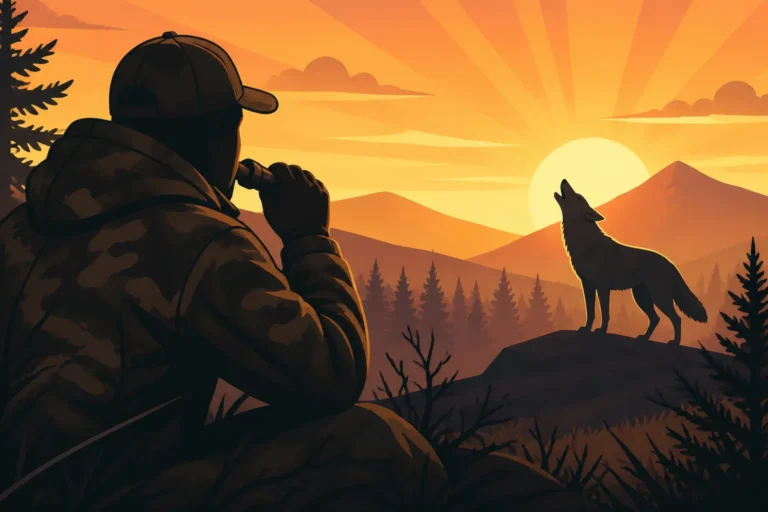
Beyond distress calls, coyote vocalizations can be incredibly effective, especially for locating animals or triggering a territorial response. Howling can be used to locate coyotes, especially at dawn or dusk, or after dark. A lone howl or a series of howls can often elicit a response from a nearby pack, letting you know their general location. Once you've located them, you can move in and try a different calling sequence.
Challenge barks, often combined with howls, can be used to provoke an aggressive response, especially during the breeding season (late winter through early spring) or when you suspect a territorial pair is in the area. A challenge howl followed by a few aggressive barks signals an intruder, often prompting coyotes to come in to investigate or defend their territory. However, use these calls sparingly and strategically, as they can also spook wary coyotes if overused. Sometimes, a series of pup-distress calls can draw in protective adult coyotes, as they come to investigate what's threatening their young. This specific technique can be incredibly effective when targeting a family group that has established a den nearby.
Pacing and Sequencing Your Calls
The pacing and sequence of your calls are just as important as the sounds themselves. Most calling sequences follow a pattern: an initial series of calls to grab attention, a period of silence, and then follow-up calls as needed. A common sequence might be:
- Initial attention grab: 30-60 seconds of distress calls at moderate volume.
- Listen and wait: 2-3 minutes of complete silence, scanning intently for movement. This is when a coyote might commit to approaching.
- Follow-up calls: If no coyote appears, another 30 seconds of distress calls, perhaps at a slightly different pitch or volume, or a different type of distress. If you get a response howl, you might switch to a challenge bark.
The total time you spend on a stand can vary, but 15-20 minutes is a good starting point. If you get a response early, you might cut the stand short, or if you feel confident a coyote is working its way in slowly, you might extend it. Don't be afraid to experiment. Each setup and each coyote will respond differently. The key is to be patient, stay still, and constantly scan your surroundings. Sometimes, as outlined in "Coyote Calling at First Light", the first few moments after your initial sequence are the most critical, as an aggressive coyote might come in quickly.
Setup Strategies for Success
You can have the best calls and the most expensive gear, but if your setup is poor, your chances of success plummet. Especially in New Hampshire's varied farm country, a well-thought-out setup is absolutely critical to tricking a coyote's keen senses. This involves careful consideration of wind, concealment, and the overall landscape.
Wind Direction and Approach
The wind is your most important ally and your biggest enemy in coyote hunting. Coyotes almost always approach a call from downwind to scent-check what's creating the noise. Ignoring the wind is a surefire way to educate a coyote that you're a human, not a meal. Before you even walk into your calling location, use a wind checker (a small bottle of powder or milkweed seeds works great) to verify the prevailing wind direction.
Your approach to the calling stand should be completely into the wind or crosswind, minimizing the chance of your scent blowing ahead of you. Once at your stand, position yourself so that the wind blows your scent behind you, away from the direction you expect the coyote to approach. If possible, use natural barriers like a deep ravine, a wide stream, or even a public road behind you to deter the coyote from completely circling your position. This forces them to approach from an angle where you have a better chance of seeing them before they smell you. Planning your entry and exit routes to maintain a wind advantage is also crucial. A common mistake is to walk in with the wind to your back, allowing your scent to saturate the area you plan to call into.
Concealment and Vantage Points
Once you've factored in the wind, the next step is to choose your exact setup spot, prioritizing concealment and a good vantage point. Look for natural cover – a dense stand of pines, the base of a large oak, a brushy fencerow, or even tall grasses at the edge of a field. Your goal is to break up your silhouette and blend into your surroundings. If hunting from the ground, a ground blind or even a simple piece of camo netting can make a huge difference, particularly in open farm fields where cover is scarce. For more on using these, consider our guide on Using a Ground Blind on Public Land.
Simultaneously, you need a clear line of sight into the areas where you expect coyotes to appear. This often means choosing a spot that overlooks a field, a logging road, or a draw. Avoid setting up on the very top of a ridge if it silhouettes you; rather, drop down a few yards from the crest to break your outline. When using an electronic call, place it 30-50 yards in front of your position, slightly off to the side, to draw the coyote's attention away from you. This gives you a slight advantage as the coyote focuses on the sound source. Always have your rifle or shotgun ready, resting on a bipod or shooting sticks, so you can make a quick, steady shot when the opportunity arises.
Multiple Hunter Setups
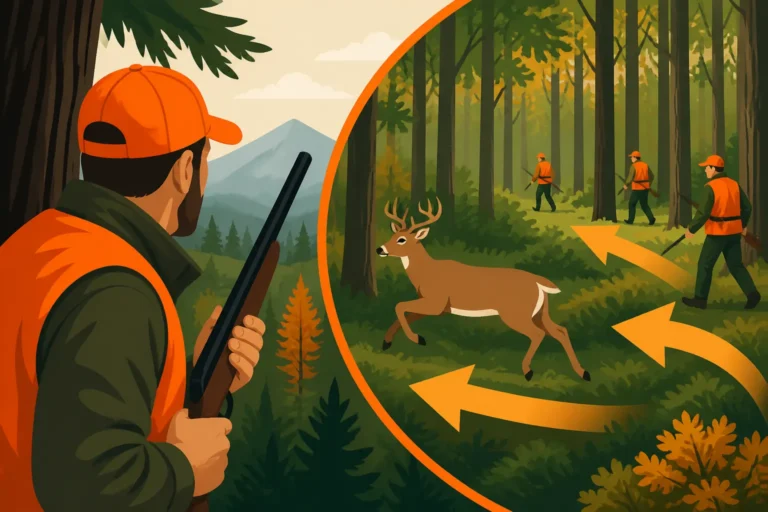
Coyote hunting, especially in farm country, can be significantly more effective with two or more hunters. This allows you to cover more ground and, crucially, address the coyote's tendency to circle downwind. The primary caller takes the upwind position, focusing on making the sounds. A second hunter, often referred to as the "cover man" or "blocker," positions themselves 75-150 yards downwind, concealed and ready.
This setup exploits the coyote's instinct to circle. As the coyote approaches the call, it will likely try to get downwind of the caller. This brings it directly into the shooting lane of the concealed second hunter. Communication between hunters is critical for safety and success. Discuss your shooting lanes beforehand, and ensure everyone knows where the others are positioned. This strategy is particularly effective on large, open fields or in areas with consistent wind direction. It multiplies your chances dramatically by covering the most likely approach route of a cautious coyote. Furthermore, having an extra set of eyes can help spot a coyote that might be hung up or taking a less direct route, giving you more time to react.
Advanced Tactics and Troubleshooting
Even with the best gear and fundamental techniques, coyotes can be incredibly challenging. They learn, they adapt, and they can be incredibly wary. This is where advanced tactics and troubleshooting come into play, helping you to outsmart those call-shy individuals and capitalize on specific conditions.
Dealing with Call-Shy Coyotes
New Hampshire farm country coyotes, especially those near populated areas or properties that see regular hunting pressure, can quickly become "call-shy." This means they've heard distress calls before, associated them with danger, and now either avoid them or approach with extreme caution, often staying out of sight. When faced with call-shy coyotes, you need to change your approach.
First, try switching up your calls entirely. If you've been using rabbit distress, try a fawn bleat, a bird in distress, or even a rodent squeak. Sometimes, the novelty of a new sound is enough to pique their curiosity. Second, adjust your volume and duration. Instead of aggressive, loud sequences, try very soft, sporadic calls – just enough to suggest something might be there, but not enough to scream "ambush." Third, incorporate more coyote vocalizations. Instead of just trying to "kill" them, try to "talk" to them. Subtle howls or even a pup-distress call can sometimes work where prey distress fails, appealing to their social or parental instincts. Finally, consider moving to entirely new areas, even if only a quarter-mile away, to find coyotes that haven't been pressured. Persistence and adaptability are key.
Night Hunting Considerations in Farm Country
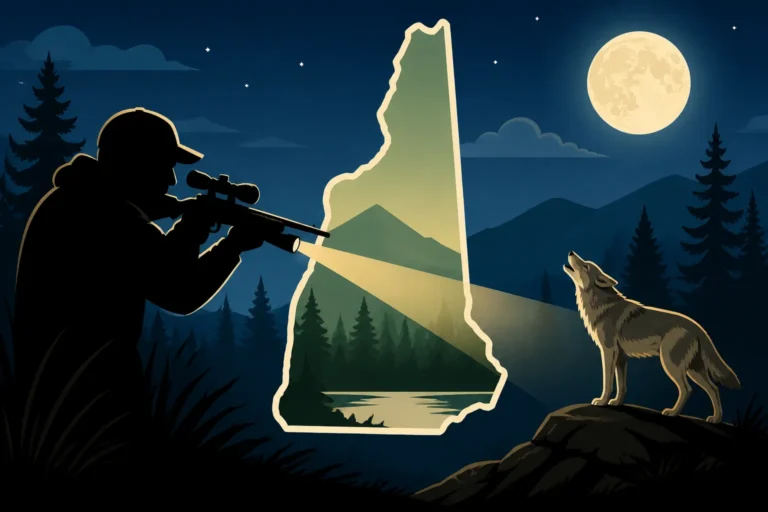
Night hunting for coyotes is legal in New Hampshire, but it comes with its own set of challenges and specific regulations, which you can read more about in "Night Hunting Rules for New Hampshire Coyotes". Hunting under the cloak of darkness can be incredibly effective because coyotes are primarily nocturnal, more active, and often bolder after the sun sets. However, safety and visibility are paramount.
The most common methods involve using red or green lights, which coyotes are less sensitive to than white light, or, for those with the budget, thermal or night vision optics. When using lights, sweep slowly and methodically, looking for eye reflections. Your setup needs to be even more carefully considered, as you have less visibility to spot an approaching coyote or to identify safe shooting lanes. Always know your backdrop. Using a fixed light source on your electronic call can help draw their eyes to the sound, making them easier to spot. Sound carries further at night, so adjust your call volume accordingly. It's also crucial to be intimately familiar with the land you're hunting to avoid hazards in the dark. A powerful headlamp, like those recommended in "Best Headlamp for a Pre-Dawn Granite Climb", is essential for walking in and out safely.
Post-Call Analysis and Learning
Every calling stand, whether successful or not, is a learning opportunity. Don't just pack up and leave if a coyote doesn't show. Take a few moments to analyze what happened. Did the wind shift? Did you get a response howl but nothing came in? Did you see tracks indicating a coyote circled and winded you? Go through the entire scenario in your head.
Keep a hunting journal. Record the date, time, location, wind direction, temperature, calls used, duration of the stand, and any coyote responses. Over time, you'll start to see patterns. You might learn that coyotes in a particular area respond better to certain calls, or that a specific setup works best for a given wind direction. The GoHunt app can be great for marking down precise stand locations and observations for future reference. This analytical approach helps you refine your techniques and become a more skilled and consistent caller. Think of it as building a mental database of coyote behavior specific to your hunting grounds, gradually turning guesswork into educated decisions.
Legal Considerations and Safety
Hunting coyotes in New Hampshire farm country isn't just about strategy; it's also about responsibility. Understanding the legal framework and prioritizing safety, especially when operating near agricultural properties, is non-negotiable.
New Hampshire Regulations for Coyote Hunting
Before you even step foot in the woods or fields, familiarize yourself thoroughly with New Hampshire Fish and Game Department regulations. Coyote hunting seasons, legal weapons, and specific rules regarding night hunting can change, so always check the most current digest. Generally, coyotes can be hunted year-round in New Hampshire, but certain restrictions apply. For instance, while night hunting is allowed, specific rules govern the use of lights and firearms during those hours. It's also critical to ensure you have the appropriate New Hampshire Hunting Licenses and What They Cost, and any necessary permits.
Always be aware of local town ordinances, which might impose additional restrictions on firearm discharge or hunting within certain distances of dwellings. When hunting on or near agricultural land, be extra vigilant about property lines. Using a GPS with a mapping application, such as onX Hunt, can help you stay aware of your exact location relative to private boundaries and avoid trespassing. Ensure you understand the rules for transporting harvested game and any reporting requirements, though coyotes typically don't have the same strict reporting mandates as deer or moose.
Ethical Hunting Practices
Ethical hunting goes beyond legal compliance; it's about respecting the land, the animals, and your fellow citizens. When hunting coyotes in farm country, this means taking clean, humane shots to ensure a quick kill. Practice regularly with your firearm to ensure accuracy, especially at various ranges you might encounter. Avoid taking shots where you don't have a clear, safe backdrop, or if the animal is beyond your effective range.
Respect for landowners is paramount. If you're hunting on private land, ensure you have explicit permission, and adhere to any specific rules they may have, such as avoiding certain fields or areas where livestock are present. Always close gates, don't disturb crops or equipment, and leave no trace of your presence. A landowner's trust is easily lost and hard to regain. Remember, you are an ambassador for all hunters, and your actions reflect on the entire hunting community. Our guide on Knocking on Doors in New Hampshire Farm Country provides excellent tips for building positive relationships with landowners.
Safety When Hunting Around Farms
Hunting near farms introduces unique safety considerations beyond typical wilderness hunting. Livestock, farm machinery, and residences require heightened awareness. Always confirm your target and know what's beyond it before taking any shot. Never shoot towards buildings, roads, or areas where you know people or animals might be, even if it's within legal setback distances. Err on the side of caution.
When walking in and out, especially in low light, consider wearing blaze orange, even if not legally required for coyote hunting, to make yourself visible to any other individuals who might be on the land. Inform landowners of your hunting plans, including the days and times you'll be on their property. This not only builds trust but also allows them to inform you of any active farm operations or areas to avoid. Secure your firearms properly when traveling to and from your hunting location, and always treat every firearm as if it's loaded. Safety is always the first priority.
Disclaimer
Please note: Hunting regulations and seasons can change. Always consult the official New Hampshire Fish and Game Department website or their latest hunting digest for the most current and accurate information before planning any hunt. This guide is for informational purposes only and does not supersede state or local laws.