New Hampshire Ruffed Grouse Population Cycles
If you've spent any time chasing grouse in the Granite State, you've probably felt the frustration of inconsistent flushes. One year, your dog might be on point every few minutes, and the next, you're walking miles through prime cover without so much as a whistle of wings. This isn't just bad luck; it's the signature of the enigmatic ruffed grouse population cycle, a phenomenon that has puzzled hunters and biologists for generations. This guide will unravel the mysteries behind these fluctuations, helping you understand the complex web of factors that dictate grouse numbers in New Hampshire.
Understanding the Ruffed Grouse Cycle Phenomenon
The concept of population cycles might sound like something out of a science textbook, but for those of us who spend our autumns in the New Hampshire woods, it's a very real, tangible experience. It dictates our success rates, influences our scouting strategies, and sometimes, frankly, makes us question if we're even hunting in the right spots! It’s this push and pull, the ebb and flow of grouse numbers, that truly defines the challenge and reward of pursuing these magnificent birds. We're not just talking about random year-to-year variation; there's a predictable pattern at play, even if the exact timing can sometimes feel a bit elusive.
The Ten-Year Oscillation – What It Means
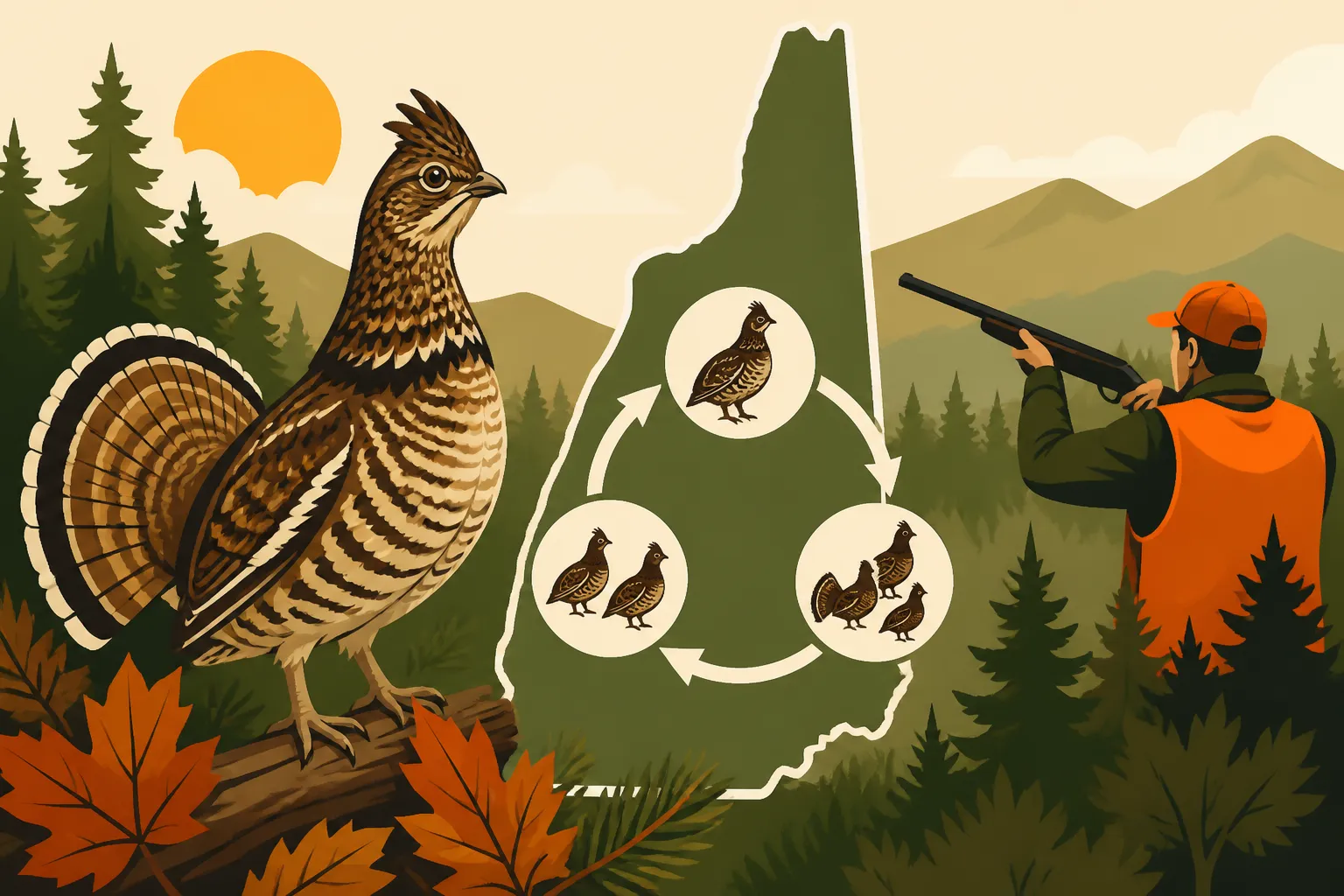
For ruffed grouse, specifically, we're often talking about a roughly 8-to-11-year cycle. This isn't a hard-and-fast rule, mind you, but it’s a widely observed pattern across their North American range, including right here in New Hampshire. What this means is that over the course of about a decade, grouse populations will typically experience a "boom" where numbers are high, followed by a "bust" where they become scarce, and then a gradual recovery. Imagine plotting grouse numbers on a graph, and you’d see a distinct wavy line, peaking and troughing with remarkable regularity.
During a "boom" phase, you'll hear more drumming in the spring, see more broods in the summer, and naturally, experience more flushes when you're out hunting. These are the years every grouse hunter dreams of, when finding birds feels almost effortless, and the woods feel alive with their presence. Conversely, the "bust" phase can be disheartening. You might walk your favorite coverts for hours, even days, and only kick up a handful of birds, leaving you wondering if they've vanished entirely. This cyclical nature is a critical piece of the puzzle for anyone serious about hunting these elusive birds, and it’s why understanding where we are in the cycle is so important.
Beyond Simple Boom and Bust – A Deeper Look
While the "boom and bust" description simplifies things, the reality is far more nuanced. It's not just a switch being flipped from high to low. The recovery phase is often slow and steady, taking several years for populations to build back up after a crash. During these recovery years, bird numbers might increase, but they often remain below the peak levels of a true boom year. This slower climb makes those peak years feel even more special and explains why consecutive banner years are rare.
Furthermore, these cycles aren't perfectly synchronized across the entire state, or even within different regions of New Hampshire. You might find that grouse are in a recovery phase in the Monadnock Region while the North Country is still experiencing a lingering bust. This local variation can make it tricky to generalize, forcing us to pay close attention to conditions in our specific hunting grounds. Factors like localized habitat changes, microclimates, or specific predator populations can influence the timing and severity of the cycle in different areas. Think of it less as a statewide switch and more like a series of interconnected, yet somewhat independent, waves rolling through the landscape.
Key Drivers of New Hampshire Grouse Cycles
Understanding the why behind these cycles is where it gets really interesting, and frankly, a bit complex. It’s never just one thing; it’s usually a confluence of several environmental factors interacting in intricate ways. These drivers are the invisible hand that guides the grouse populations, and recognizing them can give you a significant edge in predicting good and bad years. From the four-legged predators stalking the woods to the very trees that provide food and shelter, everything plays a part in the grand ballet of grouse numbers.
Predation Pressure – The Lynx and Coyote Connection
One of the most significant, and historically debated, drivers of the ruffed grouse cycle is predator-prey dynamics. For generations, biologists have linked the grouse cycle to the cycles of their primary predators, particularly the snowshoe hare and the Canada lynx in northern parts of their range. While New Hampshire doesn't have a robust lynx population that directly impacts grouse statewide, the principle of intense predation pressure at certain points in the cycle holds true with other predators like coyotes, bobcats, and even raptors.
When grouse numbers are high, there’s an abundance of food for predators. This allows predator populations to grow, leading to increased predation on grouse. Eventually, the increased predator numbers exert so much pressure that grouse populations crash. As the grouse numbers plummet, the predator populations, now without their primary food source, also begin to decline due to starvation or emigration. This reduction in predator numbers then allows the grouse to begin their slow recovery, restarting the cycle. For more on these animals, check out our guide on Coyotes and Predators in New Hampshire. It's a classic ecological dance, and New Hampshire's resident predators are very much part of it. The presence and density of predators can vary across the state, adding another layer of complexity to predicting local grouse numbers.
Habitat Fluctuations – From Aspen to Evergreens
Habitat quality is always a critical factor for any wildlife species, and ruffed grouse are no exception. However, it's not just the static presence of good habitat but also the fluctuation and distribution of specific cover types that play a role in their cycles. Ruffed grouse thrive in young, regenerating forests – often characterized by dense stands of aspen, birch, and alder, with plenty of undergrowth that provides cover from predators and accessible food sources. These "early successional" habitats are often a result of disturbances like timber harvests, fires, or even beaver activity. If you're looking for where Hunting a Beaver Flowage Edge can be productive for more than just deer, you'll often find ideal grouse habitat nearby.
The challenge is that these ideal habitats are transient. As forests mature, they become less suitable for grouse. A large clear-cut that was prime grouse habitat 5-15 years ago might be too open or too dense with pole-timber to support high numbers today. Localized logging operations can create temporary booms in grouse numbers as new habitat is created, but these benefits are geographically limited and shift over time. This constant change in the landscape, driven by both natural processes and human intervention, contributes to the localized variability of grouse populations within the broader cycle. Keeping an eye on recent timber activity in your area, or using mapping tools like those offered by GoHunt to identify younger forest stands, can be immensely helpful in finding where the birds might be congregating in any given year.
The Role of Food and Weather in Population Swings
Beyond predators and habitat, the more immediate factors of food availability and weather conditions are vital for grouse survival and reproductive success. These elements often act as accelerators or decelerators within the larger cyclical pattern, influencing the amplitude of the boom and the depth of the bust. A mild winter followed by a fantastic spring, for instance, can help accelerate a population recovery, while a harsh, snowy winter paired with a wet, cold spring can exacerbate a decline.
Mast Crop Variability and Its Impact
For many wildlife species, including grouse, the availability of food sources is paramount. While grouse are diverse foragers, consuming buds, leaves, berries, and insects, the annual mast crop can have a significant influence on their overall health and overwinter survival. Mast refers to the nuts and fruits produced by trees and shrubs, such as acorns, beechnuts, and wild apple. A bumper mast crop provides an abundance of easily accessible, high-energy food, which can lead to healthier birds going into winter, better survival rates, and stronger reproductive output the following spring. This is particularly true for other forest-dwelling small game like squirrels, as we often discuss when Squirrel Hunting New Hampshire Hardwoods.
Conversely, a poor mast year can stress grouse populations. When food is scarce, birds might have to expend more energy foraging, making them more vulnerable to predators and less able to withstand harsh winter conditions. This nutritional stress can reduce their body condition, lower their resistance to disease, and negatively impact their breeding success. These annual fluctuations in food availability can create "mini-cycles" or intensify the peaks and troughs of the larger 10-year cycle, adding another layer of unpredictability to our beloved birds. It’s one more variable that thoughtful hunters keep in the back of their minds when they're out scouting.
Winter Severity and Spring Breeding Success
New Hampshire winters are legendary, and their severity can directly impact grouse populations, especially when combined with other stressors. Deep snows and prolonged cold spells increase the energy demands on grouse, making survival a constant challenge. However, it's important to note that ruffed grouse are remarkably adapted to snow; they often "snow roost," burrowing into soft snow to insulate themselves from extreme cold and hide from predators. A certain amount of light, fluffy snow can actually be beneficial, as it provides this critical cover.
The type of winter can be just as important as its severity. Icy conditions, crusty snow, or periods of thaw and refreeze can eliminate snow roosting opportunities, leaving birds exposed and vulnerable. A spring that arrives late with prolonged cold, wet weather can be absolutely devastating to newly hatched broods. Young grouse chicks are highly susceptible to hypothermia, and a lack of insect activity during a cold, wet spring means less protein-rich food for their rapid growth. These factors can dramatically reduce chick survival, directly impacting the number of birds that make it to the fall hunting season and influencing the trajectory of the larger population cycle.
Interpreting the Cycle for New Hampshire Hunters
So, how does all this ecological information translate into practical hunting advice for those of us who spend countless hours walking the woods with a scattergun? Understanding the cycle isn't about perfectly predicting the future, but rather about equipping yourself with the knowledge to make more informed decisions, adjust your expectations, and ultimately, increase your chances of finding birds, regardless of where the population is in its swing.
Scouting During High and Low Cycle Years
Scouting is always crucial for any type of hunting, but its importance is magnified when you're dealing with cyclical game like ruffed grouse. In high cycle years, when populations are booming, birds might seem to be everywhere. You'll still want to find prime habitat, of course, but your search might be broader. You can often find birds in secondary coverts or areas that might not be consistently productive during other phases of the cycle. This is a great time to explore new areas, push into less-pressured spots, and truly learn the land. Pay attention to those New Hampshire Ruffed Grouse and Woodcock hotspots.
However, during low cycle years, your scouting strategy needs to become laser-focused. Birds will be concentrated in the very best habitat – the densest, most protected cover, with the best food sources immediately adjacent. These are the "grouse magnets" that hold birds even when numbers are down. You'll want to identify areas with a diverse mix of young timber, dense evergreens for thermal cover, and a reliable food supply. Using tools like GoHunt can help you zero in on these specific habitat types by analyzing forestry data and topographic features. Don't be afraid to put in the legwork. Sometimes, Finding Ground Others Walk Past is the key to success.
Here's a quick comparison of scouting considerations:
| Cycle Phase | General Population Trend | Hunter Strategy | Key Scouting Focus |
|---|---|---|---|
| Peak (Boom) | High, widespread | Explore new areas, enjoy plentiful flushes | Extensive range, secondary coverts, food sources |
| Decline | Falling, patchy | Concentrate efforts, refine habitat knowledge | Core habitat, food/cover junctions, escape routes |
| Low (Bust) | Very low, concentrated | Focus on prime, proven habitat, adjust expectations | Deepest cover, reliable food, thermal protection (evergreens) |
| Recovery | Slowly increasing | Monitor specific areas, look for early broods | Regenerating cuts, diverse cover, water sources |
Adjusting Hunting Tactics to Current Conditions
Your hunting tactics should absolutely evolve with the grouse cycle. In a peak year, you might find success simply walking logging roads or less dense cover. Your dog might be getting points left and right, and you can afford to be a bit less methodical in your approach. The challenge becomes more about shooting straight and handling multiple flushes than finding birds. This is the kind of year that makes you fall in love with New Hampshire Small Game and Furbearers all over again.
But when numbers are down, you need to adjust. This means slowing down, being more deliberate, and hunting cover thoroughly. Think thick, dense, nasty stuff that you might usually walk past. Grouse in low-population years are often extremely tight-holding, flushing only at the last possible second, and they'll cling to the heaviest cover for safety. Working your dog slowly and allowing them to really pick apart a covert becomes paramount. You might consider using different approaches, like still-hunting through thickets in Hunting New Hampshire's White Mountain National Forest, or even employing some of the techniques described in Predator Calling New Hampshire's White Mountain Backcountry (though for grouse, it's more about knowing the terrain than calling). Focusing on the edges where different habitat types meet – like the transition from a young clear-cut to mature timber or a stream bottom – can also be highly productive, as these "edges" often concentrate what few birds remain.
Conservation Efforts and Future Outlook
Understanding population cycles isn't just about maximizing our hunting success; it's also crucial for conservation. New Hampshire Fish and Game, along with private land managers and conservation organizations, plays a vital role in ensuring the long-term health of our ruffed grouse populations. While we can't stop the natural cycles, we can certainly implement strategies that buffer their impacts and help birds bounce back more quickly and robustly.
Habitat Management for Stable Populations
The most impactful conservation strategy for ruffed grouse in New Hampshire is habitat management, specifically creating and maintaining early successional forests. Since these habitats are naturally transient, active management is necessary to provide a continuous supply. This often involves strategic timber harvesting, conducted with wildlife in mind. Clearcuts, shelterwood cuts, and other silvicultural techniques, when properly planned and executed, can regenerate forests and create the dense, young cover grouse rely on. You'll often find these types of managed areas in New Hampshire Wildlife Management Areas which are designed for wildlife propagation.
Beyond commercial timber operations, efforts can include prescribed burning, which mimics natural fire cycles and promotes new growth, or even targeted brush cutting. Programs that encourage landowners to manage their private lands for early successional habitat are also critical, especially in regions with limited public land. For example, creating diverse forest structures, maintaining small, irregular clearings, or protecting valuable food-producing shrubs can all contribute to creating a mosaic of habitats that benefit grouse throughout their life cycle. A healthy mix of habitat types across the landscape provides grouse with both food and escape cover, making them more resilient to the lows of the cycle.
Monitoring and Research in the Granite State
New Hampshire Fish and Game actively monitors ruffed grouse populations to better understand their trends and inform management decisions. This monitoring takes various forms, including drumming surveys in the spring (where biologists listen for male grouse drumming displays, an indicator of breeding male numbers), brood surveys in the summer (counting chicks with hens), and hunter harvest reports in the fall. These data points, combined with long-term climate data and habitat mapping, help biologists piece together the larger picture of grouse health and how the cycles are playing out.
Furthermore, partnerships with organizations like the Ruffed Grouse Society and academic institutions conduct specific research projects into grouse ecology, predator interactions, and the effectiveness of different habitat management techniques. This ongoing research is essential for adapting conservation strategies to changing environmental conditions and ensuring that New Hampshire's CWD-Free Deer Herd (and other species) remain healthy for future generations. By constantly learning and refining our understanding, we can better support these iconic game birds and provide more consistent hunting opportunities for those who cherish them.
Disclaimer
This article is for general informational purposes only and does not constitute professional advice. Laws, prices and regulations vary by location and change over time. Consult a qualified professional for guidance on your specific situation.