New Hampshire Woodcock Singing Ground Surveys
Hunting woodcock in New Hampshire is a passion for many, but these elusive "timberdoodles" can be notoriously tricky to locate. You've scoured thick cover, walked endless alder runs, and still come up empty-handed more often than not, leaving you wondering where all the birds went. This guide will pull back the curtain on a critical tool used by wildlife biologists and savvy hunters alike: the New Hampshire Woodcock Singing Ground Surveys, explaining what they are, why they're so important, and how their findings can help you put more woodcock in your game bag.
Understanding the Woodcock's Unique Biology and Behavior
Before we dive into the surveys themselves, it's really helpful to understand a bit about the American Woodcock. These aren't your average game birds, and their peculiar habits are exactly why special survey methods are needed.
The Timberdoodle's Peculiar Charm
The American Woodcock, affectionately known as the timberdoodle, bog sucker, or brier snipe, is truly one of New Hampshire's most fascinating game birds. They're plump, short-legged shorebirds that have adapted to an upland, forest-edge existence. With their distinctive long, prehensile bills, they're perfectly designed for probing moist, soft soil in search of earthworms – their primary food source. You'll find them in young, regenerating forests, alder thickets, and shrubby wetlands, places most other upland birds wouldn't consider home. What makes them challenging for hunters, beyond their excellent camouflage, is their migratory nature. They breed in New Hampshire and other northern states but head south for the winter, making their presence here fleeting and dependent on seasonal movements. Trying to pinpoint their exact location without understanding their lifecycle is like trying to hit a moving target in the dark.
The Allure of the Singing Ground
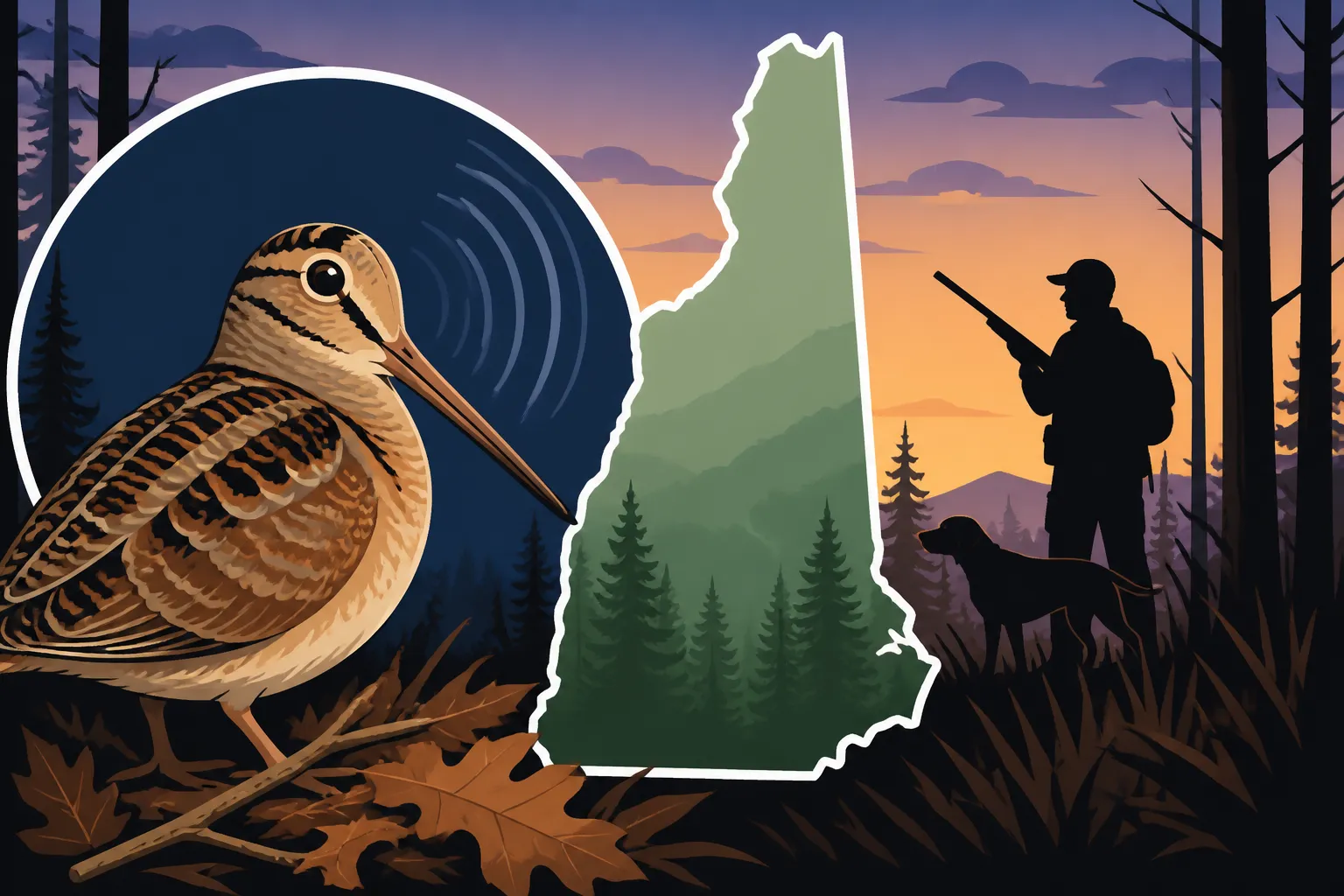
Perhaps the most unique aspect of the woodcock is its elaborate courtship ritual, which takes place on what are known as "singing grounds." These are typically open, sparsely vegetated areas adjacent to the denser, wetter cover where woodcock spend most of their time. As dusk settles in during early spring evenings, male woodcock arrive at these chosen spots to perform their incredible "sky dance." It starts with a series of nasal "peent" calls on the ground, followed by a dramatic spiraling flight upwards, often reaching hundreds of feet, while making a distinctive, twittering sound with their wings. After reaching their apex, they descend in a zigzag pattern, emitting melodic chirps before landing precisely back on their singing ground to repeat the performance. These displays are vital for attracting mates, and crucially, they make the birds audible and observable, providing a window into their population numbers that would be impossible at any other time.
What are Singing Ground Surveys and Why Do They Matter?
So, why do wildlife agencies and passionate volunteers dedicate countless hours to standing in damp fields at dusk, listening to these birds? It's all about gathering crucial data.
A Snapshot of the Breeding Population
New Hampshire Woodcock Singing Ground Surveys are a standardized method used across the woodcock's breeding range to monitor population trends. Essentially, they involve trained volunteers or biologists driving a predetermined route shortly after sunset during the breeding season, typically from mid-April to mid-May. At specific, pre-assigned stops along the route, usually a half-mile apart, they get out, listen for calling woodcock, and record how many distinct "peenting" males they hear within a several-minute period. The routes are designed to cover a variety of suitable woodcock habitats, from the thicker cover of the North Country to the more fragmented woodlands down south. This isn't just a casual stroll; it's a scientific endeavor repeated year after year, at the same locations, under consistent weather conditions, to ensure the data is comparable and reliable. Without these organized efforts, it would be nearly impossible to get an accurate read on how these populations are faring.
Tracking Trends, Not Just Numbers
The real power of these surveys isn't in a single year's count, but in the long-term trends they reveal. While knowing how many woodcock are heard on a route in a given spring is interesting, it's when you compare that data across decades that you start to see the bigger picture. Are woodcock populations increasing, decreasing, or holding steady in New Hampshire? Are these trends uniform across the state or are certain regions experiencing different fortunes? This information is absolutely vital for wildlife managers. It helps them understand the health of the species, identify potential threats like habitat loss or climate change, and make informed decisions about hunting regulations. For example, if a significant decline is noted across the board, it might trigger discussions about adjusting bag limits or season lengths. Conversely, stable or increasing numbers allow current management strategies to continue. It's a foundational piece of the puzzle for sustainable management of migratory game birds.
How New Hampshire Conducts These Vital Surveys
The success of these surveys hinges on consistency and dedicated individuals. It's a testament to both scientific rigor and the passion of wildlife enthusiasts.
The Dedicated Surveyors and Their Routes
In New Hampshire, the New Hampshire Fish and Game Department relies on a combination of agency staff and highly committed volunteers to conduct the singing ground surveys. These individuals aren't just driving around randomly; they're assigned specific routes, often roads that cut through prime woodcock habitat, which have been surveyed for many years, even decades. Each route has a set number of listening stops, usually around 10 to 12, that are spaced precisely apart. Many of these routes crisscross different Wildlife Management Units (WMUs), ensuring a broad sampling of habitat types across the state. The routes are typically run just after sunset, when the males are most active in their courtship displays. This consistency in timing, location, and methodology is what allows the data collected in New Hampshire to be compared with data from other states and contribute to a continent-wide understanding of woodcock populations. It's a significant commitment for these surveyors, braving spring black flies and unpredictable weather, all for the love of the timberdoodle.
Listening for the Sky Dance
The actual survey process is a methodical ritual. The surveyor arrives at their first stop exactly at sunset. They'll step out of their vehicle, turn off any engines, and listen intently for two minutes. During this silent period, they're not just listening for the distinctive "peent" call, but also for the high-pitched twittering wings of the male ascending into his sky dance, and the chirping descent. They record the number of individual woodcock heard peenting and performing their aerial displays. If a bird is heard at one stop and then again at the next, and it's believed to be the same bird due to proximity and timing, it's only counted once. This careful distinction prevents overcounting. After two minutes, they drive precisely 0.4 miles to the next stop and repeat the process, continuing along their entire route. This goes on until all stops are completed, typically well into the twilight hours or even after dark. The conditions are important too: surveys are ideally conducted on calm, clear evenings, avoiding strong winds or heavy rain that could obscure the sounds of the birds. This dedication to precise methodology ensures the data is as clean and accurate as possible, giving wildlife managers the best chance to understand what's happening with woodcock numbers.
Interpreting the Data: What Surveys Tell Us About New Hampshire's Woodcock
Once all the surveys are completed and the raw data is compiled, the real work of interpretation begins. This is where those numbers start to tell a story about our beloved timberdoodles.
Understanding Population Fluctuations
The data from New Hampshire Woodcock Singing Ground Surveys contributes to a larger, regional, and even continental assessment of American woodcock populations. When biologists analyze the results, they're looking for patterns. A single year's dip might be due to a late spring, unusual weather during the survey period, or even surveyor variability. But consistent declines over several years, or across multiple routes, signals a more significant issue. Factors influencing woodcock numbers in New Hampshire can be complex. Severe winter weather in their southern overwintering grounds, for instance, can impact their survival. On the breeding grounds here, habitat quality is paramount. Woodcock thrive in young, regenerating forests – typically 5-20 years old – that provide the dense cover for nesting and moist soils for foraging. As these forests mature, they become less suitable. Therefore, a decline in woodcock numbers can often be directly linked to a lack of early successional habitat in certain areas. Recognizing these fluctuations helps the New Hampshire Fish and Game Department understand where conservation efforts might be most needed.
Long-Term Health of the Timberdoodle
The singing ground surveys are a critical component in assessing the long-term health of the timberdoodle population. Nationally, woodcock populations have shown a general decline over recent decades, primarily due to widespread habitat loss and maturation of forests across their range. New Hampshire, like other states, contributes to this understanding. While a slight decrease year-to-year might not cause alarm, a sustained downward trend flags a serious problem for the species. This data directly guides conservation efforts. It prompts agencies to work with landowners and timber companies to create and maintain suitable early successional habitat. Programs focused on habitat restoration, managing logging operations to create diverse age classes of forest, and protecting riparian corridors are all influenced by the information gathered from these surveys. It's not just about managing for hunting opportunities; it's about ensuring a healthy, robust population of these unique birds for generations to come, something that hunter-conservation groups actively support.
Connecting Survey Data to Your Hunting Strategy
As hunters, we can sometimes feel disconnected from the scientific data, but understanding woodcock surveys can actually sharpen your hunting instincts and improve your success in the field.
Identifying Promising Habitat Hotspots
While the New Hampshire Fish and Game Department doesn't typically release specific route data to the public (imagine the pressure on those birds!), the general trends and knowledge gained from these surveys are invaluable for understanding where to focus your efforts. For example, if statewide reports indicate stable or slightly increasing populations in particular regions or WMUs, it suggests that habitat conditions in those areas are favorable. You can then use this broader understanding to scout for specific areas that fit the woodcock's preferred habitat profile: young, regenerating forest, often near water sources, with a good mix of alder thickets, aspen stands, and moist, rich soil. Online mapping tools, like those offered by GoHunt, can be incredibly useful for identifying these types of habitat features on public lands. Look for areas with recent timber harvests, old farm fields reverting to forest, or low-lying areas with dense shrub cover. These are the places where survey data suggests woodcock are likely to be breeding and therefore, where you'll find them during migration.
When you're out scouting, pay attention to the ground. Woodcock leave distinct "probe holes" in the soft earth as they search for worms. Finding these, even without birds present, is a strong indicator that the habitat is good and worth returning to when the birds are migrating through. Consider checking areas that are less frequently hunted for deer or turkeys; woodcock cover can be dense and overlooked. Remember, woodcock aren't found in mature, open hardwoods; they need that thick, almost impenetrable young growth to feel secure and forage effectively. Knowing the general areas where surveys show good numbers gives you a fantastic starting point for your personal boots-on-the-ground scouting.
Timing Your Hunt with Migration Patterns
New Hampshire Woodcock Singing Ground Surveys primarily give us insights into the breeding population. But for hunters, particularly during the fall season, understanding migration patterns is key. While surveys don't track migration directly, the overall health of the breeding population influences how many birds will pass through. Furthermore, knowledge of woodcock biology gained from these surveys helps us predict when these birds will be in New Hampshire. Early fall can see resident birds, but the real influx comes with the northern migration, typically peaking in mid-October. A cold snap to the north can push birds down quickly, while mild weather might delay their arrival.
Using resources like GoHunt or other online platforms that track weather patterns and anecdotal reports from other states to the north can help you anticipate the main flight. If birds are showing up in good numbers in Maine, it's a good bet they'll be in New Hampshire soon after. Local knowledge is also crucial here. Talk to other hunters, check local hunting forums, and pay attention to weather forecasts that predict cold fronts or strong northerly winds, as these often signal migratory movements. Your best bet is to be flexible and ready to hit the cover when conditions are right. For example, you might find that the best woodcock hunting aligns with the beginning of New Hampshire's Fall Turkey Hunting in the central and southern WMUs, or even into the early part of New Hampshire's November Firearms Deer Season, offering a great chance to combine hunts.
The Future of Woodcock Conservation in New Hampshire
The American Woodcock faces ongoing challenges, but there's a strong commitment in New Hampshire to ensure their future. Hunters and conservationists alike play a vital role.
Habitat Management: The Key to Sustaining Populations
The stark reality for American woodcock is that their numbers are largely dictated by the availability of suitable habitat. As forests mature, the dense, young cover they depend on for nesting, brood-rearing, and feeding diminishes. This makes proactive habitat management absolutely crucial. In New Hampshire, agencies work to encourage forest management practices that create and maintain this early successional habitat. This can involve clear-cutting small patches, strip cutting, or even prescribed burning in some areas to promote new growth. Landowners, whether private citizens or timber companies, are increasingly being educated on the value of managing portions of their land for wildlife, including woodcock.
Conservation organizations, like the Ruffed Grouse Society and American Woodcock Society, are instrumental in funding and implementing these habitat projects, often working directly with the New Hampshire Fish and Game Department. Their efforts focus on creating a mosaic of forest ages across the landscape, ensuring there's always a supply of the young, brushy habitat that woodcock and other early successional species need. Hunters can support these efforts directly through license purchases, excise taxes on hunting equipment (Pittman-Robertson Act funds), and by volunteering for habitat projects. Without this continuous effort, the timberdoodle's charming sky dance could become an increasingly rare sight.
Hunter Involvement in Monitoring and Conservation
Hunter involvement extends far beyond simply purchasing licenses. Hunters are often the first to notice changes on the ground and can be invaluable eyes and ears for wildlife agencies. If you're consistently seeing fewer woodcock in areas that used to hold birds, or if you're observing habitat changes, reporting these observations to New Hampshire Fish and Game can provide valuable anecdotal data that complements the formal surveys. Participating in citizen science initiatives, even if not directly related to singing ground surveys, can also contribute to the broader understanding of wildlife populations and habitat health.
Furthermore, many hunters are directly involved in habitat improvement projects. Clearing invasive species, planting beneficial native shrubs, or helping with controlled burns are all ways that hunters can contribute hands-on to woodcock conservation. By supporting organizations dedicated to upland bird habitat, like the Ruffed Grouse Society, hunters ensure that their passion for the sport translates into tangible conservation action. Ultimately, the future of the New Hampshire woodcock, and the cherished tradition of hunting them, relies on this partnership between wildlife professionals, landowners, and dedicated hunters who understand that good hunting is intrinsically linked to healthy habitat and robust populations. Consider using a platform like GoHunt to find and connect with local conservation groups in your area to get involved.
| Woodcock Survey Data Point | What it Means for Conservation | How it Impacts Your Hunting |
|---|---|---|
| Increased Count on Routes | Healthy local breeding population, good habitat. | Focus scouting efforts on similar habitat in that region. |
| Decreased Count on Routes | Potential habitat loss or other stressors, calls for investigation. | May indicate poorer hunting in that specific area or WMU. |
| Stable Count Over Time | Effective habitat management, sustainable population. | Consistent hunting opportunities in well-managed areas. |
| Regional Variations | Habitat conditions differ across WMUs. | Helps narrow down which WMUs might be more productive. |
| Long-Term Declines | Broader issues like widespread habitat loss, potential regulatory changes. | May indicate a need to travel further or scout more extensively for birds. |
| Spring Activity | Confirms successful migration and breeding readiness. | Provides a baseline for fall migration numbers from local birds. |
By staying informed and engaged, New Hampshire hunters can contribute significantly to the health and future of woodcock populations, ensuring that the thrill of a timberdoodle flushing from thick cover remains a vibrant part of our hunting heritage for years to come.
Disclaimer
This article is for general informational purposes only and does not constitute professional advice. Laws, prices and regulations vary by location and change over time. Consult a qualified professional for guidance on your specific situation.