New Hampshire Bear Harvest Numbers by Method
Trying to make sense of bear harvest numbers in New Hampshire can feel like a puzzle, especially with all the different methods and regional variations. It’s not just about the total count; it's about understanding how bears are being harvested, which methods are most effective, and what that means for both hunters and the overall health of our bear population. This guide is going to break down the ins and outs of New Hampshire's bear harvest statistics, focusing on the distinct methods used by hunters across the Granite State.
Overview of New Hampshire Bear Hunting
New Hampshire boasts a thriving black bear population, a true testament to successful wildlife management and the resilience of these magnificent creatures. For many years, hunters have played a vital role in managing this population, ensuring its health and preventing overpopulation that could lead to increased human-bear conflicts. But understanding the full picture requires looking beyond just the total number of bears taken each season. We need to delve into the "how" of the harvest.
New Hampshire's Bear Population Trends
It might surprise some, but New Hampshire's bear population has seen a remarkable increase over the past few decades. From an estimated few hundred bears in the mid-20th century, we now have a robust population well over 6,000, and potentially as high as 8,000, according to recent estimates. This growth isn't uniform across the state; areas like the North Country have always been bear strongholds, but increasingly, bears are expanding into more southern and eastern regions, adapting to habitats once thought unsuitable. This expansion means more opportunities for hunters, but also a greater need for nuanced management.
The New Hampshire Fish and Game Department carefully monitors these trends, using a combination of harvest data, den studies, and public sighting reports to gauge population health. As the population grows, so does the importance of a well-regulated hunting season to maintain a healthy balance. It's a delicate dance between conservation and opportunity, and understanding harvest methods is key to refining those management strategies. For a deeper dive, you might want to explore how New Hampshire's Bear Population Grew over the years.
Why Bear Management Matters Here
Effective bear management in New Hampshire is about more than just numbers; it's about balance. Without regulated hunting, a booming bear population could quickly outstrip its natural food sources, leading to a rise in nuisance complaints, property damage, and potentially dangerous encounters with humans. Bears are highly adaptable, and as they expand their range, they often come into closer contact with residential areas, leading to issues with bird feeders, trash cans, and even livestock. Hunting provides a critical tool to mitigate these issues, distributing hunting pressure across various Wildlife Management Units (WMUs) and helping to keep populations in check where they might otherwise cause problems.
Moreover, managing the bear population through hunting helps ensure the animals themselves remain healthy. An overpopulated area can lead to increased stress, disease transmission, and poorer body condition for individual bears, especially sows and cubs. By allowing a carefully controlled harvest, we help ensure that the remaining bears have ample resources, contributing to a strong, resilient, and thriving population throughout the state. It's a necessary part of coexisting with these apex predators in the New England landscape.
Understanding the Primary Harvest Methods
New Hampshire offers three primary legal methods for hunting black bears: baiting, hunting with hounds, and still-hunting (or stalking). Each method requires different skills, gear, and strategies, and each contributes uniquely to the overall harvest numbers. Understanding these distinctions is crucial for interpreting the state's bear harvest data and for any hunter planning their approach. The season dates and regulations for these methods also vary significantly, often by WMU, so it's always critical to consult the official digest.
Baiting Season Success Rates
Baiting is arguably the most popular and often the most successful method for harvesting bears in New Hampshire. The baiting season typically opens in early September and runs for several weeks, often before other methods kick off in earnest. Hunters establish bait sites, usually consisting of calorie-rich foods like pastries, dog food, and sometimes fruit, which attract bears consistently to a specific location. Once bears become regular visitors, hunters can set up a stand or ground blind nearby, waiting for an opportunity. The convenience and predictability of baiting make it highly effective, especially for hunters with limited time or those seeking a more controlled shot opportunity.
The success rates for baiting can be quite high, often accounting for the largest percentage of the annual bear harvest. This is because baiting concentrates bears, making them more visible and predictable. However, it requires significant effort, expense, and time investment long before the season even begins, with consistent baiting, scouting, and monitoring of sites. Hunters use tools like trail cameras, often with cellular capabilities in remote areas, to keep tabs on bear activity without disturbing the site. For detailed information on the rules, check out the guidelines on Baiting New Hampshire Bears Legally by WMU.
Hound Hunting and Its Contribution
Hunting with hounds is another traditional and highly effective method for pursuing bears in New Hampshire, typically running later in the season than baiting in many WMUs. This method involves a team of trained dogs tracking a bear's scent trail, eventually treeing or baying the bear, allowing the hunter to approach for a shot. It's an incredibly active and physically demanding hunt, often covering vast distances over challenging terrain in the North Country and White Mountains. The thrill of the chase, the teamwork with the dogs, and the opportunity to experience a truly primal hunt draw many participants to this method.
While hound hunting accounts for a significant portion of the harvest, it's generally less than baiting in terms of raw numbers, partly due to the specialized skills, significant investment in dogs and training, and the physical demands required. The success of a hound hunt is heavily dependent on factors like scent conditions, weather, and the individual bears' willingness to run and tree. This method is also highly regulated, with specific rules about dog collars, tracking devices, and handler responsibilities. Hunters often use specialized GPS tracking systems for their dogs, like those offered by Garmin or GoHunt, to keep track of their hounds in dense cover. If you're considering this method, make sure you understand all the nuances of Running Hounds on a New Hampshire Bear.
Still-Hunting and Opportunistic Harvests
Still-hunting, or stalking, represents the most traditional and often the most challenging method of bear hunting. This involves hunters moving slowly and deliberately through the woods, actively searching for bears, or ambushing them along travel corridors, feeding areas, or bedding sites. Unlike baiting or hounds, still-hunting relies entirely on the hunter's woodsmanship, scouting abilities, and patience. It's a method often practiced during the deer firearms and muzzleloader seasons, where a bear might be encountered opportunistically. The firearms season, in particular, offers a chance for many deer hunters to also take a bear if the opportunity arises and they have the proper permits.
While highly rewarding, still-hunting typically yields the lowest harvest numbers among the three methods. Bears are notoriously wary animals with incredible senses, making a successful stalk or ambush incredibly difficult. Hunters who still-hunt for bears often focus on areas with abundant natural food sources, like mast crops (acorns, beech nuts) or berry patches, or travel routes between bedding and feeding areas. This method truly highlights the hunter's ability to read the landscape and understand bear behavior, often requiring specialized optics, like those from GoHunt, for spotting a bear in dense cover. Success here is often a byproduct of diligent scouting and being in the right place at the right time.
Deciphering the Data: Trends and Analysis
Understanding the raw numbers is one thing, but truly deciphering the trends in New Hampshire's bear harvest by method provides valuable insights into population dynamics, hunter behavior, and the effectiveness of current regulations. The New Hampshire Fish and Game Department compiles detailed annual reports, breaking down harvests by WMU, method, and even sex and age classes. Analyzing this data can reveal shifts and patterns that inform future management decisions.
Year-Over-Year Harvest Fluctuations
New Hampshire's total bear harvest can fluctuate quite a bit from year to year, and these fluctuations are often tied to several key factors. Weather conditions play a huge role; a warm, dry fall can make baiting less effective if bears aren't as active, or make scenting difficult for hounds. Conversely, a year with a bumper mast crop (like acorns or beechnuts) can mean bears are less reliant on bait sites, dispersing them more widely and making them harder to target. For instance, a year with a poor acorn crop often sees an increase in bears visiting bait sites and also more bears moving into suburban areas seeking food.
Economic factors and hunter participation also contribute. While hunting licenses remain popular, shifts in hunter numbers or changes in the average hunter's time commitment can subtly impact harvest totals. Over the past decade, New Hampshire has generally seen a strong and stable bear harvest, with annual totals often ranging from 700 to over 1,000 bears. These figures demonstrate a healthy and well-managed population that can sustain significant hunting pressure. Keeping an eye on these yearly numbers helps managers understand how the bear population is responding to both natural factors and human activities.
Method-Specific Harvest Share
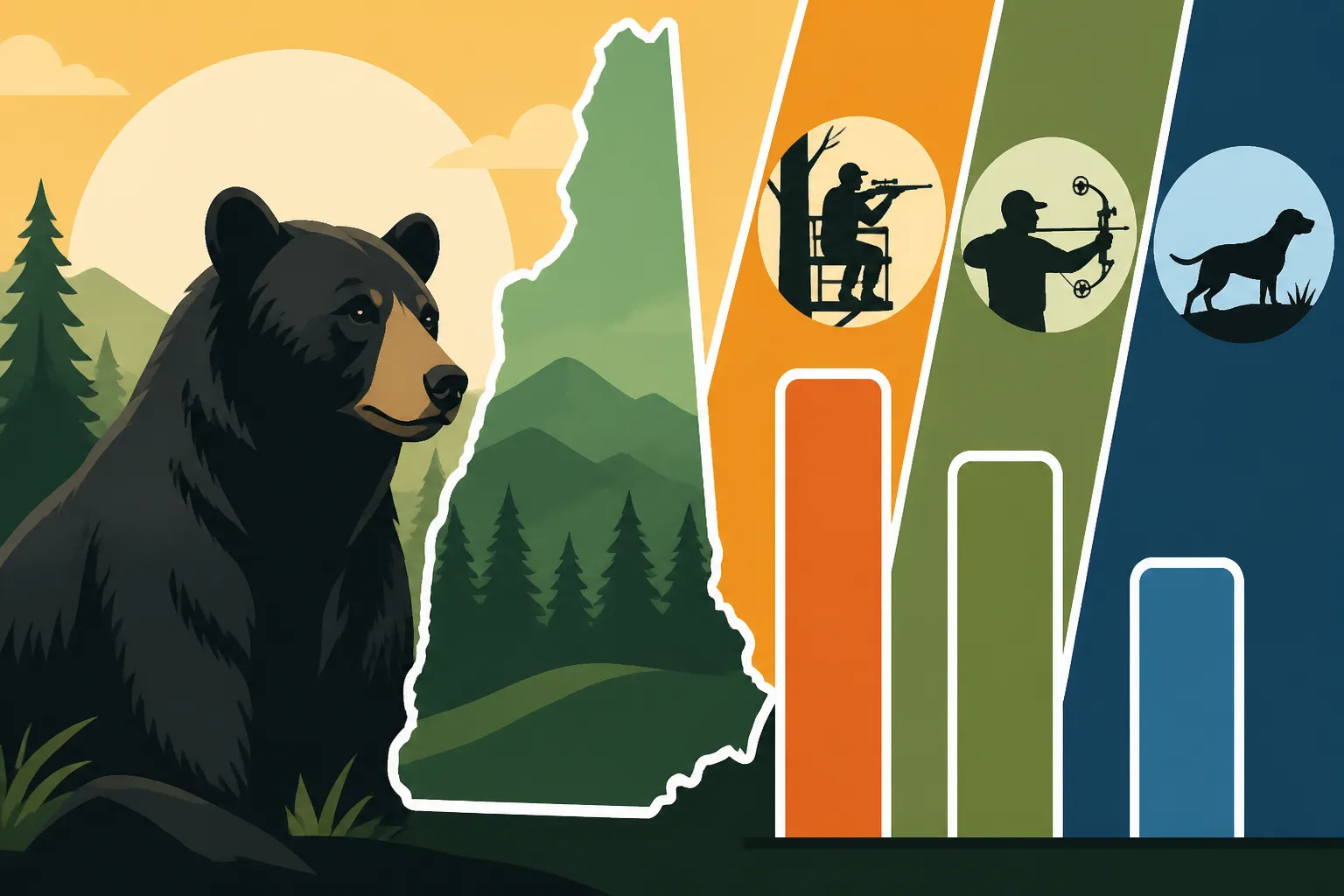
When we break down the harvest by method, a clear picture emerges. Historically, baiting has accounted for the largest share of the harvest, often contributing upwards of 50-60% of the total. This isn't surprising given its effectiveness in concentrating bears and providing consistent opportunities. Hound hunting typically follows, contributing another 20-30% of the harvest. While a lower percentage than baiting, this method is highly specialized and remains a critical component of management, particularly in the rugged terrain of the North Country where bait sites might be harder to establish or access.
The remaining percentage, usually 10-20%, comes from still-hunting and opportunistic harvests. This is a testament to the skill and luck of individual hunters, as well as the adaptability of bears themselves. It's worth noting that these percentages can shift slightly depending on the year's conditions. For example, in years with abundant natural food, the proportion of bears taken by baiting might slightly decrease as bears are less compelled to visit artificial food sources, while still-hunters might have more success finding bears on natural forage.
Here’s a simplified breakdown of typical harvest distribution, based on recent New Hampshire Fish and Game data:
| Hunting Method | Typical Harvest Share (%) | Notes |
|---|---|---|
| Baiting | 50-65% | Most popular, high effort, early season focus. |
| Hounds | 20-30% | Specialized, physically demanding, later season in some WMUs. |
| Still-Hunting/Stalking | 10-20% | Opportunistic, requires high woodsmanship, often during deer season. |
| Total | 100% | Actual percentages vary annually based on conditions and effort. |
Regional Differences in Harvest
The geography of New Hampshire plays a huge role in bear distribution and, consequently, harvest numbers. The vast, undeveloped forests of the North Country, particularly WMUs A, B, and C, consistently produce the highest bear harvests. These areas represent prime bear habitat, with extensive timberlands, remote bogs, and abundant food sources. Here, both baiting and hound hunting are widely practiced and highly effective, with outfitters and experienced guides often leading successful hunts. You can learn more about hunting the North Country if this area interests you.
As you move south, into regions like the Lakes Region (WMU D1, D2) and the Monadnock Region (WMU G), harvest numbers generally decrease, though they are steadily rising as the bear population expands. In these more populated WMUs, still-hunting and opportunistic harvests during deer season might account for a slightly larger proportion of the local bear take, simply because large-scale baiting operations or extensive hound running might be less feasible or practical near human development. Understanding New Hampshire Bear Season Dates by WMU is absolutely essential, as regulations can differ significantly from one region to another, reflecting these local population dynamics and habitat characteristics.
Factors Influencing Harvest Success
Harvest success in New Hampshire bear hunting isn't simply a matter of luck or sheer effort. A complex interplay of environmental conditions, hunter behavior, and regulatory frameworks all contribute to how many bears are successfully taken each season. Recognizing these factors helps hunters strategize and helps wildlife managers fine-tune their approaches.
Impact of Weather and Mast Crops
Weather is perhaps the single most unpredictable, yet influential, factor in bear hunting success. A cold, wet fall can make bears den earlier, shortening the hunting window. Heavy rain can wash away scent trails, frustrating hound hunters, or make travel to bait sites challenging. Conversely, an extended warm fall might keep bears active longer, offering more opportunities. But it's not just the temperature and precipitation that matter; it's also the availability of natural food.
New Hampshire bears are highly dependent on mast crops – acorns from oak trees, beech nuts, and various berries. In years with a prolific mast crop, bears are often more dispersed across the landscape, spending their time feeding on these natural riches rather than seeking out hunters' bait sites. This can lead to a lower baiting harvest, while still-hunters might find more success by actively scouting and hunting areas with abundant natural forage. In lean mast years, bears become more predictable, often concentrating on persistent food sources like bait, which can lead to higher success rates for bait hunters. This dynamic often means hunters using data apps like GoHunt pay close attention to mast crop reports to inform their scouting.
Hunter Participation and Effort
The number of hunters pursuing bears and the amount of effort they expend directly impact the harvest. More hunters, especially those who are dedicated and persistent, generally lead to higher harvest numbers. However, "effort" is a nuanced concept. It includes not just time spent in the woods during the season, but also pre-season scouting, baiting diligence, and investment in quality gear and local knowledge. Hunters who consistently scout, monitor trail cameras, and adapt their strategies to changing conditions or bear behavior are often more successful.
New Hampshire has a dedicated cadre of bear hunters, some traveling long distances to hunt in the prime North Country habitat. Their collective effort, whether through extensive baiting campaigns, running sophisticated hound teams, or mastering the art of still-hunting, forms the backbone of the state's bear management strategy. Wildlife agencies monitor hunter numbers and their distribution across WMUs to ensure that hunting pressure is appropriately managed and sustainable for the long term.
Regulatory Changes and Their Effects
New Hampshire Fish and Game Department regularly reviews and adjusts bear hunting regulations to respond to population changes and achieve management goals. These changes can include shifting season dates, altering bag limits, or modifying rules around baiting or hound use. Each regulatory adjustment can have a ripple effect on harvest numbers and methods. For example, extending a season or opening new WMUs to specific methods might increase the overall harvest, while stricter rules could lead to a temporary decrease.
A significant example would be the differing season lengths for various WMUs. Some WMUs have longer seasons or allow specific methods for a longer duration to target areas with higher bear densities or to address agricultural damage concerns. These localized changes are crucial for fine-tuning management. It's vital for every bear hunter to diligently consult the annual hunting digest for Checking Your WMU's Bear Season Dates as these regulations are dynamic and directly influence where and how you can hunt. These regulations are designed to maintain a healthy bear population while providing quality hunting opportunities and mitigating human-bear conflicts.
Comparing WMU-Specific Harvests
New Hampshire's diverse geography and varying bear densities mean that harvest numbers aren't uniform across the state's Wildlife Management Units (WMUs). Understanding these regional differences is crucial for both hunters looking for prime areas and for wildlife managers making localized decisions. The patterns of harvest by method often reflect the habitat, human population density, and traditional hunting practices within each WMU.
North Country's Dominance
The northern WMUs of New Hampshire—particularly WMU A, B, and portions of C and E—are consistently the powerhouses of bear hunting. These vast, often remote, and heavily forested areas provide ideal habitat for black bears, leading to higher bear densities and, consequently, higher harvest numbers. WMU A, B, and C frequently account for a significant portion, sometimes over half, of the state's total bear harvest. This is where you'll find extensive timber operations, vast tracts of public land, and fewer human-related disturbances compared to the southern parts of the state.
In these North Country WMUs, all three methods—baiting, hounds, and still-hunting—are prevalent and often highly effective. However, hound hunting, in particular, thrives here due to the expansive, rugged terrain perfectly suited for running dogs. Baiting is also a major contributor, with many hunters establishing multiple sites across large land holdings or public access areas. Hunters here often face challenging conditions, from remote access to difficult terrain, but the reward of a North Country bear is a powerful draw. The remote nature of these areas means having reliable mapping and GPS tools, like those found on the GoHunt platform, is almost essential.
Southern WMUs and Growing Opportunities
While the North Country dominates, the southern WMUs are increasingly offering more bear hunting opportunities as the bear population expands its range. WMUs like I1, I2, J1, and K, which historically had lower bear numbers, are now seeing consistent and often increasing harvests. This expansion is a fascinating wildlife success story, with bears adapting to more fragmented habitats, including suburban fringes and agricultural lands. However, hunting in these areas comes with its own set of challenges.
In southern WMUs, hunting pressure can be higher on smaller public parcels, and access to private land often requires diligent effort in securing permission. Still-hunting and opportunistic harvests during deer season might become more prominent here, partly because extensive baiting can be more difficult to manage discreetly near residential areas, and running hounds requires vast, uninterrupted tracts of land that are less common. However, dedicated bait hunters still find success in these WMUs by carefully selecting remote pockets of habitat. As the bear population continues to grow throughout New Hampshire, these southern WMUs will likely play an even larger role in the state's overall bear management.
Implications for Future Bear Management
Understanding New Hampshire's bear harvest numbers by method isn't just an academic exercise; it has real-world implications for how we manage this important game species going forward. The data informs conservation strategies, helps refine hunting regulations, and contributes to the long-term health of the bear population and its habitat.
Sustainable Management Practices
The detailed harvest data, broken down by method, provides crucial insights into the effectiveness and impact of different hunting approaches. This information is vital for ensuring that New Hampshire's bear harvest remains sustainable. By tracking the number of bears taken by baiting versus hounds versus still-hunting, wildlife managers can identify potential areas of disproportionate pressure or, conversely, areas where certain methods might be underutilized. This allows them to adjust season lengths, permit allocations, or method-specific rules to maintain a balanced harvest that doesn't jeopardize the overall population.
Furthermore, monitoring success rates by method also helps assess the impact of environmental changes, like mast crop failures, on hunting efficacy. If, for example, a series of poor mast years leads to an unusually high bait harvest, managers might consider adjusting future regulations to prevent over-harvesting. This adaptive management approach, grounded in detailed data, is key to the long-term sustainability of the Black Bears in New Hampshire and the hunting tradition that surrounds them.
Hunter Education and Ethics
The data on harvest methods also underscores the importance of ongoing hunter education and ethical practices. Each hunting method carries its own set of responsibilities and challenges. For instance, baiting requires careful adherence to baiting regulations, diligent site maintenance, and ethical shot selection to ensure a quick, humane harvest. Hound hunting demands responsible dog handling, respectful interaction with landowners, and meticulous tracking of animals. Still-hunting requires an intimate knowledge of bear behavior and habitat, ensuring hunters are prepared for opportunistic encounters.
By understanding which methods are most prevalent and where, New Hampshire Fish and Game can tailor educational programs to specific needs. Promoting ethical hunting practices across all methods ensures a positive public perception of hunting and maintains healthy hunter-landowner relationships. The availability of robust data also encourages hunters to be more informed and engaged, using resources like the GoHunt app for scouting and planning, contributing to a culture of responsible wildlife stewardship. Hunters who stay updated on the legal framework, for instance, understanding New Hampshire Bear Baiting and Hound Rules, contribute significantly to the ethical and sustainable practice of bear hunting.
Disclaimer
Always consult the official New Hampshire Fish and Game Department regulations before planning any hunting trip. Season dates, bag limits, and specific rules for hunting methods can change annually. The information provided here is for general guidance only and should not be considered a substitute for current official regulations.