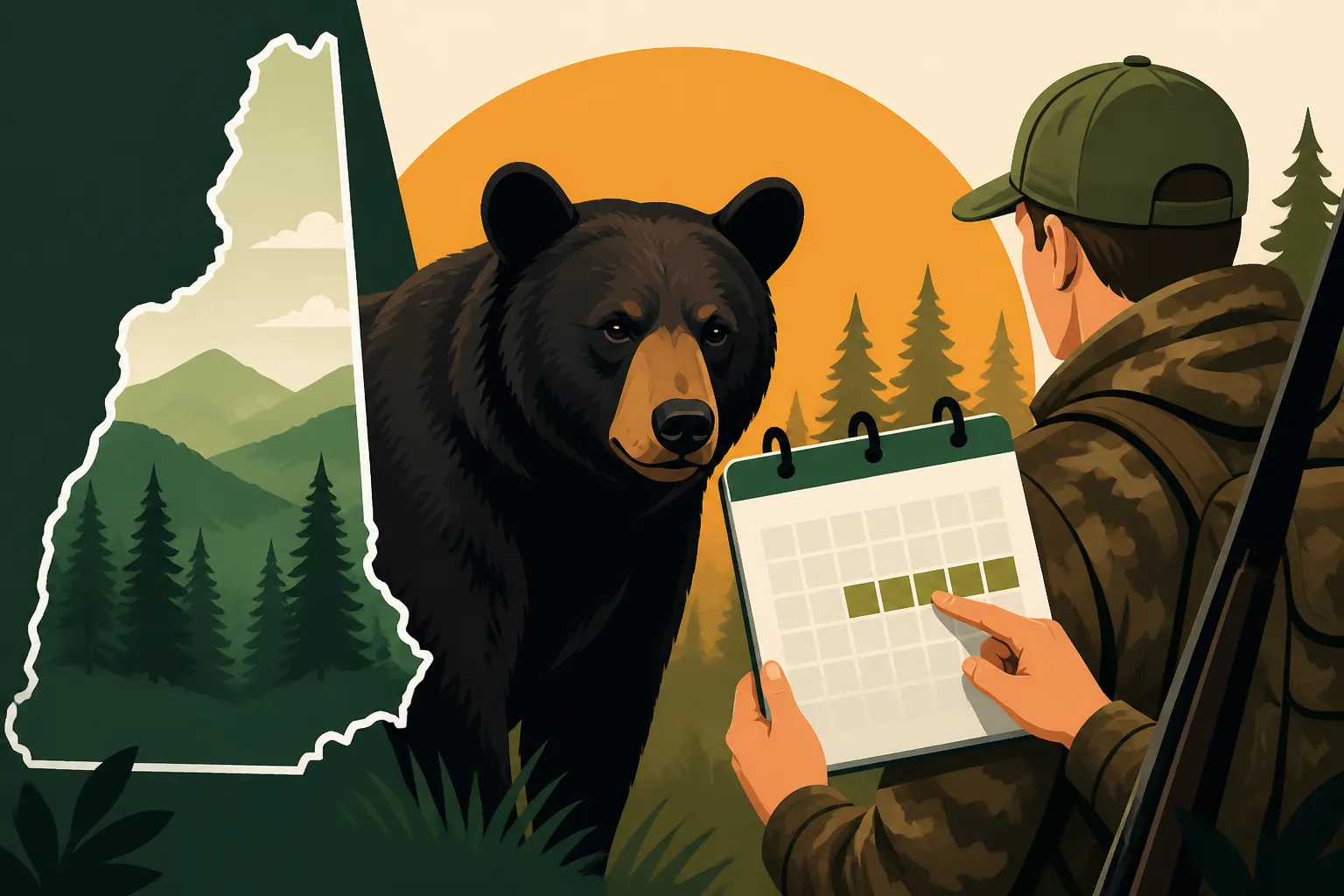
Checking Your WMU’s Bear Season Dates
Navigating New Hampshire's bear hunting regulations can feel like trying to solve a puzzle, especially when you factor in the various Wildlife Management Units (WMUs) and the different season structures. It's a common frustration for even seasoned hunters to keep all those dates straight, which is why understanding where and how to check your specific WMU's bear season dates is absolutely crucial for a successful and legal hunt. This guide will meticulously break down the complexities, helping you confidently plan your next black bear adventure.
Understanding New Hampshire's WMU System for Bear Hunting
The concept of Wildlife Management Units (WMUs) is fundamental to hunting in New Hampshire, and nowhere is this more apparent than with bear season. Unlike a blanket statewide season, bear hunting dates and methods are specifically tailored to these geographic regions. It's not just a random line on a map; these units are carefully delineated by wildlife biologists to manage game populations effectively, ensuring healthy herds and sustainable hunting opportunities.
What is a WMU and Why Does it Matter for Bear?
A Wildlife Management Unit, or WMU, is essentially a geographical area within the state that shares similar habitat characteristics and wildlife populations, allowing for localized management strategies. For bear hunting, these units dictate everything from season length to legal methods. You might find that a WMU in the northern part of the state, where bear populations are denser and habitat more expansive, has a much longer and more liberal season than a WMU closer to denser human habitation in the south. This localized approach is vital because bear populations don't behave uniformly across the entire state. Factors like food availability, human-bear conflict, and overall population health can vary drastically from one WMU to another. Ignoring these boundaries can lead to costly mistakes, like hunting out of season or using an illegal method for that specific area.
How WMUs Influence Season Dates and Methods
The WMU you plan to hunt in will directly determine the specific start and end dates for different bear hunting methods. New Hampshire traditionally offers several distinct bear hunting opportunities, each with its own set of regulations and often, different season dates within each WMU. For instance, the archery season might open first, followed by baiting, then hound hunting, and finally a limited firearms season. However, these sequences and their exact timing are not uniform.
Some WMUs might have an earlier close for baiting to prevent overharvest, while others allow it to run longer. Similarly, the ability to hunt bear with hounds, a popular and traditional method in New Hampshire, is also tied to specific WMU dates. When looking at the comprehensive guide on New Hampshire's WMU-Specific Bear Season, you'll quickly see how varied these opportunities are. It’s a nuanced system designed to fine-tune harvest rates, ensuring that bears are managed responsibly without jeopardizing future populations in any given area. Therefore, simply knowing it’s "bear season" isn't enough; you need to know which kind of bear season is open in your WMU.
Why Bear Season Dates Vary Across New Hampshire
The fluctuating and localized nature of New Hampshire's bear season dates can be a source of bewilderment for many hunters. It’s not simply about convenience; these variations are deeply rooted in scientific wildlife management principles. The New Hampshire Fish and Game Department (NHFGD) meticulously monitors bear populations and habitat conditions, making annual adjustments to ensure long-term sustainability.
Population Dynamics and Management Goals
One of the primary drivers behind varying season dates is the health and density of the bear population within each WMU. Areas with robust, growing bear numbers, often in the northern reaches of the state, might see earlier starts, longer seasons, or more liberal harvest opportunities. Conversely, WMUs where bear populations are stable or targeted for minor reductions might have shorter seasons or more restrictive dates to maintain balance. The NHFGD sets specific harvest goals for each WMU annually, aiming to keep populations at a healthy level that both supports hunting and minimizes conflicts with humans. These goals are constantly re-evaluated based on factors like cub production, survival rates, and hunter success from previous years, as detailed in reports like New Hampshire Bear Population Estimate. A WMU with a high success rate might see a slight adjustment the following year to prevent overharvest, while a lower success rate might lead to extended opportunities.
Impact of Hunting Pressure and Habitat Factors
Another significant factor influencing bear season dates is hunting pressure and habitat. WMUs with extensive public land and good access might attract more hunters, necessitating different regulations to manage that pressure. For example, if a particular WMU saw high hunter turnout and success during the initial baiting season, the subsequent firearms season might be shorter to spread out the harvest and prevent too many bears from being taken too quickly.
Furthermore, habitat conditions play a crucial role. Bear forage availability, such as acorn crops or berry production, can fluctuate year-to-year. In years with poor natural food sources, bears might move more or concentrate in certain areas, making them more vulnerable. Wildlife managers take these environmental variables into account when setting season dates to ensure fair chase and responsible harvesting. Understanding Black Bears in New Hampshire provides valuable context on the challenges and strategies involved in managing this resilient species across the varied landscapes of the Granite State. These complexities mean hunters must always verify current-year regulations for their specific area.
How to Locate Your Specific WMU
Before you can even begin to decipher bear season dates, you absolutely need to know which Wildlife Management Unit you'll be hunting in. This might sound straightforward, but New Hampshire's WMU boundaries can be intricate, often following natural features like rivers and mountain ranges, or sometimes less obvious property lines and roads. Misidentifying your WMU is one of the quickest ways to accidentally violate regulations.
Utilizing Online Maps and GPS Apps
In this modern age, technology is your best friend for pinpointing your exact WMU. The New Hampshire Fish and Game Department (NHFGD) website is an excellent starting point, often providing interactive maps that overlay WMU boundaries onto satellite imagery or topographical maps. You can zoom in on your planned hunting area and clearly see which WMU it falls within. Many hunters, myself included, rely heavily on dedicated GPS hunting apps these days. Apps like GoHunt offer detailed mapping solutions that allow you to download offline maps, plot your location in real-time, and, crucially, display WMU boundaries right on your screen. This is a game-changer, especially when you're deep in the woods where cell service might be spotty or nonexistent. Simply knowing your general location isn't enough; you need the precision these tools offer. When you're scouting, using an app like GoHunt to confirm you're within the correct WMU before you even set foot in the woods can save you a lot of headaches later on. Knowing Best GPS App for New Hampshire Public Land can greatly enhance your ability to navigate and confirm your location accurately.
Consulting Physical Maps and Official Resources
While digital tools are incredibly convenient, never underestimate the value of a physical map and official printed resources. NHFGD provides printable WMU maps, which are excellent for pre-hunt planning and for having a backup reference in the field. These maps often show not only WMU boundaries but also public land access, waterways, and other critical topographical features.
Furthermore, the annual New Hampshire Hunting and Trapping Digest is the undisputed authority on all regulations, including WMU boundaries and their associated bear season dates. It's a legal document, and having a physical copy to reference in camp or at home is always a good idea. Even if you use an app, cross-referencing with the official digest ensures you have the most accurate and up-to-date information. Sometimes, a quick glance at a large-scale paper map can give you a better overall understanding of the lay of the land and how WMUs connect. Remember, these boundaries often follow established features, so learning to identify those on the ground will also help you stay compliant.
Accessing Official Bear Season Date Information
Once you've identified your target WMU, the next critical step is to retrieve the official bear season dates. Relying on outdated information or unofficial sources can lead to severe penalties, including fines, license revocation, and the loss of your harvested animal. There’s a hierarchy of information, and sticking to the official channels is paramount.
The New Hampshire Hunting and Trapping Digest
The absolute gold standard for New Hampshire hunting regulations, including bear season dates, is the official New Hampshire Hunting and Trapping Digest. This document is published annually by the New Hampshire Fish and Game Department and is available both in print at license vendors and digitally on their website. It’s a comprehensive guide that outlines all seasons, bag limits, legal weapons, and WMU-specific rules. Think of it as your hunting Bible. Within its pages, you'll find dedicated sections for bear hunting, often presented in clear tables that break down dates by WMU and by hunting method (archery, bait, hounds, firearms). Always ensure you're referencing the current year's digest, as dates can shift. Checking the Hunting Digest for Your WMU's Bear Dates should be the very first thing you do each season.
New Hampshire Fish and Game Website and App
Beyond the digest, the New Hampshire Fish and Game Department’s official website (wildlife.nh.gov) is an invaluable online resource. Here, you'll find the digital version of the digest, but often, the website will also feature dedicated pages with quick-reference tables or news updates regarding season dates. The website is frequently updated with any last-minute changes or clarifications, making it a critical tool for staying informed.
Many states now also offer official mobile apps, and if NHFGD has one, it would be another excellent resource. These apps can sometimes link directly to regulations, offer interactive maps with updated WMU information, and even provide electronic licensing or game registration features. While extremely convenient, always ensure the app is an official NHFGD product to guarantee accuracy. The beauty of these digital platforms is their accessibility; you can check dates from your phone in the field (where service permits) or from the comfort of your home, ensuring you're always up-to-date on New Hampshire Bear Season Dates by WMU.
Common Pitfalls and Best Practices for Bear Hunters
Even with all the tools and resources available, hunters can still fall into common traps when trying to navigate New Hampshire's specific bear season dates. Being aware of these pitfalls and adopting best practices can save you from a ruined hunt or, worse, a run-in with the law.
Misinterpreting WMU Boundaries and Overlapping Seasons
One of the most frequent mistakes is misinterpreting WMU boundaries. Hunters often assume a general area falls into one WMU, only to find out the specific ridge they’re hunting, or the valley just beyond, is in a different unit with entirely different regulations. This is especially true where WMU lines follow winding rivers or less distinct geographical features. The solution, as discussed, is constant vigilance with maps and GPS. Furthermore, overlapping seasons can be confusing. For instance, the general archery deer season might be open, but the bear archery season in your specific WMU might have already closed or not yet opened. Or, perhaps the baiting season is closed, but hound hunting is still permitted. It’s crucial to distinguish between different species' seasons and different methods within the bear season itself. Always verify the rules for New Hampshire Bear Baiting and Hound Rules specifically for your WMU, as these often have unique date structures.
Another common pitfall is misunderstanding the start and end times of specific days. While hunting typically opens at civil twilight and closes at civil twilight, these exact times can vary depending on the time of year and specific regulations. Don't assume; consult the digest for precise legal shooting hours.
Proactive Planning and Double-Checking Information
The best practice for any New Hampshire bear hunter is proactive and meticulous planning. Don't wait until the week before your hunt to check the regulations. Start your research months in advance. As soon as the annual hunting digest is released, download it and review the bear sections pertinent to your chosen WMU. If you plan to hunt multiple WMUs, create a small cheat sheet for each, highlighting the key dates and regulations.
Consider creating a physical and digital backup of all pertinent information. Print out the relevant pages from the digest, save digital copies on your phone or tablet, and mark the dates on a calendar. Discuss your understanding of the regulations with hunting partners to catch any potential misinterpretations. Lastly, if you have any doubt, contact the New Hampshire Fish and Game Department directly. Their conservation officers are there to help hunters understand and comply with the law, not just to enforce it. A quick phone call or email can provide the clarity you need to proceed with confidence. This diligent approach is also critical when considering New Hampshire Hunter Education Requirements for new hunters, emphasizing safety and legal compliance from the start.
Planning Your New Hampshire Bear Hunt Around Dates
Once you’ve wrestled with the regulations, understood the WMU system, and pinned down your specific dates, it’s time to weave this crucial information into your overall hunt plan. The bear season dates aren't just arbitrary numbers; they dictate everything from your scouting strategy to your chosen hunting method and even what gear you might need.
Aligning Scouting and Hunting Methods with Season Windows
Knowing your WMU's bear season dates allows you to strategically plan your scouting efforts. If your WMU has an early baiting season, you'll need to begin scouting for bait sites, identifying bear travel corridors, and setting up trail cameras well in advance. Consider topics like Baiting New Hampshire Bears Legally by WMU to ensure your setup is compliant. Conversely, if you're primarily a still-hunter focusing on natural food sources, knowing when the season opens and closes will inform your pre-season scouting for mast crops or berry patches, and help you anticipate bear movement patterns relative to those resources.
For those interested in hunting with hounds, the season dates are particularly critical, as these are often distinct from baiting or still-hunting dates. You'll need to coordinate with your hound handler, ensure your dogs are conditioned, and scout for fresh bear sign leading up to that specific window. A detailed understanding of Hunting Bear With Hounds by WMU is essential for a legal and successful hunt using this method. Proper planning ensures you're not rushing preparations or missing prime hunting days because you misread the calendar.
Flexibility and Contingency Planning for Shifting Dates
While the NHFGD strives for consistency, it's a dynamic environment, and sometimes season dates can be subject to minor adjustments due to unforeseen circumstances, extreme weather, or management decisions. Therefore, a key component of planning is building in flexibility and having contingency plans. Always check for last-minute updates on the NHFGD website, especially right before your planned hunt.
Consider having a "Plan B" in terms of hunting areas or methods if your primary plan is impacted by date changes. For instance, if an early baiting season in your preferred WMU is unexpectedly shortened, could you pivot to still-hunting natural food sources in a different WMU with a later firearms season? This level of preparedness minimizes disappointment and ensures you can adapt to whatever the season throws at you. Regularly reviewing resources like New Hampshire Bear Season Dates by WMU will keep you ahead of any potential changes and allow you to adjust your strategy accordingly. The more prepared and flexible you are, the higher your chances of success in the unpredictable world of New Hampshire bear hunting.
| WMU Region | Typical Season Start (Bait) | Typical Season End (Hounds) | General Characteristics | Primary Considerations |
|---|---|---|---|---|
| North Country (e.g., A, B, C) | Mid-August | Late October/Early November | Higher bear density, extensive public land, diverse methods | Earlier starts, longer seasons, varied access. |
| Central (e.g., D1, D2, E, F) | Early September | Mid-October | Moderate density, mix of public/private land, often shorter seasons | Shorter windows for certain methods, higher hunter density in spots. |
| Southern (e.g., G, H1, H2, I1, I2, J1, J2, K, L, M) | Mid-September | Early October | Lower density, more private land, often very short seasons | Later starts, shortest windows, focus on permission and specific areas. |
Note: This table provides general guidance. Exact season dates and method legality vary annually by WMU. Always consult the current New Hampshire Hunting and Trapping Digest for official dates.
Disclaimer
The information provided in this guide is for general informational purposes only and is not a substitute for the official New Hampshire Fish and Game Department hunting regulations. Hunting laws and regulations are subject to change, and it is the hunter's responsibility to review and comply with all current state laws and regulations before engaging in any hunting activities. Always refer to the most recent New Hampshire Hunting and Trapping Digest and consult the NHFGD website for the most accurate and up-to-date information.