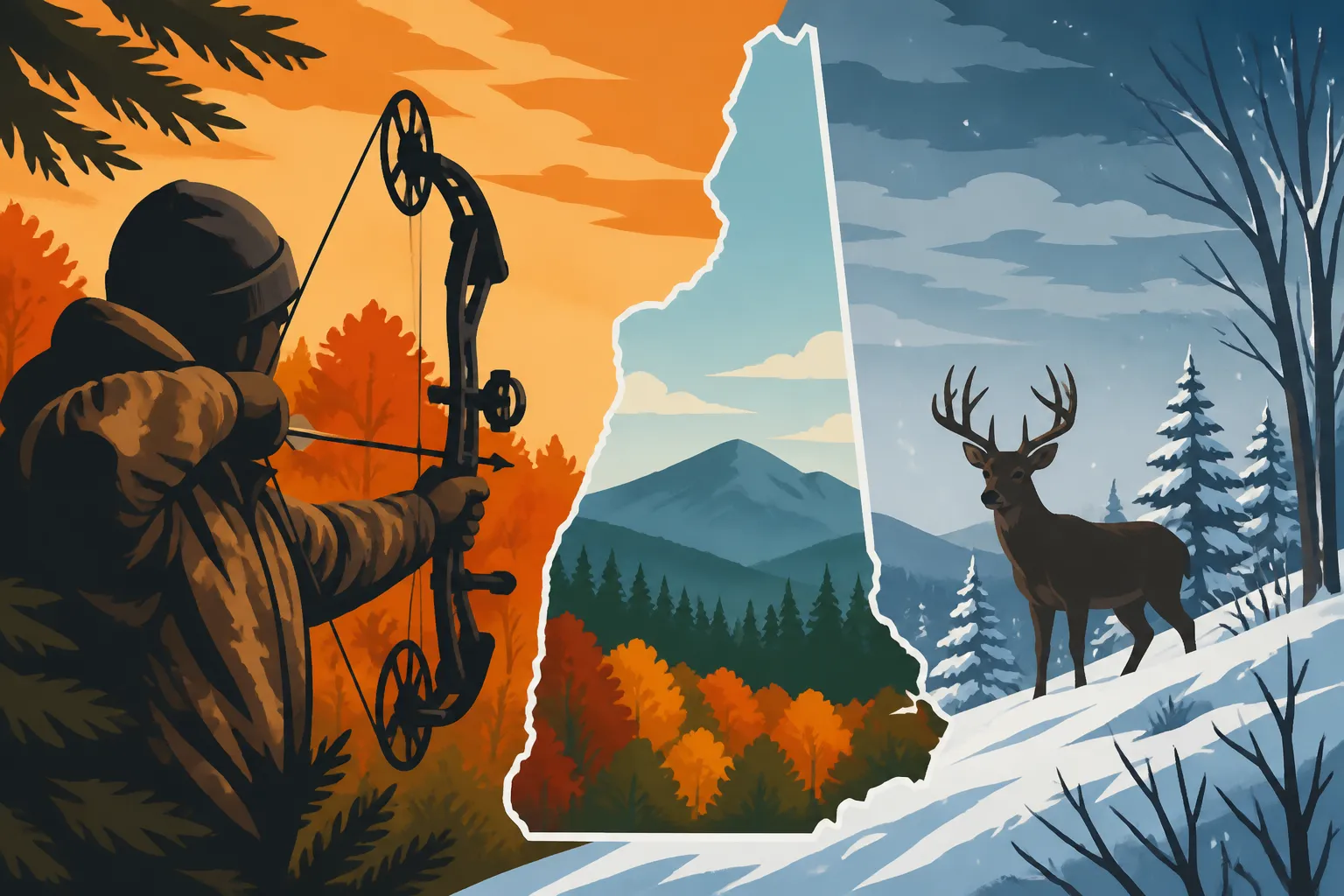
Hunting New Hampshire’s Archery Season Into December
The crisp air of a New Hampshire November often gives way to the biting cold of December, and for many archers, this transition can feel like hitting a brick wall. Suddenly, those familiar early-season deer patterns seem to vanish, leaving hunters frustrated and wondering how to extend their success into the final weeks of the archery season. If you've found yourself shivering on stand, questioning where all the deer went, this guide is for you. We'll break down how to adapt your strategies and maximize your chances of success during New Hampshire's late archery season, right up to the December close.
Understanding the Late Archery Season Shift in New Hampshire
The New Hampshire archery season offers an incredible stretch of hunting opportunity, often extending into the first half of December in most Wildlife Management Units (WMUs). However, the deer you're pursuing in late November and early December are not the same deer you were chasing in September or even during the peak of the rut. Their priorities shift dramatically, influenced by weather, food availability, and hunting pressure. Failing to acknowledge these changes is a common pitfall that leaves many archers scratching their heads and tagging out empty-handed.
Shorter Days and Dropping Temperatures
As the calendar pages turn towards winter, the days in New Hampshire grow noticeably shorter, and the mercury plummets. This isn't just uncomfortable for us; it significantly impacts deer metabolism and behavior. Deer need to conserve energy and find calorie-rich food sources to survive the impending deep winter months. You'll notice deer becoming far more nocturnal in their major movements, often only venturing out in daylight for short periods around dawn and dusk, or when driven by extreme hunger or harsh weather.
Think about a brutally cold morning when the temperature hovers around zero degrees. That big buck isn't going to be cruising aimlessly through open hardwoods looking for a late-estrous doe. His primary goal is to eat enough to fuel his internal furnace and then find the warmest, most sheltered bedding he can. This means traditional rut-phase tactics like blind rattling or grunting become largely ineffective. Instead, you need to be thinking about how to intercept deer moving between bedding and feeding, often in the most protected cover available.
Post-Rut Recovery and Changing Food Sources
By late November and certainly into December, the primary whitetail rut in New Hampshire is largely over. Those weary bucks that spent weeks chasing does and fighting rivals are now in a serious recovery phase. They've burned through an immense amount of energy and often lost significant body weight. Their sole focus now pivots from reproduction to survival, meaning food and rest become paramount. This physiological need makes them somewhat predictable, if you can locate those critical resources.
The lush green browse and abundant acorns of early fall are long gone, covered by fallen leaves or snow. Hard mast, like acorns, might still be on the ground in protected pockets, but it's dwindling. Now, deer are turning to secondary and even tertiary food sources. This could be anything from lingering apples in abandoned orchards to persistent browse like conifer needles, regenerating clear-cuts, or even agricultural fields like standing corn or brassicas if you're lucky enough to find them. Identifying these "last chance" food sources is absolutely crucial for success when Hunting New Hampshire's Archery Season Into December.
Increased Hunting Pressure and Deer Movement
New Hampshire's hunting seasons are structured such that the archery season overlaps with the firearms and muzzleloader seasons for extended periods. By the time December rolls around, many deer in easily accessible areas have experienced significant hunting pressure. They've been pushed, bumped, and perhaps even shot at, making them incredibly wary. This pressure teaches deer to become masters of evasion, utilizing the thickest cover and moving primarily under the cloak of darkness or during the absolute nastiest weather.
On public lands, especially those near roads or popular access points, this pressure is amplified. Deer learn to avoid these spots during daylight hours, often retreating deep into thick swamps, dense conifer stands, or steep, overlooked ravines. This is where a hunter's persistence and willingness to get off the beaten path truly pays off. If you're willing to hike further, cross that muddy beaver flowage, or climb that steep ridge, you'll likely find deer that haven't been as disturbed, offering a better chance at a close-range archery shot. Understanding where and how deer seek refuge from this pressure is key to Hunting the December Archery Close.
Scouting and Locating Deer in Late Fall/Early Winter
Successful late-season archery in New Hampshire isn't about luck; it's about meticulous scouting and understanding how deer adapt to the changing landscape. With leaves off the trees and often snow on the ground, the woods tell a different story than they did in October. You have to learn to read these new chapters to pinpoint where the deer are holding up.
Identifying Primary and Secondary Food Sources
As mentioned, food becomes the number one priority for deer in late fall and early winter. Your scouting efforts should heavily focus on finding high-calorie food sources that are still available. Start by considering what's left after the fall. Are there any oak ridges where acorns might still be accessible under a thin layer of snow? Sometimes, you'll find protected south-facing slopes where snow melts faster, exposing these treasures.
Beyond natural mast, look for persistent browse. This includes things like wild apple trees (especially those with fruit still clinging on), red dogwood, honeysuckle, or the tender shoots in recent clear-cuts. If you're hunting near agricultural areas, standing corn, soybean fields, or winter food plots planted with brassicas or clover can be absolute magnets. These cultivated fields offer a concentrated, calorie-dense meal that deer desperately need. A valuable tool like GoHunt's mapping features can help you identify these agricultural areas and potential travel corridors leading to them, even if they're on private land adjacent to public ground. Knowing Late-Season Food Sources for New Hampshire Whitetails is paramount.
Locating Thermal Cover and Bedding Areas
Once deer have eaten, they need to bed down in a spot that offers both security and thermal protection from the harsh New Hampshire cold and wind. Identifying these crucial bedding areas is often the missing piece of the puzzle for late-season success. Look for thick conifer stands – pines, hemlocks, and cedars are excellent – that block wind and trap ground heat. These dense evergreens provide incredible insulation, offering deer a much-needed respite from chilling winds and snow.
Steep, south-facing slopes are also prime locations. The sun's rays, even weak winter rays, can warm these slopes, melting snow and making them more comfortable bedding sites. Combine a south-facing slope with thick conifer cover, and you've found a gold mine. Don't be afraid to get into the nastiest, thickest stuff you can find. Deer want to be where they feel safe and warm, which often means places humans are reluctant to go. A quality map from a service like GoHunt can help you identify topography and potential thermal cover before you even step foot in the woods, saving you valuable scouting time. This type of detailed analysis is often part of Reading a White Mountain Deer Yard tactics, even if you're not in the actual White Mountains.
Utilizing Snow for Tracking and Sign Reading
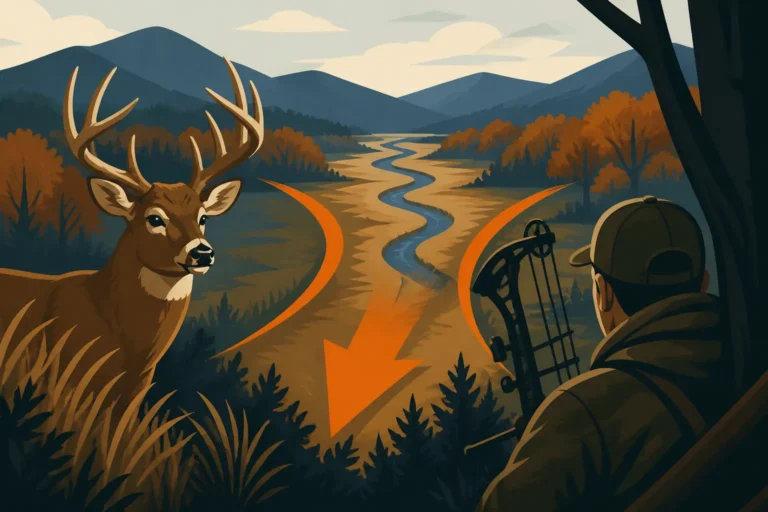
Snow, while making for a cold hunt, is an archer's best friend in the late season. It transforms the forest floor into a giant, open book, revealing every movement deer have made. Fresh snow makes finding active travel corridors between bedding and feeding areas much easier. You can literally follow tracks to see exactly where deer are going, when they're moving, and how many are using a particular path. This real-time intelligence is invaluable.
Look for heavily used trails, fresh droppings, and recently pawed-up areas where deer have dug through the snow for food. The size of tracks can also give you clues about the deer you're pursuing – bigger tracks often mean bigger deer. Pay attention to how deer navigate obstacles, where they cross logging roads, and where they enter and exit thickets. By analyzing track patterns, you can often deduce their primary bedding and feeding locations, allowing you to set up your ambush points with precision. Remember, tracking in New Hampshire snow can be challenging, but it offers unparalleled insight into deer behavior.
Strategic Archery Tactics for December Bucks
Once you've done your scouting and have a good idea of where deer are bedding and feeding, it's time to refine your hunting strategy. Late-season archery demands patience, stealth, and often a willingness to adapt on the fly. You're not just waiting for deer to magically appear; you're actively trying to intersect their very focused movements.
Still-Hunting and Stalking in Open Woods
With the leaves off the trees, visibility in New Hampshire hardwoods improves dramatically. This can be a double-edged sword: you can see further, but deer can also see you. However, it also opens up opportunities for effective still-hunting and stalking, especially if there's a light snow cover to quiet your footsteps. Still-hunting involves moving incredibly slowly, taking a few steps, then pausing for several minutes to observe your surroundings intently. Use binoculars to pick apart every shadow, every broken branch, looking for the tell-tale horizontal line of a deer's back or the flick of an ear.
Focus your still-hunting efforts between known bedding and feeding areas, or slowly work through thick thermal cover where deer might be bedded. The key is patience. Move with the wind in your face or quartering, and always be ready for a shot. This method can be incredibly rewarding, allowing you to cover ground and adapt to what the deer are doing in real-time. It's a fantastic alternative to sitting static in freezing temperatures, especially when combined with a thorough understanding of Still-Hunting White Mountain National Forest Timber techniques.
Ground Blind vs. Treestand Placement
Choosing between a ground blind and a treestand in late-season New Hampshire comes down to visibility, cover, and personal preference for staying warm. With fewer leaves, treestands can feel very exposed, but they offer an elevated vantage point to see over terrain and brush. If you choose a treestand, focus on areas with natural back cover, like a large pine tree or a dense cluster of hemlocks, to break up your silhouette. Ensure your stand location offers a clear shooting lane to your anticipated deer movement.
Ground blinds, on the other hand, can be a game-changer for late-season comfort and concealment. A well-brushed-in pop-up blind provides excellent protection from the wind and cold, allowing you to stay on stand longer. They also offer superb concealment, letting you draw your bow undetected. Set up ground blinds along field edges, pinch points, or near thick bedding cover. Make sure to brush them in thoroughly with natural vegetation to blend them into the environment. Remember, deer are highly sensitive to new objects, so deploying a ground blind well in advance, if possible, is ideal. If you're on public land, check specific rules regarding Using a Ground Blind on Public Land.
Calling and Decoying Strategies
Unlike the frenetic energy of the rut, late-season calling and decoying are generally less effective for drawing in dominant bucks. Mature bucks are often worn out and focused solely on food and survival, making them less responsive to aggressive rut calls. However, there are exceptions. A subtle doe bleat or a few soft grunts can occasionally pique the interest of a passing buck, particularly younger deer still searching or those responding to a perceived threat.
Decoys are generally not recommended for late-season archery in New Hampshire. The goal now is stealth and minimal disturbance. A static deer decoy can stick out like a sore thumb in a leafless landscape and often spooks wary, pressured deer. Focus your efforts instead on reading the sign, understanding deer movement, and setting up in the most strategic locations possible. Save the aggressive calling and decoying for the peak of the rut, and rely on quiet observation and careful ambushing in December.
Gear and Preparation for Cold Weather Archery
Late-season archery in New Hampshire means you're going to get cold. There's no way around it. But with the right gear and preparation, you can not only endure the cold but thrive in it, allowing you to stay on stand longer and remain more focused. Shivering uncontrollably is a recipe for missed opportunities and an unpleasant experience.
Layering Systems for Extreme Cold
A proper layering system is absolutely non-negotiable for comfort and safety during a December archery hunt. Forget the bulky cotton; focus on moisture-wicking synthetics or merino wool for your base layers. These materials will pull sweat away from your skin, which is critical, as dampness leads to rapid heat loss. For your mid-layers, think fleece or lightweight insulated jackets that provide warmth without excessive bulk.
Your outer layer needs to be windproof, waterproof, and well-insulated. Look for jackets and pants designed for extreme cold, preferably with features like hand warmer pockets and reinforced knees. A heavy, insulated vest can also be a great addition, providing core warmth without restricting bow movements. Don't forget your head, hands, and feet. A warm hat, insulated gloves or mittens (with a shoot-through option), and well-insulated, waterproof boots are crucial. Consider bringing chemical hand warmers for your pockets and boots. This approach is thoroughly explored in any guide about Layering for New Hampshire's Cold Hunting Season.
| Layer Type | Material Recommendations | Key Function | Considerations |
|---|---|---|---|
| Base Layer | Merino Wool, Synthetic Blends | Wicks moisture, provides initial warmth | Snug fit, avoid cotton, multiple weights for varying cold |
| Mid-Layer | Fleece, Down/Synthetic Fill | Insulates, traps body heat | Layer multiple thinner mid-layers for adaptability, easy to remove/add |
| Outer Layer | Windproof, Waterproof, Insulated | Blocks wind/moisture, primary insulation | Quiet fabric, durable, suitable for sitting still, good hood, large pockets |
| Extremities | Wool/Synthetic Socks, Insulated Boots, Hat, Gloves/Mitts | Prevents heat loss from hands, feet, head | Chemical warmers, shoot-through glove design, multiple sock layers (non-restrictive) |
Bow and Arrow Adjustments for Cold Weather
The cold can affect your archery equipment in subtle but significant ways. First, ensure your bow is properly tuned before heading out in freezing temperatures. String materials can stiffen slightly, and sights might become less precise if not well-maintained. Always check your sight pins for clarity and ensure they aren't fogging up.
For arrows, consider slightly heavier shafts and broadheads for late-season hunting. These offer better penetration, especially if you hit a deer that's heavily muscled or wearing a thicker winter coat. Make sure your broadheads are razor-sharp. Even a slight dullness can significantly reduce penetration in cold conditions. When shooting in cold weather, practice with your hunting layers on to get a feel for how they might affect your anchor point or release. A heavy jacket can change your form slightly, and you want to be completely comfortable and confident when a shot opportunity arises.
Essential Accessories for a Late-Season Hunt
Beyond your core gear, a few essential accessories can make a world of difference for a successful and safe late-season hunt. A reliable headlamp with extra batteries is paramount, as you'll likely be walking in and out of the woods in darkness. A good thermos filled with hot coffee, tea, or soup can be a moral booster and a core temperature regulator on a frigid sit.
Always carry a fully charged cell phone (in a waterproof bag) and a portable charger, even if you don't expect service. For navigating New Hampshire's vast public lands, a GPS device or a robust mapping app like GoHunt on your phone with downloaded offline maps is essential, especially when Scouting With the New Hampshire Fish and Game App or exploring unfamiliar territory. A sharp knife, gutting gloves, rope, and game bags are also crucial for field dressing and preparing your harvest. And never forget a small first-aid kit; accidents happen, especially when it's cold and remote.
Navigating New Hampshire's Regulations and WMUs
Understanding the specific hunting regulations for New Hampshire's late archery season is crucial for a legal and ethical hunt. The Granite State has a well-defined Wildlife Management Unit (WMU) system, and regulations can sometimes vary slightly by WMU, so always double-check the current New Hampshire Fish and Game Digest.
Checking WMU-Specific Season Dates and Rules
While the general statewide archery season often extends into December, it's absolutely vital to confirm the exact closing dates for the specific WMU you plan to hunt. New Hampshire's system means that the season structure can differ, with some WMUs having slightly earlier or later closures for various methods. Don't assume; verify. You can easily find these dates in the annual New Hampshire Fish and Game Hunting Digest, available online or at license vendors. This is particularly important for understanding New Hampshire Archery Season Dates and New Hampshire's WMU-Based Deer Season Structure.
Also, be mindful of specific rules regarding public versus private land, especially concerning weapon types if you are considering a crossbow in approved WMUs. Ensure you understand the bag limits (typically one deer per license, but check for antlerless opportunities) and any specific tagging requirements. Ignorance of the law is not an excuse, and violations can lead to heavy fines and loss of hunting privileges.
Blaze Orange Requirements and Safety
While not always explicitly required for archery hunters on their person during the entire season, it is strongly recommended, especially when hunting during overlapping firearms or muzzleloader seasons. When you are still-hunting or moving through the woods, wearing blaze orange makes you visible to other hunters and significantly reduces the risk of accidental shootings. New Hampshire's laws do specify blaze orange requirements for certain seasons, so it's best practice to always consult the current regulations.
Even if not legally mandated for archery on a particular day, prioritize safety. When retrieving a deer, especially in low light, consider donning blaze orange. Always know your target and what is beyond it, and treat every firearm and bow as if it were loaded. When Hunting New Hampshire's Archery Season Into December, shared public land means you'll encounter other outdoor enthusiasts, so awareness is key.
Reporting Your Harvest
Congratulations, you've successfully tagged a deer during New Hampshire's challenging late archery season! The next critical step is to properly report your harvest. New Hampshire Fish and Game requires all harvested deer to be reported. Traditionally, this meant checking your deer in person at an authorized registration station.
However, New Hampshire now offers the convenience of online registration, often through their official Fish and Game app. This can be a huge time-saver, especially after a long, cold hunt. Be sure to understand the deadlines for reporting, as they are strict. Typically, deer must be reported within 12 hours of harvest. Familiarize yourself with New Hampshire Deer Reporting Requirements to ensure a smooth and legal process. Accurate reporting helps New Hampshire Fish and Game manage the deer herd effectively, benefiting all hunters in the long run.
Disclaimer
Hunting is an inherently dangerous activity. This guide provides general information and recommendations. It is crucial for every hunter to consult the most current New Hampshire Fish and Game Department regulations, practice proper gun and bow safety, and understand local laws before engaging in any hunting activities. Always hunt ethically, respect wildlife, and prioritize safety.