New Hampshire’s WMU-Based Deer Season Structure
If you've ever found yourself staring at the New Hampshire Fish and Game Digest, flipping pages back and forth, trying to make sense of when you can actually hunt deer, you're not alone. It can feel like deciphering an ancient text sometimes, with different dates, legal weapon types, and even bag limits shifting based on arbitrary lines on a map. It’s enough to make even a seasoned hunter scratch their head. But fear not, because understanding New Hampshire's Wildlife Management Unit (WMU)-based deer season structure is absolutely crucial to a successful and legal hunt, and this guide is here to untangle all that complexity for you.
Understanding New Hampshire's WMU System for Deer Hunting
New Hampshire's landscape is incredibly diverse, from the rugged peaks of the White Mountains to the rolling farmlands of the southern tier, and even the densely populated suburban areas. It only makes sense that deer populations, habitat, and even hunter pressure vary wildly across these regions. That's precisely why the state has adopted a Wildlife Management Unit (WMU) system for deer hunting. It's not just a bunch of lines on a map; it's a strategic approach to managing our deer herd effectively and sustainably, tailored to local conditions.
What are WMUs and Why Do They Exist?
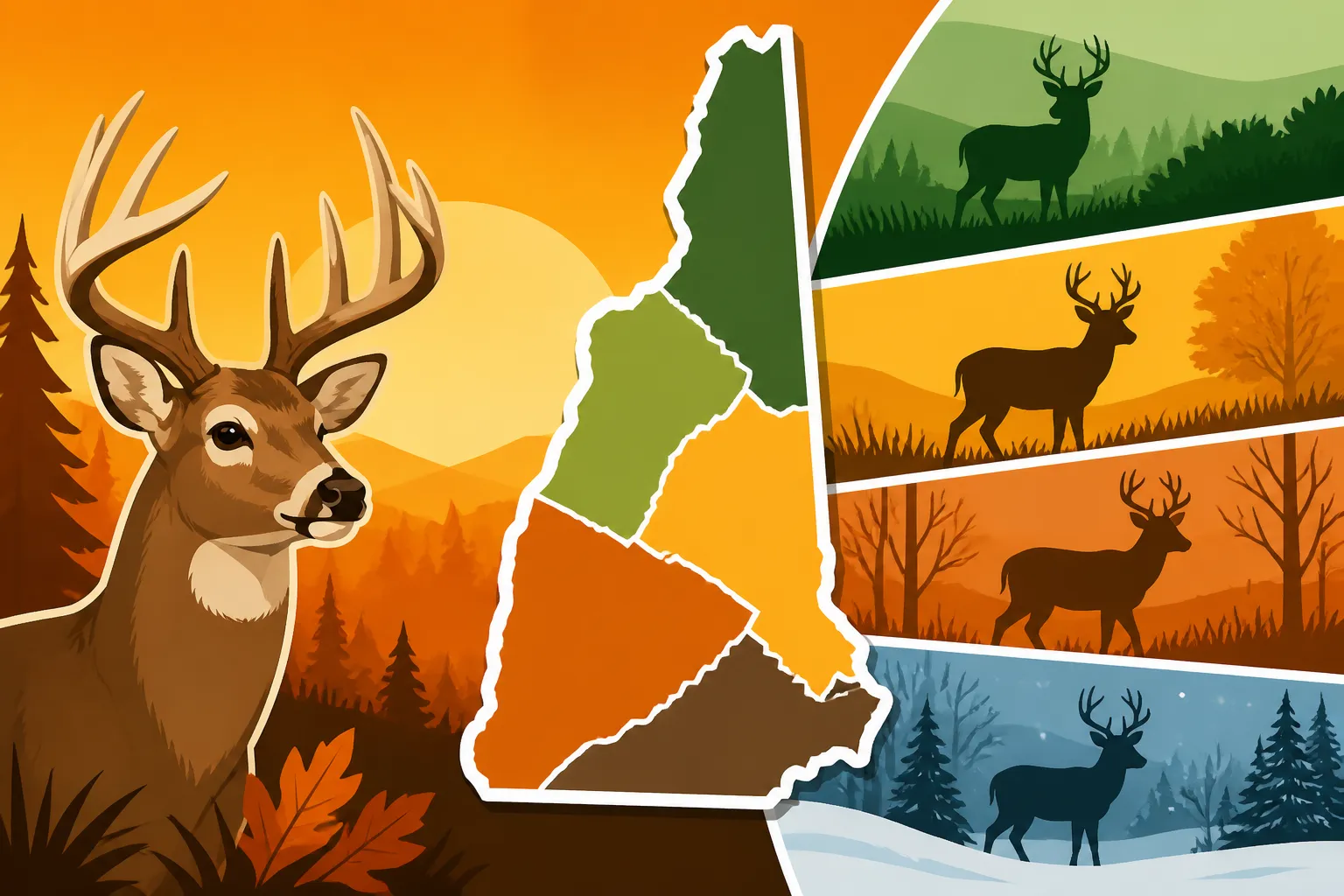
WMUs, or Wildlife Management Units, are essentially geographical regions delineated by the New Hampshire Fish and Game Department (NHFG) for the purpose of managing wildlife, especially deer. Think of them as localized zones, each with its own specific set of regulations designed to reflect the ecological conditions and population dynamics of deer within that area. These boundaries often follow natural features like major rivers, mountain ranges, or sometimes even man-made boundaries like highways, making them generally recognizable on a good map.
The primary reason for WMUs is to allow for granular management. Deer populations aren't uniform across the state. In some areas, deer might be thriving, potentially over-browsing habitat or increasing vehicle collisions, while in others, populations might be struggling due to harsh winters, predation, or habitat loss. By segmenting the state into WMUs, NHFG can implement specific antlerless deer permit allocations, adjust season lengths, or even tweak weapon restrictions to meet precise management goals for each unit. This adaptive strategy ensures that the overall health of the deer herd remains robust while providing hunting opportunities that are appropriate for each region.
How WMUs Influence Deer Season Dates
The most direct and impactful way WMUs affect your deer hunting experience is through season dates. While there are often statewide general opening dates for archery, muzzleloader, and firearms seasons, you'll quickly notice that certain WMUs have specific exceptions or different closing dates. The most prominent example of this, which we'll dive into more detail on, is WMU A in the far northern reaches of the state. Because of its unique environmental challenges, like severe winter weather and predation, WMU A often has earlier closing dates for both archery and firearms seasons compared to the rest of the state.
This WMU-specific date variation is not arbitrary; it's directly tied to population management goals. A shorter season in a WMU with a struggling deer population can help reduce harvest pressure, allowing the herd more time to recover and grow. Conversely, WMUs with healthy or overpopulated deer herds might have longer seasons or more generous antlerless opportunities. So, before you even load your truck for opening day, checking the specific season dates for the WMU you intend to hunt is non-negotiable. Don't assume that just because the statewide archery season opens on a certain date, it closes on the same date everywhere.
Finding Your WMU
Navigating the WMU map can seem a bit daunting at first, especially if you're new to hunting in New Hampshire or exploring a new area. The good news is that the New Hampshire Fish and Game Department provides excellent resources to help you pinpoint exactly where you are and which WMU you're in. The official NHFG website features interactive maps that clearly display all the WMU boundaries, often layered over topographic or road maps. These digital tools are invaluable for pre-season scouting and on-the-go reference.
Beyond the official state resources, many modern hunting apps and GPS devices incorporate WMU boundary layers. Apps like GoHunt are particularly useful for this, allowing you to overlay WMU boundaries with property lines, topo maps, and aerial imagery. This level of detail can be a game-changer when you're planning your hunt, helping you avoid accidentally crossing into a different WMU with different rules, or even worse, trespassing. Always make sure your mapping application is updated with the latest state data. You can also consult the printed New Hampshire Hunting Digest, which includes a WMU map, though a digital version is often easier to cross-reference with your exact location in the field. Knowledge of your WMU is your first step towards a successful and ethical hunt, so take the time to learn your area's designation.
Archery Season: Long Opportunities Across WMUs
New Hampshire's archery season for deer is a beloved tradition for many, offering a lengthy window to pursue whitetails, often starting in early fall when the leaves are just beginning to turn. It's a time when the woods are alive, and the cooler temperatures make for an incredibly enjoyable experience. However, just like with other seasons, the archery dates aren't entirely uniform across all WMUs, with one notable exception that often catches hunters by surprise.
General Archery Season Dates and Exceptions
For the vast majority of New Hampshire, the archery season kicks off in mid-September, offering a generous period that stretches well into December. This extended season provides ample opportunities for hunters to pursue deer through various phases of the fall, from early season patterns focused on food sources to the excitement of the rut in November, and even into the early stages of winter deer activity. This long season is a significant draw for many archers, allowing for flexibility in their hunting schedule and diverse conditions. You can really get a feel for how the deer move and react as the season progresses.
However, there's a critical exception to be aware of, and that's WMU A. Located in the northernmost part of the state, WMU A typically experiences a significantly shorter archery season. This earlier closure is a direct result of the more challenging environmental conditions in that region, including harsher winters and often higher predator densities, which necessitate a more conservative approach to deer management. If you're considering hunting deer in this beautiful but rugged area, you absolutely must check the specific dates for WMU A, as its archery season often wraps up weeks before the rest of the state. Ignoring this detail could lead to an illegal hunt, so always consult the latest New Hampshire Fish and Game Digest or the NHFG website for the most current information, especially if you're venturing into the North Country. Remember to plan your Bowhunting New Hampshire's Long Archery Season carefully, considering these important WMU differences.
WMU A's Earlier Archery Close
The distinct, earlier archery season close in WMU A is not just a minor detail; it's a fundamental aspect of deer management in New Hampshire's North Country. This region, encompassing vast tracts of timberland and mountainous terrain, presents a different set of challenges for the deer herd. Deep snows arrive earlier and persist longer, making it harder for deer to find forage and increasing their susceptibility to winter mortality. Coupled with a robust predator population, including coyotes and bears, the deer population in WMU A often requires a more protective management strategy to ensure its long-term health and stability.
By closing the archery season earlier in WMU A, the NHFG aims to reduce overall hunting pressure on the deer herd, particularly as they begin to transition into their winter patterns. This conservative approach helps protect does and fawns, ensuring a healthier breeding population going into the colder months. For hunters who enjoy the challenge of hunting in WMU A, this means planning your archery hunt to coincide with the earlier window. You'll need to be especially mindful of the dates and adjust your scouting and hunting efforts accordingly. This specific regulation underscores the importance of understanding the localized management strategies that define New Hampshire's WMU system. Don't get caught off guard; always double-check your WMU dates, especially if you're used to the longer seasons elsewhere in the state. If you plan on Hunting the Earlier WMU A Archery Close, thorough preparation is key.
Legal Archery Equipment and Crossbow Rules
Beyond season dates, understanding the legal equipment for archery hunting is paramount. New Hampshire has specific regulations regarding the types of bows and arrows that can be used, ensuring humane and ethical hunting practices. Generally, compound bows, recurves, and longbows are all legal, provided they meet minimum draw weight requirements to ensure sufficient energy for a clean kill. Arrows must be fitted with broadheads that meet certain specifications for cutting diameter and blade count. It’s not just about getting an arrow to fly; it's about making sure that arrow is capable of doing its job effectively and humanely.
Crossbows, however, have historically had more restricted use in New Hampshire's archery season. For many years, their use was limited to hunters with specific physical disabilities. In recent years, regulations have evolved, and crossbows are now permitted for all licensed archery hunters, but only in specific WMUs. It's critical to check which of New Hampshire's twelve crossbow-legal WMUs allow their use. The intent behind these specific WMU restrictions on crossbows during the archery season is often related to maintaining the traditional archery experience in certain areas or managing specific deer populations. So, if you're a crossbow hunter, don't just assume you can use it statewide during the regular archery season; verify your chosen WMU is on the approved list to avoid any violations. Always review the detailed equipment rules in the current hunting digest, as these can be updated periodically.
Muzzleloader Season: A Focused Mid-Season Window
Nestled between the archery and firearms seasons, New Hampshire's muzzleloader season offers a unique, focused hunting experience. This specialized season typically runs for a short, intense period, often in mid-November, providing hunters with an additional opportunity to pursue deer using traditional or modern muzzleloading firearms. It's a time when deer activity is often high due to the rut, but the challenge of using a single-shot, slower-to-reload weapon adds an extra layer of skill and tradition to the hunt.
Statewide Muzzleloader Season Overview
New Hampshire's muzzleloader season is generally a statewide affair, meaning the dates typically apply uniformly across all WMUs. This makes planning a bit simpler than with archery or firearms seasons, as you usually don't have to worry about WMU-specific date variations. This season usually kicks off in mid-November, providing a roughly 10-day window. This timing is fantastic for deer hunters, as it often coincides with the peak of the whitetail rut, or at least the tail end of it, when bucks are actively seeking does. The woods can be a hive of activity, with bucks cruising, scrapes and rubs being refreshed, and deer generally moving more frequently during daylight hours.
The brevity of the season, however, means hunters need to be prepared and make the most of every day afield. Weather can be a significant factor in mid-November, ranging from crisp, clear days to cold rain or even early snow. Keeping your muzzleloader dry and reliable in varying conditions is key to success. For many, this 10-day period is a cherished opportunity to hunt with a more traditional firearm, embracing the challenge and satisfaction that comes with muzzleloading. It's a great bridge between the quiet stealth of archery and the louder, faster pace of the firearms season. Before heading out, make sure you're clear on all the regulations for Muzzleloader Deer Hunting in New Hampshire.
Permitted Muzzleloader Types and Ammunition
Just like with other weapon types, New Hampshire has clear guidelines on what constitutes a legal muzzleloader for deer hunting. Generally, this includes traditional flintlock and percussion cap rifles, as well as modern in-line muzzleloaders. The key characteristic is that these firearms must be loaded from the muzzle, and they can only be fired once before needing to be reloaded. This single-shot nature is a defining feature of the muzzleloader hunt, requiring hunters to be precise with their shot placement and patient in their approach.
When it comes to ammunition, there are also specific rules. Hunters typically use black powder or approved black powder substitutes as propellant, and projectiles can range from traditional patched round balls to modern conical bullets and sabots. Sabots, which encase a smaller, often jacketed bullet, are popular for their accuracy and increased ballistic performance. However, there are typically minimum caliber requirements (e.g., .45 caliber or larger) to ensure adequate killing power for deer. It’s crucial to ensure both your muzzleloader and your chosen ammunition comply with all state regulations. A quick check of the current hunting digest will confirm all the specifics. It's not just about having a muzzleloader; it's about having the right one, loaded with legal and effective projectiles.
Muzzleloader Season Strategies by WMU
While the muzzleloader season dates are largely uniform statewide, hunting strategies can still benefit from a WMU-specific approach. The diverse habitats across New Hampshire mean that what works in the open country of the Connecticut River Valley might be less effective in the thick timber of the White Mountain National Forest. For instance, in WMUs with extensive hardwood forests (like parts of WMU G or H2), focusing on active rub and scrape lines, or known acorn-producing ridges, can be highly productive, especially during the rut. Deer will be on the move, and these travel corridors become prime locations.
In the more rugged, timbered WMUs of the North Country (such as WMU B or E), deer might be more widely dispersed, and focusing on recent logging cuts, beaver flowages, or natural saddles and funnels between higher elevations can be a good strategy. Terrain navigation and understanding how deer use the landscape to conserve energy are paramount here. Conversely, in WMUs closer to agricultural areas (like parts of WMU K or I1), connecting woodlots and field edges can be key, as deer move between bedding cover and food sources. Even though the dates are consistent, tailoring your scouting and hunting methods to the specific habitat and deer behavior within your chosen WMU will significantly increase your odds of success during this exciting, but often brief, season.
Firearms Season: The Main Event with Regional Nuances
For many New Hampshire deer hunters, the firearms season is the highly anticipated main event. It’s a short, intense window, typically in November, when the woods fill with the orange blaze of hunters and the anticipation of chasing whitetails with rifles, shotguns, or muzzleloaders. While this season is statewide for its general opening, just like archery, it carries critical WMU-specific closing dates that every hunter must be keenly aware of to avoid legal pitfalls and plan their hunt effectively.
General Firearms Season Dates
New Hampshire's general firearms season for deer is known for its brevity and intensity. It usually kicks off in mid-November, aligning with some of the best deer movement of the year as the rut is often in full swing or winding down, and deer are actively seeking mates or recovering from the peak. This statewide opener means that most hunters are in the woods at the same time, creating a palpable excitement and energy that defines this short season. Despite its short duration, often lasting only a couple of weeks, it accounts for a significant portion of the annual deer harvest.
The timing is strategic, allowing hunters to capitalize on the natural deer behaviors of the late fall while also considering wildlife management goals. The colder temperatures mean deer are often more visible, preparing for winter, and less obscured by foliage. Hunters often plan their vacation days around these precious weeks, knowing that every day afield counts. However, just because it's a statewide opening doesn't mean it's a statewide closing. That's where the WMU structure comes back into play, particularly with a specific northern unit having different regulations. For a full picture of the dates, check out New Hampshire's November Firearms Deer Season.
WMU A's Earlier Firearms Close
Just like with archery season, WMU A stands out with an earlier closing date for the firearms season compared to the rest of the state. This is not a trivial detail; it’s a critical piece of information for anyone planning to hunt deer in the North Country. While the general firearms season might run for two weeks or more in most WMUs, WMU A's season often concludes after a mere few days or a single week. This significant reduction in hunting pressure is a deliberate management decision by the NH Fish and Game Department.
The rationale behind the earlier close in WMU A is consistent with its archery season management: the deer population in this northern unit faces tougher environmental conditions, including more severe winters and higher predator impacts. A shorter firearms season helps to limit the overall harvest, giving the local deer herd a better chance to survive the winter and contribute to the population's stability. For hunters, this means you absolutely must check the specific closing dates for WMU A if that's your hunting ground. Failing to do so could result in hunting out of season, which carries significant penalties. This stark difference highlights the importance of hyper-local knowledge when hunting in New Hampshire. If your plans involve Hunting the Earlier WMU A Firearms Close, ensure you are meticulously aware of the specific dates for that unit.
Legal Firearms and Ammunition
New Hampshire's firearms season is quite inclusive when it comes to legal weapons, allowing hunters a variety of choices depending on their preference and the WMU they are hunting in. Centerfire rifles, shotguns (with slugs or buckshot, though buckshot is often restricted to specific zones or conditions), and muzzleloaders are generally permitted. This broad allowance gives hunters flexibility, whether they prefer the long-range accuracy of a rifle or the close-quarters effectiveness of a shotgun in thicker cover.
However, there are always important specifics to remember. For rifles, there are typically minimum caliber requirements to ensure ethical harvesting (e.g., .22 centerfire or larger). Certain WMUs, particularly those with higher population densities or near urban/suburban areas, might have restrictions on rifle use, sometimes limiting hunters to shotguns or muzzleloaders only for safety reasons. Ammunition choice is also regulated; full metal jacket bullets are usually prohibited, requiring expanding projectiles for humane harvests. Always check the current regulations for specific caliber minimums, ammunition types, and any WMU-specific weapon restrictions. For instance, some areas may only permit shotgun slugs, particularly in the more densely settled southern regions. Ignorance of these rules is not an excuse, so a thorough review of the latest hunting digest is always advisable before heading out.
Special Considerations and Youth Hunting Opportunities
Beyond the standard archery, muzzleloader, and firearms seasons, New Hampshire’s WMU-based structure also accounts for specific scenarios and provides unique opportunities for certain groups of hunters. These special considerations are designed to address particular management needs, encourage participation, or provide fair access, all while operating within the overarching WMU framework.
Youth Deer Weekend: A Head Start for Young Hunters
One of the most cherished special opportunities is the Youth Deer Weekend. This dedicated period, typically a weekend just before the general firearms season opens, allows young hunters (usually aged 12-15) to pursue deer under the direct supervision of a licensed adult mentor. It's a fantastic initiative designed to introduce the next generation to hunting, provide them with a less pressured environment, and foster a love for the outdoors. During this weekend, only youth hunters are permitted to harvest deer, giving them a unique chance to experience success before the main firearms season begins.
The rules for Youth Deer Weekend are specific: the youth must possess the proper license and permits, adhere to all safety regulations, and be accompanied by a licensed adult who acts as a mentor (though the mentor cannot carry a firearm or bow unless they are also hunting with a specific license, but are usually there purely to supervise). All other WMU-specific rules regarding antlerless deer permits, legal weapons, and tagging requirements still apply, so understanding the general New Hampshire Youth Deer Weekend Rules is important. This early opportunity is a powerful tool for hunter recruitment and retention, creating lasting memories for young hunters and their mentors alike.
Landowner Deer Permits and Special Tags
New Hampshire also recognizes the important role private landowners play in wildlife habitat and management. In certain situations, landowners might be eligible for special deer permits, often related to deer damage to crops or property. These permits allow landowners to take deer outside of the regular season or with specific harvest criteria, under strict guidelines and usually with prior authorization from the NHFG. These are not general hunting tags but rather targeted management tools to address specific conflicts.
Furthermore, in WMUs where antlerless harvest is encouraged due to healthy or overpopulated deer herds, NHFG may issue "bonus" or "antlerless-only" permits. These permits allow hunters to harvest a doe in addition to their regular season bag limit (which is typically one antlered deer per season across all methods). These permits are generally WMU-specific and are crucial for balancing the deer population. They are often distributed through a lottery system or sold over the counter until quotas are met. Checking the availability and rules for these special tags in your desired WMU is vital, as they provide additional opportunities and are a direct reflection of local deer management goals. Keep an eye on announcements from NHFG for when and how these permits become available, and consider how they might fit into your overall hunting strategy for a particular WMU.
Late-Season Antlerless Opportunities
While not an annual certainty in every WMU, New Hampshire occasionally implements late-season antlerless opportunities in specific WMUs where deer populations remain robust or where additional harvest is deemed necessary to meet management objectives. These late-season hunts typically occur after the general firearms season has closed, often extending into December, and are strictly limited to antlerless deer (does and fawns). They are usually conducted under specific regulations, such as archery-only or muzzleloader-only, or sometimes even through special permits that allow firearms for a very limited window.
These opportunities are rare and highly dependent on annual population assessments and winter forecasts by the NHFG. If offered, they provide a valuable chance for hunters to contribute to herd management while extending their time in the field. These hunts are almost always WMU-specific, targeting areas where conservation officers have determined the deer population can sustain additional harvest without detriment. Keep a close watch on the NHFG website and official announcements late in the fall if you're interested in these potential opportunities, as the availability and rules can change year-to-year and vary greatly by WMU.
Navigating the Rules: Resources and Best Practices
With all these WMU-specific nuances, it's easy to feel overwhelmed. However, there are excellent resources available and best practices that can help you navigate New Hampshire's deer season structure with confidence. Being well-informed isn't just about avoiding violations; it's about being an ethical, responsible, and ultimately, more successful hunter.
The New Hampshire Fish and Game Digest: Your Best Friend
Without a doubt, the single most important resource for any New Hampshire hunter is the annual New Hampshire Fish and Game Hunting & Trapping Digest. This comprehensive guide, often simply called "the Digest," contains all the official regulations, season dates, bag limits, licensing information, and WMU maps you need. It’s available both in print at license vendors and online as a downloadable PDF on the NHFG website. Make it a habit to obtain and thoroughly review the latest edition every single year, even if you think you know the rules. Regulations can and do change, sometimes subtly, from one season to the next.
Don't just skim it; read it carefully. Pay particular attention to the sections on deer season dates, WMU boundaries, legal equipment, and any special permits or restrictions that apply to your chosen WMU. Many frustrating questions or potential violations can be avoided by simply consulting this essential document. It's truly your definitive source for staying legal and informed in the New Hampshire woods.
Using Digital Tools for WMU Planning
In today's connected world, digital tools have become indispensable for hunters, offering convenience and detailed information that traditional maps sometimes can't. Apps like GoHunt, along with others such as OnX Hunt and the official New Hampshire Fish and Game App, provide highly detailed mapping capabilities that can be a game-changer for WMU planning. These apps often feature layers that show WMU boundaries, allowing you to see exactly which unit you are in while you're scouting or hunting. This is particularly useful when WMU lines follow less obvious features like logging roads or property lines.
Beyond just WMU boundaries, these digital tools can help you identify public versus private land, locate food sources, mark bedding areas, and even track your movements. Using these apps effectively requires a bit of practice and ensuring you have downloaded offline maps for areas where cell service might be spotty, especially in the remote North Country. Pairing your smartphone app with a dedicated GPS unit can also provide a reliable backup. Leveraging these digital resources for your Scouting With the New Hampshire Fish and Game App can significantly enhance your understanding of the terrain and relevant regulations.
Staying Informed About Rule Changes
The world of wildlife management is dynamic, and regulations can evolve based on population data, research, public input, and environmental factors. Therefore, staying informed about rule changes is a critical responsibility for every hunter. The NH Fish and Game Department does an excellent job of communicating these changes through various channels. Regularly checking their official website (wildlife.nh.gov) is paramount, especially in the months leading up to and during the hunting season. They often post news releases, emergency regulation changes, and updated Digests.
Signing up for the NHFG email newsletter or following their social media channels can also provide timely updates directly to your inbox or feed. Attending local public meetings or presentations by wildlife biologists, if available, can offer deeper insights into the rationale behind management decisions for specific WMUs. Don't rely solely on what you remember from last year or what "everyone else says." Proactively seeking out official information ensures you're always operating within the current legal framework, contributing to responsible hunting and wildlife conservation in the Granite State.
| Season Type | Statewide General Dates (Approx.) | WMU A Specific Dates (Approx.) | Legal Weapons (General) | Key Considerations |
|---|---|---|---|---|
| Archery | Mid-September to Mid-December | Mid-September to Early November | Compound, Recurve, Longbow, Crossbow (select WMUs) | Longer season, peak rut opportunities, WMU A early close |
| Muzzleloader | Mid-November (approx. 10 days) | Mid-November (approx. 10 days) | Muzzleloader (.45 cal+) | Short, focused season, often coincides with rut |
| Firearms | Mid-November to Early December | Mid-November (approx. 1 week) | Rifle (.22 cal+), Shotgun, Muzzleloader | Short & intense, WMU A significantly shorter |
| Youth Deer | Pre-General Firearms Season | Pre-General Firearms Season | All legal methods for youth | Mentored youth hunters only, specific age limits |
| Special Tags | Varies by WMU & Availability | Varies by WMU & Availability | Varies | Antlerless permits, damage permits (highly WMU specific) |
Note: Dates are approximate and subject to annual change. Always consult the official New Hampshire Fish and Game Digest for the most current regulations.
Strategic Hunting Approaches Based on WMU Differences
Understanding the WMU structure goes beyond just knowing the dates; it's about recognizing that each unit represents a distinct ecological and hunting environment. This means your hunting strategies, from scouting to stand placement, should ideally be tailored to the specific characteristics of the WMU you're pursuing deer in. What works in the dense forests of the North Country might be entirely ineffective in the agricultural fringes of Southern New Hampshire.
North Country WMUs: Timber, Moose, and Smaller Deer
WMUs in New Hampshire's North Country, such as WMU A, B, and E, are characterized by vast tracts of public and private timberland, higher elevations, and a landscape that feels wilder and more remote. Deer densities here are generally lower than in southern parts of the state, and the deer themselves tend to be physically smaller due to the harsher conditions and sparser food sources. This region is also moose country, and hunters often encounter these giants while pursuing deer. The hunting here is often about covering ground, understanding large-scale deer movements, and adapting to challenging terrain.
Successful hunting in these WMUs often involves extensive pre-season scouting, focusing on features like logging roads, clear-cuts (which provide browse), natural funnels, and areas where deer might concentrate to escape deep snow or find winter food sources. Still-hunting or methodical tracking can be particularly effective in these areas, as can setting up on pinch points where deer are forced to travel. Patience is key, and hunters must be prepared for colder weather and potentially lower success rates compared to regions with higher deer densities. Think about Still-Hunting White Mountain National Forest Timber or Reading Aerial Photos for North Country Deer to inform your strategy.
Southern WMUs: Farmland, Suburbia, and Larger Deer
Conversely, WMUs in Southern New Hampshire, like J2, K, and M, present a vastly different hunting landscape. These areas often feature a mosaic of suburban development, small agricultural fields, woodlots, and some larger tracts of conservation land. Deer populations here are typically much higher, and the deer themselves tend to be larger, benefiting from richer food sources (both natural and agricultural) and often milder winters. However, hunter pressure can also be significantly higher, and access to private land often requires diligent effort to gain permission.
Hunting strategies in southern WMUs often revolve around identifying overlooked pockets of cover, navigating fragmented habitats, and focusing on edge cover where deer transition between bedding and feeding. Scouting for fresh sign along field edges, within thickets adjacent to residential areas, or in small, unpressured woodlots can be highly effective. Understanding deer movement patterns between these smaller, often linear habitat features is crucial. Stand hunting, especially with careful entry and exit routes to avoid spooking deer, is a common and productive tactic. While the deer are bigger and more numerous, the challenge lies in finding unpressured deer and securing access. You might focus on Hunting Small Private Tracts in New Hampshire or Hunting a Standing Apple Orchard in these areas.
Adapting Tactics to WMU-Specific Season Lengths
The varying season lengths across WMUs directly impact how hunters should strategize their efforts. In WMUs with longer seasons, especially the general archery season that extends into December, hunters have the luxury of adapting to changing deer patterns throughout the fall. Early season hunts might focus on acorns and soft mast, while the mid-season rut is all about cruising bucks and breeding activity. Late season, with colder weather and snow, shifts focus to persistent food sources and wintering areas. This extended window allows for more flexible hunting plans and a chance to learn the local deer herd over time.
However, in WMUs with significantly shorter seasons, like WMU A's firearms or archery season, the approach needs to be much more concentrated and strategic. Every single day afield becomes critical. Hunters must have their scouting done well in advance, understand current deer patterns, and be ready to capitalize quickly on opportunities. This might mean intense, all-day sits during the shorter firearms window, or meticulously planning a specific archery setup for the early part of WMU A's season. The condensed timeframe demands peak readiness and often requires hunters to be more aggressive in their tactics, knowing they don't have the luxury of a prolonged season to fall back on. This adaptability to the specific WMU season length is a hallmark of an experienced and successful New Hampshire deer hunter.
Disclaimer
Please note that hunting regulations, season dates, and WMU boundaries can change annually. The information provided in this article is intended for general guidance and informational purposes only. It is the hunter's sole responsibility to consult the most current official New Hampshire Fish and Game Department Hunting and Trapping Digest and relevant state statutes before engaging in any hunting activities. Failure to do so may result in fines or other penalties. Always prioritize safety, ethical hunting practices, and compliance with all laws.