Bowhunting New Hampshire’s Long Archery Season
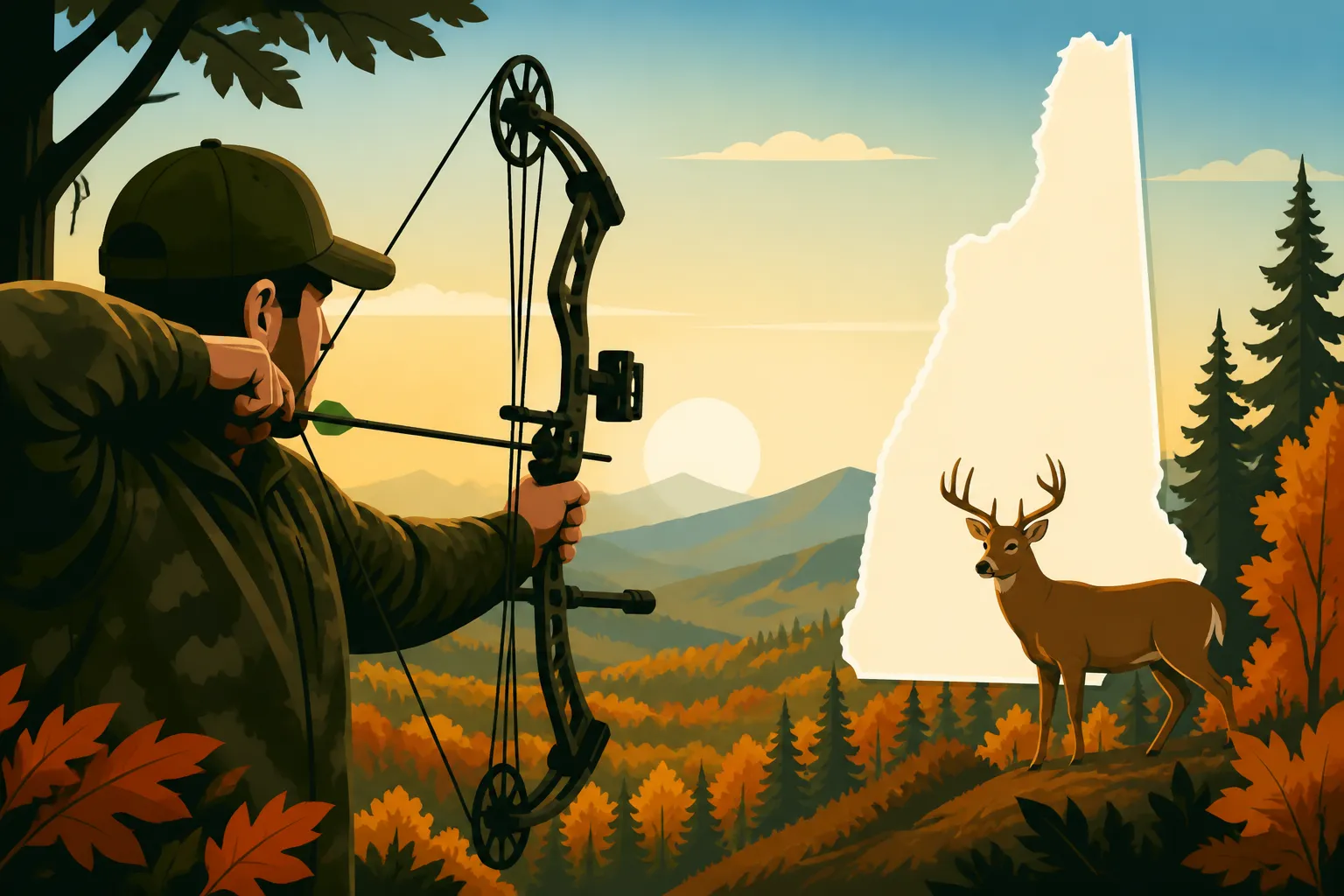
Stepping into the New Hampshire woods with a bow in hand offers a profound connection to the landscape, but let's be honest, it's also incredibly challenging. The long archery season, stretching from early September well into December in many zones, throws everything at you: sweltering early season heat, crisp autumn mornings, the frenetic rut, and brutal late-season cold. It's enough to make even seasoned hunters question their sanity. This comprehensive guide is here to walk you through everything you need to know to not just survive, but truly thrive and fill your tag during New Hampshire's diverse bowhunting opportunities.
Understanding New Hampshire's Archery Season Structure
New Hampshire's archery season is a marathon, not a sprint, and understanding its distinct phases and regional nuances is critical for success. Unlike the short, intense firearms season, bowhunters have a much broader window, but this also means adapting to a wide range of conditions and deer behaviors. Knowing when and where you can hunt is the absolute first step.
Key Archery Season Dates and WMUs
The Granite State's archery season for deer typically kicks off in early to mid-September and, for many Wildlife Management Units (WMUs), continues through mid-December. This extended period provides unique advantages but also demands a flexible approach to your hunting strategy. While most of the state enjoys this generous timeframe, it's absolutely crucial to remember that some WMUs, particularly WMU A in the North Country, might have an earlier closing date for archery. This regional variation means you can't assume a statewide rule applies everywhere. Always consult the most current New Hampshire Fish and Game Department hunting digest for precise dates for your target WMU. For instance, while much of the state enjoys a long season, it's important to be aware of Hunting the Earlier WMU A Archery Close if you're planning a trip to the far north.
Beyond deer, New Hampshire also allows archery hunting for bear, though those seasons are typically much shorter and have specific regulations based on WMU and hunting method (baiting, hounds). For turkey, archery is allowed during both spring and fall seasons, often coinciding with shotgun hunting, but again, always verify the current regulations. This mosaic of rules can feel overwhelming, but a little homework goes a long way.
Weapon and Permit Requirements
Before you even think about stringing an arrow, you need to be legally ready. A New Hampshire hunting license, along with an archery permit, is mandatory for all bowhunters. These can be purchased online through the New Hampshire Fish and Game website or at authorized agents throughout the state. Residents and non-residents have different fee structures, so be sure to check the current rates for your specific situation. Remember, you'll need to possess proof of completing an archery hunter education course, or a previous archery license from New Hampshire or another state, to purchase an archery permit. This ensures a baseline of safety and ethical understanding among hunters.
For bowhunters, the regulations specify equipment requirements. Traditional bows (recurve and longbows) and compound bows are legal, but they must have a minimum draw weight of 30 pounds. Arrows must be at least 20 inches in length and fitted with a broadhead. Notably, crossbows have specific restrictions. While they are legal during the regular firearms season, and in some archery seasons, New Hampshire has a list of New Hampshire's Twelve Crossbow-Legal WMUs where they can be used during the archery deer season. If you plan to use a crossbow, double-check that your chosen WMU is on the approved list and understand any specific rules that might apply. Always carry your license and permits with you while hunting, and be prepared to present them to a conservation officer if requested.
Essential Gear for New Hampshire Bowhunting
New Hampshire's diverse terrain and weather demand thoughtful gear selection for bowhunters. From the humid early season to the frigid late-season stands, having the right equipment can make or break your hunt, impacting both your comfort and your effectiveness. Skimping on quality here is a mistake many hunters regret.
Bow Setup and Accessories
Your bow is, naturally, the heart of your archery setup, and it needs to be perfectly tuned for the conditions you'll face. For New Hampshire whitetails, a well-tuned compound bow with a draw weight that you can comfortably and accurately shoot repeatedly is ideal. Recurve and longbows also have a dedicated following, offering a truly primal hunting experience, but demand even more practice and precision. Consistency is paramount, so practice from various positions – standing, kneeling, even from a simulated treestand height if possible. Make sure your bow's draw weight meets the minimum 30-pound requirement.
Beyond the bow itself, several accessories are non-negotiable. A reliable bow sight is crucial for accurate shot placement. Whether you prefer a single-pin adjustable, a multi-pin fixed, or even a more advanced digital sight, ensure it's sighted in precisely at various distances out to your comfortable maximum range. Check out options for a Best Bow Sight for New Hampshire Archery Season to match your hunting style. A quality arrow rest, like a drop-away or a full-containment style, will promote consistent arrow flight. Don't forget a quiver, either attached to the bow or worn on your back, to keep your arrows accessible and protected. A good stabilizer can improve accuracy and reduce vibration, and a comfortable wrist sling will prevent your bow from hitting the ground after a shot.
Broadheads and Arrows
The choice of broadhead is one of the most debated topics among bowhunters, and for good reason—it's what actually gets the job done. In New Hampshire, your broadhead needs to be sharp, durable, and capable of creating a quick, ethical kill. Fixed-blade broadheads, known for their robust construction and reliability, are a popular choice, especially in heavily timbered areas where they might encounter brush. Mechanical broadheads, which expand upon impact, offer a wider cutting diameter, potentially increasing blood trails, but require sufficient kinetic energy from your bow to deploy effectively and penetrate deeply. It's a personal choice, but ensuring your broadheads fly true with your arrows is non-negotiable. Many hunters will practice with "field-point-accurate" mechanicals or tune their fixed blades to match their field points. For a deeper dive into making this critical choice, consider our guide on Broadheads and Arrows for New Hampshire Archery.
As for arrows, consistency in weight, spine, and straightness is key to accuracy. Carbon arrows are a popular choice due to their durability and consistent manufacturing. Ensure your arrows are at least 20 inches long as per state regulations. The total arrow weight, including the broadhead, should balance speed with kinetic energy and momentum. Heavier arrows tend to penetrate better, while lighter arrows offer flatter trajectories. It's a trade-off you'll want to experiment with to find what works best for your bow and your hunting style in New Hampshire's varied terrain.
Clothing and Optics for New Hampshire Weather
New Hampshire's archery season is notorious for its weather swings. You can start the season sweating in camouflage t-shirts, and end it needing every layer you own to battle the biting cold. Layering is not just a suggestion; it's a survival strategy. Start with a moisture-wicking base layer to draw sweat away from your skin, followed by insulating mid-layers like fleece or down. Your outer layer should be quiet, scent-controlled, and provide protection from wind and rain. Check out our detailed advice on Layering for New Hampshire's Cold Hunting Season for specific recommendations. Don't forget durable, waterproof boots suitable for hiking steep, rocky terrain and navigating potentially muddy or snowy conditions.
Beyond clothing, a good pair of binoculars is invaluable, especially when trying to discern antler points or subtle movements in dense cover. A rangefinder is also essential for accurate shot placement, particularly when hunting from a treestand where judging distance can be tricky. Even if you're comfortable estimating, a rangefinder eliminates doubt, giving you confidence in your shot. For tracking a deer after the shot, a reliable headlamp with a red light option is a must-have for those inevitable situations where you're following a blood trail in the fading light or even well after dark. Brands like Vortex Optics and Bushnell offer excellent value and performance for the dedicated New Hampshire hunter.
Scouting and Pre-Season Preparation for Archery Success
Success in New Hampshire bowhunting is rarely accidental; it's a direct result of diligent pre-season scouting and meticulous preparation. The work you put in before the season opens directly translates into opportunities during the hunt. This phase is about understanding the deer, their habitat, and how they use the landscape you intend to hunt.
E-Scouting and On-The-Ground Reconnaissance
Modern technology has revolutionized the initial stages of scouting, making e-scouting an indispensable tool. Platforms like GoHunt provide invaluable aerial imagery, topographic maps, and public/private land boundary overlays. Use these tools to identify potential bedding areas, food sources (both natural mast crops and agricultural fields), water sources, and pinch points or funnels that deer might use to travel between them. Look for obvious terrain features like ridge lines, saddles, creek bottoms, and clear-cuts that could concentrate deer movement. This allows you to narrow down vast tracts of land and focus your physical efforts. Our guide on Scouting New Hampshire Public Land Before Season offers even more digital and analog tips.
Once you have identified promising areas on your digital maps, it’s time to hit the woods. On-the-ground scouting is crucial to verify your e-scouting findings and discover subtle details that maps can’t show. Look for fresh deer sign: rubs on trees, scrapes, tracks, and droppings. Identify well-used trails, especially those leading to and from bedding and feeding areas. Pay close attention to prevailing wind directions and how terrain features might create thermals, especially in the mornings and evenings. This will inform your stand placement later. Early season scouting, ideally in late summer, allows you to observe deer patterns before hunting pressure shifts them.
Food Sources and Deer Movement Patterns
New Hampshire's deer are heavily influenced by available food sources throughout the archery season. Early September hunting often finds deer focused on lush green browse, agricultural fields (like alfalfa or corn), and early mast crops such as beechnuts and early acorns. As the season progresses into October, the focus shifts to falling acorns, apples from abandoned orchards, and other hard mast. Understanding these seasonal food preferences is critical for predicting where deer will be. If you're near agricultural lands, identify active feeding areas and the trails leading to and from them. For example, a hidden apple tree on a field edge can be a magnet for deer in early fall.
As the pre-rut and rut phases approach in late October and early November, deer movement patterns become less predictable and more driven by breeding activity. Bucks will be actively seeking does, traveling more extensively during daylight hours. This is when scrape lines along logging roads or rub lines on prominent trees become significant indicators of buck activity. Knowing When the New Hampshire Rut Peaks is vital for timing your hunting efforts during this intense period. Late season, from mid-November through December, sees deer once again focusing heavily on calorie-rich food sources to build energy for winter. This might mean browsing on evergreens, pawing through snow for persistent mast, or even finding residual crops in agricultural fields. Scouting for these changing food sources will give you a significant advantage.
Effective Bowhunting Strategies for New Hampshire Whitetails
New Hampshire's diverse landscape, from dense northern forests to southern farmlands, demands a versatile approach to bowhunting. What works in a White Mountain cedar swamp might not translate to an open hardwoods ridge. Tailoring your strategy to the specific environment and the time of season is paramount.
Stand Placement and Treestand Tactics
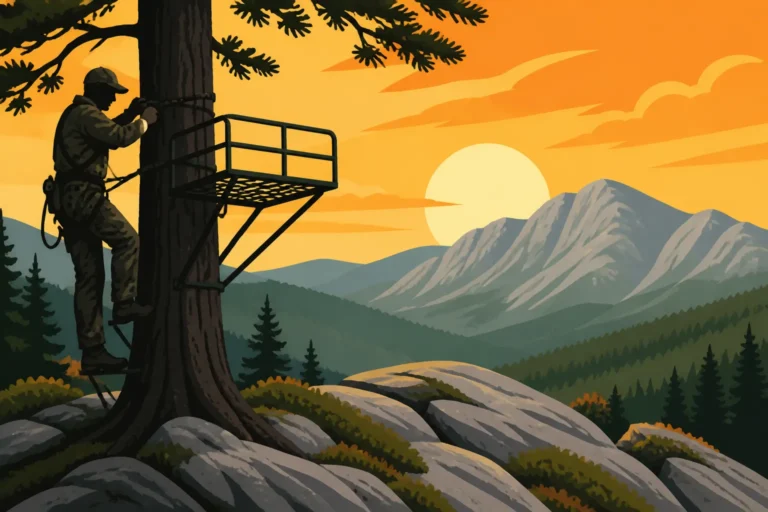
Careful stand placement is arguably the most critical factor in bowhunting success. When choosing a treestand location, prioritize wind direction, cover, and deer sign. You need to be able to get in and out undetected, and have the wind in your favor for the anticipated deer approach. Look for natural funnels – areas that naturally constrict deer movement, such as narrow strips of woods between open fields, saddles in ridge lines, or creek crossings. Deer will almost always take the path of least resistance. Our guide on Hanging a Stand on a Granite Ridge provides excellent advice specific to New Hampshire's rugged terrain. Position your stand downwind or crosswind of these funnels, and ensure you have adequate cover to break up your silhouette.
For early season hunts, focusing on trails leading to and from bedding and feeding areas is effective. As the rut approaches, consider setting up near prominent scrape lines or known buck travel corridors. During the late season, stands near thermal cover (like dense conifer stands) or remaining food sources will be your best bet. Always trim shooting lanes before the season, ensuring clear paths for a shot, but do so minimally to avoid alerting deer. Use a safety harness every single time you climb into or out of a treestand – falls are a leading cause of hunting accidents, and it's simply not worth the risk.
Still-Hunting and Ground Blind Strategies
While treestands are a bowhunter's staple, still-hunting offers an exciting, active alternative, especially in areas with varied terrain or when trying to locate pressured deer. Still-hunting involves moving incredibly slowly and deliberately through the woods, stopping frequently to scan your surroundings, listen for subtle sounds, and use your binoculars to pick apart cover. The key is to blend in, move with the wind in your face, and use the terrain to your advantage. This method is particularly effective during the rut when bucks are on the move, or in dense thickets where deer may be bedded. It requires immense patience and keen observation skills, but the reward of stalking a deer on its own turf is unmatched.
Ground blinds, whether pop-up models or natural brush blinds, offer another flexible hunting option. They are excellent for youth or new hunters, or in situations where treestands are impractical or unsafe, such as open field edges or thick swamps. A good ground blind offers concealment, scent containment, and protection from the elements. When using a pop-up blind, set it up well in advance of your hunt to allow deer to get accustomed to its presence. Brush it in heavily with natural vegetation to break up its outline. For natural blinds, use fallen logs, brush piles, or dense undergrowth to create an effective hide. Just like treestands, position your ground blind with the wind in mind, and ensure you have clear shooting lanes while remaining completely hidden.
Calling and Decoy Tactics
Adding calling and decoy tactics to your bowhunting arsenal can significantly increase your chances of drawing a deer into bow range, especially during the rut. Grunt calls, doe bleats, and fawn distress calls can be incredibly effective, particularly when used sparingly and realistically. During the early season, light bleats can sometimes pique a doe's curiosity. As the rut builds, buck grunts can challenge an approaching buck or draw in a curious doe looking for a suitor. Rattling antlers, simulating two bucks fighting, can be explosive during the peak rut, often bringing dominant bucks in quickly to investigate.
Decoys can further enhance your calling efforts. A single doe decoy can entice a buck looking for a receptive partner, while a small buck decoy can challenge an aggressive dominant buck. Position your decoy so that an approaching deer offers you a broadside shot, ideally 20-30 yards away from your stand. Always consider the wind when placing decoys; an approaching deer will almost always try to circle downwind to scent-check the "intruder," so place your decoy and stand accordingly. Remember that using decoys requires extra caution, especially on public land, to avoid being mistaken for game by other hunters.
Navigating Public vs. Private Land for Archery Hunters
New Hampshire offers a diverse landscape for bowhunting, encompassing vast tracts of public land and numerous private parcels. Each presents its own set of advantages and challenges, and understanding how to navigate both is key to expanding your hunting opportunities.
Hunting New Hampshire's Public Lands
New Hampshire boasts significant public land access, including parts of the White Mountain National Forest, numerous Wildlife Management Areas (WMAs), and various state forests. These areas offer incredible opportunities for bowhunters seeking adventure and solitude, but they often come with increased hunting pressure, especially in more accessible locations. For a comprehensive overview, our guide to Public Hunting Land in New Hampshire is a great resource.
When hunting public land, scouting is even more crucial to find areas that hold deer and experience less pressure. This often means walking further, hiking into steeper terrain, or exploring less obvious access points. Utilize mapping apps like GoHunt to identify boundaries, topography, and potential bedding areas away from roads and trails. Look for thick cover, recent clear-cuts, or areas with diverse habitat that might hold deer seeking refuge. Always be aware of other hunters and practice good etiquette. blaze orange isn't required for archers during the archery-only portion of the season, but wearing some while walking in and out, or when crossing paths with others, is a wise safety precaution. Remember that during the overlap with muzzleloader or firearms seasons, blaze orange requirements do apply to all hunters.
Securing Private Land Permission
Hunting private land can offer a significant advantage, often providing access to less pressured deer and more consistent patterns. However, securing permission requires effort, respect, and good communication. Most New Hampshire landowners are willing to consider requests, especially if you approach them respectfully and demonstrate responsibility. Our guide on Getting Private Land Permission in New Hampshire provides a detailed roadmap.
Start by identifying potential properties through mapping tools or driving rural roads. Once you've found a property, approach the landowner in person, well in advance of the season. Dress neatly, introduce yourself, and clearly state your intentions. Offer to help with chores, share some of your venison, or simply maintain regular communication about your presence. Emphasize your commitment to safety, ethical hunting, and respecting their property. Always ask about specific rules they may have, such as areas off-limits, vehicle access, or when you can hunt. A written permission slip, while not always legally required in New Hampshire, is an excellent practice for clarity and mutual understanding. Building a good relationship with a landowner can secure hunting access for years to come.
Respecting Landowner Rights and Regulations
Whether on public or private land, respect for the land and regulations is non-negotiable. On private land, this means adhering strictly to the landowner's wishes. Never trespass, even for game retrieval, without explicit permission. Close gates, don't litter, and avoid damaging property. Leaving things better than you found them is a golden rule.
On public land, be mindful of noise, scent, and your impact on the environment. Pack out everything you pack in, and leave no trace. Understand regulations regarding tree stands, trail cameras, and vehicle access. For instance, some WMAs may have specific rules about leaving stands up overnight or using ATVs. Always err on the side of caution and consult the New Hampshire Fish and Game digest or website for the most current rules. This collective responsibility ensures that hunting opportunities remain available for future generations.
Post-Harvest Protocol and Ethical Considerations
Successfully taking a deer with a bow is a culmination of hard work, skill, and a bit of luck. But the hunt doesn't end when the arrow flies. Ethical recovery, proper field dressing, and legal registration are critical steps that every responsible bowhunter must undertake.
Tracking and Recovery
After the shot, patience is paramount. The immediate instinct is often to rush, but resisting that urge is vital for a successful recovery. If you believe you made a good shot, give the deer time. For a suspected heart or lung shot, waiting 30-60 minutes is often sufficient before beginning the track. For liver or gut shots, waiting 4-6 hours, or even overnight, significantly increases your chances of recovery, especially if you're alone. Mark the location of your shot and the last place you saw the deer. Then, quietly leave the area to allow the deer to bed down and expire.
When you begin tracking, move slowly and methodically, looking for blood, broken branches, hair, and tracks. Pay attention to the deer's behavior after the shot – did it kick, run hard, or stop and look back? These clues can tell you a lot about shot placement. Use a bright headlamp (with a red light option to preserve night vision) if tracking after dark. If the blood trail peters out, grid search the area, expanding your circles. Utilize your knowledge of deer behavior: a wounded deer often heads towards thick cover, water, or downhill. If you lose the trail completely, a tracking dog (where legal and available) can be an invaluable resource. The goal is always a swift, ethical recovery, minimizing suffering and maximizing the use of the animal.
Field Dressing and Game Care
Once you've recovered your deer, prompt field dressing is essential, especially in New Hampshire's warmer early season. This involves carefully removing the internal organs to cool the carcass down quickly, preventing meat spoilage. Lay the deer on its back, make an incision from the breastbone to the pelvis, carefully cutting around the anus. Roll the deer onto its side to help expel the entrails. Work cleanly, avoiding contamination of the meat. If you're new to field dressing, watching a few instructional videos beforehand can be incredibly helpful.
After field dressing, the next step is getting the deer out of the woods. This can be the most physically demanding part of the hunt, particularly in New Hampshire's steep, rugged terrain. Methods vary from dragging (which can be exhausting), to using a game cart (if the terrain allows), to quartering the animal and packing it out (often necessary for larger deer in remote areas). Remember that you need to retain evidence of sex on the carcass until it is registered. Once out, keep the carcass cool and clean. If temperatures are warm, hang the deer in a shaded, well-ventilated area or get it to a processor quickly. In colder weather, you have more time, but cleanliness and cooling are always priorities.
Legal Registration and Reporting
New Hampshire requires all legally harvested deer to be registered. This is a critical step for both legal compliance and for providing valuable data to the New Hampshire Fish and Game Department, which uses this information to manage deer populations. Traditionally, deer were registered in person at official check stations, often local convenience stores or sporting goods shops. While this option still exists, New Hampshire now offers online registration through their website or the Fish and Game mobile app, making the process much more convenient.
Regardless of the method, registration typically needs to be completed within 24 hours of harvest. Be prepared to provide details such as the WMU where the deer was taken, the date of harvest, your license number, and the sex of the deer. You will receive a confirmation number or tag, which must remain with the deer until it is processed. This process helps ensure that New Hampshire's CWD-Free Deer Herd remains healthy by monitoring population trends and hunter success. Always adhere to the reporting deadlines, as failure to register your deer can result in fines and penalties.
Dealing with Unique Challenges of New Hampshire Bowhunting
Bowhunting in New Hampshire isn't just about the hunt itself; it's about navigating the diverse and often demanding conditions that the Granite State throws at you. From rugged landscapes to unpredictable weather, being prepared for these unique challenges will elevate your bowhunting experience.
Adapting to Diverse Terrain and Cover
New Hampshire's topography is incredibly varied, ranging from the steep, rocky slopes and dense conifer forests of the White Mountains to the rolling hardwood ridges of the central part of the state and the more agricultural river valleys. Each type of terrain presents its own set of challenges and demands specific bowhunting tactics. In the mountains, deer often travel along contours, through saddles, and in the bottoms of ravines. Finding well-used trails in this broken country requires keen observation and often, significant physical effort. Our guide on Reading a White Mountain Deer Yard provides insights into deer behavior in these challenging environments.
In hardwood forests, deer movement might be more spread out, making funnels and pinch points even more critical. Thick clear-cuts or cedar swamps offer excellent bedding cover, but can be incredibly difficult to hunt effectively with a bow due to limited visibility and shooting lanes. Adapting your stand placement or still-hunting approach to the specific cover type is key. For example, a climbing stand is excellent in hardwoods for flexibility, while a ground blind might be better suited for the dense cover of a swamp. Always be mindful of noise, as the crunch of dry leaves in a hardwood forest can easily betray your presence. Using a navigation app like GoHunt with topo and satellite overlays can help you analyze terrain before you even set foot in the woods, allowing you to identify potential travel corridors and bedding areas in various landscapes.
Weather Extremes and Prolonged Season Management
The long New Hampshire archery season exposes hunters to a full spectrum of weather conditions. Early season can mean hot, humid days that test your scent control and comfort. Investing in lightweight, breathable base layers and an effective scent control regimen (showers, clean clothes, scent sprays) is essential. As autumn progresses, crisp mornings give way to potentially warm afternoons, so layering becomes crucial to avoid overheating while hiking in and then getting cold on stand.
Late season, especially in November and December, often brings freezing temperatures, rain, sleet, and even heavy snow. This demands serious consideration for warm, waterproof clothing and insulated boots. A thermos with a hot drink can be a lifesaver on frigid stands. The cold also impacts equipment; check your bow strings and cables for ice buildup, and ensure your release aid functions properly. Batteries for electronics like rangefinders and headlamps drain faster in the cold, so carry spares. Hunting through these prolonged and varied conditions requires mental toughness and meticulous planning, but it also offers opportunities to encounter deer that are less wary, focused on feeding to survive the winter.
Hunting Pressure and Wildlife Behavior Shifts
As popular as bowhunting is, hunting pressure, particularly on easily accessible public lands, can significantly alter deer behavior. Deer learn quickly to avoid areas with high human activity, often becoming more nocturnal or seeking refuge in thick, less accessible cover. This means that a spot that was hot during pre-season scouting might be barren once the season opens and hunters hit the woods.
To counteract pressure, consider hunting mid-week when fewer people are out, or be willing to hike further into remote areas that others overlook. Focus on overlooked pockets of cover, small private parcels with permission, or areas that are difficult to access. Look for escape routes deer might use to flee pressure, as these can become productive stand locations. Deer behavior also shifts throughout the season naturally. Early season deer are often in summer patterns, focused on food. The rut brings increased, often daylight, movement from bucks. Late season finds deer concentrated on available food sources and thermal cover. Recognizing and adapting to these shifts, rather than sticking to a static plan, is what separates consistently successful bowhunters from those who struggle.
Disclaimer
This guide is intended for informational purposes only and does not supersede or replace official regulations from the New Hampshire Fish and Game Department. Always consult the most current hunting digest and local laws before planning any hunting activity. Hunting is an inherently dangerous activity, and safety should always be your top priority.