Crossbow Hunting New Hampshire’s Twelve WMUs
Trying to figure out where you can legally hunt with a crossbow in New Hampshire can feel like navigating a maze, especially with rules that have shifted over the years. It's frustrating when you've invested in a good piece of equipment but aren't sure if it's even allowed in your favorite hunting spots. This comprehensive guide is here to cut through the confusion, clearly outlining the twelve specific Wildlife Management Units (WMUs) where crossbow hunting is permitted during the archery deer season, and what you need to know to hunt them successfully and legally.
Understanding New Hampshire's Crossbow Regulations
The world of hunting regulations, particularly when it comes to specific equipment, is constantly in motion. For a long time, crossbows in New Hampshire were pretty restricted, often relegated to hunters with specific permits or during limited seasons. This created a lot of confusion and, frankly, a bit of an "us versus them" mentality between traditional archery hunters and those who preferred crossbows. Many folks just gave up trying to figure it out, assuming crossbows were a no-go statewide. But things have changed, and for the better, opening up more opportunities for hunters to get out in the woods during the popular archery season.
The Evolving Landscape of Crossbow Use in NH
It wasn't that long ago that the idea of a crossbow being a mainstream hunting tool in New Hampshire was met with a lot of skepticism, even resistance. For years, the Granite State held a fairly conservative stance, allowing crossbows only for disabled hunters with specific permits or during the short firearms season. This meant a lot of hunters who might have benefited from using a crossbow – perhaps due to age, physical limitations, or simply a preference for the platform – were effectively excluded from the much longer archery season. The traditional archery community, steeped in the challenge of vertical bows, often expressed concerns about the "ease" of crossbows and their potential impact on deer populations or the traditional hunting experience.
However, as crossbow technology advanced, becoming safer, more reliable, and undeniably effective, the conversation slowly started to shift. Many other states had already embraced crossbows into their general archery seasons, showing that they could coexist without disrupting deer management goals or the integrity of the hunt. In New Hampshire, after years of discussion, legislative proposals, and careful consideration by the Fish and Game Department, a significant change was enacted. This change recognized the growing interest and the benefits crossbows offered to a wider demographic of hunters, from seasoned veterans looking for a new challenge or an easier draw weight, to newcomers finding archery hunting more accessible. The expansion to specific WMUs was a thoughtful step, allowing for monitoring and adaptation, rather than a blanket statewide change overnight. This phased approach helped bridge the gap between traditionalists and those advocating for broader crossbow access, leading to the current framework that we'll explore in detail.
Key Legal Definitions and Requirements for Crossbows
When you decide to hunt with a crossbow in New Hampshire, it’s not just about knowing where you can hunt, but also what kind of crossbow is legal and how to use it safely and lawfully. The New Hampshire Fish and Game Department has specific definitions and requirements to ensure fair chase and public safety. For starters, your crossbow needs to meet certain specifications regarding draw weight and minimum bolt length. Generally, you're looking at a minimum draw weight that ensures sufficient power for a clean kill, usually around 125 to 150 pounds, though you should always check the most current digest as these can be updated.
Equally important are the bolts (often called arrows for crossbows) you use. There's typically a minimum length requirement, usually around 16 to 18 inches, and they must be tipped with broadheads that meet specific cutting diameter or blade count requirements. For example, a common requirement is a broadhead with at least two cutting edges and a minimum cutting diameter of 7/8 inches. Mechanical broadheads are generally allowed, but they must meet these minimum expanded cutting diameter requirements. The intent behind these rules is to ensure that any shot taken with a legal crossbow and bolt combination is capable of delivering a humane and ethical kill. Ignorance of these regulations is no excuse, and violating them can lead to significant fines and loss of hunting privileges, so always carry the current New Hampshire Hunting Digest with you or have a digital copy readily accessible on your phone.
Beyond the physical dimensions of the equipment, hunters also need to understand safe handling. Crossbows, like firearms, are powerful tools and demand respect. They must be transported uncocked in a vehicle or on an ATV. When afield, always ensure your crossbow is pointed in a safe direction, and keep your fingers and thumb below the string path to avoid injury. Many modern crossbows come with advanced safety features, including anti-dry fire mechanisms and automatic safeties, which are excellent for preventing accidental discharges. However, relying solely on these features is not enough; responsible hunter education and continuous practice are paramount to safe crossbow operation.
Diving Deep into the Twelve Crossbow-Legal WMUs
The decision to allow crossbows in New Hampshire's archery season wasn't a blanket change. Instead, it was carefully implemented for specific Wildlife Management Units (WMUs). This targeted approach acknowledges the diverse landscapes and deer populations across the state, allowing for a more controlled integration of crossbow hunting. It's crucial for any crossbow hunter to know exactly which of the state's WMUs fall under this allowance, as hunting outside these designated areas with a crossbow during archery season is illegal.
Identifying the Designated WMUs for Crossbow Archery Season
New Hampshire is divided into various WMUs, each with its own characteristics, deer densities, and sometimes, specific regulations. For crossbow hunters, the key is understanding which twelve WMUs have opened their doors to this method during the general archery season. These units are predominantly located in the more populated, southern, and central parts of the state. These areas often feature a mix of suburban interface, agricultural land, and fragmented woodlots, which can present unique hunting challenges and opportunities.
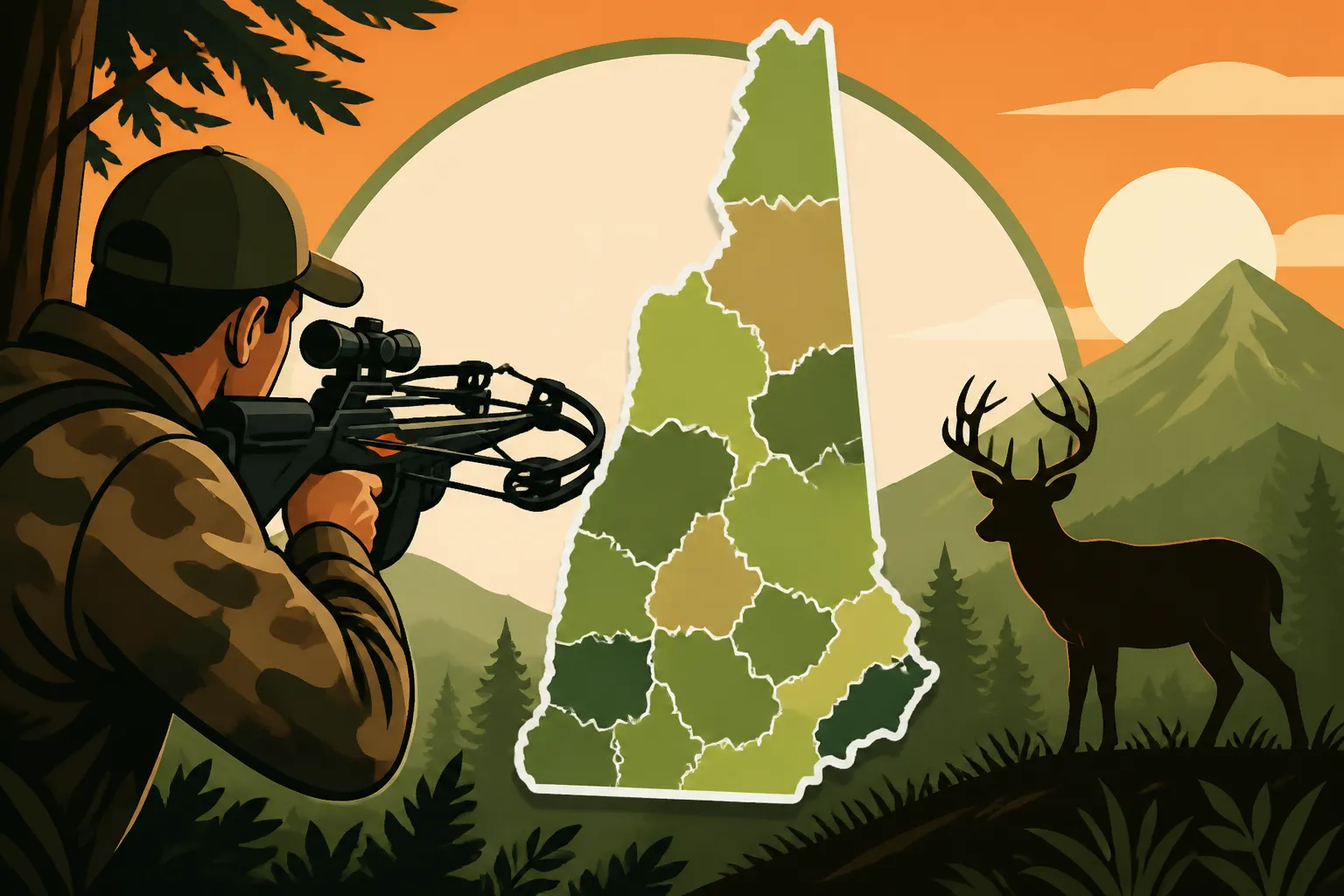
The twelve WMUs where crossbows are permitted for deer hunting during the archery season are: F, G, H1, H2, I1, I2, J1, J2, K, L, M, and D2. You'll notice that the far northern WMUs (A, B, C, D1, E) are generally excluded. This geographical distinction isn't arbitrary; it reflects a deliberate management strategy by the New Hampshire Fish and Game Department. These southern and central WMUs often have higher deer densities and are more impacted by human development, including extensive road networks and residential areas. The inclusion of crossbows in these areas can potentially help manage deer populations more effectively, particularly where traditional archery might be challenging due to terrain or proximity to populated zones. It also opens up hunting opportunities closer to where a large percentage of New Hampshire's population resides. If you're planning a trip to the North Country, make sure to check if you're venturing into areas where crossbows are not currently legal for archery season. You can check the most current regulations for New Hampshire's WMU-Based Deer Season Structure on the Fish and Game website.
Here's a quick overview of these WMUs:
| WMU | General Location | Typical Terrain/Habitat | Deer Density (Relative) |
|---|---|---|---|
| F | Southwest/Central | Mixed forest, some agriculture | Moderate to High |
| G | Southwest | Rolling hills, mixed forest, some open land | Moderate to High |
| H1 | South-Central | Agricultural, fragmented forest, suburban | High |
| H2 | Central | Mixed forest, some developed areas | High |
| I1 | Central/East | Merrimack River Valley, suburban, forest | High |
| I2 | East-Central | Suburban, forest, some coastal influence | High |
| J1 | Southeast Coast | Coastal plain, suburban, fragmented forest | High |
| J2 | Southeast Coast | Coastal plain, heavily suburban, small woodlots | High |
| K | South-Central | Mixed forest, suburban, some agriculture | Moderate to High |
| L | Southeast | Mixed forest, suburban, close to MA border | High |
| M | Far Southeast | Heavily developed, small woodlots, agricultural | High |
| D2 | Central-West | Connecticut River Valley, agriculture, forest | Moderate to High |
Navigating WMU-Specific Nuances and Restrictions
While the twelve WMUs share the allowance for crossbow hunting during archery season, it's a mistake to assume they're all the same. Each WMU, due to its unique geography, population density, and land use, presents its own set of nuances and potential restrictions. For instance, a WMU like J2, which includes significant portions of the seacoast region, is heavily suburbanized. Here, you'll find smaller, often fragmented parcels of huntable land. Access might be primarily through obtaining permission on private land, and concerns about setback distances from dwellings and roads become paramount. In contrast, WMUs like F or G might offer larger tracts of public land, including state forests or less developed private timberland, where hunter density and access points are different.
It's absolutely essential to consult the New Hampshire Fish and Game Hunting Digest each year, as regulations can subtly change. While the general allowance for crossbows in these WMUs might remain constant, other rules, such as antlerless permit availability or specific dates within the broader New Hampshire Archery Season Dates, can vary. For example, some WMUs might have an earlier archery close for specific reasons, like WMU A, which is not one of the crossbow-legal units but illustrates how dates can differ. Always double-check your chosen WMU for any specific local rules or public land restrictions before you head out.
Furthermore, within these WMUs, understanding the difference between public and private land is critical. While crossbows are legal, public land rules regarding baiting, trail cameras, and permanent stands can differ significantly from what might be permissible on private land with landowner permission. For public land, using services like GoHunt or the New Hampshire Fish and Game app to scout land boundaries and identify accessible areas is invaluable. When you're on private land, ensure you have explicit, ideally written, permission, and always respect the landowner's specific requests regarding hunting methods or access. Some landowners might allow crossbows but prohibit the use of screw-in steps for tree stands, for instance. Being a good steward and a respectful hunter goes a long way in maintaining hunting access.
Essential Gear and Setup for New Hampshire Crossbow Hunters
Just like any other form of hunting, success with a crossbow in New Hampshire hinges on having the right gear and ensuring it's properly set up. The diverse terrain, from dense timber to open agricultural fields, and the often unpredictable weather of the Granite State demand equipment that is reliable, accurate, and suited to the task. Don't skimp on quality or preparation; your effectiveness and, more importantly, your ethical responsibility to the game, depend on it.
Choosing the Right Crossbow and Bolts for Granite State Deer
Selecting a crossbow isn't a one-size-fits-all decision, especially when targeting New Hampshire whitetails. The draw weight is an important consideration, as it dictates the speed and kinetic energy of your bolt. While legal minimums exist, often in the 125-150 lb range, a higher draw weight (within comfortable cocking limits) can provide a flatter trajectory and more knockdown power, which is beneficial for clean kills. Brands like TenPoint, Ravin, and Excalibur are popular choices, known for their reliability and accuracy. However, even more budget-friendly options from Barnett or Wicked Ridge can be highly effective if properly maintained and sighted in. The key is finding a crossbow that fits your physique, is comfortable to handle, and that you can cock safely and quietly in the field.
When it comes to bolts, don't just grab the cheapest option. Bolt material, weight, and fletching all play a role in accuracy and penetration. Heavier bolts generally carry more kinetic energy and penetrate better, which is vital for a clean pass-through on a New Hampshire deer. Look for carbon bolts with good straightness tolerance for consistent accuracy. As for broadheads, this is where a lot of debate happens, but for New Hampshire deer, both fixed-blade and mechanical broadheads can be lethal. Fixed blades are known for their reliability and robust construction, often preferred for their dependable penetration through bone and hide. Mechanical broadheads, on the other hand, can offer a larger cutting diameter upon impact, creating a wider wound channel and often leaving a more substantial blood trail. Make sure whatever broadhead you choose meets the state's legal requirements for cutting diameter and blade count. It's crucial to practice with your chosen broadhead extensively, as they can sometimes fly differently than field points. For more detailed advice on this, check out this guide on Best Broadhead for a New Hampshire Whitetail.
Consider the conditions you'll be hunting in. If you're planning on sitting in a treestand on a cold, damp November morning, a crossbow with an integrated cocking device or a quiet external cocking rope will be a huge advantage. The ease of cocking quietly and efficiently can make or break a shot opportunity, especially if you need to recock for a follow-up shot. Also, think about the overall weight and balance of the crossbow. If you're going to be still-hunting or carrying it for long distances, a lighter, more compact model might be more comfortable. Ultimately, the best crossbow and bolt combination is the one you are most proficient and confident with, allowing for precise, ethical shots every time.
Optics and Accessories to Enhance Your Crossbow Hunt
Just having a legal crossbow isn't enough; the right optics and accessories can significantly boost your effectiveness and enjoyment in the field. A high-quality scope is arguably the most critical accessory. Most crossbows come with a multi-reticle scope designed for various yardages, typically with hash marks or dots calibrated for 20, 30, 40, and even 50 yards. Investing in a clearer, brighter scope can make a huge difference in low-light conditions common during prime hunting hours. Make sure your scope is sighted in meticulously at each range, as even a slight error can lead to a missed shot or, worse, a wounded animal. When Setting Up a Crossbow in New Hampshire's Approved Units, proper scope mounting and calibration are key.
A rangefinder is another indispensable tool for crossbow hunters. Unlike a rifle, where a few yards off might not matter as much, crossbow ballistics drop quickly. Knowing the exact distance to your target is paramount for using the correct reticle in your scope. A good rangefinder can eliminate guesswork and give you the confidence to make an ethical shot. Look for one that's easy to use, has a clear display, and performs well in varying light conditions. Brands like Vortex, Leupold, and Bushnell offer reliable rangefinders that can withstand the rigors of New Hampshire's hunting environment. Some rangefinders even feature angle compensation, which is incredibly useful when shooting from a treestand down at a deer.
Beyond optics, don't overlook other accessories. A comfortable sling will make carrying your crossbow through dense brush or up steep terrain much easier. A good quiver, whether attached to the crossbow or worn on your person, should hold your bolts securely and allow for quick, quiet access. A decocking device or arrow is essential for safely unloading your crossbow at the end of a hunt without firing a bolt into the ground or a target. Finally, consider a high-quality case for transport and storage to protect your investment from the elements and accidental bumps. Regular maintenance, including waxing the string and inspecting for wear and tear, will ensure your crossbow is always ready when that moment of truth arrives.
Strategic Approaches to Crossbow Hunting in New Hampshire
Hunting with a crossbow in New Hampshire's designated WMUs requires more than just legal equipment; it demands a strategic approach tailored to the region's unique landscapes and deer behavior. Whether you're targeting a large tract of public timber or a small, private woodlot nestled between suburban homes, understanding how to scout effectively and deploy the right tactics will dramatically increase your chances of success.
Scouting and Stand Placement in Diverse NH Terrain
Effective scouting is the bedrock of successful crossbow hunting in New Hampshire. Unlike rifle hunting, where longer shots are common, crossbows are effective at shorter ranges, typically 20-50 yards. This means you need to get closer to deer, which necessitates understanding their movements, feeding patterns, and bedding areas with precision. Start your scouting long before the season opens, ideally during the late winter or early spring when leaf cover is minimal, making it easier to spot old sign. Look for pinch points, funnels between woodlots, natural crossings, and active rub and scrape lines. These are prime locations where deer movement is concentrated. If you're hunting more developed WMUs like J2 or L, focus on identifying small, overlooked pockets of cover or corridors that deer use to travel between feeding and bedding areas, often surprisingly close to human activity.
Trail cameras are invaluable scouting tools, particularly in the diverse terrains of New Hampshire. Place them strategically on travel corridors, near food sources (like apple orchards or oak flats, even on private land), or along the edges of thick cover where deer feel secure. They can help you pattern deer movement, identify specific bucks, and determine the best times for a sit. When choosing a trail camera for New Hampshire's terrain, consider weather resistance and battery life, as conditions can be harsh. Using a service like GoHunt can help you overlay public land boundaries and topographical maps, making it easier to pinpoint these potential hotspots and avoid trespassing. For example, if you're trying to figure out Where to Hang a Camera on a Logging Road, a mapping app can show you the intersecting trails and cover.
Stand placement for a crossbow is critical due to the shorter effective range. Whether you choose a treestand or a ground blind, ensure it's positioned to offer multiple shot opportunities within your comfortable shooting range. Consider prevailing wind directions and sun position. You don't want to be silhouetted by the morning sun or have your scent carried directly to a bedding area. If you're Hanging a Stand on a Granite Ridge, think about thermals and how they rise and fall throughout the day, influencing deer movement and your scent cone. Also, plan your entry and exit routes carefully to avoid spooking deer. A quiet approach, often through less-traveled terrain or along natural features like creek beds, is essential. Remember, you're trying to intercept a deer at close range, so your hide must be impeccable.
Effective Hunting Tactics for Crossbow Success
Once your scouting is complete and your stands are set, it’s time to deploy effective hunting tactics. Crossbow hunting lends itself well to several common deer hunting strategies, each with its own advantages depending on the specific WMU and conditions.
Treestand Hunting: This is arguably the most popular method for crossbow hunters. Being elevated helps dissipate your scent, provides a wider field of view, and offers a better shooting angle for vital hits, leading to quicker, more ethical kills. In the timbered WMUs, treestands are excellent for overlooking food plots, oak flats, or thick bedding cover. When Hunting a Green Field Planted for Deer, a treestand on the field edge gives you a great vantage point. Position your stand to maximize shot opportunities along expected deer trails, considering both broadside and quartering-away shots. Early morning and late afternoon are prime times for treestand sits, coinciding with deer movement to and from feeding areas. Patience is key; sometimes, the best approach is simply to sit still and let the deer come to you.
Ground Blinds: For situations where treestands aren't feasible or desirable – perhaps in open fields, sparse timber, or heavily pressured areas where elevated stands are quickly spotted – a ground blind can be highly effective. Modern pop-up ground blinds offer excellent concealment and can be set up quickly. They're especially useful when hunting a field edge or in dense brush where natural cover is abundant. When Brushing In a Blind on a Field Edge, ensure it blends seamlessly with its surroundings. The main challenge with ground blinds is controlling your scent and having a clear shooting lane. Always set up with the wind in your favor and consider using scent-control products. A natural brush blind, carefully constructed, can also be incredibly effective, especially if you plan to still-hunt slowly through an area.
Still-Hunting: This active hunting method involves moving slowly and deliberately through the woods, stopping frequently to scan and listen. It's particularly effective in dense cover or during the rut when bucks are actively cruising. For example, if you're Still-Hunting White Mountain National Forest Timber (though note, many WMNF areas might not be crossbow-legal for archery, this tactic is still broadly applicable where allowed), stealth and observation are paramount. With a crossbow, your shot opportunities will often be fleeting and at close range, so you need to be constantly ready. This method requires a deep understanding of deer behavior and terrain. Move into the wind, step quietly, and use binoculars to pick apart cover before taking another step. This can be a very rewarding way to hunt, as it allows you to cover more ground and actively search for deer rather than waiting for them.
Understanding Deer Movement by WMU: Remember, deer behavior varies by WMU. In suburban WMUs, deer are often more nocturnal and wary due to human presence. In these areas, focus on transition times (dawn and dusk) and secluded pockets of cover. In more rural units, deer might move more freely during daylight hours, especially during the rut. Learning to read signs like fresh tracks, droppings, and browse is crucial for adapting your tactics to the specific area you're hunting.
Safety, Ethics, and Responsible Crossbow Hunting
Hunting is a privilege, not a right, and it comes with profound responsibilities. When you head into New Hampshire's woods with a crossbow, you're not just exercising a personal pastime; you're representing the entire hunting community. Upholding the highest standards of safety and ethics is paramount, ensuring not only your well-being but also the long-term future of hunting in the Granite State.
Prioritizing Safety in the Field
Safety, above all else, must be your number one priority when crossbow hunting. This isn't just about avoiding accidents; it's about fostering a culture of responsibility that protects yourself, your hunting partners, other outdoor enthusiasts, and the public. Just like firearms, crossbows are powerful weapons capable of causing serious harm if mishandled. The first rule is always to treat your crossbow as if it's loaded, even when you know it's not. This means keeping the muzzle (the end where the bolt exits) pointed in a safe direction and your finger off the trigger until you are ready to shoot. Never cock your crossbow until you are in your hunting location and have a clear, safe shot opportunity.
One of the most critical aspects of safety, especially for treestand hunters, is using a full-body safety harness. Falls from treestands are a leading cause of hunting accidents, and they are almost entirely preventable. Always wear your harness from the moment your feet leave the ground until you are safely back down. Inspect your stand and harness regularly for wear and tear, and ensure your life-line is properly installed and used. When ascending or descending, maintain three points of contact. For crossbow users, this also means being extra cautious when cocking the bow in a treestand, as it can be a strenuous motion. Many crossbows now feature integrated cocking devices or crank mechanisms that make this process safer and easier, reducing the risk of a fall while trying to draw the string back.
Shot placement is another huge component of ethical safety. Your goal should always be a quick, humane kill. Practice extensively at various distances and angles to understand your crossbow's capabilities and limitations. Know the anatomy of a deer intimately so you can aim for the vital organs (heart and lungs). Never take a shot beyond your comfortable, ethical range, especially if conditions (wind, light) are not ideal. A wounded animal that escapes often suffers unnecessarily and may never be recovered. Before pulling the trigger, take a moment to confirm your target and what's beyond it. Ensure no other hunters, animals, or property are in your line of fire. Having a clear understanding of your surroundings is as important as your aim.
Upholding Ethical Hunting Practices and Public Perception
Beyond mere legality, ethical hunting practices are the backbone of our tradition. This means respecting the animal, the land, and non-hunters. For crossbow hunters, this starts with a commitment to fair chase. Crossbows are incredibly efficient tools, but they still require skill, patience, and woodsmanship. Avoid "road hunting" or shooting at animals from a vehicle. Always ensure you have clear shooting lanes and that the animal is within your ethical range for a clean shot. Taking a marginal shot and hoping for the best is unethical and often leads to a lost animal.
Respect for landowners is paramount, especially in the more populated WMUs (like H1, I1, J1, K) where private land access is often necessary. Always obtain explicit permission before hunting on private property, and make sure you understand any specific rules the landowner might have. Leave no trace, close gates, and report any suspicious activity you might observe. Being a courteous and respectful hunter not only secures your own access but also helps maintain a positive image of hunters in the community, benefiting everyone. This positive interaction can make all the difference when Knocking on Doors in New Hampshire Farm Country.
Public perception of hunting, and crossbow hunting in particular, is greatly influenced by the actions of individual hunters. Be a proud, but responsible, ambassador for our sport. When you harvest an animal, handle it with respect. Field dress and process it cleanly and efficiently. Don't display harvested game disrespectfully in public. Understand that many non-hunters may not grasp the intricacies of hunting, and some may even be opposed to it. Your respectful behavior, adherence to regulations, and commitment to humane practices go a long way in shaping their opinions. It helps counter negative stereotypes and reinforces the conservation role hunters play. Advocating for crossbow hunting means demonstrating that it is a legitimate, ethical, and challenging method when practiced responsibly.
Beyond the Hunt: Registration and Post-Harvest
The hunt doesn't truly end when you pull the trigger or release the bolt. What happens immediately after a successful harvest is just as crucial, involving legal requirements for registration and proper handling of the game. These steps ensure compliance with New Hampshire Fish and Game regulations and, just as importantly, guarantee that the meat you worked so hard for is processed safely and efficiently.
Registering Your New Hampshire Crossbow Deer
Once you've successfully harvested a deer with your crossbow in one of the approved WMUs, the next critical step is registration. In New Hampshire, all deer (and other big game) must be registered with the New Hampshire Fish and Game Department. This is not just a formality; it's vital for wildlife management. The data collected from registration helps biologists monitor deer populations, track harvest trends, and make informed decisions about future hunting seasons and bag limits. Ignoring this step is a serious violation and can result in penalties.
New Hampshire offers several convenient ways to register your deer. The most modern and increasingly popular method is online registration through the Fish and Game website or their mobile app. This allows you to register your deer from the field, which is especially handy if you're hunting in a remote area and don't want to travel to a physical check station immediately. You'll need to provide details like your license number, the WMU where the deer was harvested, the date, and information about the deer itself (e.g., antlered or antlerless, sex). Make sure to carefully follow the instructions and record the confirmation number you receive. For more information on this process, you can refer to Registering a New Hampshire Deer Online.
For those who prefer a more traditional approach, or if you're hunting in an area with poor cell service, there are also numerous physical deer registration stations located throughout the state. These are typically local businesses, general stores, or sporting goods shops that are authorized to register game. Bring your deer (or at least proof of harvest like the tag attached to the carcass) and your license to the station, and an attendant will help you complete the process. It's always a good idea to know the locations and operating hours of nearby registration stations before you head out, especially if you anticipate hunting during peak times or in a specific area. Remember, there's usually a deadline for registration after harvest, so don't delay. The law states you must register your deer within 24 hours of harvest, or within 12 hours of removal from the field if that removal time is later than 24 hours after harvest.
Field Dressing and Meat Care in the New Hampshire Climate
After the excitement of the harvest, the real work begins: field dressing and meat care. Proper handling of your deer in the field is crucial for preserving the quality of the venison, especially given New Hampshire's often unpredictable weather. Even during the archery season, which spans from September into December, temperatures can range from warm, early fall days to freezing late-season conditions. The faster you can cool down the carcass, the better the meat quality will be.
Immediately after a successful shot and ensuring the animal is dispatched ethically, begin field dressing. This involves removing the internal organs to allow the carcass to cool quickly. Work efficiently and cleanly, using a sharp knife designed for the task. Lay the deer on a slight incline if possible, to allow fluids to drain. Once field dressed, if temperatures are mild, consider quartering the deer and placing the meat in game bags. This allows for even faster cooling and makes extraction from the woods much easier, especially if you're deep in the timber or if you've harvested a large animal. For advice on this, check out Butchering a Deer at Camp or Field Dressing a Deer in Cold Weather.
Transporting your deer safely and hygienically is another important aspect. Whether you're dragging it out whole or packing out quarters, ensure the meat is protected from dirt, insects, and excessive heat. If temperatures are warm, pack ice around the game bags in a cooler for transport home. Never transport an un-cooled deer carcass for extended periods in warm weather, as this can lead to spoilage. Once home, either take the deer to a professional butcher or begin processing it yourself promptly. Aging the meat in a controlled, cool environment can enhance tenderness and flavor, but it must be done correctly to prevent spoilage. Your efforts in the field directly contribute to the delicious venison that will eventually fill your freezer, making all the hard work worthwhile.
Common Questions and Troubleshooting for Crossbow Hunters
Crossbow hunting, while growing in popularity and accessibility, still generates its fair share of questions, particularly for those new to the method or those transitioning from traditional archery or firearms. Addressing these common queries and offering troubleshooting tips can help both seasoned veterans and newcomers navigate the unique aspects of crossbow hunting in New Hampshire.
Addressing Misconceptions About Crossbows
One of the persistent frustrations for crossbow hunters is the array of misconceptions that still circulate, often fueled by a lack of understanding or outdated information. A common myth is that crossbows are "too easy" and require no skill, making hunting less challenging. This couldn't be further from the truth. While a crossbow eliminates the need to hold a draw at full anchor, it still demands precise range estimation, meticulous scent control, stealthy movement, and intimate knowledge of deer behavior. In New Hampshire's dense cover and varied terrain, getting a deer within crossbow range (typically 20-50 yards) is a significant challenge, requiring every bit of woodsmanship a hunter possesses. The accuracy of a crossbow is exceptional, but only in the hands of a disciplined hunter who practices regularly and knows their equipment's capabilities. It's about precision, not simplicity.
Another misconception is that crossbows lead to an increase in deer harvest, potentially impacting populations negatively. However, studies and data from states that have legalized crossbows for general archery seasons, including New Hampshire's own initial observations, generally show that while crossbow usage increases, the overall deer harvest by archery methods typically only sees a modest increase. This suggests that crossbows are often utilized by existing hunters who switch platforms, or by new hunters who might not have otherwise participated in archery season. New Hampshire Fish and Game monitors these harvest rates closely, and their careful implementation in specific WMUs like J2 or H1, which often have higher deer densities that benefit from management, reflects a thoughtful approach to balancing opportunity with conservation. Concerns about crossbows leading to widespread wounding of animals are also largely unfounded; an ethical shot with a crossbow is just as lethal as one from a vertical bow, provided the hunter is proficient.
Finally, some mistakenly believe that crossbows are noisy or cumbersome. While older models might have been, modern crossbows from brands like Ravin or TenPoint are incredibly compact, lightweight, and can be remarkably quiet, especially with sound dampening accessories. The "clack" of the string release is often no louder than a traditional bow string. Furthermore, the ability to pre-cock the bow and wait for the perfect shot, combined with the relative lack of movement required to execute the shot, can actually make a crossbow a very stealthy tool in the field. Educating ourselves and others about the realities of modern crossbow hunting is crucial to dispelling these myths and fostering a more inclusive hunting community.
Tips for New and Experienced Crossbow Users
Whether you're new to crossbow hunting or a seasoned veteran looking to refine your skills, there are always ways to improve your effectiveness in New Hampshire's woods. For newcomers, the most important tip is practice, practice, practice. Don't just sight in your scope once and assume you're ready. Shoot regularly at different distances, from various positions (standing, kneeling, from a treestand or ground blind), and at different angles. This will help you become intimately familiar with your crossbow's trajectory and your own shooting limitations. Understand that a crossbow bolt drops significantly faster than a rifle bullet, so precise range estimation is critical for ethical shots. Use a quality target that can stop bolts without damaging them, and always inspect your bolts for damage after each shot.
For both new and experienced users, maintenance is key. Crossbow strings and cables are under immense tension and can wear out over time. Regularly inspect them for fraying or damage, and apply string wax as recommended by the manufacturer. Keep your rail clean and lubricated according to your crossbow's manual to ensure smooth bolt release and consistent accuracy. A well-maintained crossbow is a reliable crossbow. Also, be mindful of broadhead tuning. While crossbows are generally more forgiving than vertical bows, some broadheads may not fly identically to field points. Shoot a few broadheads at a target before the season to confirm their flight path and make any necessary adjustments.
Adaptation to hunting conditions is another crucial skill. New Hampshire's weather can be volatile, especially during the archery season which can see everything from 70-degree days in September to snow in December. Dress in layers, bringing appropriate rain gear and insulation. Understand how wind and thermals affect scent dispersal and deer movement, particularly in mountainous or hilly WMUs like F or G. Learn to use mapping tools like GoHunt or the New Hampshire Fish and Game app to understand terrain, property boundaries, and potential deer hotspots. These tools are invaluable for Reading Aerial Photos for North Country Deer or any other part of the state. Embrace technology, but don't let it replace your woodsmanship. The best hunters are those who can integrate modern tools with traditional skills.
Finally, consider mentorship and continuing education. If you're new to crossbows, find an experienced mentor who can share their knowledge and tips. Even as an experienced hunter, taking a hunter education refresher course or attending local clinics can always provide new insights or reinforce best practices. The hunting community thrives on shared knowledge and passion. By continuously learning and refining your approach, you not only increase your own success but also contribute positively to the future of crossbow hunting in New Hampshire.
Disclaimer
Please note that hunting regulations, including those pertaining to crossbow use and WMU designations, can change. Always consult the most current New Hampshire Fish and Game Hunting Digest or visit their official website before heading afield to ensure you are in full compliance with all state laws and regulations. This guide is for informational purposes only and should not be considered legal advice.