Registering a New Hampshire Deer Online
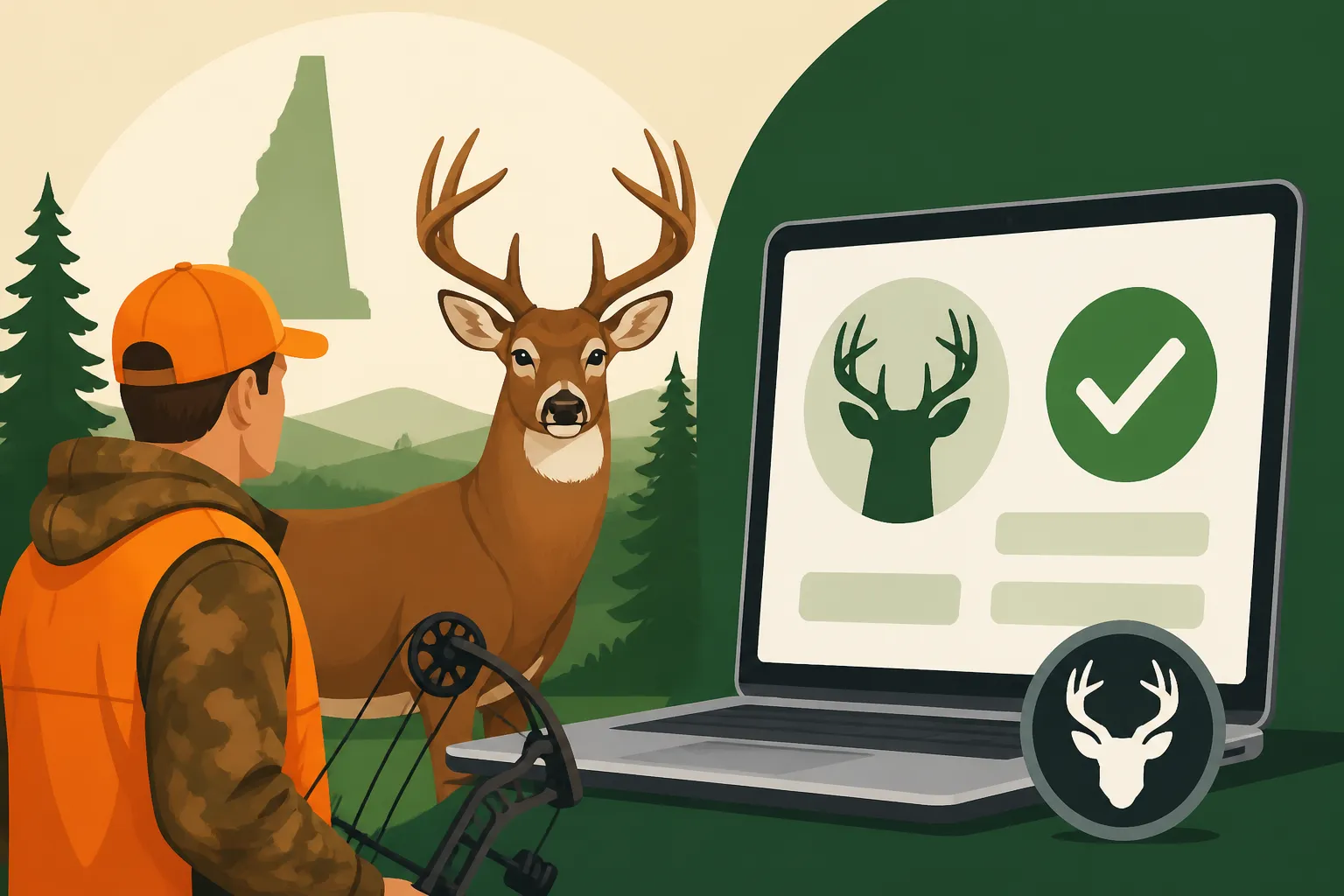
For New Hampshire deer hunters, the excitement of a successful hunt can quickly turn to a frustrating scramble when it comes to the mandatory reporting. Traditional registration methods often involved driving to a physical check station, sometimes miles out of the way, just to stand in line. This guide will walk you through the convenient, modern solution of registering your New Hampshire deer online, helping you navigate the process smoothly and get back to processing your harvest with less hassle.
Why Online Deer Registration is a Game Changer for New Hampshire Hunters
Let's be honest, after the adrenaline of the shot and the hard work of the recovery, the last thing anyone wants to do is load up their deer and drive an hour to a registration station. New Hampshire's online deer registration system has fundamentally transformed this often-dreaded final step, making it infinitely more accessible and less of a logistical headache. It's a real blessing for hunters, especially those of us who hunt remote areas or who punch a tag late in the day.
The Old Way Versus the New Convenience
Think back to the "good old days" – or maybe not so good, depending on your perspective. You'd track your deer, field dress it, and then, if you were lucky enough to be near a town with a designated check station, you'd head straight there. Often, this meant interrupting your processing plans, driving extra miles, and potentially dealing with crowds during peak times, especially during the opening days of the firearms season. For many, this was just part of the deal. But it wasn't efficient.
Now, with online registration, much of that stress is gone. You can take care of your deer, get it out of the woods, and then, from the comfort of your home or even out in camp if you have cell service, complete the registration with just a few clicks. This modern approach respects your time and energy, allowing you to focus on the truly rewarding aspects of the hunt and the subsequent meat processing. It’s a huge shift from the days of "If you can find a station open…" to "If you have a signal, you can register." It particularly shines during seasons like New Hampshire's Long Archery Season, where hunters might be miles from the nearest town.
Instant Compliance and Peace of Mind
Beyond just convenience, online registration offers immediate compliance with state regulations. As soon as you complete the online form, you receive a confirmation number. This instant acknowledgment means you don't have to worry about whether your paperwork is in order; you have proof of registration right there, usually emailed to you. This provides immense peace of mind, knowing you've fulfilled your legal obligation quickly and accurately.
This immediate compliance is especially crucial given New Hampshire's strict reporting requirements. The state requires all deer to be registered within 24 hours of harvest, or within 12 hours if the carcass is being transported out of state. Having the online option means you're much less likely to miss these critical deadlines due to travel, station operating hours, or unexpected delays. It keeps you on the right side of the law and ensures that vital harvest data is collected efficiently. For more details on what the state expects, check out the guide on New Hampshire Deer Reporting Requirements.
Step-by-Step Guide to Registering Your New Hampshire Deer Online
The process of registering your deer online through the New Hampshire Fish and Game Department's portal is designed to be straightforward, but like any digital system, it helps to know what to expect and what information you’ll need gathered beforehand. Being prepared ensures a smooth experience and avoids any last-minute fumbling.
What You Need Before You Start
Before you even open your browser or the New Hampshire Fish and Game app, make sure you have these essentials at your fingertips. Trust me, nothing is more frustrating than starting the process only to realize you’re missing a critical piece of information and have to go hunt for it.
First and foremost, you'll need your current New Hampshire hunting license number and your conservation ID number. These are your unique identifiers in the state's system. Make sure these are readily accessible – perhaps saved in your phone or written down in your hunting journal.
Next, you'll need all the details about your harvested deer. This includes:
- The date and time of harvest.
- The Wildlife Management Unit (WMU) where the deer was taken. Knowing your WMU is critical for understanding regulations, and it's key for data collection. If you're unsure, consulting a reliable mapping app or a tool like GoHunt can help you pinpoint your exact location and corresponding WMU.
- The sex of the deer (buck or doe).
- The number of antler points if it's a buck. This means counting both sides, including any abnormal points, as long as they are at least one inch long.
- The method of harvest (archery, muzzleloader, or firearm).
- The town where the deer was taken.
- Your contact information, including an email address where your confirmation can be sent.
Lastly, ensure you have a reliable internet connection. While the system is generally robust, a dropped connection in the middle of submission can be annoying. If you're out in the sticks with limited signal, consider waiting until you're back in an area with stable connectivity.
Navigating the Online Portal
Once you have everything organized, head over to the New Hampshire Fish and Game Department's official website. Look for the "Online Deer Reporting" or "Harvest Reporting" section, usually found under the hunting or licensing menus. The direct link is typically prominent during deer season.
Upon entering the portal, you’ll usually start by entering your Conservation ID and possibly your birthdate to verify your identity. From there, you'll be guided through a series of screens where you'll input all the harvest details you gathered. The interface is generally user-friendly, with clear prompts for each piece of information.
Here’s a simplified breakdown of the typical fields you'll encounter:
| Field | Description | Example Input |
|---|---|---|
| Conservation ID | Your unique identifier with NH Fish & Game. | 12345678 |
| Hunting License Number | Your current year's NH hunting license. | NH123456 |
| Date of Harvest | The specific date the deer was taken. | 11/05/2023 |
| Time of Harvest | Approximate time of day the deer was killed. | 07:15 AM |
| WMU (Wildlife Mgmt Unit) | The unit where the deer was harvested. | J2 |
| Town of Harvest | The specific town where the deer was harvested. | Deerfield |
| Sex of Deer | Male (buck) or Female (doe). | Male |
| Antler Points (if buck) | Total number of points on both antlers (1+ inch long). | 8 |
| Method of Harvest | Archery, Muzzleloader, or Firearm. | Firearm |
| Email Address | For sending confirmation. | hunter@example.com |
Double-check every entry before you hit submit. An error in the WMU or antler count, for instance, can skew vital population data that the state uses for future season planning. After reviewing, submit your report. You should immediately receive a confirmation number on screen, and usually an email with the same information shortly thereafter. Save this number! This is your official proof of registration.
Confirming Your Registration and What Comes Next
Once you've successfully submitted your deer registration online, you'll receive a confirmation number. This number is incredibly important, acting as your official proof that you've complied with state regulations. I always recommend taking a screenshot of the confirmation page and keeping the email in a dedicated hunting folder. This way, if there's ever a question, you have instant access to your verified registration.
The New Hampshire Fish and Game Department uses this data to manage deer populations across the state’s various WMUs. Your accurate reporting contributes directly to the health and sustainability of the herd, influencing decisions like season lengths, bag limits, and antlerless permits for future seasons. It’s part of your responsibility as a New Hampshire hunter to provide this information. If you're keen to understand how this data informs season structures, you might find it useful to learn more about New Hampshire's WMU-Based Deer Season Structure.
What comes next for you after registration? It's time to focus on processing your harvest! Whether you’re planning to butcher it yourself at camp, take it to a local processor, or donate the venison, having the registration complete frees you up to handle these next crucial steps. Proper field dressing in cold weather is always a priority, but once that's done and the deer is registered, you can really begin the work of transforming your harvest into delicious table fare.
Common Questions and Troubleshooting for Online Deer Registration
While the online registration system is designed for ease of use, like any technology, it can sometimes throw a curveball. Knowing how to troubleshoot common issues or understanding specific nuances can save you a lot of grief. It’s important to remember that the goal is accurate reporting, and sometimes that means knowing when to switch gears from online to in-person.
Dealing with Technical Glitches
Imagine you're trying to register your deer, and suddenly the website is slow, or you get an error message. It happens. First, don't panic. A few simple troubleshooting steps can often resolve the issue.
- Refresh the page: Sometimes, a temporary server glitch can be fixed by simply refreshing your browser.
- Clear your browser cache and cookies: Old data stored by your browser can sometimes interfere with website functionality.
- Try a different browser or device: If you're on Chrome and having issues, try Firefox or Safari. If you're on your phone, try a desktop computer, or vice-versa.
- Check your internet connection: Make sure your Wi-Fi or cellular data is stable. A weak signal can cause submission failures.
- Wait a bit: If the website seems to be experiencing high traffic (e.g., during peak firearms season opening morning), it might just be overloaded. Step away for 15-30 minutes and try again.
If you've exhausted these options and are still unable to complete the online registration, it's crucial to have a backup plan. Remember, the 24-hour reporting deadline is firm. You may need to revert to the traditional method. This means locating an open registration station. The state does have specific periods, often referred to as "blackout days" when online registration might not be available due to data processing or other reasons. During these times, knowing about Registering a New Hampshire Deer In Person During the Blackout Days becomes critical.
Specifics on Data Entry and Accuracy
Accuracy is paramount when reporting your harvest. It's not just about compliance; it's about contributing to sound wildlife management. Misreporting details can have downstream effects on population estimates and future regulations.
One common area of confusion can be the WMU (Wildlife Management Unit). New Hampshire is divided into these units, and knowing which one you hunted in is crucial. If you're hunting near a WMU boundary, use a reliable GPS device or mapping application like GoHunt to confirm your precise location. This ensures you select the correct unit during registration.
Another specific detail is antler points for bucks. Remember, it's any point at least one inch long. Don't guess; take a moment to count accurately. This data helps Fish and Game track the age structure of the buck population.
If you realize you made an error after submitting your online registration, contact the New Hampshire Fish and Game Department directly and immediately. Explain the situation, provide your confirmation number, and they will guide you on how to correct the record. Do not try to submit a second, corrected registration online, as this can cause more confusion in the system.
When Online Isn't an Option
There are indeed times when online registration isn't available or simply won't work for your situation. The most common scenario is during specific "blackout periods" when the online system is temporarily taken offline for data compilation or system updates. These periods are usually announced in advance, but it's always wise to check the Fish and Game website or the current hunting digest. You can also find information on When Online Deer Registration Goes Offline.
Furthermore, if you are hunting in an extremely remote area with no cell service or internet access, online registration simply isn't feasible. In these instances, planning ahead is key. Know where your nearest physical registration stations are located, and be prepared to take your deer there within the required timeframe. Keep in mind that not all businesses are open 24/7, so factoring in travel time and station hours is essential.
Lastly, some hunters, especially those less comfortable with technology, might simply prefer the traditional in-person method. And that’s perfectly fine! The physical stations provide an opportunity to chat with fellow hunters and local officials, which can be a valuable part of the hunting culture.
Key Benefits of Digital Deer Tagging
Beyond the immediate convenience, embracing digital deer tagging through online registration offers several significant advantages for individual hunters and the wider conservation effort in New Hampshire. It's more than just a modern amenity; it's a step towards more efficient and effective wildlife management.
Saving Time and Avoiding Blackout Days
The most immediate and tangible benefit for any hunter is the time saved. Instead of dedicating precious hours after a successful hunt to driving to a physical station, you can complete the process in minutes from virtually anywhere. This is particularly valuable for hunters who have to travel a considerable distance to their hunting grounds, such as those pursuing moose in New Hampshire's North Country, or who hunt late into the evening.
Imagine bagging a buck just before legal shooting hours end. With online registration, you can field dress your deer, get it secured, and then register it while sitting around the campfire, or at home with a warm meal. This efficiency translates to more time for family, friends, and preparing your hard-earned venison. It also helps to circumvent those tricky periods when physical check stations might be closed, or during the aforementioned "blackout days" when the online system might be temporarily unavailable. Being aware of these specific dates, and planning for them, is part of being a prepared hunter.
Contributing to Wildlife Management Data
Every single deer reported, whether online or in person, contributes to a robust dataset that the New Hampshire Fish and Game Department uses for critical wildlife management decisions. This data helps biologists:
- Estimate population trends: By tracking harvest numbers year after year, they can gauge whether populations are increasing, stable, or declining in specific WMUs.
- Assess herd health: The sex and age (determined by antler points) of harvested deer provide insights into the overall health and productivity of the herd.
- Inform future regulations: Data on harvest rates helps determine appropriate bag limits, season lengths, and whether special permits (like antlerless tags) are needed to balance the herd with available habitat.
Your accurate and timely online registration directly feeds into this scientific process. It’s not just a bureaucratic formality; it’s an active participation in the sustainable management of New Hampshire's deer resource. When you take the time to accurately report your harvest, you're investing in the future of hunting in the Granite State. This is why knowing details like the New Hampshire Deer Reporting Deadline is so important – accurate data depends on timely submission.
Disclaimer
Please remember that hunting regulations, season dates, and reporting procedures can change. Always consult the official New Hampshire Fish and Game Department website or the current year's hunting digest for the most up-to-date and accurate information before heading afield. This guide is for informational purposes only and should not replace official state resources.