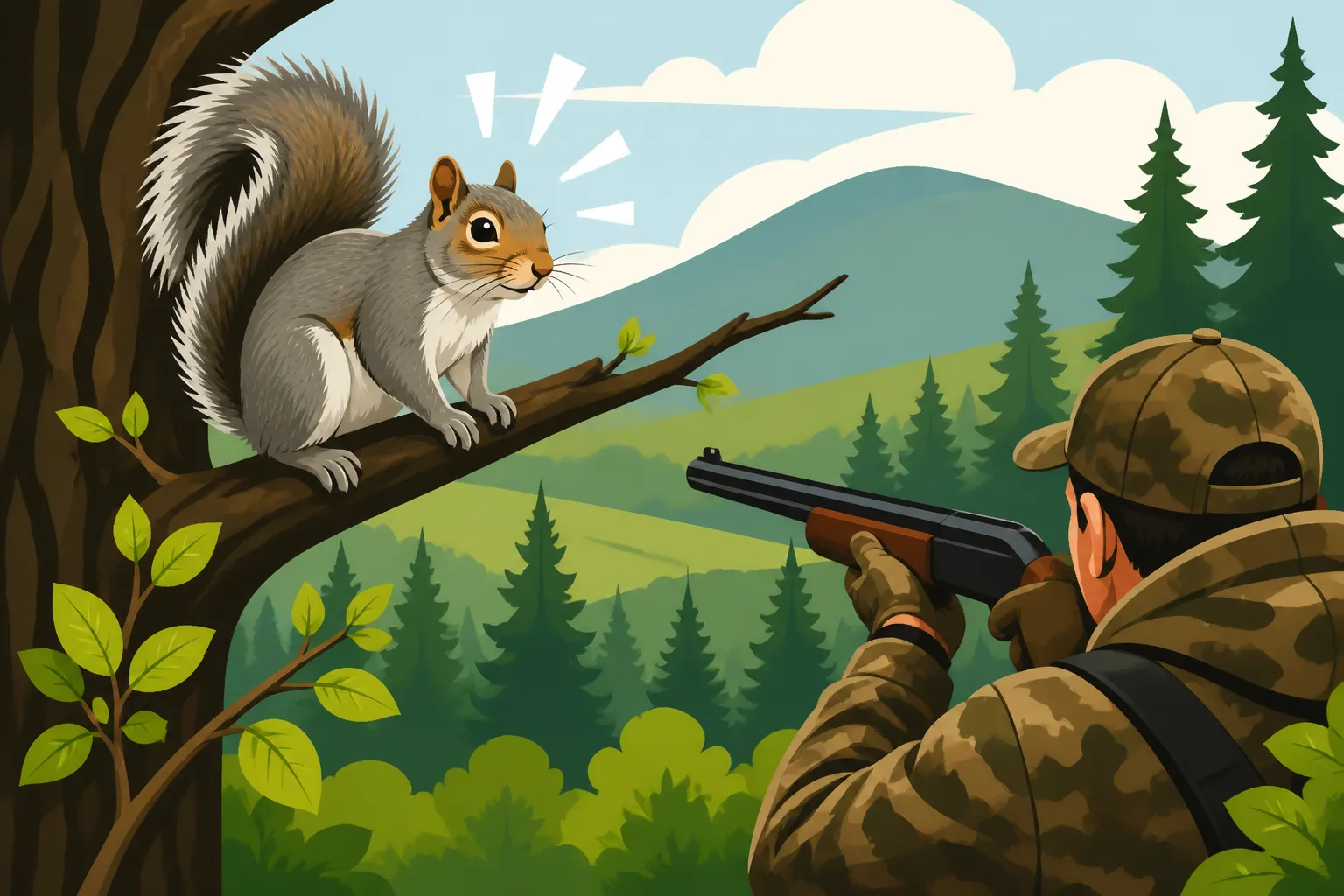
How Early Season Squirrels Give Themselves Away
Early season squirrel hunting in New Hampshire can feel like you’re trying to find a needle in a haystack, especially when the leaves are still thick on the trees and the forest floor is covered in lush undergrowth. It’s incredibly frustrating to walk through what you know is prime habitat, only to feel like you’re busting them out of their beds rather than spotting them actively. This guide will help you decipher the subtle, and sometimes not-so-subtle, clues these nimble critters leave behind, turning those silent woods into a symphony of opportunity.
Decoding the Auditory Cues of Early Season Squirrels
The most obvious way early season squirrels give themselves away, especially when visual concealment is high, is through sound. Their world is a cacophony of rustles, barks, and thumps, and learning to differentiate these noises is key to success. You’re not just listening for a squirrel, you’re listening for activity.
The Distinctive Bark and Chatter
Squirrels are highly vocal creatures, and their barks and chatters are often the first indication of their presence. An alarm bark, a sharp, repetitive "qua-qua-qua," usually means they've spotted you or another perceived threat. This sound is a clear signal that a squirrel is nearby, but also that it's aware of your presence. The trick is to pinpoint the source and then move incredibly slowly, trying to get a visual before it zips around the trunk or into a dense canopy. Sometimes, if you stand perfectly still, they'll calm down and resume their activities, allowing you a chance to move in.
Beyond the alarm bark, you'll hear a general chatter, which can be a sign of territorial disputes, communication with other squirrels, or even just general contentment while feeding. This chatter is less urgent than an alarm bark and might suggest a squirrel that's more preoccupied and less focused on its surroundings. Listen for the direction and intensity. If it's persistent and coming from a specific area, that's your cue to investigate. Knowing how to interpret these sounds is a fundamental part of any successful day Squirrel Hunting New Hampshire Hardwoods.
Rustling Leaves and Falling Mast
As squirrels go about their daily business, they create a surprising amount of noise, especially on the forest floor. Early in the season, before a hard frost or heavy winds strip the trees bare, fallen leaves can still be dry enough to crackle with every movement. A persistent rustling under a stand of oaks or hickories is a dead giveaway that a squirrel is on the ground, likely searching for nuts. This isn’t the subtle rustle of a mouse or small bird; it’s a more deliberate, heavier movement.
Even more indicative is the sound of falling mast. Whether it's the gentle thud of a single acorn hitting the forest floor or a shower of tiny scales from a chewed pine cone, these sounds are direct evidence of a squirrel feeding high in the canopy. Black oaks, white oaks, beech trees, and hickories are prime spots to listen for these tell-tale drops. Often, you'll hear multiple nuts falling over a short period, indicating a busy feeder. Take your time, scan the branches directly above where you hear the drops, and look for any slight movement or tell-tale flick of a tail. This is where patience truly pays off, and sometimes, a good mapping application like GoHunt can help you identify these specific tree species in an area you're scouting.
Visual Clues in a Full Canopy
With the trees still holding onto their leaves in the early season, spotting squirrels can be a serious challenge. Their natural camouflage blends seamlessly with bark and foliage. However, even with dense cover, squirrels leave visual breadcrumbs if you know what to look for.
Flickers of Movement and Tail Twitches
The most common visual clue, and often the hardest to spot, is a flicker of movement. Squirrels are constantly on the move, even when they’re sitting still. Their tails, especially, are almost always in motion, twitching and flicking. When scanning a tree, don't just look for the entire animal. Instead, look for anomalies in the foliage: a patch of leaves that subtly shakes, a dark shape that seems to shift, or the distinctive bushy tail waving.
Focus your gaze on areas where food sources are abundant. If you’ve heard nuts dropping, narrow your search to the upper branches of those specific trees. Sometimes, the sun glinting off a wet nose or a black eye can be enough to give them away. It's a game of patience and observation. If you catch a glimpse, don't rush. Take a breath, confirm it's a legal target, and make your move. This patient scanning is a technique that applies across the board, whether you're after small game or Hunting the November Firearms Opener for deer.
Chewed Mast and Droppings on the Forest Floor
Even if you don't see or hear a squirrel in action, their recent feeding activities can point you in the right direction. Walk slowly through oak, hickory, and beech groves, specifically looking for fresh evidence on the ground. You're looking for chewed acorn caps, shattered hickory shells, or the tell-tale tiny cone scales under pine trees. The fresher the sign, the more likely squirrels are actively using that area. Bits of green on the chewed nuts, or wet-looking shells, are excellent indicators of very recent activity.
Another subtle sign is their droppings. Squirrel droppings are small, cylindrical pellets, often found in clusters around their feeding or resting areas. While not as obvious as chewed nuts, finding them confirms consistent squirrel presence. Pay attention to the quantity and freshness of these signs. An area littered with fresh chewings and droppings is a high-percentage spot worth sitting and waiting, perhaps even setting up a temporary ground blind to break up your outline, much like you would when Using a Ground Blind on Public Land.
Leveraging Early Season Foraging Patterns
Understanding what squirrels are eating and where they're finding it is crucial for anticipating their movements and pinpointing their locations. Early season means a different diet and different habits than later in the fall or winter.
The Allure of Fresh Mast Crops
In New Hampshire, the early fall is all about the mast crops. Acorns, hickory nuts, beechnuts – these are the energy-rich foods that squirrels are intensely focused on collecting and consuming. Your best bet for finding active squirrels is to scout out stands of mature nut-producing trees. White oaks drop their acorns earlier than red oaks, so keep an eye out for those first. Hickory nuts are another favorite and can be found in more open hardwood stands.
Don't just look at the trees; look under them. A significant concentration of fresh cuttings and shells indicates a productive tree. Sometimes, you'll find a single tree that's raining acorns, drawing squirrels from all around. This is a goldmine. Using a reliable mapping tool like GoHunt can help you identify different tree species within a forest block, allowing you to prioritize your scouting efforts on known mast producers. The health of these mast crops can significantly impact various species, even influencing Hunting After a Poor Acorn Year for deer.
Seeking Out Mushroom Patches and Greenery
While nuts are king, early season squirrels also diversify their diet. They'll readily munch on various fungi, especially mushrooms found on logs or emerging from the forest floor. Keep an eye out for tell-tale bite marks on mushrooms. They also enjoy certain green vegetation and even some insects.
This diverse diet means they might not always be in the tallest oak. Sometimes, they'll be working a fallen log for mushrooms or digging for roots and tubers. This adds another layer of complexity but also offers more opportunities. When scouting, observe signs of disturbance on the forest floor, beyond just nut shells. Freshly dug areas, overturned leaves in odd spots, or even partially eaten mushrooms can indicate a squirrel's recent culinary explorations. Understanding these varied food sources is part of the broader effort of Small Game and Predator Hunting in New Hampshire.
Strategic Scouting and Patience
Ultimately, consistently finding early season squirrels relies on good scouting and a patient approach in the field. You can't just wander aimlessly and expect results.
Pre-Season Reconnaissance
Before the season even opens, spend time in the woods walking potential hunting areas. Look for concentrations of nut-bearing trees, identify historical squirrel "hot spots," and note any significant changes in habitat. With tools like the New Hampshire Fish and Game app or satellite imagery from platforms like GoHunt, you can identify potential food sources and travel corridors from home. This kind of diligent scouting, much like when Reading Aerial Photos for North Country Deer, gives you a significant advantage. Look for areas with a mix of mature hardwoods for food and dense softwood stands for cover and nesting.
Identifying these key areas beforehand allows you to walk straight to productive spots on opening day, rather than spending valuable hunting time searching. Pay attention to areas where old logging roads or trails intersect with prime hardwood ridges, as these often serve as natural travel routes.
The Art of the Still-Hunt and Sit
Once you're in the woods, adopt a slow and deliberate pace. Early season squirrels are often less wary than their late-season counterparts, but the dense foliage still provides them ample opportunity to escape undetected if you're crashing through the brush. Move a few steps, then stop and listen. Scan the canopy with your eyes, looking for those subtle movements or flickers. Use your binoculars to pick apart the dense foliage.
If you hear or see activity, find a comfortable spot with good visibility and sit still for 15-30 minutes. Let the woods settle down. Often, the squirrels will resume their activity, giving you a chance to make a clean shot. This patience is a common thread in all effective hunting strategies, from waiting out a gobbler when Calling a May Gobbler Off the Roost to setting up on deer. The goal is to become a part of the environment, not a disturbance within it.
| Early Season Squirrel Giveaway | Type of Clue | What to Listen/Look For | Interpretation & Action |
|---|---|---|---|
| Alarm Bark / Chatter | Auditory | Sharp, repetitive "qua-qua"; general chattering | Awareness of your presence or social interaction. Freeze, pinpoint source, move slowly. |
| Rustling Leaves | Auditory | Deliberate, consistent movement on forest floor | Squirrel actively foraging on the ground. Approach cautiously. |
| Falling Mast (Nuts, Scales) | Auditory | Thud of nuts, shower of scales from chewed cones | Squirrel actively feeding in canopy. Scan branches above. |
| Subtle Movement | Visual | Flickering leaves, twitching tail, shifting shape | Squirrel moving or perched. Use optics, identify target. |
| Chewed Nuts / Droppings | Visual | Freshly cracked shells, small pellets on ground | Recent feeding activity. Indicates a hotspot; consider sitting. |
| Dug-Up Ground / Eaten Fungi | Visual | Disturbed soil, bite marks on mushrooms | Squirrel foraging for non-mast items. Explore diversified habitat. |
Disclaimer
Always check the latest New Hampshire Fish and Game hunting regulations before heading afield. Season dates, bag limits, and legal methods can change annually. This guide is for informational purposes only and does not replace official state regulations.