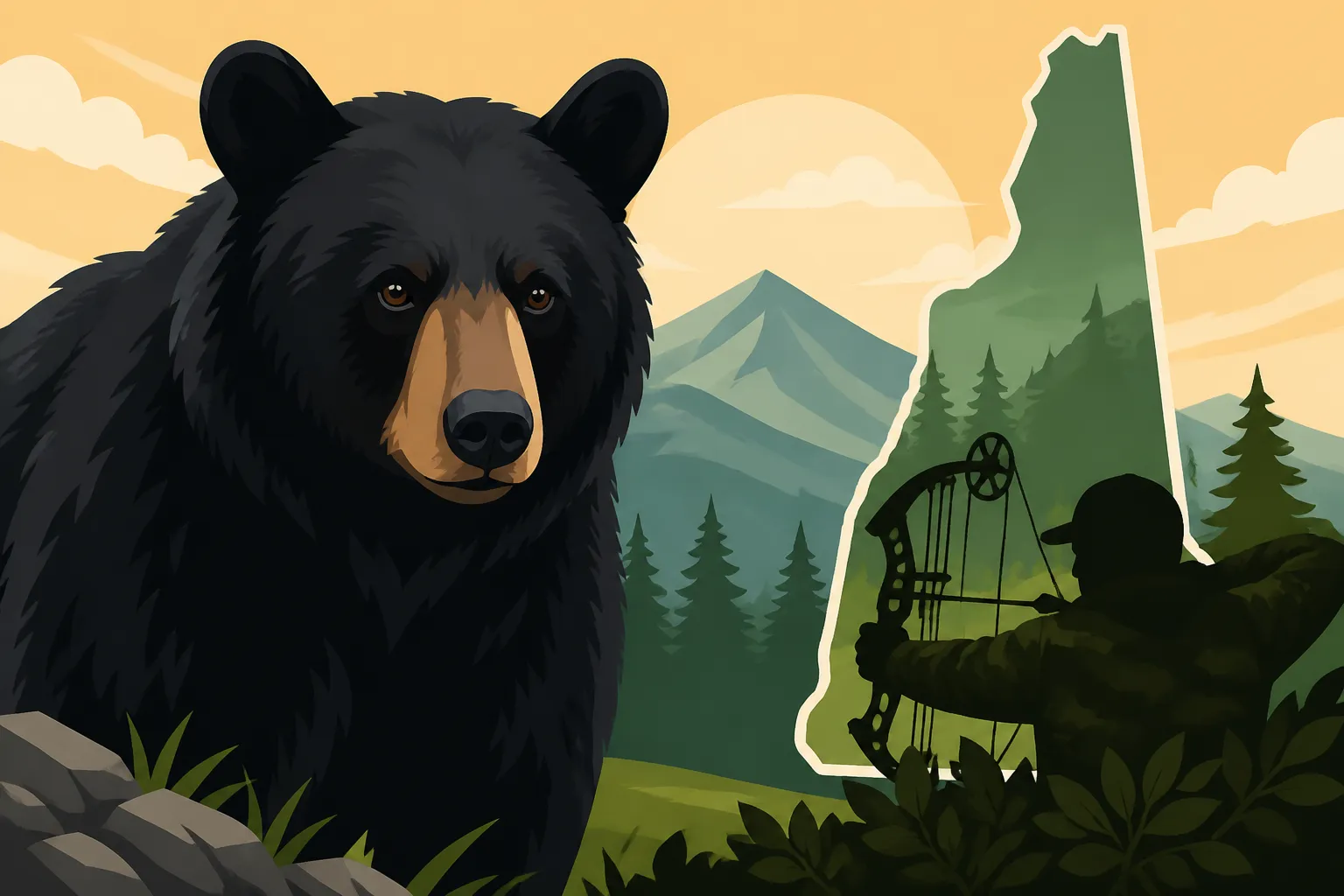
Black Bears in New Hampshire
For many folks who cherish the wild corners of New Hampshire, the thought of encountering a black bear brings a mix of awe and a little bit of apprehension. These incredible animals are an undeniable part of our state's rich natural heritage, but their increasing numbers and expanding range can sometimes lead to unexpected encounters, both in the deep woods and closer to our backyards. This comprehensive guide is here to help you understand the fascinating world of New Hampshire's black bears, from their biology and behavior to management strategies and hunting opportunities, ensuring you're well-informed whether you're a nature enthusiast or a seasoned hunter.
Understanding the Black Bear Population in New Hampshire
New Hampshire's black bear population is a true success story of wildlife management, but with success often comes the need for careful stewardship. These magnificent creatures have bounced back dramatically over the past several decades, expanding their range and thriving in the Granite State's diverse habitats. It’s a testament to good conservation practices, but it also presents new challenges for both bears and the people who share their landscape.
Current Population Estimates and Trends
It wasn't always this way. Back in the early 1900s, black bears were largely confined to the most remote, wild areas of northern New Hampshire. Their numbers were sparse, and encounters were rare. Fast forward to today, and the picture is vastly different. The New Hampshire Fish and Game Department estimates the state's black bear population to be somewhere in the range of 5,000 to 6,000 animals, and potentially even higher. This represents a significant increase, and frankly, it's quite remarkable.
What does this trend mean for us? Well, it means that bears are no longer just a "North Country" phenomenon. While the highest densities are still found in the expansive forests of Coos and Grafton counties, bears are now regularly observed in every county in New Hampshire, including the more suburbanized southern regions. This expansion means that encountering a bear, whether on a trail while hiking or perhaps even in your backyard, is becoming increasingly common. The population isn't just growing; it's spreading out, taking advantage of available habitat and food sources wherever they can find them. This makes understanding their presence crucial for everyone who enjoys the outdoors.
Factors Contributing to Population Growth
Several key factors have played a pivotal role in the resurgence of New Hampshire's black bear population. One of the most significant is undoubtedly improved habitat quality and availability. Decades of reforestation efforts have transformed former farmlands back into forests, providing excellent cover, denning sites, and food sources. The landscape is simply more bear-friendly than it was a century ago. Fewer large-scale clear-cuts and more responsible forest management practices have also contributed to stable habitats.
Another critical factor has been the shift in public perception and hunting regulations. Historically, bears were often viewed as pests and hunted indiscriminately. However, changing attitudes, coupled with science-based management by the New Hampshire Fish and Game Department, led to more conservative hunting seasons and bag limits. The regulated harvest now plays a vital role in managing the population, ensuring it remains healthy and stable without overpopulation pressures. Furthermore, educational efforts have taught people how to coexist with bears, reducing conflicts and illegal killing. The result is a robust, resilient bear population that truly thrives across the state.
Regional Distribution Across the Granite State
While black bears are truly found throughout New Hampshire, their distribution isn't uniform. The vast, unbroken forests of the North Country, particularly in Coos County and northern Grafton County, remain the stronghold. Here, you'll find the highest densities of bears, with expansive wilderness areas offering ideal habitat, abundant natural food, and minimal human disturbance in many spots. This is the heart of bear country, where large tracts of land mean bears can often live their lives without encountering humans very often.
As you move south, bears adapt to more fragmented landscapes. The White Mountains region still holds a strong bear population, but they often utilize areas closer to human activity, like hiking trails and campgrounds, especially when natural food sources are scarce. In the Lakes Region and Merrimack Valley, bears are present but tend to be more elusive, sticking to larger woodlots, river corridors, and areas with good mast crops. Even the more densely populated southeastern and southwestern parts of the state have resident bear populations, though they often rely on smaller, isolated patches of woods and can become more accustomed to human food sources, leading to increased human-bear conflicts. Understanding these regional differences is key to predicting bear activity and knowing what to expect in your particular neck of the woods.
Black Bear Biology and Behavior
Black bears are incredibly intelligent and adaptable animals, perfectly suited to the diverse habitats of New Hampshire. To truly appreciate them, and to interact safely with them, it helps to understand their fundamental biology and the behaviors that drive their daily lives. From their long winter slumber to their relentless search for food, every aspect of a bear’s existence is a masterclass in survival.
Denning Habits and Winter Survival
As the crisp air of autumn turns into the biting cold of winter, New Hampshire's black bears begin their remarkable annual process of hibernation, or more accurately, denning. Unlike true hibernators, bears don't go into a deep, unresponsive state; their body temperature drops, and their heart rate slows, but they can be roused. This allows them to conserve energy during the lean winter months when natural food is scarce. They typically enter their dens in late November or early December, and will emerge in late March or early April, depending on the weather and their location.
Finding the perfect den is crucial for survival. Bears are opportunistic denners, using a variety of locations. You might find a bear denning under the root ball of a fallen tree, in a rock crevice, within a brush pile, or even in a hollow tree cavity. Sometimes, they simply excavate a shallow depression in the ground, covered by snow. Pregnant sows often seek out the most secure and well-insulated dens to give birth in January or February. During their time in the den, bears don't eat, drink, or defecate. They survive entirely on the fat reserves they've accumulated during the fall, losing a significant portion of their body weight, sometimes up to 30%. It's an incredible physiological feat that allows them to endure the harshest part of the New Hampshire winter.
Diet and Foraging Strategies
Black bears are omnivores, meaning they eat both plants and animals, and their diet is incredibly diverse and seasonal. This adaptability is a huge part of their success in New Hampshire. In spring, when they emerge from their dens, they're often ravenous. Their diet at this time largely consists of tender young grasses, sedges, and forbs, providing crucial nutrients after months of fasting. They'll also turn over rocks and logs to find insects, grubs, and ant larvae. As summer progresses, their diet shifts to berries – blueberries, raspberries, and blackberries are particular favorites.
But the real feast comes in the late summer and fall, a critical period known as hyperphagia, when bears are driven to consume massive amounts of calories to build up fat reserves for winter. This is when acorns and beechnuts become absolutely vital. White oak acorns and American beech nuts are high in fat and protein, and bears will spend countless hours foraging for them. If natural mast crops are poor, bears are more likely to seek out alternative, human-associated food sources, such as garbage, bird feeders, and agricultural crops, which can unfortunately lead to conflicts. They'll also opportunistically prey on fawns, moose calves, and small mammals, and will readily consume carrion if they find it. Their powerful sense of smell, keen eyesight, and excellent hearing make them incredibly efficient foragers.
Reproduction and Cub Rearing
The life cycle of a black bear is a slow and deliberate one, emphasizing the care and protection of their young. Black bears typically don't reach sexual maturity until they are around 3-5 years old. Mating usually occurs in late May through July. However, bears exhibit a fascinating reproductive strategy called delayed implantation. After mating, the fertilized egg doesn't immediately implant in the uterine wall. Instead, it free-floats for several months, only implanting in late fall, around November, if the sow has accumulated enough fat reserves to sustain a pregnancy and successfully raise cubs. This ensures that cubs are born when the mother is in optimal condition to care for them.
Cubs are born in the den in January or February, typically in litters of one to three, though larger litters are possible. They are born remarkably small, blind, and helpless, weighing only about half a pound. The sow nurses them in the den, and by the time they emerge in spring, the cubs have grown considerably, often weighing 5-10 pounds. Cubs stay with their mother for a relatively long period, usually 1.5 to 2.5 years, learning essential survival skills such as foraging, avoiding danger, and identifying safe den sites. This extended maternal care is vital for their development and ensures they have the best chance of survival once they disperse. It's truly a sight to behold when a sow and her cubs emerge in spring, a testament to the wildness and resilience of New Hampshire.
Black Bear Management in New Hampshire
Managing a thriving, intelligent, and adaptable species like the black bear requires a multi-faceted approach. In New Hampshire, the goal is to maintain a healthy and sustainable bear population while minimizing human-bear conflicts. This involves careful monitoring, regulated hunting, and extensive public education. It's a delicate balance, but one that is absolutely essential for the long-term well-being of both bears and people.
New Hampshire Fish and Game's Role
The New Hampshire Fish and Game Department (NHFG) is the primary steward of the state's black bear population. Their role is comprehensive, encompassing research, monitoring, public education, and regulatory oversight. NHFG biologists conduct extensive research to understand bear movements, reproductive rates, denning habits, and diet preferences. They use various techniques, including live-trapping and collaring, to gather crucial data that informs management decisions. This scientific approach ensures that population estimates are accurate and that management strategies are effective.
Beyond research, NHFG is responsible for setting hunting seasons, bag limits, and legal hunting methods, all designed to manage the bear population at a level that is healthy for the bears and acceptable to the public. They also spearhead public education campaigns, teaching residents and visitors how to prevent human-bear conflicts by securing attractants like garbage and bird feeders. When conflicts do arise, NHFG often intervenes, providing advice, and in some cases, live-trapping and relocating problem bears, though prevention is always the preferred method. Their dedicated efforts are what allow us to enjoy a robust bear population today.
Hunting as a Management Tool
Hunting plays a critical and scientifically sound role in managing New Hampshire's black bear population. Without natural predators like wolves or cougars, which are no longer present in significant numbers in the state, human hunters are the primary mechanism for regulating bear numbers. A regulated harvest helps to control population growth, preventing overpopulation that could lead to increased conflicts with humans, habitat degradation, and potential disease outbreaks among bears. It's a tool that ensures the population remains within the ecological carrying capacity of the land.
The NH Fish and Game Department carefully sets hunting season dates, methods, and specific Wildlife Management Unit (WMU) regulations based on population data and harvest trends. This ensures that the harvest is sustainable and targeted. Hunters contribute valuable data through mandatory registration, providing information on bear age, sex, and weight, which further aids in population assessment. For many New Hampshire hunters, pursuing a black bear is a challenging and rewarding experience that connects them deeply with the wild. Responsible hunting helps maintain a healthy balance in the ecosystem, and it's a privilege that comes with significant responsibilities regarding ethical conduct and conservation.
Coexistence and Conflict Mitigation
With a growing and expanding bear population, learning to coexist peacefully with black bears is more important than ever. The unfortunate reality is that most human-bear conflicts are directly related to easily accessible human food sources. A bear, with its incredible sense of smell and insatiable appetite, will always take the path of least resistance to a meal. This often means raiding bird feeders, unsecured garbage cans, pet food left outside, or even raiding a poorly stored cooler at a campsite. These incidents are frustrating for homeowners and can lead to habituation, where bears lose their natural fear of humans, becoming "nuisance" bears that may eventually need to be lethally removed.
The good news is that preventing these conflicts is largely within our control. Simple actions like bringing bird feeders in from April to December, securing garbage in bear-resistant containers, keeping pet food indoors, and cleaning grills after use can make a huge difference. For those living in areas with high bear activity, the use of electric fencing around gardens or chicken coops can be very effective. Public education campaigns by NHFG and organizations like BearWise are continually promoting these preventative measures. When you're out hiking, carrying bear spray and knowing how to act if you encounter a bear (make noise, make yourself look big, don't run) are crucial safety steps. By taking these proactive measures, we can significantly reduce conflicts and ensure both bears and people can thrive in New Hampshire.
Hunting Black Bears in New Hampshire
For dedicated hunters, the pursuit of a New Hampshire black bear offers a unique and exhilarating challenge. It’s a demanding hunt, often requiring patience, perseverance, and a deep understanding of bear behavior. Success doesn't come easy, but the rewards—from the incredible experience in the woods to the high-quality meat—are well worth the effort. New Hampshire's bear seasons are structured to offer various opportunities, catering to different hunting styles and preferences.
Season Dates and WMU Regulations
New Hampshire's black bear hunting season is carefully structured and varies depending on the Wildlife Management Unit (WMU) and the hunting method. This allows the Fish and Game Department to fine-tune harvest rates based on regional bear densities and population objectives. Generally, bear season opens in early September with archery, followed by an early bait season, a hound season, and then a later general firearms season that often overlaps with deer season in certain WMUs. It's crucial to consult the most current New Hampshire Hunting Digest every year, as dates and specific regulations can change.
For instance, some WMUs in the northern part of the state, with higher bear populations, might have longer seasons or more liberal bag limits compared to WMUs in the more populated south. Understanding the specific regulations for your chosen WMU is not just good practice, it's a legal requirement. You'll need to know when you can legally hunt, what methods are permitted, and any specific reporting requirements. This kind of detail is exactly where resources like the GoHunt app or website can be incredibly helpful, providing up-to-date regulations and maps at your fingertips, which can save a lot of headaches when planning your hunt. Always double-check with the official NHFG digest to ensure you're compliant.
Here's a simplified table illustrating how bear seasons can vary by WMU and method, but always confirm with the current NHFG Digest:
| Hunting Method | Northern WMUs (e.g., A, B, C) | Southern WMUs (e.g., H2, K, M) |
|---|---|---|
| Archery | Early Sept – Mid Sept | Early Sept – Mid Sept |
| Bait | Early Sept – Late Sept | Mid Sept – Early Oct |
| Hounds | Early Sept – Late Sept | Mid Sept – Early Oct |
| Firearms | Mid Oct – Early Nov | Late Oct – Mid Nov |
Note: This table is a simplified example. Actual dates and specific WMUs vary annually. Always consult the official New Hampshire Fish and Game Department Hunting Digest for the most accurate and up-to-date information.
Legal Hunting Methods
New Hampshire offers a variety of legal methods for hunting black bears, each with its own set of skills and challenges. These methods are designed to provide opportunities while ensuring ethical and responsible hunting.
Baiting: Bear baiting is a popular and effective method in New Hampshire, particularly in the northern WMUs. This involves establishing a bait site, usually consisting of sweet or oily foods, to attract bears and pattern their movements. Hunters then typically hunt from a treestand or ground blind near the bait. Rules for baiting are strict, including specific timelines for when bait can be placed, what constitutes legal bait, and setback distances from dwellings and public roads. When done correctly, baiting allows hunters to observe bears, identify legal animals, and take a clean, ethical shot. It requires a significant time investment to establish and maintain a productive bait site. Proper management of these sites is also crucial to avoid creating nuisance issues.
Hunting with Hounds: The use of trained bear hounds is another traditional and legal method in New Hampshire. This involves releasing a pack of hounds on a fresh bear track, which then pursue the bear until it "trees" or "bays" (stands its ground). The hunter then follows the dogs to the treed or bayed bear to take a shot. This method requires specialized dogs, extensive training, and a lot of physical endurance to keep up with the chase, often across challenging terrain. Running hounds on a New Hampshire Bear is a highly active form of hunting, often involving a team of individuals working together, and it can cover significant distances over rough wilderness.
Still-Hunting/Stalking: For hunters who prefer a more traditional, solitary approach, still-hunting or stalking bears without the aid of bait or hounds is also legal and incredibly challenging. This method relies on the hunter's ability to locate prime bear habitat, identify fresh sign (tracks, scat, rubs, claw marks on trees), and then move slowly and quietly through the woods, hoping to intercept a bear. This is often done around natural food sources like oak ridges or beech groves during the fall, or along creek bottoms and edges of clear-cuts where bears might be feeding. It demands keen observation skills, patience, and a deep understanding of bear movement patterns and wind direction, much like Still-Hunting White Mountain National Forest Timber. Success with this method is hard-earned and often considered the pinnacle of bear hunting skill.
Incidental Harvest During Other Seasons: It's also possible to harvest a bear incidentally while hunting other game, particularly during the archery or early firearms deer seasons, if the bear season is open in that WMU. Hunters often prepare for this possibility by carrying a tag for both deer and bear, ensuring they are legally equipped for either opportunity. This requires the hunter to be aware of the specific bear season dates and regulations for their chosen WMU, even if their primary target is deer.
Preparing for a Bear Hunt
A New Hampshire bear hunt is not for the faint of heart, and proper preparation is paramount to success and safety. The first step, as with any hunt, is thorough scouting. This means spending time in the woods before the season, looking for bear sign. Where are the recent mast crops? Are there fresh tracks near water sources? Are there scat piles indicating recent feeding activity? Using tools like GoHunt to identify property boundaries, terrain features, and even recent sightings can give you a significant advantage in narrowing down potential areas. Pay attention to remote areas, especially those with dense cover, as bears will often retreat to these areas during daylight hours.
Physical conditioning is also vital. Whether you're hauling bait, following hounds, or still-hunting, bear country can be rugged, featuring steep inclines, thick brush, and wet bogs. Being in good shape will not only increase your chances of success but also your safety and enjoyment. Additionally, ensure your equipment is in top condition. This includes your firearm or bow, optics, sturdy boots, and appropriate clothing layers for New Hampshire's variable fall weather. Consider carrying a quality backpack with essential survival gear, a good first-aid kit, and a reliable headlamp. Finally, understanding bear anatomy for shot placement is critical for an ethical harvest, and having a plan for field dressing and meat care, especially in warm weather, is a must.
Finding and Scouting Bear Habitat
Locating black bears in New Hampshire often feels like finding a ghost in the woods. They are masters of stealth, moving quietly and often staying out of sight. However, bears are creatures of habit, driven by their instincts to find food, water, and cover. By understanding their habitat preferences and knowing what to look for, you can significantly increase your chances of encountering these elusive animals. Scouting isn't just about walking in the woods; it's about interpreting the landscape through a bear's eyes.
Identifying Key Food Sources
Bears are inextricably linked to their food sources, and their movements throughout the year are largely dictated by the availability of seasonal forage. In spring, when bears first emerge from their dens, focus your efforts on low-lying areas, south-facing slopes, and stream bottoms where early green vegetation like skunk cabbage, sedges, and tender grasses sprout first. These areas provide the initial flush of nutrition after a long winter. As the weather warms, look for areas with emerging berry crops. Blueberry and raspberry patches are magnets for bears in mid to late summer, often found in clear-cuts, old logging roads, or along powerline corridors.
The real bear magnet, however, is the hard mast crop of late summer and fall. This is when acorns (from oak trees) and beechnuts (from American beech trees) become critical. Bears will actively seek out and feed heavily in mature stands of oak and beech. Look for fresh scat full of nut husks, broken branches, or even claw marks on beech trees where bears have climbed to access the nuts. Scouting these mast areas diligently is perhaps the single most important tactic for finding bears in the fall. If you know what a good acorn year looks like versus a poor one, you'll be ahead of the curve in predicting bear movements, as a poor mast crop often pushes bears toward human food sources or agricultural fields.
Locating Travel Corridors and Bedding Areas
Just like deer, bears use specific travel corridors to move between feeding areas, water sources, and bedding cover. Identifying these routes is key to setting up an ambush or understanding their patterns for a still-hunt. Look for well-worn trails, especially along ridgelines, creek bottoms, or through dense stands of cover that connect different food sources. Old logging roads and utility corridors can also serve as efficient travel routes for bears. Pay attention to bottlenecks or funnels where natural terrain features constrict movement, as these are prime locations for intercepts.
Bear bedding areas are typically found in dense, secure cover where a bear can feel safe and undisturbed during the day. This could be a thick stand of regenerating softwood, a laurel or rhododendron thicket, or even a deep, brushy ravine. In the White Mountain National Forest, bears might bed in high-elevation spruce-fir forests. Look for large, flattened areas within this dense cover, sometimes with a faint bear odor. Fresh tracks leading into or out of these areas, or piles of scat nearby, are strong indicators of a bedding location. Understanding where bears feel safe to rest will help you avoid bumping them unintentionally and allow you to plan your approach more effectively.
Using Trail Cameras and Technology
In today's hunting world, technology can be a powerful ally in scouting, and black bear hunting is no exception. Trail cameras are invaluable tools for monitoring bear activity without being physically present. Setting up cameras on known travel corridors, near potential food sources (especially mast trees), or even on established bait sites can provide incredible insight into bear patterns. You can learn when bears are most active (day vs. night), how many bears are in an area, and even identify individual bears by their size or unique markings. Cellular trail cameras, in particular, allow you to receive real-time photos and videos, saving you countless trips into the woods and minimizing disturbance.
Beyond trail cameras, GPS devices and hunting apps like GoHunt have revolutionized how hunters scout and navigate New Hampshire's vast wilderness. These tools allow you to mark specific bear sign (tracks, scat, rubs), food sources, bedding areas, and potential stand locations with extreme accuracy. You can analyze topo maps to identify natural funnels and elevation changes, or use satellite imagery to pinpoint dense cover. Having detailed maps on your phone or GPS unit, especially with offline capabilities for areas without cell service, is absolutely essential. The ability to overlay property lines on your mapping system (like many GoHunt subscriptions offer) is also critical for ensuring you're always hunting legally and respectfully. This blend of traditional woodsman skills with modern technology gives today's bear hunter a distinct advantage.
Field Dressing and Processing Your Bear
Harvesting a black bear is just the beginning of the journey. The next critical steps involve field dressing, proper meat handling, and hide care. Bear meat is highly prized when handled correctly, but it requires specific attention due to the bear's diet and fat content. Just like Field Dressing a Deer in Cold Weather, speed and cleanliness are key, especially in warmer early season temperatures.
Safe and Efficient Field Dressing Techniques
Once your bear is down, the clock starts ticking, particularly in the warmer temperatures of early fall. Field dressing a bear is similar to a deer, but with a few crucial differences. Bears have a thick layer of fat, which can insulate the internal organs and cause the meat to spoil quickly if not cooled rapidly. The first step is to carefully eviscerate the bear, removing all internal organs as quickly and cleanly as possible. Many hunters prefer to roll the bear onto its back for this, propping it open with sticks or logs to create an opening. Make a long incision from the sternum to the pelvis, circling the anus. Be extremely careful when cutting through the diaphragm to avoid puncturing the stomach or intestines.
Once the organs are removed, inspect them for any abnormalities, and remove the windpipe and esophagus from the chest cavity. It's often beneficial to cut the bear into quarters in the field, especially if you're deep in the woods or if it's a large bear. This makes it much easier to drag or pack out. For a detailed breakdown of the process, particularly for large game, techniques similar to Field Dressing a Moose in the North Country can be adapted. Be sure to wipe out any excess blood or debris from the cavity with clean cloths or paper towels. If possible, rinse the cavity with clean water, then thoroughly dry it. The goal is to get as much air circulating around the meat as possible to promote cooling.
Handling Bear Meat for Quality
Bear meat is delicious and nutritious, but proper handling is paramount to ensure its quality. The primary concern with bear meat is rapid cooling. That thick layer of fat that kept the bear warm in winter can also hold heat and cause spoilage. After field dressing, if you're quartering the bear, immediately place the meat in game bags to protect it from dirt, flies, and debris. If temperatures are warm, even in early season, consider bringing large coolers with ice to the retrieval point. Layer the meat directly on ice, ensuring there's space for air circulation if possible, or use clean towels between the meat and ice to prevent it from sitting in meltwater.
Unlike deer, where the fat can be quite tasty, bear fat has a very strong, distinct flavor that many people find unpalatable. It's also where many of the strong "gamey" flavors are concentrated. Therefore, it's highly recommended to trim away as much of the visible fat as possible during the butchering process. This will significantly improve the flavor and tenderness of the meat. Bear meat must also be cooked thoroughly, to an internal temperature of at least 160°F (71°C), to kill any potential parasites like Trichinella. This isn't a concern unique to bear, as pork and other wild game can also carry it, but it's an important consideration to keep in mind.
Hide Care and Taxidermy Considerations
If you plan to have your bear hide tanned or mounted, proper field care is absolutely crucial. Poor initial care can ruin a valuable hide. The first step, after the bear is field dressed, is to skin it as quickly as possible. If you're going for a rug or a life-size mount, you'll need to skin it out using the appropriate taxidermy cuts (e.g., a dorsal cut for a rug, or tubes for a life-size). If you're simply planning on a shoulder mount, a cape will need to be properly removed.
Once skinned, the hide needs to be cooled and then either salted or frozen. If you have immediate access to a freezer, rolling the hide up (flesh side in) and freezing it solid is a good temporary solution. However, if you're not getting it to a taxidermist or tanner within a day or two, it needs to be thoroughly salted. Lay the hide out, flesh side up, and generously apply non-iodized salt, working it into all the creases and edges. The salt draws out moisture, preventing bacterial growth. After 24-48 hours, scrape off the wet salt and reapply a fresh layer. Continue this process until the hide is stiff and dry. The best advice is always to communicate with your chosen taxidermist before your hunt to understand their specific requirements for field care, as this will ensure the best possible outcome for your trophy.
Disclaimer
Hunting is a challenging and rewarding activity that requires adherence to strict safety protocols and regulations. Always refer to the most current New Hampshire Fish and Game Department hunting digest for up-to-date season dates, bag limits, and legal requirements. This article provides general information and should not be considered a substitute for official regulations or professional guidance. Stay safe, be ethical, and happy hunting!