Calling a Bull Moose Into Range
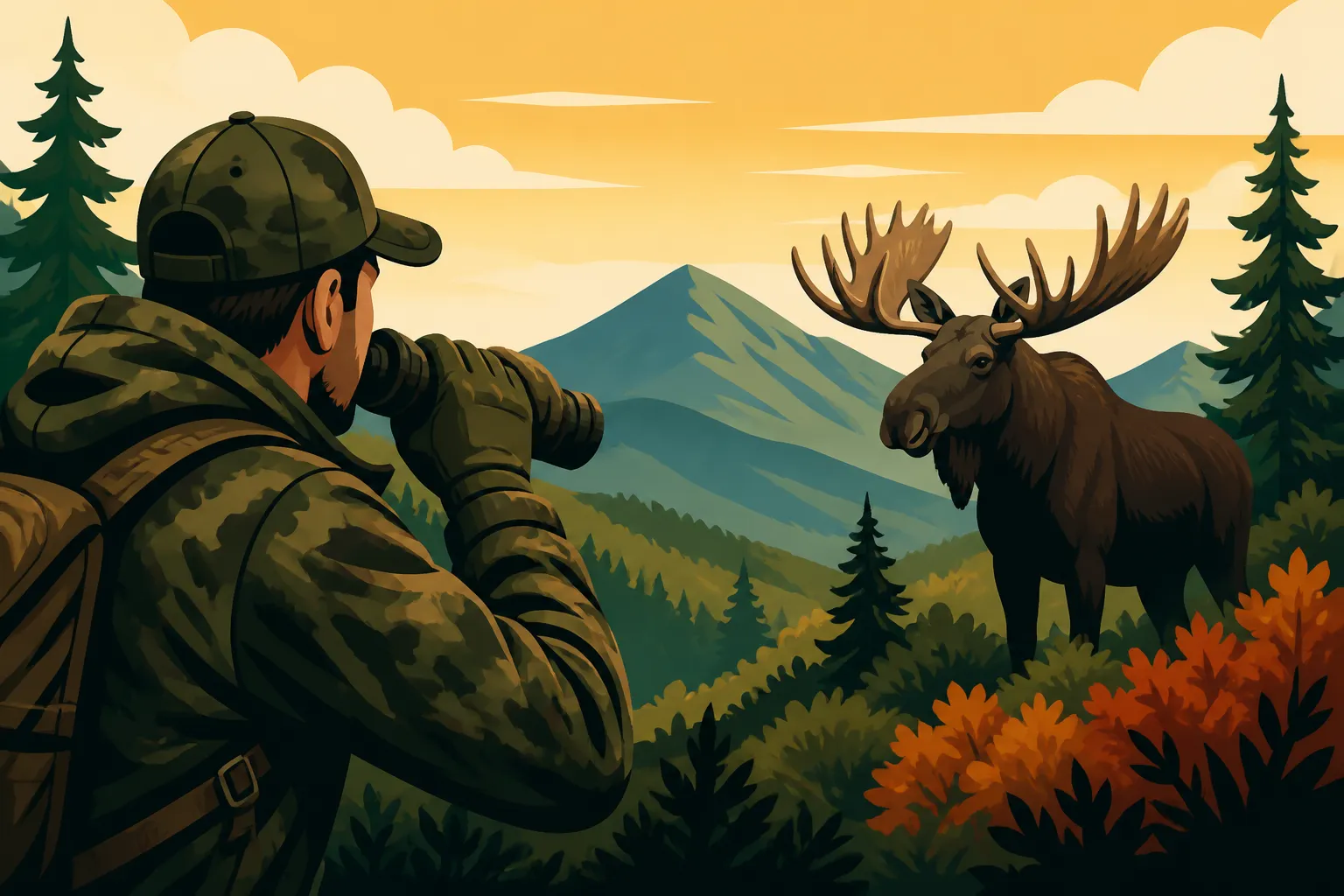
Drawing a colossal bull moose into range with calls is arguably one of the most thrilling and challenging endeavors a New Hampshire hunter can undertake. Many hunters spend years, even decades, applying for that coveted moose permit, only to find themselves utterly bewildered when their carefully practiced calls receive no response from the vast, silent North Country. It's easy to get discouraged when a bull simply hangs up, out of sight, or vanishes entirely. This comprehensive guide aims to demystify the art and science of calling a bull moose in New Hampshire, offering practical strategies and insights to help you make the most of your incredible opportunity.
Understanding Moose Communication: The Language of the North Woods
Moose are vocal animals, especially during the rut, and understanding their different calls is the first step to speaking their language. It's not just about making noise; it's about mimicking the right sounds at the right time to elicit a response from a wary bull.
The Different Calls and What They Mean
There's a common misconception that all moose calls are the same, or that you only need one type of call. In reality, moose have a repertoire of sounds, each conveying a specific message. Your success hinges on knowing which call to use and when.
-
Cow Calls: The most widely recognized and often most effective call. A cow call is a long, drawn-out bawl, sometimes sounding mournful, other times more urgent. It's essentially a female moose advertising her presence and receptivity. In New Hampshire, especially in the thick cover of the Great North Woods, a cow call can draw a bull in from a significant distance. The tone and length can vary depending on what you're trying to convey – a softer, pleading call for a shy bull, or a more aggressive, drawn-out wail for a bull that might be moving off. Experiment with different cow sounds; sometimes a slightly raspy or more breathy call can make all the difference. When you're trying to locate a bull or bring one closer, this is your primary tool.
-
Bull Grunts: These are typically shorter, guttural sounds made by a bull. There are several types of grunts, from a soft, almost contented "chuff" to a more aggressive, challenging grunt. A contented grunt might indicate a bull is nearby, perhaps feeding or resting, and could be a good follow-up to a cow call if you think a bull is listening but not committing. Aggressive grunts, often paired with thrashing or raking, signal dominance and a challenge. Using these too early can spook a cautious bull, but deployed correctly, they can ignite the fighting instinct in a bull already close by. Often, if you get a response from a bull, his grunts can tell you a lot about his mood and distance.
-
Calf Calls: These are high-pitched, distressed bleats from a young moose. While less commonly used by hunters, a calf-in-distress call can sometimes pique the curiosity of a cow (who may bring a bull with her) or even a bull looking for a cow. It’s a less aggressive approach but generally not your primary calling method for bulls. However, in certain scenarios, such as when a bull is with a cow and you want to draw her away subtly in hopes he follows, a calf call might work.
Reading Moose Body Language and Responses
Calling is a conversation, not a monologue. Once you make a call, you need to keenly observe and listen for any response, no matter how subtle. Moose don't always come crashing through the timber; often, they are incredibly stealthy.
-
Auditory Cues: The most obvious is a vocal response – a distant grunt, a deeper cow call (sometimes a bull mimics a cow), or even the distinct sound of antlers raking brush or hitting trees. Listen for footfalls, especially the heavy tread of a moose, or water splashing if you're near a bog. Sometimes, a "snap" of a twig might be all you hear. It’s crucial to wait, sometimes for several minutes, after each call sequence. New Hampshire's dense forests and varied terrain can muffle sounds, making it hard to pinpoint a bull. Using a high-quality mapping app like GoHunt, you can mark potential travel corridors or bog edges where a bull might be moving, helping you anticipate their approach even when sounds are faint. When you are Calling a Bull Moose in Late October and the rut is cooling down, responses can be even more subtle, so patience is paramount.
-
Visual Cues: Look for movement, obviously, but also listen for visual indicators that aren't vocal. The thrashing of brush (raking) is a huge sign that a bull is near and potentially interested or challenging. You might see a flash of antler through the trees, or even a subtle head turn from a distant moose. Even crows or other birds suddenly taking flight from a specific area can indicate a large animal is moving through. If you're Glassing a Bog for a Bull Moose, pay close attention to the smaller details – ripples in the water, a displaced branch, or even the way other animals in the area are behaving.
-
The "Hang-Up": This is a common frustration. A bull responds, grunts back, but then stops just out of sight and won't commit. This means he's either wary, trying to pinpoint your location precisely, or he expects you to come to him (which you ideally don't want to do, as it means moving towards his perceived security). This is where understanding your next move is critical. He might be trying to circle downwind, so setting up strategically and watching your wind is vital.
Timing is Everything: When to Call and When to Listen
The effectiveness of your calling hinges significantly on the time of year, the time of day, and environmental conditions. A perfectly executed call at the wrong moment might be ignored, while a mediocre call at the right time could be magic.
Early Season vs. Peak Rut Calling Strategies
New Hampshire's moose season typically falls during the peak or just after the peak of the rut, offering prime calling opportunities. However, knowing the nuances of each phase is key.
-
Pre-Rut/Early Season (late September into early October): While New Hampshire's moose season generally starts later, if you have any pre-season scouting opportunities or are thinking about a very early season tag (which is rare), bulls are often still solitary but becoming more active. They're starting to rub antlers and mark territory. During this phase, you might need to rely more on cow calls to simply locate a bull, rather than aggressively trying to draw him in. He might be curious but not yet desperate for a mate. Soft, infrequent cow calls mixed with some light raking can be effective. It’s more about a gentle invitation than a full-blown argument.
-
Peak Rut (mid to late October, typically aligning with NH season): This is prime time. Bulls are actively seeking cows, often covering significant ground. They are more responsive to aggressive cow calls and can be drawn in by challenge grunts. During this period, bulls are often "hot" and less cautious. If you're fortunate enough to draw one of the limited New Hampshire moose permits, your hunt will almost certainly coincide with this window. This is when you can be more assertive with your calling, using louder, more frequent cow calls and integrating bull grunts and raking. This is also when you're most likely to encounter a bull that charges in. Be ready.
-
Post-Peak Rut/Late Season (late October into November): As the rut wanes, bulls become harder to call. Many have found cows, are exhausted, or have been pressured by other hunters. They are often less vocal and more wary. Calling now requires extreme patience and subtlety. You might need to revert to very soft, pleading cow calls, waiting longer between sequences. Bulls might respond with a single, distant grunt and then go silent, trying to determine if the effort is worth it. If you're involved in Moose Hunting New Hampshire's North Country in the later stages of the season, consider adding more visual elements like a decoy (if legal and practical) or intensified raking to grab a bull's attention.
Weather, Wind, and Topography's Influence
Never underestimate how environmental factors can dictate a moose's behavior and your calling success. Ignoring these can lead to frustration and blown opportunities.
-
Weather: Overcast, cool, calm days are often ideal. Moose are less active in hot weather, as they can overheat easily. Heavy rain can dampen sound and make it difficult for moose (and you) to hear calls, but a light drizzle can be excellent, masking your movement and making the woods quieter underfoot. Snow, especially a fresh dusting, can be a game-changer for tracking and sound transmission. Clear, cold mornings after a frost can be fantastic, as sounds carry well. However, be mindful of bitterly cold, windy days, which can make calling futile.
-
Wind: This is your biggest enemy or best friend. Always, always be aware of the wind direction. Moose, like deer, will often try to circle downwind to scent-check the source of a call. If a bull is coming in, he'll likely try to get downwind of you. Position yourself so the wind is blowing away from your approach, but not at the area you expect the moose to come from. This usually means sitting with the wind quartering slightly away from where you expect the bull to appear, or setting up with the wind in your face and hoping the bull comes straight in (less likely). A variable or swirling wind in the mountains is a nightmare, so try to find stable air currents.
-
Topography: New Hampshire's varied landscape, from the steep ridges of the White Mountains to the vast bogs of the North Country, dramatically impacts calling.
- Bogs and Swamps: These are moose magnets. Sounds carry incredibly well over open water and through sparse bog vegetation. Moose love to cruise these edges. When calling in a bog, position yourself on higher, drier ground on the downwind side, giving you a good vantage point over the open areas.
- Ridge Lines and Valleys: Sounds can get distorted or funneled. A call from a ridge might carry far but be difficult for a bull in a valley to pinpoint accurately. Conversely, a call made in a deep valley might not carry far enough to attract distant bulls. When calling in hilly terrain, consider setting up on a bench or a saddle where sounds might project better, and where moose naturally travel. Using an app like GoHunt to analyze topography and wind currents can give you a crucial edge. It can help you identify strategic spots for calling, like funnels or bedding areas.
Advanced Calling Techniques and Scenarios
Beyond basic cow calls, there are several advanced techniques and scenarios you might encounter that require a more nuanced approach to calling.
Decoy Usage and Setups
A visual element can be incredibly powerful, especially for those hung-up bulls or in more open terrain where visibility is good. However, proper decoy usage is paramount.
- Types of Decoys: Moose decoys typically come in two main forms:
- Cow Decoys: These are designed to look like a receptive female. They can be incredibly effective when combined with cow calls, creating a realistic scenario. A bull seeing a "cow" while hearing her call is often more inclined to commit.
- Bull Decoys: Less common, but a smaller bull decoy can be used in conjunction with aggressive bull grunts and raking to challenge a dominant bull, especially if he's already in the vicinity and you're trying to coax him into range. Be cautious with bull decoys, as they can be perceived as overly aggressive by some bulls and might spook them.
- Strategic Placement: Never place a decoy too close to yourself. Position it 20-40 yards downwind or crosswind of your shooting lane, slightly off to the side, so the bull's attention is drawn to the decoy, not directly to you. This also gives you an ethical shot opportunity as the bull approaches. Ensure the decoy is visible from where you expect the bull to approach. Set it up so it looks natural – standing, perhaps facing away or slightly quartering, as if browsing.
- The "Motion" Element: Some decoys have subtle movement features, like a head that sways in the wind. This realism can be a huge advantage. If your decoy doesn't have this, consider gently shaking a branch near it to simulate movement, or even raking nearby brush to add another dimension to the illusion. Remember, the goal is to create a believable scene.
Incorporating Raking and Grunting
These actions add aggression and realism, often turning a curious bull into a committed one.
-
Raking: This involves mimicking the sound of antlers rubbing against trees or brush. Take a shoulder blade, a stick, or even your call and aggressively scrape it against small trees, bushes, or the ground. The louder and more realistic, the better. Raking simulates a bull marking his territory or expressing dominance. Use it in conjunction with bull grunts after a cow call has elicited a response. It tells the bull, "There's another bull here with this cow, and I'm ready to fight." The sounds of a bull Still-Hunting White Mountain National Forest Timber are very specific, and realistic raking can fool even wary animals.
-
Aggressive Grunts: Once a bull responds to your cow calls and you've established his general direction, aggressive grunts, sometimes called "challenge grunts," can seal the deal. These are deeper, more guttural, and more frequent than contented grunts. Mix them with raking. If the bull hears a cow and then hears another bull challenging him, his territorial instincts can kick in, driving him towards your position. Be prepared for a fast approach after this tactic.
-
Simulated Breeding Sequence: This is the ultimate, and most risky, combination. Start with soft cow calls, then transition to more aggressive cow calls, followed by bull grunts and heavy raking. If you hear a bull respond aggressively, you might even try to simulate the sounds of a bull breeding a cow (grunts, groans, heavy breathing). This can absolutely infuriate a dominant bull, making him charge in to break up the perceived mating. This is a high-reward, high-risk strategy, so be ready.
Dealing with Hang-Ups and Shy Bulls
The "hang-up" is a hunter's bane. A bull responds, sounds interested, but simply won't come into view. This often happens because he's trying to circle downwind, or he's seen something he doesn't like, or he simply expects the cow to come to him.
-
Patience and Subtle Changes: The first rule is patience. Wait him out. A hung-up bull might stand there for a long time trying to decide. Sometimes, going completely silent for 15-20 minutes, then making a very soft, pleading cow call can draw him in. He might think the "cow" is moving off and won't wait.
-
Circle and Recalibrate: If you know generally where he is, and your wind is good, sometimes a very subtle, slow, quiet move of 50-100 yards, then calling again from a slightly different angle, can work. Be incredibly stealthy. This changes the perceived origin of the sound and might convince him to move. This is also where understanding moose movement helps. If he's likely to move to a certain funnel or cover, try to reposition yourself there. Using tools like GoHunt can provide detailed maps to understand his potential movement paths and reposition yourself.
-
The "Moving Cow" Call: If a bull is hung up and won't budge, try to make your cow calls sound like she's moving away from him. Start a call, and as you hold it, slowly back up a few steps, then finish the call. This can make him think the cow is leaving, often triggering him to rush in. This is a fantastic tactic for drawing a bull out of thick cover.
-
Aggression as a Last Resort: For a bull that is absolutely glued in place and you're running out of time, an aggressive challenge grunt and heavy raking might be the final push needed. He might be too dominant to let another bull get away with "his" cow. Be prepared, as this can often lead to a rapid and direct approach.
Gear and Preparation for Effective Calling
Effective moose calling isn't just about technique; it's also about having the right gear and putting in the legwork beforehand. A little preparation goes a long way in a high-stakes hunt.
Choosing the Right Call
There's a wide array of moose calls on the market, from simple mouth calls to larger horn or diaphragm calls. What works best for you depends on personal preference and desired versatility.
- Mouth Calls/Diaphragm Calls: These are compact and allow for hands-free operation, which is critical when you need to maintain a shooting position. They take practice to master, but can produce a wide range of cow calls, grunts, and even calf calls. Brands like Quaker Boy and Primos make excellent diaphragm calls suitable for moose.
- Horn/Tube Calls: These typically consist of a plastic or birch bark cone, sometimes with a reed or diaphragm at the mouthpiece. They project sound incredibly well, which is an advantage in New Hampshire's vast wilderness, especially if you're trying to reach a bull over a long distance in a bog or large clear-cut. However, they are larger and require hands to operate. Many hunters use a combination, employing a horn for long-range communication and a diaphragm for close-in, subtle work.
- Birch Bark Calls: Traditional and highly effective, these calls are made from rolled birch bark. They produce incredibly authentic, deep, resonant cow calls. While they can be harder to find commercially, many experienced moose hunters swear by them. They require practice to get the right sound but the authenticity is hard to beat.
- Practice, Practice, Practice: No matter which call you choose, practice is essential. Get comfortable with the sounds you're making. Listen to real moose calls online or in videos to get the cadence and tone right. The more realistic you sound, the better your chances. Don't just practice the calls, practice the sequences – call, rake, grunt, listen.
Scouting for Calling Success
Your calling skills will be amplified exponentially by good scouting. Knowing where moose are, what they're doing, and their preferred travel routes gives you a massive advantage.
- Pre-Season Reconnaissance: If possible, spend time in your assigned WMU (Wildlife Management Unit) before the season. Look for moose sign: fresh tracks, large droppings, rub lines (trees where bulls have rubbed their antlers), and wallows (muddy depressions where moose have rolled). Pay close attention to transition areas – where different habitat types meet, like a hardwood ridge meeting a conifer swamp. These are natural travel corridors.
- Focus on Water Sources: Moose are drawn to water. Bogs, swamps, beaver flowages, and small ponds are prime locations. Bulls will often cruise the edges of these areas looking for cows. If you're looking for where How Many Moose Live in New Hampshire, these wet areas are key indicators.
- Using Technology: Digital mapping tools are invaluable. Apps like GoHunt allow you to overlay property lines, topographic maps, and even satellite imagery. You can mark potential calling setups, travel corridors, bedding areas, and feeding zones. This pre-planning allows you to identify ideal calling locations that maximize sound projection and minimize wind issues. Understanding the terrain on a map can tell you if a distant grunt is likely from a bull in a deep valley or on an adjacent ridge.
- Reading the Land: Once you're in the field during the season, continue to scout actively. Fresh sign tells you where moose are now. If you find a fresh rub line leading into a thicket, it's a good bet a bull is in that area. Set up, wait for favorable wind conditions, and begin your calling sequence. Remember, New Hampshire's Moose Permit Lottery is a once-in-a-lifetime opportunity for many, so every piece of preparation counts. For those lucky enough to get a tag, this knowledge can be the difference between success and disappointment. You've earned this hunt, make the most of it!
| Call Type | Primary Purpose | Ideal Timing/Situation | Expected Bull Response | Hunter Action After Response |
|---|---|---|---|---|
| Cow Call | Attracts bulls, indicates presence of receptive cow. | All phases of rut, especially for locating or drawing. | Grunt, raking, or silent approach. | Patiently wait, listen, assess distance/direction. Follow up with another soft cow call or raking if no immediate visual. |
| Bull Grunt | Aggression, challenge, interest. | After initial cow call response, closer distances. | Aggressive grunt, charge, or hang-up. | Prepare for shot, assess bull's mood. If hangs up, try subtle changes or wait. |
| Raking | Visual/auditory challenge, simulating antler rubs. | Paired with bull grunts, when a bull is responding nearby. | Increased aggression, approach. | Maintain cover, prepare for bull to come into view quickly. |
| Calf Call | Curiosity, distress (less common for bull focus). | Very rare for bulls, sometimes for cows with calves. | Mild curiosity from cows, sometimes ignored by bulls. | Only use if other methods fail and you're targeting a cow/bull pair. |
Disclaimer
Hunting is an inherently dangerous activity. Always prioritize safety, wear appropriate blaze orange, understand and follow all New Hampshire Fish and Game laws and regulations, and be aware of your surroundings. This guide provides information for educational purposes only and does not guarantee hunting success. Always hunt responsibly and ethically.