New Hampshire Caribou History and Extirpation
It’s a romantic notion, isn't it? The idea of towering caribou, those magnificent northern deer, still roaming the vast forests and high peaks of New Hampshire. For many of us who cherish the wild, the thought of what once was, and what we’ve lost, can be a heavy one. While today our state is celebrated for its thriving populations of White-Tailed Deer Across New Hampshire, Moose in New Hampshire's North Country, and Black Bears in New Hampshire, there was a time when caribou were very much a part of the Granite State's natural tapestry. This isn't just a historical footnote; it's a profound story about how ecosystems change, how human presence impacts even the most robust wildlife, and the enduring lessons we carry forward for conservation efforts today.
The Echoes of a Lost Landscape: Caribou in Historic New Hampshire
Imagine New Hampshire's landscape hundreds of years ago – a wilder, more unbroken expanse, particularly in the northern reaches. This was the domain of the woodland caribou, a subspecies perfectly adapted to the vast conifer forests and harsh winters that define much of northern New England. Their historical presence here is a testament to the region's ancient wilderness, long before widespread logging, farming, and settlement began to reshape the land. While we might associate caribou more readily with the far reaches of Canada or Alaska today, they were once a natural, thriving component of the New Hampshire ecosystem.
Historical Range and Habitat: Where They Roamed
The woodland caribou, distinct from the barren-ground caribou, were creatures of the deep forest. In New Hampshire, their primary range would have been the expansive, unbroken tracts of boreal and mixed coniferous forests stretching across the North Country, particularly in what we now know as Coos and northern Grafton counties. This would have included the higher elevations of the White Mountains and the vast lowlands and wetlands further north towards the Canadian border. These areas provided the specific habitat they needed: lichen-rich forests, particularly old-growth stands, which were a critical winter food source when other vegetation was scarce. They weren't animals of the open plains, but rather secretive denizens of dense timber, bogs, and rocky ridges.
Think about the terrain today that still feels incredibly wild, places like the remote sections of the Hunting the North Country or deep within the White Mountain National Forest. These are the kinds of places that would have once provided refuge and sustenance for caribou. Unlike deer, which prefer a mix of open areas and edge habitat, caribou thrived in dense, mature forests with plenty of shade and moisture. They had broad, splayed hooves perfect for navigating deep snow and soft ground, and their pelage was incredibly insulating, allowing them to endure the bitter cold. They were truly a symbol of the untamed north, a living part of the ecological fabric that extended across northern North America. It paints a picture of a New Hampshire that is almost unrecognizable to us today, yet the ghosts of that wilderness still whisper through the pines.
What Made New Hampshire Good for Caribou
New Hampshire, especially its northern half, offered a climate and a particular type of forest that was highly favorable to caribou. The cooler temperatures, significant snowfall, and vast expanses of spruce, fir, and pine forests, interspersed with bogs and high-elevation plateaus, created an ideal environment. The abundance of arboreal lichens, those fascinating organisms that cling to tree trunks and branches, was crucial. These lichens, often referred to as "reindeer moss" (though they are not mosses at all), are a slow-growing but highly nutritious food source, especially important during the lean winter months when other browse is buried under snow.
The rugged, often inaccessible terrain would also have provided a degree of protection from human disturbance for a long time. Caribou are incredibly wary animals, and their ability to blend into dense woodlands allowed them to evade predators and survive in an often challenging environment. The interconnectedness of forest patches, the presence of numerous New Hampshire Wildlife Management Areas even then, albeit unrecognized, meant that caribou could move freely across vast distances in search of food and mates, a behavior essential to their survival. It was a perfect, albeit delicate, balance. This intricate relationship between the caribou and their unique northern forest habitat is a stark reminder of how specialized some species are and how easily that balance can be disrupted.
The Decline and Disappearance: A Tragic Chapter
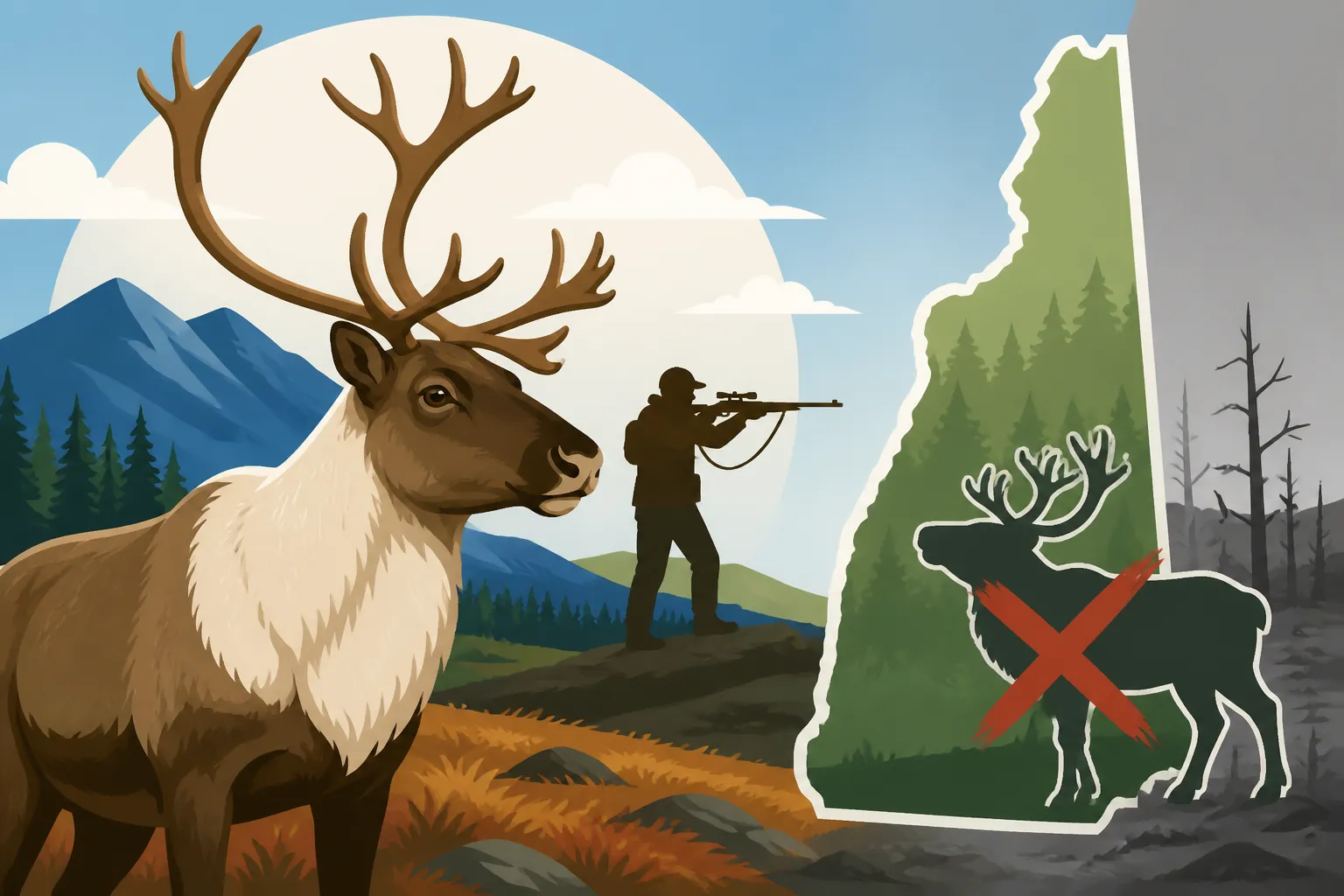
The story of the caribou's extirpation from New Hampshire is not a sudden, dramatic event, but rather a slow, grinding decline, mirroring the fate of many other large game animals across the expanding American frontier. It's a sad chapter, one that underscores the cumulative impact of human activity on even the most resilient species. While there wasn't a single, catastrophic event, a combination of factors gradually eroded their populations until they simply vanished from the landscape forever. Understanding this decline helps us appreciate the fragility of wildlife populations and the importance of proactive conservation today.
Early Human Impact and Overhunting
As European settlers pushed northward into New Hampshire, particularly during the 17th, 18th, and 19th centuries, they brought with them a different way of interacting with the land and its resources. Caribou, being a large game animal, represented a significant source of food and hides. Unlike smaller game, a caribou could sustain a family or a small community for an extended period. This made them a prime target for subsistence hunting, which, combined with market hunting (hunting animals specifically for commercial sale of meat or hides), began to exert immense pressure on their populations.
The technology of hunting also advanced. While indigenous peoples had hunted caribou for millennia, their methods were generally sustainable. The introduction of firearms, combined with a lack of regulation and a philosophy of unlimited resources, drastically altered the equation. There was no concept of bag limits, season dates, or sustainable harvest back then. If you found caribou, you hunted them. This relentless pressure, especially when caribou gathered in larger groups for migration or wintering, would have quickly depleted local herds. Even in remote areas, trappers and loggers would have taken advantage of opportunities, gradually chipping away at the population year after year. It's a somber lesson in how unchecked exploitation can lead to irreversible loss, a lesson that led to the development of modern wildlife management practices, which we rely on when using tools like GoHunt to scout and plan our hunts responsibly today.
Habitat Alteration and Fragmentation
Perhaps even more devastating than direct hunting pressure was the widespread alteration and fragmentation of their critical habitat. Caribou are wilderness animals, and their survival is intrinsically linked to vast, unbroken forests. Beginning in the late 1700s and accelerating dramatically throughout the 1800s, New Hampshire experienced extensive logging operations. These weren't the sustainable, selective cuts we often see today; they were often clear-cuts, designed to remove as much timber as possible for building materials, fuel, and industry. These clear-cuts destroyed the old-growth forests that provided the vital arboreal lichens caribou depended on, especially in winter.
Beyond logging, the expansion of agriculture and the construction of roads, railroads, and settlements carved up the landscape. Each new road or farm field created a barrier, fragmenting the caribou's range and isolating populations. Caribou require large territories to find food and evade predators, and when these territories are broken into smaller, disconnected pieces, their ability to survive and reproduce effectively is severely compromised. Imagine trying to Reading aerial photos for North Country Deer for caribou when their core habitat is continually shrinking and being cut off by human development. The loss of connectivity, the disappearance of those crucial lichen-rich forests, delivered a death blow to a species that needed vast, undisturbed wilderness to thrive. This transformation of the landscape, driven by human expansion, left the caribou with nowhere left to go.
Disease and Predation Pressures
While human activity was undoubtedly the primary driver of their extirpation, other factors likely played a compounding role in the caribou's decline, particularly as their populations became stressed and fragmented. Disease, for instance, could have swept through weakened herds, especially if they were concentrated in smaller areas due to habitat loss. We see this today with diseases affecting other species, like the concern over New Hampshire's CWD-Free Deer Herd. A small, isolated population is much more vulnerable to epidemics than a widespread, robust one.
Additionally, changes in predator populations, often influenced by human activity, could have further exacerbated the caribou's struggles. As deer populations (which thrive in disturbed, edge habitats) began to increase with settlement and forest clearing, so too did their primary predators, such as wolves and coyotes. These predators, now with a more abundant and readily available food source in deer, would have also opportunistically preyed on caribou. This "apparent competition," where increased deer populations lead to increased predator populations that then pressure caribou, is a well-documented phenomenon in caribou ecology. Even though wolves themselves were eventually extirpated from New Hampshire, as explored in New Hampshire Wolf History and Extirpation, their historical presence and the shifting balance of prey species certainly impacted caribou before their own disappearance. It's a complex web, and once threads start unraveling, it's incredibly difficult to stitch them back together.
Remembering a Lost Species: Lessons for Modern Conservation
The absence of caribou in New Hampshire is a stark reminder of our past mistakes and the profound responsibility we bear as stewards of the land and its wildlife. While we can’t bring them back, the lessons learned from their extirpation are invaluable and actively inform the conservation efforts we undertake today to protect the species that still grace our forests and mountains. It forces us to reflect on the delicate balance of ecosystems and the long-term consequences of our actions.
The Void Caribou Left Behind
When a species vanishes from an ecosystem, it leaves a void, and the New Hampshire forests were no exception. Caribou played a unique ecological role. As large herbivores, they were a significant component of the food chain, both as consumers of plants and as prey for larger predators. Their specialized diet, particularly their reliance on lichens, meant they influenced forest dynamics differently than deer or moose. The ecological niche they occupied was distinct.
After their disappearance, Moose in New Hampshire's North Country essentially stepped into a similar, albeit not identical, role as the primary large herbivore of the northern forests. Moose, however, prefer different browse (younger trees, aquatic vegetation) and generally thrive in a slightly different type of habitat than caribou. While moose have done remarkably well in New Hampshire, even experiencing a significant population increase before recent challenges, their presence doesn't fully replace the complex interactions that caribou once had within the ecosystem. The idea of what could have been, what our wilderness truly lost, remains. It’s a sobering thought that when a unique species like the caribou disappears, it diminishes the ecological richness and resilience of the entire region.
A quick look at how caribou differ from our current large cervids highlights this unique niche:
| Feature | Woodland Caribou (Historical NH) | White-Tailed Deer (Current NH) | Moose (Current NH) |
|---|---|---|---|
| Primary Habitat | Dense boreal forests, bogs, high elevations, old-growth for lichen | Mixed forests, forest edges, agricultural lands, younger growth | Northern forests, wetlands, ponds, younger successional growth |
| Winter Diet | Arboreal lichens, some browse | Woody browse, acorns, agricultural crops | Woody browse (twigs, bark), aquatic vegetation |
| Herd Structure | Often in larger, migratory herds (though woodland caribou less so) | Smaller family groups, males often solitary during much of year | Solitary or small cow-calf groups |
| Hooves | Large, splayed for deep snow and soft ground, also used for digging | Smaller, more pointed for diverse terrain | Large, cloven, good for soft ground and deep snow, but less specialized |
| Antlers | Both sexes grow antlers, often unique and palmate in shape | Males grow antlers, shed annually; females typically do not | Males grow massive, palmate antlers, shed annually; females do not |
| Body Size | Medium to large cervid, smaller than moose, larger than deer | Medium-sized cervid | Largest cervid in North America |
Modern Monitoring and Data: How Tools like GoHunt Would Assist Today
In today’s age of advanced technology and comprehensive wildlife management, the story of the caribou would likely be very different. Imagine if we had access to the kind of sophisticated data and mapping capabilities that are available through platforms like GoHunt. Wildlife biologists and conservationists would be able to track populations, map crucial habitat, monitor migration patterns, and understand pressures in real-time. This level of insight would allow for targeted conservation efforts, habitat restoration projects, and regulated hunting seasons designed for sustainability, rather than extirpation.
Using a tool like GoHunt, hunters today can delve into detailed maps showing land ownership, topography, and even recent satellite imagery to understand deer movement patterns or to find a Hunting a Beaver Flowage Edge. Had caribou still been present, such tools would have been invaluable for understanding their specific needs and pressures. For example, biologists could use GoHunt to identify critical lichen-rich old-growth forests that need protection or to map potential migratory corridors that must remain unbroken. The ability to collect and analyze data across vast landscapes allows for informed decision-making, ensuring that conservation efforts are strategic and effective. It's a testament to how far we've come in understanding wildlife, and it makes the loss of the caribou even more poignant when we realize what we now know that we didn't then.
Protecting Current Iconic Species
The painful lesson of the caribou’s extirpation has profoundly shaped modern wildlife management in New Hampshire. It's a constant reminder that no species is immune to the pressures of human activity. This understanding underpins the efforts to manage populations of White-Tailed Deer Across New Hampshire, Moose in New Hampshire's North Country, Black Bears in New Hampshire, and Wild Turkeys in New Hampshire sustainably. Conservation is not just about preserving what we have, but about learning from what we’ve lost.
Today, New Hampshire Fish and Game meticulously monitors wildlife populations, sets harvest quotas based on scientific data, and actively works to protect and restore critical habitats. We have strict hunting regulations, hunter education programs, and designated New Hampshire Wildlife Management Areas to ensure healthy, vibrant populations for future generations. Issues like New Hampshire Moose Population Decline Since the 1990s due to winter ticks are met with intense study and management efforts, reflecting a profound commitment to preventing another extirpation. The awareness of diseases, habitat needs, and the importance of public land access are all built on the foundation of past experiences, including the loss of the caribou. While we can’t turn back the clock and reintroduce caribou to their former range, we can certainly honor their memory by ensuring that the iconic species that still call New Hampshire home continue to thrive. We hunt these animals responsibly, not just for sport or sustenance, but as an act of engagement with the wild, carrying forward the lessons learned from those who came before us.
Disclaimer
This article is for general informational purposes only and does not constitute professional advice. Laws, prices and regulations vary by location and change over time. Consult a qualified professional for guidance on your specific situation.