New Hampshire Deer Antler Growth Timeline
It's a question every deer hunter in New Hampshire has pondered, whether you're new to the woods or a seasoned veteran: "Why did that buck I saw last year suddenly sprout a monster rack, while another seems stuck with spikes?" Understanding the intricate, year-round cycle of antler growth in our whitetails can feel like trying to solve a cryptic puzzle, but it's crucial for truly appreciating and anticipating deer behavior. This guide is going to pull back the curtain on the fascinating New Hampshire deer antler growth timeline, from the moment they shed their old headgear to the hardened racks of the rut.
The Marvel of Antler Biology: More Than Just Bone
Before we dive into the seasonal changes, it's worth understanding what antlers actually are and why they're such a unique biological phenomenon. They're not just some static decoration; they're a dynamic, living structure that represents a buck's health, age, and genetics.
What are Antlers, Really?
Unlike horns, which are permanent and grow continuously throughout an animal's life (think bighorn sheep or cattle), antlers are shed and regrown annually. They're essentially extensions of the skull, made of true bone, and are the fastest growing tissue in the animal kingdom. This rapid growth, often adding pounds of bone in just a few months, is truly astounding. When we talk about New Hampshire bucks putting on inches of antler each week, it’s not an exaggeration; it's a testament to the incredible biological engine driving their development. It's a massive energy investment for a buck, one that draws heavily on his nutrient reserves.
The Orchestral Role of Hormones
The entire process of antler growth, from initiation to shedding, is meticulously controlled by a complex interplay of hormones, primarily testosterone and growth hormones. Think of it like a finely tuned orchestra, with different hormones acting as the conductor for each movement. As daylight hours begin to increase in late winter and early spring, hormonal shifts signal the start of new antler growth. Levels of growth hormone surge, driving that incredible rapid bone formation. Then, as fall approaches and daylight wanes, testosterone levels rise dramatically. This increase in testosterone is what triggers the hardening of the antlers, cutting off the blood supply, and eventually leading to the shedding of the velvet. Understanding these hormonal cues helps us predict When New Hampshire Bucks Shed Antlers and when new growth begins.
Genetics Versus Environmental Factors: A Tug-of-War
When you see a truly magnificent buck in New Hampshire, it’s often easy to jump to the conclusion that it's all about genetics. And yes, genetics definitely play a significant role in a buck's potential for antler size and configuration – things like tine length, mass, and overall symmetry can be passed down. However, genetics only provide the blueprint. The actual expression of that blueprint, the ultimate size and health of the antlers, is heavily influenced by environmental factors.
Imagine two bucks born with identical genetic potential for a massive rack. One grows up in a lush valley with abundant, high-quality forage and minimal stress. The other lives in a sparse, high-pressure area with limited food sources. The first buck will likely express his full genetic potential, while the second will be limited by his environment. This is why habitat quality, food availability, and even hunting pressure can dramatically impact the antler growth we see year to year across different regions of New Hampshire. A platform like GoHunt can be invaluable here, helping you analyze habitat characteristics and potentially identify areas where bucks have access to better nutrition.
A Year-Round Antler Cycle: From Shed to Velvet, and Back Again
The antler growth timeline is a continuous loop, cycling through distinct phases dictated by the changing seasons and a buck's internal clock. It’s not just a summer thing; it’s a twelve-month commitment.
Winter: The Shedding Phase
As the late fall hunting seasons wind down and the cold grip of winter takes hold in New Hampshire, bucks are often entering their post-rut recovery. Their testosterone levels, which peaked during the breeding season, begin to decline. This drop in testosterone is the key trigger for antler shedding. Typically, New Hampshire bucks will start dropping their antlers anywhere from late December through March, with the bulk of shedding often occurring in January and February.
It’s an impressive sight to find a shed antler, a tangible piece of a buck's previous season. Many of us spend countless hours trekking through snow-covered woods, eyes peeled for those treasures. Each shed antler represents a buck preparing to conserve energy and recover from the exhaustive rut. They become less concerned with dominance displays and more focused on survival, conserving precious resources during the leanest months. You might find a single antler first, followed by the other days or even weeks later, or occasionally find both dropped close together.
Spring: The Velvet Surge
With the increasing daylight hours of spring, usually starting in April, a buck's hormones shift again. New pedicels – the bony structures on the skull from which antlers grow – become active. The process begins with soft, fuzzy buds that rapidly transform into impressive velvet-covered structures. This velvet is a living tissue, rich in blood vessels and nerves, that supplies the rapidly growing bone with nutrients and oxygen.
During this period, antlers are incredibly fragile. A buck in velvet is essentially wearing a pair of highly sensitive, blood-filled bone extensions. They’ll be extremely careful to avoid bumping them, which can cause damage or deformities to the developing rack. This is why you'll often see them moving through dense cover with a deliberate, almost cautious gait. The growth rate during spring and early summer is astonishing; a buck can add a significant amount of mass and length in just a few weeks. It’s a period of intense growth, and the buck's diet and overall health during these months are critical for the ultimate size and strength of his antlers. For hunters planning their fall strategy, this is the time to observe fields and food plots, noting which bucks are present and how they’re progressing. Scouting New Hampshire Public Land Before Season is crucial in understanding these early growth patterns.
Summer: Hardening Off
By late summer, typically August and early September in New Hampshire, the antlers are reaching their full genetic potential for the year. At this point, the hormonal changes swing back towards increasing testosterone. This rise in testosterone signals the velvet to dry up and peel away. The process of velvet shedding can take anywhere from a few hours to a couple of days, and it's often observed as bucks rubbing their antlers against trees and brush. It’s not just to remove the velvet; these "velvet rubs" are an early form of scent marking, depositing scent from glands on their forehead, and are a way for bucks to test their new, hardened racks.
Once the velvet is completely gone, the antlers are fully hardened and bone-white, often stained from the sap and tannins of the trees they've rubbed. This is the moment a buck truly comes into his own for the upcoming breeding season. They’re ready for action, prepared to challenge rivals and establish dominance. For those of us keeping tabs on specific bucks, witnessing this transformation, either in person or through trail camera photos, is always a thrill.
Fall: The Rut and Beyond
With hardened antlers, New Hampshire bucks are fully equipped for the challenges of the fall. Their testosterone levels continue to climb, driving the aggressive behaviors associated with the rut. Antlers are used extensively during this period for sparring with other bucks, establishing dominance, and impressing does. While actual fights can be dangerous, most interactions involve pushing, shoving, and posturing, where the antlers are both a weapon and a visual display of strength.
The size and symmetry of a buck's rack can be a direct indicator of his social status. A buck with a larger, more impressive rack typically commands more respect and has better access to breeding opportunities. This period, roughly from late October through November, is when hunters are most focused on the deer woods. Understanding Hunting the Rut in Early-to-Mid November is key, as deer behavior changes dramatically with these hormonal shifts. After the intensity of the rut, and as food sources become scarce, a buck's body begins to focus on recovery, leading back to the shedding phase as winter sets in once more.
Factors Influencing Antler Quality in New Hampshire
It's not just a straightforward biological process; many factors can enhance or hinder a buck's antler growth each year. As hunters and wildlife enthusiasts, understanding these variables can help us appreciate the challenges and triumphs of our New Hampshire deer herd.
Nutrition and Habitat: The Building Blocks of Bone
Without adequate nutrition, a buck simply cannot grow impressive antlers, regardless of his genetic potential. Antler growth is an incredibly energy-intensive process, demanding high levels of protein, calcium, phosphorus, and a whole host of other minerals. If a buck spends his spring and summer in an area with poor forage, his body will prioritize survival and basic bodily functions over antler growth.
In New Hampshire, this means that areas with diverse food sources – lush browse, acorns (in good mast years), agricultural crops, and mineral-rich soils – are going to produce bucks with better antler development. Deep snow can also impact deer survival and therefore antler growth in subsequent years, as a harsh winter depletes resources. How Deep Snow Affects New Hampshire Deer Survival highlights the critical impact of these conditions. We often see differences in antler quality between the fertile river valleys and the more rugged, nutrient-poor high country. Using tools like GoHunt can help you identify areas with quality habitat and potential food sources by analyzing satellite imagery and public land maps.
Age and Maturity: The Key to True Potential
This is perhaps the most critical factor: a buck simply needs time to reach his full antler potential. Young bucks (1.5 to 2.5 years old) are still growing their bodies, and much of their nutritional intake goes towards increasing body mass. While they may sprout spikes or small forks, their bodies aren't yet ready to put maximum energy into antler growth.
A buck typically doesn't hit his prime antler-producing years until he's 3.5 to 5.5 years old. During these years, his body growth has largely peaked, allowing more energy and nutrients to be directed towards growing a bigger rack. After 5.5 or 6.5 years, a buck might start to decline in antler quality as his body ages, though some individual bucks can continue to produce impressive antlers well into old age. This is why many experienced hunters advocate for letting younger bucks walk; allowing them to mature is the best way to see those truly exceptional racks in the New Hampshire woods. When you’re Reading New Hampshire Mud for Fresh Deer Movement, pay attention to track size—it can sometimes give you a clue about the age class of the deer in the area.
Weather and Stress: Unpredictable Influencers
Beyond nutrition and age, external factors like severe weather patterns and chronic stress can significantly impact antler growth. A late, harsh spring with prolonged cold and snow can delay the onset of antler growth or stunt it in the early stages. Conversely, a mild winter followed by a warm, wet spring can lead to an explosion of growth due to abundant forage.
Drought conditions in summer can also reduce the quality and quantity of natural food sources, forcing bucks to work harder for less, ultimately impacting their antler development. Additionally, any form of chronic stress, whether it's high hunting pressure, disease, or frequent encounters with predators like coyotes, can divert a buck's energy away from antler growth and towards survival. This is why a buck might have a great rack one year and a noticeably smaller one the next, even if his age hasn't changed dramatically; it often reflects the environmental conditions and stressors he encountered during the growth cycle.
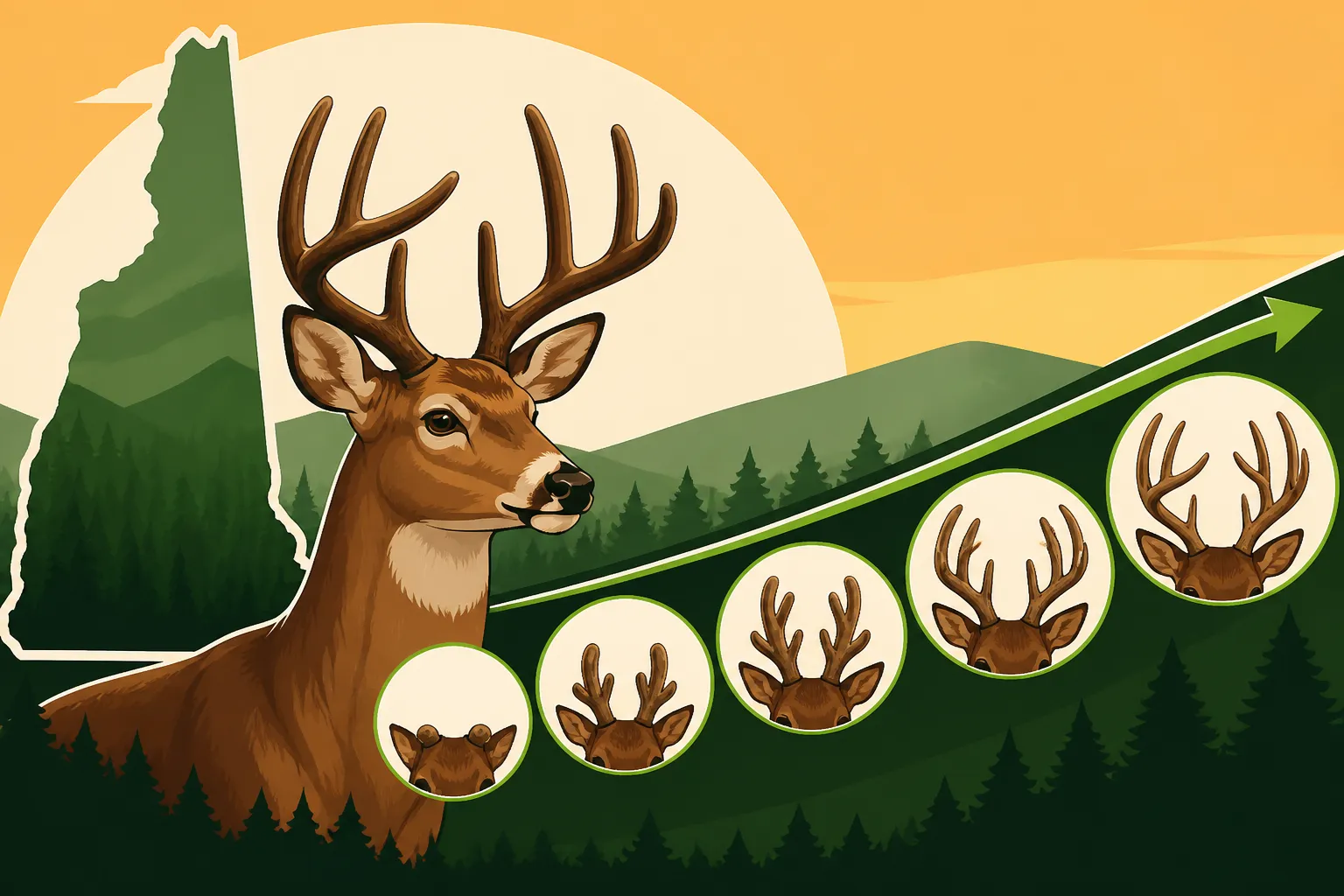
Here's a quick look at the New Hampshire deer antler growth timeline:
| Season | Month Range | Key Antler Event | Buck Behavior | Influencing Factors |
|---|---|---|---|---|
| Winter | Dec – Mar | Antler Shedding | Recovering from rut, conserving energy | Declining testosterone, post-rut exhaustion |
| Spring | Apr – May | Velvet Growth Begins | Eating vigorously, avoiding antler damage | Increasing daylight, growth hormones, rising temps |
| Summer | Jun – Aug | Peak Velvet Growth | Rapid antler development, very careful movement | Abundant forage, peak nutrient intake |
| Late Summer | Aug – Sep | Velvet Shedding | Rubbing velvet off, early scent marking | Rising testosterone, decreasing daylight |
| Fall | Sep – Dec | Hardened Antlers/Rut | Sparring, breeding, aggressive displays | High testosterone, breeding urgency, food sources |
Ultimately, understanding the New Hampshire deer antler growth timeline is about more than just curiosity; it’s about becoming a more informed hunter and wildlife enthusiast. It allows us to better appreciate the resilience of our deer herd and make more strategic decisions in the field. When we observe a buck's rack, we're not just seeing bone; we're reading a story of his year, his health, and the environment he calls home.
Disclaimer
This article is for general informational purposes only and does not constitute professional advice. Laws, prices and regulations vary by location and change over time. Consult a qualified professional for guidance on your specific situation.