New Hampshire Waterfowl Banding Programs
It can feel like you're just a tiny speck out there in the vast New Hampshire marsh or standing along the Connecticut River, doing your best to call in a few ducks or geese. You've scouted, you've set your decoys, you've done everything right, and maybe, just maybe, you connect with a bird. But have you ever pulled in a banded duck or goose? It’s a moment that connects you directly to a much larger story – the incredible journey of these migratory birds and the dedicated efforts to understand and manage them. This guide is all about shedding light on New Hampshire's waterfowl banding programs, explaining why they're so vital, how they work, and most importantly, how your actions as a hunter play a crucial role in their success.
Understanding Waterfowl Banding: Why It Matters to Hunters and Birds Alike
For many of us, the sight of a band on a duck or goose leg is like finding a hidden treasure. It's more than just a piece of metal; it's a direct link to the life story of that bird and a testament to the scientific work that helps ensure healthy waterfowl populations for generations to come. Waterfowl banding programs are a cornerstone of migratory bird management, providing essential data that would be impossible to gather otherwise.
The Science Behind the Band
Think about it: how else could biologists track the incredibly complex movements of ducks and geese that literally span continents? These birds nest in one region, migrate thousands of miles, and winter in another. Without a way to uniquely identify individual birds and track their journeys, we’d be completely in the dark about their survival rates, migration routes, and habitat preferences. The band is a tiny, durable ID tag, stamped with a unique alphanumeric code, that allows scientists to gather this invaluable information.
When a bird is banded, data like its species, age, sex, and the precise location and date of banding are recorded. This creates a baseline. When that bird is later recovered, whether by a hunter or through another banding effort, that recovery data is matched with the original banding data. This pairing of "where it started" and "where it ended up" paints a picture, one bird at a time, of the larger migratory patterns and life histories of an entire population. It’s like putting together a giant, living puzzle where each piece is a bird and each connection is a journey.
Beyond Just "Where Did It Go?"
While tracking migration routes is a huge part of it, banding data tells us so much more. For instance, it provides critical insights into annual survival rates. If a certain percentage of birds banded in New Hampshire are recovered in subsequent years, biologists can estimate how many birds are making it through a hunting season and surviving other natural challenges. This data directly influences hunting regulations. If survival rates for a particular species dip, it might trigger adjustments to bag limits or season lengths to ensure the population remains sustainable.
It also helps identify specific stopover points and wintering grounds that are vital for different species. For example, if a large number of mallards banded in the Great North Woods are consistently recovered in Louisiana or North Carolina, it highlights the importance of those distant wintering habitats and the need for conservation efforts along that specific flyway. This informs habitat protection and restoration projects across the entire Atlantic Flyway. Without this granular data, managers would be making educated guesses at best, which isn't a recipe for long-term success. It's a fundamental tool that helps keep our hunting heritage alive by protecting the resource.
The Process: How New Hampshire Bands Its Ducks and Geese
New Hampshire, like other states along the Atlantic Flyway, participates actively in waterfowl banding programs. These aren't just random acts; they are carefully planned and executed efforts, often coordinated regionally and nationally, to gather representative samples of various species. It takes a lot of skill, patience, and a deep understanding of bird behavior to successfully capture and band these wild creatures.
Trapping and Banding Operations
Most waterfowl banding operations in New Hampshire occur during the late summer and early fall, before the main hunting seasons kick off and before many birds begin their major migrations. This timing is strategic because many birds are still on their breeding grounds or staging areas, often in family groups or large local flocks, and haven't become highly wary of human activity in the same way they might during hunting season.
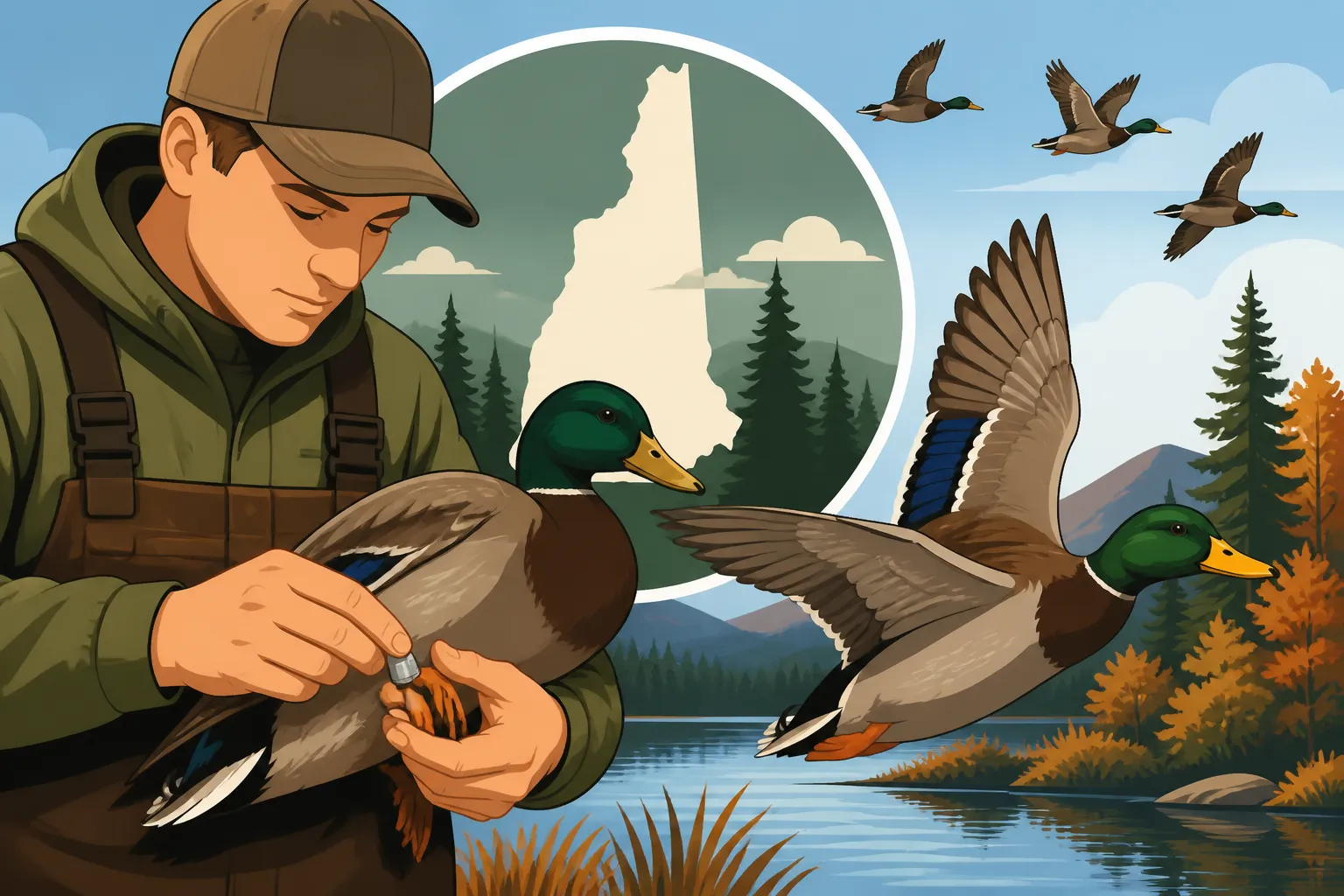
Biologists and trained technicians use a variety of trapping methods. One common method involves large, wire-mesh traps baited with corn or other grains. These traps are designed to allow birds to enter but not easily exit. Another method might involve rocket nets or cannon nets, which are deployed over baited areas, capturing multiple birds at once when triggered remotely. The safety and well-being of the birds are always the top priority. Once captured, the birds are carefully handled by experienced personnel who quickly and efficiently band them. Each bird is processed, meaning its species, age (juvenile or adult), and sex are determined before a lightweight, individually numbered aluminum leg band is applied. The bird is then released, usually flying off none the worse for wear, to continue its journey.
New Hampshire specifically focuses on banding species common to its wetlands and waterways, such as mallards, black ducks, wood ducks, and various goose species like Canada geese. These efforts are often concentrated in key waterfowl staging areas, such as the wetlands along the Connecticut River or larger lake systems in the Lakes Region, where ducks and geese congregate before heading south. Understanding the dynamics of these specific populations is crucial for local management decisions. You can often find information about these efforts and even opportunities to volunteer if you look at the New Hampshire Fish and Game Department's website, or sometimes even through organizations listed on platforms like GoHunt, which can help hunters connect with conservation efforts.
Who Does the Banding?
The banding programs in New Hampshire are primarily conducted by the state's Fish and Game Department biologists and trained staff. However, they are part of a much larger, continent-wide effort managed by the U.S. Geological Survey (USGS) Bird Banding Laboratory (BBL) in partnership with the Canadian Wildlife Service. This extensive network ensures that banding efforts are standardized, and all data collected feeds into a central database. This cooperation is absolutely essential because waterfowl don't recognize state or national borders; they are truly international travelers.
Think of the sheer logistics involved: coordinating efforts across dozens of states and provinces, ensuring consistent methodology, and maintaining a massive database that holds records for millions of banded birds. It's a monumental undertaking. The data collected in New Hampshire is pooled with data from Maine, Vermont, Massachusetts, and all other states and Canadian provinces. This allows for a comprehensive understanding of flyway-wide populations, which is vital for setting federal frameworks for migratory bird hunting seasons, like those for New Hampshire Waterfowl Season and Zones or New Hampshire Duck and Goose Bag Limits. Without this coordinated effort, individual state data would be far less valuable in making broad management decisions that affect the entire Atlantic Flyway.
Your Role in the Program: Reporting Bands and What the Data Reveals
You've done it. You're out hunting, maybe Decoying Mallards on the Connecticut River or Layout Blind Hunting a Northern Zone Field, and you bag a bird with a band on its leg. This isn't just a trophy; it's a golden ticket to contribute directly to waterfowl conservation. Reporting that band is arguably the most critical part of the entire banding program. Without hunter recoveries, the scientists banding birds only have half the story.
How to Report a Banded Bird
If you're lucky enough to recover a banded bird, the process for reporting it is straightforward and incredibly important. Each band has a unique number, often with a website or phone number printed on it. In most cases, you'll go to the USGS Bird Banding Laboratory website (reportband.gov) or call the toll-free number provided on the band.
When you report the band, you'll be asked for several key pieces of information:
- The band number: Make sure to copy it accurately.
- The date you recovered the bird: This tells scientists when it was taken.
- The precise location of recovery: This is where GPS on your phone or a hunting app like GoHunt comes in handy. Knowing the county and state, or even better, the latitude and longitude, is invaluable.
- The species of bird: Was it a mallard, a black duck, a Canada goose, etc.?
- How you recovered it: Was it harvested, found dead, or caught another way?
After you submit the information, you'll usually receive a certificate of appreciation by email. This certificate will tell you the original banding date, location, species, age, and sex of the bird. It's a truly cool piece of personal history and a direct connection to the science. Don't worry, you get to keep the band as a memento! Your effort in reporting closes the loop on that bird's journey and adds crucial data points to the collective understanding of waterfowl populations.
What Your Report Contributes to the Big Picture
Every single band report you submit helps fill in gaps in our knowledge. Imagine thousands of hunters across North America doing the same; each report becomes a tiny pixel in a massive, high-definition image of waterfowl migration and survival. This collective data allows biologists to estimate harvest rates (how many birds are taken by hunters), which is vital for setting New Hampshire Duck and Goose Bag Limits and understanding the impact of hunting pressure.
More importantly, it provides critical data on annual survival rates. For example, by analyzing recovery data over multiple years, scientists can see if a particular species is experiencing lower survival, perhaps due to habitat loss, disease, or environmental changes. This can trigger investigations into the causes and lead to specific conservation actions. For instance, if data shows a decline in black duck survival and higher harvest rates in certain areas, it might prompt a review of hunting regulations in those regions to protect the breeding population. The data from your band report helps to create adaptive management strategies, meaning that hunting regulations and conservation efforts can be adjusted as populations change, ensuring a sustainable future for these amazing birds. It's a direct example of how hunters are truly conservationists, actively contributing to the resource they cherish.
The Long-Term Impact: How Banding Informs New Hampshire Waterfowl Management
The insights gained from waterfowl banding programs are not just interesting tidbits; they are fundamental to how New Hampshire, and indeed the entire Atlantic Flyway, manages its waterfowl resources. This data-driven approach is what allows us to have sustainable hunting seasons year after year. Without banding programs, management decisions would be far less precise, and potentially detrimental to the long-term health of our beloved ducks and geese.
Shaping Regulations and Conservation Efforts
The information gleaned from banding programs directly influences hunting regulations, from season lengths to bag limits. For example, if recovery data shows high survival rates for mallards originating from New Hampshire, wildlife managers might advocate for slightly more liberal hunting opportunities. Conversely, if a species like the American black duck, which has faced historical population challenges, shows lower survival or recovery rates, regulations might become more conservative. This adaptive management, informed by robust data, is the cornerstone of sustainable hunting. It allows decisions to be made not on guesswork or tradition alone, but on solid scientific evidence.
Furthermore, banding data helps identify crucial habitats. When birds banded in New Hampshire are consistently recovered in specific wetland complexes in other states, it underscores the importance of those wintering grounds. This knowledge can drive conservation funding and efforts to protect or restore critical habitat areas far beyond New Hampshire's borders. It highlights the interconnectedness of waterfowl populations and the need for broad-scale, collaborative conservation. Organizations and state agencies use this information to prioritize habitat projects, ensuring that vital breeding, staging, and wintering areas are protected for species that pass through our state during New Hampshire Duck Migration Timing Through New Hampshire.
A Legacy of Data-Driven Conservation
Waterfowl banding has been going on for over a century, building an unparalleled dataset on migratory birds. This long-term perspective is invaluable for understanding population trends over decades, not just years. We can compare current survival rates and migration patterns to those from fifty or seventy years ago, revealing the impacts of climate change, habitat alteration, and other environmental pressures. This historical data is crucial for anticipating future challenges and developing proactive conservation strategies.
New Hampshire hunters, through their participation and diligence in reporting bands, are an integral part of this enduring legacy. Every reported band strengthens this scientific foundation, ensuring that biologists have the best possible information to make decisions that will benefit waterfowl populations for future generations. It reinforces the fact that hunting isn't just a recreational activity; it's a vital component of wildlife management and conservation. So, the next time you're out in the marsh, whether you're hunting or just observing, remember the incredible journey of these birds and the critical role that banding programs – and your contribution – play in their continued existence. It's a reminder of how everything is connected, from a tiny band on a duck's leg to the vast, wild skies of the Atlantic Flyway.
| Information Collected During Waterfowl Banding | Importance to Management |
|---|---|
| Species | Allows for species-specific analysis of population dynamics, survival, and migration. |
| Age & Sex | Helps determine reproductive success, age structure of the population, and differential survival rates between sexes and age classes. |
| Banding Location (Latitude/Longitude) | Establishes precise origin points for migration tracking. |
| Banding Date | Provides a timeline for migration patterns, onset of migration, and duration of stay in certain areas. |
| Unique Band Number | Crucial for individual bird identification and linking banding data to recovery data. |
| Recovery Location (Latitude/Longitude) | Reveals migration routes, wintering grounds, and specific stopover points. |
| Recovery Date | Allows calculation of time between banding and recovery, shedding light on migratory speed and survival duration. |
| Recovery Method (Harvested, Found Dead) | Differentiates between hunting mortality and natural mortality, influencing harvest rate estimations and hunting regulation adjustments. |
Disclaimer
This article is for general informational purposes only and does not constitute professional advice. Laws, prices and regulations vary by location and change over time. Consult a qualified professional for guidance on your specific situation.