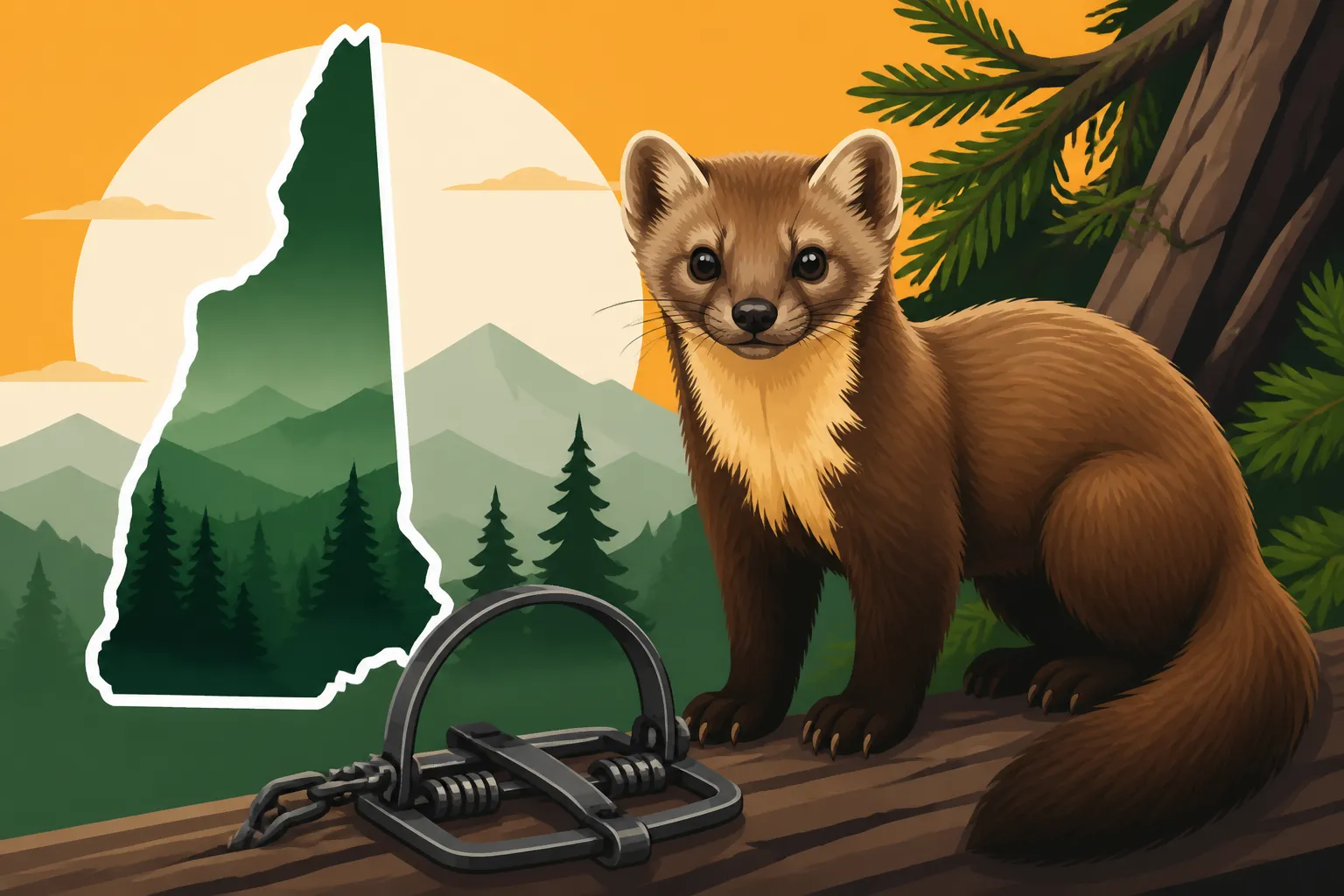
New Hampshire Marten Trapping Season
For trappers in New Hampshire, understanding the nuanced regulations around furbearer species can be a real head-scratcher, especially when it comes to lesser-known or historically sensitive animals. This guide dives deep into the status of the American marten in the Granite State, explaining why you won't find a traditional "marten trapping season" and what responsible furbearer enthusiasts need to know to stay legal and ethical.
Understanding New Hampshire's Marten Population and Management
The American marten, often simply called marten, is a captivating furbearer that calls dense forests home. However, unlike some of our more common furbearers, the marten holds a unique, and often misunderstood, place in New Hampshire's wildlife management. It’s crucial for any trapper to know the history and current status of these elusive creatures before even thinking about setting a trap.
The Marten's Place in New Hampshire's Ecosystem
Historically, martens were once more widespread across New Hampshire's vast timberlands. They are true residents of the deep woods, preferring mature, unbroken conifer and mixed-wood forests, particularly in the northern reaches of the state. Think of them as tiny, agile predators, perfectly adapted to navigate the snow-laden branches and dense undergrowth of places like the White Mountain National Forest or the expansive tracts of the North Country. They're part of that intricate web of life, preying on small mammals like voles, mice, and squirrels, and even birds or insects when the opportunity arises.
Martens are a fantastic indicator species, meaning their presence or absence can tell us a lot about the health and connectivity of our northern forest ecosystems. They require specific habitat—dense canopy cover, plenty of downed logs and snags for denning and foraging, and often rugged terrain that provides refuge. As such, they've always been more common in areas less impacted by human development and extensive timber harvesting that fragments their preferred habitat. Their secretive nature and preference for remote areas mean encounters are rare for most folks, which contributes to their mysterious aura.
Marten Status and Conservation Efforts
When we talk about furbearers in New Hampshire, species like beaver, otter, fisher, and coyote often come to mind, and for good reason—they typically have established trapping seasons. The marten, however, isn't usually on that list. For a long time, the American marten population in New Hampshire was considered quite sensitive, largely due to historical overtrapping and significant habitat loss from logging practices in the 19th and early 20th centuries. While some recovery has occurred, their populations are still considered more fragile than many other furbearers.
The New Hampshire Fish and Game Department actively monitors many wildlife populations, and furbearers are certainly among them. Through various surveys, harvest data (for other species), and habitat assessments, they strive to understand population trends and set appropriate regulations. For martens, this monitoring often indicates that their numbers are not robust enough to support a sustained trapping season. This proactive approach helps ensure the long-term viability of these important forest inhabitants. Unlike some species where management might involve harvest quotas or specific season dates, for martens, the primary management strategy has often been protection and habitat conservation rather than an open trapping season.
Navigating Furbearer Regulations in New Hampshire (Without a Specific Marten Season)
It can be really confusing for trappers who are used to annual adjustments for various furbearers to find little to no information about martens. This section will clarify why a dedicated season for these animals is typically absent and what that means for trappers in the Granite State.
Why There Isn't a Dedicated Marten Trapping Season
The simple truth is, for many years, New Hampshire has not had a specific open trapping season for the American marten. This isn't an oversight or a forgotten detail in the hunting and trapping digest; it's a deliberate management decision. The primary reason often boils down to population levels. Martens generally exist in lower densities than, say, a fisher or a coyote. Their reproductive rates are not as high, and they are quite particular about their habitat. When a species' population is considered vulnerable, even if it's not federally or state-listed as endangered or threatened, wildlife agencies err on the side of caution.
Consider the efforts made for other species, such as moose, where even with a lottery, permits are limited due to concerns about population health, especially related to winter ticks. New Hampshire Moose Population Decline Since the 1990s illustrates the careful balance wildlife managers must strike. Martens face similar, albeit different, ecological pressures that make an open season unfeasible. Essentially, the Fish and Game Department's goal is to ensure the species thrives, and currently, that means no directed take through trapping. If you're looking through the official New Hampshire hunting and trapping digest or using digital platforms like GoHunt to scout and check regulations, you'll find comprehensive information for legally trappable species, but you won't see specific dates or bag limits for martens. This absence is the clearest indicator of their protected status.
General Furbearer Trapping Rules and Licensing
Even though there's no marten season, understanding the general furbearer trapping rules is absolutely essential for anyone looking to trap other species. If, by some chance, regulations were to change in the future (always check the current digest!), these foundational rules would apply. To even consider setting a trap in New Hampshire, you must first possess the appropriate trapping license. This isn't just a formality; it ensures you understand the responsibilities and laws involved. New Hampshire Trapping License Requirements outlines the steps you'd need to take.
Beyond the license, trappers must adhere to strict regulations regarding trap types, set locations, and setback distances from dwellings and public roads. For example, there are specific size limitations for body-gripping traps, and snares are only allowed under certain conditions for particular species. These rules are designed to promote ethical trapping, minimize non-target catches, and ensure public safety. You also need to mark your traps with your name and address or Fish and Game license number. And, of course, regular checking of your traps, typically within 24 hours, is a non-negotiable requirement. While you might be setting traps for species like fisher or bobcat, knowing these general rules prevents issues with any species you might encounter, intended or otherwise. New Hampshire Fox and Bobcat Trapping Season delves into some specific regulations for other furbearers that demonstrate this complexity.
Incidental Catches and Reporting Protocols
Even the most experienced trapper, setting traps for legally allowed furbearers like fisher or bobcat, can sometimes encounter an unexpected animal. When that unexpected animal is a species like the marten, which typically has no open season, knowing exactly what to do becomes critically important. Missteps here can lead to legal issues and certainly contradict the principles of ethical wildlife management.
What to Do if You Accidentally Trap a Marten
Imagine you're checking your trapline in a remote section of the White Mountains, perhaps with a well-placed foothold or body-gripping trap targeting a fisher, and you find a marten. This situation, while hopefully rare, demands immediate and precise action. If you catch a marten, or any other non-target species that is protected or for which there is no open season, the law is clear: you must immediately release the animal unharmed if possible. This means having the tools and knowledge to safely handle and release a wild animal.
Beyond immediate release, it is your legal and ethical obligation to report the incident to the New Hampshire Fish and Game Department. This isn't about getting into trouble; it's about contributing to wildlife data and demonstrating responsible trapping practices. They need to know about these occurrences to monitor populations and assess potential interactions with trapping efforts. Keep a detailed record of the date, time, location (GPS coordinates are best), the type of trap, and the condition of the animal upon release. Failing to report an incidental catch, or worse, attempting to conceal it, can lead to serious penalties. Remember, even if you’re focused on Trapping New Hampshire Furbearers like beaver or muskrat, you might occasionally encounter an animal like a marten that requires careful handling.
The Importance of Species Identification
Accurate identification is paramount for trappers, especially when targeting furbearers in areas where species like marten might overlap with more commonly trapped animals such as fisher. Martens and fishers, both members of the weasel family, can be confused, especially in the heat of the moment or for less experienced trappers. However, there are distinct differences. Martens are generally smaller, often weighing 1.5 to 3 pounds, with a much more slender build. Their fur is typically a richer, lighter brown to yellowish-brown, often with a distinct orange or cream-colored patch on their throat and chest. Their ears are more prominent, and their tail is proportionally longer and bushier compared to their body size.
Fishers, on the other hand, are significantly larger, typically 5 to 15 pounds, with a stockier build. Their fur is darker, usually dark brown to black, and while they might have some lighter fur on their chest, it's generally less defined than the marten's patch. Their ears are smaller in proportion to their head. Being able to quickly and accurately distinguish between these two species in the field is vital for legal compliance and ethical trapping. Resources like the New Hampshire Fish and Game website, furbearer guides, and even digital tools like GoHunt, which often includes detailed species profiles and identification aids, can be invaluable for trappers to hone their identification skills. Knowing your target and non-target species is a core responsibility.
Here's a quick comparison to help distinguish between these two forest weasels:
| Feature | American Marten | Fisher |
|---|---|---|
| Size/Weight | Smaller (1.5-3 lbs), slender body | Larger (5-15 lbs), stockier body |
| Fur Color | Lighter brown to yellowish-brown | Dark brown to black |
| Throat Patch | Distinct orange/cream patch, often well-defined | Less defined, often lighter brown or off-white |
| Ears | More prominent, rounded | Smaller in proportion to head |
| Tail | Long, bushy, proportional to body | Shorter, less bushy, appears thicker |
| Habitat | Dense, mature conifer/mixed forests | Wide range of forests, more adaptable |
| Legs/Feet | Smaller feet, often with retractible claws | Larger, broader feet, non-retractible claws |
Researching and Staying Informed on New Hampshire Furbearer Seasons
The world of trapping regulations is constantly evolving, and staying on top of the latest rules is not just a suggestion—it's a requirement. This is especially true when dealing with species that may have restricted or no open seasons, like the American marten. Responsible trappers know that knowledge is their most important tool.
Official Resources for Current Regulations
When it comes to New Hampshire's hunting and trapping regulations, there is no substitute for the official word. The New Hampshire Fish and Game Department's annual hunting and trapping digest is your bible. This comprehensive guide, published yearly, contains all the current season dates, bag limits, legal methods, licensing requirements, and specific rules for every game and furbearer species. It's crucial to understand that these regulations can and do change from year to year based on population assessments, habitat conditions, and management goals.
Never rely solely on information from previous years or word-of-mouth. Always obtain the most recent digest, either in print from a license agent or, more conveniently, directly from the Fish and Game Department's website. Pay particular attention to the furbearer sections, checking specifically for any mention of martens. You'll likely find information for other furbearers, such as when New Hampshire Fox and Bobcat Trapping Season runs, or the rules for New Hampshire River Otter Trapping Season, but for martens, the absence of specific dates is usually the key indicator of no open season. This regular check ensures you're always operating within the bounds of the law, protecting both yourself and New Hampshire's valuable wildlife resources.
Utilizing Digital Tools for Furbearer Information
In today's digital age, hunters and trappers have an incredible array of tools at their fingertips to help them stay informed and enhance their outdoor pursuits. While the official digest remains the ultimate authority, digital platforms can serve as excellent complements for research, planning, and staying updated on general furbearer information. Mapping applications, for example, are indispensable for identifying prime habitat for various furbearers, whether you're seeking beaver flowages, productive coyote country, or potential fisher strongholds. These apps often allow you to overlay property boundaries, public versus private land, and even topography, which is incredibly helpful for planning traplines or scouting areas. Scouting New Hampshire Public Land Before Season becomes much more efficient with these tools.
Platforms like GoHunt provide valuable resources for trappers by consolidating information and offering advanced mapping capabilities. While you might not find an open marten season listed, GoHunt can be used to research the general trapping regulations for New Hampshire, identify public lands like New Hampshire Wildlife Management Areas or Public Hunting Land in New Hampshire where furbearer trapping is permitted, and even explore habitat types that would be suitable for other legally trappable species. Staying informed through GoHunt's aggregated data, or by cross-referencing its mapping features with official Fish and Game information, empowers trappers to make informed decisions, ensuring they are always up-to-date on rules for New Hampshire Small Game and Furbearers and can identify good areas for species like bobcat, fisher, and coyote, even while adhering to the protected status of marten.
Disclaimer
This article is for general informational purposes only and does not constitute professional advice. Laws, prices and regulations vary by location and change over time. Consult a qualified professional for guidance on your specific situation.