New Hampshire Bear Density by Region
Hunting New Hampshire black bears can feel like searching for a needle in a haystack, especially if you're not entirely sure which haystack to even start in. There's nothing more frustrating than putting in countless hours of scouting and stand time only to find yourself in an area with sparse bear activity. You know bears are out there, but where exactly are they most concentrated? This guide is going to strip away the guesswork, diving deep into New Hampshire's bear density across its various regions, helping you pinpoint the most promising areas for your next hunt.
Understanding New Hampshire's Bear Country
When we talk about hunting for black bears in New Hampshire, it’s not just about knowing there are bears. It’s about understanding their habits, their preferred habitat, and critically, where their populations are densest. This knowledge can literally make or break your hunting season.
Why Bear Density Matters to Hunters
Imagine spending days pre-season scouting, setting up trail cameras, and hauling bait into a spot, only to discover the overall bear population in that entire region is minimal. It's a soul-crushing experience, and it's a common one for hunters who don't consider the bigger picture of bear distribution. Knowing where bears are concentrated saves you immense amounts of time, effort, and even money. It allows you to focus your precious hunting hours on areas where your chances of encountering a bear are statistically much higher.
This isn't just about finding any bear; it's about optimizing your strategy. If you're planning a spot-and-stalk hunt, high-density areas mean more opportunities to glass openings and track sign. For those pursuing Baiting New Hampshire Bears Legally by WMU, setting up your bait in a region known for robust bear numbers simply makes your efforts more efficient. The same goes for those utilizing Hunting Bear With Hounds by WMU; more bears in a given area means better opportunities for a track to be laid. Ultimately, a deep understanding of bear density informs every aspect of your hunt, from initial scouting to the actual execution of your preferred hunting method.
The Overall Picture: New Hampshire Black Bears and Their Growth
New Hampshire is truly a fantastic place to pursue New Hampshire Black Bears. The Granite State's landscape, with its vast tracts of timber, ample water sources, and diverse food offerings, provides an ideal environment for these adaptable creatures. Over the past few decades, we've seen a remarkable resurgence and continued growth in their numbers. This is a testament to effective wildlife management and the resilience of the species itself.
Historically, bear populations faced challenges, but thanks to conservation efforts and changing land use patterns, their numbers have rebounded significantly. You can read more about this journey in our article on How New Hampshire's Bear Population Grew. Today, the statewide New Hampshire Bear Population Estimate suggests a thriving population, but it’s crucial to remember that "statewide" doesn't mean "everywhere." Bears, like most wildlife, aren't evenly distributed. They concentrate where habitat is most favorable, and that leads us to the critical regional differences. They seek out areas with dense cover for bedding, abundant mast crops for food, and remote corners where human disturbance is minimal. New Hampshire's varied topography offers these conditions in spades, leading to distinct regional concentrations that every bear hunter should be aware of.
Regional Breakdown: Where Bears Roam in the Granite State
Understanding the general health of New Hampshire’s bear population is one thing, but knowing the specific regions where they thrive is another entirely. New Hampshire can be broadly divided into several geographic regions, and each offers a unique flavor of bear hunting, directly correlated to its bear density.
The North Country: Bear Central
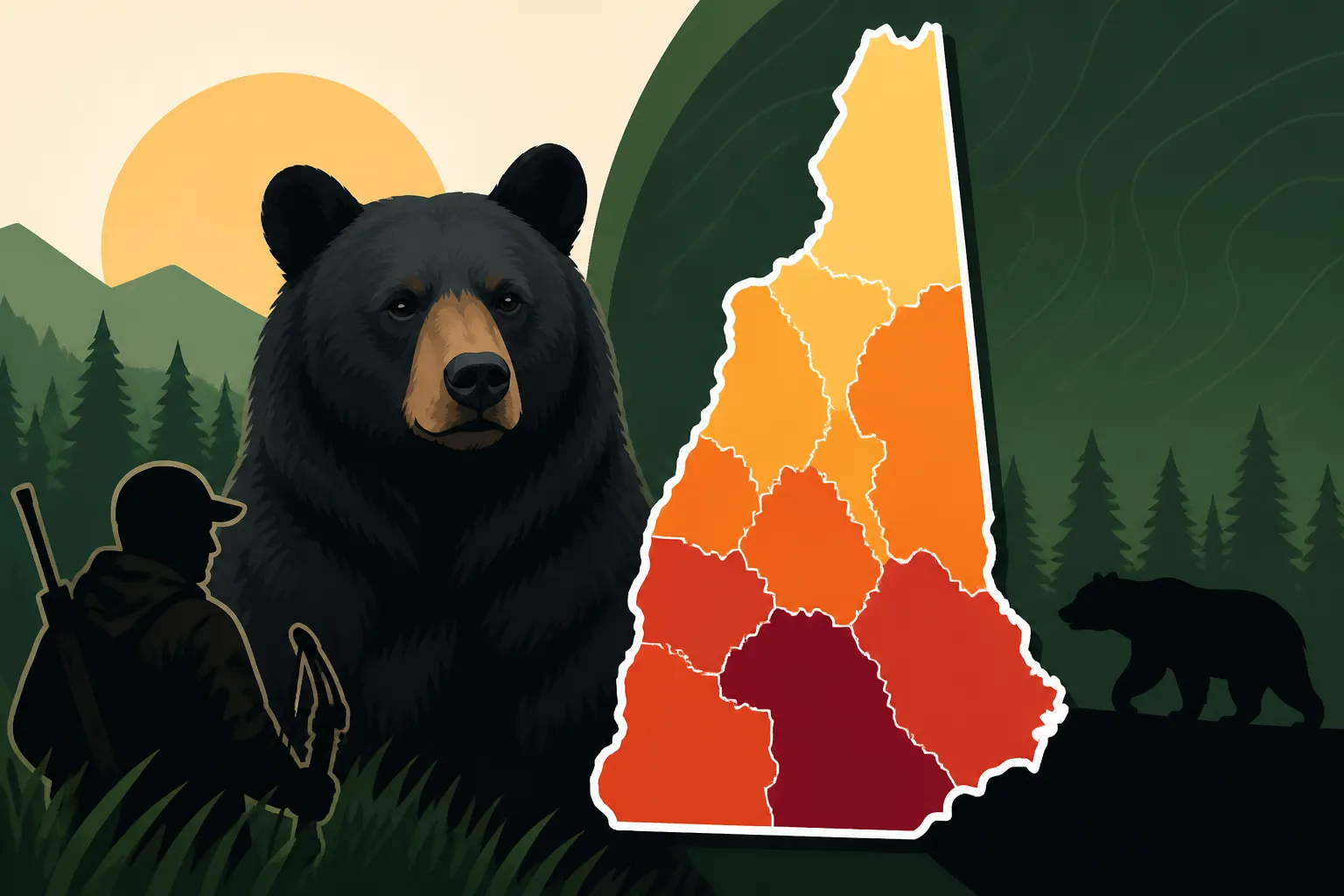
If there’s one region in New Hampshire that screams "bear country," it's the North Country. This encompasses the vast, rugged expanses of Coos County and the northern reaches of Grafton and Carroll counties, covering Wildlife Management Units (WMUs) like A, B, C, D1, D2, E, and F. Here, the bear density is consistently at its highest.
Why is this region such a bear magnet? It's simple: prime habitat. The North Country boasts immense, unbroken tracts of coniferous and mixed hardwood forests. Think dense spruce-fir stands, sprawling beaver bogs, and mountainous terrain that offers seclusion and an abundance of natural food sources. Bears thrive on this wildness. They find sanctuary in the deep timber, feast on a rich seasonal buffet of berries (blueberries, raspberries, blackberries), and utilize beechnuts and acorns when available. The remote nature of much of this landscape means fewer roads, less human disturbance, and plenty of room for bears to roam and reproduce without constant pressure. For serious bear hunters, especially those looking for a truly wild experience, targeting this region is often the most logical first step. Using mapping tools like GoHunt can be incredibly helpful here, allowing you to overlay land ownership, topo maps, and recent satellite imagery to identify remote cuts, bog edges, or hardwood ridges that might be bear highways. It’s an invaluable tool for dissecting these vast wilderness areas. If you're planning on Hunting the North Country, understanding the specific nuances of bear movement within these WMUs is paramount.
White Mountains and Central New Hampshire: Healthy Populations
Moving south from the extreme North Country, but still firmly within excellent bear range, we find the heart of the White Mountains and the broader central New Hampshire region. This area includes WMUs like E, F, G, H1, and H2, representing a diverse blend of high-elevation wilderness, steep valleys, and rolling hardwood hills. The bear density here remains robust, offering excellent opportunities, though perhaps not quite at the consistent peak of the most northern counties.
Bears in this region are incredibly adaptive, utilizing the varied terrain to their advantage. They'll spend summers foraging in high-elevation berry patches and move down to lower elevations in the fall to capitalize on mast crops in the mature hardwood forests. The sheer ruggedness of the White Mountains provides ample escape cover and denning sites. While there's more human presence here compared to the far north, especially around tourist areas and smaller towns, bears have learned to coexist, often sticking to the deeper woods and moving nocturnally near developed areas. For hunters willing to put in the effort to climb and traverse steep terrain, this region can yield fantastic results. It’s about understanding the specific habitat pockets within these WMUs and how they change with elevation and season. A good scouting strategy here involves looking for prime food sources and thick cover, as bears will shift their patterns based on what’s available.
Southern and Eastern Regions: Patchy but Present
As you move into the southern and eastern parts of New Hampshire, including WMUs I1, I2, J1, J2, K, L, and M, the landscape changes dramatically. Here, human population density increases, forest tracts become more fragmented, and agriculture becomes more prevalent. While bears are still present, their density becomes more "patchy" and localized.
Don't misunderstand—this doesn't mean there are no bears. It just means you have to work harder to find them, and your strategy needs to adapt. Bears in these regions often rely on smaller, isolated woodlots, river corridors, and suburban green spaces that provide sufficient cover. They're often more nocturnal, moving under the cover of darkness between feeding and bedding areas. Food sources can be varied, from natural mast crops to agricultural fields, and unfortunately, sometimes even residential bird feeders or garbage. Hunting in these areas requires meticulous scouting to identify critical travel corridors, thickets, and remote pockets of woods that act as bear sanctuaries. You might find a healthy population in one 500-acre block of woods, while the surrounding miles are relatively devoid of bear sign. This is where tools like GoHunt become indispensable again. You can use its detailed property line maps and satellite imagery to identify those overlooked timber blocks, small wetlands, or even powerline cuts that provide vital cover and travel routes for bears amidst a more developed landscape. It's about finding the "islands" of bear habitat in a sea of human activity.
Here's a quick overview of New Hampshire's general bear density by region:
| Region | Primary WMUs | Habitat Characteristics | Estimated Bear Density (Relative) | Hunting Strategy Considerations |
|---|---|---|---|---|
| North Country | A, B, C, D1, D2 | Vast, unbroken forests, bogs, mountains, remote | Very High | Focus on large wilderness areas, remote scouting, traditional methods (bait/hounds) |
| White Mountains | E, F, G | Rugged mountains, steep valleys, mixed forests, some development | High | Physical demands, elevation changes, food source scouting (mast, berries) |
| Central NH | H1, H2 | Rolling hills, mixed hardwoods, more agriculture, increasing human presence | Medium-High | Identify key travel corridors, larger woodlots, natural food sources |
| Southern/Eastern | I1, I2, J1, J2, K, L, M | Fragmented forests, suburban fringe, agriculture, high human density | Patchy/Low | Intensive scouting for isolated cover, nocturnal patterns, focus on specific properties |
Factors Influencing Bear Distribution and Density
Bear distribution isn't random; it's a complex puzzle influenced by various environmental and human factors. Understanding these elements helps you predict where bears are likely to be, beyond just general regional assumptions.
Habitat and Food Availability
The most critical factor dictating where bears live and thrive is, without a doubt, the availability of suitable habitat and a consistent food supply. Bears are opportunistic omnivores, meaning their diet changes dramatically with the seasons.
In the spring, they emerge from dens, often seeking green browse like grasses, skunk cabbage, and tender shoots, sometimes even scavenging winter-killed deer. As summer progresses, their focus shifts to berries—blueberries, raspberries, and blackberries are absolute magnets. Anyone who’s spent time in New Hampshire's wilder areas knows how thick these berry patches can get, and where there are berries, there are often bears. Come fall, it's all about packing on calories for winter, and mast crops become paramount. Hardwood forests rich in acorns (especially from oak trees) and beech nuts are prime feeding grounds. A good mast crop year can concentrate bears in specific areas, while a poor one might force them to range wider in search of alternatives, sometimes bringing them closer to human settlements. Beyond food, bears need dense, secure cover for bedding, especially thick softwood stands (spruce, fir, hemlock) or regenerating clear-cuts. These areas provide protection from the elements and a sense of security. They also need access to water, which New Hampshire's countless brooks, streams, rivers, and ponds readily provide. When you're Finding Sign in White Mountain Timber, understanding how these elements coalesce is key to identifying active bear areas. Recent logging operations, for instance, can create new food sources (like berry growth in clearings) and dense bedding cover in the regrowth, altering bear movement patterns.
Human Influence and Hunting Pressure
While bears are wild animals, their lives are undeniably intertwined with human presence, especially in a state like New Hampshire where wildlands often butt up against developed areas. Human influence can both displace bears and, paradoxically, create new opportunities for them.
Increased development, new roads, and recreational trails can push bears further into remote areas, fragmenting their habitat and limiting their movement. However, bears are highly adaptable. In some areas, they learn to tolerate human proximity, becoming more nocturnal and utilizing smaller, overlooked patches of cover. This often leads to human-bear conflicts, such as bears raiding garbage or bird feeders, particularly in years with poor natural food crops.
Hunting pressure also plays a significant role in bear distribution. In areas that see heavy hunting activity, bears may become more wary, shifting their patterns to avoid hunters. They might move into thicker, harder-to-reach terrain or become almost exclusively nocturnal during hunting season. This is where understanding New Hampshire's WMU-Specific Bear Season and New Hampshire Bear Season Dates by WMU becomes vital. Hunting methods, too, can influence local density. Areas where baiting is prevalent might see bears concentrated around bait sites, while areas with high hound hunting activity might see bears quickly moving through larger territories. Savvy hunters use mapping applications, like those available through GoHunt, to analyze public land boundaries, access points, and potential pressure points, which helps in finding those less-pressured pockets where bears might feel safer.
Applying Density Knowledge for a Successful Hunt
Knowing where bears generally live is a fantastic start, but converting that knowledge into a successful hunt requires thoughtful application and strategic planning. This isn't just theory; it's about putting boots on the ground with a purpose.
Targeted Scouting and Strategy
Armed with a better understanding of regional bear densities, your scouting efforts become infinitely more targeted. Instead of randomly wandering the woods, you can focus your time and energy on areas within high-density regions that exhibit the specific habitat characteristics bears favor at that particular time of year.
For example, if it's early fall and you're in the North Country, you'd prioritize scouting mature hardwood ridges for fresh sign of bears feeding on acorns and beechnuts. Conversely, in the late summer, you'd be glassing clear-cuts and open areas with abundant berry bushes. Consider the specific hunting method you plan to employ. If you’re thinking about Baiting New Hampshire Bears Legally by WMU, choosing a bait site in a high-density WMU within easy travel distance for multiple bears is a no-brainer. If you prefer spot-and-stalk, focus on areas with good visibility like power line cuts, clearings, or old logging roads, often found within the White Mountain or North Country regions. For those joining a Hunting Bear With Hounds by WMU group, knowing the areas with highest bear concentrations ensures the best chance of finding a fresh track. No matter your method, always make sure to double-check the local regulations and seasons for your specific WMU by Checking the Hunting Digest for Your WMU's Bear Dates. Digital tools like GoHunt allow you to mark specific bear sign, potential travel routes, and even your planned stand locations directly on the map, creating a living blueprint for your hunt. This kind of detailed planning, based on density and habitat, dramatically increases your odds of success.
Leveraging Tools and Resources
In today's hunting world, we have an incredible array of tools at our disposal that can enhance our understanding of bear density and improve our hunting efficiency. Embracing these resources is a smart move for any serious New Hampshire bear hunter.
One of the most valuable resources is the New Hampshire Fish and Game Department's own app and website. This allows you to check WMU boundaries, understand regulations, and even report your harvest effortlessly. Learning to use resources like Scouting With the New Hampshire Fish and Game App can give you a significant advantage. Before you even step foot in the woods, it's crucial to ensure you have the proper New Hampshire Hunting Licenses and What They Cost. Without the correct permits, all the scouting in the world won't matter.
Beyond state resources, third-party mapping applications like GoHunt offer incredible depth. These apps provide detailed satellite imagery, topographic maps, and often public/private land ownership layers. This information is gold, especially when trying to identify isolated patches of Public Hunting Land in New Hampshire that might hold bears in more fragmented southern regions, or to plan deep dives into the vast wilderness of the North Country. You can use GoHunt to visualize terrain features, identify potential food sources, and even predict travel corridors based on elevation changes and cover. By combining your knowledge of bear density with these powerful digital tools, you transform your hunting from a game of chance into a strategic pursuit.
Disclaimer
This article is for general informational purposes only and does not constitute professional advice. Laws, prices and regulations vary by location and change over time. Consult a qualified professional for guidance on your specific situation.