Best New Hampshire Counties for Grouse
It can be incredibly frustrating to hit the woods looking for grouse, only to walk for miles through seemingly good cover and hear nothing but the crunch of leaves under your boots. We've all been there, questioning if the birds are even around anymore. While it's true that ruffed grouse populations in New Hampshire have seen their ups and downs, knowing where to focus your efforts can drastically improve your chances of hearing that explosive flush. This guide will dive deep into specific New Hampshire counties that consistently offer better opportunities for grouse hunters, and why their unique landscapes make them prime spots.
Understanding What Makes Great Grouse Habitat in New Hampshire
Before we talk about specific counties, it's crucial to understand what grouse need to thrive here in the Granite State. Ruffed grouse aren't just found anywhere there are trees; they're incredibly particular about their environment. They seek out specific types of forest cover that provide both food and protection from predators, especially at different times of the year. Think about it from a grouse's perspective: where can I find plenty to eat, and still feel safe from hawks and coyotes?
The Importance of Early Successional Forests
This is the golden rule for grouse hunting. Ruffed grouse absolutely love young, regenerating forests. These are areas that have been recently logged, clear-cut, or have suffered from natural disturbances like severe wind events. When sunlight hits the forest floor after timber has been removed, a dense tangle of saplings, shrubs, and briars explodes. This thick, almost impenetrable cover is exactly what a grouse needs for security. It's hard for predators to fly through or sneak into these areas, giving the grouse a fighting chance.
You’ll often find these areas choked with aspen, birch, young maples, and a variety of berry-producing shrubs. These plants provide vital food sources, from catkins and buds in the winter to berries and insects in the warmer months. Without these "young woods," grouse simply can't maintain healthy populations. Older, mature forests, while beautiful, typically lack the dense understory grouse require, making them less productive for hunting. This is why when you're looking at a map or scouting, you want to identify those areas marked as recent timber harvests or areas with distinct habitat transitions.
Key Food Sources and Cover Types
Beyond just early successional growth, specific food sources and diverse cover types contribute to a thriving grouse population. Look for areas that have a mix of softwood (like spruce and fir) and hardwood (maple, oak, birch). Softwood stands provide crucial thermal cover during harsh winters, protecting birds from snow and extreme cold. Hardwoods, on the other hand, are the primary producers of buds and catkins, which are staples in a grouse's diet, especially in late fall and winter.
Furthermore, keep an eye out for forgotten apple orchards, stands of highbush cranberry, dogwood, or even old stone walls choked with grapevines. These provide a bounty of fruit and insects, especially during the fall hunting season. Water sources, while not as critical as for deer, are also important, so areas adjacent to small streams, seeps, or beaver flowages can often hold birds. The more varied the habitat, the better. A good grouse county will have a patchwork of these different elements, not just one uniform forest type. This diversity allows birds to move between feeding areas, escape cover, and roosting spots easily, providing for all their seasonal needs.
Top New Hampshire Counties for Ruffed Grouse Hunting
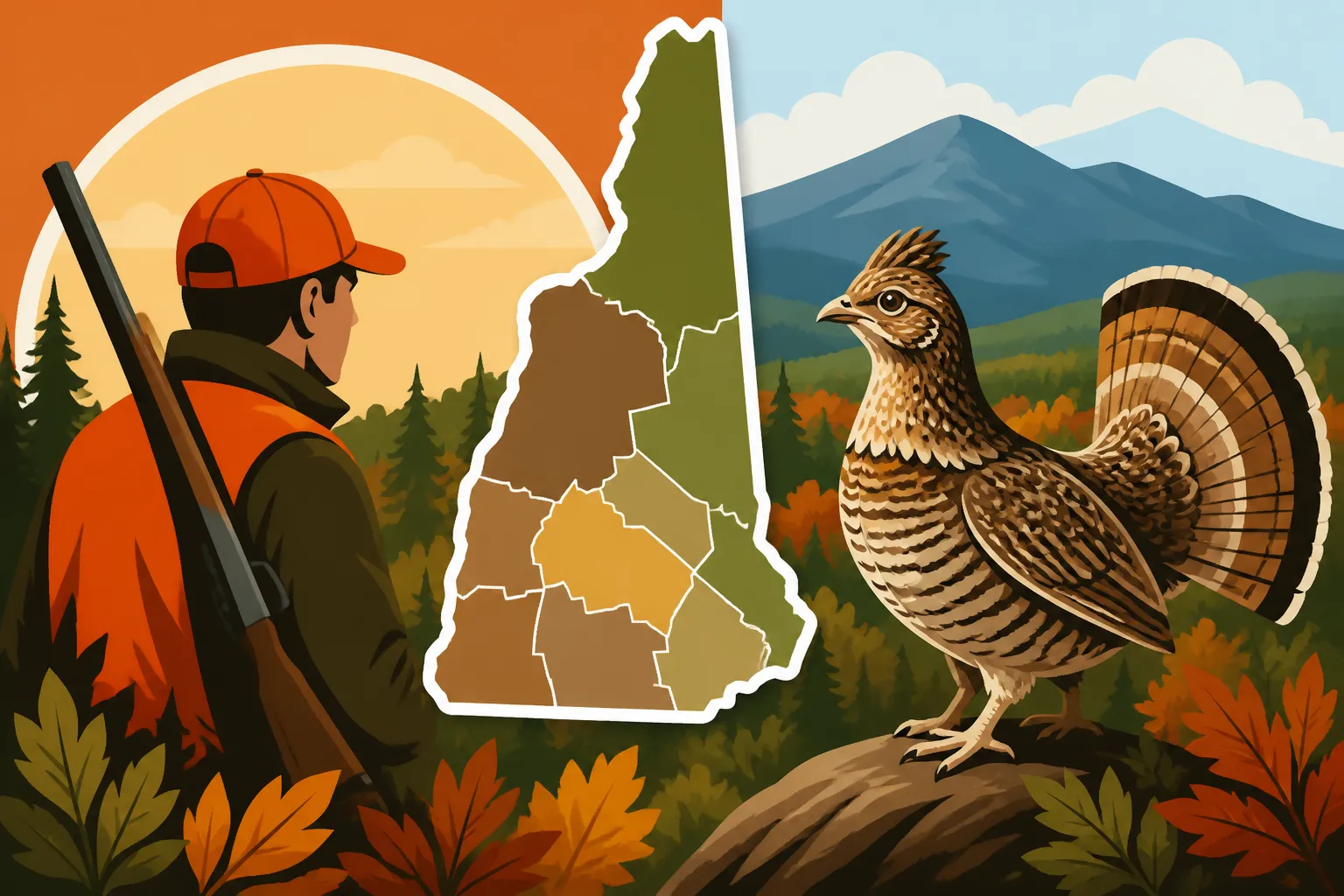
While you can technically find grouse in all corners of New Hampshire, some counties consistently stand out due to their geography, logging activity, and land management practices. These are the places where, statistically, your chances of running into a grouse or two are simply higher. We're talking about areas with a strong tradition of timber management and a landscape that naturally fosters the right mix of cover.
Coos County: The North Country's Ruffed Grouse Haven
When hunters talk about grouse in New Hampshire, Coos County often comes up first. This is the heart of the "North Country," known for its vast expanses of working forest and lower human population density. Much of Coos County is managed timberland, which means there's a constant cycle of logging creating that vital early successional habitat grouse crave. The sheer scale of the landscape also means less hunting pressure in many areas compared to more populated parts of the state.
The mix of spruce-fir forests and regenerating hardwoods after logging provides incredible cover and food. You'll find extensive tracts of land where birds can flourish without constant disturbance. Look for logging roads and skid trails off main routes; these often cut through prime grouse real estate. Areas around the Connecticut Lakes Region and the Umbagog Lake wetlands, while known for moose and waterfowl, also hold impressive numbers of grouse along their fringes. You can learn more about Hunting the North Country and specific tactics there. The challenge here is the vastness, requiring more legwork, but the rewards can be well worth it.
Grafton County: White Mountains Foothills and Beyond
Just south of Coos, Grafton County offers another fantastic opportunity for grouse hunters. This county encompasses a significant portion of the White Mountain National Forest, but also has a lot of private timberland and state forests. The topography here is rugged, with rolling hills, steep drainages, and plenty of mixed forest types. This natural diversity, combined with ongoing timber harvests on both private and public lands, creates excellent patchwork habitat.
Focus on the lower and mid-elevations, particularly where logging has occurred in the past 5-15 years. You'll find a good mix of aspen, birch, and young maple stands, especially around clear-cuts and along older logging roads that are regenerating. Hunting New Hampshire's White Mountain National Forest offers unique challenges and rewards for grouse hunters. Keep an eye out for old apple trees or abandoned homesteads nestled in these areas; they can be magnets for grouse. The key in Grafton is often finding those hidden pockets of dense cover in an otherwise mature forest.
Carroll County: Eastern Slope and Lake Region Edges
Carroll County, which borders Maine and extends into the eastern White Mountains and Lakes Region, is another solid choice for grouse. While parts of it are more developed, particularly around Lake Winnipesaukee, large swaths of the county remain heavily forested and actively logged. The eastern slopes of the White Mountains provide a diverse elevation profile and a mix of forest types that are beneficial to grouse.
Areas particularly worth exploring are found away from the major tourist hubs, further east towards the Maine border, or in the northern reaches where it blends into Grafton and Coos. Similar to Grafton, look for the edges of mature timber stands next to younger growth, old logging roads, and areas with a good hardwood component. The transitional zones between the higher elevations and the lower valley floors often hold excellent cover. You might even find some birds closer to the Hunting the Lakes Region if you explore the less-developed fringes and state forests there.
Scouting and Strategy for New Hampshire Grouse
Knowing the best counties is only half the battle; actually finding the birds requires diligent scouting and a smart hunting strategy. Grouse are elusive creatures, and their habits can change based on weather, food availability, and hunting pressure. You'll need to put in some effort before and during the season to consistently find success.
Pre-Season Scouting: Maps and Boots on the Ground
The work begins long before opening day. Modern mapping tools are incredibly helpful. Start by using satellite imagery (like what's available through platforms like onX Hunt) to identify potential habitat. Look for areas with distinct changes in forest density, indicating recent timber cuts, and the tell-tale mottled green of mixed forests. Pay attention to power lines, old farm fields, and beaver activity, as these often create excellent edge habitat.
Once you have some promising spots identified on your map, it's time to hit the woods. Early fall, before the leaves drop completely, is a fantastic time to scout. You'll want to confirm what you saw on the map. Walk those old logging roads, push through the thick regenerating clear-cuts, and identify specific food sources like wild apple trees or patches of highbush cranberry. Look for sign: grouse droppings, dusting bowls, and even shed feathers. Listen for drumming in the spring, which tells you where birds are establishing territories. Understanding Reading Aerial Photos for North Country Deer can also apply to finding good grouse cover. Pay attention to areas that provide both overhead cover and open understory for easy movement, which is often along field edges or the fringes of thickets.
Hunting Tactics: The Walk and Flush
Grouse hunting in New Hampshire is primarily a "walk and flush" game, often done with a good bird dog, though many hunters find success without one. The key is to move slowly and deliberately through prime cover. Grouse often hold tight, relying on their camouflage, and will explode into flight at your feet. Being prepared for a quick shot is essential.
Walk in a zigzag pattern through thickets, pausing frequently. Those pauses often make a nervous bird flush. Focus on the edges of clear-cuts, along old stone walls, creek bottoms, and where different habitat types meet. These "edges" are natural travel corridors and feeding areas. If you're hunting without a dog, consider bringing a partner and spacing out 20-30 yards apart to cover more ground and encourage birds to flush. Remember to always be aware of your hunting partner's location for safety. For those looking for smaller game, consider Small Game and Predator Hunting in New Hampshire for additional tips.
Other Factors Influencing Grouse Hunting Success
While county selection and habitat knowledge are critical, several other factors can significantly impact your grouse hunting experience in New Hampshire. These range from annual population fluctuations to regulatory details.
Understanding Population Cycles and Harvest Numbers
Ruffed grouse populations are known for their cyclical nature, typically peaking and then declining over a 8-11 year period. This cycle is influenced by a complex interplay of factors including predation, disease, and weather patterns, especially during nesting season. Some years will simply be "better" for grouse than others, regardless of where you hunt.
New Hampshire Fish and Game monitors these trends, and while they don't provide county-specific forecasts, understanding the broader population trend can help manage expectations. A poor mast crop year (acorns, beech nuts) can also push grouse into different areas in search of food. You can sometimes find generalized information about New Hampshire Ruffed Grouse Population Cycles to get a sense of where we are in the larger pattern. Don't get discouraged if a particular year seems slow; sometimes, it's just the cycle, not your scouting skills.
Navigating Regulations and Seasons
New Hampshire's grouse season is generally long, often running from early fall into December, sometimes even coinciding with parts of the deer season. Always consult the current New Hampshire Fish and Game digest for the exact dates and bag limits, as these can change year to year. Make sure you have the proper licenses; typically, a small game license is what you'll need. Don't forget your New Hampshire Resident License Options or New Hampshire Nonresident License Options if you're coming from out of state.
New Hampshire Grouse Hunting Quick Reference
| Factor | Description | Impact on Hunting |
|---|---|---|
| Habitat Type | Early successional forests, mixed hardwoods/softwoods, dense understory | Crucial for bird presence |
| Logging Activity | Recent timber cuts (5-15 years old) create ideal young growth | Direct correlation to grouse numbers |
| Food Sources | Aspen/birch buds, wild apples, berries, catkins | Determines bird density in an area |
| Hunting Pressure | Less pressure in remote areas often means more undisturbed birds | Affects bird behavior and holding |
| Population Cycle | Natural 8-11 year boom-and-bust cycle | Influences overall bird abundance |
| Weather | Heavy snows can push birds to specific cover; wet springs affect brood survival | Can alter daily movements and seasonal numbers |
Be aware of legal shooting hours, which are typically half an hour before sunrise to half an hour after sunset. If you plan to carry a shotgun during deer season, ensure you understand all blaze orange requirements, which are mandatory for firearms deer hunting. Some areas might also have specific rules regarding dog use, so always double-check local regulations for public lands or wildlife management areas. It's better to be safe than sorry and ensure you're hunting legally and ethically.
Respecting Land and Other Hunters
New Hampshire is a state with a strong outdoor tradition, and respecting private land and fellow hunters is paramount. Always obtain permission before hunting on private property, even if it's unposted. Many private landowners are gracious, but it's their right to deny access, and maintaining good relationships benefits all hunters.
On public lands, be mindful of other users. Hikers, mountain bikers, and other outdoor enthusiasts share these spaces. Avoid hunting too close to trails or developed areas, and always exercise extreme caution and positive target identification before shooting. If you're taking advantage of the vastness of the White Mountain National Forest Camping Setback Rules, be especially mindful of other campers. A polite wave and a friendly chat can go a long way in ensuring a positive experience for everyone sharing our beautiful New Hampshire woods.
Disclaimer
This article is for general informational purposes only and does not constitute professional advice. Laws, prices and regulations vary by location and change over time. Consult a qualified professional for guidance on your specific situation.