New Hampshire Woodcock Harvest Numbers
For hunters in New Hampshire, especially those with a passion for migratory game birds, it's natural to wonder about the health and abundance of species like the American woodcock. Many of us scan through official reports, trying to make sense of the data and predict what the next season might hold. This guide aims to demystify the reported woodcock harvest numbers in the Granite State, explaining what they mean, how they're collected, and how you can use this information to better understand and pursue these elusive woodland creatures.
Understanding Woodcock Harvest Data in New Hampshire
The American woodcock, often referred to as the "timberdoodle," is a unique and challenging bird to hunt. Unlike many other game species, woodcock are migratory, moving through New Hampshire primarily during the fall. This migratory nature means that local population trends aren't solely dependent on what happens within our state borders, but also on breeding success and habitat conditions across a much wider range, from their northern breeding grounds down to their southern wintering areas. Understanding harvest data is a crucial piece of this complex puzzle, helping wildlife managers and hunters alike gauge the overall health of the population.
Why Tracking Harvest Numbers Matters
Tracking harvest numbers for any game species isn't just about counting what hunters take; it's a vital component of wildlife management and conservation. For the New Hampshire Fish and Game Department, these figures, combined with breeding ground surveys and habitat assessments, provide a comprehensive picture of the woodcock population. They help determine if hunting pressure is sustainable, if habitat initiatives are effective, and if there are any emerging concerns that might require management changes.
Think of it this way: if harvest numbers start to consistently decline, it could signal a problem. Is it fewer birds migrating through? Is there less suitable habitat? Or perhaps fewer hunters are pursuing them? Conversely, stable or increasing harvest numbers can indicate a healthy, thriving population and successful conservation efforts. For us, the hunters, this data offers reassurance that our pursuit is not harming the overall population, and it also clues us into potential hotspots or general trends. It's a testament to responsible hunting practices that we actively participate in monitoring these trends.
The Challenges of Accurately Counting Woodcock
Counting woodcock is, frankly, tough business. These birds are masters of camouflage, spending their lives in dense, young forests, alder thickets, and damp woodland edges. They're not like deer that might congregate in fields, or turkeys that gobble from a roost. Their cryptic nature makes direct population counts incredibly difficult.
New Hampshire, like other states, relies on a combination of methods. One primary source of data comes from the Migratory Bird Harvest Information Program (HIP). This federal program requires all migratory bird hunters to register annually. Through this registration, a subset of hunters is selected to participate in a harvest survey, reporting the number of birds they took. This survey-based approach helps estimate the total harvest. Additionally, some localized surveys, like singing ground surveys in the spring, attempt to monitor breeding populations by listening for the males' distinctive "peent" calls and aerial displays. However, interpreting these numbers always comes with a degree of estimation and extrapolation, which is why wildlife agencies continually refine their methodologies. The woodcock's elusive nature means we're always working with the best available science, acknowledging that a precise, bird-for-bird count is nearly impossible.
Deciphering New Hampshire's Woodcock Harvest Trends
When we look at harvest numbers for woodcock in New Hampshire, it’s rarely a straight line. There are always peaks and valleys, and understanding what drives these fluctuations is key to putting the numbers into perspective. It’s not just about how many birds are out there, but also how many hunters are chasing them, and what conditions they face.
Factors Influencing Annual Harvests
Several factors can cause New Hampshire’s annual woodcock harvest numbers to ebb and flow.
- Weather Patterns: This is huge for migratory birds. A cold snap up north can push birds south earlier, leading to a strong early-season flight through New Hampshire. Conversely, a mild fall might mean birds linger longer in more northern states, resulting in fewer birds arriving in the Granite State during our season. Severe weather during nesting season in the spring, or prolonged droughts, can also impact overall breeding success, which then shows up in lower numbers during the fall migration. You might have noticed this yourself; some years, the birds just seem to be here, while other years, it feels like they blew through before you even had a chance to get into the cover.
- Habitat Availability: Woodcock are very particular about their habitat. They need young, dense forest stands, particularly those with moist soil where they can probe for earthworms. As forests mature, or as land use changes, suitable habitat can diminish. Conservation efforts by organizations and state agencies focus on creating and maintaining these critical early successional habitats, which directly impacts the number of birds that can breed or stage in an area. Without good cover and food, birds simply won't be there, regardless of the weather.
- Hunter Effort: This is a subtle but important factor. If fewer hunters are out pursuing woodcock in a given year, or if those hunters spend less time in the field, the harvest numbers might appear lower even if the bird population is stable. Hunter participation can be influenced by factors like fuel prices, available free time, other hunting seasons (like Fall Turkey Hunting New Hampshire's Eight WMUs or Small Game and Predator Hunting in New Hampshire overlapping), or even the perceived abundance of birds from prior seasons.
- Regional Population Dynamics: Since woodcock migrate, what happens far outside New Hampshire profoundly affects what we see. Breeding success in Quebec or the Maritime Provinces, for instance, directly influences the number of birds that pass through our state on the Atlantic Flyway. Disease, predation, and habitat loss in other parts of their range can all contribute to the overall population health. This interconnectedness is why programs like HIP are so crucial; they give a flyway-wide perspective.
Comparing Harvests to Population Estimates
It’s important to remember that harvest numbers are not the same as population numbers. Harvest data is a measure of hunter success and bird availability during the season, while population estimates try to quantify the total number of birds in existence, usually based on breeding surveys. Ideally, these two sets of data should align: a healthy, stable population should yield a relatively stable harvest, assuming consistent hunter effort and environmental conditions.
However, discrepancies can arise. For example, a year with excellent local breeding success might see more birds in New Hampshire, but if extreme weather pushes them south quickly, the harvest might still be low for our state, even if the overall population is strong. Conversely, a poor breeding year might be masked by favorable migration weather that concentrates birds in certain areas, leading to a temporarily higher harvest despite a smaller overall population. This is where the New Hampshire Fish and Game Department uses data from various sources, including cooperative surveys like the New Hampshire Woodcock Singing Ground Surveys, to get the most accurate picture possible. They’re constantly analyzing these figures to ensure that our hunting seasons are set responsibly and sustainably. This complex analysis is vital for species like woodcock, which are part of a larger, migratory system often discussed in broader terms within the New Hampshire Waterfowl on the Atlantic Flyway context.
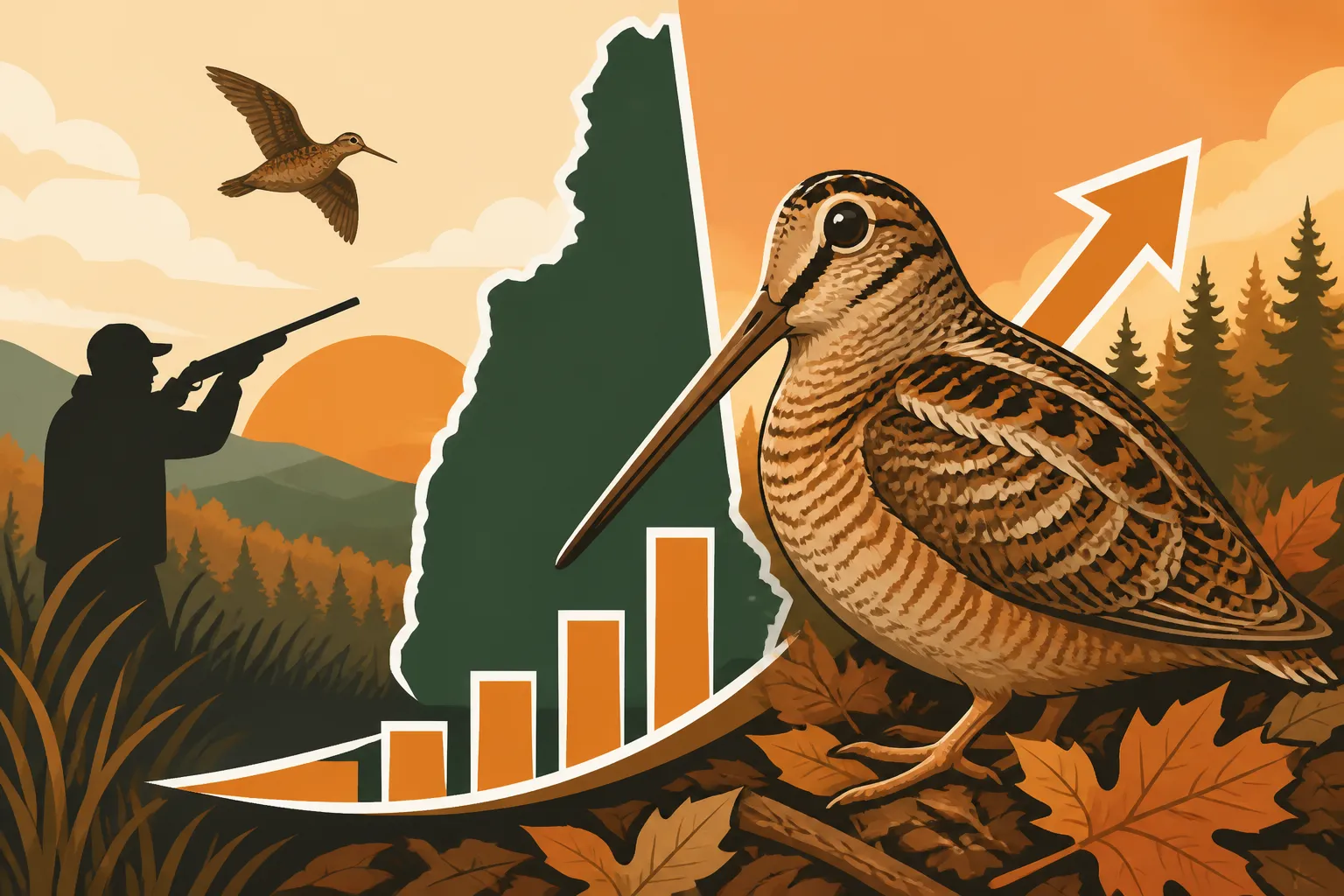
To illustrate how harvest numbers might look, here's a hypothetical view over a few seasons. Please note, these are illustrative figures and do not reflect current or historical data.
| Year | Estimated New Hampshire Woodcock Harvest (Illustrative) | General Trend | Notes |
|---|---|---|---|
| 20XX | 3,800 | Stable | Average migration, good habitat conditions. |
| 20XY | 4,100 | Slight Increase | Strong breeding season up north, favorable early migration. |
| 20XZ | 3,200 | Slight Decrease | Late migration, fewer hunters in field due to other seasons. |
| 20XA | 3,950 | Stable | Recovered hunter effort, mixed migration. |
| 20XB | 3,500 | Slight Decrease | Local habitat changes, lower breeding success. |
Practical Implications for New Hampshire Woodcock Hunters
So, what does all this data mean for you, the hunter who loves stomping through alder runs and young timber looking for these quirky birds? It's not just abstract numbers; it's information that can genuinely enhance your hunting experience and inform your approach to conservation.
Using Harvest Data to Plan Your Hunt
While you won't find specific GPS coordinates in a harvest report, understanding general trends and patterns can be incredibly useful.
- Regional Hotspots: Over time, harvest data, when combined with your own scouting and local knowledge, can hint at which Wildlife Management Units (WMUs) or regions tend to have more consistent woodcock activity. If a particular WMU consistently shows higher harvest numbers compared to others, it might indicate better habitat availability or more consistent migratory staging areas. This doesn't mean other areas are devoid of birds, but it can help you prioritize your scouting efforts.
- Timing Your Efforts: By looking at annual variations, you might pick up on trends related to weather and migration. If historical data suggests that early October generally sees the peak of the woodcock migration through central New Hampshire, you can adjust your hunting schedule to hit the woods when the birds are most likely to be present. Of course, current weather always plays a huge role, but historical averages offer a great baseline.
- Habitat Focus: Harvest numbers, alongside habitat assessments, reinforce the importance of specific cover types. Woodcock thrive in young forests, often associated with beaver activity (like Hunting a Beaver Flowage Edge), alder bottoms, and brushy field edges. Knowing that these habitats are critical helps you focus your scouting on looking for them. Tools like those offered by GoHunt, with their detailed mapping layers, can be invaluable for identifying these prime habitat areas from your couch before you ever hit the field. You can zoom in on topo maps and aerial imagery, pinpointing potential coverts that align with the woodcock's needs.
- Realistic Expectations: Some years will simply be better than others. Understanding that harvest numbers fluctuate due to factors beyond your control can help manage expectations. A "low" harvest year doesn't mean you won't find birds, but it might mean you need to work harder, cover more ground, or adjust your tactics. It also highlights the dedication needed for New Hampshire Ruffed Grouse and Woodcock hunting, as these birds demand a specific habitat focus.
Ethical Considerations and Conservation
As hunters, we are often the most ardent conservationists, and understanding harvest numbers directly ties into that ethic.
- Sustainable Practices: Seeing robust, yet controlled, harvest numbers confirms that hunting, as regulated by the New Hampshire Fish and Game Department, is a sustainable activity that does not threaten the woodcock population. It reinforces our role in a healthy ecosystem, where we act as participants rather than exploiters. This understanding empowers us to continue advocating for and contributing to conservation efforts.
- Habitat Advocacy: Woodcock, like many other forest-dwelling small game animals such as Snowshoe Hare in New Hampshire, are dependent on specific early successional habitats. Declining harvest numbers could be a red flag signaling habitat loss. This data can galvanize hunters to support land management practices that promote young forest growth, participate in conservation organizations, or even engage with local landowners to encourage beneficial habitat creation. Every hunter who steps into the woods, especially those using a robust mapping tool like GoHunt to find and explore areas, becomes an informal ambassador for habitat awareness.
- Reporting Your Harvest: This cannot be stressed enough. The accuracy of harvest numbers relies heavily on honest and timely reporting from hunters. When you participate in the HIP survey or follow specific state reporting requirements, you are directly contributing to the data that guides future management decisions. It’s a small effort that has a massive impact on the long-term health of our game populations and ensures that future generations can enjoy the same opportunities we do. Remember, proper HIP certification is not just a formality; it's a foundational piece of migratory bird management, just like New Hampshire HIP Certification for Bird Hunters explains.
Where to Find Official New Hampshire Woodcock Harvest Information
Accessing the official data is crucial for any hunter who wants to dive deeper into woodcock harvest numbers and broader population trends. The New Hampshire Fish and Game Department is the primary source, and they work diligently to compile and present this information to the public.
Leveraging State Wildlife Agency Resources
The New Hampshire Fish and Game Department's website is your go-to resource for official harvest data. While they may not always have a single, dedicated report solely on woodcock harvest numbers, this information is typically integrated into broader small game or migratory bird harvest summaries.
- Annual Harvest Reports: Look for sections related to "Annual Harvest Reports," "Small Game Harvest," or "Migratory Bird Harvest" within the wildlife or hunting sections of their website. These reports often break down harvest data by species, and sometimes even by region or WMU. You might find charts or tables detailing estimated harvest figures over several years, allowing you to see long-term trends.
- Species Management Plans: Sometimes, more detailed information, including specific surveys and population objectives, can be found within species management plans. While these documents can be quite technical, they offer a deep dive into how the department monitors and manages woodcock populations.
- News Releases and Digests: Keep an eye on their news releases or the annual hunting digest. Important updates or summaries of harvest data might be published there, especially if there are significant changes or trends. For instance, sometimes they might highlight Why New Hampshire Is a Woodcock Migration Corridor and how that impacts harvest success.
Remember that these reports are usually compiled annually, so the most current year's data might not be available until several months after the season has concluded, as it takes time to process all the survey results. Be patient, and check back regularly.
Other Tools for Scouting and Data Analysis
Beyond official state reports, there are several other resources and tools that can help you contextualize and utilize harvest data for your own hunting pursuits.
- Online Mapping Platforms: This is where tools like GoHunt really shine. While they won't give you real-time harvest numbers, platforms that offer detailed satellite imagery, topographical maps, and public/private land boundaries are essential for identifying potential woodcock habitat. You can overlay different map layers to find young forest stands, alder swamps, and wet areas – precisely the spots woodcock favor. When you combine this visual scouting with general harvest trends you've learned, you can pinpoint promising areas more effectively. A good mapping platform allows you to mark potential covers, plan your routes, and understand the terrain.
- Hunting Forums and Communities: Online forums and local hunting communities, while not official data sources, can sometimes offer anecdotal insights into bird numbers and migration timing. Just remember to take personal observations with a grain of salt, as they are localized and subjective. However, they can complement official data by providing a ground-level perspective.
- Academic and Conservation Group Reports: Organizations like the Ruffed Grouse Society & American Woodcock Society often publish research and reports on woodcock populations and habitat. These can offer a broader, scientific perspective that helps you understand the bigger picture beyond New Hampshire's borders. Learning about population cycles, as discussed in New Hampshire Ruffed Grouse Population Cycles, often goes hand-in-hand with woodcock dynamics.
- Federal Reports (USFWS): The U.S. Fish and Wildlife Service (USFWS) oversees migratory bird management nationally. Their website often contains comprehensive harvest reports and population assessments for the American woodcock across all flyways, giving you a wider context for New Hampshire's specific numbers. These reports are often quite detailed and provide the overall picture of the species.
By integrating official state data with advanced mapping tools like GoHunt and your own field experience, you can develop a much more informed and successful strategy for hunting woodcock in New Hampshire.
Disclaimer
This article is for general informational purposes only and does not constitute professional advice. Laws, prices and regulations vary by location and change over time. Consult a qualified professional for guidance on your specific situation.