Fall Turkey Hunting New Hampshire’s Eight WMUs
The crisp New Hampshire autumn air, with its breathtaking foliage and that unmistakable scent of fallen leaves, might feel like a peaceful reprieve after the frantic gobbling of spring turkey season. But for many fall turkey hunters, this tranquility often comes with a new set of frustrations: locating those elusive, scattered flocks and getting them to commit to a call. If you've ever felt like fall turkeys disappear off the face of the earth or simply ignore your best efforts, you're not alone. This comprehensive guide is designed to cut through that confusion, walking you through everything you need to know about successfully hunting fall turkeys across New Hampshire's eight designated Wildlife Management Units (WMUs).
Navigating New Hampshire's Fall Turkey Season Regulations
Before you even think about hitting the woods, understanding the rules and regulations for fall turkey hunting in New Hampshire is absolutely paramount. It’s not just about staying legal; it’s about knowing where you can go, when you can hunt, and what you’re allowed to harvest. The New Hampshire Fish and Game Department has a very specific framework, and it's easy to get turned around if you're not careful.
Understanding the Eight Designated WMUs
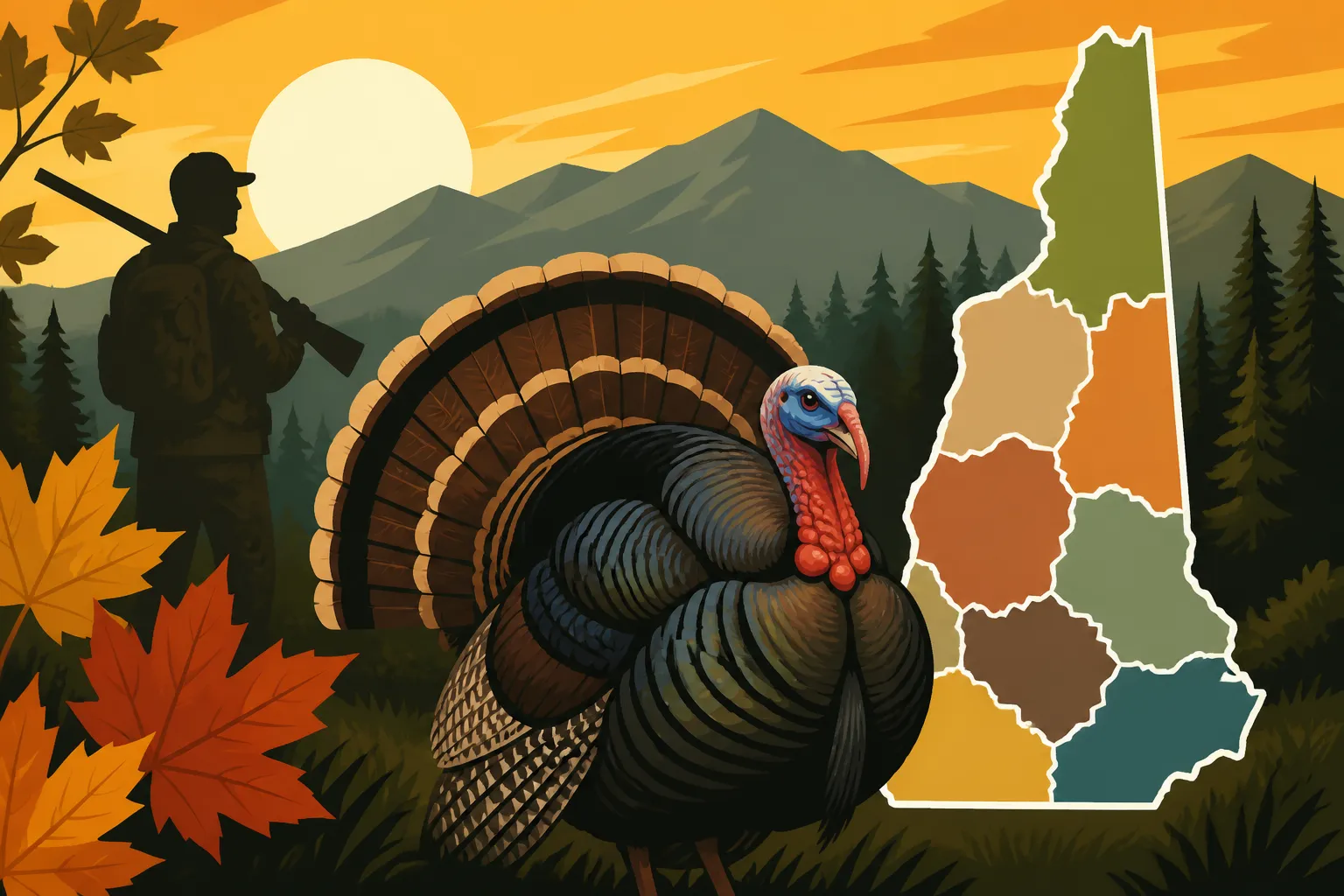
New Hampshire's fall turkey season isn't a statewide free-for-all. It's actually quite localized, focusing on specific Wildlife Management Units where turkey populations are robust enough to support a fall harvest. This targeted approach helps maintain healthy turkey numbers across the state while providing ample opportunity for hunters. Currently, eight WMUs are open for fall turkey hunting: B, D1, D2, G, H1, H2, I1, and I2. Each of these units presents its own unique landscape and challenges, from the rolling hills and agricultural fields of the Merrimack Valley to the more mountainous and timbered terrain in other parts of the state.
It’s crucial to know your WMU boundaries before you even step foot in the woods. Relying on general county lines can lead to big problems, as WMUs often crisscross county borders. A good way to confirm your location is by using a reliable mapping application, like the one offered by GoHunt, which overlays WMU boundaries onto satellite imagery. This level of detail helps prevent accidental trespassing or hunting in a closed WMU, which could ruin your season and lead to hefty fines. Understanding the nuances of New Hampshire's Fall Turkey WMU List is your first step to a successful hunt.
Legal Weapons, Bag Limits, and Season Dates
The weapon of choice for fall turkeys in New Hampshire is a shotgun, and the season is specifically designated as a Hunting the Shotgun-Only Fall Turkey Week. Unlike some states that allow archery during the fall, New Hampshire keeps it straightforward for turkeys in autumn. You'll want a shotgun capable of delivering a tight pattern at typical turkey ranges, often 12-gauge or 20-gauge, shooting high-density turkey loads. While smaller shot sizes like #4, #5, or #6 are common, many fall hunters opt for heavier loads to ensure a clean kill.
The season dates for fall turkey hunting in these WMUs are generally quite short, often a single week in October. It’s a brief window, so planning your time off and scouting efforts to maximize this period is essential. The bag limit is typically one bird of either sex, which means you can harvest a hen or a gobbler. This differs from the spring season, where hunters are often restricted to gobblers or bearded birds. Always double-check the current year's New Hampshire Fish and Game Digest for the exact dates and any last-minute changes to New Hampshire Turkey Season Rules, as these regulations can occasionally be updated.
Licensing, Permits, and Reporting Requirements
Just like any other hunting pursuit in the Granite State, fall turkey hunting requires the proper licensing and permits. You’ll need a valid New Hampshire hunting license, which you can purchase online, through the New Hampshire Fish and Game Department's website, or at authorized vendors. Beyond the general hunting license, you’ll also need to purchase a specific fall turkey permit. This permit will be tied to your hunting license, indicating your authorization to pursue fall turkeys. You can find detailed information on New Hampshire Hunting Licenses and What They Cost on the Fish and Game website.
Once you’ve successfully harvested a turkey, the responsibility doesn't end there. New Hampshire, like many states, requires hunters to register their game. This is a critical step that provides valuable data to wildlife biologists, helping them manage turkey populations effectively. In the past, this meant driving to a physical check station, but now you can often register your bird online or through the Fish and Game app. Be aware of any specific deadlines or methods for New Hampshire Turkey Checking Requirements, as improper or late registration can result in penalties. Always carry proof of your license and permit while hunting.
Pre-Season and In-Season Scouting for Fall Flocks
Fall turkey hunting isn't typically a "set up and call" scenario like spring can be. Fall turkeys are highly mobile, often in larger, family-group flocks, and their patterns are driven primarily by food and security. This makes scouting absolutely critical. If you don't know where the birds are, you're just wandering through the woods hoping for a miracle, and that's a tough way to fill a tag.
Locating Roosts and Primary Food Sources
Before the season even begins, usually in late summer or early fall, you should be out actively looking for signs of turkeys. Their primary drivers are food and roosting sites. In New Hampshire, hard mast crops like acorns, beechnuts, and even apples can be absolute magnets for turkeys. Scout oak ridges, beech stands, and old apple orchards. Look for scratchings under trees, indicating where turkeys have been raking through leaf litter for nuts. If you find significant scratching, it's a good bet birds are regularly feeding there.
Beyond food, finding roosting sites is key. Turkeys typically roost in tall trees, often pines or mature hardwoods, usually on ridges overlooking drainages or near water sources. Early morning and late evening listening sessions can help you pinpoint these locations. If you hear fly-down cackles at dawn or fly-up chirps at dusk, you’re onto something big. You can use mapping applications, like those available on GoHunt, to identify promising areas with mature timber near food sources or water, which can significantly reduce your legwork. Knowing where birds are bedding down and where they're heading to eat gives you a massive advantage.
Reading Sign: Tracks, Droppings, and Dust Bowls
Even if you don't see or hear a turkey, their presence leaves a wealth of information on the forest floor. Learning to "read" this sign is a skill that will serve you well. Turkey tracks are distinctive, showing three forward-pointing toes, usually without a visible rear toe imprint unless the bird was walking uphill or through soft ground. Look for clusters of tracks, indicating a flock, or individual large tracks that might suggest a mature gobbler.
Droppings are another strong indicator. Hen and jake droppings are typically more coiled or J-shaped, while gobbler droppings are larger and more elongated. Fresh droppings will be moist and shiny. Dust bowls—areas where turkeys have ruffled their feathers in dry dirt to rid themselves of parasites—are also excellent indicators of recent activity. They often look like small, shallow depressions in dusty areas or old logging roads. The fresher the sign, the more likely the turkeys are still in the area. Pay attention to these details, especially when you're Scouting New Hampshire Public Land Before Season.
Using Technology for Effective Scouting
In today's hunting world, technology can be a game-changer for scouting, especially on large tracts of New Hampshire public land. Satellite imagery on apps like GoHunt allows you to identify potential food sources, roosting areas, and travel corridors from your couch. You can mark oak flats, old fields, or dense softwood thickets that might serve as thermal cover. These tools are incredibly helpful for Reading Aerial Photos for North Country Deer, and the same principles apply to turkeys.
GPS mapping tools also let you track your own movements, mark sign, and create a comprehensive map of your hunting area. If you find a fresh dust bowl, mark it. If you hear birds fly down from a specific ridge, drop a pin. This builds a picture over time, showing you preferred travel routes, feeding areas, and escape cover. Trail cameras, strategically placed near active scratchings or field edges, can also confirm turkey presence and even show you flock dynamics. Just be sure to check the specific regulations on trail camera use on public lands where you plan to hunt.
The Art of Breaking Up a Fall Flock
When it comes to fall turkeys, one of the most consistently effective tactics is to break up a flock and then call the scattered birds back together. It plays on their strong social instincts and their desire for safety in numbers. Unlike spring gobblers strutting for hens, fall flocks, especially those dominated by hens and poults, are much more vocal and eager to reassemble once separated.
Identifying the Target Flock and Approach Tactics
The first challenge is simply locating a flock. This can happen through scouting, accidentally bumping into them, or hearing their soft clucks and purrs as they feed. Once you know a flock is in an area, your goal is to approach them as discreetly as possible, getting close enough to initiate the scatter without being detected. This often means moving slowly, using terrain features and cover to your advantage. Try to identify the size and composition of the flock. Is it a large group of hens and poults, or a smaller group of jakes? This will influence your calling strategy later.
Successful approach often means using a "run-and-gun" style, moving from one likely area to another, pausing to listen. If you're on public land, be mindful of other hunters. Once you're within range, typically 50-100 yards, you need to be ready to commit to the scatter. This is where the tactic diverges from careful stalking; you're about to make a lot of noise and movement. For more mobile methods, refer to Run-and-Gun Turkey Tactics on Public Land.
The Aggressive Scatter: When and How to Execute
The scatter itself is an aggressive, somewhat counter-intuitive maneuver. The moment you've located a feeding or roosting flock, and you're within striking distance, you charge them! Yell, wave your arms, run towards them – do anything you can to send them flying in every direction. The goal is complete chaos. You want every single bird to fly or run off in a different direction, disoriented and confused. This creates maximum anxiety among the birds, which then sets the stage for your calling efforts. This might sound jarring, but it's a time-tested strategy, often referred to as Breaking Up a Fall Turkey Flock.
The best time for a scatter is often when birds are feeding on the ground, away from dense cover where they can easily disappear as a group. If they're tightly bunched in thick woods, a scatter might be harder to achieve effectively. The key is to commit fully; a half-hearted attempt might just push the flock away without actually breaking them up, making them even warier. Once the birds are scattered, quickly find a concealed spot to set up.
Setting Up Post-Scatter and Waiting for Reassembly
Immediately after scattering the flock, you need to quickly get to a good setup. This means finding a spot with good visibility, a solid backrest (against a tree is ideal), and enough cover to break up your silhouette. Think about where the birds scattered from and where they might try to reassemble. They will typically try to return to the area where they were scattered, or at least to a familiar, safe location nearby.
Now comes the hardest part for many hunters: patience. After the initial commotion, give the woods about 15-30 minutes of silence. The turkeys will be disoriented and wary at first. Then, you can begin your calling. The younger birds (poults) will be the first to want to reassemble, and they'll often start with soft, pleading kee-kees and lost yelps. These are the sounds you'll want to imitate. Resist the urge to call too soon or too loudly; let the woods settle, and then gently begin your reassembly calls. Sometimes, an hour or two might pass before the first bird starts to respond, so be prepared for a long sit.
Calling Strategies for Persuading Fall Turkeys
Fall turkey calling is a world away from the aggressive gobbling and purring of spring. It's about empathy, vulnerability, and mimicking the social distress of separated birds. You're not challenging a tom; you're comforting a lost poult or reuniting a family.
The Power of Kee-Kees and Assembly Yelps
The kee-kee run is perhaps the most iconic and effective call for fall turkeys. It's a series of high-pitched, whistle-like notes, often ending in a soft yelp. This call perfectly imitates a lost poult trying to find its flock. When executed properly, a realistic kee-kee can be incredibly enticing to scattered birds, especially hens and jakes, who have a strong maternal or social instinct to gather. Practice this call with a mouth call or a slate call until it sounds natural and wistful.
Alongside the kee-kee, the assembly yelp is equally crucial. This is a longer, more drawn-out series of yelps, louder and more urgent than a typical spring yelp, designed to signal "Hey, I'm over here! Come find me!" You're essentially taking on the role of the lead hen trying to gather her brood. Use these calls intermittently, varying the volume and cadence. Remember, you're trying to sound like a natural, anxious bird, not a robot. If you're using GoHunt for mapping, you might even consider marking good calling locations, like open hardwood ridges where sound carries well.
Imitating Lost Birds and Incorporating Decoys
When you're calling, put yourself in the mindset of a lost turkey. You're alone, vulnerable, and desperate for company. Your calls should reflect that. Soft clucks and purrs, mixed with the occasional lost yelp or kee-kee, can be very effective. Sometimes, just mimicking the soft "putt" of a contented feeding bird can draw in curious turkeys. Don't overcall; let the silence work for you, and listen intently for subtle responses. Fall turkeys aren't as boisterous as spring birds, so their answers might be very soft.
While less common than in spring, decoys can still have a place in fall turkey hunting, especially if you're set up in a more open area like a field edge. A single hen decoy, or even a couple of jake decoys, can offer a visual reassurance to birds coming into your calls. They provide a focal point, drawing the turkey's attention away from your position. However, be mindful of hunting pressure; if birds are heavily pressured, they might be wary of any decoy. For a detailed discussion on various calling methods, you might find articles on Calling a May Gobbler Off the Roost helpful for understanding basic turkey vocalizations, even though the context is spring.
Adjusting Calls for Different Flock Dynamics and Pressures
Not all fall flocks are created equal, and your calling strategy needs to adapt. A large flock of mostly poults will likely respond quickly and vocally to kee-kees. A smaller, older hen with a few surviving poults might be warier and require softer, more subtle calls. If you scatter a group of jakes, they might come back in together, often clucking and yelping amongst themselves. Learning to identify the "voice" of the turkeys you scattered will help you tailor your calls for better success.
Hunting pressure is another huge factor. On public land, especially in WMUs near population centers, turkeys might be much shyer and less responsive. Here, soft, infrequent calling is usually better than aggressive, loud sequences. The goal is to sound natural and non-threatening. If birds have been scattered multiple times, they might be more reluctant to reassemble in the exact same spot. Be prepared to move and call from different locations if your initial setup isn't producing results. The ability to adapt on the fly is a hallmark of a successful fall turkey hunter.
Hunting Diverse Fall Turkey Habitats
New Hampshire’s landscape offers a rich tapestry of habitats, and fall turkeys utilize many of them throughout the season. Understanding which habitats they prefer at different times, and how to hunt them effectively, is key to consistent success. From the highest ridges to the low-lying agricultural fields, turkeys adapt, and so must you.
Mastering Hardwood Ridges and Mast Crop Areas
In early fall, as soon as acorns and beechnuts start dropping, hardwood ridges become prime real estate for turkeys. These mast crops are a crucial energy source for birds preparing for winter. Turkeys will spend hours scratching through the leaf litter, sometimes leaving huge areas looking like they’ve been rototilled. Identifying these active feeding areas is paramount. Look for mature oak and beech trees on south-facing slopes, which tend to ripen earlier and receive more sunlight.
When hunting these areas, consider a still-hunting approach, slowly moving through the woods, stopping often to listen and glass. Turkeys can be surprisingly quiet when feeding. Once you locate a flock, the "scatter and call" method works exceptionally well here. After scattering, set up on a high point or a natural funnel on the ridge, using the topography to your advantage. This gives you a better vantage point and allows your calls to carry further. Remember that in hardwood timber, your Camo Patterns for New Hampshire Hardwood Cover should blend well with the browns and grays of tree bark and fallen leaves.
Working Field Edges, Ag Fields, and Transition Zones
As the fall progresses, especially after the mast crops have been heavily utilized or winter approaches, turkeys will often shift their focus to agricultural fields. Cut cornfields, hayfields, and even pastures can be magnets for turkeys, offering leftover grains, insects, and easy travel. These open areas also provide excellent visibility for the birds, making them feel secure. Field edges, where the woods meet the open ground, are natural transition zones and prime ambush points.
Hunting these areas often involves setting up a ground blind or finding natural cover along the field edge before daylight. Watch for birds flying down from their roosts into the fields, or moving out of the woods to feed. Decoys can be highly effective in these open settings, giving wary birds a visual to focus on as they approach your calls. When hunting field edges, think about wind direction and sun position to avoid being silhouetted or having your scent carried towards the birds. A well-placed blind and patient calling can yield fantastic results.
Utilizing Softwood Stands and Dense Cover for Ambushes
While hardwoods and fields get a lot of attention, don't overlook the importance of softwood stands and dense cover, especially on colder or windier days. Pine and hemlock thickets provide thermal cover, protecting turkeys from the elements. These areas also offer security, acting as bedding areas or escape routes. Turkeys might roost in taller softwoods or seek shelter in dense undergrowth during midday lulls.
Hunting these areas requires a different approach. Instead of wide-open calling, focus on ambushing birds moving through these thickets. Look for faint game trails or breaks in the cover where birds might travel. If you've scattered a flock into a dense softwood stand, set up on the edge, or along a known travel corridor leading out of it. Your calls should be softer, drawing birds out rather than trying to pull them through impenetrable cover. Patience is key, as turkeys might take a while to emerge from their sanctuary. Consider integrating some knowledge from Hunting a Beaver Flowage Edge if you encounter similar dense, wet cover types where turkeys might seek refuge or food sources like frogs and insects.
Essential Gear for a Successful Fall Turkey Hunt
Having the right gear won't guarantee a turkey, but having the wrong gear can certainly guarantee a miserable and unsuccessful hunt. Fall in New Hampshire can bring a huge range of weather, from warm, sunny days to bitter cold, rain, or even early snow. Being prepared with the right equipment is crucial for comfort, safety, and effectiveness.
Shotgun Selection and Ammunition Choices
As mentioned earlier, a shotgun is the legal weapon for fall turkeys in New Hampshire. Most hunters opt for a 12-gauge, but a 20-gauge can be just as effective, especially for smaller-framed hunters, given the advances in modern turkey loads. The key is to have a gun that patterns well with your chosen ammunition. Pattern testing before the season is non-negotiable. Shoot various brands and shot sizes (like #4, #5, or #6 high-density loads) at paper targets at typical hunting ranges (20, 30, 40 yards) to see what combination gives you the densest, most consistent pattern.
A tight choke is essential for turkey hunting. Full or extra-full chokes are standard, but some hunters opt for specialized turkey chokes that are even tighter. The goal is to deliver as many pellets as possible to the turkey's head and neck for a quick, clean kill. Make sure your shotgun is sighted in and comfortable to shoulder quickly from a seated position, as many fall turkey shots happen when birds suddenly appear.
Camouflage, Layering, and Footwear for Varied Weather
New Hampshire fall weather is notoriously unpredictable. One day it might be 60 degrees and sunny, the next it's 35 degrees with a driving rain or snow flurry. Layering is your best friend. Start with a moisture-wicking base layer, add insulating mid-layers (fleece or synthetic down are great), and top it off with a waterproof and windproof outer shell. This allows you to shed or add layers as conditions change, preventing you from getting too hot and sweaty (which leads to being cold later) or too cold. For specific recommendations, check out Blaze Orange Layering Options, which can be adapted for camouflaged base layers underneath.
Your camouflage pattern should match the dominant habitat you're hunting. In the hardwoods, a pattern with browns, grays, and leafy elements works well. If you're hunting field edges, something with more muted earth tones might be better. Crucially, your footwear needs to be up to the task. Waterproof, comfortable boots with good ankle support are a must for navigating New Hampshire's often rugged and wet terrain. Insulated boots are a blessing for cold, static sits. Don't forget a warm hat and gloves, even on seemingly mild days, as cold extremities can quickly ruin a hunt.
Calls, Optics, and Navigational Tools
A selection of calls is essential. A mouth call (diaphragm call) is versatile, allowing you to produce kee-kees, yelps, clucks, and purrs hands-free. A slate call or box call can add realism and variety, especially for louder assembly yelps that carry well. Practice with all your calls until you can make realistic turkey sounds without thinking. Carry a few different calls in case one gets wet or fails.
Optics can be very helpful for spotting subtle turkey movements in the woods or identifying birds at a distance in open fields. A good pair of 8x or 10x binoculars will serve you well. A rangefinder is also a smart addition, helping you accurately judge distances to decoys or potential shooting lanes. For navigation, a reliable GPS unit or a smartphone app like GoHunt with downloaded offline maps is invaluable, especially on unfamiliar public land or in thick cover. There's nothing worse than getting turned around, especially when chasing scattered birds. Make sure your phone is charged or carry a power bank, and consider a Best Headlamp for a Pre-Dawn Granite Climb for those early morning walks to your setup or tracking a bird after dark.
Ethical Considerations and Safety in the Fall Woods
Hunting is a privilege, and with that comes a profound responsibility for safety, ethics, and respect for the game and fellow outdoorsmen. These principles are especially important when hunting fall turkeys, as the season often overlaps with other hunting activities, and the tactics can be more dynamic.
Adhering to Blaze Orange Requirements
One of the most critical safety rules in New Hampshire during certain hunting seasons is the requirement for blaze orange. While there are some nuances, generally, during the firearms deer season and sometimes during the muzzleloader season, hunters are required to wear a certain amount of blaze orange. The fall turkey season often overlaps with these seasons, particularly the muzzleloader and potentially the early firearms deer season in some WMUs. Always consult the current New Hampshire Fish and Game Digest to confirm if blaze orange is required during the specific fall turkey week you're hunting. Even if it's not strictly mandated, wearing blaze orange or blaze pink (which is also legal in NH) can be a smart choice for visibility, especially if you're hunting public land where other hunters might be present.
When you're trying to scatter a flock, you're making noise and movement, which is unusual for a hunter. If you decide to wear blaze orange, make sure it's visible from all directions. This isn't just about protecting yourself; it's about being seen by other hunters and avoiding any potential accidents. When using the scatter method, for example, once the turkeys are gone and you're settling in to call, consider your visibility and ensure you're as conspicuous as legally required and safely prudent. Knowing the specific New Hampshire Hunter Education Requirements also reinforces the importance of safe hunting practices.
Shot Placement and Responsible Hunting Practices
Ethical hunting demands a clean, humane kill. For turkeys, this means aiming for the head and neck. A turkey's body is incredibly resilient, and a shot to the vitals (lungs/heart) through the thick feathers and muscle can be difficult to achieve and often results in a wounded bird. The head and neck, however, are vulnerable and offer a high probability of a quick, clean harvest. This is why pattern testing your shotgun is so important; you need a dense pattern that covers the turkey's head and neck area at your maximum effective range.
Resist the urge to take a shot beyond your effective range or at a running bird. If a turkey is moving quickly, wait for it to stop or try to bring it closer with soft calls. Patience and discipline are vital. After the shot, immediately retrieve your bird. Turkeys can sometimes flop around or run a short distance even after a fatal headshot. Always confirm the bird is expired before approaching, and be ready for a follow-up shot if necessary. Leave no doubt.
Understanding Public Land Etiquette and Boundaries
Much of New Hampshire's prime fall turkey hunting exists on public lands, whether it's White Mountain National Forest, state forests, or Wildlife Management Areas. With public land comes shared responsibility. Always be aware of your surroundings and respect other users, whether they are hikers, dog walkers, or other hunters. Loud calling or aggressive tactics near trails can be unsettling to non-hunters. Understanding Public Hunting Land in New Hampshire is critical.
Knowing your property boundaries is also paramount. Use mapping apps like GoHunt to clearly delineate public from private land. Even if you have scattered birds onto private land, you cannot pursue them without permission. Retrieving game from private land without explicit permission is trespassing and illegal. Always get written permission from landowners before hunting their property. Adhering to all regulations, being respectful, and leaving no trace are fundamental tenets of ethical hunting.
Post-Harvest: Field Care, Registration, and Meat Preparation
Congratulations! You've successfully navigated the challenges of fall turkey hunting in New Hampshire and harvested a bird. But the job isn't quite done. Proper field care, timely registration, and thoughtful meat preparation are the final, crucial steps to honor your harvest and ensure delicious meals.
Proper Field Dressing Techniques
As soon as your turkey is down, the clock starts ticking, especially if the weather is mild. Field dressing the bird quickly helps to cool the meat and prevent spoilage. There are a few common methods. Some hunters prefer to simply "gut" the bird on the spot, removing the entrails to allow the body cavity to cool. You can make a cut from the sternum to the vent, reach in, and remove the organs.
Another popular method, especially for those who want to keep the skin on, is to simply pop the bird's crop, which is a pouch in its chest where food is stored, and clean any blood or debris from the shot area. If you plan to pluck the bird whole, keeping the skin intact is essential. If you’re planning to breast out the bird, then you can make incisions along the breast bone and remove the large breast meat sections, leaving the rest of the carcass. Regardless of the method, cool the bird as quickly as possible. If you’re far from your vehicle, consider packing it with snow or ice if available, or simply getting it out of the sun. Many of the principles for handling deer meat, discussed in resources like Best Knife for Field Dressing a Whitetail, can be applied to smaller game like turkeys, just on a smaller scale.
The Importance of Timely Registration
Once you've field dressed your turkey, your next priority is registration. As previously mentioned, New Hampshire requires all harvested turkeys to be reported to the Fish and Game Department. This data is vital for wildlife management, helping biologists track population trends, harvest success rates, and overall herd health. Failure to register your bird within the specified timeframe can lead to fines and loss of hunting privileges.
The process is typically straightforward. You'll need your hunting license and fall turkey permit information. Many states now offer online registration or through a mobile app, making it convenient to report your harvest from the field or shortly after returning home. Double-check the current year's regulations for the exact method and deadline for New Hampshire Turkey Checking Requirements. Don't delay; it's the responsible thing to do.
Preparing Your Harvest for the Table
One of the most rewarding aspects of hunting is enjoying the wild game you've harvested. Fall turkeys offer fantastic lean meat that can be prepared in countless ways. If you've plucked your bird, you can roast it whole, much like a domestic turkey, though wild turkey meat is typically leaner and benefits from brining or basting to prevent drying out.
More often, hunters will breast out their fall turkeys. The breast meat can be sliced into cutlets, pounded thin for schnitzel, or cut into cubes for stews and stir-fries. The legs and thighs, while tougher than the breast, are full of flavor and excellent for slow-cooking methods like braising or confit, where the connective tissues break down. Don't forget the tenderloins, which are delicious pan-fried. Properly cared for, your fall turkey can provide several meals of healthy, organic, and incredibly satisfying wild game. Consider trying some recipes designed for wild game; you'll be amazed at the versatility of fall turkey meat.
New Hampshire Fall Turkey WMU Summary
| WMU (Wildlife Management Unit) | Fall Turkey Hunting Allowed | General Location | Primary Habitat Characteristics | Notes on Hunting Challenges |
|---|---|---|---|---|
| B | Yes | North Country | Mixed forests, higher elevations | Larger tracts of public land, lower turkey density, rugged terrain. |
| D1 | Yes | Lakes Region | Mixed forests, some agriculture, suburban interface | Higher human population density, more fragmented habitat, requires good public land access knowledge. |
| D2 | Yes | Connecticut River Valley | River bottomlands, agricultural fields, hardwoods | Good food sources, but can have high hunting pressure along popular areas. |
| G | Yes | Monadnock Region | Hill country, mixed forests, some farmlands | Moderate turkey density, varied terrain, good mast crops. |
| H1 | Yes | Southern Central | Rolling hills, agriculture, increasing development | Good populations, but private land access can be key. |
| H2 | Yes | Southwestern | Similar to H1, varied terrain, less development | Decent turkey numbers, good mix of woods and fields. |
| I1 | Yes | Merrimack Valley | More developed, significant agricultural influence | Higher hunter density, good food sources in agricultural areas. |
| I2 | Yes | Southeastern | Coastal plain, mixed forests, suburban interface | Fragmented habitat, can be tough to find consistent access. |
Disclaimer
The information provided in this guide is for informational purposes only and is not a substitute for official hunting regulations. Always consult the current New Hampshire Fish and Game Department hunting digest and local ordinances before engaging in any hunting activities. Regulations, season dates, and WMU boundaries can change annually. Hunters are responsible for knowing and adhering to all applicable laws.