Best Headlamp for a Pre-Dawn Granite Climb
There’s nothing quite like the crisp, still air of a New Hampshire morning before the sun has even thought about peeking over the eastern horizon. You're bundled up, the thermos is hot, and the truck is finally parked, but now comes the real challenge: navigating the dark, unforgiving granite terrain to get to your stand or chosen hunting spot. Fumbling with a weak, unreliable light source isn't just frustrating; it can be downright dangerous. This guide will walk you through everything you need to know to pick the best headlamp for those critical pre-dawn granite climbs, ensuring you reach your destination safely and efficiently.
Why Your Headlamp is Crucial for New Hampshire's Pre-Dawn Hunts
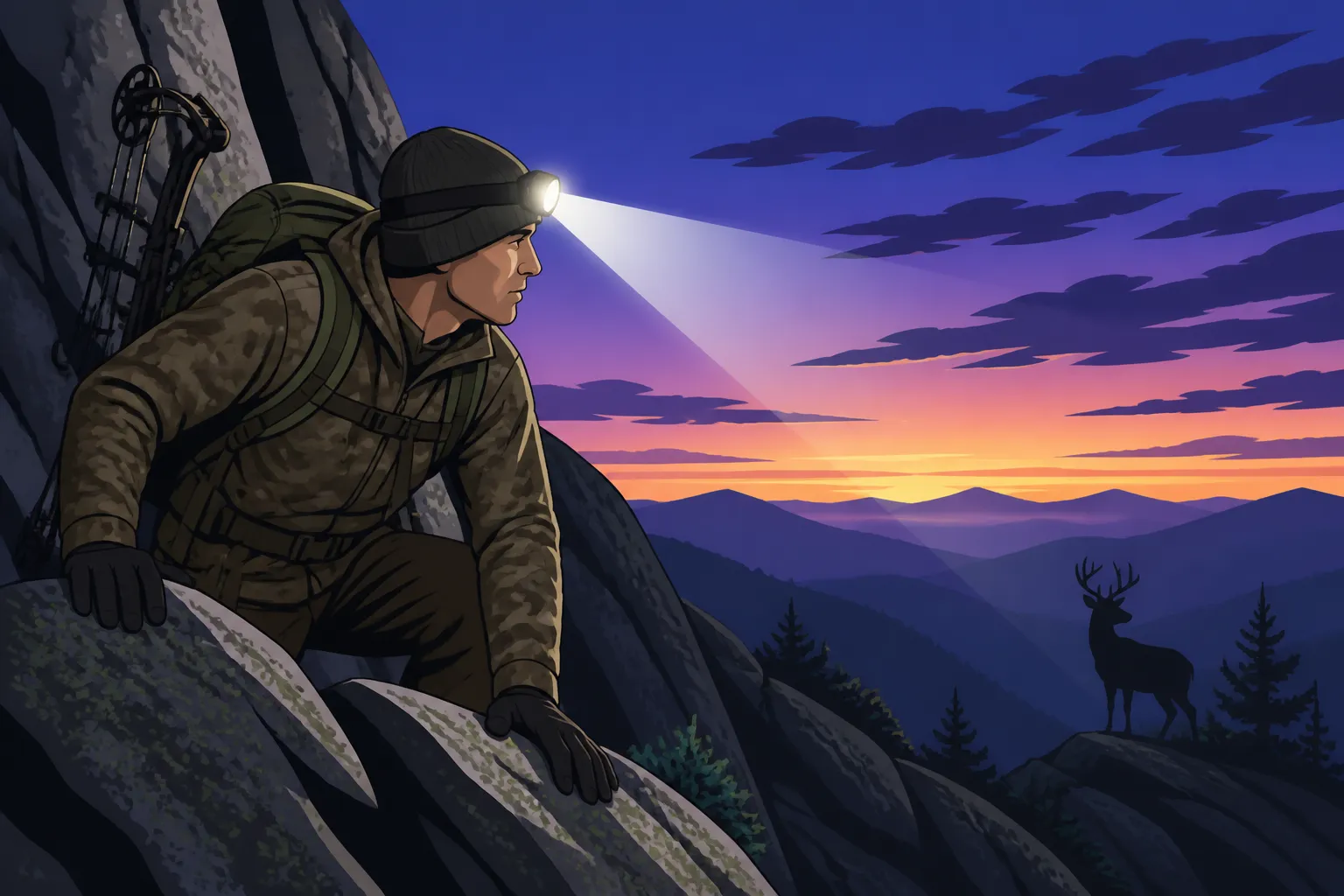
When you're slipping out of the truck at 4:30 AM in the White Mountains, the world is a symphony of darkness, broken only by the crunch of frost under your boots. This isn't just a walk in the park; it's often a climb over slippery rocks, tangled roots, and steep grades. A quality headlamp isn't just a convenience; it's a vital piece of safety equipment that can make or break your hunt, and frankly, your morning.
The Dangers of Dark Terrain
Imagine trying to navigate a boulder-strewn logging road, or worse, an unmarked deer trail through thick spruce, with only the weak glow of your phone's flashlight. You're trying to carry your rifle or bow, a pack full of gear, and maybe a treestand, all while trying not to trip over a hidden root or step into a thigh-deep mud puddle. The risk of a twisted ankle, a nasty fall, or even worse, dropping valuable gear, is incredibly high. New Hampshire's terrain, especially in the more mountainous regions, isn't forgiving. The granite can be slick with dew, frost, or recent rain, and the elevation changes can be abrupt. It's a place where every step needs to be deliberate and confident.
A good headlamp illuminates your path broadly and brightly, allowing you to see obstacles well in advance. It frees up your hands, which is absolutely essential when you're trying to climb over downed trees or scramble up a steep embankment. This hands-free operation drastically reduces your risk of injury and lets you focus on moving stealthily and safely through the woods. Many experienced hunters, including those who rely on tools like onX Layers for New Hampshire Land Status for pre-scouting, understand that physical preparation and the right gear go hand-in-hand for challenging terrain.
Efficiency and Stealth in the Early Hours
Beyond safety, your headlamp plays a huge role in your hunting efficiency and stealth. Every minute you spend fumbling with a poor light source is a minute less you have for setting up your stand, finding the perfect shooting lane, or simply letting the woods settle down around you before legal shooting light. A strong, reliable headlamp allows you to move with purpose and confidence. You can quickly read a map, check your gear, or adjust your layers without wasting precious time.
Furthermore, how you use your headlamp can impact your stealth. A poorly chosen headlamp might blast light everywhere, potentially spooking game that might be moving at first light. A headlamp with adjustable brightness and, crucially, a red light mode, is invaluable. Red light doesn't penetrate as far, but it preserves your night vision and is much less alarming to wildlife. You can use it to check your immediate surroundings or pack up silently without broadcasting your presence across the entire ridge. This kind of attention to detail is something I often see discussed among seasoned hunters who use platforms like GoHunt for their comprehensive gear reviews and tips.
What Makes a Headlamp "Granite-Ready" for New Hampshire Hunters
Not all headlamps are created equal, especially when you consider the specific demands of hunting in New Hampshire. A cheap convenience store headlamp might work for rummaging in your car, but it won't stand up to the rigors of a pre-dawn climb up a granite ridge or a still-hunt through dense timber.
Brightness and Beam Patterns: Seeing What's Ahead
The first thing most people think of with a headlamp is brightness, measured in lumens. While more lumens generally mean a brighter light, it's not the only factor. For New Hampshire's diverse terrain, you'll want a headlamp with a good range of brightness settings, typically from a few lumens for close-up tasks to several hundred lumens for illuminating a trail or distant objects.
- Spot Beam: A focused beam of light, ideal for long-distance visibility. This is crucial when you're trying to pick out a trail marker 50 yards ahead or scan the canopy for a potential roost tree.
- Flood Beam (Wide Beam): A broad, diffused light that illuminates a wider area directly in front of you. This is fantastic for navigating uneven ground, scanning your immediate surroundings for obstacles, or setting up your gear without creating harsh shadows.
- Combination Beam: Many high-quality headlamps offer both, sometimes simultaneously. This provides the best of both worlds, giving you a clear path ahead while also lighting up your peripheral vision.
Look for a headlamp that allows you to easily switch between these modes or adjust intensity. You don't always need maximum brightness, especially when you're trying to be discreet. A hunter should always aim for balance between visibility and avoiding overkill. For instance, when Hunting a Ridge-Top Saddle for Rutting Bucks, you'll want enough light to get there, but then a very dim, stealthy light to settle in.
Durability and Weather Resistance: Built for the Backwoods
New Hampshire weather is notoriously unpredictable. A clear, crisp morning can quickly turn into a drizzly, foggy, or even snowy one. Your headlamp needs to be able to withstand these conditions.
- Impact Resistance: Accidents happen. You might drop your headlamp while climbing, or it might get jostled around in your pack. Look for models with a robust casing, often made from durable plastics or even aluminum, that can handle a fall onto granite.
- Water Resistance (IPX Rating): This is critical. An IPX4 rating means it can withstand splashes from any direction, which is generally sufficient for light rain or mist. An IPX7 rating means it can be submerged in water up to 1 meter for 30 minutes, offering superior protection against heavy downpours or accidental drops into a stream. For serious backcountry hunts or any wet-weather outing, aiming for IPX7 or IPX8 provides peace of mind. Many serious hunters check these specs rigorously, often consulting gear guides from sources like GoHunt to ensure their equipment can handle the elements.
Ease of Use and Comfort: When Gloves Are On
Think about how you'll be interacting with your headlamp in the dark, often with numb fingers or heavy gloves.
- Large, Responsive Buttons: Small, finicky buttons are a nightmare in cold weather or when wearing gloves. Look for headlamps with generously sized, tactile buttons that are easy to press and differentiate by feel.
- Adjustable Strap and Ergonomics: A comfortable headlamp stays put without digging into your head. A wide, adjustable elastic strap is key. Some models even offer an over-the-top strap for extra stability, which can be a godsend when you're moving fast or wearing a hat. The lamp itself should be lightweight and balanced, so it doesn't bounce or pull down on your forehead.
- Red Light Mode: We touched on this for stealth, but it's also excellent for preserving your natural night vision. Switching to a red light when you need to check your watch, grab something from your pack, or talk to a hunting partner allows your eyes to quickly re-acclimate to the dark once it's off, unlike white light which can temporarily blind you.
Navigating Power: Battery Types and Management in the New Hampshire Cold
The single biggest complaint most hunters have about any electronic gear in the cold is battery life. Nothing is worse than having your headlamp flicker and die halfway up a mountain, leaving you truly in the dark. Understanding battery types and proper management is paramount.
Alkaline vs. Lithium vs. Rechargeable: The Cold Hard Facts
Each battery type has its pros and cons, especially when subjected to New Hampshire's often frigid pre-dawn temperatures.
| Battery Type | Cold Weather Performance | Cost | Rechargeable | Shelf Life | Environmental Impact |
|---|---|---|---|---|---|
| Alkaline (AAA/AA) | Significantly reduced capacity and voltage in cold. | Low | No | Good | High, frequent disposal |
| Lithium (AA/AAA) | Excellent capacity and stable voltage in cold. | Moderate | Some (Li-ion) | Excellent | Moderate, less disposal |
| Rechargeable (Integrated or 18650) | Good, but can still see some reduction. Varies by battery chemistry. | High initial | Yes | Good, but slowly self-discharges | Low, reusable |
- Alkaline Batteries: These are common and inexpensive, but their performance plummets in cold weather. At freezing temperatures, an alkaline battery might only deliver a fraction of its rated capacity. You'll find yourself burning through them quickly, which isn't practical or environmentally friendly for frequent use.
- Lithium Batteries (non-rechargeable): These are the workhorses for cold weather. They maintain their voltage and capacity much better in low temperatures, making them a superior choice for sustained performance on those bitter New Hampshire mornings. While more expensive than alkaline, their reliability often outweighs the cost for critical gear. I always recommend these for backup power, especially if you're venturing deep into the woods for something like Hunting New Hampshire's Muzzleloader-Only Ten Days.
- Rechargeable Batteries (Li-ion): Many modern headlamps come with integrated rechargeable lithium-ion batteries or use standard 18650 rechargeable cells. These offer excellent performance and save money and waste in the long run. However, even Li-ion batteries can experience some diminished capacity in extreme cold. The key is how you manage them.
Battery Life and Management Strategies
Even with the best batteries, managing your power is essential.
- Carry Spares: This might seem obvious, but it's often overlooked. Always, always, always carry a fresh set of lithium backup batteries (or a fully charged spare rechargeable pack) in a warm pocket close to your body. Keeping them warm helps preserve their charge until you need them. For longer trips or multi-day excursions like Packing for a Nine-Day Moose Hunt, multiple sets of spares are a must.
- Use Low Settings When Possible: Resist the urge to constantly run your headlamp on its brightest setting. Use the lowest effective brightness for the task at hand. A dim red light for packing or moving slowly, a medium flood for walking, and a bright spot only when truly needed will drastically extend your battery life.
- Check Before You Go: Develop a habit of checking your battery levels before every hunt. Most headlamps have a battery indicator, use it! Don't rely on "I think it's probably good."
- External Power Banks: For rechargeable headlamps, a small, durable power bank can be a lifesaver. Keep it charged and warm, and you can top off your headlamp battery between uses or even while on the move, assuming you have a reliable charging cable. GoHunt's gear reviews often highlight headlamps compatible with external charging for extended trips.
Practical Headlamp Strategies for Your Next Big Woods Adventure
Having the best headlamp is only half the battle; knowing how to use it effectively and integrate it into your overall hunting strategy is just as important.
Preserving Night Vision and Stealthy Movement
When you step out of the vehicle and into the inky blackness, your eyes immediately begin to adapt. This "night vision" is precious, and a blast of white light can instantly destroy it, leaving you temporarily blinded when the light is off or dimmed.
- Red Light First: Always start with your headlamp on its red light setting if it has one. Use it for close-up tasks like checking your gear, looking at your map on a GPS and Mapping Apps for New Hampshire Public Land device, or whispering with a partner. This preserves your ability to see subtle shapes and shadows in the ambient low light.
- Aiming Your Beam: Avoid swinging your headlamp wildly. Direct the light only where you need it. If you're walking, aim slightly ahead and down to illuminate your immediate path without casting unnecessary light into the treeline.
- Pre-Dawn Reconnaissance: Before switching on your headlamp, take a moment to let your eyes adjust. Use any ambient light from stars or a distant town to get your bearings. Sometimes, you'll be surprised how much you can see once your eyes are fully adapted, reducing your reliance on artificial light. This is especially true if you've already done your Shed Hunting on New Hampshire Public Land and know the terrain well.
Integrating with Your Gear and Technology
Your headlamp isn't an isolated tool; it's part of a larger system of gear you use for successful hunting.
- Mapping Apps: Many hunters use mapping apps on their phones or dedicated GPS units to navigate to their spots. Your headlamp needs to be bright enough to clearly illuminate your screen, but also have a dim enough setting (preferably red) so that the screen's glow doesn't overwhelm your night vision. Practice using your headlamp in conjunction with your navigation device before your hunt. Setting waypoints in your GoHunt app or other mapping software while under headlamp light at home can help you get comfortable.
- Packing and Setup: Whether you're hanging a treestand, Brushing In a Blind on a Field Edge, or laying out decoys, your headlamp needs to provide consistent, hands-free illumination. Think about how the beam will cast shadows while you work. A flood beam is generally better for setup tasks, allowing you to see your hands and tools clearly.
- Emergency Preparedness: In a worst-case scenario, like getting turned around in the dark or having an unexpected injury, your headlamp can be a beacon. Some headlamps have a strobe or SOS mode, which can be invaluable for signaling for help. Always keep it accessible, even if you're otherwise packed away. This is part of the comprehensive approach to safety when hunting in areas like the White Mountain National Forest Camping Setback Rules where help might be a long way off.
Choosing the right headlamp for those challenging New Hampshire pre-dawn granite climbs means considering brightness, durability, battery life, and ease of use. It's an investment in your safety, efficiency, and ultimately, your hunting success. Don't underestimate the power of a reliable light to guide your way through the darkness and ensure you're ready for first light.
Disclaimer
This article is for general informational purposes only and does not constitute professional advice. Laws, prices and regulations vary by location and change over time. Consult a qualified professional for guidance on your specific situation.