Best Muzzleloader Scope for Timber Shots
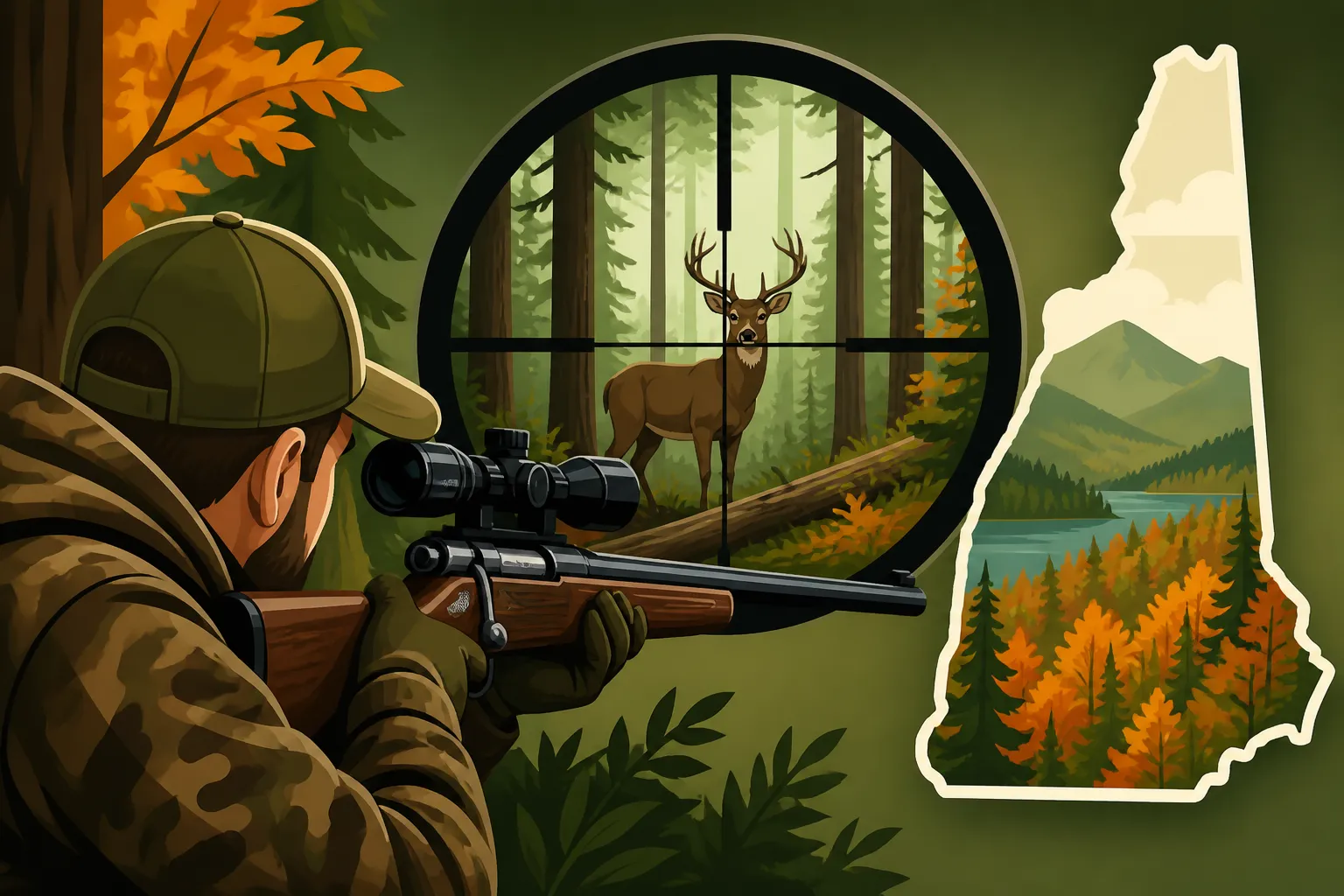
There’s nothing quite like the crack of a muzzleloader in the crisp New Hampshire air, but hunting our dense timber with one presents its own unique set of challenges. When that big buck steps out of the thick stuff, you need every advantage you can get, and having the right scope can make all the difference between a clean shot and a missed opportunity. This guide is all about helping you find that perfect muzzleloader scope designed for those close, fast shots in heavy cover.
The Unique Demands of New Hampshire Timber for Muzzleloaders
Hunting in New Hampshire's timber isn't like sitting over a vast open field. Our woods, from the dense spruce thickets of the North Country to the hardwood ridges of the Monadnock region, demand a specific approach, especially when you're carrying a muzzleloader. You're not typically taking 200-yard shots here; more often, it's a quick reaction at 50 yards or less as a deer slips through the trees.
The primary frustrations often boil down to two things: seeing your target clearly in challenging light, and getting on that target quickly when it appears. A scope that's too powerful or poorly suited for low light will only add to these difficulties, turning what should be an exciting moment into a frustrating blur. It’s all about enhancing your natural ability to react when conditions are far from ideal.
Low Light and Heavy Cover Challenges
Imagine it: the sun is barely peeking over the eastern horizon, or it's dipping fast behind the western ridges. You're deep in a New Hampshire woodlot, maybe a mix of mature hardwoods and thick softwoods, and the canopy overhead is doing its best to block what little light there is. Now, add a layer of fog or a damp, drizzly morning – familiar territory for any Granite State hunter. This is where many scopes fail.
The ability of a scope to gather and transmit light effectively is paramount in these conditions. A cheap scope might look bright enough in broad daylight, but when you're trying to pick out the outline of a deer through the shadows and branches at dawn or dusk, it can quickly become a dark tunnel. This isn't just about identifying legal game; it's about making an ethical shot where you can clearly see your aiming point. The denser the cover, the more critical this light-gathering capability becomes. It’s a frustrating reality that the biggest bucks often move during these low-light periods, making your optics choice even more crucial.
Quick Shots and Target Acquisition
New Hampshire timber hunting with a muzzleloader is rarely a leisurely affair. Deer often materialize suddenly, moving through the underbrush or popping out from behind a stand of pines. When this happens, you don't have time to fiddle with high magnification settings or search for a tiny reticle. You need to acquire your target, shoulder your weapon, and get a clear sight picture in a matter of seconds.
This fast-paced scenario puts a premium on a wide field of view and generous, forgiving eye relief. A scope with a narrow field of view feels like looking through a straw, making it nearly impossible to track a moving deer in tight quarters. Similarly, poor eye relief can lead to "scope bite" – a painful experience with a muzzleloader's recoil if your eye is too close – or make it hard to get a consistent sight picture quickly. Your goal is to be able to raise the muzzleloader, find the deer, and place the crosshairs without hesitation. Many of the shots you take will be within Hunting a Funnel Between Two Woodlots or Hunting a Clear-Cut Regrowth Edge distances.
Key Features to Look for in a Muzzleloader Scope for Timber
When you're out there, hoofing it through the woods during Hunting New Hampshire's Muzzleloader-Only Ten Days, you need gear that's going to stand up to the elements and perform when it counts. A muzzleloader scope for timber isn't about bragging rights on paper; it's about practical performance in real-world scenarios.
Magnification and Field of View
For timber hunting, less is often more when it comes to magnification. While a 3-9x or even a 4-12x might seem versatile, you'll rarely use the higher power settings in dense woods. In fact, cranking up the magnification actually narrows your field of view, making it incredibly difficult to find and track a deer moving through the trees. Imagine trying to follow a squirrel with binoculars at maximum zoom – now picture a deer.
Scopes with a low-end magnification, like a 1-4x, 1.5-5x, or 2-7x, are typically ideal. At 1x or 2x, you get an incredibly wide field of view, almost like looking with your naked eye, which is perfect for snap shooting or quickly picking up a deer that just appeared. Even at the higher end of these ranges (4x, 5x, or 7x), you still have enough magnification to make precise shots at the typical 75-100 yard maximum ranges you'd likely encounter in New Hampshire timber. Some hunters even prefer a fixed power scope, like a straight 4x, for its simplicity and bright, consistent sight picture. This keeps things clear and uncluttered for those critical moments.
Objective Lens and Light Gathering
The objective lens is the lens at the very front of your scope, and its diameter plays a significant role in how much light the scope can gather. Generally, a larger objective lens means more light. For low-light situations in heavy timber, this might sound like you want the biggest objective lens possible – say, a 50mm or even 56mm.
However, there's a practical trade-off. Larger objective lenses make the scope physically bigger and heavier, which can throw off the balance of your muzzleloader and make it more cumbersome to carry through thick brush. They also require higher scope rings, which can affect your cheek weld and overall comfort when aiming. For a muzzleloader in timber, a 32mm to 40mm objective lens is often the sweet spot. This range offers an excellent balance of light gathering for those crucial dawn and dusk hours without making your setup unwieldy. It’s enough to brighten the shadows without creating an overly bulky package that catches on every branch as you still-hunt through the White Mountain National Forest Timber.
Reticle and Eye Relief
The reticle, or crosshairs, is what you use to aim, and its design can either be a huge asset or a major hindrance in timber. Complex reticles with lots of subtensions, while great for long-range ballistic calculations, can become busy and distracting in the heavy cover and low light of New Hampshire woods. For timber hunting, a simple, bold reticle like a standard duplex, or perhaps an illuminated version, is often best.
An illuminated reticle can be a game-changer. In those last minutes of legal shooting light or on a dark, overcast day, a fine black reticle can completely disappear against a dark animal or a shadowed background. A glowing red or green dot or crosshair allows you to maintain a precise aiming point regardless of the ambient light, which is critical for quick target acquisition. Just make sure the illumination is adjustable, as too bright can be as bad as too dim.
Eye relief is another often-overlooked feature, but it's vital, especially with a muzzleloader. Muzzleloaders, by their nature, can have a sharp recoil impulse. Generous eye relief – the distance your eye needs to be from the scope to see a full, clear image – prevents the scope from smacking you in the brow during recoil. Look for scopes with at least 3.5 to 4 inches of eye relief. This provides a margin of safety and allows for a quicker, more forgiving sight picture, which is invaluable when you need to get on target fast and make an accurate shot.
Durability and Weatherproofing
New Hampshire weather is, to put it mildly, unpredictable. One minute it's crisp and clear, the next you're walking through a sleeting drizzle or a dense fog. Your muzzleloader scope needs to be built to withstand these conditions without skipping a beat. There's nothing more frustrating than having your optics fog up internally on a critical morning when you've finally got a deer in front of you.
Look for scopes that are explicitly labeled as waterproof, fog-proof, and shock-proof.
- Waterproof: This usually means the scope is O-ring sealed and nitrogen or argon purged to prevent moisture from entering.
- Fog-proof: The nitrogen or argon purging also prevents internal fogging by removing moist air.
- Shock-proof: This ensures the scope can handle the recoil of a muzzleloader without losing its zero or suffering internal damage, and also stands up to the inevitable bumps and scrapes of being carried through thick timber.
A durable, one-piece tube construction, often made from aircraft-grade aluminum, contributes significantly to a scope's overall ruggedness. After all, you’re not just carrying this scope to a bench rest; you’re lugging it up and down granite ridges, through beaver swamps, and across frozen stream beds. It needs to be tough enough to handle the rigors of our New Hampshire woods.
Practical Considerations for Mounting and Zeroing
Having the best scope in the world won't do you much good if it's not mounted correctly and zeroed for the specific type of hunting you'll be doing. Muzzleloaders have their own peculiarities, and attention to detail here can prevent a lot of headaches in the field. This applies whether you're chasing deer during New Hampshire's Muzzleloader Season Dates or just plinking at the range.
Choosing the Right Mounts and Rings
The scope rings and base are the crucial link between your scope and your muzzleloader. They need to be incredibly robust to handle the recoil of a muzzleloader and maintain zero. Cheap, flimsy rings are a common culprit for accuracy issues, especially with the repeated heavy recoil over time.
For muzzleloaders, many hunters opt for a one-piece base, often a Picatinny or Weaver style, which provides a solid, continuous platform for mounting. This minimizes potential points of failure compared to two separate bases. When choosing rings, look for solid steel or high-quality aluminum construction. Six-screw rings or wider rings offer more clamping surface and better hold than standard four-screw rings. Proper torque on the ring screws is also critical; overtightening can damage the scope tube, while undertightening can allow the scope to shift under recoil. If you’re unsure, a reputable gunsmith can help you choose and install the right rings and base, ensuring a rock-solid foundation for your optic. Don't skimp here; it's a small investment that protects a larger one and ensures accuracy.
Zeroing for Close-to-Mid Range
Forget trying to zero your muzzleloader for 200 yards when you're primarily hunting New Hampshire timber. Most of your shots will be significantly closer, often under 75 yards. Zeroing for these closer ranges makes far more sense and simplifies your aiming points.
A common practice for timber muzzleloader hunting is to zero your scope for 50 or 75 yards. At these distances, your bullet will typically be rising or falling minimally within common timber ranges (say, 25 to 100 yards). For instance, if you zero at 75 yards, you might be an inch or two high at 50 yards and an inch or two low at 100 yards, which is perfectly acceptable for the vital zone of a deer. This keeps your aiming simple: put the crosshairs on the vitals, and you're good. Trying to hold over or under significantly at typical timber distances just introduces more variables and opportunities for error, especially when time is of the essence. Focus on putting your shots where they count, accurately, at the ranges you're most likely to encounter.
Field Use and Practice
Zeroing at the range is one thing, but performing in the field is another. You absolutely need to practice with your muzzleloader and scope in conditions that mimic your actual hunting environment. Head out to the woods, set up targets at various distances (25, 50, 75 yards), and practice quick target acquisition. Simulate those moments when a deer suddenly appears. Can you get the rifle shouldered, find the target, and take a steady shot quickly and effectively?
Pay attention to how your scope performs in low light. Practice early in the morning and late in the afternoon. Get comfortable with your chosen magnification setting (or fixed power) and reticle. Understand your muzzleloader's trajectory with your chosen load. Knowing if you need to aim a hair high or low at 25 or 100 yards because of your 75-yard zero is crucial. This confidence only comes from practice. Also, it's always a good idea to check local regulations and scouting information using resources like GoHunt. This can give you an edge in understanding animal movements and preferred habitats, helping you put yourself in the right place at the right time.
Recommended Scope Types and Applications for New Hampshire
Choosing the right scope is a personal decision, but for New Hampshire timber, there are certainly some types that rise above the rest due to their practical advantages. Remember, the goal isn't to over-scope your muzzleloader, but to enhance your ability to make a clean, ethical shot under challenging conditions.
Variable Power Workhorses
Variable power scopes offer a fantastic balance of versatility and performance for muzzleloader hunting in New Hampshire timber. As discussed, scopes with a low-end magnification are key.
- 1-4x or 1.5-5x: These are perhaps the quintessential timber scopes. At 1x or 1.5x, they offer an extremely wide field of view, almost true 1x on some models, allowing for incredibly fast target acquisition. You can use them almost like a red dot sight for close, fast-moving targets. When you need a little more precision for a 75-yard shot, dialing up to 4x or 5x provides ample magnification without sacrificing too much field of view. They tend to be compact and lightweight, which is a huge bonus when traversing rough terrain.
- 2-7x: Another excellent choice, offering slightly more magnification on the high end if you find yourself occasionally needing to stretch a shot a bit further, while still retaining a very usable 2x on the low end for close quarters. The field of view at 2x is still generous, and 7x is more than enough for any reasonable muzzleloader shot in timber.
- 3-9x (with caution): While very popular, a 3-9x requires a bit more discipline. You'll want to keep it dialed down to 3x, or maybe 4x, most of the time you're actively hunting in thick cover. Only dial up to 9x if you have a stationary target and time to do so, which is rare in timber. It’s better to choose a scope with a lower minimum magnification if you primarily hunt thick woods.
These variable scopes, when paired with a good quality lens and a simple, illuminated reticle, become truly effective tools for the muzzleloader hunter.
Fixed Power Simplicity
Some hunters swear by fixed power scopes, and for good reason. What they lack in versatility, they make up for in simplicity, reliability, and often, optical brightness.
- Fixed 4x or 6x: A fixed 4x scope is a classic timber optic. It's incredibly simple: no dialing, no fumbling with magnification rings. What you see is what you get. This means a consistently bright image and a predictable field of view every single time. With fewer moving parts, fixed power scopes are also generally more robust and less prone to issues. A 6x fixed scope offers a bit more reach if you feel comfortable with that magnification in your primary hunting areas, but 4x is arguably the sweet spot for pure timber work.
The argument for fixed power is often about eliminating variables. In the heat of the moment, the fewer decisions you have to make, the better. You just focus on your target and your shot placement. These scopes are often lighter and more compact than their variable counterparts, adding to the overall balance and handling of your muzzleloader. If you know your maximum shot distance and it falls within the effective range of a fixed 4x or 6x, this can be an outstanding, no-nonsense choice.
The GoHunt Advantage for Research
When you're looking to dive deeper into specific scope characteristics, read reviews from other hunters, or compare different options before making a purchase, a platform like GoHunt can be a valuable resource. While I can't recommend specific models or price points, GoHunt allows you to research the technical specifications of various scopes, see how different reticles are designed, and even explore how certain features might align with specific hunting styles. It's a great way to educate yourself on the nuances of optics and ensure you're making an informed decision based on your individual needs and the unique demands of hunting New Hampshire's diverse terrain. This research can also help you understand why certain brands or types of scopes command the costs they do, helping you budget wisely for your Muzzleloader Gear for New Hampshire's Ten-Day Season.
When you're out there during New Hampshire's November Firearms Deer Season or even during the special New Hampshire's Muzzleloader-Only Ten Days, having confidence in your gear is paramount. The right muzzleloader scope, specifically chosen for the timber, ensures that when that moment of truth arrives, your optics are an asset, not an obstacle.
| Feature | Ideal for Timber Muzzleloader Hunting | Why It Matters |
|---|---|---|
| Magnification | 1-4x, 1.5-5x, 2-7x (variable) or 4x (fixed) | Wide field of view for quick target acquisition; lower power for close shots |
| Objective Lens | 32mm – 40mm | Balances light gathering with compact size; avoids bulk in dense cover |
| Reticle | Simple Duplex, Illuminated Dot/Cross | Easy to see in low light/heavy cover; uncluttered sight picture |
| Eye Relief | 3.5 inches or more | Prevents "scope bite" from muzzleloader recoil; faster sight picture |
| Durability | Waterproof, Fog-proof, Shock-proof | Withstands New Hampshire weather and muzzleloader recoil; maintains zero |
| Mounting | Robust, one-piece base, quality rings | Ensures scope holds zero under heavy recoil; provides a stable platform |
| Zeroing Range | 50-75 yards | Optimized for typical timber shot distances; simplifies aiming points |
Disclaimer
This article is for general informational purposes only and does not constitute professional advice. Laws, prices and regulations vary by location and change over time. Consult a qualified professional for guidance on your specific situation.