Hunting a Clear-Cut Regrowth Edge
There's nothing quite as frustrating as scouting for deer, seeing all the classic sign in mature timber, and then having those elusive New Hampshire whitetails seem to vanish come opening day. Often, hunters overlook the hidden gems right under their noses: the dense, seemingly impenetrable world of a clear-cut regrowth edge. This guide will walk you through how to unlock the potential of these overlooked areas, helping you effectively hunt the thick cover and abundant food sources they provide for deer throughout the Granite State.
Understanding Clear-Cuts and Deer Behavior in New Hampshire
Clear-cuts often get a bad rap for being unsightly, but from a deer hunting perspective, they are absolute goldmines. These areas, once mature timber, have been harvested, allowing sunlight to flood the forest floor and ignite a burst of new growth. For a deer, it’s like a five-star buffet combined with a fortress.
The Dynamics of Clear-Cut Regrowth
When an area is clear-cut in New Hampshire, the immediate aftermath can look pretty desolate – just stumps and exposed earth. But nature, especially in our robust northern forests, doesn't waste time. Within a season or two, you'll start seeing a dense explosion of saplings, shrubs, and herbaceous plants. Think about species like red maple, aspen, birch, and a host of berry bushes like blackberry and raspberry. These aren't just pretty plants; they are prime browse for whitetails.
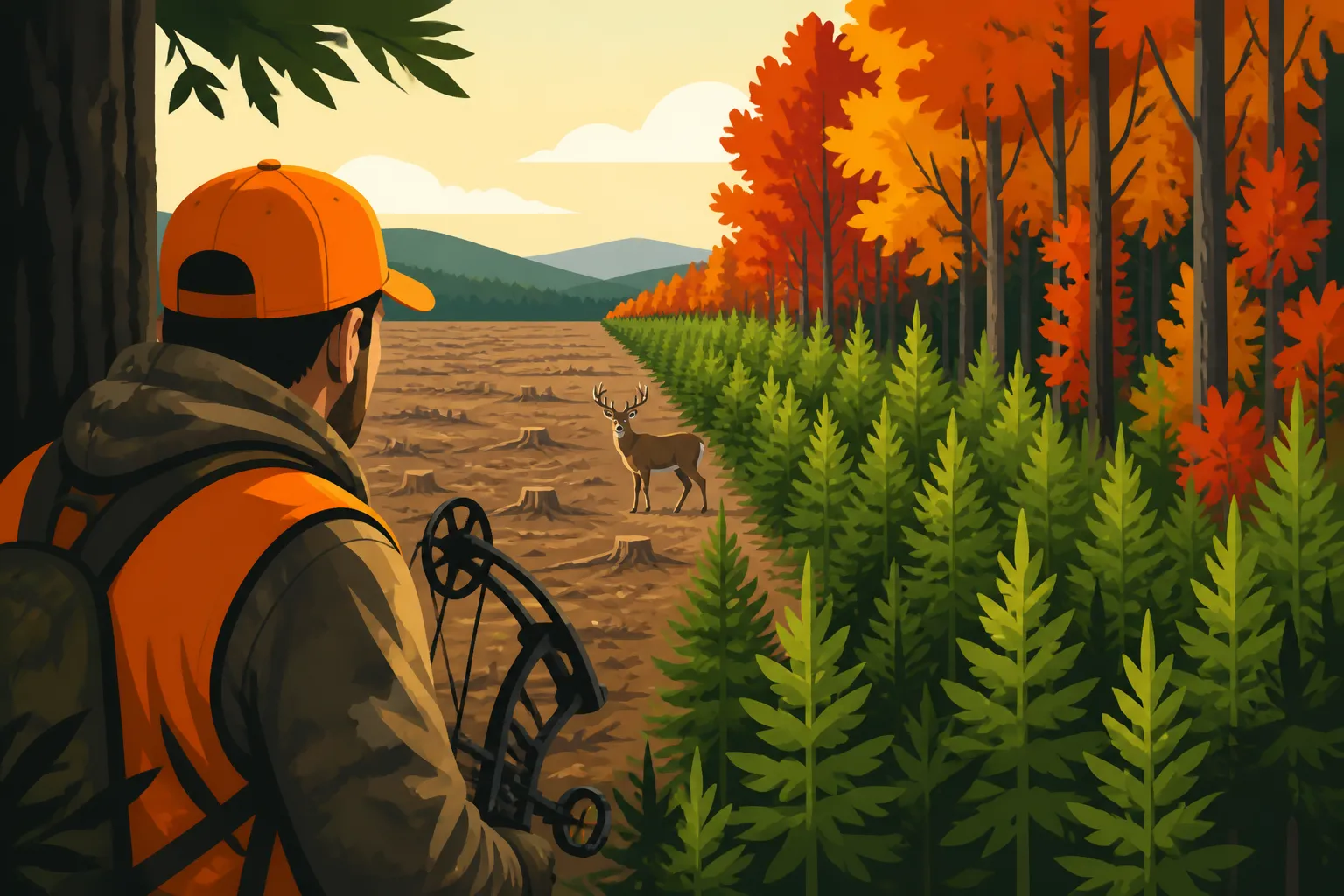
As the years progress, this regrowth transitions. In the first few years, it's mostly low-lying forage. After about 3-7 years, it becomes a tangle of young trees and thick underbrush, creating incredible security cover. This is the sweet spot for hunting. The canopy isn't fully closed yet, so sunlight still reaches the ground, fostering continued browse, but the height and density offer perfect bedding and escape routes. Further along, around 10-15 years, the saplings grow into poles, and the understory starts to thin out as the canopy closes, making it less appealing for bedding but still offering travel corridors. Understanding these stages is crucial because deer use them differently, depending on how far along the regrowth is.
Why Deer Gravitate Towards These Edges
Deer are survival machines, and clear-cut edges provide the trifecta they crave: food, cover, and security. The abundant new growth is a smorgasbord of nutrient-rich browse that mature timber simply can't offer. In New Hampshire, where food sources can vary greatly by season and region, these areas are consistently reliable. Whether it’s succulent new shoots in spring and summer, or the persistent twigs and bark in fall and winter, clear-cuts provide.
Beyond food, the sheer density of the regrowth offers unparalleled thermal and security cover. A deer can disappear into a young clear-cut and be practically invisible, making it a favored bedding area. During harsh New Hampshire winters, this dense cover also traps snow, insulating them from biting winds and extreme cold. They can bed down in the thick stuff, feeling safe, and then easily slip out to the adjacent mature timber or other food sources. These edges often become natural travel corridors too, connecting feeding areas inside the clear-cut with external water sources or larger blocks of timber. They're basically highways and hideouts all rolled into one. You might even find where New Hampshire bucks bed in thick cover by carefully observing these edges.
Scouting and Locating Productive Clear-Cut Edges
Finding the right clear-cut isn't just about spotting a patch of young trees; it's about understanding how deer use the terrain around it. Effective scouting combines digital tools with good old-fashioned boots-on-the-ground detective work.
Reading Topographic Maps and Aerial Imagery
Before you even step foot in the woods, your best friend will be a good mapping application. Tools like the GoHunt app or the New Hampshire Fish and Game app are invaluable. Zoom in and look for areas with distinct changes in forest cover. Clear-cuts appear as lighter green patches, often with sharper, more defined edges compared to the unbroken canopy of mature forests. Don't just look for the clear-cut itself; pay attention to what's around it.
Are there adjacent mature timber stands offering additional cover and perhaps different food sources? Is there a water source nearby, like a stream, beaver flowage, or swamp? Look for topographic features that might funnel deer movement, such as saddles, ridges, or draws that lead into or out of the clear-cut. A clear-cut situated on a ridge might offer thermals that help deer detect predators, while one in a low-lying area might hold more moisture and different vegetation. Consider prevailing wind directions, too, especially if you're thinking about how to set up a stand. Knowing the topography and how it influences wind patterns is key to successful hunting, particularly in areas like those described in Wind and Thermals in Steep Granite Terrain. This digital reconnaissance will help you narrow down your search and maximize your time in the field.
Boots-on-the-Ground Scouting for Sign
Once you've identified potential clear-cuts from your maps, it's time for some serious legwork. Early pre-season scouting is crucial, even when mosquitoes are thick. You're looking for undeniable evidence of deer activity. Start by walking the perimeter of the clear-cut, looking for fresh tracks leading in and out of the thick cover. Pay close attention to any natural funnels or pinch points where deer traffic might be concentrated. You might find a well-worn trail leading from the clear-cut to a water source or a nearby hardwood ridge where acorns might drop.
Next, carefully venture into the edge itself, but be mindful not to disturb potential bedding areas too much. Look for rubs on small saplings, indicating bucks have been marking their territory. Scrapes, particularly during the pre-rut and rut, will tell you that bucks are actively cruising these edges. Most importantly, search for bedding areas – flattened-down patches of grass or leaves, often just inside the thickest cover, offering deer a good view downwind or of their backtrail. Observe what browse species are heavily nipped, revealing their preferred food sources. This detailed scouting is how you confirm if a clear-cut is merely present, or if it's truly a high-traffic, high-value area for deer. You'll be looking for Finding Sign in White Mountain Timber in these regrowth zones.
Effective Hunting Strategies for Clear-Cut Edges
Hunting clear-cuts can be challenging because of the dense cover, but with the right approach and a bit of patience, they can be incredibly rewarding. It's all about playing the wind, timing, and understanding deer movement within these unique habitats.
Stand Placement and Wind Considerations
The dense nature of a clear-cut means your stand placement is paramount. You want to be on the edge of the clear-cut, not deep within it, where visibility becomes too limited. Look for mature trees along the perimeter that offer good elevation and a clear line of sight into the younger growth. Your goal is to intercept deer as they move into or out of the clear-cut, or as they travel along its edge. Consider a setup where you can see a natural opening or a well-used trail within the dense stuff. A good mapping tool like the GoHunt app can also help visualize optimal entry and exit routes that minimize disturbance.
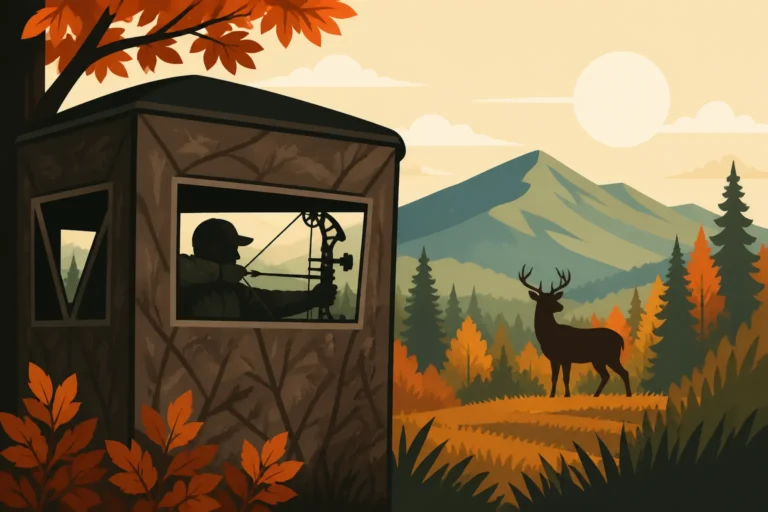
The wind is your absolute top priority here. Deer will often try to approach a feeding or bedding area with the wind in their favor, using their nose to detect danger. In the often undulating terrain of New Hampshire, winds can swirl, especially near valleys and ridges. Always set up so your scent is blowing away from where you expect deer to approach or bed. If you plan to hunt an afternoon sit, consider where the thermals will draw your scent as the air cools and descends. Conversely, for a morning hunt, consider how your scent will rise with the warming air. A wrong wind can bust your hunt before it even begins. Sometimes, a ground blind can offer better concealment and scent control in these thick areas than a treestand, especially if you are concerned about your silhouette against the skyline. Learning to choose between Using a Ground Blind on Public Land or a treestand comes with experience.
Timing Your Hunt for Peak Activity
Deer activity around clear-cut edges tends to peak during specific times of day and phases of the hunting season. Generally, the first and last hours of daylight are prime. In the mornings, deer will be leaving the secure bedding cover of the clear-cut to feed in adjacent areas, or they might already be feeding within the clear-cut itself before retreating deeper into the thicket for the day. In the evenings, they'll be moving out of their bedding areas to feed.
During the early archery season, clear-cuts are excellent because they offer abundant, accessible food sources. As the New Hampshire's November Firearms Deer Season approaches and the rut kicks in, these edges become even hotter. Bucks will cruise the perimeters, scent-checking for does that might be bedding or feeding inside the thick growth. This is when rattling antlers and grunting calls can be particularly effective. A buck might not commit to entering the dense stuff where he feels vulnerable, but he might investigate from the safety of the edge. Knowing Grunt Calls in Mature New Hampshire Hardwoods and Rattling Volume in Thick Softwood Cover for the local conditions can make a huge difference. Later in the season, when other food sources are depleted, the persistent browse in clear-cuts can still draw deer, especially during cold snaps.
Still-Hunting and Driving the Edges
While sitting a stand can be productive, sometimes the best way to hunt a clear-cut edge is to slowly, meticulously still-hunt it. This tactic involves moving at a snail's pace, pausing frequently to scan for movement or the tell-tale horizontal line of a deer's back in the vertical tangle of saplings. You'll want to move into the wind, taking advantage of any slight breeze to carry your scent away and bring you theirs. Focus on the fringes of the thickest cover, slowly working your way around the perimeter, or even along old logging roads that might cut through the area. Pay attention to every detail, from a flick of an ear to a patch of darker brown against the lighter brush. Still-hunting requires immense patience and sharp senses, but it allows you to adapt to deer movement and cover more ground than a static stand. This method is excellent when you're Still-Hunting White Mountain National Forest Timber adjacent to a clear-cut.
If you're hunting with a small group of friends or family, a well-planned deer drive can be highly effective in a clear-cut. Two or three hunters can slowly push through the densest part of the clear-cut, making just enough noise to encourage deer to move, while one or two standers are positioned on the downwind side of the clear-cut's edge, anticipating escape routes. It's crucial that everyone understands the plan, their assigned positions, and most importantly, safety protocols. Visibility is often limited, so bright blaze orange is non-negotiable, and communicating through two-way radios can be incredibly helpful. This is a tactic often employed for Deer Drives With Three or Four Hunters, making thick cover like a clear-cut much more manageable.
Pros and Cons of Hunting Clear-Cut Edges
| Feature | Pros of Hunting Clear-Cut Edges | Cons of Hunting Clear-Cut Edges |
|---|---|---|
| Deer Density | High potential for deer concentration due to abundant food and cover. | Can be unpredictable, as deer move in and out of the thick cover frequently. |
| Food & Cover | Consistent source of browse and dense bedding areas throughout the season. | Limited visibility once deer are deep within the regrowth, making shots challenging. |
| Scouting | Distinct boundaries make them easy to spot on aerial maps, often with visible trails. | Ground scouting can be extremely difficult and noisy due to thick brush. |
| Hunting Method | Ideal for still-hunting, small drives, or strategic stand placement on the perimeter. | Limited opportunities for long-range shots; close-quarters encounters are common. |
| Pressure | Often overlooked by other hunters who prefer more open timber, leading to less pressure. | Can be physically demanding to navigate due to dense, tangled vegetation. |
| Rut Activity | Bucks actively cruise edges during the rut, scent-checking for does, increasing encounter rates. | Swirling winds, especially in hilly terrain, can make scent control very challenging. |
| Game Recovery | Deer often don't run far after a shot due to thick cover, making recovery potentially shorter. | Tracking can be difficult due to heavy brush and limited blood trails in dense vegetation. |
Disclaimer
Hunting is an inherently unpredictable activity with risks involved. Always prioritize safety, understand and adhere to all New Hampshire Fish and Game laws and regulations, and obtain proper licenses and permits before heading into the field. This guide offers general advice; local conditions, animal behavior, and regulations can change. Always scout thoroughly, be aware of your surroundings, and never take a shot without a clear understanding of your target and what lies beyond.