Finding Sign in White Mountain Timber
Trying to find deer in the vast, rugged White Mountain timber can feel like searching for a needle in a haystack, especially when you're staring at miles of seemingly uniform forest. This guide is all about helping you cut through that wilderness noise, teaching you how to read the subtle signs that whitetails leave behind, and giving you the edge you need to locate deer consistently in New Hampshire's challenging terrain.
The Unique Landscape of White Mountain Timber
Hunting in New Hampshire's White Mountain National Forest isn't like hunting agricultural fields or suburban woodlots. This is big country, characterized by steep granite ridges, dense softwood thickets, regenerating clear-cuts, and a seemingly endless expanse of mixed hardwoods. The deer densities are often lower than in the southern parts of the state, and the deer themselves tend to be more transient, adapting to the harsh environment and the scattered food sources. This means that finding their sign requires a more deliberate and observant approach.
Understanding the Terrain's Impact on Deer
The sheer elevation changes and ruggedness of the White Mountains directly influence how deer move and where they spend their time. Deer, like us, prefer the path of least resistance. Look for natural funnels like saddles between ridges, benches on steep hillsides, and the edges of beaver flowages or stream bottoms. These features act as highways, concentrating deer movement and thus, their sign. Wind and thermals in steep granite terrain play a huge role in how deer utilize these areas, often bedding on leeward slopes during the day and moving up and down with the changing air currents at dawn and dusk. Understanding these patterns is key to predicting where sign will be most prevalent.
Furthermore, snow can dramatically alter deer behavior. When heavy snow blankets the higher elevations, deer will often seek out lower elevations and sheltered areas, particularly softwood stands that offer thermal cover and protection from deep drifts. These areas, known as deer wintering yards, can become hotspots for concentrated sign, even outside of hunting season, providing valuable insights for future hunts.
Common Habitat Features and Deer Preferences
While the White Mountains are vast, certain habitat types consistently attract deer. Regenerating clear-cuts and areas impacted by recent logging activity are prime examples. These areas, though often thick and difficult to navigate, provide an abundance of new growth – browse that deer absolutely crave. Look for deer trails weaving through the young saplings and consistent evidence of browsing on tender shoots.
Similarly, stands of mast-producing trees like oak, beech, and even abandoned apple orchards can draw deer in, especially during the fall. A good mast crop can concentrate deer for weeks, making these areas incredibly valuable for scouting. Even small pockets of hemlock or cedar stands, particularly on north-facing slopes, offer critical thermal cover during cold snaps, serving as bedding areas where you'll find beds and fresh droppings. Think about where deer would go to escape the elements or to find a quick, calorie-rich meal; that's where you'll find their sign.
Decoding the Whispers of Whitetail Sign
Once you understand where to look, the next step is learning what to look for. Deer sign is essentially a diary of their daily lives, written in rubs, scrapes, tracks, trails, beds, and browse. Each piece of sign tells a part of the story, and by piecing them together, you can build a comprehensive picture of deer activity in a given area.
Reading Rubs and Scrapes for Buck Activity
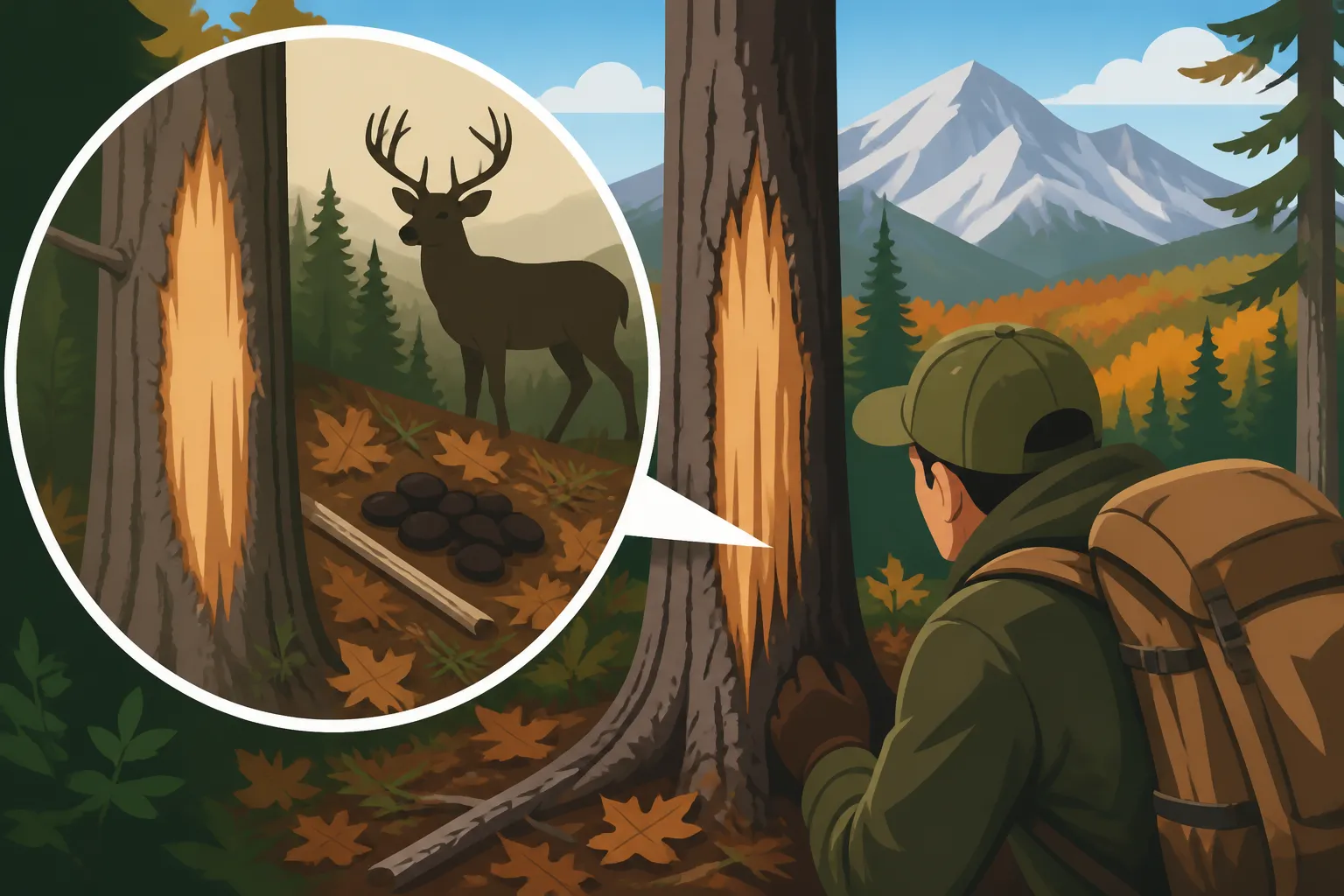
Rubs are probably one of the most exciting pieces of buck sign to find. These are trees or saplings that a buck has rubbed with his antlers, stripping the bark away. The height of the rub can give you an indication of the buck's size, but more importantly, rubs indicate where bucks are traveling and defining their territory. A single rub is interesting, but a "rub line" – a series of rubs leading in a specific direction – is gold. It suggests a travel corridor, often from a bedding area to a feeding area, or along a ridge-top saddle.
Scrapes are another critical indicator, especially as the rut approaches. A scrape is an area on the ground, usually under an overhanging branch, that a buck has pawed clear of leaves and debris, then urinated in. He’ll often chew and rub the overhanging branch (the "licking branch") with his preorbital glands. Scrapes are communication hubs, telling other deer in the area that a buck is present and ready to breed. Active scrapes will be fresh, moist, and often have visible tracks. During the peak of the rut in early-to-mid November, a fresh scrape can indicate a buck is actively patrolling that area. Look for scrapes along travel corridors, especially where cover transitions or funnels exist, such as a logging road or a natural pinch point.
Interpreting Trails, Beds, and Browse
Deer trails are perhaps the most obvious sign, but their interpretation requires nuance. Well-worn, distinct trails indicate consistent, heavy usage. These are often primary travel routes. However, fainter, less-defined trails can also be important, sometimes indicating secondary routes or escape paths. Pay attention to the direction of travel – do they lead to dense bedding cover, or to a potential food source? Look for interlocking trails, often creating a network that can reveal how deer move through a larger area.
Beds are depressions in the leaves or snow where deer have rested. Fresh beds will still hold residual body heat in cold weather, or simply look disturbed. The size and shape of the bed can give you a clue to the deer's size, and often, you'll find droppings nearby. Finding multiple beds in a specific area, especially in thick cover on a leeward slope, points to a preferred bedding location. When you find a bed, look around for an escape route and observe the wind direction relative to the bed; deer almost always bed in a spot where they can smell danger behind them and see it in front.
Browse refers to the woody vegetation that deer eat. When scouting, examine young saplings and bushes for clipped ends or torn leaves. Deer have no upper incisors, so they tend to tear rather than cleanly cut vegetation. Consistent browsing indicates a current food source and an area where deer are actively feeding. This is particularly important for finding late-season food sources when acorns and other mast crops are gone.
Finding Late Season Food Sources
As the season progresses into colder weather and snow begins to fly, finding deer sign becomes more about identifying reliable food sources. The White Mountain timber offers fewer obvious agricultural fields compared to southern New Hampshire, so deer shift their focus to woody browse, persistent soft mast (like frozen apples if you're lucky enough to find an abandoned orchard), and conifer needles. Areas of regenerating timber, where young saplings like maple, birch, and aspen are abundant, become crucial. Look for heavy browsing in these areas.
Additionally, certain evergreens like hemlock, balsam fir, and cedar can provide both food and critical thermal cover. Deer will browse on the needles of these trees, particularly during harsh winters. When Scouting New Hampshire Public Land Before Season or during late season hunts, focus your efforts on checking these evergreen thickets, especially those growing on south-facing slopes which get more sunlight and melt snow faster. The combination of food and shelter will draw deer in, and their concentrated activity will leave behind significant sign.
Seasonal Changes in Sign and Deer Behavior
The story deer sign tells changes dramatically throughout the hunting year. What you look for in September during the early archery season will be different from the clues you seek in November's firearms season or December's muzzleloader season. Understanding these shifts is paramount to effective scouting and hunting.
Early Season Clues to Summer Patterns
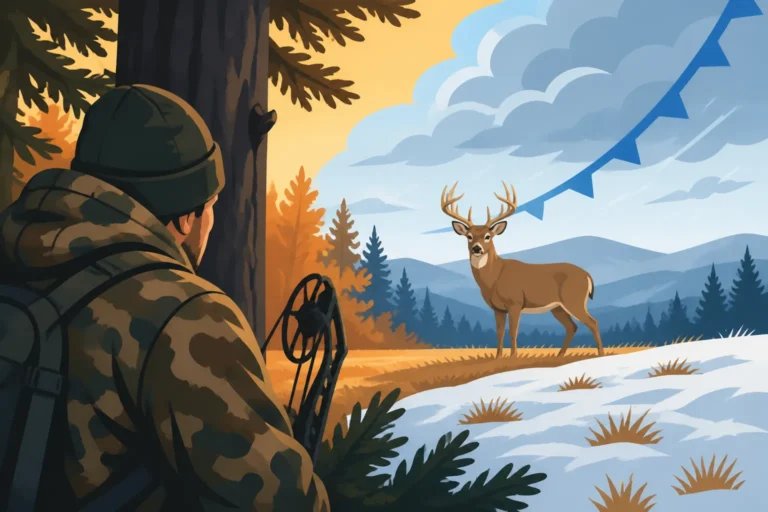
During the early archery season in September and early October, deer patterns are often still tied to summer habits. Bucks might still be in bachelor groups, and their sign will reflect a focus on readily available food sources, often in more open areas or along field edges where they feel secure under the cover of darkness. Rubs might be present, but often smaller, as bucks are just starting to rub the velvet off their antlers and establish dominance. Scrapes are generally non-existent or minimal.
At this time, concentrate on identifying well-used trails leading to and from consistent water sources, lush green browse, and early mast crops. Look for large tracks in soft ground or mud around water holes or seeps, and areas with heavy browsing pressure. Scouting with the New Hampshire Fish and Game App can help identify these areas from aerial photos. If you're still-hunting white Mountain National Forest timber, move slowly and look for these subtle, consistent patterns.
Rut Sign and Peak Activity
The middle of October sees the beginnings of pre-rut, and then, as November rolls in, New Hampshire enters the most exciting phase: the rut. This is when buck sign explodes. Rubs become more numerous and aggressive, often on larger trees. Scrapes, both primary and secondary, will appear in high-traffic areas and along travel corridors, and they'll be actively worked by bucks. This is the time to really focus on Reading a Ridge-Top Saddle for Rutting Bucks or looking for scrape lines along a logging road.
During this period, deer activity is less predictable throughout the day, as bucks are constantly on the move searching for does. The sign you find will reflect this intense activity, offering clear indicators of buck presence. You’ll see more distinct tracks, especially larger ones from mature bucks, as they cover more ground. This is also a great time to implement tactics like Rattling Volume in Thick Softwood Cover or using grunt calls in mature New Hampshire hardwoods. Pay close attention to these rut-specific signs to position yourself for success.
Late Season Scarcity and Wintering Yards
As November turns to December and the muzzleloader season unfolds, the landscape transforms, and so does the deer sign. The rut has largely wound down, and deer are focused almost exclusively on feeding to replenish energy reserves and find shelter from the increasingly harsh weather. Fresh rubs and scrapes become much rarer, and if present, are usually residual from the rut.
Now, your focus shifts to finding Late-Season Food Sources for New Hampshire Whitetails and thermal cover. Look for heavily browsed areas in regenerating clear-cuts or specific stands of evergreens. Tracks in fresh snow become invaluable, revealing exactly where deer are moving and bedding. Deer will often yard up in dense softwood thickets, particularly if snow depths become significant. Finding these "deer yards" – areas with numerous beds, concentrated droppings, and heavily browsed vegetation – is a critical late-season scouting strategy. Remember that deer are trying to conserve energy, so their movements will be more deliberate and predictable, often along established travel routes between food and cover.
Advanced Scouting and Hunting Strategies
Just finding sign isn't enough; you need to know how to interpret it and use it to your advantage. Effective scouting, whether during the off-season or just before a hunt, is about building a comprehensive understanding of deer movement in your chosen area.
Leveraging Technology for Efficient Scouting
In today's hunting world, technology can be a huge asset in the White Mountain timber. Digital mapping applications, like GoHunt, allow you to overlay topographical maps, aerial imagery, public land boundaries, and even historical harvest data. This lets you identify potential pinch points, saddles, benches, and thickets from the comfort of your home. Before heading into the timber, take time with a tool like GoHunt to analyze aerial imagery and topographical maps, marking potential areas of interest where you anticipate finding sign.
When you're actually in the woods, a GPS or a mapping app on your phone (download offline maps because cell service can be spotty) is invaluable for marking every piece of sign you find. Pin dropped rubs, scrapes, beds, heavily used trails, and specific food sources. Over time, these pins will create a "sign map" that reveals consistent patterns of deer movement, helping you to narrow down your hunting efforts. This data-driven approach, especially when planning a long-term strategy for Bowhunting New Hampshire's Long Archery Season or Muzzleloader Deer Hunting in New Hampshire, can drastically increase your efficiency.
Still-Hunting and Stand Placement Based on Sign
Once you’ve done your scouting homework and identified areas with good sign, the real work begins. If you prefer to still-hunt, move incredibly slowly and deliberately, taking a few steps then stopping to scan for subtle clues. Your eyes should constantly be searching not just for fresh sign on the ground, but for rubs on trees, disturbed leaves, or the horizontal lines of a deer's back in the thick underbrush. When you encounter fresh sign, slow down even more, dissecting the area for the next clue. Remember that you're hunting in their living room, so minimize your impact and maximize your observation.
For stand hunters, the sign you've found is critical for optimal stand placement. If you've identified a rub line or a series of active scrapes, consider hanging a stand along that travel corridor, preferably downwind of the anticipated deer movement. If you've found a consistent bedding area and a nearby food source, position your stand between the two, aiming to intercept deer as they transition during low-light hours. Always consider wind direction when hanging a stand, and have multiple stand locations or a mobile setup to adapt to changing conditions. Hanging a Stand on a Granite Ridge, for example, requires careful consideration of thermals, which often pull scent uphill in the morning and downhill in the evening. Matching your entry and exit routes to avoid blowing your scent into core areas is just as important as the sign itself.
Remember, finding sign in the vast White Mountain timber isn't a one-time event; it's an ongoing process of observation, analysis, and adaptation. Each piece of sign is a breadcrumb leading you closer to success.
Disclaimer
Always consult the current New Hampshire Fish and Game Department hunting regulations before heading into the field. Regulations can change annually, and it is the hunter's responsibility to know and follow all applicable laws.