Hunting a Funnel Between Two Woodlots
For many New Hampshire deer hunters, one of the biggest challenges isn't just finding deer, but consistently finding deer in predictable patterns. It can feel like you're always a step behind, endlessly chasing scattered tracks through the woods. But what if there was a way to put yourself right in the path of their natural movement, day after day? This guide is all about mastering the art of hunting funnels between woodlots, a tactic that can dramatically increase your odds of encountering those elusive Granite State whitetails.
Understanding Deer Funnels and Why They Work
Deer, like most wildlife, are creatures of habit, but they're also highly attuned to efficiency and safety. They want to move from point A to point B using the path of least resistance, while simultaneously minimizing their exposure to perceived threats. This combination of factors often forces them into specific travel corridors, which we hunters lovingly call funnels. Understanding these natural tendencies is the first step to unlocking some of the most consistent hunting opportunities New Hampshire has to offer.
What Exactly is a Funnel?
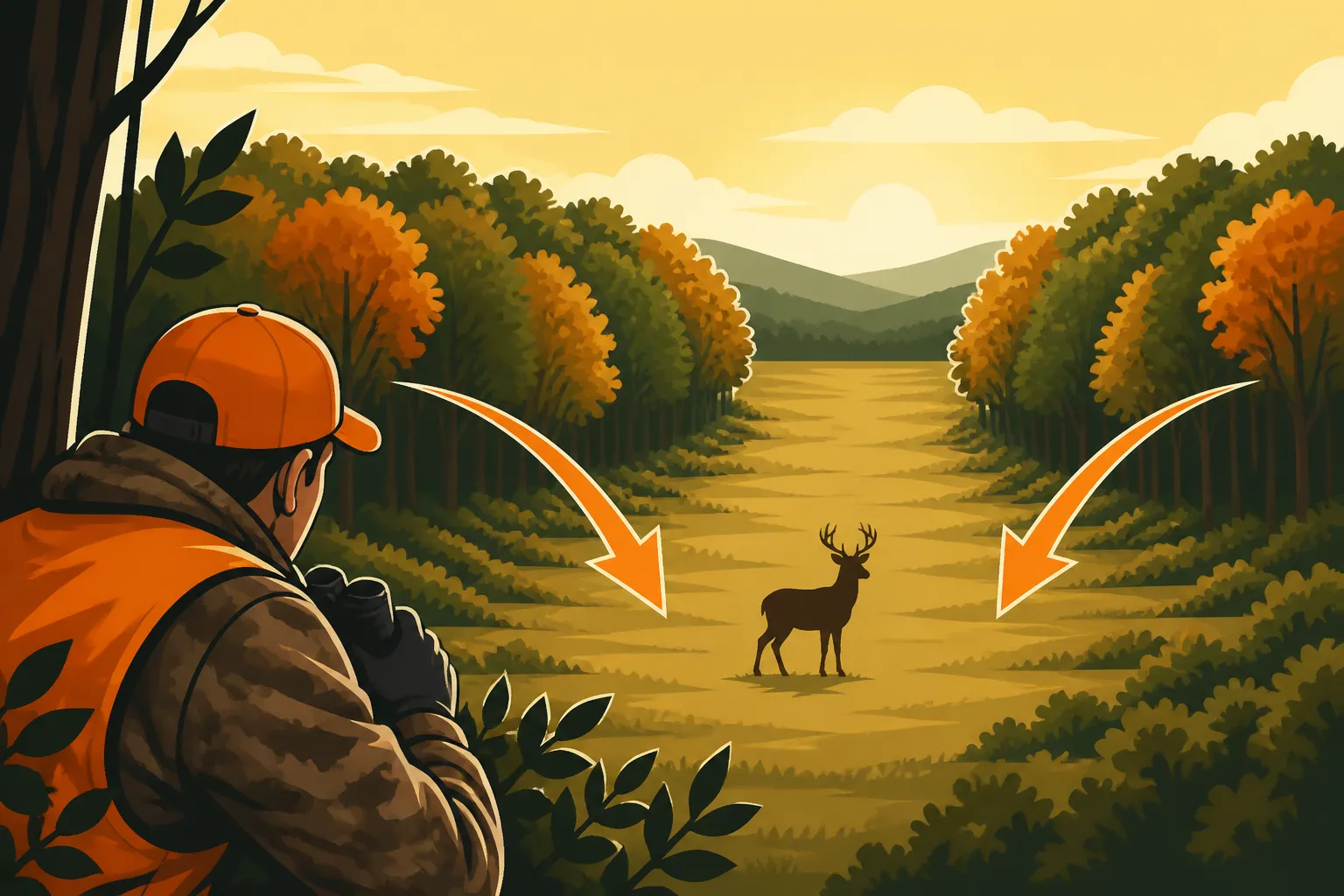
At its core, a funnel is simply a natural or man-made feature that constricts deer movement into a narrower path. Think of a wide-open area where deer could travel in a hundred directions, suddenly narrowing down to just a few. Deer will invariably choose one of those constricted routes. In New Hampshire, with our diverse topography and mixed forests, these funnels can take many forms. They might be a narrow strip of dense softwood cover bordered by open hardwoods, a low saddle between two steep ridges, or even just a subtle pinch point created by two fingers of timber extending into a large field.
Deer use these funnels to feel secure. Instead of traversing wide-open spaces where they're vulnerable, they opt for the cover and defined paths that funnels provide. This is especially true during daylight hours when they are most cautious. They might browse casually through a broader area, but when it comes time to move with purpose – from bedding to feeding, or vice-versa – a funnel often becomes their highway. Learning to recognize these natural bottlenecks is key to intercepting deer during their purposeful movements.
The Strategic Advantage for Hunters
The beauty of hunting a funnel is the predictability it offers. Instead of trying to guess where a deer might cross a vast woodlot, you're setting up where they have to cross. This dramatically reduces the amount of luck involved and puts more emphasis on careful scouting and strategic stand placement. You're no longer hoping a deer passes by; you're waiting for them to use their preferred travel lane.
This predictability translates directly into higher success rates. When you identify a genuine funnel, you're essentially finding a choke point in the deer's highway system. Whether they're moving to feed in a standing corn field, retreating to a cedar swamp for bedding, or cruising for does during the rut, these funnels become high-traffic areas. By setting up correctly, you significantly increase the chances of a deer walking right past your stand or ground blind. It’s about leveraging the deer’s natural desire for efficiency and security against them, turning their predictable patterns into your advantage.
Identifying Productive Funnels in New Hampshire
New Hampshire's landscape is a patchwork of mountains, rolling hills, dense forests, and agricultural pockets, all offering unique opportunities for funnel identification. The key is to train your eye, and your mapping tools, to see the subtle (and sometimes not-so-subtle) features that channel deer movement.
Natural Terrain Features
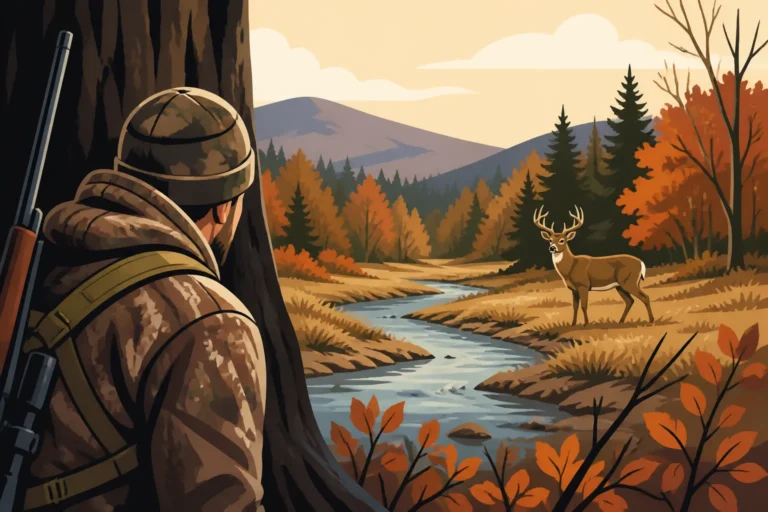
Our rugged New Hampshire terrain is a goldmine for natural funnels. One classic example is a saddle, a low point between two hills or ridges. Deer will almost always opt to cross a saddle rather than expending extra energy to climb over the peaks. These can be particularly effective during the rut when bucks are tirelessly traveling. Similarly, a narrow valley or draw between two higher elevations can act as a natural corridor, especially if it provides cover. Rivers and creeks can also create funnels; deer will often follow the easiest path along a bank or cross at a specific narrow point or shallow bend.
Swamps and wetlands are another major factor. Deer generally avoid slogging through deep water or thick, impassable marshland. Therefore, any dry land that pinches down between two wet areas will become a natural travel route. Imagine a fingers of dry ground that extends into a vast marsh – that finger is a natural funnel. Pay close attention to these areas when you're Reading a White Mountain Deer Yard or exploring new territory; deer will always seek the path of least resistance through otherwise difficult terrain.
Man-Made or Transitional Funnels
Beyond natural topography, human activity and habitat transitions also create powerful funnels. Think about old logging roads that cut through vast timber blocks; deer will use these clear, easy paths, especially if they offer some overhanging cover. The edge of a clear-cut where dense new growth meets mature timber is another classic example, acting as a linear funnel. If you're Hunting a Clear-Cut Regrowth Edge, you're essentially hunting a long, linear funnel. Deer will often travel along the edge of the dense regrowth, feeling secure in the thick cover while still being able to see into the more open timber.
Fencerows, stone walls, and hedgerows are common in New Hampshire's historic agricultural landscapes. While they might seem minor, these linear features offer subtle cover and distinct travel lanes, especially if they connect two larger woodlots or stand between fields. Even a narrow strip of woods separating two active agricultural fields or suburban developments can become a significant funnel. Deer use these thin strips of cover as secure routes to move between food sources and bedding areas without exposing themselves in the open.
Using Technology to Pinpoint Key Areas
In today's hunting world, digital mapping tools are an absolute game-changer for identifying funnels. Applications like GoHunt allow you to overlay satellite imagery with topographical maps, revealing subtle elevation changes, vegetation types, and property lines that might be invisible on the ground. You can zoom in and spot those narrow strips of timber connecting larger woodlots, map out saddles, or visualize how a creek bed might pinch deer movement.
Before you even set foot in the woods, spend time poring over these maps. Look for areas where contours converge, where different habitat types meet, or where obvious breaks in cover occur. Mark potential funnel locations as waypoints. Then, during your actual scouting trips, you can verify these spots on the ground, looking for actual deer sign like tracks, rubs, and scrapes. When Scouting With the New Hampshire Fish and Game App, combine the official data with advanced mapping features from GoHunt to truly understand the landscape. This combination of digital reconnaissance and boots-on-the-ground verification is the most effective way to pinpoint those high-potential funnel locations.
Effective Strategies for Hunting Woodlot Funnels
Once you've identified a promising funnel, the real work begins: setting up your hunt for success. This isn't just about showing up; it's about meticulous planning, considering every detail from your entry to your exit, and adapting to the conditions of the day.
Stand Placement and Wind Direction
This cannot be overstated: wind direction is paramount when hunting a funnel. Deer will almost always travel with the wind in their face or across their body, allowing them to scent-check what's ahead. If your scent is blowing into the funnel, your hunt is over before it begins. Always approach your stand or blind from a direction that keeps your scent out of the anticipated deer travel path. Place your stand or ground blind downwind of where you expect deer to approach, typically 20-30 yards off the main trail, allowing for a good shot angle.
For treestands, elevation is your friend. Getting 15-20 feet up helps your scent dissipate above the deer's nose and gives you a better vantage point for spotting movement in dense cover. When Hanging a Stand on a Granite Ridge that creates a funnel, ensure you’re on the downwind side of the prevailing wind for that time of year. If you're opting for a ground blind, brush it in thoroughly to break up its outline and position it where prevailing winds won't carry your scent into the funnel. Using a Ground Blind on Public Land requires even more attention to detail, as deer on public land are often more wary. Consider the sun's position too; you don't want it in your eyes or glaring off your equipment at prime hunting times.
Timing Your Hunt
Understanding when deer use funnels is just as important as knowing where they are. The most consistent times are usually dawn and dusk, when deer are transitioning between bedding and feeding areas. During these low-light periods, funnels offer a quick, secure route. However, don't overlook midday movement, especially during the rut. Bucks will actively cruise funnels at all hours, scent-checking for does. Hunting the Rut in Early-to-Mid November in a well-defined funnel can be incredibly productive, as bucks are far less cautious and will often travel established pathways.
Weather conditions also play a huge role. Cold fronts often trigger increased deer activity as they feed heavily before or after the weather shifts. Hunting after a cold front can be fantastic, as deer move purposefully. Similarly, the hours immediately following a light rain can be excellent, as the wet ground muffles sound and fresh scent lays well. Keep an eye on the forecast and plan your hunts accordingly, prioritizing those days with optimal conditions.
Scent Control and Stealth
Deer are masters of detecting danger, and their noses are their primary defense. In a funnel, where their movement is concentrated, any foreign scent or unnatural noise will immediately put them on high alert. This makes meticulous scent control absolutely critical. Shower with scent-eliminating soap, use scent-free laundry detergent for your hunting clothes, and store your gear in airtight containers. Dress at your hunting location to minimize human scent transfer from your vehicle.
Beyond scent, stealth is key. Plan your entry and exit routes carefully, ensuring they are quiet and keep you out of the funnel itself. Avoid breaking twigs, rustling leaves, or talking loudly. Use natural cover to approach your stand or blind, moving slowly and deliberately. If a deer approaches, minimize movement. Even the slightest twitch can betray your presence in these confined spaces. The more you blend into the environment – both visually and olfactorily – the better your chances of a close encounter.
Advanced Tactics and Considerations
While the basics of funnel hunting are relatively straightforward, there are always ways to refine your approach and overcome common challenges, especially in heavily hunted areas or when dealing with particularly cagey deer.
Decoys and Calls
In the tight confines of a woodlot funnel, a full-size deer decoy might be overkill and even counterproductive, drawing unwanted attention or spooking wary deer. However, subtle use of calls can be very effective. A soft grunt call can peak a buck's curiosity, pulling him a few extra yards into your shooting lane, especially if he's cruising for does. Grunt Calls in Mature New Hampshire Hardwoods work best when mimicking a lone buck searching. A quick series of doe bleats can also be enticing. When considering Rattling Volume in Thick Softwood Cover, remember that in a funnel, less is often more. You want to sound like two deer sparring nearby, not a full-blown battle. Overly aggressive calling can alarm deer in these close quarters.
Sometimes, a simple "peek-a-boo" approach with a small, lightweight doe or young buck decoy might work, but it requires careful timing and concealment. The goal is to make the deer feel like they're seeing another deer naturally interacting within the funnel, not a static, obviously fake object. Always position any decoy to present a quartering-away shot opportunity.
Dealing with Hunting Pressure
New Hampshire's public lands can see significant hunting pressure, and funnels are often the first places hunters think to set up. This means many prime funnels, especially those close to access points, might become pressured zones. When Hunting Pressure on New Hampshire Public Land becomes an issue, you need to adapt. Look for those "hard-to-reach" funnels that require a longer walk or cross challenging terrain. These often hold less pressured deer.
Another strategy is to identify secondary funnels – slightly less obvious routes that deer might use to avoid primary pressure points. These could be subtle elevation changes or narrow strips of cover that aren't immediately apparent on a map. Sometimes, Finding Ground Others Walk Past involves looking for the funnels within the funnels, or the less-traveled pathways that lead to and from a main funnel. This requires extensive scouting and an understanding of how deer react to human intrusion. Using quiet entry and exit routes is even more critical in pressured areas, as deer quickly learn to associate human presence with danger.
Year-Round Scouting
Funnels aren't static; their effectiveness can change from year to year, or even season to season, based on food sources, water availability, and changes in cover. That's why year-round scouting is essential. Visit your chosen funnels in the spring to see how the cover has changed, or in late summer to check for early sign. Understanding how deer patterns shift throughout the year helps you predict their movement come hunting season.
Trail cameras are invaluable tools for year-round scouting. Place them on rubs or scrapes within or leading into funnels to monitor deer activity. Platforms like GoHunt often offer features to manage and analyze your trail camera data, helping you track deer movement patterns over time. When deciding Where to Hang a Camera on a Logging Road that acts as a funnel, consider putting it near a rub line or a scrape to get the most valuable intel. By continuously monitoring your funnels, you'll stay one step ahead, ready to capitalize on deer movement regardless of the conditions.
Types of Deer Funnels and Their Characteristics
Here's a quick look at common types of funnels you'll encounter in New Hampshire and what makes them effective:
| Funnel Type | Description | Why Deer Use It | Ideal Hunting Conditions | Considerations for Hunters |
|---|---|---|---|---|
| Saddle | Low point between two hills or ridges. | Easiest path to traverse elevated terrain. | Rut, morning/evening transitions, post-cold front. | Wind swirling can be an issue; prioritize wind direction. |
| Pinch Point | Any area where two obstacles (e.g., dense cover, water, fields) force deer | Minimizes exposure in open areas, provides security while moving. | Anytime deer are moving between distinct cover/food sources. | Stand placement requires precision due to tight travel corridor. |
| Creek/River Bank | Narrow strips of dry land along water features. | Follows water for cover, less energy than crossing thick brush. | Morning/evening, late season food searches (acorns near banks). | Approach quietly, be mindful of water flow and noise. |
| Logging Road/Trail | Old roads or well-worn game trails through timber. | Easy travel corridor, often offering overhead cover. | Morning/evening, post-rain, during the rut for cruising bucks. | Can be heavily used by other hunters; scout for less obvious access. |
| Habitat Edge | Border where two distinct habitat types meet (e.g., clear-cut and mature woods). | Security in dense cover, visibility into open areas. | Any daylight movement, especially feeding transitions. | Deer may travel just inside the dense cover; set up for closer shots. |
| Field Corners | The junction of two field edges, often with a finger of woods. | Natural entry/exit point to fields, provides immediate cover. | Evening hunts as deer enter fields, morning as they exit. | Wind can be tricky in open areas; focus on entry/exit routes. |
Disclaimer
Hunting is an inherently dangerous activity. Always prioritize safety, understand and follow all New Hampshire Fish and Game Department regulations, and respect private property. The information provided here is for educational purposes and should not replace proper hunter education and personal responsibility. Conditions in the woods can change rapidly, and you are responsible for your own safety and actions.