Finding Ground Others Walk Past
It's a familiar frustration, isn't it? You spend hours scouting, pouring over maps, and finally hit the woods on opening day only to find truck after truck already parked at every obvious access point. The feeling that all the good spots are taken, or worse, that every deer has been pushed off public land, can be incredibly deflating. But what if I told you there are still incredible pockets of unpressured ground out there, even in heavily hunted states like New Hampshire? This guide is dedicated to helping you develop the skills and mindset needed to find and successfully hunt those hidden gems, the places other hunters simply walk past.
Understanding Hunting Pressure in New Hampshire
The reality of public land hunting is that deer learn quickly. They adapt to human activity, and they instinctively seek out areas where they feel safe. If you're consistently bumping deer or seeing nothing but tracks from other hunters, you're likely hunting areas that are experiencing significant pressure. The key to finding success often lies in understanding why certain areas get hit hard and how deer react to that pressure.
The Allure of Easy Access and Its Downside
Let's be honest, we all love an easy walk. A well-maintained logging road, a clear hiking trail, or a designated parking area close to prime habitat feels inviting. It saves time, energy, and makes the whole experience a bit more comfortable. However, this very convenience is precisely why these areas become hotbeds of human activity. Whether it's the easily accessible trailheads in the White Mountain National Forest or the convenient parking lots at many of New Hampshire's Wildlife Management Areas, hunters flock to these spots because they're easy.
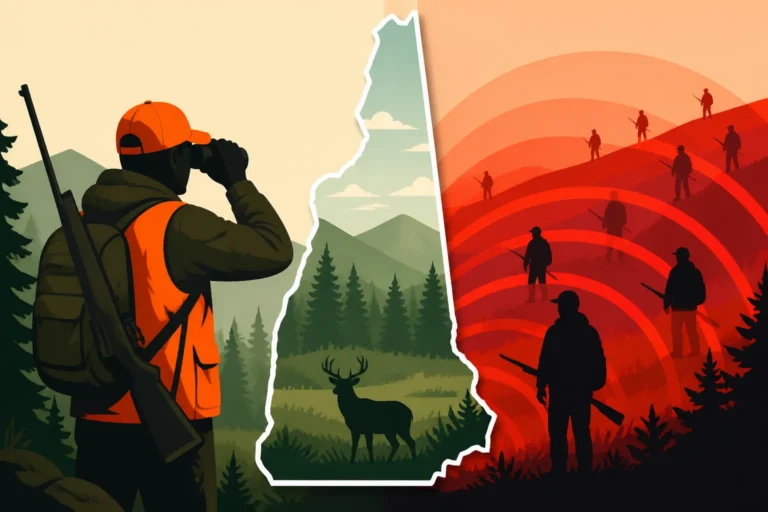
Think about it: most hunters will only venture a certain distance from their vehicle or a defined trail. This creates a "pressure perimeter" around accessible areas. Deer, being smart creatures, quickly learn to avoid these zones during daylight hours, often retreating deeper into cover. While you might find fresh sign along these edges, the chances of encountering a mature buck during legal shooting light in such a spot diminish significantly. They'll move under the cover of darkness, or if they're forced to move during the day, they'll be on high alert and likely pushing through dense security cover, making them incredibly difficult to intercept. The downside of easy access is that it concentrates hunters, which in turn concentrates the deer's avoidance behaviors, making these seemingly "prime" spots less productive than they appear.
How Hunter Behavior Creates Overlooked Areas
It's not just about roads and trails; it's also about human nature and our comfort zones. Many hunters operate under a few unspoken rules. One common one is the "half-mile rule" – the idea that if you walk a half-mile or more from the road, you're getting away from the crowds. While this can sometimes be true, it often just shifts the pressure further into the woods along the most obvious travel corridors. Another "rule" is the "sight-line rule," where hunters tend to avoid areas they can't easily see into or navigate, such as thick stands of blowdowns, dense spruce swamps, or steep, rocky ravines.
We also tend to avoid areas that look "unproductive" or "ugly" to our human eyes. A tangled clear-cut might seem impassable and devoid of game, but for a deer seeking security, it's a perfect sanctuary. The reluctance to cross a small stream, scramble up a truly steep pitch, or push through a dense, thorny thicket is natural, but it's precisely these barriers that create havens for deer. Modern technology, while incredibly helpful, can sometimes contribute to this by leading many hunters to the same spots that look good on a map, creating new pressure points rather than alleviating old ones. The result is vast tracts of less appealing, more difficult-to-access terrain that many hunters simply bypass, inadvertently creating pockets of unpressured deer. This behavioral pattern is the bedrock of our strategy for Finding Ground Others Walk Past.
Identifying Overlooked Terrain and Habitat Features
The first step to hunting overlooked ground is learning to see it. This means shifting your perspective from what looks easy or comfortable to what looks challenging and uninviting to the average hunter. These are the places where deer find refuge.
Embracing Difficult Access Points
To find ground that others walk past, you often have to be willing to walk further or harder than they do. This isn't just about distance; it's about navigating obstacles. Think about those areas that require crossing a beaver flowage, climbing a truly steep, granite-strewn hillside, or pushing through a dense, wet, and muddy swamp. These are natural deterrents for many, but for a determined hunter, they can be gateways to solitude and unpressured deer.
Look for unmaintained logging roads that are overgrown or gated well before the prime hunting spots. Often, these old tracks lead to forgotten corners of the forest. Pay attention to property boundaries on your maps – sometimes a small public parcel is bordered by private land that restricts access, but if you can legally enter from the public side and put in the effort, you might find deer that rarely see human activity. A remote backside of a granite ridge in the White Mountains, or a thick spruce swamp that requires serious effort to traverse, will likely hold deer that feel secure. Remember, deer will always choose security over convenience, and if that means navigating tough terrain, they will. Hunting a Gated Logging Road Beyond the Public Lot can often lead you to these hidden sanctuaries.
Hunting "Unappealing" Habitat
Our human perception of "good" habitat often differs greatly from a deer's. We might prefer open hardwoods with good visibility, but deer, especially mature bucks, often seek out the densest, most difficult-to-navigate cover imaginable. This "unappealing" habitat offers them sanctuary, protection from predators (including hunters), and often a surprising amount of forage.
Think about dense, young clear-cuts with thick, regenerating growth that tears at your clothes, or impenetrable softwood thickets (like spruce or balsam fir) that are so dense you can barely see ten feet in front of you. These spots are often avoided by hunters because they're noisy, difficult to move through, and offer poor visibility for shooting. However, these are precisely the kinds of places where a mature buck will bed during daylight hours. Similarly, the edges of a sprawling beaver flowage, with its tangled mess of downed trees, thick alders, and muddy banks, might seem like a nightmare to navigate, but it offers deer water, cover, and unique food sources. Even steep, north-facing slopes, which can be brutal to climb, often hold deer seeking thermal cover during colder months or escape routes from pressure below. While other hunters might gravitate to the nice, open oak ridges, smart deer are often hunkering down in the seemingly "ugly" spots. Understanding Where New Hampshire Bucks Bed in Thick Cover is paramount to this strategy.
To illustrate the difference in perspective:
| Feature/Condition | Typical Hunter Focus | Overlooked Opportunity | Why it Works |
|---|---|---|---|
| Access | Maintained roads, clear trails, designated lots | Gated logging roads, old stone walls, steep climbs | Less human presence, deer feel secure |
| Terrain | Gentle slopes, open timber, easily walkable | Steep ravines, boulder fields, dense swamps | Natural barriers to human movement, deer escape |
| Cover Type | Open hardwoods, pine plantations | Thick clear-cuts, spruce/fir thickets, blowdowns | Impenetrable security for deer, difficult for hunters |
| Water Features | Crossing open streams, dry ground | Beaver flowages, muddy creek bottoms, wetlands | Avoided by hunters, provides water/food for deer |
| Visibility | Areas with good sight lines for shooting | Areas with limited visibility (thick brush) | Deer prefer dense cover; hunters avoid for shooting |
Leveraging Mapping Tools for Hidden Gems
Before you even step foot in the woods, your best friend for finding overlooked ground is a good mapping application like GoHunt or onX Hunt. These tools allow you to virtually scout vast areas from the comfort of your home, identifying features that might deter other hunters but attract deer.
Start by zooming in on public land parcels in your chosen Wildlife Management Unit (WMU). Look for areas that are a significant distance from known access points or are surrounded by features that create a "buffer" against casual hunting pressure. Use the aerial imagery layer to spot subtle terrain changes – small benches on steep hillsides, saddles between ridges that don't quite show up on a topographical map, or faint lines that indicate an old, abandoned logging road winding deep into the woods. With GoHunt, you can switch between different base maps and overlay layers to get a comprehensive view. Topographical maps are crucial for identifying elevation changes, steepness, and potential funnels created by terrain. Look for drainages, small creeks, or areas where the contour lines are tightly packed – these indicate steep sections that many hunters will avoid.
You can also use the land ownership layers to find small pockets of public land that might be surrounded by private land, making access complicated but not impossible. Sometimes, a long walk along the edge of posted private property will lead you to a pristine corner of public ground that receives little pressure. Pay close attention to subtle changes in forest type, too. A sudden shift from mature hardwoods to a dense patch of conifers might signal a prime bedding area, especially on a north slope offering thermal protection. Learning to interpret these digital clues, like Reading Aerial Photos for North Country Deer, is a skill that directly translates into finding unpressured deer.
Strategies for Hunting Overlooked Ground
Finding these overlooked spots is only half the battle. You need a deliberate strategy for scouting them, approaching them, and hunting them effectively to turn your efforts into success.
The Art of Deep Scouting
Once you've identified potential overlooked areas on your maps using tools like GoHunt, the real work begins: boots-on-the-ground scouting. This isn't just about walking a few hundred yards from the truck; it's about making a dedicated effort to penetrate these difficult areas, long before hunting season opens. Your goal is to confirm what you saw on the map and to find fresh sign that tells you deer are actively using these hidden pockets.
Walk through those thick clear-cuts, scale those steep hillsides, and navigate those tangled beaver flowages. Look for subtle signs that indicate deer movement: old rub lines, faint game trails that barely show up, bedding areas deep within the thickest cover, or droppings that indicate recent activity. Pay attention to how deer are using the terrain to their advantage – where do they cross that steep ravine? How do they enter and exit that dense thicket? Often, the trails will be subtle, almost invisible to the untrained eye, but they'll be there, indicating how deer are moving through their sanctuary. Don't be afraid to dedicate entire scouting trips to a single, challenging square mile. The more you understand the specific movements and habits of deer in these unpressured zones, the better your chances of success. Understanding Finding Sign in White Mountain Timber is crucial during these deep scouting missions.
Adjusting Your Hunting Tactics
Hunting these overlooked areas demands different tactics than a casual sit on a field edge. First and foremost, stealth is paramount. Since these deer are less accustomed to human presence, any noise or unnatural movement will send them fleeing. Approach slowly, deliberately, and with extreme attention to wind and thermals, especially in complex terrain like Wind and Thermals in Steep Granite Terrain.
You'll often find that traditional stand hunting can be challenging in these dense, difficult-to-access areas due to limited shooting lanes or unsuitable trees. This is where still-hunting or using ground blinds becomes incredibly effective. Still-hunting, moving slowly and deliberately through the cover, pausing frequently to observe and listen, allows you to cover ground while remaining adaptable. When you encounter fresh sign or a promising funnel, you can set up quickly. If you prefer to sit, consider Using a Ground Blind on Public Land. Portable ground blinds are often more versatile in thick cover than treestands, allowing you to quickly brush in and disappear into the landscape without needing the perfect tree. Focus on natural funnels within the dense cover, subtle ridges, or the edges of different habitat types where deer might transition. Remember, the deer in these spots aren't expecting you, so a quiet, calculated approach can yield close encounters. Consider tactics like Still-Hunting White Mountain National Forest Timber to capitalize on the element of surprise.
Mental Fortitude and Persistence
Let's be real: hunting overlooked ground isn't always easy or glamorous. It requires more effort, more sweat, and often, more patience. You might not see as many deer as you would on a heavily trafficked field edge, but the deer you do see are far more likely to be mature, unpressured animals. The rewards of tagging a buck that truly earned its keep, one that outsmarted countless other hunters by simply going where no one else wanted to go, are immense.
There will be days when you walk further, climb steeper, and push through thicker brush than you thought possible, only to come back empty-handed. Don't let that discourage you. Every single trip into these remote areas is a learning experience, an opportunity to read more sign, understand more deer behavior, and mentally map out the intricacies of their sanctuary. The persistence to keep exploring, to keep pushing beyond your comfort zone, and to trust your scouting and your instincts is what separates the consistently successful hunters from those who just follow the crowds. Embrace the challenge, enjoy the solitude, and know that with enough effort, you'll eventually unlock the secrets of the ground others walk past.
Disclaimer
Hunting is an inherently dangerous activity. Always prioritize safety, understand and follow all New Hampshire Fish and Game laws and regulations, and obtain appropriate licenses and permits. Respect private property, practice ethical hunting, and be prepared for changing weather conditions and emergencies in the backcountry. This guide is for informational purposes only and does not substitute for professional training or direct consultation with wildlife authorities.