Setting Decoys on a Farm Pond
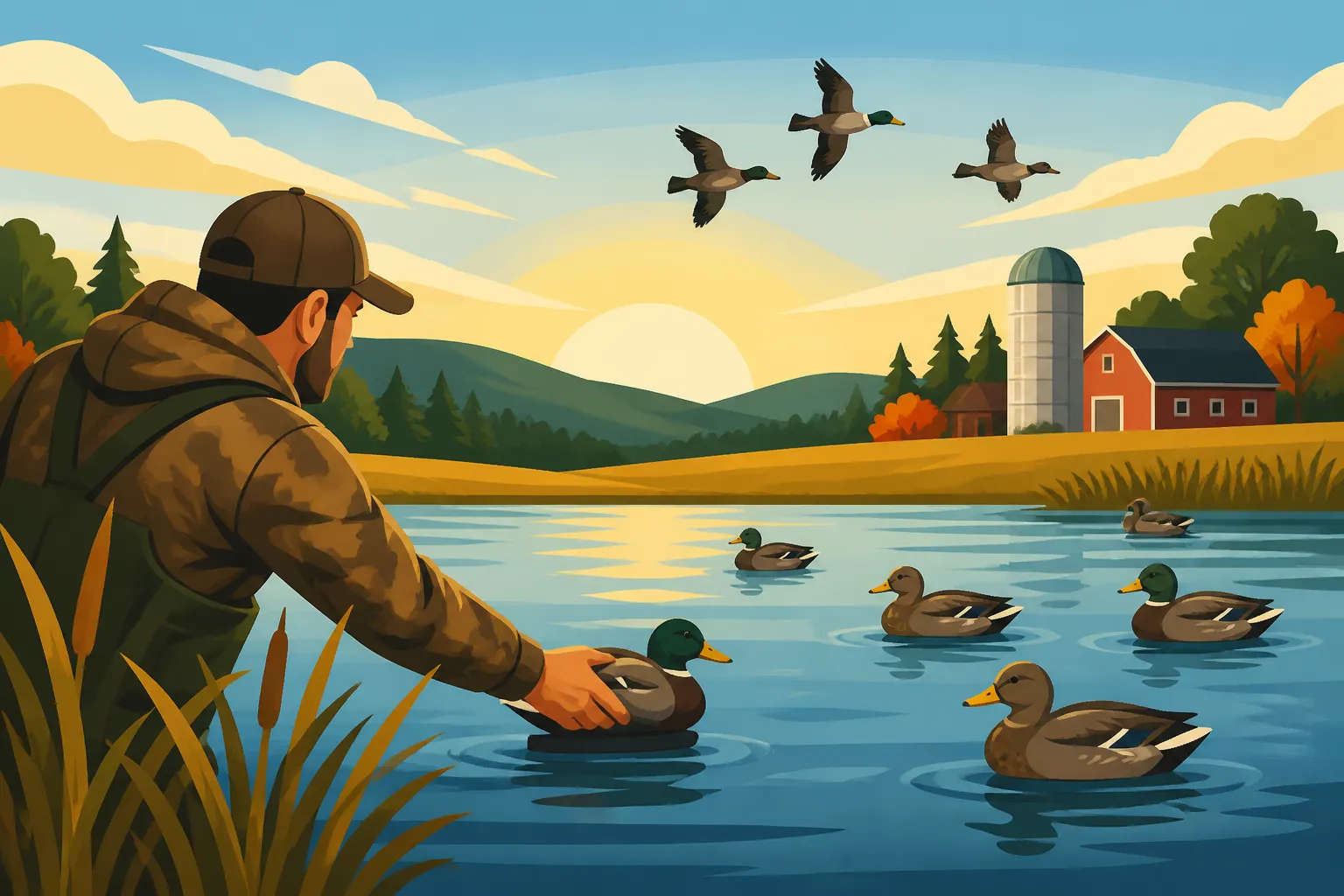
There's nothing quite like the anticipation of a crisp New Hampshire morning, dew still clinging to the tall grass, as you set out toward a promising farm pond for a waterfowl hunt. But let's be honest, the excitement can quickly turn to frustration when those wary ducks bank hard and flare, having spotted something "off" with your decoy spread. This guide is all about getting those decoys right, so you can entice more birds into landing zones and turn those frustrating flares into successful retrieves.
Understanding Farm Pond Dynamics for Waterfowl
Hunting small, private waters like farm ponds in New Hampshire offers a unique set of challenges and opportunities. Unlike sprawling rivers or vast marshes, farm ponds often have distinct features that dictate how ducks approach and land. Ignoring these nuances is a surefire way to send birds packing.
Water Depth and Shoreline Features
Farm ponds, by their very nature, are often man-made or modified natural depressions, meaning their depth profiles can vary wildly. You might have extremely shallow edges that quickly drop off to a deeper center. Ducks, especially dabblers like mallards and wood ducks, prefer shallower water where they can tip up to feed. When you're scouting, pay close attention to where these shallower feeding zones are. Are there mud flats exposed at low water? Are there submerged stumps or brush piles that might offer protection or a food source?
The shoreline itself is also crucial. Is it overgrown with cattails and reeds, providing natural cover? Or is it a wide-open, mown bank, offering little concealment? Ducks will often approach from the direction of the most natural cover or where they feel safest. Consider how the pond connects to larger water bodies or agricultural fields, too. A pond near a cornfield might see different traffic than one surrounded by dense woods. This information can be gold when you're planning your setup, and platforms like GoHunt can sometimes offer satellite imagery that helps you visualize these features before you even step foot on the property.
Identifying Flight Paths and Landing Zones
Ducks are creatures of habit, and they often use the same flight paths day after day, especially when traveling between roosting areas and feeding grounds. On a farm pond, these paths might be influenced by treelines, hills, or even nearby buildings. Observe how birds enter and exit the pond before you ever set a decoy. Do they typically come in low over a specific stand of pines? Do they circle a few times before committing?
The landing zone is where they want to set down, usually into the wind, with enough open water to feel safe. On a small pond, this open water can be limited, so your decoy spread needs to clearly define this safe landing strip. If they have to fight the wind too much or feel squeezed, they'll often just keep flying. Think about the angles of approach; a south wind might mean birds approach from the north end of the pond, so your landing zone should be clear in that area.
Reading the Wind and Weather
Wind is perhaps the single most critical factor in setting effective decoy spreads on any water, and farm ponds are no exception. Ducks almost always land into the wind because it helps them slow down and maintain control, much like an airplane landing on a runway. Your decoys should be set up so that approaching birds have a clear, inviting path to land directly into the wind, right in front of your blind.
- Wind Direction: This dictates the "business end" of your spread. If the wind is from the west, your landing zone should be to the east of your decoys.
- Wind Speed: A gentle breeze will cause your decoys to bob naturally, adding realism. High winds, however, can make your decoys drift, tangle, or even flip, so robust anchoring is key. Heavy chop can also make small decoys disappear from a distance, so consider larger ones on blustery days.
- Weather Conditions: Overcast days might make birds fly lower and be more receptive to decoys, while bright, sunny days can make them warier. Fog can be tricky; ducks might appear out of nowhere, so you need to be ready. Knowing your New Hampshire Northern Zone Waterfowl Dates and New Hampshire Inland Zone Waterfowl Dates is essential, as weather patterns shift dramatically throughout the long season.
Choosing Your Decoy Spread Strategy
Once you understand the pond's layout and how ducks interact with it, you can start planning your decoy strategy. Remember, you're trying to create a picture that screams "safe and inviting."
Species-Specific Spreads
While a mixed bag of decoys can work, it's often more effective to tailor your spread to the primary species you expect to encounter. Mallards, with their vibrant green heads, are often the bread and butter of New Hampshire farm pond hunting.
- Mallard Spreads: These typically involve drakes and hens, with a slightly higher ratio of drakes for visibility. A classic "J" or "U" shaped spread is popular, creating an open pocket for birds to land in. You'll want to place some "feeder" decoys with their heads down to signal a relaxed, feeding environment. You might also want to consult specific techniques like those used for Decoying Mallards on the Connecticut River, as many principles translate to smaller waters.
- Wood Duck Spreads: Wood ducks are stunning, but often smaller and shier. They prefer tight, wooded ponds and can be spooked easily. A smaller spread of a half-dozen wood duck decoys, placed closer to wooded cover, can be highly effective. If you're targeting wood ducks, consider their habits, as they often don't mix as readily with large groups of mallards in open water.
- Goose Spreads: If Canada geese are using the pond, a few full-bodied goose decoys can add a powerful layer of confidence to your spread. Geese are often considered "confidence birds" by ducks, signaling that the area is safe. Place goose decoys slightly apart from your duck decoys, perhaps up on the bank or at the edge of the pond, to mimic their natural behavior. Keep in mind the New Hampshire Duck and Goose Bag Limits to ensure you're hunting legally.
Numbers Game: How Many Decoys?
This is a common question, and the answer, especially for farm ponds, is often "less is more." Unlike wide-open spaces where you might deploy dozens or even hundreds of decoys, a smaller pond can look overcrowded with too many.
- Small Spreads (6-12 decoys): For most farm ponds, a dozen or fewer decoys is often ideal. This creates a realistic, unpressured look. Focus on quality and realistic placement over sheer quantity. A spread of 6-8 mallard decoys, mixed with a couple of wood ducks or a single goose, can be incredibly inviting.
- Medium Spreads (12-24 decoys): If the pond is larger, or you know it holds a good number of birds, you might incrementally increase your spread. However, still prioritize realism and leave ample landing space.
- Visibility vs. Realism: Sometimes, especially on cloudy days or when birds are flying high, a slightly larger spread might offer more visibility from a distance. But always balance visibility with the need for a natural-looking scene. If it looks like a party rather than a calm feeding spot, wary birds will notice.
Motion Decoys and Confidence Boosters
Adding movement to your spread can be a game-changer, especially on still days when traditional decoys just sit there lifelessly.
- Spinner Decoys (Mojo Decoys): These battery-operated decoys with spinning wings create a flash that mimics a landing or taking off bird, catching the attention of distant waterfowl. A single spinner, like the popular Mojo Decoys for New Hampshire Puddle Ducks, placed at the edge of your landing zone, can dramatically increase your pulling power. Just be mindful of local regulations regarding motorized decoys.
- Jerk Rigs: A simple jerk rig allows you to manually create ripples and movement among a few of your decoys from your blind. This is an incredibly natural and effective way to add life, especially when birds are circling. It mimics ducks splashing and feeding.
- Swimmer Decoys: These decoys have weighted keels that allow them to gently move and turn with the slightest breeze, offering more natural motion than static decoys.
- Feeder Decoys: Decoys with their heads down, as if feeding, convey a sense of security and contentment. Mix these in with your upright "sentinel" decoys.
Practical Tips for Setting Decoys on New Hampshire Farm Ponds
Getting the decoys on the water is one thing; setting them correctly is another. Small details can make a huge difference.
Concealment and Blind Placement
Even the best decoy spread is useless if the ducks see you first. Effective concealment is paramount.
- Natural Cover: Whenever possible, use existing cover like cattails, brush, or treelines. Digging a shallow "duck trench" into a bank and covering it with natural vegetation can be incredibly effective. Remember, ducks have excellent eyesight and will pick up unnatural shapes or movements instantly.
- Portable Blinds: If natural cover is scarce, a portable blind is your best friend. A small panel blind brushed in with local vegetation can be very effective. For larger, more open ponds, you might consider a layout blind, similar to what you'd use for Layout Blind Hunting a Northern Zone Field, positioned strategically at the pond's edge. Ensure your blind blends in seamlessly with its surroundings, breaking up your outline.
- Sky-Busting vs. Waiting: No matter how well you're concealed, resist the urge to jump up and shoot at birds that are too far out. Let them work the spread, give them confidence, and wait for them to commit to the landing zone. It’s far more rewarding, and you’ll learn a lot about their behavior. You might even use techniques similar to Using a Ground Blind on Public Land if the terrain allows for it.
Anchoring Decoys Effectively
New Hampshire weather can be unpredictable, from calm mornings to blustery afternoons. Secure anchoring prevents your decoys from drifting away or tangling.
- Line and Weight: Use durable decoy cord (braided nylon or tarred line is common) and enough weight to hold the decoy in place. For shallow farm ponds, 3-4 ounces per decoy might suffice, but if the bottom is soft or you expect wind, bump it up to 6-8 ounces. Some hunters even use heavy fishing weights or sash weights for extra security.
- Short vs. Long Lines: In shallow water, short decoy lines (just a few feet longer than the water depth) are perfectly fine. This keeps your decoys from bunching up too much. For deeper sections, you'll need longer lines, but always consider the "swing" radius to prevent tangles.
- Retrieval Systems: A simple Texas rig or carabiner system can make deploying and retrieving decoys much faster and less prone to tangles, especially on colder mornings when your fingers don't want to cooperate.
Safety First on and Around the Pond
Hunting on or around water always requires extra vigilance.
- Waders and PFDs: If you’re wading out to set decoys, quality waders are a must. They’ll keep you dry and comfortable. In deeper ponds, or if you're using a small boat, wear a personal flotation device (PFD). Cold water shock is a real danger in New Hampshire, especially during the later parts of the Hunting the Split Inland Zone Waterfowl Season.
- Visibility: Especially if you're near a public access point or private property boundaries, ensure you're visible to others if necessary, or that your hunting area is clearly delineated. While you want to be concealed from ducks, safety often dictates knowing your surroundings.
- Footing: Pond bottoms can be mucky, uneven, and slippery. Move slowly and deliberately to avoid falls or stepping into unexpected holes.
Troubleshooting Common Decoy Setting Issues
Even with the best planning, ducks can be fickle. Being able to adapt on the fly is a hallmark of a successful waterfowl hunter.
Dealing with Finicky Birds
Sometimes, ducks just don't want to commit. They might circle endlessly, or land far outside your spread.
- Adjusting the Landing Zone: If birds are landing consistently in one spot, they're telling you something. Try moving your decoys to create a more inviting, open pocket in that preferred landing zone.
- Calling: Sometimes, a subtle feeder chuckle or a soft greeting call can be all it takes to reassure wary birds. Don't overcall, especially on smaller waters where sound travels easily.
- Less is More (Again): If birds are flaring, try pulling a few decoys, especially if your spread looks too dense for the size of the pond. Simplify the picture.
- Concealment Check: Double-check your blind and personal concealment. Even a glint of sunlight off a gun barrel or an unnatural movement can send birds packing.
Adapting to Changing Conditions
New Hampshire weather can change rapidly, and your setup needs to adapt with it.
- Wind Shifts: A sudden wind shift is probably the most common challenge. If the wind changes direction significantly, you must move your decoys to re-establish an into-the-wind landing zone. This might mean pulling the whole spread and resetting. It's a pain, but it's often the difference between success and frustration.
- Light Changes: As the sun rises or sets, the light changes. Decoys might appear different to birds. Pay attention to how the light hits your decoys, especially any shiny surfaces.
- Pressure: If the pond has been hunted recently, birds will be warier. A smaller, more natural spread with fewer decoys and excellent concealment will often be more effective in these situations.
Retrieving Decoys Efficiently
When the hunt is over, or you need to move, efficient retrieval saves time and keeps your gear in good shape.
- Organized Lines: Keep your decoy lines organized. Texas rigs are fantastic for this, as they allow you to clip decoys together on a main line. This prevents tangles and makes deployment and retrieval a breeze.
- Decoy Bags: Invest in good quality decoy bags. These protect your decoys during transport and storage, and they also make carrying them to and from the pond much easier. Carrying a large bag while using Waders for New Hampshire Waterfowl Hunting can be challenging, so consider how you'll manage both.
- Buddy System: If possible, hunt with a partner. One person can pick up decoys while the other watches for late-flying birds or helps with loading. It makes the work go by faster and safer.
- Scouting for Next Time: As you retrieve, take a mental note of where the birds wanted to land, what the wind was doing, and any changes in the pond's conditions. This information is invaluable for your next hunt and will help you continually refine your approach to Reading a Marsh for a Morning Flight and adapting those skills to ponds.
Setting decoys on a New Hampshire farm pond might seem straightforward, but it's an art that combines observation, strategy, and a little bit of improvisation. By paying attention to the details, understanding the birds, and using your gear effectively – perhaps even with the help of scouting tools like GoHunt to analyze terrain and potential flyways – you'll significantly increase your chances of a successful waterfowl hunt.
Disclaimer
Hunting is an inherently dangerous activity. Always prioritize safety, follow all local, state, and federal regulations, and obtain proper licenses and permits. The information provided here is for educational purposes only and should not replace professional instruction or official hunting guides. Be aware of your surroundings and hunt ethically and responsibly.