Best Deer Cart for Flat Farmland Terrain
There’s nothing quite like the thrill of taking a deer on New Hampshire’s expansive farmland, but that triumphant feeling can quickly turn to dread when you realize the sheer effort it will take to get your prize out of the field. Even flat ground can be a brutal obstacle course of mud, crop stubble, and distance. This guide is all about making that recovery manageable, focusing on the best deer carts specifically designed to tackle the unique challenges of flat farmland terrain.
The Challenge of Deer Recovery on Flat Farmland
You've put in the time scouting, mastered your Entry Routes Through a Cut Cornfield, and finally connected with a deer. Now comes the real work. Many hunters assume flat ground means an easy drag, but that couldn't be further from the truth. Farmland presents its own specific set of difficulties that can leave you exhausted, muddy, and regretting not having the right equipment.
Why Flat Doesn't Mean Easy
Imagine walking across a freshly tilled field after a rain, or a standing cornfield with dense stalks underfoot. Flat doesn't mean smooth. It often means soft, uneven soil that saps your energy with every step. You could be dealing with deep furrows from planting or harvesting, slick mud from recent precipitation, or even dense, tangled crop residue that snags on everything. A deer's weight, combined with these ground conditions, can make even a short recovery feel like an uphill battle. Plus, unlike the relative predictability of a logging road, farmland often lacks obvious paths or trails, forcing you to break new ground every time.
Then there's the sheer distance. New Hampshire’s farmland parcels can be extensive, and while it might look like an open shot across a field, that shot could be hundreds of yards from your vehicle access. Dragging a deer that distance, especially a mature buck, is a recipe for back strain and extreme fatigue. You might be navigating a Hunting a Standing Corn Field for Deer for a considerable stretch, which is far from a leisurely stroll. The perceived ease of "flat" is often a cruel illusion when you're facing down 150 pounds of dead weight in the middle of a big field.
The Limitations of Dragging Alone
Unless you've got a pair of workhorses or a UTV, dragging a deer by yourself, or even with a partner, is incredibly taxing. Without a cart, you're relying purely on muscle power, pulling the animal directly over rough terrain. This not only puts immense strain on your back, shoulders, and legs, but it's also incredibly slow. The deer's hide can get damaged, picking up burrs and debris, and if you're pulling it across crop stubble, you risk tearing the hide, which isn't ideal for processing or taxidermy.
Furthermore, dragging can be dangerous. Overexertion can lead to injuries, and in remote areas, a pulled muscle or worse could leave you in a tough spot. If you're hunting alone, it becomes even more critical to conserve your energy for getting yourself and your game out safely. Think about those long hauls from a distant corner of a Hunting a Green Field Planted for Deer – trying to drag a heavy deer through that kind of cover can take hours and leave you completely spent. The simple physics of friction and weight are against you, making a specialized deer cart not just a convenience, but often a necessity for a successful and safe recovery.
Key Features of an Ideal Deer Cart for Farmland
Choosing the right deer cart for New Hampshire’s diverse farmland isn't about grabbing the first one you see. It's about understanding the specific demands of the terrain and matching them with features that will genuinely make your life easier. You need something robust, maneuverable, and designed to minimize effort over soft, uneven ground.
Wheel Design and Tire Type
The wheels are arguably the most critical component of a farmland deer cart. Unlike rocky, uneven timber, farmland often presents soft soil, mud, and tangled vegetation.
- Large Diameter Wheels: This is non-negotiable. Large diameter wheels (think 18-22 inches or more) are like miniature monster truck tires for your deer. They roll over obstacles like crop stubble, small logs, and deep furrows with far less effort than smaller wheels. A larger wheel maintains momentum better and reduces the number of times the wheel gets "stuck" against an obstacle. It helps lift the cart over irregularities rather than digging into them.
- Pneumatic Tires (Air-Filled): While solid tires are puncture-proof, they offer no cushioning and perform poorly in soft conditions. Pneumatic tires, filled with air, are a game-changer. They conform to the uneven ground, providing flotation and a smoother ride. This "cushioning" effect reduces jolting and makes the cart much easier to pull over soft dirt, mud, or grass. Look for tires with an aggressive tread pattern for maximum grip, especially if you anticipate mud or slick conditions after a rain. Make sure they're not flimsy bicycle tires; you want heavy-duty, multi-ply tires designed for utility use. If you’re often dealing with thorns or sharp stubble, consider investing in tire liners or a sealant to prevent flats.
- Wide Tire Profile: Wider tires distribute weight more effectively, preventing the wheels from sinking into soft ground. A narrow tire will cut into soft soil, essentially digging a trench and making the cart incredibly difficult to move. A wider footprint helps the cart float over the surface, similar to how fat bike tires work in sand or snow.
Frame Construction and Durability
A deer cart needs to be tough enough to handle heavy loads and the abuse of being dragged through fields, over fences, and potentially in and out of truck beds.
- Material:
- Steel: Many heavy-duty carts use steel frames. Steel offers superior strength and durability, able to handle massive weights without bending or breaking. The downside is weight – steel carts can be quite heavy themselves, which adds to the overall effort of hauling your deer. However, for sheer brute strength and longevity, steel is hard to beat.
- Aluminum: Lighter-weight options often use aluminum. Aluminum frames significantly reduce the cart's empty weight, making it easier to maneuver and lift. While generally strong, the quality of aluminum construction varies. Look for thick-walled, aircraft-grade aluminum if possible. The trade-off might be slightly less ultimate carrying capacity compared to a similar steel frame, but for most New Hampshire whitetails, a well-built aluminum cart is more than sufficient.
- Welds and Fasteners: Inspect the welds. They should be clean, consistent, and fully penetrate the joint. For carts that use bolts and rivets, ensure they are heavy-duty and securely fastened, preferably with locking nuts to prevent loosening from vibration. You don't want a cart coming apart when you're halfway across a large fencerow.
- Weight Capacity: Check the manufacturer's stated weight capacity. While a New Hampshire whitetail typically weighs between 100-200 pounds dressed, you want a cart rated for well above that to ensure durability and safety margins. A rating of 250-350 pounds is generally good, giving you confidence even with a larger-than-average buck or if you need to haul out other gear with the deer.
- Balance and Design: The cart should be designed to balance the deer's weight over the axle, minimizing the amount of weight you have to lift at the handles. A well-designed cart feels almost effortless to pull, with minimal downward pressure on your arms.
Ergonomics and Handling
Even with the best wheels and frame, a cart that's uncomfortable or unwieldy to use will quickly become a nuisance.
- Handle Design: Look for comfortable, padded handles that provide a good grip, even when wet or muddy. Adjustable handles are a huge bonus, allowing hunters of different heights to find a comfortable pulling position. Some carts offer a single T-handle, while others have two separate handles. The T-handle often allows for more leverage and easier single-person operation, but two handles can be more comfortable for two people sharing the load.
- Tie-Down Points: Secure attachment points for straps are essential. You don't want your deer shifting or falling off the cart, especially when navigating uneven terrain or going over an obstruction. Look for multiple integrated loops or hooks that allow you to cinch the deer down tightly with ratchet straps or bungee cords.
- Folding Mechanism: For easy transport and storage, a folding design is highly beneficial. Many quality carts fold flat or break down into manageable pieces that can fit in a truck bed, trunk, or even a smaller SUV. Ensure the folding mechanism is secure when deployed, with robust pins or latches that won't accidentally collapse under load.
- Ground Clearance: Adequate ground clearance is important to prevent the cart's frame from dragging on high spots, rocks, or deep crop stubble. While large wheels help, the overall design should keep the frame sufficiently elevated.
When evaluating carts, platforms like GoHunt might not directly review deer carts, but the emphasis they place on understanding terrain and planning routes using their mapping features can inform your decision. Knowing the specific types of fields and access roads you'll be navigating will help you prioritize these features.
Types of Deer Carts and What Suits Farmland Best
Not all deer carts are created equal, and what works beautifully for a logging road might be a nightmare in a freshly cut cornfield. Understanding the different designs available and how they perform in various conditions is key to making the right choice for your New Hampshire farmland hunts.
Single-Wheel vs. Two-Wheel Carts
This is often the first decision you'll face, and each type has distinct advantages and disadvantages when traversing open, flat farmland.
- Two-Wheel Carts (The Standard Workhorse):
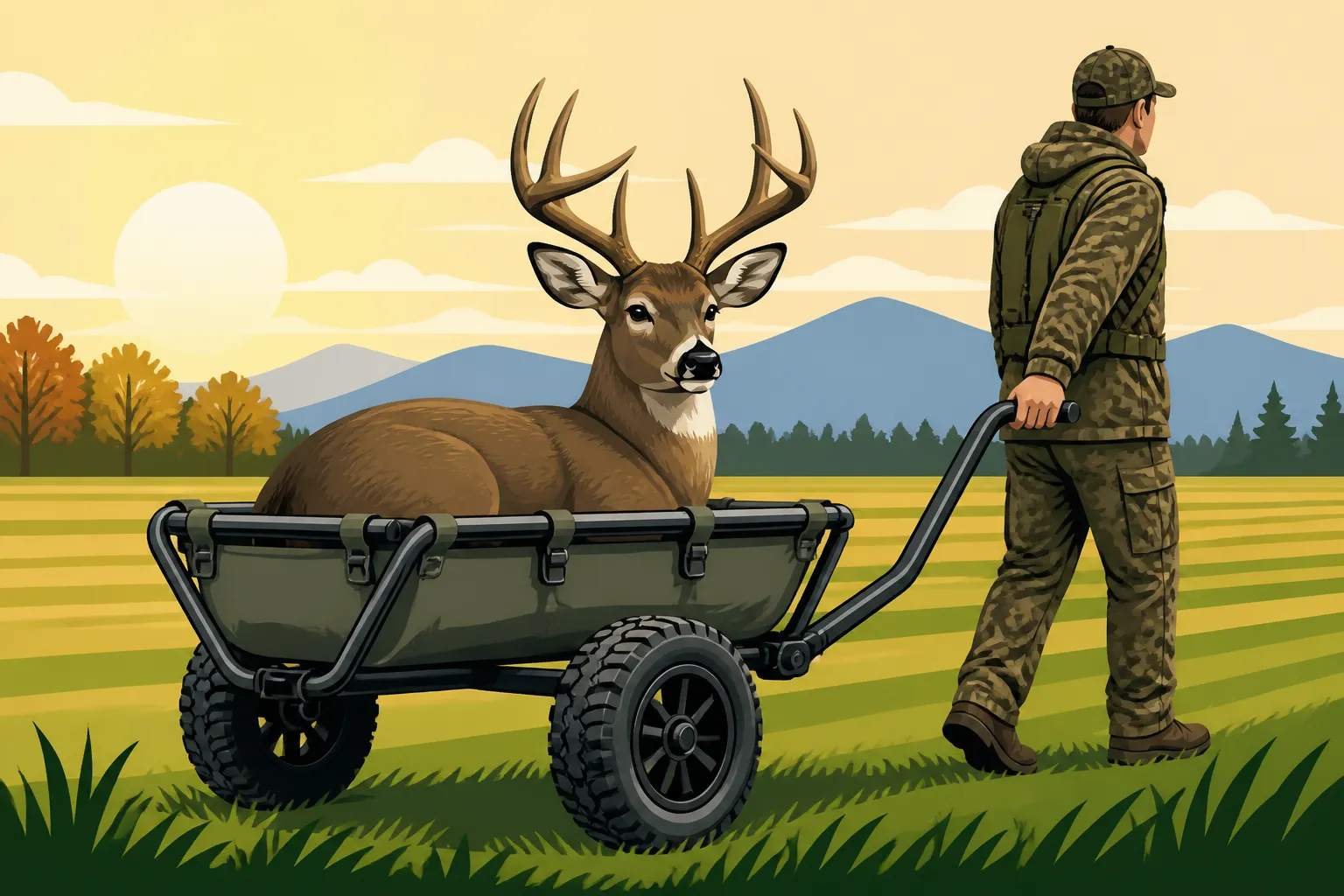
- Pros for Farmland: Two-wheel carts are by far the most common and generally the best choice for farmland. Their primary advantage is stability. With two wheels, the cart is self-balancing, meaning you don't have to constantly hold the weight of the deer while moving. This significantly reduces strain on your back and arms, allowing you to focus on pulling. The wider footprint of two wheels also helps spread the load, reducing the tendency to sink into soft ground. They are excellent for heavy loads and often come with larger, pneumatic tires perfect for rolling over stubble, furrows, and uneven soil. When considering a two-wheeler, think about models with a wider axle stance for even greater stability, especially if you're crossing sloping fields or navigating ruts.
- Cons for Farmland: While excellent, two-wheelers can be wider and therefore slightly less maneuverable in extremely tight spots, though this is less of an issue in open fields. They might also be heavier to lift over a high fence or into a truck by yourself, but the trade-off in stability and pulling ease is usually worth it.
- Single-Wheel Carts (The Trail Blazer):
- Pros for Farmland: Single-wheel carts, often resembling a large wheelbarrow, excel in very narrow, winding trails or extremely dense brush where a two-wheeler would constantly snag. They are highly maneuverable and can follow a very narrow path.
- Cons for Farmland: For open, flat farmland, single-wheel carts are generally not the best choice. They require constant effort to balance the load, much like a wheelbarrow, which can be exhausting over long distances, especially with a heavy, shifting deer. The single, narrow wheel might also be more prone to digging into soft ground or getting bogged down in mud, which is exactly what you're trying to avoid in a field. Unless you're hunting tiny, overgrown field edges that resemble thick timber, stick with a two-wheeler for open farmland.
Folding Carts for Easy Transport
Let's face it, your pickup bed or SUV trunk isn't limitless. Many of us drive compact vehicles or already have a truck bed full of other hunting gear. This is where a well-designed folding deer cart truly shines.
- Convenience: A cart that folds flat or breaks down into two or three main components (frame, wheels) makes storage and transport incredibly easy. You can often keep it stowed in your vehicle without it eating up valuable space, ready for when you need it. This is especially useful if you're driving a good distance to hunt Hunting Small Private Tracts in New Hampshire or public farmland.
- Mechanism: Look for a robust, user-friendly folding mechanism. It should be quick and easy to deploy and collapse, even with cold hands or while wearing gloves. Spring-loaded pins, sturdy clamps, or quick-release axles are all good features. Avoid anything that feels flimsy or requires excessive force, as it will likely wear out or frustrate you in the field.
- Compactness: Compare the folded dimensions. Some carts fold much flatter than others. If you have limited space, this is a major consideration. Even if you're only using it a few times a season, the ease of transport can make the difference between bringing it along or leaving it at home when you desperately need it.
Specialized Features to Consider
Beyond the basic design, some carts offer extra features that can enhance their performance on farmland.
- Integrated Game Bags or Harnesses: Some carts come with heavy-duty mesh bags or integrated harness systems that help cradle the deer and keep it securely in place. This can be especially useful for smaller deer or if you're also hauling other gear. This prevents the deer from sliding around, which can throw off the cart's balance and make pulling harder.
- All-Terrain Wheels/Tracks: While expensive, some extreme-duty carts feature solid foam-filled tires (eliminating flats) or even rubber tracks. These are typically overkill for most New Hampshire farmland but could be considered if you frequently encounter exceptionally rough, rocky, or heavily timbered approaches to your fields.
- Kickstands/Stands: A built-in kickstand can be incredibly useful when loading the deer onto the cart by yourself. It keeps the cart stable and upright, freeing up both your hands to lift and position the animal.
- Brakes: Some carts, particularly those designed for very heavy loads or mountainous terrain, may include hand brakes. While less critical for flat farmland, a brake could be useful if you're loading on a slight incline or need to secure the cart temporarily on uneven ground.
- Camo or High-Visibility Options: While not performance-enhancing, some hunters prefer carts in camouflage patterns, while others opt for bright orange or yellow for increased visibility and safety, especially during firearms season. Remember, New Hampshire Blaze Orange Requirements mean you'll need to be visible anyway, but a visible cart can add an extra layer of safety.
Here's a quick comparison of common deer cart types for farmland applications:
| Feature/Cart Type | Two-Wheel Cart (Standard) | Single-Wheel Cart (Trail) | Folding Two-Wheel Cart |
|---|---|---|---|
| Stability | Excellent (self-balancing) | Poor (requires constant balance) | Excellent (when deployed) |
| Farmland Suitability | Best choice | Poor for open fields, okay for tight edges | Best choice (with added portability) |
| Maneuverability | Good, but wider turns | Excellent in tight spots | Good, but wider turns |
| Loading Ease | Very good (stable) | Difficult (unstable) | Very good (stable) |
| Transport/Storage | Can be bulky | Easier to transport | Excellent (compact) |
| Typical Use | Open fields, logging roads, moderate brush | Dense woods, narrow trails | Open fields, logging roads, hunters with limited vehicle space |
When using an app like GoHunt for scouting, you can overlay property lines and topographical features, giving you a clear picture of how much field you'll be crossing and what kind of terrain you'll encounter on the way to your truck. This intel can help you confirm the need for a robust, two-wheeled folding cart with good, large pneumatic tires.
Maximizing Your Deer Cart's Efficiency in New Hampshire Farmland
Having the best deer cart is only half the battle; knowing how to use it effectively on New Hampshire's varied farmland terrain is the other. Proper technique, smart navigation, and regular maintenance will ensure your cart serves you well season after season, turning a grueling recovery into a manageable task.
Proper Loading Techniques
Getting the deer onto the cart correctly is crucial for balance, stability, and ease of pulling. A poorly loaded deer will shift, make the cart unstable, and ultimately increase your effort.
- Position the Cart: Lay the cart flat on the ground with the handles facing away from where you're dragging the deer. If possible, place it on a slight decline to help with the initial lift, or use a small rise as leverage.
- Lift with Your Legs, Not Your Back: This is paramount for safety. Bend at your knees, keep your back straight, and use the strong muscles in your legs to lift the deer. If you're alone, you might need to use a "roll and lift" technique, rolling the deer onto its side and then using the cart frame as leverage to get it onto the platform. For heavy deer, consider field dressing it first to lighten the load; this is always a good practice, especially in warmer weather, and when Field Dressing a Deer in Cold Weather, it can still reduce the effort significantly.
- Center the Weight: Once the deer is on the cart, adjust its position so that the heaviest part (typically the mid-section) is directly over the axle. This distributes the weight evenly and minimizes the downward pressure on the handles, making the cart feel lighter.
- Secure the Load: Use strong ratchet straps or heavy-duty bungee cords to firmly secure the deer to the cart's frame. Wrap the straps over the deer's body and through the cart's tie-down points, cinching them tightly. This prevents the deer from rolling or shifting, especially when going over bumps or changing direction. You don't want the deer to fall off and force you to reload it in the middle of a muddy field.
Navigating Different Farmland Obstacles
New Hampshire farmland isn't always wide-open, perfectly smooth terrain. You'll encounter fences, ditches, hedgerows, and potentially even some boggy spots.
- Fences: Fences are common boundaries between farmland properties or pastures. If you have permission to cross, carefully lift the front of the cart over the bottom wire, then lift the back. If the fence is too high, you might need to temporarily unload the deer, pass the cart and then the deer over, and reload. Always be mindful of damaging fences, especially if you've secured permission by Knocking on Doors in New Hampshire Farm Country.
- Ditches and Culverts: Approach ditches at an angle, if possible, rather than head-on. Lower one wheel into the ditch at a time, allowing the cart to articulate. Use a slow, controlled motion. If it's a deep ditch, you may need a second person to help lift and stabilize.
- Crop Stubble and Furrows: This is where those large, pneumatic tires truly shine. Keep the cart moving at a steady pace. Momentum is your friend, helping the wheels roll over rather than get stuck in the stubble. If you encounter deep furrows, try to pull the cart so one wheel is on the ridge and the other in the trough, or straddle the furrow if the cart is wide enough.
- Mud and Soft Ground: Reduce your speed and maintain consistent pulling pressure. If the wheels start to sink, avoid sudden jerks. Instead, try a steady, forward pull. If you hit a really boggy spot, you might need to briefly lift the handles high to get the wheels out of the deepest mud, or even walk around the worst of it. Knowing the terrain ahead, perhaps by reviewing maps on a platform like GoHunt, can help you avoid these problem areas entirely by Scouting New Hampshire Public Land Before Season for your specific hunting area.
- Hills and Inclines: Even "flat" farmland can have slight undulations. For slight inclines, lean into the pull, using your body weight. For steeper (but short) inclines, a second person pushing from behind can be invaluable. On declines, let the cart's weight do some of the work, but maintain control to prevent it from running away from you.
Maintenance for Longevity
Like any piece of essential hunting gear, your deer cart will last longer and perform better with a little TLC.
- Cleaning: After each use, especially if it's been through mud or wet conditions, thoroughly clean the cart. A hose and stiff brush are usually all you need. Pay special attention to the wheels, axle, and folding mechanisms to remove dirt, mud, and debris. This prevents rust and keeps moving parts operating smoothly.
- Lubrication: Periodically apply a light lubricant (like silicone spray or light oil) to the axle bearings, folding hinges, and any other moving parts. This prevents squeaks, reduces friction, and protects against corrosion.
- Tire Care: Check tire pressure before and after each hunt. Proper inflation is crucial for performance and preventing flats. Keep a small hand pump with you in your vehicle. Inspect the tires for any cuts, punctures, or signs of wear. Repair or replace damaged tires promptly. A small patch kit can be a lifesaver in the field.
- Frame Inspection: Regularly inspect the frame for any signs of cracks, bends, or loose fasteners. Tighten any bolts or nuts that have come loose. Address minor damage quickly to prevent it from worsening.
- Storage: Store your clean, dry cart in a garage, shed, or other protected area when not in use. This protects it from the elements and extends its lifespan.
By understanding how to choose the right deer cart for New Hampshire Deer Harvest Records from farmland, and then mastering its use and care, you'll be well-equipped to handle the often-underestimated challenges of recovering your game. It’s an investment that pays off in reduced effort, increased safety, and more enjoyable hunts, allowing you to appreciate the fruits of your labor without the lingering dread of the haul out. When you're Reading a New Hampshire Harvest Report, think about how much easier that recovery was thanks to your trusty cart.
Disclaimer
This article is for general informational purposes only and does not constitute professional advice. Laws, prices and regulations vary by location and change over time. Consult a qualified professional for guidance on your specific situation.