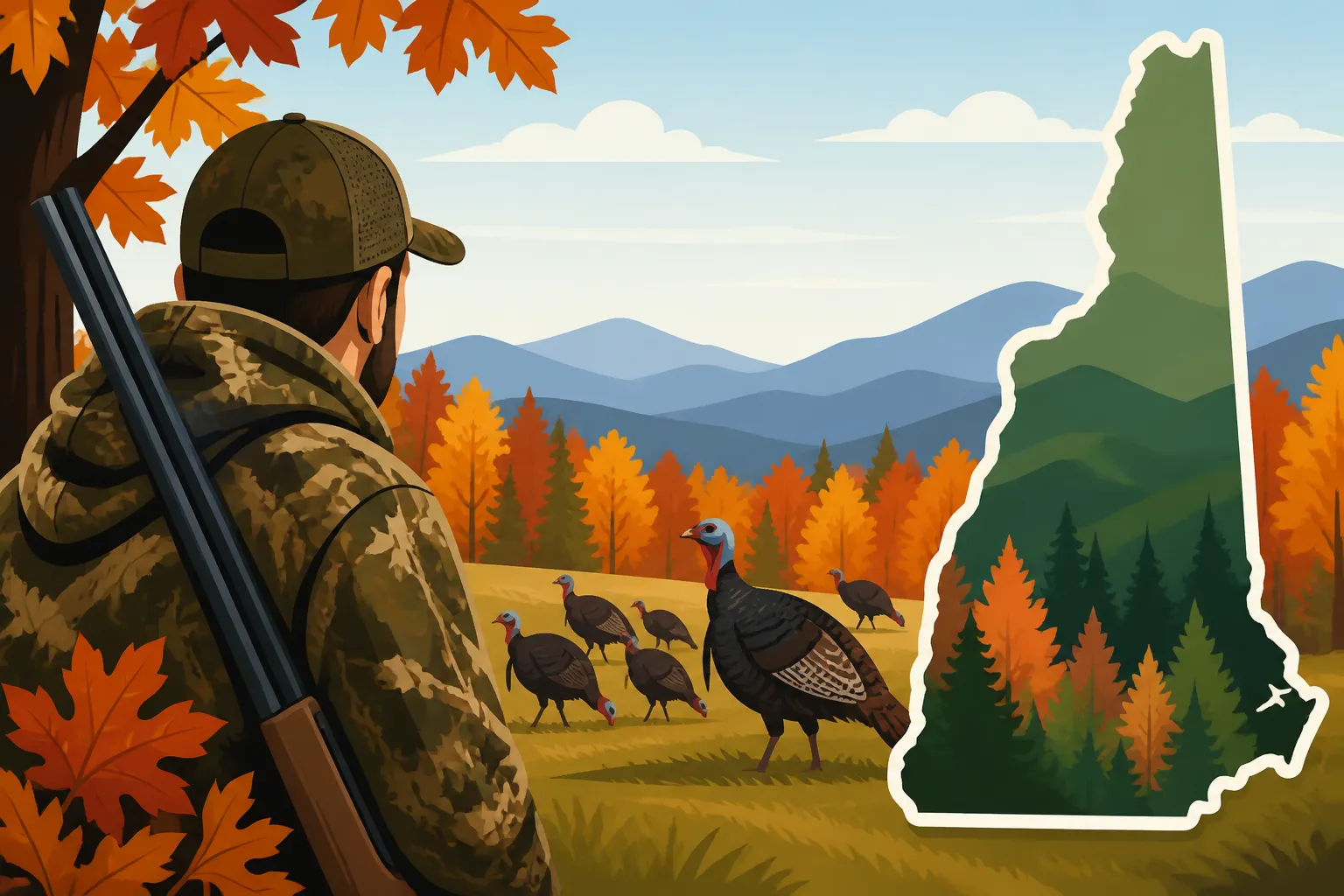
Breaking Up a Fall Turkey Flock
There's nothing quite as frustrating in the fall woods as finally locating a big flock of wild turkeys, only to have them bolt into the timber, staying stubbornly together and out of range. Fall turkeys are a different beast than their spring counterparts, often moving in large, tight-knit family groups that make a successful hunt feel impossible without the right strategy. This guide will walk you through the essential tactics for effectively breaking up a fall turkey flock in New Hampshire, giving you the best chance to call a bird back into shooting range.
Understanding Fall Turkey Behavior and Flock Dynamics
Fall turkey hunting in New Hampshire presents unique challenges, primarily due to the birds' strong flocking instincts. Unlike the dispersed, breeding-focused behavior of spring, fall turkeys prioritize survival, food, and safety in numbers.
Why Fall Flocks are Different
During the fall, wild turkeys in New Hampshire congregate in larger family groups, often consisting of a dominant hen, her brood of poults from the spring, and sometimes other adult hens and jakes. These flocks can range from a handful of birds to several dozen, and their collective vigilance makes them incredibly difficult to approach undetected. The social structure within these groups is centered on security and finding food sources. They move across the landscape, feeding on mast crops like acorns, beechnuts, and wild berries, as well as insects and waste grain in agricultural areas.
They feel safety in these numbers, with many eyes and ears constantly scanning for predators, and this makes them notoriously spooky. If one bird senses danger, the entire flock is likely to respond, melting into the woods with surprising speed. Trying to call a single bird out of a large, contented flock is often a futile exercise, as the social bonds are too strong. This is why the first, critical step in fall turkey hunting is often to break up that cohesion.
Reading the Roost and Feeding Patterns
Successful fall turkey hunting starts long before you ever try to break up a flock; it begins with diligent scouting. Understanding where these birds are roosting and what their daily feeding patterns look like is paramount. Turkeys will often use the same roosting trees for extended periods, especially large pines or hardwoods along a ridge or river bottom. Observing them fly down from the roost at first light can give you invaluable information about their travel corridors and initial feeding areas.
During the day, fall flocks will systematically work through food-rich areas. In the Granite State, this often means scouting oak ridges for acorn crops, scouting abandoned apple orchards, or even working the edges of active agricultural fields for waste grain. Knowing their preferred feeding areas and the routes they take between roosts, feeding grounds, and water sources allows you to position yourself for an effective "break." Tools like GoHunt's detailed satellite imagery can be incredibly helpful for identifying these patterns, allowing you to mark potential roosts, travel corridors, and feeding flats before you even set foot in the woods. This kind of preparation gives you a distinct advantage, as detailed further in our guide on Scouting New Hampshire Public Land Before Season.
Identifying the Dominant Hen and Alarm System
Every fall turkey flock, especially a family group, has a hierarchy, with a dominant hen often acting as the leader and primary alarm system. This matriarchal figure is the glue that holds the flock together. She dictates movement, initiates feeding, and is usually the first to sense danger, issuing alarm putts or clucks that send the entire group scrambling. Her experience and wariness make her the most challenging bird to fool, and her presence keeps the younger, less experienced birds in line.
When you're observing a flock, try to identify this dominant hen. She'll often be slightly larger, more vocal, and always alert. The key to successfully breaking up a flock and then calling birds back lies in disrupting her control. If you can scatter the flock so completely that the younger birds are disoriented and separated from her, they become much more susceptible to your calls. Her powerful influence is why a mere walk-through might not be enough; you often need a more aggressive approach to truly achieve a scatter.
The Art of the Break and Scatter
Once you’ve located a fall turkey flock, your primary objective becomes sending those birds flying in as many different directions as possible. This is where the true "art" of breaking up a flock comes into play.
Stealthy Approaches and Strategic Interception
Before you can break a flock, you need to get close enough without spooking them prematurely. This requires extreme stealth and a deep understanding of the terrain. Use cover to your advantage: hardwoods, softwood thickets, stone walls, and rolling topography can all provide concealment. Your goal is to intercept the flock along a natural travel route, perhaps between their roost and a feeding area, or as they cross a logging road or field edge.
Move slowly and deliberately, always checking the wind to avoid carrying your scent to the birds. Listen for their tell-tale vocalizations – soft clucks, purrs, and the rustle of leaves as they feed. Once you are within striking distance, usually 75-100 yards, you need to prepare for your move. The element of surprise is crucial. You want to burst upon them with enough force to create maximum panic and confusion, forcing them to scatter rather than simply run together. This strategic positioning and silent approach are essential components of effective Run-and-Gun Turkey Tactics on Public Land.
The Aggressive Charge: When and How
This is the moment of truth. When you decide to "charge" a flock, you’re committing to a full-on, aggressive tactic designed to send birds flying in every direction. This isn't a gentle stroll; it's a sprint with a purpose. As soon as you decide to execute the break, run directly at the flock, yelling loudly, waving your arms, and making as much noise as possible. The goal is to maximize their fear and disorient them, preventing them from regrouping instantly.
Don't hesitate, and don't slow down until they've all taken flight. Watch closely to see which way the birds fly. You want them to scatter individually, not just fly off as a tight group. Pay particular attention to where single birds or small groups land. Immediately after the charge, find the nearest cover, get low, and remain absolutely still. This is crucial for two reasons: first, safety, as you need to be aware of your surroundings and any hunting partners; second, you need to listen. The sounds the birds make as they scatter – alarm putts, lost calls, wing beats – will tell you a lot about how effectively you broke them up and where they went.
Situational Breaks: Decoys and Other Tactics
While the aggressive charge is often the most effective way to break up a large, cohesive fall flock, there are situations where a full-on sprint might not be feasible or safe. For instance, if you're hunting in very thick cover with limited visibility, or if you're on public land with other hunters nearby, a more nuanced approach might be necessary. In these cases, you might aim for a "softer" break. This could involve slowly walking into the flock's feeding area, letting them see you at a distance, and allowing them to walk or fly off somewhat. While not as disorienting as a full charge, it can still break up the larger group into smaller, more call-able units.
Using a decoy in the fall is less common than in the spring, but a lone hen or jake decoy could theoretically be used to draw a small portion of a flock closer before you initiate a break. However, the primary focus in fall is on the physical act of scattering. The noise and visual impact of your presence are paramount. The goal is always to create chaos and separation. This isn't about fooling them into coming close; it's about making them run for their lives in every direction. If you're considering hunting during the specific Hunting the Shotgun-Only Fall Turkey Week, these aggressive tactics become even more relevant.
Calling Strategies for Scattered Birds
After you’ve successfully busted a flock, the woods will fall eerily silent for a few minutes. This is where patience becomes your most valuable asset. The real calling game begins only after the birds have had time to calm down and realize they're alone.
The Lone Hen Yelps: The "Lost Call"
Once you've broken up a flock, the young birds, especially the poults, will quickly feel isolated and distressed. They rely heavily on the dominant hen for guidance and security. After about 15-30 minutes of silence following the scatter, when the initial panic has subsided, it's time to start employing the "lost call." This is typically a soft, plaintive series of yelps, mimicking a hen or young bird trying to locate its family.
You want these calls to sound genuinely lonely and somewhat anxious, but not overly aggressive. Start with 3-5 soft yelps, then listen intently. Wait 5-10 minutes, then repeat. The key is to be subtle and patient. Young birds separated from the flock are highly motivated to regroup, and a realistic lost call can be incredibly effective. You can use various calls for this, including a slate call for soft, realistic yelps, a box call for slightly louder projections, or a diaphragm call for hands-free operation as a bird approaches. The objective is to sound like another lost bird, giving them a point of reference to come to.
Kee-Kee Runs and Assembly Calls
While lone hen yelps are excellent for attracting any lost bird, the "kee-kee run" is particularly effective for young, separated poults and jakes. A kee-kee run is a series of high-pitched whistles followed by a yelp, mimicking a young bird trying to locate its flock members. It's an innocent, inquiring call that often elicits a response from scattered poults. Use it sparingly and with conviction, especially if you hear soft clucking or chirping in the distance.
The "assembly call" is another powerful tool, a louder, more emphatic series of yelps and clucks designed to bring the flock back together. This is typically used a bit later, perhaps 30-60 minutes after the break, once individual birds have started making soft calls themselves. You're essentially playing the role of the lead hen trying to gather her dispersed family. The timing and intensity of these calls depend entirely on how the birds are responding, or if they're responding at all. Observing their behavior and vocalizations, perhaps using a mapping app like GoHunt to visualize their possible return paths to a marked roost, can help you decide which call to use. Remember, New Hampshire's New Hampshire Fall Turkey Permit Rules dictate what you can harvest, so be sure you're identifying your target correctly.
Patient Listening and Reading the Response
Calling scattered turkeys isn't just about making noise; it's an intricate dance of calling and listening. After every sequence of calls, you must remain absolutely motionless and listen for a response. Turkeys have incredibly keen hearing, and they'll often respond with soft clucks, purrs, or tentative yelps before committing to moving toward you. Learning to distinguish between these subtle sounds is crucial.
A soft cluck might indicate a bird is close and wary, trying to pinpoint your location. A distant yelp confirms they heard you and are likely headed in your direction. If you hear multiple birds clucking and yelping, it could mean a small group is trying to reassemble. Resist the urge to call too frequently or too loudly; over-calling can spook wary birds. Let them come to you, using your calls just enough to guide them in. Sometimes, the most effective calling strategy is to just offer a few soft yelps and then go silent, letting their natural flocking instinct do the rest. The dynamic of calling can be similar to spring hunting, as explored in Decoy Placement for Pressured Spring Birds, where understanding the bird's response is key.
Setting Up for Success After the Break
Once the flock is broken and you've started your calling sequence, your setup is critical. Turkeys are incredibly wary, especially the older hens, and they have exceptional eyesight.
Choosing the Right Hide
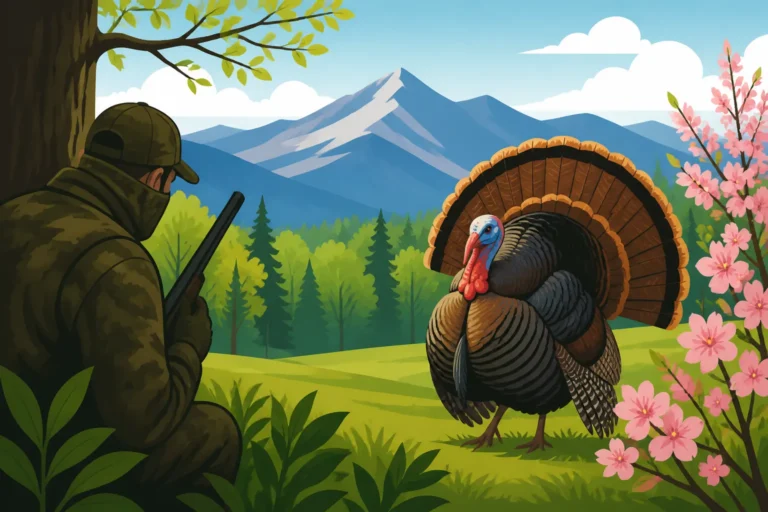
After you've busted the flock and moved to a strategic location, choosing the perfect hide is paramount. You need to be completely concealed, yet have a clear line of sight and shooting lanes in the direction you expect the birds to approach. Look for natural cover: the base of a large tree, a thick brush pile, behind a stone wall, or within a dense softwood stand. Remember to consider your silhouette against the skyline; position yourself with a dark background to break up your outline.
A well-brushed-in ground blind can be incredibly effective, providing excellent concealment and allowing for slight movements without detection. If using a natural hide, ensure there's enough room to comfortably shoulder your shotgun or crossbow (if you're in one of the New Hampshire's Twelve Crossbow-Legal WMUs). Think about the sun's position – ideally, you want it at your back, making it harder for incoming turkeys to spot you. In New Hampshire's varied terrain, from dense timber to open fields, adaptable hiding spots are everywhere. For more on this, check out Using a Ground Blind on Public Land.
Anticipating Return Paths
Turkeys, particularly in fall, are creatures of habit and will often attempt to reassemble in predictable locations. They typically try to return to the last place they felt safe, or a known rendezvous point within their territory. This might be a prominent ridge line, a specific field edge, a creek bottom, or even a logging road they frequently use. As they scatter, pay attention to the terrain. If they flew over a valley, they might use the opposite ridge to work their way back. If they flew into a dense swamp, they might try to skirt its edge.
Use mapping tools like GoHunt to analyze the topography and identify natural funnels or travel corridors that the scattered birds might use. If you busted them in a field, they're likely to try to regroup along the nearest wooded edge. If they scattered from a ridge, they might try to circle back along the contour or drop into a hollow. Positioning yourself on high ground overlooking these potential return paths, or along a known travel corridor, significantly increases your chances of intercepting a returning bird. The goal is to set up in a location where the birds are likely to walk past or approach, giving you the best shot opportunity.
Remaining Still and Ready
Once you're set up, absolute stillness is non-negotiable. Turkeys possess eyesight that rivals that of a bald eagle; even the slightest movement can give you away. This means no fidgeting, no checking your phone, and only moving your head to scan very slowly and deliberately. Keep your firearm or crossbow in a ready position, perhaps resting it across your knee or propped on shooting sticks, ensuring a quick, fluid motion to aim.
As birds respond to your calls and approach, they will often come in silent, using their keen sense of hearing to pinpoint your location. They might appear as if from nowhere, especially if they are moving through thick cover. Only raise your gun or crossbow when the bird's head is obscured by a tree or brush, or when it's at a distance where movement won't alarm it. Wait until the bird is within effective shooting range and offers a clear, ethical shot. This discipline, combined with your calling prowess, is the final ingredient for a successful fall turkey hunt after breaking up a flock. Always consult the New Hampshire Fish and Game digest for specific season dates and regulations for Which WMUs Allow Fall Turkey Hunting in your area.
Fall Turkey Calling Strategies After the Break
| Strategy | Purpose | When to Use | Calling Device Options | Key Points |
|---|---|---|---|---|
| Lone Yelps | Mimic a lost, disoriented turkey seeking its flock. | 15-30 minutes after the break, in response to silence. | Slate, box, diaphragm calls | Soft, plaintive, 3-5 yelps per sequence. Listen intently. |
| Kee-Kee Runs | Attract young poults trying to re-establish contact. | If you hear soft chirps or suspect poults are nearby. | Diaphragm call, slate call | High-pitched whistles ending in a yelp. Sound young. |
| Assembly Calls | Mimic a dominant hen gathering her scattered family. | 30-60 minutes after the break, as birds start vocalizing. | Box, slate, diaphragm calls | Louder, more emphatic yelps and clucks. Confident tone. |
| Clucks & Purrs | Reassure approaching birds, mimic content feeding. | As birds get closer, to keep them calm and coming. | Mouth, slate, box calls | Subtle, soft sounds. Use sparingly to avoid spooking. |
| Silence | Allow birds to pinpoint your location without being wary. | Most crucial after calling sequence, especially when birds are close. | N/A | Listen, scan, remain absolutely still. Let curiosity pull them in. |
Disclaimer
Hunting can be a dangerous activity. Always prioritize safety, wear appropriate blaze orange as required by New Hampshire law, and be sure of your target and what lies beyond it. Consult the current New Hampshire Fish and Game Digest for all regulations, season dates, and licensing requirements before heading into the field. This guide provides general information and does not supersede official regulations.