Spring Turkey Hunting in New Hampshire
The crisp air of a New Hampshire spring carries a unique promise for many of us: the chance to match wits with a gobbling tom. However, the excitement of chasing wild turkeys can quickly turn to frustration when those birds clam up, disappear into dense cover, or simply outsmart your best efforts. This comprehensive guide is here to unravel the complexities of spring turkey hunting in the Granite State, offering practical advice and seasoned insights to help you tag your bird.
Understanding New Hampshire's Spring Turkey Season
New Hampshire offers some truly fantastic opportunities for spring turkey hunting, but like any state, it comes with its own set of rules and nuances that you absolutely need to grasp. It's not just about knowing when to go, but understanding the how and where to ensure a successful and legal hunt. For many, navigating the annual digest can feel like deciphering ancient scrolls, but it's crucial for staying on the right side of the law and maximizing your chances.
Key Dates and Regulations You Can't Miss
First things first: when does the action actually begin and end? New Hampshire's spring turkey season typically kicks off in early May and runs for most of the month, usually concluding around the end of the fourth week. While these dates are fairly consistent year to year, always double-check the official New Hampshire Fish and Game Department website or their annual Hunting and Trapping Digest. They'll have the most up-to-date information, and sometimes there are minor adjustments or special youth weekends that you'll want to be aware of. Missing a date or misunderstanding a specific rule can quickly ruin a hunt, or worse, lead to penalties. Keep in mind that different Wildlife Management Units (WMUs) could have slight variations, though for spring turkey, the season tends to be fairly uniform statewide.
Beyond the season dates, you need to pay close attention to the legal hunting methods. Spring turkey hunting in New Hampshire is primarily shotgun-only, with specific shot size restrictions to ensure humane kills. Typically, only shot sizes 4 through 7 are permitted. You also can't use decoys that move mechanically or are remotely controlled; they need to be static. Understanding these small but critical details is key. Remember that you can only hunt male turkeys (gobblers or bearded hens, although bearded hens are rare), and strict rules govern identifying your target before pulling the trigger. It's all about ethical hunting and respecting the resource we're so fortunate to have.
Licensing Requirements and Permit Specifics
Before you even think about setting foot in the woods, you've got to have the proper paperwork in order. Just like deer or moose hunting, spring turkey hunting requires specific licenses and permits. You'll need a regular New Hampshire hunting license, which can be purchased online through the Fish and Game portal, at authorized agents like local sporting goods stores, or directly from Fish and Game offices. For residents, this is usually straightforward, but non-residents should anticipate slightly higher fees. Once you have your base hunting license, you'll also need a separate spring turkey permit. This is an additional tag that authorizes you to hunt turkeys specifically during the spring season.
The process for getting your New Hampshire Spring Turkey Permit Rules is relatively simple once you have your base license. Most hunters acquire both at the same time. While New Hampshire doesn't have a lottery system for spring turkey like it does for moose, it's still good practice to get your permits well in advance of the season opener. Nothing dampens anticipation like realizing you forgot a critical license the night before opening day. You can often print your licenses and permits right from home if you buy them online, or the agent will issue them on the spot. Always carry proof of your license and permits with you in the field, whether it's a physical copy or stored digitally on your phone via the official Fish and Game app.
Bag Limits and Legal Shooting Hours
The thrill of a successful hunt is often capped by understanding your bag limit. For spring turkey in New Hampshire, the bag limit is quite generous: New Hampshire's Two-Bird Spring Limit. This means you can harvest two male turkeys during the season, but there's a crucial caveat: only one bird may be taken per day. This rule encourages fair chase and spreads out hunting pressure. So, if you're lucky enough to tag a gobbler on Monday, you'll need to wait until Tuesday to try for your second. This also means careful planning if you're hunting with friends or family, ensuring everyone understands their individual limits.
Legal shooting hours are another non-negotiable aspect of the regulations. In New Hampshire, spring turkey hunting hours typically run from one-half hour before sunrise until 12:00 PM (noon) each day. This strict midday cut-off is designed to reduce pressure on birds during their mid-day foraging and breeding activities, giving them a much-needed break from human interaction. It also means that morning hunts are absolutely critical. If you're not in the woods and ready to go well before first light, you're missing out on prime gobbling activity. Knowing these hours backward and forward is not just about legality; it's about maximizing your time in the field when the birds are most active and callable. A good practice is to set your alarm and be in your chosen spot at least an hour before legal shooting light to allow yourself to settle in quietly.
Scouting Strategies for Spring Gobblers
You can have the best calls, the fanciest shotgun, and all the camo in the world, but if you're hunting where the turkeys aren't, it's all for naught. Scouting is, without a doubt, the single most important factor in consistent spring turkey success in New Hampshire. The birds aren't going to magically appear in front of you; you need to put in the legwork to find them and understand their patterns. This means dedicating time before the season opens to gather intelligence.
Pre-Season Reconnaissance: Reading the Landscape
Long before opening day, the real hunting begins. Pre-season scouting in New Hampshire's diverse landscape means pounding the pavement (or, more accurately, the logging roads and trails) to locate where birds are currently living. I like to start by looking at maps—topographic and aerial. Services like GoHunt offer incredible mapping tools that can help you identify potential turkey hotspots before you even leave your couch. Look for areas with mixed hardwoods and softwoods, particularly those with mature oak, beech, or cherry trees that provide essential food sources like acorns. Turkeys also love open areas, so look for old fields, clear cuts, power lines, and agricultural edges adjacent to timber. These spots offer insects, grit, and space for strutting.
Once you've identified some promising areas on a map, it's time to hit the woods. Don't be afraid to walk extensively. Look for physical sign: droppings (often large and J-shaped for gobblers), wingtip drag marks in dusty areas where turkeys have been strutting, and tracks, especially along dirt roads or muddy creek beds. You might even find feathers from molting birds or old dusting bowls where they've groomed themselves. Pay attention to terrain features like saddles, benches, and creek bottoms, as these often act as travel corridors. Identifying roosting areas, typically large, mature trees (pines, oaks, maples) near water or on a ridge, is gold. If you find a few hot spots, make a mental note or mark them on your mapping app.
Roosting Birds the Night Before
"Roosting" is a specific scouting technique that can significantly increase your odds on a morning hunt. It involves locating where turkeys are flying up to spend the night in trees. Turkeys typically fly up to roost an hour or so before dark, and they'll often gobble a few times before settling in for the night. This is your cue! Head out to your target areas in the late afternoon or early evening. As the sun begins to set, use locator calls – an owl hooter, a crow call, or even a coyote howl – to try and provoke a "shock gobble." This is a reflexive gobble from a tom who thinks another bird or animal is invading his space.
When a gobbler sounds off from a tree, pinpoint his location as accurately as possible without disturbing him. You don't want to get too close. Once you've got a good fix on his general area, quietly back out and plan your morning approach. Your goal is to be within 100-200 yards of that roost tree, set up and ready to call before he flies down at first light. Being close to the roost gives you a tremendous advantage, as turkeys are often most vocal and receptive to calling right after they pitch down. This technique, when successful, can put you right in the game when they are most vulnerable to being called. Calling a May Gobbler Off the Roost is a classic tactic for a reason.
Identifying Prime Spring Turkey Habitat
New Hampshire's diverse landscape means "prime habitat" can look a little different depending on where you are. In the southern parts of the state, you'll find more agricultural fields, old orchards, and mixed hardwood forests. Here, turkeys will frequent field edges in the morning, seeking insects and strutting ground, then often retreat to the woods as the day progresses. Further north, in areas like the White Mountains foothills or the Lakes Region, extensive tracts of timber, pine plantations, and more rugged terrain define the habitat. Turkeys in these areas might rely more heavily on forest clearings, logging roads, and open ridges for strutting and feeding.
Regardless of the specific region, certain elements are consistently attractive to spring turkeys. They need mature trees for roosting, often near water sources. They need areas with a good understory for bugging and protection from predators. And crucially, they need open areas for strutting and display. Look for south-facing slopes that get early sun, warming up quickly and melting snow first, making them attractive feeding and strutting spots. Areas with a mix of cover types, providing food, water, roosting, and security, are the sweet spots. Don't overlook old logging landings, power lines, or even large private tracts you might have permission to hunt. The more diverse the habitat, the more likely you are to find birds throughout the day, not just at first light. Public Hunting Land in New Hampshire offers plenty of opportunities, but understanding habitat types within those areas is key.
Essential Gear for New Hampshire Spring Turkey Hunting
Having the right gear won't guarantee a turkey, but having the wrong gear can definitely ruin your hunt. New Hampshire's spring weather can be notoriously fickle – one day it's warm and sunny, the next it's raining sideways or even snowing. Being prepared for anything is part of the game. Beyond the clothes on your back, your shotgun, decoys, and calls are your primary tools for success.
Shotguns, Chokes, and Ammunition Choices
Your shotgun is arguably your most important piece of gear. While many gauges can be effective, 12-gauge and 20-gauge shotguns are the most common choices for New Hampshire spring turkey hunters. The key isn't just the gun itself, but how it's set up. You'll want a tight-patterning choke tube, typically an "extra full" or "turkey specific" choke, designed to deliver a dense pattern of shot at longer ranges. Brands like Carlson's, Indian Creek, and Patternmaster make excellent aftermarket chokes that can significantly improve your shotgun's performance.
Ammunition choice is equally critical. Modern turkey loads are incredibly effective, often utilizing heavy payloads of dense shot materials like tungsten super shot (TSS) or heavy lead alloys. Brands such as Federal Premium's Heavyweight TSS, Winchester Long Beard XR, or Remington Nitro Turkey are popular choices. It's vital to pattern your shotgun with your chosen choke and ammunition before the season. This means shooting at a turkey head target at various distances (20, 30, 40 yards) to see how your gun patterns. You want a dense, consistent pattern that puts enough pellets in the turkey's vitals (head and neck) to ensure a clean kill. Knowing your gun's effective range will prevent you from taking risky shots and improve your confidence in the field.
Decoy Selection and Placement Tactics
Decoys can be incredibly effective tools for drawing in a wary tom, but they need to be used strategically. There's a huge variety available, from simple foam gobbler heads to highly realistic full-body fakes. The most common setup involves a hen decoy, often accompanied by a jake or sub-dominant gobbler decoy. A lone hen can attract a dominant tom looking for a mate. Adding a jake decoy can really tick off a dominant gobbler, making him come in aggressively to assert his dominance. Some hunters even use a full strut gobbler decoy, but this can be intimidating to some Toms, especially pressured birds.
Placement is everything. When setting up, consider where the turkey will likely approach from. Position your decoys so that when the gobbler comes in to challenge or mate, he offers you a clean, close-range shot. Often, this means placing the decoys about 15-20 yards from your setup, slightly off to the side of your shooting lane. If using a jake decoy, aim his head away from you, as the dominant tom will often approach head-on to fight him. Always consider safety when using gobbler decoys, especially on public land. Other hunters might mistake a realistic decoy for a real bird. When walking in or out, carry your decoys in a bag to prevent them from being seen. Decoy Placement for Pressured Spring Birds is a skill that takes practice, but when done right, it can be game-changing.
Calls and Calling Sequences for Granite State Toms
Turkey calls are where the art and science of turkey hunting truly merge. There are three main types of calls: mouth calls (diaphragm calls), slate/pot calls, and box calls. Each has its own unique sound and learning curve. Mouth calls are versatile, allowing for hands-free calling, but require practice to master. Slate calls produce incredibly realistic hen sounds with varying tones and pitches. Box calls are easy to use and produce loud, clear yelps. Many hunters carry a combination of calls to adapt to different situations. GoHunt's extensive articles often delve into specific calling techniques that prove highly effective in different regions, including New Hampshire.
The key to successful calling isn't just making the right sound, but knowing when to make it and what sequence to use. Early in the morning, a few soft tree yelps as birds are still on the roost can be effective. Once they hit the ground, a series of excited yelps and cutts can get their attention. As the day progresses, quieter clucks and purrs might be more effective for drawing in a hung-up tom. Don't be afraid to experiment, but also don't overcall. Sometimes, less is more. Listen to the birds and let their responses guide your calling. Pay attention to the cadence, volume, and emotion in your calls. A soft, pleading call can be irresistible to a tom that's been gobbling but not committing.
| Call Type | Pros | Cons | Best Use |
|---|---|---|---|
| Mouth Call | Hands-free, versatile, wide range of sounds | Steep learning curve, can get stuck | Close-range, fast sequences, subtle purrs |
| Slate/Pot Call | Realistic, good volume control, easy to learn | Requires two hands, can be affected by moisture | Yelp, purr, cluck, soft calls, diverse tones |
| Box Call | Easy to use, loud, good for locator calls | Bulky, can squeak, less versatile | Long-range yelps, cutts, initial contact |
Calling Techniques That Work in New Hampshire
Calling a spring gobbler in New Hampshire is a skill honed over seasons, often through trial and error. It's a conversation with nature, and like any good conversation, it requires listening, timing, and knowing what to say. The diverse terrain, from dense hardwoods to open fields, means adapting your strategy is essential.
Locator Calls: Getting a Response
Before you can call a turkey in, you need to know where he is. That's where locator calls come in. These aren't turkey sounds themselves, but rather sounds that birds like owls, crows, or coyotes make, which often provoke a "shock gobble" from a tom. Turkeys are territorial and will often gobble back at loud, sudden noises, thinking another animal is encroaching. The best times to use locator calls are just before fly-down at dawn and just before fly-up at dusk.
In New Hampshire, owl hoots are particularly effective right at first light, mimicking a barred owl. A series of "Who cooks for you? Who cooks for you all?" can often get a sleepy gobbler to sound off from his roost. Crow calls work well throughout the morning, especially if you can get a real crow to respond first, making your call sound more authentic. Coyote howls, while less common for turkey hunting, can also elicit a response, particularly in areas where coyotes are prevalent. The key is to make a loud, distinct sound, then immediately go silent and listen intently. Don't overdo it; one or two good series of locator calls in an area should be enough. Once you get a response, mark his location and plan your approach.
Soft Calls and the Art of Patience
Once you've located a gobbler, or if you're set up in a known turkey area, soft calls often become your most potent weapon. These include subtle clucks, purrs, and soft yelps, mimicking a contented hen. Many hunters make the mistake of overcalling, especially with loud, aggressive yelps right off the bat. While that can work, it can also scare off a wary tom, particularly if he's seen a lot of hunting pressure. The art of patience is truly tested here.
When a gobbler is still distant or hung up, a few soft tree yelps from your mouth call or slate call can be enough to get his attention without alarming him. Once he's on the ground and gobbling, a few quiet clucks and purrs might entice him to come looking for the "hen" that sounds so comfortable and inviting. Sometimes, the best strategy is to call sparingly and then completely shut up, letting the woods go silent. A curious tom will often sneak in to investigate the quiet, only to find himself within shotgun range. It's a game of psychological warfare, and often, the quiet, confident hen wins the battle. Remember, a gobbler wants to find the hen, he doesn't want her to find him.
Aggressive Calling for Hung-Up Toms
Not every tom is going to be lured in by soft, subtle calls. Some gobblers, especially dominant birds or those with hens, can get "hung up" – meaning they'll gobble their heads off, but refuse to come any closer than 70-100 yards, often just out of range. This is when it's time to switch gears and get a little more aggressive with your calling. Loud, excited yelps, cutts, and even gobbler clucks (from a box call or a specialized gobbler tube) can sometimes challenge a hung-up tom into committing.
When a bird is hung up, try mimicking a hen that's getting impatient and walking away. This is often called the "receding hen" tactic. Make a series of loud, demanding yelps and cutts, then quickly move 20-30 yards away (if safe and practical, maintaining good cover), and then make a few more soft clucks. The idea is to make the gobbler think the hen he's been trying to woo is leaving him, potentially triggering his instinct to chase. Another tactic for aggressive birds is the "gobbler fight" scenario. If you have a jake or gobbler decoy, combine aggressive gobbler yelps and clucks with a little motion on your part (if you're well hidden in a blind) to simulate a territorial dispute. This can often push a dominant tom over the edge and into range. Just remember to gauge the bird's mood and adapt; some respond to aggression, others simply shut down.
Setting Up for Success: Blinds, Stands, and Ambushes
Once you've located a bird and planned your calling strategy, your physical setup is the next critical component. Being comfortable, concealed, and ready for the shot can make all the difference, especially when a keen-eyed gobbler is staring right at your position. New Hampshire's varied terrain offers different options, from dense cover to more open areas.
Using Ground Blinds for Concealment
Ground blinds have revolutionized turkey hunting for many, offering superior concealment and comfort, especially in areas with sparse natural cover or when hunting with children. A good pop-up ground blind (like those from Primos or Ameristep) provides a dark interior, allowing you to move subtly and prepare for your shot without being detected by a wary turkey. This is particularly advantageous when dealing with bright spring sunlight that can highlight movement. Set your blind up well in advance of the hunt, if possible, allowing birds to get accustomed to its presence. This is especially true on private land where you have control over the setup.
When placing your blind, always position it with a solid backdrop, like a thick stand of pines, a large rock outcrop, or a dense hedgerow. This breaks up your silhouette and ensures you're not silhouetted against the sky. Angle the blind to take advantage of the sun, keeping it at your back or to your side to avoid glare directly into the blind. Clear shooting lanes from your windows in all directions you expect a bird to approach. Remember, turkeys have incredible eyesight. Even in a blind, minimize movement. A well-placed ground blind can turn a tough setup into a killing zone, allowing you to use decoys effectively and remain undetected until the shot.
Natural Cover and Run-and-Gun Tactics
While ground blinds offer comfort, many traditional turkey hunters prefer the "run-and-gun" method, relying on natural cover for concealment. This highly mobile style is perfect for covering a lot of ground, especially on large tracts of Public Hunting Land in New Hampshire or when turkeys are moving frequently. The key to successful run-and-gun hunting is finding a suitable ambush site quickly once you've located a gobbler. This means identifying natural obstacles like large tree trunks, thick brush piles, or stone walls that can break up your outline.
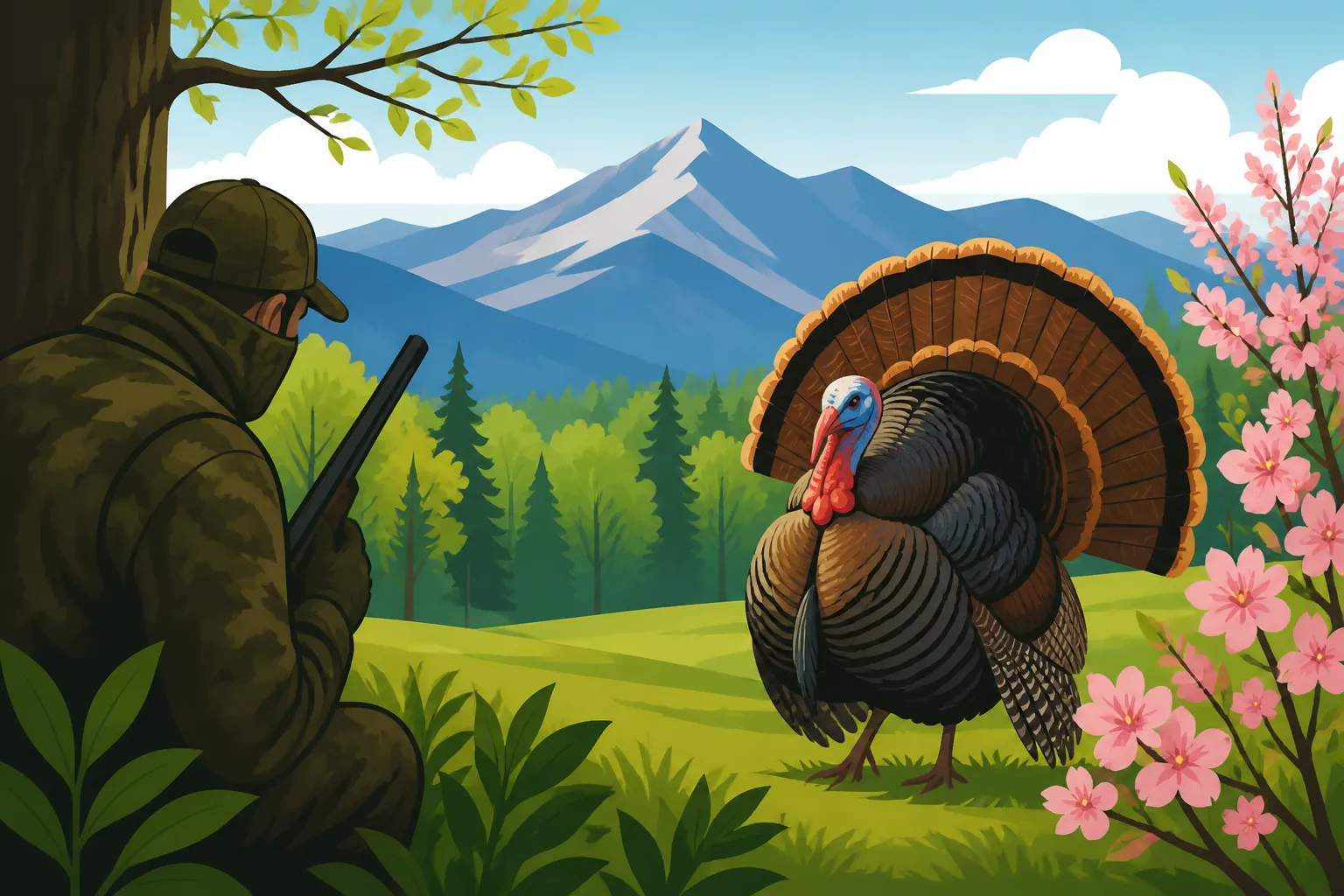
When you hear a gobble and need to set up quickly, look for a wide tree to sit against. A tree that's at least as wide as your shoulders will conceal your movements and help you disappear into the woods. Setting Up Against a Big White Pine provides excellent concealment. Position yourself so you have a clear shooting lane in the direction you expect the turkey to approach, but also ensure you have some background cover. Never sit directly on a ridge top where you'll be silhouetted. Instead, drop just below the crest or find a low spot with good visibility. This method demands extreme patience and minimal movement. Every twitch, every adjustment of your gun or call, could be seen by a sharp-eyed gobbler. The advantage here is flexibility; you can chase gobbling birds across ridges and through valleys, adapting to their movements in real-time.
Dealing with Pressured Birds on Public Land
Hunting turkeys on public land in New Hampshire, especially later in the season, can be a real challenge due to hunting pressure. Birds quickly learn to associate calls with danger, becoming "call-shy" or "hunter-wise." They might gobble profusely but refuse to commit, or they might silently sneak in and spot you before you even know they're there. The key to success in these situations is often to do the opposite of what everyone else is doing.
First, consider hunting less accessible areas. This might mean hiking further off the beaten path, crossing a creek, or navigating dense regrowth. Most hunters stick to logging roads and easily accessible spots. If you're willing to put in the extra effort, you'll often find birds that haven't been as pressured. Second, ease up on the calling. Instead of loud, aggressive yelps, try soft clucks and purrs, or go completely silent for long stretches. Let the birds come to you out of curiosity, rather than forcing them to respond. Another tactic is to set up where you expect birds to naturally travel, rather than relying solely on calling them to you. This might be a saddle between two ridges, a field edge, or a creek bottom funnel. GoHunt resources often highlight strategies for tackling heavily hunted areas, which can be invaluable. Patience, stealth, and adapting your tactics are paramount when dealing with pressured New Hampshire gobblers.
Post-Shot Procedures and Game Care
The moment of truth arrives, you've made a clean shot, and your gobbler is on the ground. But the hunt isn't over. Ethical hunting dictates a set of procedures for tracking, recovering, field dressing, and reporting your bird. These steps ensure you honor the animal and comply with New Hampshire Fish and Game regulations.
Tracking and Recovering Your Bird
Even with a perfect shot, a turkey can sometimes run or flop a surprising distance. The first rule after the shot is to mark the exact spot where the bird was standing when you fired. Pick out a tree, a rock, or some other landmark. Then, take a deep breath, ensure your gun is safe, and wait a few minutes. This gives the bird time to expire and reduces the chance of bumping a still-living bird into a difficult-to-find area. If the bird is visible and clearly down, approach with caution, gun ready, and be prepared to administer another shot if necessary.
If the bird is not immediately visible, begin your track at the spot where it was standing. Look for feathers, blood, or disturbed leaves. Turkeys often run in a straight line, but they can also dive into thick cover. Expand your search outward in ever-widening circles if you don't find a clear trail. Pay attention to changes in terrain; a bird might run downhill or seek out the densest cover. The goal is a quick and efficient recovery. If you lose the trail, grid-search the area methodically. A lost bird is a wasted opportunity and a somber end to a hunt. Taking your time and being thorough is key to a successful recovery.
Field Dressing and Transporting Your Turkey
Once your bird is recovered, proper field dressing is crucial, especially if you plan to eat it (and why wouldn't you?). The primary goal of field dressing is to cool the meat quickly to prevent spoilage. Start by removing the entrails. Make a small incision from the breastbone down to the vent, being careful not to puncture the intestines. Reach in and remove all internal organs, including the gizzard, liver, heart, and lungs. You can save the heart and liver for eating if you wish. Some hunters also choose to remove the crop (a pouch in the neck where food is stored), which often contains seeds, berries, and insects.
After removing the entrails, wipe the cavity clean with paper towels or leaves if water isn't available. Do not rinse the cavity with water unless you can dry it thoroughly afterward, as moisture promotes bacterial growth. If you plan to mount the bird, be very careful not to damage the tail fan or the beard. Many hunters prefer to simply remove the breast meat in the field, as it's the largest and most valuable portion. To do this, make an incision down the center of the breastbone, then slice along the rib cage to free the meat. Transport your turkey quickly and keep it cool, especially on warm spring days. A cooler with ice is ideal.
New Hampshire Turkey Checking Requirements and Reporting
New Hampshire takes its wildlife management seriously, and that includes mandatory reporting for harvested turkeys. This data is vital for biologists to monitor turkey populations, assess harvest rates, and make informed decisions about future seasons. Thankfully, the process has become much easier in recent years. Instead of physically bringing your bird to a check station, you can now register your turkey online or through the New Hampshire Fish and Game mobile app.
You must register your turkey within 12 hours of harvest. The app, which can be downloaded for free, allows you to enter all the necessary information, including the date and time of harvest, the WMU, and details about the bird (e.g., beard length, spur length, weight). You'll receive a confirmation number that serves as your proof of registration. It's a convenient system, but make sure you have cell service or wait until you're in an area with reception. If for some reason the online system isn't working, you might still need to find a physical registration agent. Always check the annual digest for the most current New Hampshire Turkey Checking Requirements and procedures. Failing to register your turkey is a violation and can result in penalties, so don't skip this important final step.
Overcoming Common Spring Turkey Hunting Challenges
Spring turkey hunting in New Hampshire, while incredibly rewarding, isn't always easy. The birds are wild, the weather is unpredictable, and sometimes, other hunters can add to the complexity. Being prepared for these common challenges is part of becoming a more resilient and successful hunter.
Dealing with Unresponsive or Call-Shy Birds
One of the most frustrating scenarios is encountering birds that simply won't respond to calls, or worse, gobble a few times and then go silent. This is often the result of hunting pressure, or sometimes, they're just "henned up," meaning they're already with a group of real hens and have no interest in your artificial yelps. When faced with unresponsive birds, it's time to get creative. First, try changing calls. If a slate isn't working, try a box or a diaphragm. Vary your cadence and volume. Sometimes a completely different sound is what it takes.
If they're still not responding, it's time for some old-fashioned woodsmanship. Instead of relying on calls, try still-hunting or slowly moving through likely habitat, stopping frequently to listen and observe. You might catch a silent bird moving between feeding areas or heading to a strut zone. This also ties into the "receding hen" tactic mentioned earlier – make a few calls and then move away. They might follow out of curiosity. If birds are henned up, your best bet is often to try to get ahead of the flock and intercept the gobbler as he travels. This often requires stealth, knowledge of the terrain, and a good dose of luck. The key is never to give up; sometimes, the most stubborn gobbler is just waiting for the right moment or the right call. When New Hampshire Gobblers Go Quiet in Late May, these tactics become even more critical.
Navigating Variable New Hampshire Spring Weather
New Hampshire weather in May can be a real mixed bag. One day it's glorious sunshine and 60 degrees, the next it's sleeting and 30. This variability presents significant challenges for turkey hunters. Rain can dampen gobbling activity, make calls difficult to use (especially slate calls), and make tracking a shot bird harder. Cold temperatures can make for uncomfortable long sits, while unexpected heat can lead to rapid meat spoilage if not handled correctly.
The solution lies in preparation. Always check the weather forecast before you go, but be ready for anything. Layering your clothing is paramount. Start with a moisture-wicking base layer, add insulating layers, and top it off with waterproof and windproof outer shell. This allows you to adjust to changing conditions throughout the day. Pack extra gloves, a warm hat, and rain gear, even if the forecast looks clear. For your calls, consider carrying a waterproof box call or using mouth calls which aren't affected by moisture. For your shotgun, ensure it's well-maintained and protected from the elements. And remember to keep your harvested bird cool; pack a cooler with ice, even if you plan on field dressing quickly. Being uncomfortable in the woods is a surefire way to shorten your hunt and decrease your focus.
Handling Other Hunters and Public Land Etiquette
Hunting on public land often means sharing the woods with others, and in New Hampshire, turkey season can be popular. While most hunters are respectful, encounters can sometimes be frustrating or even dangerous if proper etiquette isn't followed. The number one rule is safety. Always identify your target beyond a shadow of a doubt, ensuring it's a legal bird and that nothing is behind it. Never stalk a gobbling sound, as it could be another hunter.
If you encounter another hunter in the woods, a simple, friendly wave or greeting is usually sufficient. If you realize another hunter is working the same bird, it's generally good etiquette to back off and find another area. There are plenty of turkeys and plenty of woods in New Hampshire to go around. If you're using decoys, especially gobbler decoys, be extra cautious about placement and concealment, as they can attract attention from other hunters. Wear some blaze orange when walking in or out of the woods, especially if you're not in the immediate vicinity of your setup, to make yourself visible. This is a common practice even where not legally required for turkey. Overall, respect, courtesy, and clear communication go a long way in ensuring everyone has a safe and enjoyable experience.
Disclaimer
Please note: Hunting regulations and laws can change frequently. Always consult the most current New Hampshire Fish and Game Department hunting regulations guide before heading afield. This content is for informational purposes only and should not be considered legal advice.