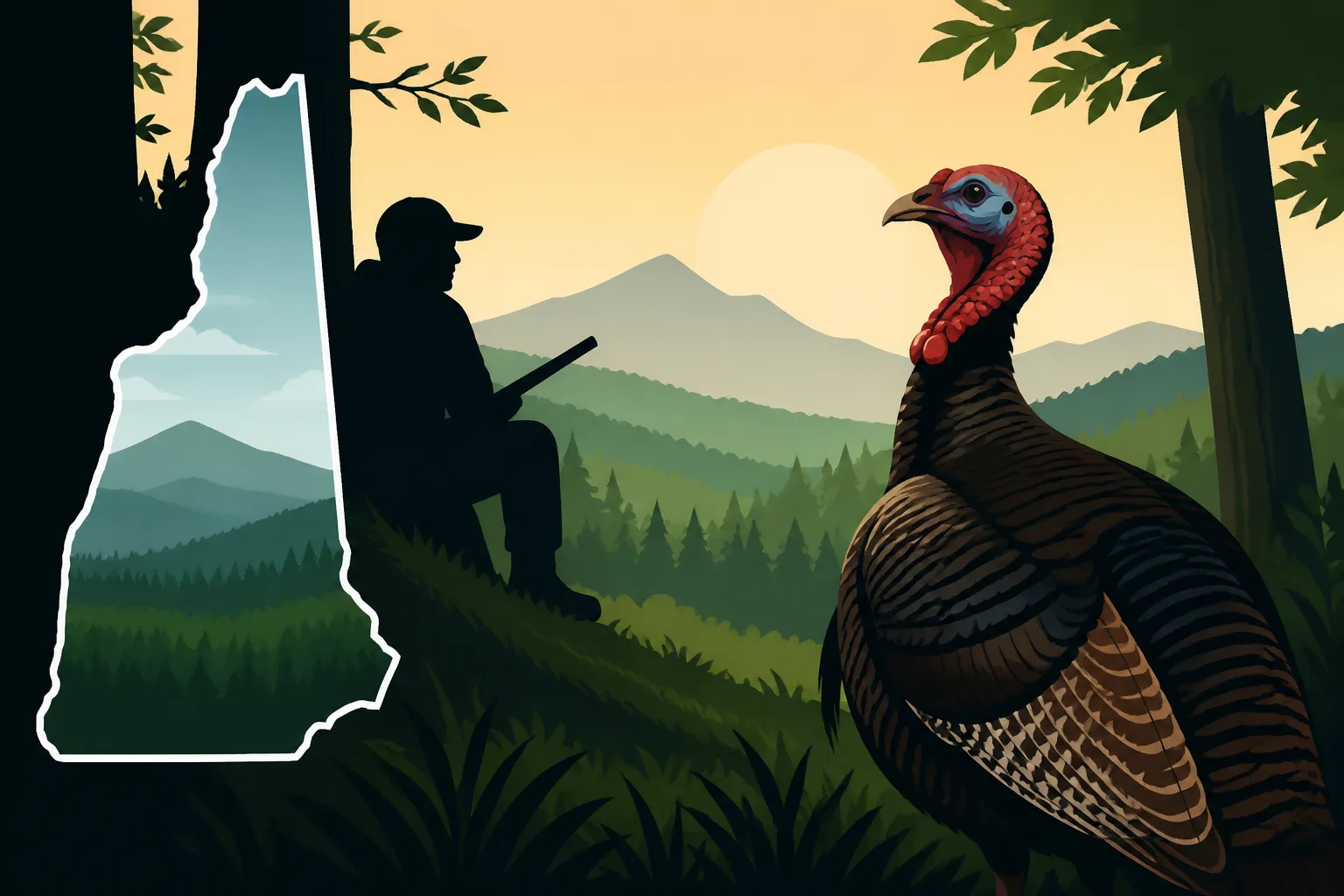
When New Hampshire Gobblers Go Quiet in Late May
The late days of May in New Hampshire's turkey woods can be a real head-scratcher. One minute, gobblers are thundering on the roost, eager to respond to every yelp; the next, it feels like they’ve simply vanished into thin air. If you've ever found yourself scratching your head, wondering where all the birds went, you're not alone. This guide aims to pull back the curtain on why New Hampshire gobblers go quiet as the spring season draws to a close and, more importantly, equip you with the advanced strategies to consistently put yourself in a position for success, even when the woods seem silent.
The Late May Silence: Understanding Why New Hampshire Gobblers Go Quiet
It’s a common frustration, isn't it? That vibrant early-season chatter and booming gobbling fades into a stillness that can make you question if you're even in the right woods. But there are very real, biological, and behavioral reasons for this shift, and understanding them is the first step to adapting your approach.
Post-Breeding Season Dynamics
The primary driver for a gobbler's boisterous nature in early spring is, quite simply, procreation. When the season first kicks off, particularly in early to mid-May, hens are still very much in the early stages of their nesting cycle, and many haven't even bred yet. Gobblers are driven by an intense instinct to find receptive hens, attract them with their calls and displays, and fend off rival Toms. This is when they're most vocal, asserting dominance and advertising their presence.
By late May, however, the peak of breeding activity in New Hampshire has largely passed. Many hens are now either on their nests, diligently incubating clutches of eggs, or have already hatched poults. Their focus has shifted dramatically from seeking a mate to the vital task of raising their young. Consequently, the gobblers' intense drive to shock-gobble and strut overtly to attract hens diminishes significantly. They might still be interested in a lone hen, but the urgent, almost frantic energy of early spring is gone. They don’t need to gobble as much, and therefore, they often don’t. You might still get a courtesy gobble in response to a loud locator call, but it's often softer, more sporadic, and doesn't carry the same enthusiasm.
Increased Hunting Pressure and Learned Behavior
Another massive factor contributing to the late-May silence is the cumulative effect of hunting pressure. New Hampshire sees a good number of turkey hunters, especially during the first few weeks of the spring season. New Hampshire Spring Turkey Season Dates show that these birds have been called to, spooked, and pursued for several weeks straight. Turkeys, especially older gobblers, are incredibly intelligent animals, and they learn quickly.
A gobbler that might have charged in on a string of excited yelps during the season opener may now associate those same sounds with danger. They become "call-shy," meaning they're wary of responding to or approaching calls. They’ve encountered human presence, seen decoys, and perhaps had close calls. This learned wariness makes them much less likely to give away their position with a gobble, preferring instead to move silently and cautiously. They might still be curious, but they'll often circle wide, approaching from unexpected angles, or simply stand just out of sight, listening. For hunters, this means your go-to aggressive calling that worked wonders earlier in the month might now be actively pushing birds away. It's a frustrating reality, but one that demands a strategic shift in your approach.
Shifting Habitat and Food Sources
Just like deer, turkeys' habitat preferences and dietary needs change throughout the seasons. Early in the spring, when fresh green growth is just emerging, turkeys are often found in more open areas: field edges, clearings, and sparse timber where they can easily find insects and tender sprouts. They're also often seen near established roost sites, making their morning routines somewhat predictable.
As May progresses, and especially by late May, the landscape undergoes a transformation. The foliage thickens dramatically, providing much more cover. Hens on nests require secluded, protected areas. Gobblers, no longer tied as closely to breeding, tend to disperse. They might seek out denser cover, spend more time in creek bottoms, or utilize logging roads and ridges as travel corridors. Food sources also become more diverse and abundant. Insects are plentiful, a variety of new plants are available, and they might even be starting to key in on specific berry bushes or other early fruit. This means those field edges that were red hot two weeks ago might now be devoid of birds. You need to adjust your scouting and hunting locations to where the birds are now, not where they were. Using resources like GoHunt to analyze satellite imagery and topo maps can help identify these changing patterns, highlighting thicker cover or new food sources that might be attracting birds.
Advanced Tactics for Late-Season Success
When gobblers go quiet, your tactics need to evolve. The aggressive, run-and-gun style of early season might need to be reined in, replaced by a more nuanced, patient, and often subtle approach. Don't give up on the woods just because the gobbling has slowed; instead, learn to outsmart these wary late-season Toms.
Mastering the Subtle Approach vs. Aggressive Calling
Forget about blowing a series of ear-splitting cutts that worked wonders in early May. For late-season New Hampshire gobblers, less is almost always more. These birds have heard it all, and loud, aggressive calling often serves only to spook them or confirm their suspicions that a hunter is in the area. Instead, embrace the art of subtle, infrequent calling.
Think soft clucks, gentle purrs, and the occasional soft, pleading yelp of a lone hen. Imagine yourself as a contented hen quietly going about her business, perhaps looking for a gobbler, but not desperate. These soft sounds can pique a wary gobbler's curiosity without triggering his alarm bells. Don't call constantly; instead, call once every 10-15 minutes, or even longer, then listen intently. Wait him out. Sometimes, a silent gobbler will appear as if from nowhere, drawn in by the subtlety and realism of your calls. It's a completely different mental game than the high-octane excitement of an early-season charge. Knowing which calls to use, and when, is crucial. For instance, while a loud box call is great for breaking the silence on the roost, a quiet slate call or a soft mouth call is often your best bet for those late-season birds. If you're looking to refine your vocalizations, check out our guide on Best Call for a New Hampshire Spring Gobbler. This subtle strategy is a stark contrast to trying to get a gobbler to announce his presence right off the roost, as you might in early May.
The Art of Relocation and Run-and-Gun
While the calling itself becomes subtle, the movement aspect of late-season hunting often remains a key component, albeit a modified one. It's not about crashing through the woods, yelping loudly every hundred yards. Instead, it's about methodical, quiet relocation. You'll often cover more ground by walking silently, stopping frequently to listen, and using very soft locator calls (like an owl hoot or crow caw) every 15-20 minutes, or at opportune locations like ridgelines, to try and elicit a shock gobble without giving away your exact position.
When you do get a response, resist the urge to immediately close the distance quickly. Instead, plan your approach carefully, using terrain features like creek beds, ridge lines, or thick timber to remain hidden as you move into position. Once you're set up, typically within 100-150 yards, switch back to those subtle hen calls and let patience take over. This "run-and-gun" method, when applied judiciously with quiet footwork and soft calling, allows you to cover more ground and increase your chances of finding a bird that's not actively gobbling. Our detailed advice on Run-and-Gun Turkey Tactics on Public Land can further refine this strategy. Utilizing tools like the GoHunt app to quickly assess terrain and potential travel routes can save you precious time and energy during these silent searches.
Decoy Strategies for Pressured Birds
Decoys can still be effective in late May, but they need to be used with extreme caution and often in a more minimalist fashion. Gone are the days of setting up multiple hen and jake decoys in an open field, expecting a gobbler to charge in. Pressured birds will often hang up out of range, circle wide to investigate, or simply spot something "off" and disappear.
For late season, consider a single, realistic hen decoy, positioned subtly. A jake decoy can still work if you encounter a subordinate gobbler or a particularly aggressive Tom, but often a single hen is less intimidating and more believable to a cautious bird. Positioning is paramount: ensure the decoy is clearly visible from where you expect the gobbler to approach, but also consider your shooting lanes. You'll want to avoid any obstructions between you, the decoy, and the approaching bird. Sometimes, using no decoy at all is the best strategy, especially if you're set up in very thick cover where visibility is limited. However, when used correctly, especially with a "Reaper" fanning technique (where you hold a fan of tail feathers and slowly move it to imitate a strutting gobbler coming to you), decoys can sometimes be the ticket to bringing that hung-up bird the last few yards. For more in-depth advice on placement and types, refer to our guide on Decoy Placement for Pressured Spring Birds.
Scouting, Location, and Leveraging Technology
Success in late-season turkey hunting hinges heavily on scouting and understanding where the birds are, even when they're not making a sound. Relying solely on your ears won't cut it anymore; you need to become a detective, looking for clues and using all available tools to your advantage.
Post-Roost Movement and Sign Reading
When gobblers aren't gobbling, you have to find them by seeing where they've been and where they're going. This means shifting your focus from listening for calls to actively searching for physical sign. Spend your time scouring logging roads, trails, field edges, and creek bottoms for fresh tracks in the mud or dust. Look for "strut marks" – the tell-tale drag lines left by a gobbler's wingtips as he performs his display. Examine droppings: fresh droppings indicate recent activity. Feather dustings, where birds have preened, are another great indicator of a favorite loafing or strutting area.
Pay close attention to potential travel corridors between roost sites (which can be hard to pinpoint if birds aren't gobbling) and feeding or loafing areas. Turkeys are creatures of habit, and while their vocalizations might change, their general daily routines often follow predictable routes, especially between cover and food. Identifying these routes and setting up along them, rather than just calling blindly, dramatically increases your odds. It's less about the grand vocal performance and more about precise placement, a skill you can refine by considering advice like Hunting a Funnel Between Two Woodlots.
Utilizing Topography and Cover
New Hampshire's diverse terrain, from the rolling hills of the Monadnock Region to the rugged White Mountain foothills, plays a huge role in how turkeys move and where they spend their time. In late May, with dense foliage, birds often use topography to their advantage for security and efficient travel. This means looking beyond the obvious open areas and concentrating on features like gentle slopes, ridge-tops, saddles, and dense softwood thickets that offer thermal cover and protection.
A gobbler might use a ridge to travel quietly, ducking over the backside to avoid detection. He might follow a creek bottom for water and insect foraging, or skirt the edge of a dense clear-cut. Your job is to analyze the landscape, identifying these natural travel funnels and setting up in ambush positions. The GoHunt app's detailed topographic maps are invaluable here, allowing you to identify saddles, benches, and thickets that might concentrate bird movement. Learning to read these topographical clues and understand how birds use them is critical for success. This kind of detailed scouting, well before you hunt, as discussed in Scouting New Hampshire Public Land Before Season, is essential.
Understanding Local Turkey Populations and Habits
While general turkey behavior trends exist, every Wildlife Management Unit (WMU) in New Hampshire has its own unique characteristics. The turkey population density, hunting pressure, and available habitat can vary significantly from one WMU to another. For example, some WMUs might have a higher density of birds due to excellent habitat and lower pressure, while others might see more hunting activity, leading to even warier birds.
Consulting the New Hampshire Fish and Game Department's harvest reports can give you insights into turkey populations and success rates in different WMUs. While these reports don't tell you where to hunt, they can inform your expectations and help you decide which areas might be worth focusing your scouting efforts on. For example, some WMUs might be known for holding more birds, even if they are pressured. Additionally, talk to local landowners, other ethical hunters, or even bait shops to get a pulse on local bird activity, without asking for specific spots. This local knowledge, combined with your own scouting, paints a more complete picture. Keep in mind that understanding the nuances of different seasons and locations, as detailed in articles like New Hampshire Turkey Population Trends and Which WMUs Allow Fall Turkey Hunting (for contrast in bird distribution), can give you an edge in interpreting late-season spring behavior. GoHunt's community forums and WMU-specific data can also be an excellent resource for gleaning these localized insights.
Late Season Turkey Hunting Strategy Comparison
Understanding the differences between early and late season strategies is paramount to success. This table outlines the key shifts you'll need to make in your approach.
| Feature | Early Spring Season (Early-Mid May) | Late Spring Season (Late May – Season Close) |
|---|---|---|
| Gobbling Activity | High, especially at dawn and dusk. Birds eager to respond to calls. | Significantly reduced, often silent. Gobblers may only cluck or purr. |
| Hens' Behavior | Actively breeding, often with gobblers. Can pull gobblers away. | Nesting or already on nests, less receptive to gobblers. |
| Gobblers' Focus | Strong urge to breed, seeking hens, defending territory. | Less intense breeding drive, more dispersed, cautious, focused on food. |
| Calling Strategy | Aggressive yelps, cutts, loud volume to elicit responses. | Subtle clucks, purrs, soft yelps, patience. Mimic lone, contented hen. |
| Decoy Use | Often effective with hen/jake setups to draw in dominant birds. | Use sparingly. Single hen or jake. May shy away from large setups. |
| Hunting Pressure | Moderate to high, birds can be less wary initially. | High cumulative pressure, birds are often call-shy and extremely wary. |
| Habitat Focus | Strutting zones, open fields, edges near roosts. | Thicker cover, creek bottoms, travel corridors, new food sources. |
| Movement | Birds more predictable from roost to strut. | More erratic, often quiet movement between cover. |
| Primary Challenge | Intercepting birds quickly before they commit to hens. | Locating silent birds and coaxing them into range with caution. |
Final Thoughts on Late-Season Success
Hunting late-season gobblers in New Hampshire might be challenging, but it's incredibly rewarding. When you finally pull off a successful hunt on a bird that refused to gobble, drawing him in with subtle calls and strategic movement, the satisfaction is immense. It's a true testament to your patience and skill. Always remember your New Hampshire Spring Turkey Bag Limit and to follow proper protocols for New Hampshire Turkey Checking Requirements after a successful hunt. Don't let the silence deter you; let it sharpen your senses and refine your approach. The woods might be quiet, but the opportunity is still there for those willing to adapt.
Disclaimer
Hunting carries inherent risks, including but not limited to injury or death. Always prioritize safety, understand and follow all New Hampshire Fish and Game laws and regulations, and respect private property. The information provided in this guide is for informational purposes only and should not be considered a substitute for proper hunter education, on-the-ground scouting, or professional guidance.