White-Tailed Deer Across New Hampshire
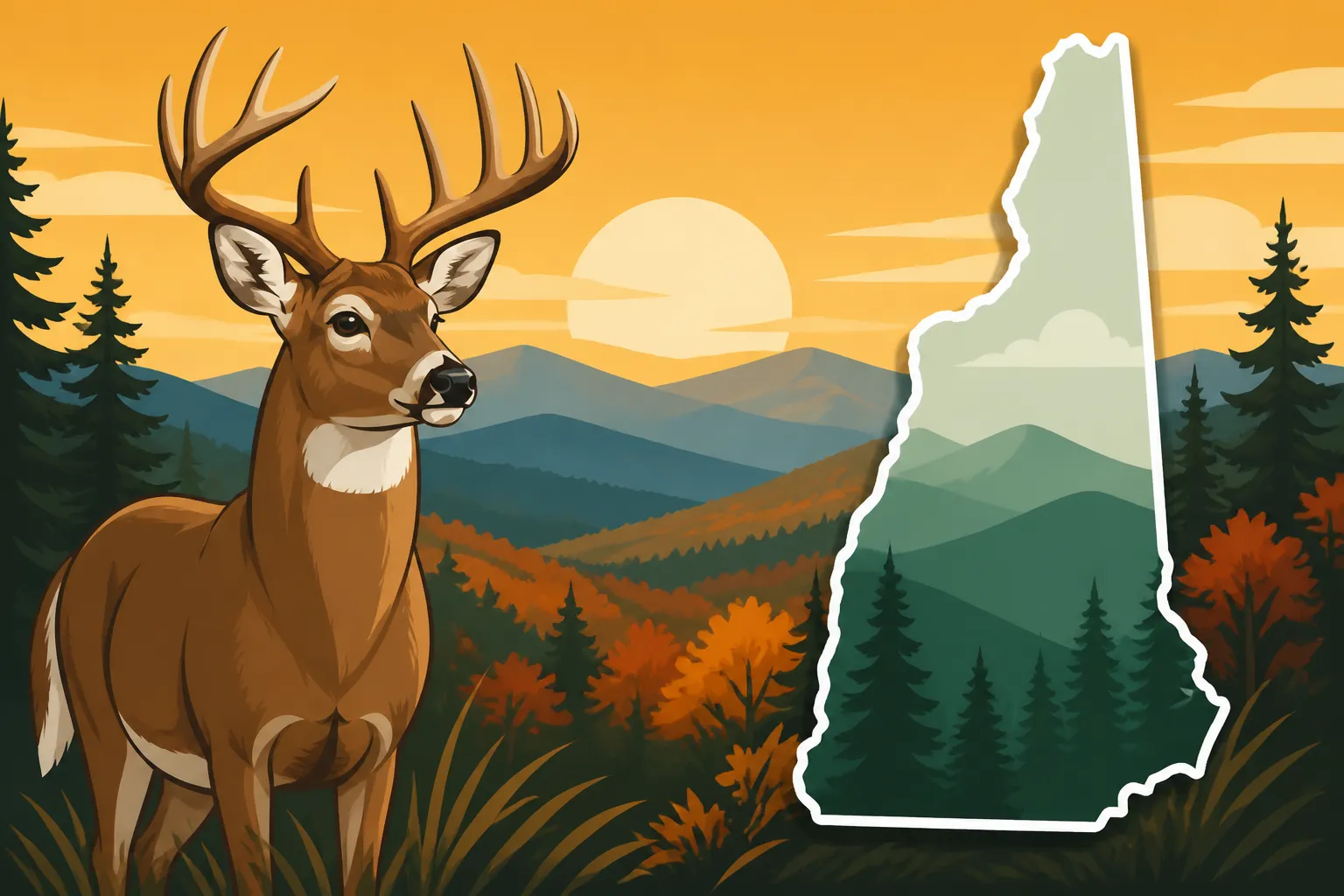
There's nothing quite like the sight of a white-tailed deer ghosting through the New Hampshire hardwoods, especially when the leaves are turning, or the first snow has dusted the ground. But if you've spent any time chasing these elusive creatures in our beautiful Granite State, you know that understanding their patterns, their preferred haunts, and even their numbers can feel like trying to solve a complex puzzle. From the dense northern forests to the more suburban fringes down south, deer behavior and hunting opportunities vary dramatically. This comprehensive guide is here to untangle that complexity, providing you with a deep dive into the world of white-tailed deer across New Hampshire, their habits, and how you can be a more effective hunter, regardless of where your boots hit the dirt.
Understanding New Hampshire's White-Tailed Deer Population
New Hampshire's white-tailed deer herd is a testament to resilience and careful management. While we don't have the vast agricultural landscapes that produce giant bucks in some other states, what we do have are robust, healthy deer that thrive in our diverse terrain. Getting a handle on their population dynamics is the first step to becoming a more informed hunter.
Historical Perspective and Current Population Estimates
For generations, white-tailed deer have been an integral part of New Hampshire's ecosystem and cultural heritage. Early European settlement, followed by extensive logging and unregulated hunting, dramatically reduced deer numbers by the late 19th and early 20th centuries. It's hard to imagine now, but there were periods when deer were scarce across much of the state. Thankfully, conservation efforts, habitat restoration, and regulated hunting seasons brought them back from the brink. The New Hampshire Fish and Game Department has been instrumental in managing this recovery, using a scientific approach to ensure sustainable populations.
Today, New Hampshire boasts a healthy and stable deer population. While exact numbers are always estimates, the trend has generally been positive in recent decades, with local fluctuations due to factors like winter severity, habitat changes, and hunting pressure. The department conducts extensive surveys, harvest analyses, and other research to arrive at a New Hampshire Deer Population Estimate each year, giving hunters and wildlife managers critical data. These estimates inform season lengths, bag limits, and specific management objectives for different regions.
Factors Influencing Deer Numbers
Several factors play a significant role in shaping our state's deer population, and understanding them can help you predict deer movement and density.
One of the most critical factors is winter severity. Deep snow and prolonged cold can lead to higher winter mortality, particularly for fawns and older deer. When food sources become buried under heavy snow, deer expend more energy trying to find sustenance, leading to a negative energy balance that can be fatal. This is especially true in the more mountainous and northern parts of the state. Conversely, mild winters often result in higher fawn survival rates and a healthier overall herd going into the spring.
Habitat availability and quality are also paramount. Deer thrive in areas with a mosaic of young forests, open fields, mature hardwoods, and thick conifer stands for thermal cover. Logging practices, for example, can have a profound impact. Recent clear-cuts or selective harvests create new browse for deer, drawing them to these areas for several years before the vegetation grows too tall. Urban and suburban expansion, while sometimes creating localized "nuisance" deer problems, can also fragment habitat and reduce overall deer range in certain areas.
Predation, primarily from coyotes, can also influence fawn survival, particularly in areas with high coyote densities. While coyotes rarely take healthy adult deer, they can impact fawn recruitment. Ultimately, however, human hunting remains the primary tool for managing deer populations in New Hampshire, helping to balance deer numbers with habitat capacity and reduce deer-vehicle collisions.
Regional Differences in Deer Density
New Hampshire isn't a uniform landscape, and neither are its deer populations. There's a clear difference in Deer Density by New Hampshire Region, often correlated with habitat types, human population density, and winter conditions.
The North Country, encompassing areas like Coos County and northern Grafton County, generally has lower deer densities. This region is characterized by vast tracts of spruce-fir forest, rugged terrain, and much harsher winters with deeper, longer-lasting snow. Deer in these areas tend to be hardier, often living more spread out and utilizing wintering yards more intensely. Hunters in the North Country might find success by focusing on transitional zones between mature timber and younger clear-cuts, or along major river drainages where food is more available.
As you move south, particularly into the central and southern parts of the state (e.g., Merrimack, Hillsborough, Rockingham counties), deer densities generally increase. These regions feature a mix of hardwood forests, agricultural lands, and more developed areas, offering a richer and more varied food supply. Winters are typically milder, leading to better overwinter survival. Here, deer often adapt to suburban environments, becoming more nocturnal and utilizing green spaces, woodlots, and backyard gardens for forage. This creates different challenges and opportunities for hunters, often requiring different tactics.
New Hampshire Deer Density by Region (General Overview)
| Region | General Deer Density | Primary Habitat Types | Typical Deer Size | Hunting Pressure |
|---|---|---|---|---|
| North Country (WMU A, B) | Lower | Spruce-fir forests, rugged terrain, river valleys | Smaller body, antler size | Moderate |
| White Mountains (WMU E, F) | Low to Moderate | Mixed hardwoods, high elevation, harsh winters | Smaller body, antler size | Moderate to High |
| Lakes Region (WMU D1, D2) | Moderate | Mixed forests, lakeshore, agricultural pockets | Medium body, good antler potential | High |
| Central/Merrimack Valley (WMU C, I1, I2) | Moderate to High | Mixed hardwoods, suburban edges, agricultural | Medium to Large body, good antler potential | High |
| Southwest (WMU G, H1, H2) | High | Mixed forests, rolling hills, agricultural, suburban | Large body, excellent antler potential | High |
| Southeast/Seacoast (WMU J1, J2, K, L, M) | High | Mixed forests, coastal plain, heavy suburban | Large body, excellent antler potential | Very High |
Note: Deer densities are relative and can vary greatly within each WMU and region depending on specific habitat and conditions.
Deer Biology and Behavior in the Granite State
Understanding how deer live, what drives their daily routines, and how they react to the changing seasons is fundamental to consistent hunting success in New Hampshire. They are creatures of habit, but also incredibly adaptable.
Seasonal Movements and Habitat Use
Deer in New Hampshire undergo distinct seasonal shifts in their habitat use and movement patterns, primarily driven by food availability, breeding cycles, and thermal cover needs.
In spring and early summer, after the rigors of winter, deer are focused on replenishing lost reserves. Green-up brings tender new growth, and deer gravitate towards areas with lush forage. This can include early successional growth in recent timber harvests, regenerating clear-cuts, and the edges of agricultural fields. Does are also preparing for fawning, seeking secluded, thick cover to drop their fawns. During this time, deer movements tend to be more localized as they focus on feeding and fawning.
As summer progresses into early fall, deer continue to feed heavily, building up fat reserves for the coming rut and winter. Acorns and other hard mast become incredibly important food sources, drawing deer to mature oak and beech ridges. Soft mast, like apples and berries, also provides critical energy. You'll often find deer congregating in proximity to these food sources, and scouting during this period can reveal key travel corridors. This is a great time for Scouting New Hampshire Public Land Before Season, identifying those heavily used trails leading to abundant forage.
Late fall brings the rut, followed by the onset of colder weather. Deer transition to winter ranges, often favoring dense conifer stands (like hemlock or white pine) that offer protection from wind and snow, known as deer wintering areas or deer yards. These areas are crucial for survival, especially in the North Country. During harsh winters, deer may move significant distances to reach these protected havens, and their activity outside these yards becomes minimal, focusing solely on survival.
The New Hampshire Rut Explained
Ah, the rut! This is the period every deer hunter dreams about, and in New Hampshire, it's a dynamic and exciting time to be in the woods. While the exact timing can fluctuate slightly year to year based on factors like weather, the peak of the rut generally occurs in Hunting the Rut in Early-to-Mid November.
The rut is essentially the deer breeding season, characterized by increased activity, territorial disputes, and bucks actively seeking out receptive does. It begins with the pre-rut phase in late October, where bucks start making scrapes and rubs, asserting their dominance, and beginning to check doe groups. You'll notice a significant increase in rub lines and scrape activity along travel corridors and field edges.
The peak of the rut, typically in the first two weeks of November, is when the most intense breeding activity takes place. Bucks will be on the move almost constantly, day and night, scent-checking for does. This is when you might see a mature buck chasing a doe through the woods in broad daylight – a thrilling sight that validates all those hours of scouting and sitting. During this time, traditional stand locations near scrapes and rubs can be effective, but focusing on natural funnels, pinch points, and cover where does frequently travel can be even more productive, as bucks will be patrolling these areas.
Post-rut, which extends through late November and into December, sees bucks recovering from the exhaustive breeding period. They're still active, but often more focused on feeding to regain weight before winter truly sets in. Does will also be seeking out food sources to recover their body condition. Understanding these phases allows you to adapt your hunting strategy throughout the season.
Winter Survival Strategies
New Hampshire winters can be brutal, and white-tailed deer have evolved remarkable strategies to survive the deep snow and bitter cold. Their primary strategy revolves around minimizing energy expenditure and finding adequate thermal cover and food.
Deer grow a thicker, darker winter coat that provides excellent insulation. Their metabolism also slows down, allowing them to conserve energy. When snow depths reach a foot or more, deer in northern and higher elevation areas will typically gather in "deer yards" or "deer wintering areas." These are usually dense stands of conifers (like hemlock, spruce, and balsam fir) that intercept snow, creating shallower snow depths on the forest floor. The thick canopy also blocks wind, providing crucial thermal protection. Within these yards, deer create intricate trail networks, limiting their movement to conserve energy and access what little browse might be available.
Food sources in winter are scarce. Deer rely on woody browse—the twigs and buds of various trees and shrubs—which offers less nutritional value than summer forage but is critical for survival. They also consume mast that might still be available under the snow, or even lichens. Hunters who understand how to Reading a White Mountain Deer Yard can often locate areas where deer concentrate during the toughest parts of winter, which can be useful for late-season hunting or future scouting. A tough winter, however, often means a leaner fawn crop the following spring, as does enter the fawning season in poorer condition.
Key Deer Management Units (WMUs) for White-Tails
New Hampshire manages its deer population through a system of Wildlife Management Units (WMUs), each with specific characteristics and regulations. This localized approach is critical because deer populations, habitats, and hunter pressure vary so much across the state. Understanding these WMUs is crucial for any hunter.
WMU System Overview and Deer Allocation
New Hampshire is divided into a series of WMUs, ranging from A in the far north to M in the far southeast. This system, detailed in New Hampshire's WMU-Based Deer Season Structure, allows the Fish and Game Department to tailor management strategies to specific areas. For instance, northern WMUs (A, B, E, F) often have more conservative regulations due to harsher winters and lower deer densities, while southern and central WMUs might have more liberal antlerless deer opportunities.
Each WMU has specific harvest objectives, aiming to maintain a healthy, sustainable deer population that is in balance with its habitat and local human tolerance. These objectives are influenced by deer population estimates, hunter success rates, public input, and disease monitoring. The department carefully monitors harvests in each WMU to ensure these objectives are met. Hunters will notice that bag limits and season dates can sometimes differ between WMUs, especially for the earlier archery close in WMU A or specific antlerless permit availability.
High-Yield WMUs for Deer Harvest
If you're looking for areas with consistently higher deer harvest numbers, you'll generally be looking towards the central and southern parts of the state. These WMUs typically have higher deer densities and more favorable habitats.
WMUs like G, H1, H2 (Monadnock Region), I1, I2 (Merrimack Valley), and J1, J2, K, L, M (Seacoast and Southeastern regions) often report the highest deer harvests annually. These areas boast a combination of mature hardwood forests, diverse understory, and proximity to agricultural lands and suburban green spaces that provide ample forage and cover. The milder winters also contribute to better deer survival rates.
For example, WMU H2, often referred to as ridge country terrain, offers excellent deer hunting due to its mix of dense cover and diverse food sources. Similarly, the Merrimack Valley (WMU I1) provides a patchwork of river bottomlands, small woodlots, and agricultural fields that hold strong deer numbers. While hunting pressure can be higher in these areas, particularly on public lands, the sheer number of deer often makes up for it. Success in these high-yield WMUs often comes down to diligent scouting, understanding localized deer movements, and being prepared to navigate smaller parcels of public land or secure private land access.
Managing for Antlerless Opportunities
Managing for antlerless deer (does and fawns) is a critical component of New Hampshire's deer management strategy, especially in WMUs with higher deer populations. Allowing the harvest of antlerless deer helps to control herd growth, maintain a healthy buck-to-doe ratio, and reduce impacts on habitat and potential conflicts with humans (e.g., deer-vehicle collisions).
The opportunity to take an antlerless deer typically varies by WMU and often requires an "any-deer" permit or specific regulations during certain seasons. For instance, during the New Hampshire's November Firearms Deer Season, hunters in certain WMUs might be eligible for an antlerless deer if they possess the correct permit or if the regulations allow it for that specific season and WMU.
These permits are generally more available in the southern and central WMUs where deer populations are robust and sometimes exceed habitat carrying capacity or local tolerance levels. In contrast, northern WMUs might have very limited or no antlerless opportunities to help grow or stabilize their populations. For bowhunters, the Bowhunting New Hampshire's Long Archery Season often provides more flexibility for antlerless harvest depending on the WMU, allowing a longer window to fill a tag. Always check the current New Hampshire Fish and Game Digest for the most up-to-date information on antlerless regulations for your chosen WMU, as these can change annually.
Effective Strategies for Hunting New Hampshire Deer
Hunting white-tailed deer in New Hampshire is a rewarding challenge that requires a blend of skill, patience, and adaptability. The diverse landscapes, from dense timber to agricultural fringes, mean there's no one-size-fits-all approach. However, some fundamental strategies can significantly increase your odds of success.
Scouting and Interpreting Deer Sign
Effective scouting is the bedrock of successful deer hunting. It's not just about walking through the woods; it's about interpreting the story the deer leave behind. Before the season even opens, spend time in your chosen hunting area. Look for trails – worn paths indicating regular deer travel. Pay close attention to trails that connect bedding areas (dense cover like thick conifer stands or brushy clear-cuts) to feeding areas (oak ridges, apple orchards, agricultural fields).
Beyond trails, fresh deer sign is your most valuable intel. Rubs, where bucks have scraped their antlers on small trees, indicate buck activity and can give clues to their size and travel routes. Scrapes, areas where bucks paw away leaves and urinate, are communication hubs, especially during the pre-rut and rut. Look for these along field edges, logging roads, and natural funnels. Droppings can tell you how recently deer were in an area and what they're feeding on. For example, droppings full of apple pieces indicate a nearby orchard.
Utilizing technology can also be a game-changer. Apps like GoHunt, or traditional topographical maps combined with aerial photography, can help you identify potential pinch points, saddles, and dense cover before you even step foot in the woods. These tools can highlight areas that naturally funnel deer, such as narrow strips of timber between open fields, or ridges that connect different habitat types. Setting up trail cameras can provide invaluable insights into deer movement patterns, preferred travel times, and even specific bucks in the area. Remember to always check local regulations regarding trail camera use on public lands.
Popular Hunting Methods Across the State
New Hampshire offers opportunities for a variety of hunting methods, each with its own advantages and challenges.
Still-Hunting and Stalking: This method is about moving slowly and deliberately through the woods, pausing frequently to observe, listen, and scan for deer. It's particularly effective in dense timber or rolling terrain where visibility is limited, such as when Still-Hunting White Mountain National Forest Timber. The key is to move quietly against the wind, taking advantage of natural cover and the deer's own movements. This requires a high degree of patience and woodsmanship, but the reward of spotting and stalking a deer is immense.
Stand Hunting (Treestands and Ground Blinds): This is perhaps the most popular method, involving waiting patiently in a fixed location. Treestands offer an elevated vantage point, improving visibility and helping to keep your scent above the deer's nose. They're excellent for overlooking food sources, travel corridors, or pinch points. Ground blinds, either natural or manufactured, offer concealment at ground level, which can be ideal in open country or for hunters who prefer not to use treestands. Setting up in a strategic location along a known travel route or near a late-season food source can be incredibly effective. Consider locations where deer may be moving between bedding and feeding areas at first and last light.
Driving: More common during the New Hampshire's November Firearms Deer Season, deer drives involve a group of hunters working together. "Drivers" push deer from a block of cover towards "posters" positioned to intercept the moving deer. This can be very effective in dense cover or large woodlots. It requires careful planning, communication, and a thorough understanding of safety protocols to ensure everyone knows their role and shot zones. Deer drives with three or four hunters can be incredibly successful if executed properly.
Specialized Seasons: New Hampshire also offers specific seasons that cater to different methods. Muzzleloader Deer Hunting in New Hampshire provides a unique challenge, requiring proficiency with a different type of firearm. The Bowhunting New Hampshire's Long Archery Season offers a lengthy window, from early fall well into December, allowing hunters to target deer before the pressure of firearms season. Each method demands different gear and a refined set of skills.
Adapting to Weather and Terrain
New Hampshire's weather can be unpredictable, and its terrain varies wildly. Successful hunters learn to adapt.
Weather: Wind direction is paramount for scent control. Always try to hunt with the wind in your favor, carrying your scent away from where you expect deer to approach. Rain can be a blessing, muffling your footsteps for still-hunting and often making deer move more freely, especially if it’s a light drizzle. Heavy rain, however, can put deer down in thick cover. Cold snaps after a period of mild weather can kick deer activity into high gear as they try to feed aggressively. Conversely, extreme cold might make deer bed down for longer periods, conserving energy. Always dress in layers, as conditions can change rapidly. For example, knowing how to choose the best mid-layer for a November firearms hunt can be the difference between a comfortable sit and heading home early.
Terrain: Hunting a flat, agricultural field edge in the southern part of the state requires a different approach than hunting a steep, rocky ridge in the White Mountains. In rugged terrain, understanding thermals (air currents that rise in the morning and fall in the evening) is crucial. Your scent will rise as the air warms and fall as it cools. Always use this to your advantage, positioning yourself where your scent will be carried away from potential deer travel routes. Ridges, saddles, and creek bottoms often serve as natural travel corridors, regardless of the region. A strategic stand setup in a granite ridge saddle can be highly productive. Using mapping apps to study topography can reveal hidden funnels and benches that deer frequently use to navigate challenging landscapes.
Dealing with New Hampshire's Specific Challenges
Hunting in New Hampshire, while incredibly rewarding, comes with its own set of unique challenges that can frustrate even seasoned hunters. Acknowledging and preparing for these hurdles is key to a more successful and enjoyable season.
Navigating Public and Private Land Access
One of the biggest frustrations for hunters in New Hampshire, particularly in the more populated southern and central regions, is finding accessible hunting land. While the state boasts substantial public lands, including the White Mountain National Forest and numerous Wildlife Management Areas (WMAs), these areas often see high hunting pressure. Also, many prime deer habitats are on private property.
Public Land: Hunters utilizing public land must understand the specific regulations for each area. For instance, the White Mountain National Forest Camping Setback Rules might dictate how close you can set up a stand to a campsite, and all WMAs will have their own rules regarding vehicle access, trail cameras, and even stand types. Resources like the New Hampshire Fish and Game App can be incredibly helpful for identifying public land boundaries, but it's wise to double-check with physical maps or other online tools like GoHunt that integrate land ownership data. These layers can quickly show you where public parcels lie and help you avoid inadvertent trespassing. Be prepared for company on public land, especially on weekends and during the peak of firearms season. Finding ground others walk past often requires getting off the beaten path and being willing to hike deeper.
Private Land: Securing permission to hunt private land can be a golden ticket, but it requires effort and respect. New Hampshire's trespass laws state that hunters need permission to hunt private land, though written permission is not explicitly required unless the land is legally "posted" with specific signage. However, in practice, obtaining explicit, written permission is always the best approach. Approach landowners respectfully, ideally well before the season. Offer to help with chores, share your harvest, or assist with nuisance wildlife issues. Building a relationship based on trust and mutual respect is far more effective than a cold call just before opening day. Understanding New Hampshire Posted Land Rules is vital to avoid any legal issues.
The Impact of Hunting Pressure
Hunting pressure is a very real factor in New Hampshire, especially on easily accessible public lands and in areas with high deer densities. When deer feel pressured, they become more wary, often shifting to nocturnal patterns, utilizing thicker cover, and moving to areas with less human disturbance.
You'll notice the impact of pressure most acutely during the initial days of the firearms season. Deer that were visible during bow season might seemingly vanish overnight. To counter this, consider hunting during weekdays when pressure is generally lower. Also, focus on areas that are difficult to access – rugged terrain, beaver flowages, or parcels that require a longer walk from a parking area. These spots often act as natural sanctuaries where pressured deer retreat.
Another tactic is to hunt smaller, overlooked pockets of cover. A small woodlot surrounded by suburban development might hold a surprising number of deer that have learned to evade hunters by sticking to these overlooked havens. Deer become highly sensitive to human scent and noise, so meticulous scent control and quiet movement become even more critical in pressured areas. Even something as simple as using a ground blind on public land that's well-brushed in can give you an edge by making you less conspicuous than an elevated treestand in a high-traffic area.
Best Practices for Deer Recovery
Few things are more disheartening than losing a deer after a good shot. Ethical hunters prioritize a clean harvest and diligent recovery. New Hampshire's terrain and variable weather can make tracking challenging, so preparedness is crucial.
After taking a shot, give the deer ample time to expire. For a marginal shot, wait several hours, or even overnight if conditions allow and the temperature is cold enough to preserve the meat. Rushing the track can push a wounded deer further, making recovery much harder. Mark the spot where the deer was standing and where you last saw it, as well as the point of impact.
When tracking, look for a blood trail, but also pay attention to disturbed leaves, broken twigs, and scuff marks. Note the color and consistency of the blood – bright red, frothy blood often indicates a lung hit, while dark, thick blood suggests a liver or gut shot. If the blood trail peters out, expand your search in concentric circles from the last known blood. Use landmarks to keep your bearings. If hunting near water, be prepared for a deer to enter a beaver flowage or stream. Knowing how to Recovering a Deer From a Beaver Flowage is a skill you hope to never need, but it's important to be ready.
If you hit a deer late in the day, especially as temperatures drop, consider returning at first light. A fresh set of eyes, or the aid of a tracking dog (where legal), can make all the difference. Always be prepared for a long track; carry a good headlamp, flagging tape, and a compass or GPS device. Once recovered, know your New Hampshire Deer Reporting Requirements and how to properly Field Dressing a Deer in Cold Weather to ensure the meat is taken care of efficiently. For those times when the traditional check stations aren't an option, remember that Registering a New Hampshire Deer Online is a convenient and legal way to report your harvest.
Health and Conservation of New Hampshire's Deer Herd
The health of New Hampshire's white-tailed deer herd is a top priority for the New Hampshire Fish and Game Department and hunters alike. Vigilance against disease and proactive conservation efforts ensure that future generations can continue to enjoy hunting in the Granite State.
New Hampshire's CWD-Free Status and Prevention Efforts
One of the most significant threats to deer populations across North America is Chronic Wasting Disease (CWD). CWD is a fatal, neurological disease affecting deer, elk, and moose. It's highly contagious and can persist in the environment for many years. Thankfully, New Hampshire's deer herd remains New Hampshire's CWD-Free Deer Herd. This is a status that the Fish and Game Department, along with the hunting community, works incredibly hard to maintain.
New Hampshire has a robust CWD surveillance program. This involves collecting samples from harvested deer for testing, particularly in high-risk areas or near state borders where CWD has been detected in neighboring states. Hunters play a crucial role in this effort by cooperating with voluntary or mandatory testing requirements at check stations during the season.
Prevention is key. New Hampshire's CWD Prevention Rules are designed to minimize the risk of the disease entering the state. These rules include restrictions on importing deer, elk, and moose carcasses or certain parts from states or provinces where CWD is known to exist. For instance, hunters cannot bring in brain, spinal cord, or lymphatic tissues from CWD-positive areas. Using natural deer lures made from urine or glands is also prohibited to prevent potential transmission. These measures, though sometimes inconvenient, are vital for protecting our healthy herd.
Other Health Concerns and Monitoring
While CWD rightly receives significant attention, the Fish and Game Department also monitors the deer herd for other health concerns.
Winter Tick Infestations: While more commonly associated with moose, severe winter tick infestations can also affect deer, particularly fawns. Heavy tick loads can lead to blood loss, lethargy, and an increased susceptibility to other diseases or environmental stressors. These infestations are particularly problematic after mild winters, which allow more ticks to survive.
Hair Loss Syndrome: Often called cutaneous fibromas or deer warts, this condition causes visible tumors on a deer's skin. While unsightly, it's generally not life-threatening to the deer unless the tumors impede sight or feeding. It's a viral infection that is common and usually resolves on its own, but it’s something hunters occasionally observe.
Other Diseases and Parasites: Like all wild animals, deer can carry various parasites and diseases, some of which can be transmitted to humans. This is why proper field dressing, hygiene, and cooking venison thoroughly are always important. The Fish and Game Department continuously monitors the herd for emergent diseases and investigates unusual mortalities to maintain the overall health of the population. They publish harvest reports and disease updates, ensuring transparency and informing the public about herd health trends.
The Role of Hunters in Deer Management
Hunters are not just participants in the outdoor tradition; they are integral partners in New Hampshire's deer conservation and management efforts. Through license and permit fees, hunters provide the primary funding for the Fish and Game Department's wildlife management, research, and law enforcement activities.
Beyond financial contributions, hunters directly impact deer populations through regulated harvest. By removing deer, especially antlerless deer in specific WMUs, hunters help keep populations in check, preventing overbrowsing of habitat, reducing agricultural damage, and limiting the spread of disease. This balance is crucial for the long-term health of the ecosystem.
Furthermore, hunters act as the "eyes and ears" in the field. By reporting observations of sick deer, unusual deer behavior, or illegal activities, hunters provide valuable data that helps wildlife biologists monitor herd health and enforce conservation laws. Participating in harvest surveys, submitting deer for CWD testing, and adhering to all hunting regulations are all ways that hunters actively contribute to the sustained success of New Hampshire's white-tailed deer population. The tradition of hunting here is deeply intertwined with a commitment to ethical and responsible stewardship, ensuring that the thrill of chasing these magnificent animals endures for generations to come.
Disclaimer
This guide is for informational purposes only and is not a substitute for the official New Hampshire Fish and Game Department regulations. Hunting laws and regulations can change frequently. Always consult the current New Hampshire Hunting Digest and relevant state statutes before planning any hunting activities.