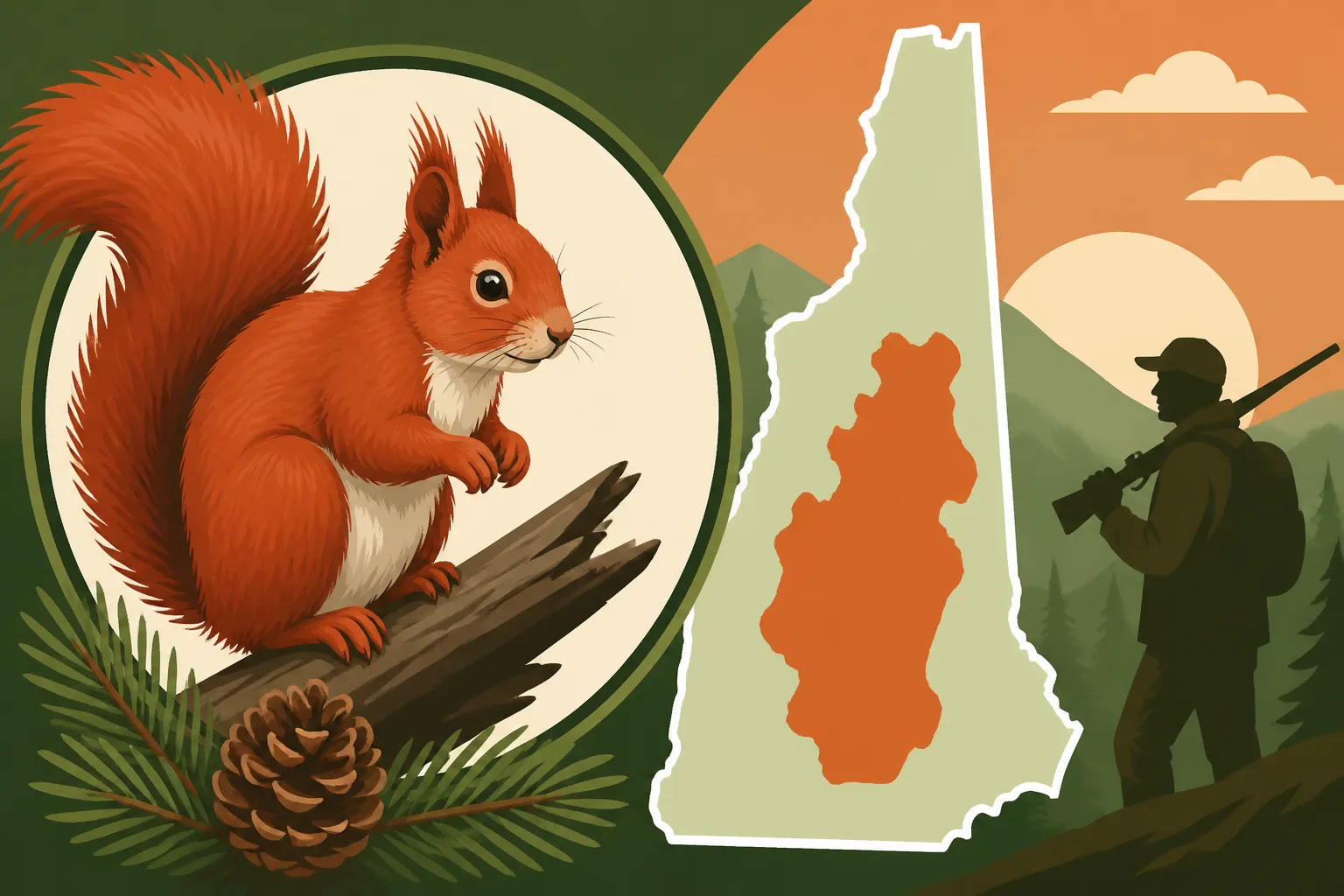
New Hampshire Red Squirrel Range
You might think you know the red squirrel – that feisty, chattering ball of energy that seems to be everywhere in New Hampshire. But beyond their seemingly ubiquitous presence, there's a fascinating story about where these little creatures truly thrive, what drives their movements, and how their lives are deeply intertwined with the Granite State's diverse forest ecosystems. This guide is going to peel back the layers and give you a real understanding of the American red squirrel's range in New Hampshire, helping you appreciate their role, whether you're a nature enthusiast, a homeowner, or a hunter trying to understand the noises in the woods.
Understanding the New Hampshire Red Squirrel: More Than Just a Cute Face
Before we dive into their specific haunts, let's take a moment to truly appreciate the American red squirrel ( Tamiasciurus hudsonicus ). These aren't just generic squirrels; they're unique little powerhouses with distinct behaviors and preferences that really set them apart from their gray squirrel cousins.
Distinguishing Characteristics of the American Red Squirrel
When you picture a squirrel, you might first think of the common gray squirrel, but red squirrels are a whole different ballgame. They're noticeably smaller, typically weighing in at about half a pound, with a sleek, reddish-brown coat on their backs and flanks, usually contrasting sharply with a white or off-white belly. One of their most distinctive features is the noticeable white ring around their eyes, almost like they're wearing tiny spectacles. Their tails are bushy but not quite as broad or long as a gray squirrel's, and they often hold them curled over their back when agitated or alert.
But perhaps their most defining characteristic isn't visual at all – it's auditory. Red squirrels are incredibly vocal, known for their rapid-fire chatter, scolding, and chirps. This isn't just random noise; it's a constant communication with their territory and any perceived threats. If you've ever walked through a quiet stand of pines and suddenly been assaulted by a torrent of angry chirps, you've met a red squirrel. They're constantly on the go, highly energetic, and fiercely territorial, especially around their prized food caches. You'll often see them racing up and down tree trunks, darting across branches, or excavating furiously at the base of a conifer.
The Red Squirrel's Vital Role in the Forest Ecosystem
It's easy to dismiss red squirrels as just another furry face in the woods, or even a nuisance if their incessant chatter blows your deer stand. However, these small mammals play a surprisingly significant role in the health and dynamics of New Hampshire's forests. They are essentially master gardeners, though perhaps accidental ones. Their habit of burying and caching seeds, particularly those from conifers, means they inadvertently contribute to seed dispersal. They hoard far more seeds than they could ever possibly eat, and many of these forgotten caches germinate, leading to new tree growth. This seed dispersal is crucial for the regeneration of many tree species, helping to shape the very composition of our woodlands. New Hampshire Squirrel Nest Counts and Mast Crops are vital for their survival and reproductive success.
Beyond their horticultural contributions, red squirrels are also a fundamental part of the food web. They represent a consistent food source for a variety of predators, from majestic raptors like goshawks and great horned owls to cunning mammalian hunters such as bobcats, fishers, and coyotes. Their presence influences the hunting patterns and success rates of these predators, contributing to the delicate balance of the forest ecosystem. While their chattering can be a double-edged sword for hunters, alerting you to movement but also potentially alarming game, it's a testament to their integral role as constant sentinels and active participants in the forest's ongoing story.
Mapping the Range: Where Red Squirrels Thrive in New Hampshire
Now that we know who these little dynamos are, let's talk about where you can expect to find them across the diverse landscapes of New Hampshire. Unlike some species with very limited, specialized ranges, red squirrels are quite widespread, but they definitely have their favored stomping grounds.
Statewide Presence and General Distribution
You'd be hard-pressed to find a corner of New Hampshire that doesn't host at least some American red squirrels. They are incredibly common and adaptable, found in virtually every county and across most habitat types where trees are present. From the dense, towering timber of the North Country down to the more fragmented woodlots of the southern tier, these squirrels have carved out a niche. However, their numbers and concentrations vary significantly.
You'll generally notice a higher prevalence of red squirrels in areas with abundant coniferous trees – pines, spruces, and firs – which are their preferred food source. While gray squirrels tend to dominate the mature hardwood forests, red squirrels are the kings of the conifer stands. This distinction is important for hunters, too; if you're Squirrel Hunting New Hampshire Hardwoods, you might be targeting grays, but head into a pine grove, and it's almost guaranteed you'll encounter reds. Their widespread distribution means that wherever you are in New Hampshire, if there are trees, there's a good chance a red squirrel isn't far away. A hunter using a mapping tool like GoHunt might notice how extensively green (forest) areas are spread across the state, indicating potential red squirrel habitat just about everywhere.
Regional Concentrations and Specific Habitats
While red squirrels are widespread, certain regions of New Hampshire provide truly ideal habitat, leading to higher densities. The White Mountain National Forest is a prime example. Here, vast tracts of spruce, fir, and pine forests, often at higher elevations, create a perfect environment for them. You'll hear their calls echoing through the valleys and off the ridgelines as you hike or hunt. Hunting New Hampshire's White Mountain National Forest often means encountering plenty of these vocal residents. Similarly, the entire Great North Woods Region, encompassing much of Coos County, is another stronghold. The expansive evergreen forests in places like the Connecticut Lakes Headwaters and the Second College Grant are rich with the cone-bearing trees that red squirrels depend on.
Even in the more mixed forests of the Lakes Region or the Monadnock Region, where hardwoods are more prevalent, red squirrels will seek out stands of white pine, hemlock, or red spruce. They can even adapt to suburban woodlots, as long as there's a good supply of conifer trees and places to hide their middens. They are less common in purely deciduous forests but are certainly not absent from them if a few pine or hemlock trees offer a suitable resource. For instance, in many of New Hampshire State Forests and Reservations, you'll find a blend of forest types, and red squirrels will concentrate wherever the conifers offer the best food and cover. If you're Finding Sign in White Mountain Timber, you'll undoubtedly see evidence of red squirrel activity, from stripped cones to their tell-tale middens.
Habitat Specifics: Conifers, Food, and Cache Sites
The key to understanding the red squirrel's range and density boils down to habitat, and specifically, the availability of their preferred food sources and safe caching spots. These aren't creatures of open fields; they are forest dwellers through and through.
Their absolute favorite habitat consists of coniferous forests – think tall stands of red pine, white pine, spruce, hemlock, and balsam fir. Why these trees? Because the seeds within their cones are a primary food source. Red squirrels are incredibly efficient at stripping the scales off cones to get to the nutritious seeds inside. A healthy stand of mature conifers provides a consistent, abundant food supply. They also utilize mixed forests, where conifers are interspersed with hardwoods, especially if those hardwoods produce mast crops like acorns or beechnuts in a good year.
Beyond just eating, red squirrels are prodigious hoarders. They create large, centralized food caches known as "middens." These middens are typically located in cool, damp spots that help preserve their bounty, often under the roots of large trees, beneath downed logs, or within rock crevices. You'll recognize a midden by the massive pile of stripped cone scales, nut shells, and other discarded food debris, sometimes accumulating for years into a mound several feet wide and deep. This is their pantry, their fortress, and often the heart of their territory. The availability of secure, damp spots for these middens, coupled with an abundant supply of conifer cones or other seeds, largely dictates where you'll find the highest concentrations of red squirrels. A robust midden signals a well-established and thriving red squirrel presence.
Factors Shaping Red Squirrel Populations and Distribution
While red squirrels seem to be everywhere, their populations aren't static. Several environmental factors play a huge role in how many of these little chatterboxes are running around and where they choose to set up their territories. Understanding these dynamics can give you an edge, whether you're trying to locate small game or simply appreciate forest ecology.
Food Availability: The Cornerstone of Their Existence
For any wild animal, food is king, and for the red squirrel, this is especially true. Their populations are intrinsically linked to the availability and abundance of conifer cones and, to a lesser extent, mast crops from hardwoods. Years with bumper crops of pine or spruce cones often lead to a boom in red squirrel numbers, as mothers can successfully raise larger litters and juveniles have ample resources to establish their own territories. Conversely, a poor cone year can lead to significant population declines, increased competition, and less successful breeding. These fluctuations can be quite dramatic from year to year.
Consider a late summer and early fall where the white pine cones are thick on the branches, or the spruce trees are heavy with their seed-laden offerings. You'll likely see more red squirrels, hear more chatter, and find more active middens. This directly impacts hunters; more squirrels might mean more activity (and noise) in the woods, but it also means a healthier ecosystem in general. For those looking at New Hampshire Squirrel Harvest Numbers, you'll often see a correlation between good mast years and higher harvests, simply because there are more animals available. GoHunt users often cross-reference habitat maps with historical mast crop reports to understand these animal movements.
Predation, Competition, and Disease
Even fierce little red squirrels have their struggles. They are a vital food source for many predators across New Hampshire. Sharp-shinned hawks and goshawks are incredibly adept at snatching them from treetops, while great horned owls patrol the night skies. On the ground, cunning predators like bobcats, fishers, and coyotes will readily hunt red squirrels, especially during lean years when other prey might be scarce. The sheer number of potential predators keeps their populations in check.
Competition is another factor, primarily with gray squirrels, particularly in areas where coniferous and hardwood forests mix. While red squirrels typically dominate conifer stands, gray squirrels are bigger and can outcompete reds for resources like acorns when they venture into mixed woods. Diseases, while less frequently observed, can also play a role in localized population fluctuations. For example, a severe respiratory illness could sweep through a dense population, causing a temporary dip in numbers. Observing these interactions helps tell the broader story of the forest ecosystem.
Human Influence: Forest Management and Urbanization
Humans, perhaps unintentionally, exert a considerable influence on red squirrel populations and their distribution. Forest management practices, particularly logging, can have both positive and negative impacts. Clear-cutting, for instance, can temporarily wipe out red squirrel habitat, forcing them to relocate. However, selective harvesting, which maintains a diverse forest structure and leaves some mature conifers, can actually create more varied habitat and promote cone production, benefiting squirrels in the long run.
Urbanization and suburban sprawl also reshape their world. As forests are converted into housing developments or commercial areas, red squirrels might find their habitat fragmented into smaller, isolated woodlots. While they are surprisingly adaptable and can persist in parks and backyard trees, they generally thrive best in larger, contiguous forest blocks. However, even within these fragmented landscapes, if there's a strong presence of conifer trees, they'll often hold on. For example, a homeowner using onX Layers for New Hampshire Land Status to check their property boundaries might discover a small, overlooked patch of pines where red squirrels have established a tiny but robust territory. Understanding these human influences helps us better manage our landscapes for all wildlife, including our spirited red squirrels.
Encountering Red Squirrels While Hunting and Outdoors
Whether you're consciously looking for them or not, red squirrels are an undeniable part of the New Hampshire outdoor experience. For hunters, their presence often sparks a mix of frustration and, sometimes, opportunity.
Red Squirrels as Game Species and Forest Indicators
In New Hampshire, the American red squirrel is indeed classified as a small game species, offering a fun and challenging hunt, particularly for new hunters or those looking to sharpen their skills during the early archery season. They require keen eyesight and quick reflexes to spot and harvest. Beyond their potential as game, they are also invaluable forest indicators. Their constant chatter often signals the presence of other animals – sometimes deer, sometimes predators. If a red squirrel suddenly goes silent after a sustained bout of scolding, it might indicate a larger predator (or a stealthy hunter) has entered its territory.
For seasoned hunters, learning to interpret the "language" of the red squirrel can be a subtle but powerful tool. A quick, sharp bark might be a general alert, but a continuous, agitated chatter directed at a specific spot could mean a deer is slowly slipping through the underbrush. While they might occasionally blow your cover, they can also provide an early warning system. Being aware of New Hampshire Small Game and Furbearers regulations is key if you decide to try hunting them.
Best Practices for Observing and Managing Encounters
When you're out in the New Hampshire woods, particularly in coniferous or mixed forests, you're going to encounter red squirrels. The trick is how you respond to their almost inevitable chatter. If you're deer hunting, their scolding can be incredibly frustrating. Your best bet is often patience: let them vent their frustration. Sometimes, they'll simply give up and move on. Trying to shoo them away or move too quickly might only draw more attention to your presence.
For those interested in simply observing, finding a quiet spot near a large conifer or a visible midden pile can offer hours of entertainment. Watch how they interact with each other, how they expertly shuck cones, and how they defend their caches. They are truly fascinating creatures. If you're actively hunting, developing a heightened sense of hearing can help you distinguish between the general background chatter and the specific, alarm-directed calls that might indicate bigger game nearby. Knowing How Early Season Squirrels Give Themselves Away can be a useful skill, even if you're not targeting them directly.
Ethical Considerations and Local Regulations
For anyone considering hunting red squirrels, it's paramount to adhere to all New Hampshire Fish and Game regulations. Always check the current hunting digest for specific season dates, bag limits, and legal methods of take for small game. These regulations ensure a sustainable harvest and the continued health of the squirrel population.
Respecting their role in the ecosystem also extends to how we interact with their habitat. Avoid disturbing middens unnecessarily, as these are critical food storage sites. When hunting, practice ethical shot placement to ensure a quick, humane harvest. Remember, every creature, no matter how small or seemingly annoying, plays a part in the intricate web of life in the Granite State. Understanding their range and habits not only makes you a more informed outdoors person but also fosters a deeper appreciation for the wild beauty of New Hampshire.
| Characteristic | Description | Primary Habitat | Food Sources | Vocalization | Activity Peak |
|---|---|---|---|---|---|
| Size | Small, about 0.4-0.6 lbs | Coniferous & Mixed Forests | Conifer seeds, nuts, fungi, buds | Loud, rapid chatter, scolds, chirps | Dawn and Dusk |
| Color | Reddish-brown back, white belly, white eye ring | Throughout New Hampshire | Pine, spruce, fir cones, acorns, beechnuts | Highly vocal, territorial | All year, most active in warmer months |
| Territorial | Highly territorial around middens | Often near mature conifer stands | Dependent on mast crop cycles | Alarms predators and other squirrels | Pre-winter caching |
| Middens | Large piles of discarded cone scales and shells | Under large trees, logs, rock crevices | Critical for winter survival | Warning calls when threatened | Early fall |
Disclaimer
This article is for general informational purposes only and does not constitute professional advice. Laws, prices and regulations vary by location and change over time. Consult a qualified professional for guidance on your specific situation.