New Hampshire Buck Age Structure
It's a common frustration for many hunters, isn't it? You spend countless hours in the woods, scouting, hanging stands, enduring the cold, and all you seem to see are spikes and small basket-racked bucks. You dream of that truly mature deer, the one with character and years of wisdom, but sometimes it feels like they're a ghost. This guide is here to shed some light on exactly what "New Hampshire buck age structure" means, why it’s so important for both the health of our deer herd and your hunting success, and how you can learn to better identify those older, wiser bucks when they finally step into your shooting lane.
Understanding New Hampshire Buck Age Structure
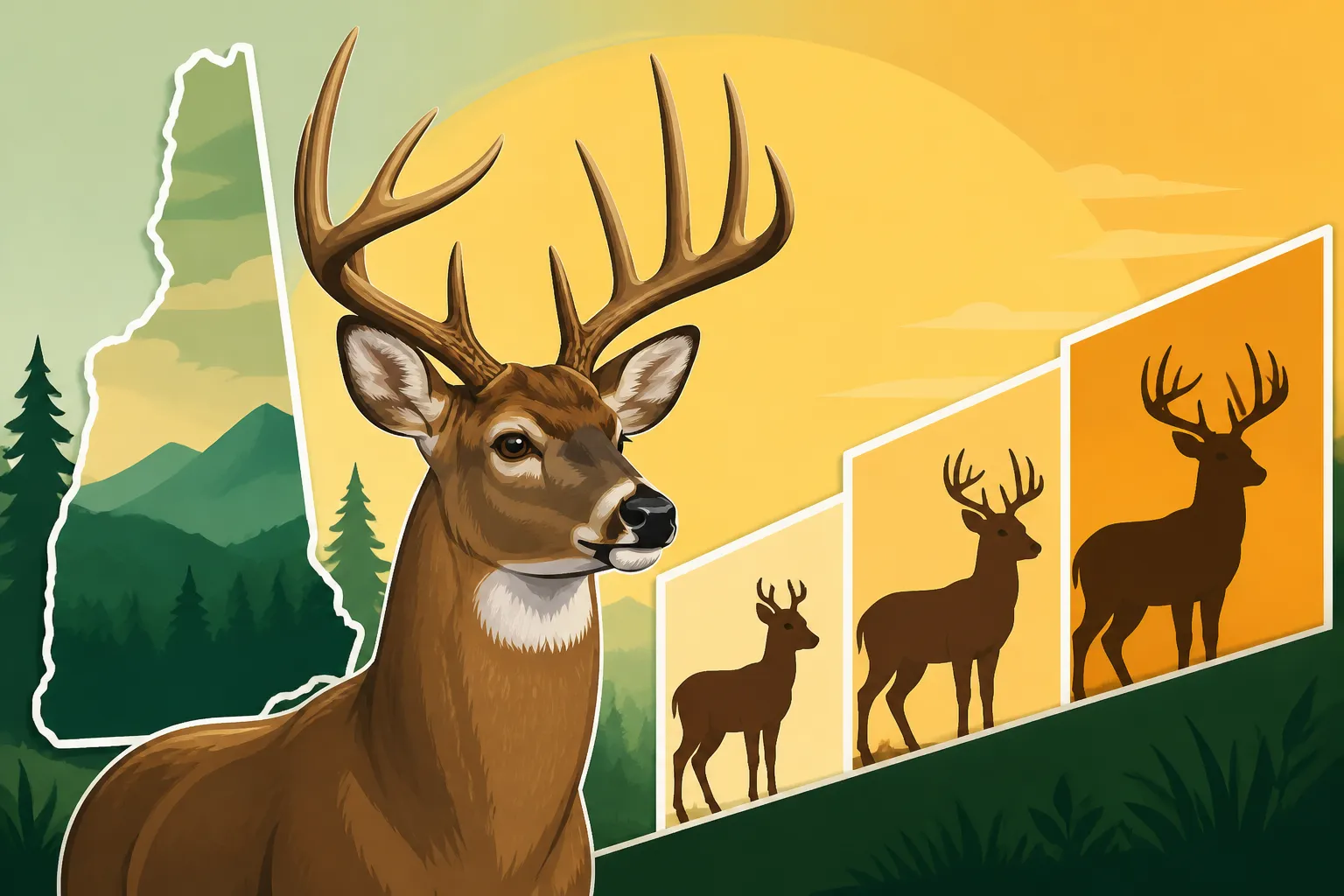
When we talk about "buck age structure," we're not just talking about the biggest antlers harvested each year. We're looking at the overall distribution of male deer across different age classes within a specific area, like a Wildlife Management Unit (WMU) or even a smaller, localized parcel of woods. It's about knowing how many yearlings (1.5 years old), how many 2.5-year-olds, how many 3.5-year-olds, and how many truly mature 4.5+ year-olds are roaming the timber.
This concept is absolutely vital for understanding the health and potential of a deer herd. A healthy, balanced age structure typically means there's a good representation of bucks in all age classes, not just a dominant number of young, immature males. If all you're seeing are young bucks, it can indicate high hunting pressure on older age classes or other factors influencing survival.
It’s easy to confuse age structure with antler restrictions (ARs), but they’re distinct. While some states use ARs to try and influence age structure by protecting younger bucks, New Hampshire doesn't employ a statewide antler restriction rule. Instead, our focus is on managing the overall population through other means, and hunters learning to identify buck age is a crucial part of that equation. Understanding the nuances of age helps us make smarter decisions in the field and contributes to a more fulfilling hunting experience overall. It’s about more than just numbers; it’s about the quality of the hunting experience and the sustained health of these magnificent animals.
Why Age Structure Isn't Just About Antlers
Many hunters, myself included, often equate a "good" buck age structure with seeing more big-racked deer. And while it's true that older bucks generally have larger antlers, the age structure is about much more than just inches of horn. It reflects the overall vigor, genetics, and balance of the herd. When you have a healthy mix of ages, you also have a more robust breeding cycle. Older, dominant bucks are typically more effective breeders, ensuring stronger fawns and a more resilient population.
From a hunter's perspective, a balanced age structure means you're more likely to encounter the challenging, wily mature deer that make hunting so rewarding. There's a certain thrill in trying to outsmart a buck that has survived multiple hunting seasons. It elevates the experience beyond simply harvesting an animal. If you're consistently seeing only 1.5-year-old bucks, it suggests that something might be off in the local herd dynamics or hunting pressure, which can be disheartening for those seeking a more mature target.
It's also worth noting that antler size can vary significantly even within the same age class due to nutrition, genetics, and even injury. A 3.5-year-old buck in an area with poor forage might have a smaller rack than a 2.5-year-old in a prime agricultural region. So, while antlers are a guide, they shouldn't be the sole indicator of age. Learning the subtle body cues is often more reliable, which we'll dive into shortly.
How New Hampshire Deer Management Tracks Age
New Hampshire Fish and Game plays a vital role in monitoring the health of our deer herd, and understanding buck age structure is a key component of that effort. They collect data through various methods, primarily focusing on harvest reports and biological samples from harvested deer. Every time a deer is registered, whether it's through the state's online portal or in person during the blackout days, critical information is gathered. This includes the sex of the animal, where it was harvested (down to the WMU), and sometimes other details.
For a deeper dive into age, biologists often collect lower jawbones from harvested deer at check stations. By examining the wear and replacement patterns of the molars, they can accurately determine the deer's age in half-year increments. This scientific method provides the most precise data on how many bucks of each age class are being harvested across the state. This information is then compiled and analyzed to gauge trends, identify areas needing management adjustments, and ensure the long-term sustainability of the herd.
Hunters can actually contribute to this valuable data by voluntarily submitting jawbones or allowing biologists to collect samples at check stations. It’s a direct way for us to participate in the scientific management of our deer resources. By understanding how the state gathers this information, we can better interpret the harvest reports and population estimates that are made available to the public, such as those found when you're Reading a New Hampshire Harvest Report.
The Impact of Age Structure on Your Hunt
The age structure of the buck population in your hunting area has a profound impact on almost every aspect of your deer hunting experience. It affects everything from the number of deer you see, to the antler quality, to the intensity and duration of the rut. If you're consistently finding that your hunting efforts yield mostly young bucks, it can be a bit disheartening. This isn't just about "trophy hunting"; it's about encountering the full range of a species’ behavior and potential.
A balanced age structure creates a more dynamic and exciting rut, for instance. When there are several mature bucks competing for does, the breeding behavior is often more aggressive and visible. These older bucks are also masters of survival, often leading to more challenging and rewarding hunts. Hunters who delve into data, perhaps using tools like GoHunt, can often find patterns in New Hampshire Deer Harvest Records that suggest which WMUs might have a better representation of older age classes. This kind of research can be a game-changer for planning your season.
Ultimately, a healthy age structure means a healthier, more resilient deer herd for future generations. It's a win-win: better hunting opportunities for us, and a robust population for the state. Ignoring age structure means we're only seeing a fraction of the picture, and potentially missing out on some of the most exciting aspects of deer hunting.
Rut Intensity and Mature Bucks
One of the most exciting times to be in the woods is during the rut, and the presence of mature bucks directly influences its intensity. When an area has a good number of 3.5-year-old and older bucks, the competition for does is fierce. This leads to more visible signs of rutting activity: more scrapes, more rubs, and more vocalizations like grunts and snort-wheezes. These older bucks are often less tolerant of younger, smaller bucks, pushing them around and asserting dominance.
This increased competition can make for some incredible hunting experiences. Bucks are more apt to be on their feet during daylight hours, cruising for does, and potentially more responsive to calling. If you're hunting an area with a skewed age structure—meaning very few mature bucks—the rut might feel lackluster. You'll still see younger bucks chasing does, but that intense, calculated pursuit by a seasoned veteran buck might be missing. This is a common frustration I hear from hunters in areas with heavy pressure on younger deer.
Understanding the buck age structure can help you anticipate how the rut will play out in your chosen WMU. If you've been seeing good numbers of older bucks in your trail camera photos or during pre-season scouting, you can expect an exciting rut. If not, you might adjust your expectations or even consider hunting different areas to improve your odds of encountering those rut-crazed big boys during Hunting the Rut in Early-to-Mid November.
How Age Relates to Antler Growth and Quality
It's a biological fact: bucks need time to grow big antlers. While a 1.5-year-old buck might sprout a small rack (often spikes or a small basket six-point), their bodies are primarily focused on growth and survival. By 2.5 years old, a buck is starting to put more energy into antler development, and you'll typically see eight-points with small to medium mass. However, it's generally at 3.5 years old and beyond that bucks really start to hit their stride in terms of antler size, mass, and overall character.
A buck's genetic potential for antler growth isn't fully expressed until they reach maturity, usually between 4.5 and 6.5 years old. In a balanced age structure, you'll have these older bucks reaching their prime, carrying impressive racks that make for truly memorable encounters. When an area has very few bucks reaching these older age classes, the overall antler quality of the herd will naturally be lower. This isn't necessarily a sign of poor genetics in the herd, but rather a reflection of the bucks simply not having the opportunity to mature.
Therefore, if your goal is to harvest a buck with a truly mature rack, understanding the age structure of your hunting area is paramount. Researching areas known for a good age class distribution, possibly by digging into harvest data on platforms like GoHunt, can significantly increase your chances of success. It's about knowing where the older, larger-antlered bucks are more likely to exist, and then focusing your efforts there. This is why many hunters are keenly interested in finding the Best New Hampshire WMUs for Big Bucks.
Reading the Signs: Identifying Mature Bucks
One of the most challenging, yet rewarding, skills a deer hunter can develop is accurately aging a buck in the field. It's not always about counting points or looking for a massive spread; often, it's about the subtle body characteristics and behaviors that only come with age and experience. Learning these cues can help you make informed decisions when a buck walks into your sight, ensuring you're targeting the kind of deer you truly wish to harvest. It takes practice, keen observation, and sometimes, a little luck.
Yearling bucks (1.5 years old) often look gangly, with long legs and a thin neck, almost like a grown fawn. As they mature, their bodies fill out, their necks thicken, and their overall demeanor changes. By 3.5 years old, a buck starts to look like a completely different animal. Their chests deepen, their bellies begin to sag slightly, and their necks swell dramatically during the rut, often merging seamlessly with their shoulders. These are the details that separate an informed hunter from one just looking for "horns."
Remember, it's not foolproof, and every deer is an individual, but by focusing on a combination of visual cues, you can significantly improve your ability to judge a buck's age on the hoof. This skill becomes even more crucial when considering the long-term health and age structure goals of your hunting property or public land.
Antler Characteristics as Age Indicators
While antlers aren't the sole indicator of age, they certainly offer valuable clues. For New Hampshire bucks, you'll notice distinct patterns as they mature:
- Yearlings (1.5 years old): Often spikes or small forked antlers. The tines might be thin, and the mass at the base will be minimal. They look small on their head, almost like they don't quite fit.
- 2.5-year-olds: These bucks typically sport 6 to 8 points. The rack will be more symmetrical, but still generally slender. The mass at the base starts to develop, but it's not yet exceptionally thick.
- 3.5-year-olds: This is often when a buck's rack starts to show significant improvement. You'll see more mass, longer tines, and a wider spread. They often have solid 8-points or even 10-points, and the antlers will look more proportional to their body size.
- 4.5+ year-olds: These are the mature bucks. Their antlers will typically have impressive mass, deep G-droppers, and often some abnormal points or character. The bases can be extremely thick, and the overall rack appears heavy and robust. They are truly magnificent.
However, don't rely solely on point count. A 3.5-year-old buck could be an exceptional 8-point with incredible mass, while a 4.5-year-old might be a 6-point that never developed more points but has incredible mass and deep color. Always consider mass and overall antler appearance in combination with body cues. Tools like quality binoculars, especially when you're Best Binoculars for a North Country Bog, become invaluable for scrutinizing these details from a distance.
Body Characteristics for On-the-Hoof Aging
Beyond antlers, a buck's body tells a detailed story about his age. Learning to "read" these physical changes can be more reliable than antler size alone:
- Yearlings (1.5 years old): Think "racehorse." They are lean, lanky, and have a distinct neck-to-shoulder transition. Their legs look too long for their body. They'll have a flat belly, and their back will be straight.
- 2.5-year-olds: They're starting to fill out. Their shoulders and chest are developing, but they still have a lean look, especially in the hindquarters. The neck will thicken a bit during the rut, but you'll still see a clear distinction between the neck and shoulders.
- 3.5-year-olds: This is where the transformation becomes more obvious. The chest is deep, the shoulders are powerful, and the belly might start to show a slight sag, especially in areas with good nutrition. During the rut, their neck will swell considerably, making it blend more smoothly into their shoulders. They look strong and athletic.
- 4.5+ year-olds: These are the "powerhouses." They have a thick, deep chest, often a noticeable pot belly, and a sway or slightly concave back. Their legs might appear shorter relative to their massive body. Their necks are incredibly thick, merging almost seamlessly with their shoulders and often looking as wide as their head. They move with a deliberate, confident gait.
| Age Class | Antler Appearance (General) | Body Appearance (General) | Neck-Shoulder Transition (Rut) | Belly (General) | Behavior (Typical) |
|---|---|---|---|---|---|
| 1.5 Years Old | Spikes or small forked rack, thin tines | Lean, lanky, "racehorse" look, long legs, straight back | Very distinct, pencil-thin | Flat, tucked up | Skittish, follows does/older bucks, nervous |
| 2.5 Years Old | 6-8 points, slender, beginning mass | Filling out, developing shoulders, athletic | Still noticeable, but thickening | Mostly flat | More independent, still reactive, some sparring |
| 3.5 Years Old | Good mass, longer tines, 8-10 points | Deep chest, powerful shoulders, filled hindquarters | Blends smoothly, very thick | Slight sag | Confident, active rutting, establishes dominance |
| 4.5+ Years Old | Significant mass, heavy, deep tines, character | Massive chest, often pot belly, shorter legs proportionally, sway back | Appears to merge seamlessly, huge, wide as head | Significant sag (pot belly) | Wary, calculated movements, dominant, avoids confrontation when possible |
Remember to combine these observations. A 3.5-year-old might not have the biggest rack but could have the body of a much older deer, or vice versa if nutrition is an issue. Using your optics to study a deer for several minutes before making a decision can be incredibly beneficial. And, of course, Scouting New Hampshire Public Land Before Season can help you identify these differences even when deer are still in velvet.
Behavioral Clues of Age and Experience
Beyond the physical, a buck's behavior can also give away its age and experience. Younger bucks (1.5 and 2.5 years old) are typically more impulsive, curious, and reactive. They might bolt at the slightest movement, or conversely, stand there staring at you for a long time, trying to figure things out. They're often seen chasing does relentlessly without much strategy, or sparring aggressively with other young bucks. They're prone to making mistakes.
Mature bucks, on the other hand, are the epitome of caution and calculated movement. They didn't get old by being careless. When a mature buck enters an area, they often do so slowly, pausing, scent-checking the wind, and scanning their surroundings for danger. They move with purpose, rarely wasting energy. During the rut, their pursuit of does is often more strategic, cutting off escape routes rather than just a frantic chase. They're incredibly sensitive to human presence and pressure.
Observing a buck's demeanor can often be the final piece of the puzzle in aging them. A buck that slips silently through the woods, barely disturbing a twig, constantly checking his back trail, is almost certainly an older, wiser animal. A younger buck might crash through the brush with less concern. Paying attention to these subtle behavioral cues, along with the physical characteristics, will make you a much more effective and discerning hunter, increasing your chances of finding that truly special deer. Knowing the general New Hampshire Deer Population Estimate can also inform your expectations for seeing various age classes in a given region.
New Hampshire's Commitment to Herd Health
New Hampshire's Fish and Game Department is dedicated to maintaining a healthy and sustainable deer herd across the state. This isn't just about providing hunting opportunities; it's about ecological balance, preventing overpopulation that can lead to habitat degradation, and ensuring the long-term viability of this iconic species. Managing buck age structure is an integral part of this broader strategy, even without specific antler restrictions.
The state relies heavily on hunter participation in reporting harvests and, where possible, providing biological samples for aging. This collaboration between hunters and wildlife managers is what allows for effective, science-based decision-making. By analyzing data from across the WMUs, they can identify trends in populations, health, and age structure, and make adjustments to season lengths, bag limits, or other regulations as needed. This proactive approach ensures that our deer herd remains robust for generations to come, providing both aesthetic enjoyment and challenging hunting experiences.
The Role of Hunter Cooperation in Data Collection
As hunters, we are the front-line data collectors for New Hampshire Fish and Game. Every time we successfully harvest a deer, the act of registering it—whether online or at a physical station—provides crucial information that feeds into the broader management plan. This isn't just a formality; it's a vital contribution to understanding the New Hampshire Deer Herd Size, trends in populations, and yes, the age structure.
Beyond the mandatory registration, voluntarily providing jawbones or other biological samples when requested by biologists takes our contribution a step further. These samples allow for precise aging of deer, which is the gold standard for understanding age structure. This kind of data helps wildlife managers understand which age classes are being harvested, if certain areas are seeing too much pressure on younger bucks, or if older bucks are surviving longer in other regions. It's a partnership, and our cooperation ensures the best possible information is available for smart management.
Think of it this way: the more accurate and comprehensive the data, the better equipped Fish and Game is to make decisions that benefit the entire deer herd and, by extension, future hunting seasons. It’s a small effort on our part that yields big rewards for the future of New Hampshire hunting.
Balancing Hunter Opportunity and Herd Quality
New Hampshire's deer management philosophy aims to strike a balance between providing ample hunting opportunities and ensuring the long-term health and quality of the deer herd. This means looking beyond just the total number of deer and considering factors like age structure, buck-to-doe ratios, and overall animal health. A healthy age structure contributes to a more natural breeding cycle and helps ensure genetic diversity within the herd.
While some states use antler restrictions to push more bucks into older age classes, New Hampshire relies on a combination of different season structures, bag limits, and hunter education to achieve its goals. By allowing hunters to make their own decisions about which buck to harvest, and by providing the information and encouragement to target older animals if desired, the state fosters a more informed and responsible hunting community. Tools like GoHunt can be invaluable for hunters looking to dive deep into these numbers and make informed decisions about where and how they hunt, connecting data to their personal hunting goals.
Ultimately, the goal is to have a robust deer population that offers diverse hunting experiences, from pursuing a challenging mature buck to filling the freezer with venison. This balance benefits everyone: the deer, the ecosystem, and the generations of hunters who will continue to enjoy New Hampshire’s incredible wild spaces. Understanding the New Hampshire Buck-to-Doe Ratio by Region is another piece of this puzzle that helps round out the picture of herd health.
Disclaimer
This article is for general informational purposes only and does not constitute professional advice. Laws, prices and regulations vary by location and change over time. Consult a qualified professional for guidance on your specific situation.