New Hampshire Wild Brook Trout Streams
Finding those hidden gems, those truly wild brook trout streams in New Hampshire, can feel like chasing a ghost. It’s a challenge that many of us face, weary of crowded, stocked waters and longing for that pristine experience where native fish thrive. This guide isn't just about throwing a line; it’s about understanding the unique magic of these resilient fish, learning how to decipher the landscape to find their secret hideaways, and adopting the techniques and mindset needed to connect with a truly wild New Hampshire brook trout, helping you unlock the rewarding world of remote angling in the Granite State.
The Allure of New Hampshire's Wild Brook Trout
There’s something inherently special about a wild brook trout. They’re not just fish; they're living jewels, reflecting the health and purity of the waters they inhabit. For many of us, the quest for wild brook trout is a pilgrimage, a search for an experience far removed from the bustling crowds of the more accessible, stocked rivers and ponds. It's about connecting with nature on a deeper level and embracing the challenge of pursuing a truly native species.
Why "Wild" Makes All the Difference
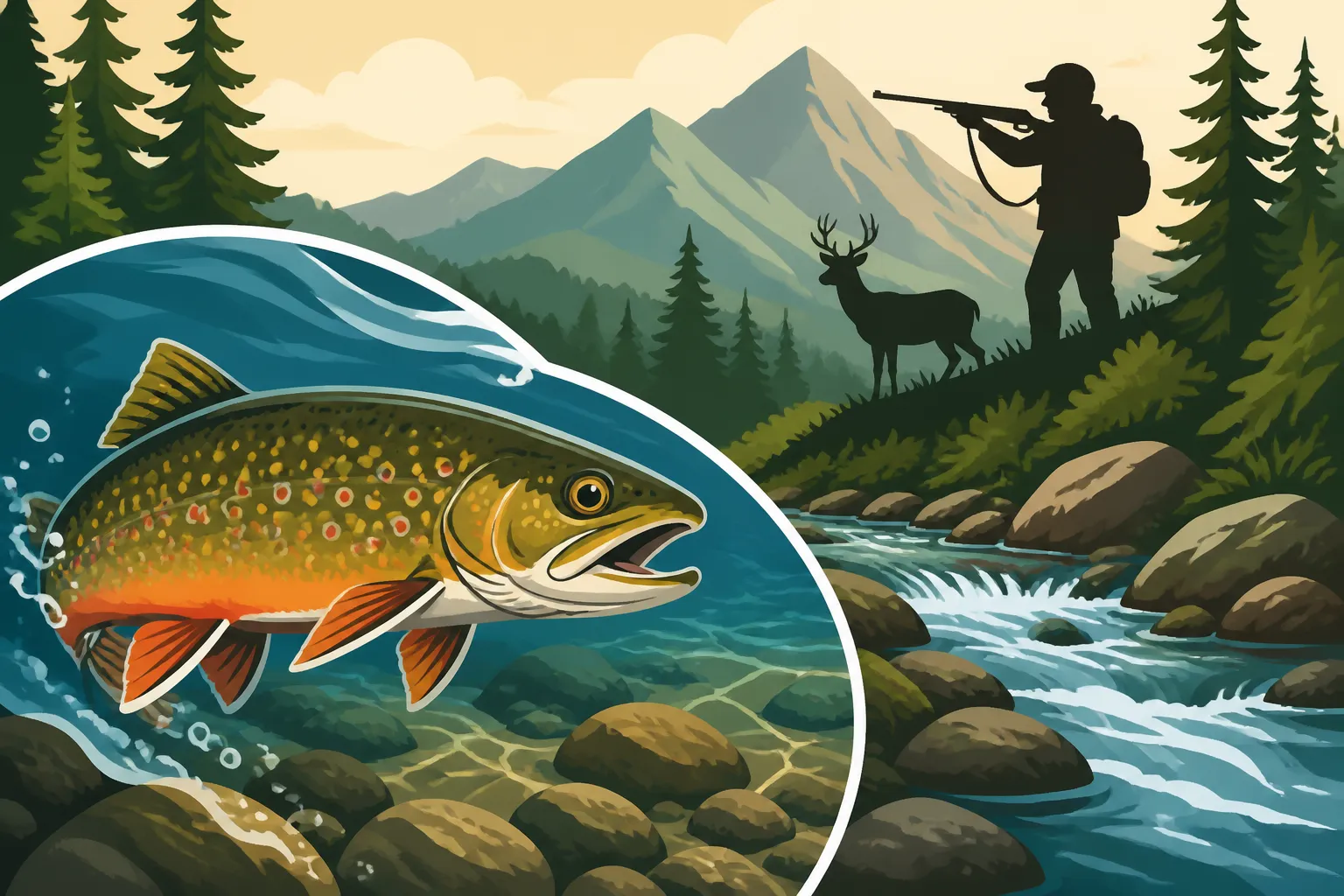
You’ve probably seen plenty of brook trout in your fishing life, right? But I'm talking about the wild ones. These aren't the hatchery-raised fish that get dumped into easily accessible ponds and rivers for a put-and-take season. Wild brook trout are descendants of populations that have survived and thrived in their natural environment for generations. They are vibrant, intelligent, and incredibly wary, shaped by the ebb and flow of their pristine, cold-water homes. Catching a wild brook trout isn't just about the fight; it's about the culmination of careful scouting, stealthy approaches, and precise presentation in some of the most beautiful and untamed corners of our state.
It's a completely different game. Stocked fish, bless their hearts, are often used to being fed and aren't nearly as cautious. They'll hit just about anything. A wild brook trout, however, has evolved to evade predators, including us, with lightning-fast reflexes and an uncanny ability to disappear into the smallest pocket of cover. This makes the reward so much greater when you do fool one. You know you've earned that bright flash of crimson and gold in your hand.
The Ideal Habitat They Call Home
So, where do these wild beauties live? Forget wide, slow-moving rivers. Think small. Think cold. Wild brook trout are cold-water specialists, preferring streams and rivers where water temperatures rarely exceed the mid-60s, even in the heat of summer. Their ideal homes are often found in the higher elevations, where springs feed crystal-clear water directly into small streams, keeping them consistently chilled and highly oxygenated.
Look for a stream that snakes through dense forest cover, providing natural shade that helps maintain those crucial low temperatures. These streams will often have a mix of riffles (fast-moving, shallow water), runs (deeper, flowing water), and small, dark pools. Undercut banks, fallen logs, boulders, and overhanging vegetation are all vital elements, offering shelter from predators and strong currents, as well as prime ambush points for insects. Think about those hidden creeks you might hike past when hunting in the White-Tailed Deer Across New Hampshire or Moose in New Hampshire's North Country areas; those are often perfect candidates. A healthy wild brook trout stream is a microcosm of ecological balance, a place where clean water and abundant insect life combine to create the perfect environment for these fish to thrive.
Facing the Challenges of Access and Stealth
Here’s where the rubber meets the road. Finding and fishing these streams isn't like rolling up to a state park pond. Most prime wild brook trout habitat is found in remote, often rugged, areas. This means bushwhacking through dense brush, navigating steep terrain, and being prepared for extended hikes into the backcountry. You might be following an old deer trail, or making your own path, often far from any marked trails or easy access points. Many of these streams flow through Public Hunting Land in New Hampshire or even parts of Hunting New Hampshire's White Mountain National Forest, but that doesn't mean they're easy to get to.
Once you’re there, stealth becomes your absolute best friend. Wild brook trout are incredibly skittish. A heavy footstep on the bank, a silhouette against the sky, or a poorly executed cast sending a ripple across a small pool will send them darting for cover in an instant. It’s a dance of quiet movement, observing the water carefully, and making precise, delicate presentations. You'll quickly learn that often, the biggest challenge isn't just catching a fish, but even getting a look at one before it vanishes. It demands patience, respect for the environment, and a willingness to embrace the quiet solitude of the wild.
Identifying and Locating Productive Waters
So, you're ready for the adventure. But how do you actually find these elusive wild brook trout streams in the vastness of New Hampshire? It's a combination of map study, utilizing modern tools, and good old-fashioned boots-on-the-ground scouting. It's detective work, really, piecing together clues to uncover those untouched honey holes.
Reading the Landscape for Potential Streams
Your journey begins long before you ever step foot in the woods. Grab some good topographic maps or fire up your mapping software. Look for areas with significant elevation changes, particularly those that are heavily wooded. Wild brook trout often reside in the headwater streams, the very beginnings of larger river systems, high up in the mountains or secluded valleys.
Pay close attention to the contours. You're looking for blue lines that snake through areas with minimal human development, away from roads, towns, and agricultural runoff. These small, often unnamed tributaries are your best bet. Trace them upstream, noting where they emerge from steep hillsides or converge from multiple small springs. The steeper the gradient, often the colder and faster-moving the water, which is a good sign. Also, consider the aspect of the slope; north-facing slopes tend to retain moisture and shade better, leading to cooler stream temperatures throughout the year. Reading Aerial Photos for North Country Deer can also give you insights into canopy cover and potential access points, which directly applies to finding secluded streams.
Utilizing Digital Tools for Stream Discovery
In this day and age, we're incredibly fortunate to have powerful digital tools at our fingertips that can drastically cut down on blind scouting. Applications like GoHunt and onX Hunt (which I often use for identifying New Hampshire Wildlife Management Areas boundaries) are invaluable. These platforms allow you to overlay topographic maps with public land boundaries, parcel data, and satellite imagery.
With GoHunt, for example, you can zoom in and identify even the smallest blue lines on the map that might indicate a perennial stream. You can see the elevation changes in detail, helping you pinpoint those headwater areas. The satellite imagery helps you gauge the density of the forest cover—crucial for shade—and identify potential access points or old logging roads that might get you close. I’ve spent countless evenings pouring over these maps, marking potential spots, and planning my approach. It's also incredibly helpful for understanding land ownership, ensuring you're sticking to public lands or seeking permission if a potential stream crosses private property. And if you're heading into areas without cell service, remember that many apps, like the Using the Fish and Game App Without Cell Service, allow you to download maps for offline use, which is absolutely critical in remote locations where these trout thrive.
Ground Truthing and Scouting Your Spots
Even with the best maps and digital tools, there’s no substitute for getting your boots wet and actually exploring. Once you’ve identified a few promising blue lines on your map, it’s time for some ground truthing. This often means driving to the nearest public access point and then hiking in. The walk might be long, the terrain challenging, and the brush thick.
As you hike along the stream, pay attention to the water itself. Is it clear and cold? Does it have good flow? Are there plenty of natural features like logs, rocks, and undercut banks? Look for actual fish sign – insects hatching, small ripples, or perhaps even a flash of a tiny trout darting away. Sometimes, you'll find a stream that looks great on the map but disappoints in person, perhaps too shallow, too warm, or lacking in cover. Other times, you'll stumble upon a gem that wasn't immediately obvious. I've often found that beaver activity, while sometimes a nuisance, can create incredible habitat in the form of deeper, slow-moving pools that hold surprisingly large wild brook trout. You might even find yourself Hunting a Beaver Flowage Edge in the fall and noticing these promising waters. These scouting trips are part of the adventure, teaching you to read the subtle nuances of the New Hampshire landscape and refining your eye for prime trout habitat.
Here’s a quick overview of what to look for when scouting:
| Stream Feature | What It Tells You (for Wild Brook Trout) |
|---|---|
| Cold Water | Absolutely essential; temperatures below 65°F are ideal. Check with a thermometer if unsure. |
| Clear Water | Indicates healthy watershed, low sediment, good light penetration for insect life. |
| High Oxygenation | Fast-moving riffles, cascades, and springs introduce vital oxygen. |
| Varied Structure | Undercut banks, fallen trees, boulders, deep pools, riffles provide cover and feeding lanes. |
| Shade/Canopy Cover | Dense overhead foliage keeps water temperatures cool, especially in summer. |
| Minimal Disturbance | Absence of roads, clearcuts, development indicates less pollution and pressure. |
| Abundant Insects | Look for caddisfly cases, stonefly nymphs, mayfly shucks on rocks; signs of healthy food chain. |
Gear and Tactics for Success on Wild Trout Streams
Once you've found a promising stream, it's time to adjust your approach. Wild brook trout are not forgiving of heavy-handed tactics or inappropriate gear. This isn't about brute force; it's about finesse, subtlety, and a deep respect for the fish and their environment.
Minimalist Gear for Maximum Mobility
When chasing wild brook trout, less is definitely more. You're going to be hiking, often through dense brush and over uneven terrain, so heavy gear will only hinder you.
- Rod and Reel: For fly fishing, a lightweight 2-to-4 weight fly rod, typically between 6 and 7.5 feet long, is perfect. It allows for delicate presentations in tight quarters and makes even a small brook trout feel like a monster. Pair it with a simple, small-capacity fly reel that balances the rod. For spin fishing, an ultra-light spinning rod (4-5 feet) with a small reel spooled with 4-pound test monofilament or fluorocarbon is ideal. This light line reduces visibility and allows for casting tiny lures.
- Waders vs. Wet Wading: In the colder spring and fall, lightweight breathable waders might be necessary, but for summer exploration, wet wading is often preferred. A good pair of quick-drying pants, sturdy wading boots (or old hiking boots), and neoprene socks can keep you comfortable and agile.
- Small Pack: A small backpack is all you need to carry essentials: a fly box or small tackle box, tippet, forceps, nippers, a water bottle, a snack, and perhaps a small first-aid kit. Leave the heavy camera gear at home unless it’s truly waterproof and easily accessible.
- Other Essentials: Polarized sunglasses are non-negotiable for seeing fish and structure. A wide-brimmed hat provides sun protection and helps cut glare. Don't forget bug spray; the deep woods can be buggy!
The key is to be able to move freely, often scrambling over rocks, ducking under branches, and navigating tight stream corridors. GoHunt or your mapping app will come in handy for marking where you parked and where you want to go.
Stealth and Presentation are Key
This cannot be overstressed. Wild brook trout are masters of evasion. Your approach to the stream is just as important as your cast.
- Approach from Downstream: Always try to approach a pool or run from downstream. This keeps you out of their immediate line of sight and prevents sending vibrations up the water column.
- Stay Low and Hidden: Use stream-side vegetation, boulders, and terrain to your advantage. Crouch, kneel, or even crawl if necessary. Avoid silhouetting yourself against the sky. Think like a predator, or perhaps more accurately, like a deer trying to remain unseen while Still-Hunting White Mountain National Forest Timber.
- First Cast Counts: Often, the first cast into a promising spot is your best, or only, chance. Make it count. Aim for precision, placing your fly or lure gently at the head of a pool, near an undercut bank, or beside a fallen log.
- Natural Drift: For fly anglers, achieving a drag-free drift is paramount. The fly needs to float naturally with the current, as if it were a real insect. For spin anglers, tiny spinners or spoons should be retrieved just fast enough to impart action, mimicking a struggling baitfish or insect larva.
- Target Specific Pockets: Don't just cast aimlessly. Look for the "holding water" – those small pockets behind rocks, the dark water under an overhanging branch, the seams where faster and slower currents meet. These are where brook trout lie in wait for food. These fish are territorial and will often hold in the best ambush spots.
Effective Lures and Flies
Wild brook trout, especially the smaller ones in headwater streams, aren't usually picky eaters, but their discerning nature about presentation means your offerings need to be appropriate for their size and natural forage.
- Dry Flies: Small, general attractor patterns like an Adams, Elk Hair Caddis, or Parachute Adams in sizes #14-#20 are always a good starting point. They imitate a wide range of terrestrial and aquatic insects. Don't be afraid to try a small ant or beetle pattern if you see them falling into the water.
- Nymphs: When fish aren't rising, nymphs fished subsurface can be highly effective. A Pheasant Tail Nymph, Hare's Ear Nymph, or even a small Squirmy Wormy in sizes #14-#18 can fool them. Fish them with a small indicator or simply by watching your leader for subtle takes.
- Small Spinners and Spoons: For the spin fisherman, tiny inline spinners (like Panther Martin, Mepps, or Rooster Tail) in sizes #00 to #1, with natural-looking blade colors (silver, gold, black), are deadly. Small spoons (like Little Cleo or Phoebe) can also be effective. The key is small! Anything too large will spook these modest-sized fish.
- Terrestrials: In late summer and fall, patterns imitating grasshoppers, beetles, and ants can be incredibly productive, as these insects often fall into the water from streamside vegetation.
Regardless of your chosen method, think "small" and "natural." A wild brook trout has a relatively small mouth and is used to feeding on small, opportunistic meals.
Conservation and the Future of New Hampshire's Wild Brook Trout
Our enjoyment of these precious wild brook trout streams comes with a significant responsibility. These populations are often fragile, existing in a delicate balance with their environment. As anglers, we are stewards of this resource, and our actions directly impact the long-term health of these fish and their habitats.
The Importance of Catch and Release
For wild brook trout, catch and release isn't just a suggestion; it's often a necessity for their continued survival. These aren't populations that are supplemented by hatcheries. Every fish caught and carefully released contributes to the breeding stock and ensures future generations of anglers can experience the thrill of a wild brook trout.
- Barbless Hooks: Crimp down the barb on your hooks. This makes it far easier to remove the hook with minimal damage to the fish's mouth.
- Minimize Handling: Try to keep the fish in the water as much as possible. If you must handle it for a quick photo, wet your hands first to protect its delicate slime coat, which is vital for disease prevention.
- Quick Release: Don't prolong the fight or the time out of water. Gently remove the hook, revive the fish in the current if needed, and let it swim away under its own power. Observe it until it actively swims off.
Think of it this way: each wild brook trout is a genetic treasure. By releasing them unharmed, we're not just practicing good etiquette; we're actively participating in the conservation of a truly unique New Hampshire natural resource.
Protecting Their Pristine Habitats
Beyond the individual fish, we must also be vigilant guardians of the streams themselves. Wild brook trout are indicators of clean water and healthy ecosystems. Threats like pollution, habitat degradation from logging or development, and the increasing impacts of climate change (leading to warming water temperatures) can quickly devastate these sensitive populations.
As anglers, we have a voice. Support conservation organizations that work to protect New Hampshire's waterways and public lands. Advocate for responsible land use practices. Educate others about the importance of these fragile ecosystems. While you're out Scouting New Hampshire Public Land Before Season for hunting, keep an eye out for anything that looks amiss near these vital stream systems. Report any signs of pollution or illegal dumping to the appropriate authorities. Our vigilance in the field translates directly into the health of these vital habitats.
Embracing the "Leave No Trace" Ethic
This goes hand-in-hand with conservation. When we venture into these remote wild brook trout streams, we are guests in a wild, delicate environment. Our goal should always be to leave no trace that we were ever there.
- Pack it in, Pack it out: This is the golden rule. Every wrapper, every fishing line scrap, every piece of garbage you bring in must come back out with you.
- Stay on Durable Surfaces: Where possible, stick to established paths or stream banks that can handle foot traffic. Avoid trampling delicate vegetation.
- Respect Wildlife: Observe from a distance. Don't disturb stream banks or alter the natural environment unnecessarily.
- Be Mindful of Fire: If you’re truly deep in the backcountry and need a fire, ensure it’s in a safe, designated spot, and that it's completely out before you leave. Often, a small stove is a better option.
- Respect Private Property: If a stream flows through private land, always seek permission before entering. Do You Need Written Permission in New Hampshire? emphasizes the importance of understanding access laws.
By adhering to the Leave No Trace principles, we ensure that the wild brook trout streams of New Hampshire remain pristine and vibrant, offering future generations the same awe-inspiring experience we cherish today. The quiet pursuit of these native fish is more than a hobby; it's a connection to the very heart of New Hampshire's wildness.
Disclaimer
This article is for general informational purposes only and does not constitute professional advice. Laws, prices and regulations vary by location and change over time. Consult a qualified professional for guidance on your specific situation.