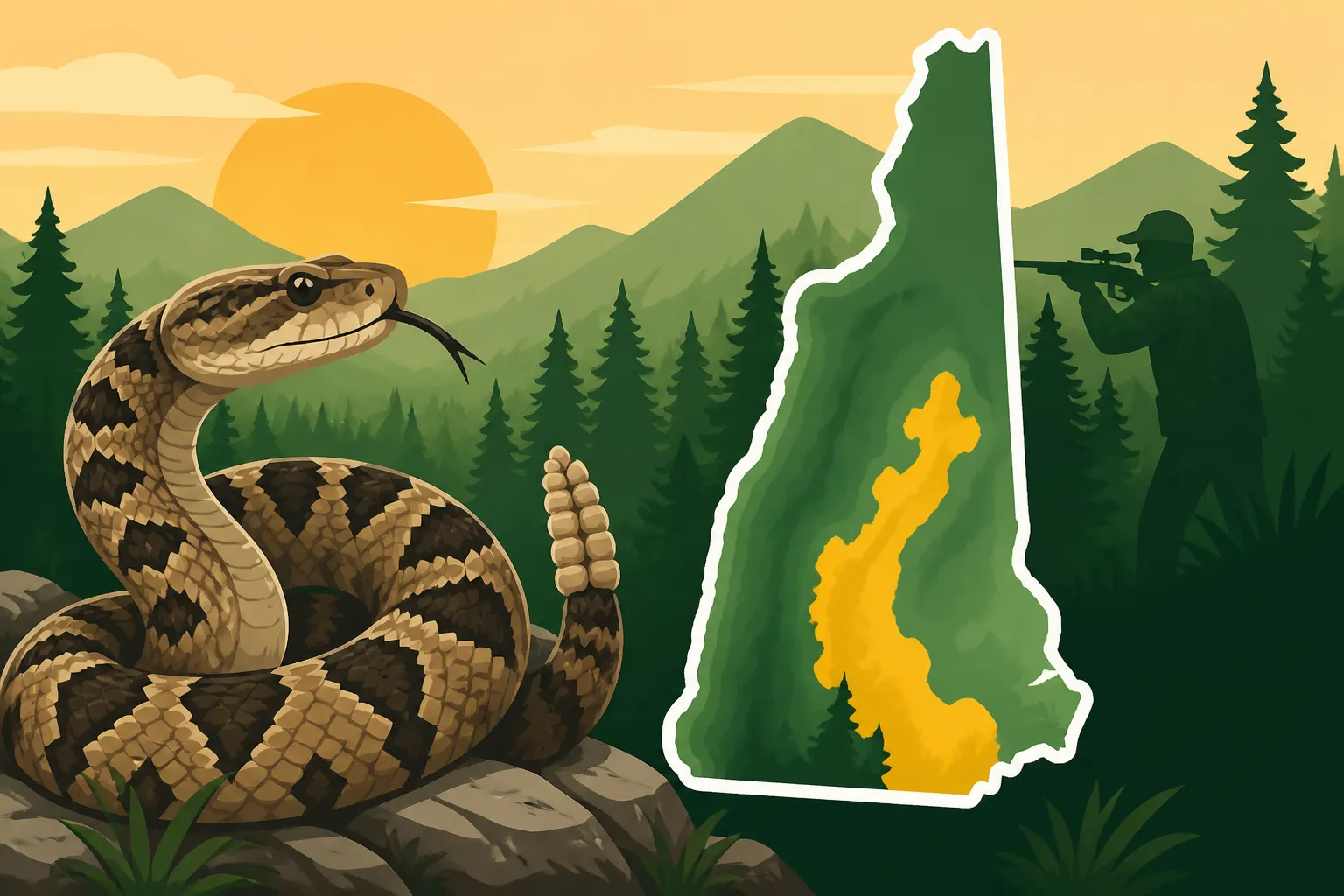
New Hampshire Timber Rattlesnake Range
The sound of a rattlesnake can send shivers down even the most seasoned outdoorsperson's spine, and for good reason—it's a warning from a creature that demands respect. While many of us assume New Hampshire is too far north or too populated for such reptiles, the truth is, timber rattlesnakes do call a very small, specific corner of our Granite State home. This guide will take a deep dive into the elusive world of the timber rattlesnake in New Hampshire, exploring their vanishing range, what makes their habitat special, and what you absolutely need to know if you're ever lucky—or unlucky—enough to encounter one.
Understanding New Hampshire's Timber Rattlesnake Population
It might come as a surprise to some, but timber rattlesnakes (Crotalus horridus) are indeed native to New Hampshire. However, their presence here is incredibly rare, bordering on mythical for most folks who spend time in our woods. These aren't creatures you're likely to stumble upon during your average hike or hunting trip; they are ghosts of the forest, holding on by a thread in a few isolated pockets. Understanding their history and current status is key to appreciating just how unique and vulnerable these reptiles truly are.
Historical Presence and Modern Rarity
Historically, timber rattlesnakes likely had a somewhat wider, albeit still patchy, distribution across New Hampshire, particularly in the warmer, rocky, south-facing slopes of the southern and central parts of the state. They were never abundant, mind you, but certainly more prevalent than they are today. Old records and anecdotal accounts suggest they were once found in a few more counties than their current highly restricted range. This historical presence speaks to the long-standing ecological tapestry of New Hampshire, even if these slithering threads have mostly unraveled.
Over the last century or more, a combination of factors has severely impacted their numbers and range. Habitat loss and fragmentation are huge culprits. As forests were cleared for agriculture, towns, and roads, the specific den sites and foraging grounds these snakes rely on dwindled. Public perception also played a significant role; fear and misunderstanding led to direct persecution, with people killing rattlesnakes out of fear or a misguided sense of protection. These majestic reptiles, slow to reproduce and easily disturbed, simply couldn't withstand the pressure, leading to their extreme rarity today. They stand as a stark reminder of how fragile some species can be in the face of human expansion and historical prejudice.
Habitat Preferences and Key Characteristics
Timber rattlesnakes aren't just any snake; they have very specific habitat needs that further explain their limited distribution. They are primarily denning snakes, meaning they return to the same overwintering sites year after year, often rocky ledges or crevices on south-facing slopes that offer stable temperatures. These den sites, sometimes called "hibernacula," are absolutely critical for their survival, especially in our cold New Hampshire winters. Without these specific geological features, a timber rattlesnake population simply cannot persist.
During the warmer months, they disperse from these dens to hunt and breed. Their summer habitat typically consists of mixed deciduous forests with a good understory, often near wetlands or riparian areas where prey such as small mammals and birds are abundant. They are masters of camouflage, their beautifully patterned skin blending seamlessly with leaf litter and bark. You'll often find them coiled, waiting patiently for prey, or basking in patches of sunlight. Identifying them involves looking for their distinct triangular head, heavy body, and, of course, the iconic rattle on their tail. It's important to remember that they are generally quite docile and prefer to avoid confrontation, striking only as a last resort when threatened. Their preference for specific, undisturbed, rocky woodlands is a huge factor in why their presence is so limited to certain areas, and why even when you're using tools like GoHunt to scout remote areas, you're still highly unlikely to encounter one.
Where You Might Encounter a Timber Rattlesnake (And Why It's Unlikely)
Let's be clear: encountering a timber rattlesnake in New Hampshire is an exceedingly rare event. You're far more likely to see a New Hampshire Black Bear Denning Habits or come across a New Hampshire Moose Population Decline Since the 1990s than to cross paths with one of these protected reptiles. Their range is so incredibly restricted that for 99.9% of New Hampshire's outdoors, they simply don't exist anymore. However, understanding the type of areas they might inhabit, even if you never see one, contributes to a broader appreciation of our state's biodiversity.
Specific Geographic Regions of Known Presence
For conservation reasons, and to protect these incredibly vulnerable populations from disturbance, specific den locations are not publicly disclosed. What we can say is that the known remaining timber rattlesnake populations in New Hampshire are extremely isolated and found in very few specific locations, primarily in the southern tier of the state. We're talking about a handful of rocky, rugged, and relatively undisturbed areas, often on south-facing slopes, where the geology provides the crucial denning sites they need to survive the winter. These are not widespread populations; they are small, precarious holdouts.
When you're out Scouting New Hampshire Public Land Before Season or even exploring private tracts, it's wise to carry that general knowledge. If you're in the southern part of the state, in areas with significant rocky outcrops, ledges, and mature mixed forests, you're theoretically in the kind of habitat they prefer. However, the operative word here is "kind of." Their actual distribution is so limited that even within suitable habitat, the chances are incredibly slim. Think of it less as a widespread threat and more as a rare ecological treasure that persists in the most remote and protected corners. Keep an eye out for other wildlife, like learning to identify New Hampshire Coyote Diet in Farm Country or how to predict New Hampshire Deer Wintering Yards Explained, as those are far more common signs of life in our woods.
Seasonal Movements and Activity Patterns
Timber rattlesnakes, like most reptiles, are ectothermic, meaning their body temperature is regulated by their external environment. This makes their activity highly dependent on the seasons and daily temperatures. They typically emerge from their dens in late April or May, once the weather consistently warms. At this time, they often bask near the den site to warm up before dispersing to their summer foraging grounds.
Throughout the summer, from late May through September, they are most active. This is when they hunt, feed, and breed. You might find them basking on sun-drenched rocks, coiled near fallen logs, or moving through the undergrowth in search of prey like mice, voles, and chipmunks. As autumn approaches, usually in late September or October, they begin to return to their communal den sites to prepare for hibernation. This return journey is crucial, and any disturbance during this period can severely impact their ability to overwinter successfully. They generally become inactive and enter their dens for the winter when temperatures consistently drop, often by late October or early November. Understanding these seasonal patterns reinforces how little time they actually spend actively moving and how restricted their presence is.
Conservation Efforts and Legal Protections
Because of their critically low numbers, timber rattlesnakes in New Hampshire are afforded the highest level of protection. They are a state-endangered species, meaning that their survival in New Hampshire is at serious risk without ongoing conservation efforts. This designation isn't just a label; it comes with significant legal implications aimed at safeguarding every individual snake and its precious habitat.
New Hampshire's Protected Species Status
Under New Hampshire law, the timber rattlesnake is listed as an endangered species. This designation makes it illegal to harass, harm, capture, kill, or possess a timber rattlesnake. It also protects their critical habitat, particularly their den sites, from disturbance or destruction. This legal framework is absolutely essential for their survival, as even a single death or the destruction of a den can have a devastating impact on such small, isolated populations. The state's Fish and Game Department actively works on monitoring these populations and engaging in conservation strategies to try and ensure their continued, albeit tenuous, existence.
This protected status means that any activity in areas known or suspected to harbor rattlesnakes, especially land development or large-scale logging, comes under intense scrutiny. The focus is on minimizing human impact and preserving the fragile ecosystems where these snakes still persist. It's a testament to New Hampshire's commitment to biodiversity, even for creatures that might evoke fear rather than affection in some. For more information on how the state monitors wildlife, you can often find details related to topics like New Hampshire's CWD Surveillance Program for deer, which highlights similar data collection efforts for other species, though rattlesnakes are handled with even more discretion due to their rarity.
What to Do if You Encounter a Rattlesnake
Given their extreme rarity, encountering a timber rattlesnake in New Hampshire is a memorable, almost once-in-a-lifetime event for most. If you do find yourself in such a situation, the most important thing is to remain calm and respectful. These snakes are not aggressive; they prefer to avoid humans and will only strike if they feel directly threatened or cornered. Most bites occur when people try to handle or harm them.
Here's what you should do:
- Give it Space: The golden rule is to give the snake a wide berth. Slowly back away, maintaining a distance of at least six feet. Do not approach it, try to touch it, or attempt to move it.
- Do Not Harass: Never try to provoke, poke, or throw things at a rattlesnake. This is when they feel threatened and are most likely to strike defensively. Remember, it's illegal to harm them.
- Observe from a Distance: If you can safely do so from a distance, take a photo. This can be incredibly valuable for conservationists to confirm the sighting and learn more about their distribution.
- Report the Sighting (if appropriate): If you believe you've seen a timber rattlesnake in New Hampshire, especially if it's in a new or unusual location, consider reporting it to the New Hampshire Fish and Game Department. This information is vital for monitoring and conservation efforts. However, avoid sharing exact locations publicly to prevent curious individuals from disturbing these sensitive areas. You can often find wildlife reporting mechanisms through resources like GoHunt, which can help guide you to the correct state agency portals.
- Educate Others: Help dispel myths about rattlesnakes. Share accurate information about their rarity, protected status, and their non-aggressive nature. Many fears stem from misunderstanding, and education is a powerful tool for conservation. While you might be more focused on Reading New Hampshire Mud for Fresh Deer Movement or Finding Sign in White Mountain Timber during your hunts, a keen eye for all wildlife helps foster a deeper connection to the natural world.
Timber rattlesnakes are a vital, albeit tiny, part of New Hampshire's natural heritage. Their continued presence, even in such limited numbers, speaks to the resilience of nature and the importance of our conservation efforts. Respecting their space and understanding their critical status is the best way to ensure these elusive reptiles can continue to slither through our wildest places for generations to come.
| Characteristic | Description |
|---|---|
| Species Name | Crotalus horridus (Timber Rattlesnake) |
| Conservation Status | State-Endangered in New Hampshire |
| Known Range (NH) | Extremely limited, isolated populations in southern New Hampshire (specific sites undisclosed) |
| Habitat Preference | Rocky, south-facing slopes, ledges, and crevices (for denning); mixed deciduous forests (for foraging) |
| Diet | Small mammals (mice, voles, chipmunks), small birds |
| Activity Season | Late April/May to late September/October |
| Identification | Heavy body, triangular head, distinct patterns (often chevron-like), rattle on tail |
| Temperament | Non-aggressive, prefers to avoid confrontation, strikes only when provoked or cornered |
Disclaimer
This article is for general informational purposes only and does not constitute professional advice. Laws, prices and regulations vary by location and change over time. Consult a qualified professional for guidance on your specific situation.