New Hampshire’s November Firearms Deer Season
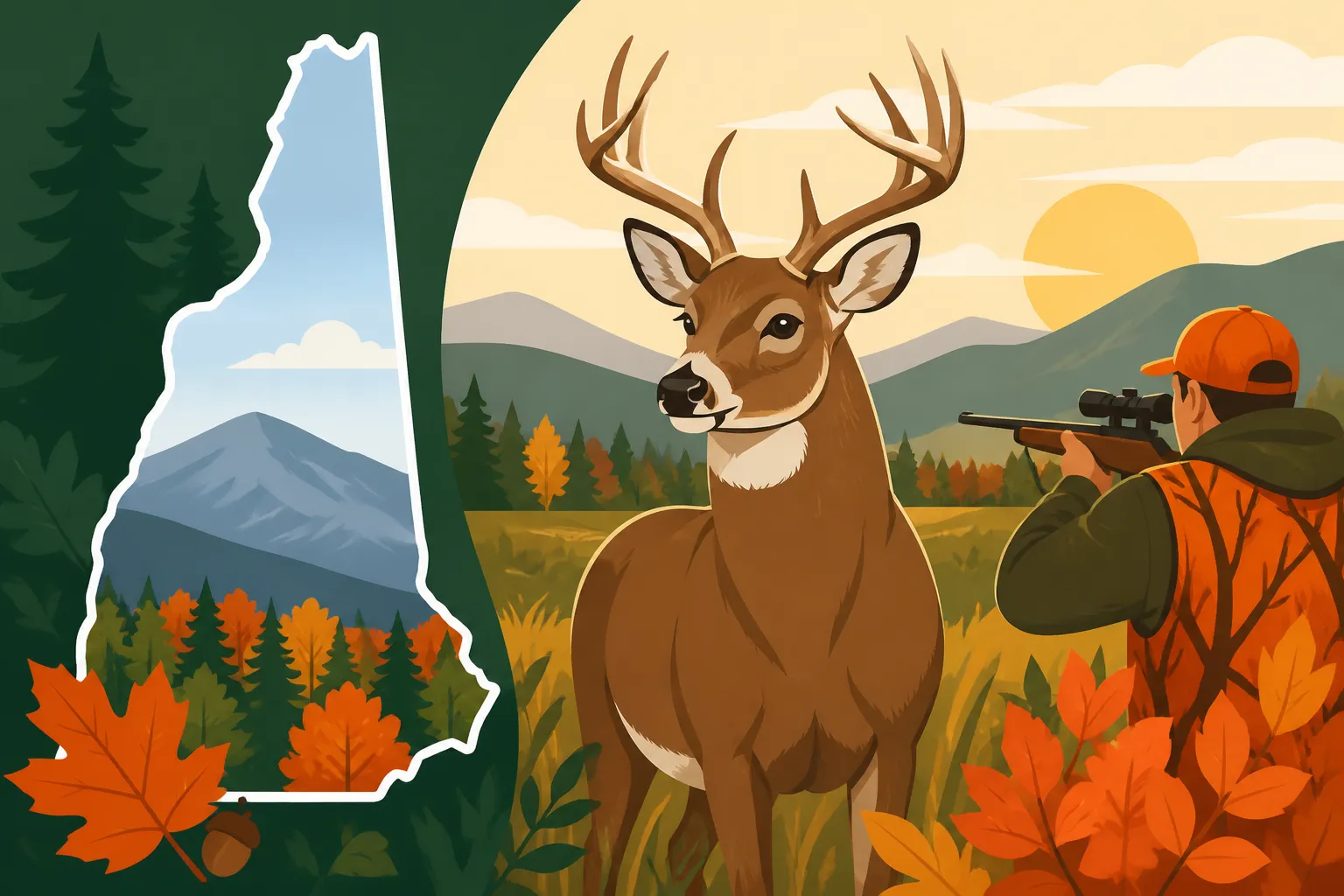
The crisp air of a New Hampshire November signals one of the most anticipated times for hunters across the state: the firearms deer season. This isn't just another hunting opportunity; it's often the culmination of months of scouting, planning, and anticipation, presenting its own unique set of challenges and immense rewards. If you've ever felt overwhelmed by the specific dates, legal requirements, or best strategies for navigating our diverse terrain during this intense period, you're not alone. This comprehensive guide will meticulously break down everything you need to know to approach New Hampshire's November firearms deer season with confidence, from understanding the regulations to mastering effective hunting tactics and ensuring a successful harvest.
Understanding the November Firearms Season Structure
New Hampshire's firearms deer season is relatively short but incredibly action-packed, often coinciding with the peak of the whitetail rut. This creates a high-stakes, high-reward environment that demands hunters be prepared and knowledgeable about the regulations that govern this pivotal time. Getting the specifics right is crucial for a legal and successful hunt.
Key Dates and Season Length by WMU
The firearms deer season in New Hampshire typically kicks off in early November and usually runs for about three weeks. It’s a period that hunters mark on their calendars in bold red ink, often scheduling vacation days specifically to maximize their time in the woods. While the general statewide opening day is fairly consistent, the exact closing dates can actually vary by Wildlife Management Unit (WMU), which is a detail that far too many hunters overlook until it's too late.
For instance, most of the state's WMUs will follow the standard three-week season, offering a good window of opportunity for hunters. However, if you plan on hunting in WMU A, which covers a significant portion of the far northern reaches of the state, you'll find that its firearms season often closes earlier than the rest of the state. This earlier closure is usually due to specific wildlife management objectives for that region, which might include managing deer populations in areas with harsher winters or different habitat pressures. Knowing these nuanced differences is vital for planning your hunt, especially if you have favorite spots in different WMUs or are traveling from a distance. Always double-check the official New Hampshire Fish and Game Department's digest for the exact dates for your chosen WMU, as these dates are subject to minor adjustments each year. A quick glance at the current year’s digest can prevent a costly mistake or a missed opportunity.
Legal Weapons and Ammunition Requirements
When it comes to the firearms deer season, New Hampshire has specific rules about what you can and cannot use. This isn't the time for guesswork; understanding the legalities is paramount. The primary legal weapon is, of course, a rifle. Hunters typically opt for common deer calibers that are proven performers, such as .30-06 Springfield, .270 Winchester, .308 Winchester, and 7mm Remington Magnum. These calibers offer sufficient power and range for taking down whitetails in New Hampshire's varied terrain, from the thick softwood swamps of the North Country to the more open hardwoods of the southern regions. The choice of caliber often comes down to personal preference, recoil tolerance, and the specific terrain a hunter frequents.
Beyond rifles, shotguns firing slugs are also perfectly legal and are often preferred by hunters in more densely populated areas or regions with specific firearm discharge setbacks. A modern slug gun, especially one with a rifled barrel, can be incredibly accurate out to 100-150 yards, making it a formidable tool for deer hunting. It's important to note that while muzzleloaders have their own dedicated season, they are also generally legal for use during the regular firearms season, providing an additional option for those who enjoy the challenge and tradition of black powder hunting. However, it's critical to understand that archery equipment, including crossbows, is not permitted during the regular firearms deer season. Crossbows have specific regulations that allow their use during certain archery periods in approved WMUs, but not when the rifles are out. Always ensure your chosen weapon and ammunition comply with the current year's regulations to avoid any legal issues in the field.
Navigating New Hampshire's WMU System for Deer
New Hampshire's approach to deer management is largely based on its Wildlife Management Units (WMUs). These geographical divisions are not just lines on a map; they represent distinct ecological zones with varying deer populations, habitat types, and management goals. Understanding how to navigate this system is key to maximizing your success during the firearms season.
How WMUs Impact Your Firearms Hunt
The WMU you choose to hunt in can profoundly impact your experience and success. Deer densities, for instance, vary significantly across the state. The more agricultural and suburban southern WMUs often boast higher deer populations and healthier, larger-bodied deer due to richer food sources and milder winters. Conversely, the vast, rugged, and densely forested WMUs of the North Country, while offering immense solitude and wilderness experiences, typically have lower deer densities, and the deer themselves may be smaller due to harsher conditions and less abundant browse. This means your hunting strategy, from scouting intensity to the type of stand you set, might need to adapt dramatically depending on whether you're hunting in WMU D2 along the Connecticut River Valley or deep in WMU E in the White Mountains core.
Furthermore, WMUs dictate specific regulations, such as the aforementioned earlier closing date for firearms season in WMU A. This earlier closure is a critical piece of information for hunters planning extended trips to the North Country. Additionally, the availability of antlerless deer permits, often referred to as "doe permits," is typically allocated by WMU. Some WMUs might have a limited number of these permits available through a lottery system, while others might not offer them at all if the deer population needs protection or is already at a target level. Understanding these nuances can inform your decision on where to focus your hunting efforts and what type of deer you might legally harvest. It's not just about finding deer; it's about understanding the localized management goals.
Identifying High-Producing WMUs for Deer Harvest
For hunters keen on finding the best opportunities, digging into harvest data and population estimates by WMU can be incredibly insightful. While a "best" WMU is subjective and can depend on what kind of hunting experience you're after, certain units consistently stand out for higher deer harvests or the potential for larger-racked bucks. Generally, WMUs in the central and southern parts of the state, particularly those with a mix of agricultural land, mature hardwoods, and suburban fringe areas, tend to have higher overall deer numbers. These regions often provide abundant food sources like acorns, apples, and crop remnants, which contribute to healthier, more robust deer. WMUs like H1, H2, or I1 in the Merrimack Valley often show strong harvest numbers and offer diverse habitat.
However, if you're chasing that elusive "wall-hanger" buck and are willing to put in the effort, the White Mountain National Forest, which spans several WMUs like E and portions of C, D1, and F, can produce some truly impressive deer. These are often older, wiser bucks that have survived multiple seasons in challenging terrain. While the density might be lower, the quality can be exceptional. The key is to research the New Hampshire Deer Population Estimate and recent harvest reports published by the New Hampshire Fish and Game Department. These reports often break down harvest success by WMU, weapon type, and even sex of the deer, providing invaluable data for planning your hunt. Considering which New Hampshire WMU Kills the Most Deer or the Best New Hampshire WMUs for Big Bucks will give you a strategic edge.
Pre-Season Scouting and Preparation
Success during New Hampshire's firearms deer season isn't born overnight; it's forged through dedicated pre-season preparation. The work you put in long before opening day pays dividends when that crucial moment arrives in November. Scouting effectively and leveraging modern tools are absolutely essential components of this preparation.
Early Fall Scouting for November Success
The most effective scouting often happens in the early fall, ideally before the leaves drop entirely. Why then? Because the woods are still lush enough to hide deer, but the initial signs of their movement patterns and fall food preferences are becoming evident. Focus your efforts on identifying consistent food sources. This means looking for acorn flats in mature oak stands, checking abandoned apple orchards (many old New England farms have them, now overgrown), and investigating any agricultural fields that might still hold corn or other crops. Deer will be heavily focused on putting on weight before the rut and the colder winter months, making these food sources magnetic.
Beyond food, look for fresh deer sign. Rubs on saplings, particularly larger ones, indicate where bucks are marking their territory. Scrape lines, which are often overlooked until later, can reveal buck travel corridors and communication hubs. Pay close attention to trails—not just major deer highways, but subtle trails that connect bedding areas (often dense softwood thickets or south-facing slopes offering thermal cover) to food and water. Understanding these three components—food, water, and cover—and how deer transition between them throughout the day will be the foundation of your November hunting strategy. Remember, the goal of Scouting New Hampshire Public Land Before Season is to understand deer habits, not just to find a single deer.
Using Technology for Effective Pre-Hunt Planning
In today's hunting world, technology can be a hunter's best friend, transforming how we scout and plan. Mapping applications are arguably the most powerful tool available. Platforms like onX Hunt or even the integrated mapping features on GoHunt provide incredibly detailed topographic maps, aerial imagery, and crucial land ownership overlays. These features allow you to identify public vs. private land, locate potential bedding areas, pinpoint subtle terrain features like saddles and funnels, and plan your entry and exit routes without ever stepping foot in the woods initially. This digital reconnaissance saves immense amounts of time and effort.
Another invaluable technological aid is the trail camera. Setting up trail cameras in strategic locations—near food plots, along major travel corridors, or overlooking scrapes—can provide real-time intelligence on deer activity, buck behavior, and even patterns of movement that are difficult to discern through physical scouting alone. You might find a mature buck consistently using a specific logging road in the evenings, for instance. For remote North Country spots where cellular service is spotty, you might need to rely on traditional SD card cameras, but if you have coverage, a cellular trail camera can send images directly to your phone, keeping you updated without disturbing the area. When choosing Where to Hang a Camera on a Logging Road, consider areas with natural pinch points or intersections of deer trails for maximum coverage. Just be sure to check the rules about Trail Camera Placement on Public Land as some areas might have restrictions.
Effective Hunting Strategies During Firearms Season
New Hampshire's November firearms deer season demands a multi-faceted approach. The deer are constantly on the move, responding to changing weather, hunting pressure, and the irresistible draw of the rut. Having a repertoire of strategies will significantly increase your chances of success.
Stand Hunting and Ambush Tactics
Stand hunting remains one of the most popular and effective methods during the firearms season, especially when targeting specific bucks or predictable travel patterns. Whether you prefer a treestand or a ground blind, the key is proper placement. Treestands offer a crucial advantage by getting you above a deer's primary line of sight and helping to carry your scent away. Ideal treestand locations include pinch points (where terrain funnels deer into a narrow corridor), funnels between bedding and feeding areas, and along the edges of thick cover. When selecting your tree, consider factors like prevailing wind direction, potential shooting lanes, and concealment from the ground.
Ground blinds, on the other hand, offer excellent concealment and can be a great option for hunting open field edges or in areas where suitable trees for stands are scarce. The trick to using a Ground Blind on Public Land effectively is to brush it in naturally, making it blend seamlessly with the surroundings. Regardless of your choice, scent control is paramount. Deer have an incredible sense of smell, and a whiff of human odor will send them packing. Utilize scent-eliminating sprays, store hunting clothes properly, and play the wind religiously. Always be aware of thermals, especially in hilly or mountainous terrain, as air currents will carry your scent differently depending on the time of day and temperature changes. Placing your stand with the wind in mind, such as Hanging a Stand on a Granite Ridge, is crucial for those wary New Hampshire whitetails.
Still-Hunting and Deer Drives
For those who prefer a more active approach, still-hunting offers an exciting challenge. Still-hunting involves moving through the woods incredibly slowly, taking only a few steps at a time, pausing for long periods to observe, listen, and scan for deer. This method is particularly effective in New Hampshire's varied timber, allowing you to cover ground and adapt to changing deer movement. Focus on areas with good visibility and diverse cover, using the terrain and vegetation to your advantage. Move into the wind or crosswind, minimizing your scent dispersal, and pay close attention to any changes in the woods—a flick of an ear, a patch of contrasting color, or the subtle sound of rustling leaves.
Deer drives, while requiring more coordination and hunters, can be incredibly productive, especially in challenging terrain or later in the season when deer are pressured. A successful drive involves a combination of "pushers" who slowly move through a designated section of woods, pushing deer towards "posters" who are strategically positioned along escape routes or downwind vantage points. Safety is the absolute priority during any deer drive, so clear communication, pre-determined routes, and explicit shooting lanes are essential. In New Hampshire's dense cover, a Deer Drives With Three or Four Hunters can be surprisingly effective for moving bucks that might otherwise stay bedded. This tactic works well in small woodlots, pushing deer into an adjacent funnel or open area.
Leveraging the Rut in November
New Hampshire's firearms season often perfectly coincides with the peak of the whitetail rut, transforming deer behavior and creating incredible opportunities. Bucks, driven by the urge to breed, become less cautious and more active during daylight hours. This is when vocalizations and decoys can be incredibly effective. Grunt calls can pique a buck's curiosity, mimicking another deer in the area. Vary the intensity and duration of your grunts; a short, sharp grunt might signify a cruising buck, while a longer, drawn-out grunt could imitate a buck tending a doe.
Rattling antlers together, simulating two bucks fighting, can draw in curious or aggressive bucks, especially during the pre-rut and early rut phases. The key to Rattling and Grunting New Hampshire Bucks is to adapt your calling to the specific conditions and the behavior you're observing. If you see a buck cruising, a few soft grunts might stop him. If you hear distant crashing, aggressive rattling might be in order. Decoys, particularly a buck decoy or a doe decoy, can also be used to draw deer into range, though they require careful placement and understanding of wind direction to avoid spooking real deer. The prime of Hunting the Rut in Early-to-Mid November is fleeting, so capitalize on this heightened activity while it lasts.
Public Land Opportunities and Access
New Hampshire boasts a substantial amount of public land, offering incredible hunting opportunities for those willing to put in the effort. From vast federal forests to smaller state and town parcels, understanding where to go and how to navigate these lands is crucial.
Hunting New Hampshire's White Mountain National Forest
The White Mountain National Forest (WMNF) is a crown jewel for public land hunters in New Hampshire, encompassing over 800,000 acres of rugged, wild, and incredibly beautiful terrain. This expansive area offers a truly remote hunting experience, far from road noise and often from other hunters. However, the sheer vastness and challenging topography also present unique hurdles. Deer densities are generally lower here compared to southern WMUs, and deer often live in pockets dictated by food sources and thermal cover. Hunters must be prepared for steep climbs, thick softwood stands, and navigating without reliable cell service.
Hunting in the WMNF requires a different mindset—it's more about covering ground, understanding contour lines, and finding secluded areas that hold deer. Focus on logging roads (many are gated, requiring a walk in), clear-cuts (which provide browse and thick cover), and the edges of beaver flowages or stream bottoms. Always be aware of the specific regulations for the WMNF, which might differ slightly from state land, especially concerning camping and vehicle access. This is an ideal place for those who enjoy Still-Hunting White Mountain National Forest Timber, where patience and physical endurance are rewarded. Remember to carry a good map and compass, or a reliable GPS unit, as getting turned around in the vastness of the White Mountains is a real possibility.
State Forests and Wildlife Management Areas
Beyond the national forest, New Hampshire offers numerous state forests and Wildlife Management Areas (WMAs) that provide excellent hunting grounds. State forests, like the Bear Brook State Park Hunting Access, often feature a mix of hardwoods and softwoods, with varying terrain. These areas are typically well-marked and have designated parking, making access relatively straightforward. However, due to easier access, they can sometimes experience higher hunting pressure, especially on opening weekend.
Wildlife Management Areas, managed by the New Hampshire Fish and Game Department, are specifically acquired and managed for wildlife habitat and public recreation, including hunting. These areas are often rich in diverse habitats—from wetlands and open fields to dense woodlands—and are actively managed to support healthy wildlife populations. Each WMA might have its own unique characteristics and best approach, so it's worth taking the time to research a New Hampshire WMA Near You. The department provides detailed information on how New Hampshire WMAs Are Managed, including habitat projects and species of focus, which can inform your hunting strategy. While smaller than the WMNF, these areas can be incredibly productive for deer, turkey, and small game.
Gaining Private Land Access
While public land offers abundant opportunities, securing private land permission can often put you on properties with less hunting pressure and potentially higher deer concentrations. Many private landowners, especially in the more agricultural and rural parts of the state, are open to allowing hunters access, particularly if deer are causing damage to crops or gardens. The key to successful private land access is respectful communication and building a good relationship.
Start by identifying potential properties using mapping apps that show land ownership. Then, dress respectfully, approach the landowner directly, and clearly state your intentions. Offer to share venison, help with chores, or simply clean up after yourself. Always ask for specific permission, understand their boundaries, and adhere strictly to any rules they might impose. It's often helpful to provide your contact information and even a copy of your hunting license. While New Hampshire doesn't always require written permission for unposted land, offering a written agreement can show responsibility and professionalism. Remember, when Knocking on Doors in New Hampshire Farm Country, you're not just asking to hunt; you're building a relationship based on trust and respect. Understanding whether Do You Need Written Permission in New Hampshire? for a specific parcel is also a crucial detail.
Post-Harvest Considerations and Regulations
Congratulations, you've successfully harvested a New Hampshire whitetail! But the hunt isn't truly over until the animal is properly cared for and legally registered. These final steps are as important as the hunt itself, ensuring ethical treatment of the animal and compliance with state law.
Field Dressing and Game Recovery
After a successful shot, the immediate priority is to field dress the deer. This involves removing the internal organs to cool the carcass rapidly, which is crucial for preserving the quality of the meat, especially if temperatures are mild. In cold weather, which is often the case during New Hampshire's November firearms season, rapid cooling is still important, but you have a bit more grace period. For detailed instructions, refer to Field Dressing a Deer in Cold Weather. Make sure to have a sharp knife and game bags on hand. If you're hunting in particularly rugged terrain, you might consider quartering the deer in the field to make the pack-out easier, especially in the steep ravines of the White Mountains.
Recovering the deer can sometimes be the most challenging part of the hunt. If the deer doesn't drop in sight, blood trailing becomes essential. Move slowly, marking the last known blood sign, and look for subtle clues like disturbed leaves, bent grass, or hair. Pay attention to the type of blood, as bright red, frothy blood indicates a lung shot, while darker blood might suggest a liver or gut shot, requiring more patience before tracking. In low light or after dark, a powerful headlamp is indispensable. If you find yourself in a bind, consider going home and returning with fresh eyes in the morning, or with friends to help. However, for those moments when time is of the essence or conditions are harsh, understanding Blood Trailing After Dark in New Hampshire is a critical skill. Remember, your responsibility to the animal continues long after the shot.
Deer Registration and CWD Prevention
Once your deer is recovered and field dressed, the next step is mandatory registration. New Hampshire offers several ways to register your deer, but it’s crucial to understand the nuances. Historically, this involved physical check stations, and while many still exist, online registration through the New Hampshire Fish and Game website or its mobile app has become increasingly popular and convenient. However, there are "blackout days" when the online system is temporarily taken offline, typically during the peak of the firearms season. During these times, hunters must register their deer in person at an authorized registration station. This ensures accurate harvest data collection when the volume is highest. Being aware of these periods is vital to avoid potential fines or complications. Always check the annual digest for these specific dates, as they can shift slightly year to year. For detailed guidance on this, consult Registering a New Hampshire Deer In Person During the Blackout Days.
Finally, New Hampshire is proudly CWD-free, meaning Chronic Wasting Disease has not been detected in its wild deer herd. To maintain this status, the state has strict New Hampshire's CWD Prevention Rules. A key regulation is the restriction on importing certain deer, elk, or moose parts from CWD-positive states or provinces. Generally, you can only import de-boned meat, clean skull plates, antlers, and hides. Whole carcasses or spinal column/brain matter are typically prohibited. These rules are in place to protect New Hampshire's valuable deer herd from this always-fatal neurological disease. Adhering to these regulations is not just about compliance; it's about being a responsible steward of our state's wildlife.
| WMU (Wildlife Management Unit) | General Deer Density | Terrain Characteristics | Firearms Season Close (Typically) | Antlerless Permit Availability |
|---|---|---|---|---|
| A (North Country) | Low | Rugged, Mountainous, Thick Softwood | Earlier (e.g., Mid-Nov) | Usually None / Very Limited |
| B, C (Central/Northern Transition) | Moderate | Mixed Forest, Foothills, Some Agriculture | Standard (e.g., Early Dec) | Limited Lottery |
| D1, E (White Mountains/Lakes Region) | Low to Moderate | Very Rugged, High Elevation, Mixed Forest | Standard (e.g., Early Dec) | Limited Lottery (E is stricter) |
| D2, F (Connecticut River Valley) | Moderate to High | River Bottomlands, Farmland, Rolling Hills | Standard (e.g., Early Dec) | Limited Lottery |
| G, H1, H2, I1 (Southern/Central) | High | Mixed Forest, Farmland, Suburban Edge | Standard (e.g., Early Dec) | Moderate Lottery |
| I2, J1, J2, K, L, M (Southeastern) | High | Mixed Forest, Suburban, Coastal Plain | Standard (e.g., Early Dec) | Moderate to High Lottery |
Disclaimer
Always consult the most recent New Hampshire Fish and Game Department hunting digest or website for the official and most up-to-date regulations, dates, and requirements before planning or engaging in any hunting activities. This guide provides general information and recommendations, but state regulations can change.